中国平安

Search documents
智通特供|南向1.41万亿“压舱” 韩国散户“点火”——港股迎来定价权分层时代
智通财经网· 2026-02-13 01:49
Core Viewpoint - The Hong Kong stock market is experiencing two distinct but resonant waves of incremental capital from mainland China and South Korean retail investors, leading to a diversification of funding sources and a layered pricing logic in the market [1][14]. Group 1: Scale and Structure - Southbound funds have established themselves as the core incremental source and revaluation force in the Hong Kong stock market, with a cumulative net inflow of 5.11 trillion HKD by the end of 2025, and a record annual net purchase of 1.41 trillion HKD in 2025 [2]. - The market capitalization of southbound funds has surpassed 6.3 trillion HKD, accounting for 12.7% of the total market capitalization of Hong Kong stocks, indicating their evolution into an "endogenous pricing variable" [2]. Group 2: Trading Behavior of South Korean Retail Investors - South Korean retail investors, while having a relatively limited capital size, exhibit highly concentrated and leveraged trading behaviors, particularly impacting specific sectors such as new economy IPOs and the semiconductor industry [5]. - In early 2026, South Korean retail investors made a net purchase of over 2 million USD in MiniMax-WP, contributing significantly to its IPO, which saw an oversubscription of 1837 times [5]. Group 3: Industry Preferences - Southbound funds focus on financials and high-dividend utilities, with significant investments in companies like China Construction Bank and China Mobile, driven by high dividend yields and low valuation levels [6]. - South Korean investors, on the other hand, show a preference for high-growth sectors, with notable investments in Xiaomi and MiniMax-WP, reflecting a narrative-driven trading strategy [8]. Group 4: Investment Strategies - Southbound funds demonstrate a long-term investment strategy characterized by stable holdings and systematic increases in positions, as seen with China Construction Bank, which saw a net purchase of 7.39 billion shares in 2025 [12]. - South Korean retail investors engage in high-frequency trading with a focus on social media trends and community consensus, leading to a rapid turnover of holdings, with an average holding period of less than three months [13]. Group 5: Market Dynamics - The influx of South Korean retail investors into the Hong Kong market represents a diversification of the investor base, contributing to liquidity while also potentially increasing volatility during certain periods [14]. - The interaction between the long-term positioning of southbound funds and the short-term trading strategies of South Korean investors creates a new normal in the Hong Kong stock market characterized by layered pricing and concurrent narratives [14].

上证180指数上涨0.20%,上证180ETF指数基金(530280)交投活跃
Sou Hu Cai Jing· 2026-02-13 01:47
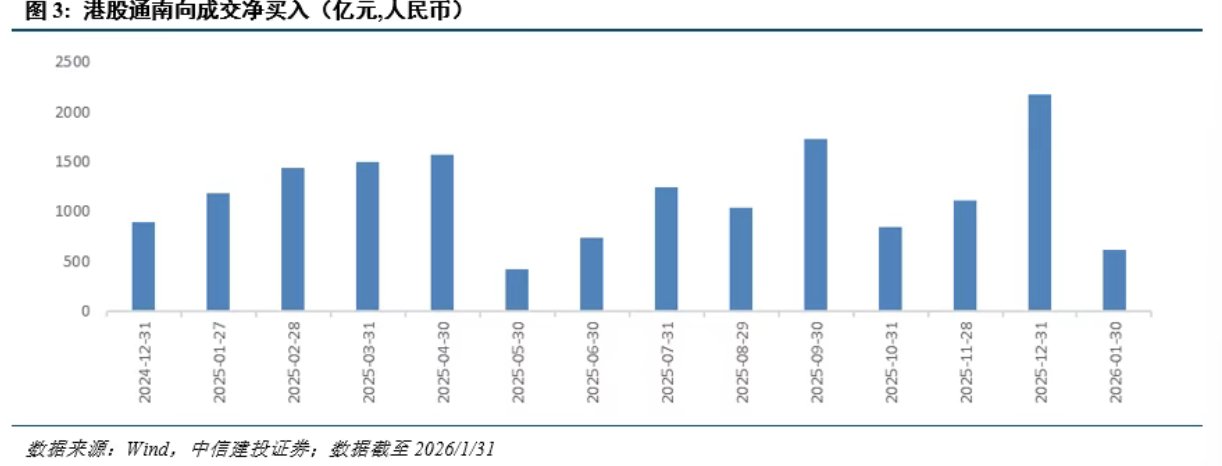
Core Insights - The Shanghai 180 Index (000010) has shown a slight increase of 0.20% as of February 12, 2026, with notable gains from stocks such as Dongfang Electric (+10.00%) and China National Offshore Oil Corporation (+9.98%) [1] - The Shanghai 180 ETF (530280) has experienced a minor decline of 0.16%, currently priced at 1.26 yuan, but has seen a cumulative increase of 1.04% over the past week [1] - The ETF has a Sharpe ratio of 1.91 since its inception, indicating a favorable risk-adjusted return [1] Performance Metrics - The Shanghai 180 ETF has a maximum drawdown of 4.28% year-to-date, with a relative benchmark drawdown of 0.06% [1] - The management fee for the ETF is set at 0.15%, while the custody fee is 0.05% [1] - The tracking error for the ETF over the past three months is 0.019%, reflecting its close alignment with the underlying index [1] Index Composition - The Shanghai 180 Index comprises 180 securities selected for their large market capitalization and liquidity, representing the core performance of Shanghai's listed companies [2] - As of January 30, 2026, the top ten weighted stocks in the index account for 24.85% of the total index weight, including major companies like Zijin Mining and Kweichow Moutai [2] - The top ten stocks by weight include: - Zijin Mining (4.03%) - Kweichow Moutai (4.22%) - China Ping An (2.87%) - Others include Hengrui Medicine, WuXi AppTec, and China Merchants Bank [3]
沪深300ETF嘉实(159919)开盘跌0.22%
Xin Lang Cai Jing· 2026-02-13 01:35
Core Viewpoint - The article discusses the performance of the HuShen 300 ETF managed by Harvest Fund Management, highlighting its recent market movements and key holdings [1] Group 1: ETF Performance - The HuShen 300 ETF (159919) opened at 4.918 yuan, experiencing a decline of 0.22% [1] - Since its establishment on May 7, 2012, the fund has achieved a return of 129.33%, while its return over the past month is -1.31% [1] Group 2: Key Holdings Performance - Notable stocks within the ETF include: - CATL (宁德时代) down 0.07% - Kweichow Moutai (贵州茅台) unchanged at 0.00% - Ping An Insurance (中国平安) down 0.59% - Zhongji Xuchuang (中际旭创) down 0.66% - Zijin Mining (紫金矿业) down 3.75% - China Merchants Bank (招商银行) down 0.10% - Xinyi Technology (新易盛) down 1.02% - Midea Group (美的集团) down 0.36% - Industrial Bank (兴业银行) up 0.05% - Yangtze Power (长江电力) up 0.04% [1] Group 3: Management Information - The ETF is managed by Harvest Fund Management Co., Ltd., with Liu Jiayin as the fund manager [1]





中信证券A股2025年报预告全景透视:预喜公司占比达37% 大市值龙头盈利修复显著
Zhi Tong Cai Jing· 2026-02-13 01:17
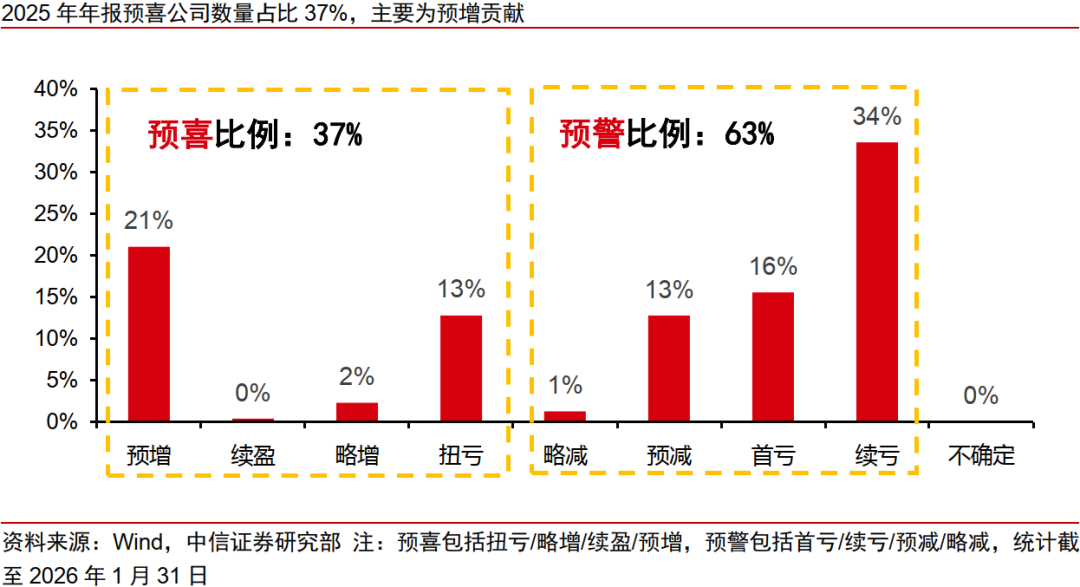
Core Viewpoint - As of January 31, 2026, 2,976 A-share companies have disclosed their 2025 annual performance forecasts, with a total disclosure rate of 54.0%. The proportion of companies with positive forecasts has increased to 37% from 33% in 2024, indicating a structural recovery driven by technology, supported by external demand, while financial sectors face pressure [1][9]. Group 1: Performance Forecast Overview - The number of companies with positive forecasts has expanded, with technology, finance, and cyclical sectors being the highlights. The overall disclosure rate is 54.0%, with 37% of companies forecasting positive results, up from 33% in 2024. Key sectors showing growth include communication, basic chemicals, non-ferrous metals, non-bank finance, electronics, and utilities [1][5]. - The performance forecast reveals significant improvements among large-cap leaders, while small-cap companies continue to face substantial pressure. The positive forecast ratio is highly correlated with market capitalization, with the Shanghai Stock Exchange 50 index showing a 75% positive forecast ratio [9][12]. Group 2: Sector-Specific Insights - The current performance forecasts exhibit structural characteristics of "technology-driven, externally supported, and financial pressure." Notably, 9 companies from the Shanghai Stock Exchange 50 have released forecasts, with 6 showing growth, particularly in machinery, non-ferrous, pharmaceuticals, and electronics [12]. - The technology sector shows high resilience due to global AI infrastructure and semiconductor demand growth, while industries like non-ferrous metals and chemicals are experiencing performance releases due to improved pricing power [12][22]. Group 3: Institutional Investment Strategies - Fund companies focus on clear growth sectors, with the top three heavy investment industries being electronics (20.1%), pharmaceuticals (10.1%), and power equipment & new energy (9.3%). The top 20% of holdings have a forecasted net profit of 3,976.3 billion yuan, reflecting a 46.4% year-on-year growth [16][21]. - Insurance companies prioritize cash flow and defensive attributes, with a significant portion of their holdings in banking and non-bank financial sectors. The top 20% of holdings forecast a net profit of 814.7 billion yuan, with limited growth elasticity [16][20]. Group 4: Analyst Expectations and Market Reactions - Analyst expectations are generally optimistic, with 537 companies forecasting below market consensus and only 160 exceeding expectations, indicating a significant bias towards optimism in earnings predictions [22][27]. - The analysis of market reactions shows that 658 stocks experienced a gap down on the day following their forecasts, while only 230 saw a gap up, suggesting that overall earnings expectations were overly optimistic prior to announcements [27][33].

智通港股通持股解析|2月13日





智通财经网· 2026-02-13 00:32
Group 1 - The top three companies by Hong Kong Stock Connect holding ratios are China Telecom (71.33%), Haotian International Investment (69.79%), and Green Power Environmental (68.88%) [1] - Tencent Holdings saw the largest increase in holding amount over the last five trading days, with an increase of 9.996 billion yuan, followed by Alibaba-W with 3.458 billion yuan and Southern Hengsheng Technology with 2.412 billion yuan [1] - The companies with the largest decrease in holding amount over the last five trading days include China Ping An (-0.571 billion yuan), Shandong Gold (-0.566 billion yuan), and Zhaojin Mining (-0.404 billion yuan) [2] Group 2 - The latest holding ratios for the top 20 companies in Hong Kong Stock Connect show significant ownership, with China Telecom leading at 71.33% and several other companies above 60% [1] - The top 10 companies with the largest increases in holdings over the last five trading days include Meituan-W (+1.796 billion yuan) and China Life (+1.686 billion yuan) [1] - The top 10 companies with the largest decreases in holdings include Kangfang Biotech (-0.388 billion yuan) and Zijin Mining (-0.386 billion yuan) [2]
智通港股沽空统计|2月13日
智通财经网· 2026-02-13 00:21
Group 1 - The core point of the article highlights the short-selling ratios and amounts for various companies, indicating significant market activity and investor sentiment towards these stocks [1][2]. Group 2 - The top three companies by short-selling ratio are China Resources Beer (80291), Great Wall Motor (82333), and JD Health (86618), all at 100.00% [1][2]. - The top three companies by short-selling amount are Meituan (03690) with 1.878 billion, Zijin Mining (02899) with 1.770 billion, and Tencent Holdings (00700) with 1.606 billion [1][2]. - The companies with the highest deviation values in short-selling are Kuaishou (81024) at 36.81%, Zhaojin Mining (01818) at 33.02%, and China Shipbuilding Leasing (03877) at 30.32% [1][2].



2026年第5周:跨境出海周度市场观察
艾瑞咨询· 2026-02-13 00:02
跨境出海丨市场观察 本周看点: -越南,最适合快消品新消费品牌的出海地方! -跨境电商支付机构有哪些 ? 2026优秀平台盘点,助力企业扬帆出海; -全球营销进入SuperAgent时代:中国品牌出海的智能新基建。 行业环境 1.越南,最适合快消品新消费品牌的出海地方! 关键词:越南市场,消费逻辑,传统渠道,现代渠道,电商渗透 概要: 越南是中国品牌出海的热门新兴市场,快消零售以传统渠道为主(占80%),但现代超 市和电商增长迅速。电商(如TikTok Shop)爆发,但传统渠道仍是核心。消费者偏好低价小规 格产品,品牌依赖内容电商营销。分销体系复杂,需管控账期;现代渠道由头部连锁主导。建 议中国品牌分阶段布局:先通过电商测试爆款,再切入连锁超市,强化内容营销与地推,兼顾 线上线下。本地化能力和耐心是关键挑战。 2.跨境电商支付机构有哪些?2026优秀平台盘点, 助力企业 扬帆出海 关键词: 跨境支付,数字经济,合规,金融科技,风控能力 概要: 本文介绍了十家跨境支付机构,包括Ksher(东南亚市场)、Airwallex(多币种管 理)、Stripe(开发者友好)、Wise(低费汇款)、PayPal(全球支付 ...

深企里程碑 上市600家
Sou Hu Cai Jing· 2026-02-12 23:08
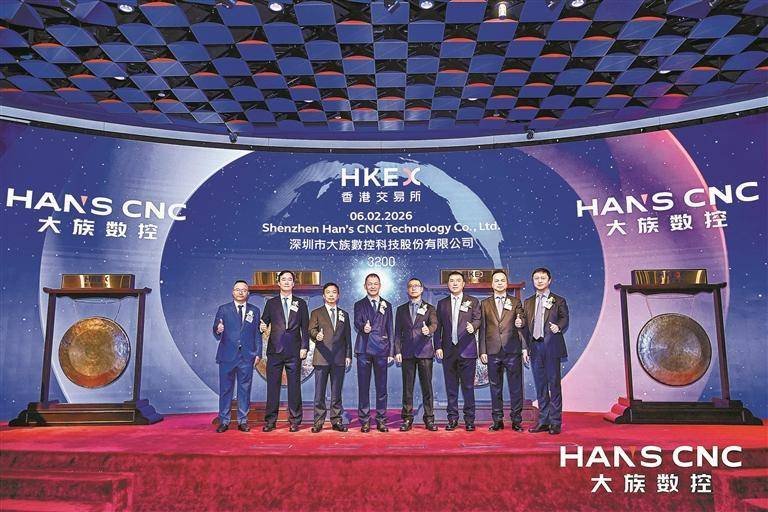
大族数控在港股敲钟上市,跻身"A+H"行列。(资料图片) 深圳商报首席记者 谢惠茜 2月6日上午,随着卓正医疗、大族数控在港股敲钟上市,宣告深圳迎来了里程碑时刻:全市上市公司总量突 破600家大关,其中,境内上市公司426家,境外上市公司174家。截至2026年1月末,深圳上市公司总市值超 19万亿元,稳居全国大中城市第二位。 这不仅是一个数字的跨越,更是一座城市实体经济活力、创新动能与金融生态深度融合的生动映照。从新中 国第一张股票在宝安破土而出,到今天600个火炬熠熠生辉,深圳企业的上市史,几乎就是半部中国现代企业 制度的演进史。 拓荒奠基 从"第一股"到全球销冠 回望来路,那些"拓荒者"的名字镌刻于中国资本市场的史册。 1983年,宝安县联合投资公司向社会公开发行"原始股",催生了改革开放后深圳第一家股份制企业——深宝 安,也诞生了新中国第一张股票。1991年6月25日,深宝安登陆深交所,成为中国资本市场第一批上市企业; 1991年发行的"南玻B",则成为中国内地第一支B股。 更早的1987年,招商银行作为全国第一家由企业法人持股的商业银行在深圳成立,中国平安也在蛇口呱呱坠 地,日后成长为世界级的综合金 ...
平安基金管理有限公司 关于新增平安久瑞回报混合型证券 投资基金销售机构的公告
Zhong Guo Zheng Quan Bao - Zhong Zheng Wang· 2026-02-12 22:53
Group 1 - The core announcement is about the addition of multiple sales institutions for the Ping An Jiurui Return Mixed Securities Investment Fund, effective from February 26, 2026 [1] - The fund's sale period is set from February 26, 2026, to March 13, 2026 [2] - Investors can consult various sales institutions for details regarding the fund, including customer service numbers and websites [2][3][4][5][6][7][8][9][10][11] Group 2 - Starting from February 13, 2026, Ping An Fund Management Company has signed a supplementary sales agreement with China Merchants Bank, allowing the bank to sell certain funds [8] - The announcement includes details on how investors can perform various transactions such as account opening, subscription, redemption, and regular investment through China Merchants Bank [8][9] - There are fee discounts available for investors who subscribe or regularly invest through China Merchants Bank, with the bank having the discretion to set the discount rates [10][11]


2月11日【港股Podcast】恆指、小米集團、比亞迪股份、中國平安、中海油田服務、攜程
Ge Long Hui· 2026-02-12 20:50
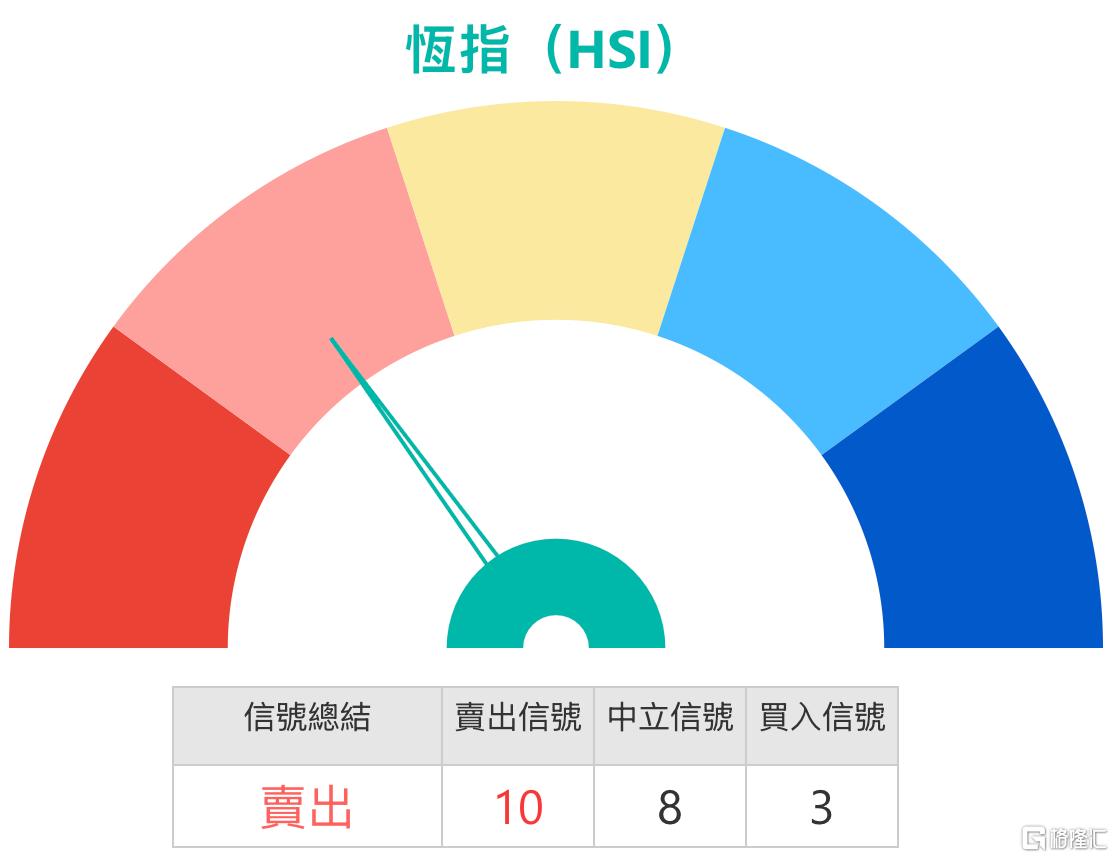
Group 1: Hang Seng Index - The Hang Seng Index showed a slight increase, closing at 27,274 points with a gain of 0.31%, but trading volume continued to decline, raising concerns about market sustainability [1] - Investors exhibit a clear divergence in sentiment post-Lunar New Year, with bullish investors optimistic about reaching 28,500 points, while bearish investors worry about the sustainability of the current upward trend due to shrinking trading volume [1] - Technical analysis indicates a sell signal predominates, with a sell-to-buy signal ratio of 10:3, and key support at 26,700 points, with a potential drop to 26,100 points if breached [2] Group 2: Xiaomi Group - Xiaomi Group's stock price rebounded significantly, closing at 37.1 HKD, with intraday prices nearing the upper Bollinger Band, and trading volume increased [8] - To reach the target of 40 HKD, Xiaomi must break through two key resistance levels: 38.8 HKD and 39.7 HKD [8] - Some investors opted for put options as the stock price rose, indicating concerns about potential short-term pullbacks [9] Group 3: BYD Company - BYD's stock price performed well, reaching 99.15 HKD, with investors focused on whether it can stabilize above the 100 HKD mark and challenge the 110 HKD target [15] - Technical signals are neutral, with key resistance at 103.1 HKD, and a breakthrough could lead to further gains towards 110 HKD [15] - Investors are favoring long-dated call options with a strike price of around 106 HKD, which have a favorable selection in the market [16] Group 4: Ping An Insurance - Ping An's stock price has been fluctuating within a narrow range, closing at 72.5 HKD, with trading volume hitting a recent low [22] - There is a growing bearish sentiment, with some investors believing the stock needs to drop to 69 HKD before a new upward trend can begin [22] - The key support level is at 70.1 HKD, and if breached, the stock may drop to 67.5 HKD, with a sell signal dominating the market [22] Group 5: CNOOC Services - CNOOC Services' stock price reached a new high of 9.57 HKD, but trading volume slightly decreased, indicating a divergence between price and volume [28] - Despite the price breakout, technical signals remain bearish, suggesting caution regarding short-term optimism [28] - The key resistance level is at 9.83 HKD, and a breakthrough could lead to a rise above 10 HKD [28] Group 6: Trip.com Group - Trip.com Group's stock price has been hovering at low levels, closing at 446.2 HKD, with expectations for upcoming Spring Festival travel data [35] - The stock is near the lower Bollinger Band, with a slight buy signal prevailing, but the key support level is at 431 HKD, below which a drop to 395 HKD is likely [35] - Investors are advised to wait for stabilization before considering bottom-fishing strategies, with some opting for call options with a strike price of 400 HKD [35]