华熙生物

Search documents
期待!众星云集,北京1月演唱会好精彩!
Xin Lang Cai Jing· 2026-01-04 04:33
转自:北京日报客户端 "声音玩具"1999年成立于成都 以诗意歌词、宏大编曲 以及极致浪漫的现场表演 独树一帜 是中国当代最具影响力的摇滚乐队之一 2026年《时间之外》终于来到了北方 让"我们"共同打造 "内心之内,时间之外"的美学盛宴 敬请期待北京站的精彩演绎 〗演出时间:2026.01.10 周六 19:00 『演出地点:华熙生物 · 周百颜中心 AK刘彰《致命爱人》巡演 图 命 豐 ERFORMING 2026 I 「致命爱人」生日会不是故事的终点 而是"纠缠一生"誓言的起点 让一切在音乐中重启 让这段危险的关系不断延续 「致命爰人」巡演正式开启 新的舞台已在你的城市搭建完毕 AK刘彰在这里恭候你的光临 【】演出时间:2026.01.10 周六 19:00 【演出地点:本土王牌LIVE 康姆士COM'Z「桃花源」 2026巡演 2026. 1.16-1.17 北京 福浪LIVEHOUSE-福 COMP STUNTELA 康姆士COM'Z是成立于2009年的 中国台湾摇滚乐团 乐队作品风格偏向于另类流行/独立摇滚 旋律上口 搭载主唱极具特色的南部口音 及颗粒感音色 直达流行与独立之间的平衡点 【演出时间 ...


天津华熙海御科技有限公司成立,注册资本1000万人民币
Sou Hu Cai Jing· 2026-01-02 03:37
企业名称天津华熙海御科技有限公司法定代表人邓喜先注册资本1000万人民币国标行业科学研究和技术 服务业>科技推广和应用服务业>技术推广服务地址天津市南开区科研东路西侧天津科技广场6-2-2552 (天开园)企业类型有限责任公司(法人独资)营业期限2026-1-1至无固定期限登记机关天津市南开区市 场监督管理局 来源:市场资讯 天眼查显示,近日,天津华熙海御科技有限公司成立,法定代表人为邓喜先,注册资本1000万人民币, 由华熙生物科技股份有限公司全资持股。 序号股东名称持股比例1华熙生物科技股份有限公司100% 经营范围含技术服务、技术开发、技术咨询、技术交流、技术转让、技术推广;食品销售(仅销售预包 装食品);第二类医疗器械销售;化工产品销售(不含许可类化工产品);化妆品零售;化妆品批发; 食品添加剂销售;日用品销售;日用品批发;卫生用品和一次性使用医疗用品销售;个人卫生用品销 售;塑料制品销售;宠物食品及用品批发;饲料原料销售;电子产品销售;机械设备销售;办公服务; 货物进出口;第一类医疗器械销售;宠物食品及用品零售。(除依法须经批准的项目外,凭营业执照依 法自主开展经营活动)许可项目:医护人员防护用品生 ...

美容护理系列深度报告2:技术、需求双轮驱动,PDRN应用提速
Orient Securities· 2025-12-31 15:40
Investment Rating - The report maintains a "Positive" investment rating for the beauty and personal care industry, specifically focusing on PDRN applications [6]. Core Insights - The report highlights that PDRN (Polydeoxyribonucleotide) is expected to unleash stronger commercial potential due to increasing registrations and search metrics. The extraction of PDRN is transitioning from animal sources to microbial fermentation and synthetic biology, laying a solid foundation for accelerated applications in the medical beauty and skincare sectors [3][4]. - The report emphasizes that domestic beauty companies are likely to redefine the value boundaries of PDRN, with leading firms accelerating their strategies in this competitive landscape [3][4]. Summary by Sections PDRN Overview - PDRN, derived from salmon and other sources, has a high similarity to human DNA (98%) and is known for its skin repair and cell regeneration properties. Its historical development spans from the 15th century to its current applications in medical aesthetics and cosmetics [8][13][19]. Market Growth Potential - The PDRN market is projected to grow significantly, with estimates indicating an increase from USD 0.72 billion in 2024 to USD 8.55 billion by 2031, reflecting a CAGR of 43%. The demand for anti-aging products is a core driver of this growth [8][30]. Competitive Landscape - Domestic companies are actively entering the PDRN medical and skincare sectors, with significant advancements in extraction technologies. Companies like Huaxi Biological and Lepu Medical are leading the charge in developing PDRN-based products [8][30][34]. Key Mechanisms and Benefits - PDRN operates through two main mechanisms: acting as an agonist for the adenosine A2A receptor to suppress inflammation and providing nucleotides for DNA synthesis, thus promoting cell regeneration and tissue repair [34][36]. - The primary benefits of PDRN include skin repair, anti-inflammatory effects, and anti-aging properties, making it suitable for various cosmetic and medical applications [34][39].




科创板医药2025:赛道分化显冷暖 支持“硬科技”仍然是主调⎜年终盘点
Xin Lang Cai Jing· 2025-12-31 05:25
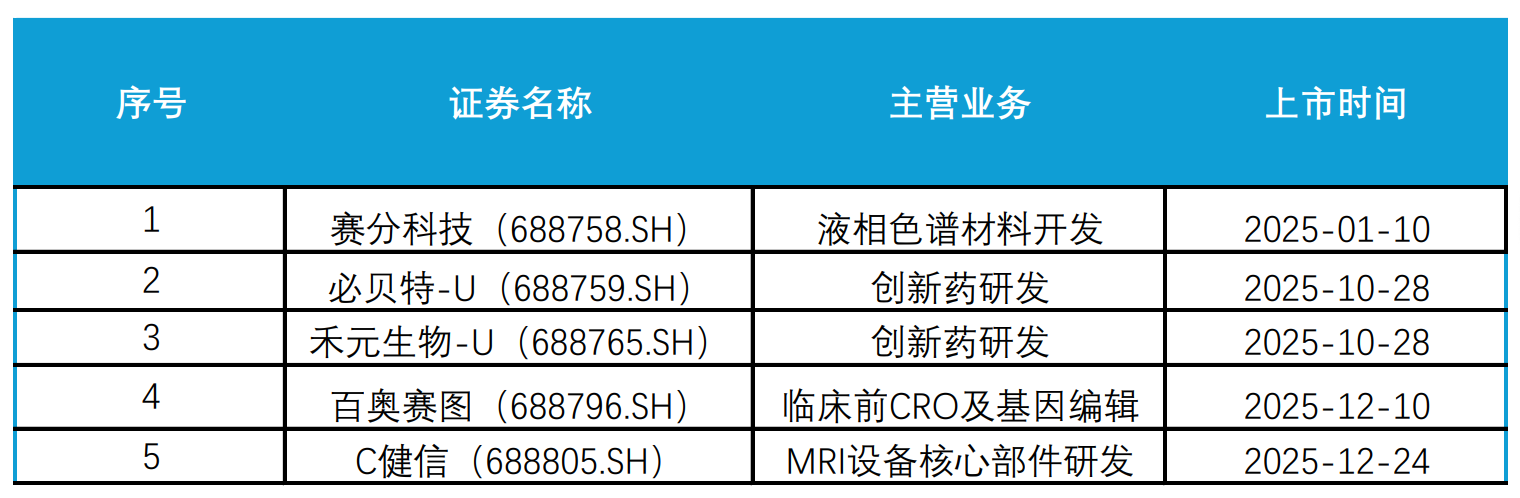
Core Insights - The pharmaceutical sector of the Sci-Tech Innovation Board (STAR Market) has shown significant market narrative capabilities and has attracted more attention from the capital market in 2025 [1] - As of December 26, 2025, there were 118 listed companies in the STAR Market's pharmaceutical sector, with 98 companies experiencing stock price increases throughout the year [1] - The number of IPOs for biopharmaceutical companies on the STAR Market has decreased significantly, with only one company, Tianxing Medical, terminating its review in 2025, compared to over 10 in 2024 [2] Market Performance - The STAR Market's overall index has risen by 48.35% since its launch on January 20, 2025, outperforming major broad-based indices [5] - By December 26, 2025, 40 companies in the pharmaceutical sector had stock price increases exceeding 50%, with the top ten companies all surpassing a 100% increase compared to the previous year [6][7] New Listings and Policies - In 2025, five new biopharmaceutical companies were listed on the STAR Market, a significant increase from one in 2024 [2] - The introduction of the "1+6" policy measures by the China Securities Regulatory Commission (CSRC) on June 18, 2025, aimed to enhance the inclusivity of the STAR Market, particularly for unprofitable technology companies [2][3] Company Performance - The top-performing pharmaceutical companies in terms of stock price increase included Tianchen Medical, with a 226.84% rise, and others like Kangzhong Medical and SanSheng Guojian, which also saw significant gains [8] - Many of the companies with the highest stock price increases reported substantial revenue and net profit growth, indicating a strong correlation between financial performance and market valuation [8] Innovation Drug Sector - The innovation drug sector has emerged as a major highlight in 2025, with a total annual increase of 60.75%, driven by supportive policies and increasing market interest [9] - The total amount of business development (BD) transactions in the domestic innovation drug sector exceeded $130 billion in 2025, more than doubling from $64.08 billion in 2024 [10] Challenges in Other Sectors - The IVD (in vitro diagnostics), vaccine, and medical aesthetics sectors faced significant challenges, with many companies experiencing stock price declines and performance pressures [11] - The IVD sector, once considered a golden opportunity, is now facing a downturn due to various factors, including prolonged accounts receivable cycles and lower-than-expected demand [12] - The medical aesthetics industry is also under pressure, with both listed companies reporting declines in performance and stock prices due to increased competition and regulatory changes [13][14]
经济持续提级进位,光明跑出“新深圳速度”
Xin Lang Cai Jing· 2025-12-31 04:22
Core Viewpoint - Jim Rogers, co-founder of Quantum Fund, believes that Guangming has the potential to become the next Silicon Valley, highlighting its significance in China's hard technology future within the Greater Bay Area [1]. Group 1: Industrial and Innovation Rankings - Guangming District has rapidly ascended to 16th place in the 2025 China Industrial Top 100 Districts, improving by 4 positions from the previous year and by 40 positions since 2021, marking it as the fastest-growing industrial district [3]. - The district's industrial clusters, particularly in ultra-high-definition video display, have surpassed a total scale of 400 billion yuan, while future industries like synthetic biology and brain science have valuations exceeding 50 billion yuan [3][4]. - Guangming is also ranked 23rd in the National Innovation Top 100 Districts and has seen its Guangming Science City rise from 24th to 7th in the National Science City Top 100 over three years, showcasing its rapid technological advancement [3][4]. Group 2: Economic Growth and Development - Since the 14th Five-Year Plan, Guangming's GDP has exceeded 170 billion yuan, with an average annual growth rate of 10%, placing it among the top districts in Shenzhen [4]. - The district's industrial output value has surpassed 100 billion yuan, with strategic emerging industries growing at an annual rate of 10.4%, contributing to over 50% of the GDP [4]. - Guangming's economic structure is characterized by a nearly 60% contribution from industry, with emerging industries forming a significant part of the economy, indicating its transformation into a major industrial and innovation hub [4]. Group 3: Guangming Science City and Innovation Platforms - Guangming Science City is positioned as a key innovation hub, aiming to match global standards and serve as a comprehensive national science center and a high-level talent hub in the Greater Bay Area [6][7]. - The city focuses on three major fields: information technology, life sciences, and new materials, with 23 major innovation platforms established, including significant research facilities and universities [7][9]. - Guangming Science City has successfully undertaken over 600 major technology projects and has received multiple national awards for technological progress, indicating its strong output of high-level innovation [9][10]. Group 4: Talent Attraction and Business Environment - Guangming District has attracted significant investment, with 38 major projects signed at the Shenzhen Global Investment Conference, totaling an intended investment of 66.9 billion yuan [12]. - The district has become home to over 100,000 enterprises, including 35 listed companies and 2,275 national high-tech enterprises, reflecting its robust business environment [13]. - The demographic profile shows a high proportion of young labor force, with 83.5% of the population aged 15-59, indicating a vibrant and dynamic workforce [14]. Group 5: Future Opportunities - Looking ahead to the 15th Five-Year Plan, Guangming is expected to leverage its strategic location and comprehensive development positioning to further enhance its economic and industrial capabilities [17][18]. - The district aims to integrate technological and industrial innovation, focusing on emerging industries such as artificial intelligence and biomedicine, which are aligned with national strategic goals [18].

扎堆中高端商场!国货美妆开店潮又来了
Sou Hu Cai Jing· 2025-12-30 17:57
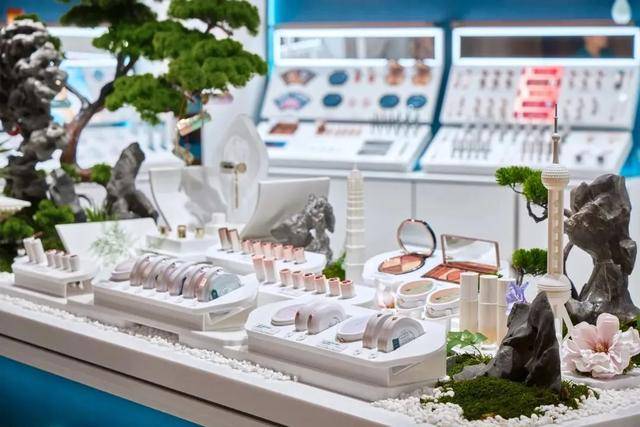
Core Insights - Domestic beauty brands are increasingly expanding their offline presence as online traffic growth reaches its peak, with brands like Lin Qingxuan and Mao Geping leading the charge in opening new stores [1][2][3] - The shift to offline retail is driven by the need to enhance brand image and consumer trust through personalized customer service, despite the challenges of increased costs and supply chain management [1][4][7] Group 1: Expansion Strategies - Major domestic beauty brands are focusing on high-end shopping centers and have begun to penetrate lower-tier markets, with Lin Qingxuan and Mao Geping opening stores in cities like Luoyang and Chifeng [2][3] - New entrants to the offline market, such as Gu Yu and Hua Xizi, are utilizing pop-up stores to establish their brand presence in key urban areas [3][4] Group 2: Consumer Engagement and Sales Performance - Offline stores are reported to have higher conversion and repurchase rates, with Mao Geping's offline member repurchase rate increasing from 28.7% to 30.3% year-on-year, compared to 24.1% for online [7] - Lin Qingxuan's average transaction value in offline channels reached 1,026 yuan, significantly higher than the 497 yuan in online channels, indicating a strong consumer willingness to spend in physical stores [7] Group 3: Challenges and Market Dynamics - The competitive landscape for domestic beauty brands has intensified, with many brands adopting franchise and partnership models to accelerate store expansion, as seen with Lin Qingxuan increasing its number of distributors from 15 to 93 [8][11] - The offline retail environment remains challenging, with high operational costs and the need for skilled beauty consultants, leading to increased sales expenses for brands like Mao Geping [15] - The recent resurgence of beauty collection stores, which saw a sales increase of 0.39% year-on-year, provides a low-cost avenue for domestic brands to expand their market reach [12][13]
认知即财富:2026年,为什么我建议你重读混沌这份“上市公司创始人”课表?
混沌学园· 2025-12-30 11:48
Core Insights - The essence of value investing is understanding the cognitive boundaries of founders and their decision-making processes during critical moments, rather than relying solely on financial reports or stock charts [2][3] - The upcoming year 2026 is expected to present challenges, but the underlying logic of business remains constant, emphasizing the importance of founder insights in navigating uncertainty [3][12] Group 1: Investment Philosophy - Warren Buffett emphasizes that buying stocks is essentially buying a part of the company, advocating for a long-term investment mindset [2] - Charlie Munger criticizes superficial analysis, suggesting that true understanding comes from engaging with the founders and their philosophies [2] - The article highlights the importance of learning from successful founders who have survived market pressures, as their insights are invaluable [10] Group 2: Educational Framework for 2026 - A curriculum is proposed for 2026, featuring sessions led by prominent company founders, focusing on their strategic insights and experiences [4][5][7][9] - The courses aim to provide a deeper understanding of business fundamentals, emphasizing real-world applications over theoretical knowledge [10] - The design logic of the curriculum is based on verified cognition, practical logic, and the opportunity to adopt the perspectives of successful leaders [10] Group 3: Market Trends and Company Strategies - The article discusses the significance of understanding the decision-making logic of founders during critical times, which contributes to a company's competitive advantage [3] - It mentions various companies and their strategic transformations, such as Anta's strategic pivot and Bosideng's brand rejuvenation, as examples of resilience and adaptability [3] - The focus on hard technology and manufacturing reflects the evolving landscape of the A-share and Sci-Tech Innovation Board markets [4]

美妆行业深度报告:国货崛起、模式分化与营销提效下的竞争新局
Shanghai Aijian Securities· 2025-12-30 09:07
Investment Rating - The report rates the beauty and personal care industry as "Outperform" compared to the market [1] Core Insights - The beauty industry is experiencing significant growth driven by domestic brands, with a shift towards online sales channels, particularly through platforms like Douyin [2][3] - Domestic brands are gaining market share, with 43% of consumers preferring domestic beauty brands over international ones by 2025 [2][3] - The industry is characterized by high sales expense ratios due to intense competition and the need for substantial marketing investments [2][3] Summary by Sections 1. Beauty Industry Overview - The beauty sector is primarily focused on skincare and makeup, with online sales accounting for over 70% of revenue [2] - Facial care is the core category within skincare, with domestic brands experiencing growth despite overall market challenges [2][3] - The current channel structure is dominated by online sales, which account for 79% of revenue, with platforms like Taobao and Douyin leading the way [2][3] 2. Market Growth and Domestic Brand Rise - The Chinese cosmetics market is expanding, with domestic brands driving this growth [2][3] - The market size is projected to grow from 934.6 billion yuan in 2024 to 1,200 billion yuan by 2029, with a CAGR of 6.6% [2][3] - Domestic brands are expected to surpass international brands in market share by 2025, with a projected share of 52.9% by 2029 [2][3] 3. Business Model Differentiation - The domestic beauty industry has developed three main business models: efficacy research, brand deepening, and a combination of agency operations with self-owned brands [2][3] - Companies are transitioning from reliance on agency models to creating their own brands to enhance profitability [2][3] 4. Industry Characteristics and Competition - High gross margins and sales expense ratios are common in the beauty industry, driven by the need for extensive marketing to build brand recognition [2][3] - Companies are employing multi-faceted marketing strategies to balance costs and growth [2][3] 5. Investment Recommendations - The report suggests focusing on companies that excel in efficacy research, brand deepening, and transitioning from agency operations to self-owned brands [2][3] - Specific companies to watch include Juzhibio in efficacy research and Proya and Maogeping in brand deepening [2][3]
林清轩上市成功,国货美妆十强变天
Sou Hu Cai Jing· 2025-12-30 04:31
Core Viewpoint - Lin Qingxuan has officially listed on the Hong Kong Stock Exchange, becoming the first high-end domestic skincare stock, with an opening price of 85 HKD per share, reflecting a market capitalization of approximately 12.6 billion HKD [2][4]. Company Overview - The stock price increased by about 9.3% from the issue price of 77.77 HKD, reaching a peak of 91.65 HKD on the first trading day, maintaining a high valuation for beauty stocks in Hong Kong [4][6]. - Lin Qingxuan's global offering consisted of approximately 13.97 million shares, raising over 1 billion HKD, with significant backing from cornerstone investors [6][10]. Financial Performance - Revenue grew from 691.15 million RMB in 2022 to 1.21 billion RMB in 2024, with a compound annual growth rate exceeding 30% [8][22]. - The company achieved a net profit of approximately 1.87 billion RMB in 2024, reversing previous losses, and reported a revenue of 10.52 billion RMB in the first half of 2025, nearly matching the entire revenue of 2024 [8][11]. Market Position - Lin Qingxuan ranks among the top fifteen high-end skincare brands in China by retail sales, being the only domestic brand in this category [10][11]. - The company has established over 554 stores nationwide, with online sales accounting for more than 60% of its revenue [10][11]. Competitive Landscape - The listing has reshuffled the ranking of domestic beauty companies, pushing Lin Qingxuan into the top ten by revenue, surpassing competitors like Shuiyang [11][12]. - The competitive environment is intensifying, with other brands like Shuiyang and Naturals poised to challenge Lin Qingxuan's position [13][14]. Investment Appeal - Investors are attracted to Lin Qingxuan due to its strong brand recognition, high gross margins, and rapid revenue growth, which suggest a promising financial outlook [20][21]. - The company's reliance on a single flagship product, the Camellia Oil, has raised questions about sustainability and the need for diversification in its product offerings [21][23].

多地积极培育未来产业 10只概念股筹码集中
Zheng Quan Shi Bao Wang· 2025-12-30 00:23
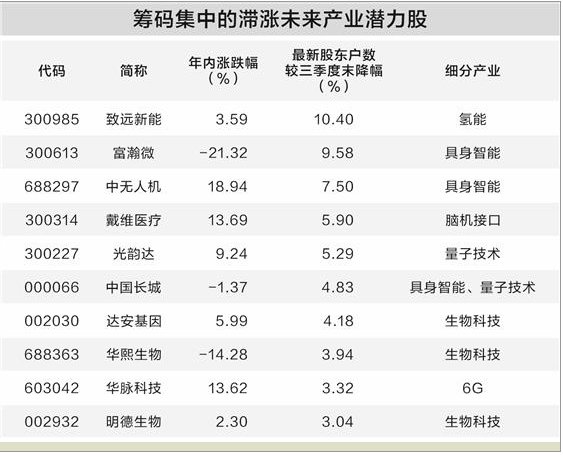
Core Insights - The article highlights the growing focus on future industries in China, as emphasized in the "14th Five-Year Plan," which aims to cultivate and expand emerging industries and future sectors [1] - It discusses the importance of exploring diverse technological routes, typical application scenarios, feasible business models, and market regulatory rules to drive economic growth through sectors like quantum technology, biomanufacturing, hydrogen energy, nuclear fusion, brain-computer interfaces, embodied intelligence, and 6G mobile communication [1] Group 1: Market Trends - The article notes that over 381 concept stocks have seen a decline in shareholder numbers compared to the end of Q3, with more than 40 companies experiencing a decrease, and 27 companies showing a decline exceeding 3% [1] - 福晶科技 (Fujing Technology) has seen a significant drop in shareholder numbers, with a decrease of nearly 26% compared to the end of Q3 [1] Group 2: Investment Opportunities - Among the 27 companies with a shareholder decline over 3%, only 10 companies have recorded a year-to-date increase of less than 19%, indicating potential for price recovery in the future industry sector [1] - The table lists several companies with their respective year-to-date performance and shareholder decline percentages, highlighting potential stocks for future investment, such as 致远新能 (Zhiyuan New Energy) with a 3.59% increase and a 10.40% decline in shareholder numbers [2]