DeepSeek

Search documents
字节阿里DeepSeek决战春节:一场关乎14亿人的重磅AI大战
3 6 Ke· 2026-01-30 11:01
Core Insights - The upcoming Spring Festival marks a critical moment for AI in China, with major companies like ByteDance, Alibaba, and DeepSeek preparing to launch significant AI models, indicating a fierce competition for user engagement and future internet order [1][18]. ByteDance - ByteDance plans to release three flagship models during the Spring Festival: Doubao 2.0 (language model), Seedream 5.0 (image generation model), and SeedDance 2.0 (video generation model) [2]. - Doubao 2.0 has reached 155 million weekly active users, and the company aims to integrate AI into its ecosystem, particularly within Douyin, to maintain its dominance in content creation [3][4]. - The new models are expected to enhance ByteDance's cloud business, positioning it to compete more effectively with Alibaba Cloud [4]. Alibaba - Alibaba is set to launch its flagship model Qwen 3.5, focusing on enhancing user experience and capabilities in mathematics and coding [5][6]. - The Qwen app is evolving into a multifunctional assistant, integrating services like food delivery and travel booking, aiming to capture users' daily life services [7]. - Alibaba's strategy includes a goal to deeply integrate all its services with the Qwen app by 2026, with the app's monthly active users surpassing 100 million [8]. DeepSeek - DeepSeek plans to unveil its new model, V4, which is expected to excel in coding and long-context processing, potentially surpassing competitors like OpenAI's GPT and Google's Gemini [9][10]. - The V4 model is designed to handle extensive code prompts and maintain data integrity during training, crucial for developing complex software systems [10]. - DeepSeek's unique training architecture allows for larger models without proportionally increasing chip numbers, showcasing its capability in logical reasoning and code generation [13]. Industry Implications - The competition among these tech giants is not solely about financial gains but about establishing a dominant entry point in the AI era, which will define the internet landscape for the next decade [17][18]. - The integration of AI into everyday life is anticipated to transform user interactions, from generating festive videos to planning family trips and writing complex code [16].




Exclusive: China conditionally approves DeepSeek to buy Nvidia's H200 chips - sources
Reuters· 2026-01-30 06:51
Core Insights - China has approved its leading AI startup DeepSeek to purchase Nvidia's H200 artificial intelligence chips, with regulatory conditions still being finalized [1] Company Summary - DeepSeek, identified as a top AI startup in China, is set to acquire Nvidia's H200 chips, indicating a significant move in the AI sector [1] Industry Summary - The approval for DeepSeek to buy Nvidia's AI chips reflects China's ongoing investment and interest in advancing its artificial intelligence capabilities [1]

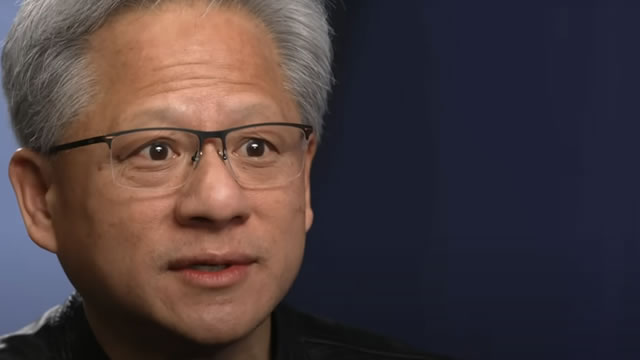
China conditionally approves DeepSeek to buy Nvidia's H200 chips, sources say
Yahoo Finance· 2026-01-30 06:51
Core Viewpoint - China has approved its top AI startup DeepSeek to purchase Nvidia's H200 AI chips, with regulatory conditions still being finalized [1][3]. Group 1: Company Approvals - DeepSeek, along with ByteDance, Alibaba, and Tencent, has received permission to buy over 400,000 H200 chips in total [1]. - The approvals were granted by China's industry and commerce ministries, but specific conditions are still under discussion by the National Development and Reform Commission (NDRC) [3]. Group 2: Nvidia's Position - Nvidia's CEO Jensen Huang stated that the company has not received confirmation regarding the approvals and believes that China is still finalizing the licensing process [2]. - The H200 chip is Nvidia's second most powerful AI chip and has become a significant point of contention in U.S.-China relations [4]. Group 3: Market Dynamics - The U.S. has recently cleared the way for Nvidia to sell the H200 to China, where there is strong demand for the product [5]. - Any purchases by DeepSeek may attract scrutiny from U.S. lawmakers due to allegations that Nvidia assisted DeepSeek in developing AI models used by the Chinese military [6]. Group 4: Future Developments - DeepSeek is expected to launch its next-generation AI model V4, which will feature advanced coding capabilities, in mid-February [6].
【人民网】DeepSeek等获选2025年度“十大科技新闻事件”
Ren Min Wang· 2026-01-30 06:39
Group 1 - The DeepSeek AI assistant ranked first in global app store downloads across 140 markets, significantly reducing model training costs and attracting global attention [1] - The "Zu Chongzhi No. 3" quantum computing prototype achieved a new record in superconducting quantum computing superiority with 105 qubits, solving quantum random circuit sampling tasks rapidly [2] - The world's first humanoid robot half marathon took place in Beijing, featuring 20 teams, highlighting the future potential of the robotics industry [3] Group 2 - A breakthrough in quantum cryptography was achieved with the development of a dual encryption technology that combines quantum key distribution (QKD) and post-quantum cryptography (PQC), potentially reshaping international communication security [4] - Research results from the Chang'e 6 lunar sample series revealed the evolutionary history of the moon's far side, marking a significant milestone in lunar exploration [5] - The Yarlung Tsangpo River downstream hydropower project commenced construction, equivalent in scale to three Three Gorges dams, expected to provide nearly 300 billion kilowatt-hours of clean energy annually [6] Group 3 - The new generation neuromorphic brain-like computer "Wukong" was launched, featuring over 2 billion pulse neurons, approaching the scale of a macaque brain [7] - The State Council issued a document to implement the "Artificial Intelligence+" initiative, focusing on six key actions and enhancing eight foundational capabilities to promote deep integration of AI across various sectors [8] - The first National Science Popularization Month was successfully held, with over 500,000 activities organized nationwide, engaging millions of participants and promoting science education [9] - China's first electromagnetic catapult aircraft carrier, the Fujian, was commissioned, marking the beginning of a new era for the Chinese Navy with three aircraft carriers [10]

X @Bloomberg
Bloomberg· 2026-01-29 18:42
Nvidia provided technical support that helped DeepSeek improve its AI model despite US export controls, according to the Republican head of the House China committee https://t.co/WgMUA2bBge ...
千问、DeepSeek、Kimi齐出手,国产大模型密集上新,“工程化”闯关还有三道坎
Mei Ri Jing Ji Xin Wen· 2026-01-29 14:52
Core Viewpoint - Recent updates from multiple domestic large model manufacturers indicate a shift from merely competing on parameters and dialogue performance to a deeper focus on engineering and system-level capabilities, aiming to transition large models from "research achievements" to "industrial products" [1] Group 1: Model Updates - Alibaba released the Qwen3-Max-Thinking flagship reasoning model, while DeepSeek and Kimi updated their models with DeepSeek-OCR 2 and Kimi K2.5 respectively [1] - MiniMax launched the Music2.5 music generation model, addressing two major AI music technology challenges, which significantly boosted stock prices in the Hong Kong market, with MiniMax's stock rising over 20% and Zhiyu's stock increasing over 10% [1] Group 2: Challenges in Engineering Phase - The first challenge is balancing cost and efficiency, as high-parameter models incur substantial training and inference costs, making it financially burdensome for most companies to adopt top models for full-scale business operations [2] - The second challenge involves meeting industrial-grade requirements for stability and interpretability, as current models still exhibit issues like "hallucinations" and output variability, which could pose significant risks in critical applications such as financial risk control and medical diagnosis [2] - The third challenge is the integration with existing systems, which requires complex API connections, data format conversions, workflow restructuring, and adaptation of security frameworks, yet many models remain at the "chat demonstration" level without deep integration capabilities [2] Group 3: Path to Overcoming Challenges - Breakthroughs in each challenge are technically demanding, necessitating a shift from "pursuing extreme parameters" to "optimizing unit computational efficiency" to ensure affordability and usability for enterprises [3] - Companies are increasingly seeking stable problem-solving capabilities rather than just technical specifications, prompting a shift from merely providing models to offering comprehensive services and solutions [3] - Implementing techniques like prompt engineering and retrieval-augmented generation can help build safeguards for key application scenarios, effectively controlling hallucinations and enhancing result reliability and interpretability [3]
国产大模型竞技场:DS、元宝、豆包等谁执牛耳?
Sou Hu Cai Jing· 2026-01-29 12:37
Core Insights - The Chinese large model industry has transformed from a "follower" to a "runner" and even a "leader" in certain areas by 2026, reshaping the global AI competitive landscape with breakthroughs in technology, ecosystem prosperity, and application capabilities [1] Group 1: Company Highlights - DeepSeek (DS) leads with its innovative Mixture of Experts (MoE) architecture and Multi-Head Potential Attention (MLA) mechanism, significantly reducing computational costs while maintaining high performance. The latest DS-V4 model surpasses GPT-4o in blind tests and offers a cost-effective API [2] - Tencent Yuanbao excels in multi-modal understanding and reasoning, leveraging Tencent's vast ecosystem data. Its Qwen3-Max-Thinking model achieves a 73.8% accuracy rate in complex tasks, outperforming Gemini 3 Pro [3] - ByteDance's Doubao 1.5Pro utilizes a large-scale sparse MoE architecture, achieving performance equivalent to a dense model with seven times the activation parameters while reducing inference costs by 40% compared to GPT-4o [4] Group 2: Industry Trends - The industry is witnessing verticalization in sectors like healthcare, education, and manufacturing, with significant advancements in specialized applications [6] - General scene integration is evident in office, e-commerce, and cross-border trade, with open-source strategies reshaping the global AI ecosystem. DS models have over 200,000 derivatives in the Hugging Face community, while Yuanbao's Qwen series has spawned over ten sub-models [7][8] - The commercialization of large models has entered a scalable phase, with DS serving over 2,000 enterprises and maintaining an 85% customer renewal rate. Yuanbao manages over 800 billion in assets in the financial advisory sector [9] Group 3: Future Outlook - The competition focus is shifting from "model capability" to "intelligent ecosystem," with DS developing technologies for human-like understanding and Yuanbao enhancing tool invocation capabilities [9][10] - The Chinese large model industry is positioned to further penetrate the physical world, becoming a "smart foundation" for new productive forces, emphasizing technological independence, deep scene cultivation, and open ecosystems [10]


每经热评|国产大模型密集上新 “工程化”闯关还有三道坎
Mei Ri Jing Ji Xin Wen· 2026-01-29 12:04
Core Insights - Recent updates from multiple domestic large model manufacturers indicate a shift from merely competing on parameters and dialogue performance to a deeper focus on engineering and system-level capabilities [1] - The goal is to transition large models from "research achievements" to "industrial products," enabling non-AI professional teams to utilize them in a stable, secure, and cost-effective manner [1] Group 1: Challenges in Engineering Large Models - The first challenge is balancing cost and efficiency, as high-parameter models incur significant training and inference costs, creating financial pressure for most enterprises [2] - The second challenge involves meeting industrial-grade requirements for stability and interpretability, as current models still exhibit issues like "hallucinations" and output variability, which can pose risks in critical applications [2] - The third challenge is the integration with existing systems, requiring complex API connections, data format conversions, and workflow restructuring, as many models currently remain at the "chat demonstration" level [2] Group 2: Pathways to Overcoming Challenges - Breakthroughs in each challenge are technically demanding, necessitating a shift from "pursuing extreme parameters" to "optimizing unit computational efficiency" to make models more accessible and usable for enterprises [3] - Companies should focus on providing comprehensive services and solutions rather than just models, enhancing reliability and interpretability through techniques like prompt engineering and retrieval-augmented generation [3] - Successfully navigating these engineering challenges will allow domestic large models to transition from frequent updates to deeper utilization, ultimately creating substantial industrial value and market returns [3]
计算机行业分析报告:DeepSeek近期成果分析及V4影响力预测
Zhongyuan Securities· 2026-01-29 09:41
Investment Rating - The report maintains an "Outperform" rating for the computer industry, expecting a relative increase of over 10% compared to the CSI 300 index in the next six months [1][50]. Core Insights - DeepSeek is set to launch its next-generation flagship AI model, DeepSeek V4, in mid-February 2026, which is anticipated to surpass the capabilities of Claude and GPT series models [3][11]. - The introduction of a new architecture independent of transformers in V4 is expected to mark a significant technological breakthrough, paving the way for advancements towards AGI [4][46]. - The report highlights the potential for cost reductions in model training, which could alleviate the current chip shortages in the domestic market [4][40]. - DeepSeek's commitment to an open-source approach is likely to enhance its competitive position against closed-source models from companies like OpenAI and Anthropic [41][45]. Summary by Sections 1. Latest Developments of DeepSeek - DeepSeek plans to release V4, which is positioned against the anticipated R2 model expected in May 2025 [11]. - The company has made significant advancements in adapting its models to domestic chips, enhancing compatibility and performance [12]. 2. Sparse Allocation Scheme - The introduction of the "Engram" memory module aims to improve model performance and decouple computation from memory constraints, addressing current GPU memory limitations [19][29]. - Experimental data indicates that allocating 20%-25% of sparse parameters to Engram optimizes overall model performance [22]. 3. Innovations in Information Transmission Architecture - The mHC architecture proposed by DeepSeek enhances information flow and stability in deep networks, improving training convergence speed by approximately 1.8 times [30][31]. 4. Long Text Input Compression - DeepSeek-OCR and its upgrade, DeepSeek-OCR2, utilize visual encoding to significantly reduce the number of tokens required for long text inputs, achieving high decoding accuracy even at substantial compression rates [34][37]. 5. Increased Transparency in Research - The update of the R1 paper from 22 to 86 pages reflects DeepSeek's commitment to transparency, detailing training processes and costs, which are significantly lower than those of leading models [39][40]. 6. Predictions for V4's Impact - V4 is expected to lower model costs and enhance performance, potentially transforming the competitive landscape of the AI industry [40][46]. - The model's deep integration with domestic chips is anticipated to support the development of the local computing ecosystem [47].
梁文锋和杨植麟,第四次撞车
3 6 Ke· 2026-01-29 08:24
Core Insights - The article discusses the simultaneous advancements in AI models by DeepSeek and Moonlight, particularly focusing on their new models Kimi K2.5 and OCR-2, which both enhance visual understanding capabilities [1][4][11]. Group 1: Model Developments - Moonlight released the Kimi K2.5 model on January 27, 2025, which integrates various capabilities including visual understanding, coding, and multi-modal functions [1]. - DeepSeek launched its OCR-2 model on the same day, introducing a novel "visual causal flow" mechanism that allows for dynamic reading of images based on semantic content [1][11]. - Both models aim to address the industry pain points in visual understanding, indicating a shared focus on enhancing AI's capabilities in this area [5][11]. Group 2: Technical Innovations - DeepSeek's model employs a new visual encoder, DeepEncoder V2, which mimics human visual processing by breaking away from fixed scanning orders [11]. - Moonlight's K2.5 model features an Agent Swarm architecture, allowing for the creation of multiple sub-agents to enhance task execution efficiency by up to 4.5 times [12][13]. - Both companies are addressing the challenges of long-context processing and computational efficiency in their respective models, with DeepSeek focusing on hardware optimization and Moonlight on flexible innovations within the Transformer framework [2][11]. Group 3: Industry Context - The advancements in visual understanding are critical for the commercial viability of AI models, as they transition from language interaction to full-scene interaction [5]. - The competition between DeepSeek and Moonlight reflects a broader trend in the AI industry, where companies are racing to overcome similar technical challenges and capture market opportunities [4][5][7].