LG

Search documents
华为公布2024年“技术账单”:研发投入1797亿,专利许可收入6.3亿美元
Feng Huang Wang· 2025-11-11 14:15
Core Insights - Huawei disclosed its latest data in technology openness and intellectual property for 2024, highlighting a strong output in patent contributions and commercial returns [1][2] Group 1: Patent Contributions - Huawei's patent disclosure volume reached over 37,000 in 2024, with more than 10,000 proposals contributed to domestic and international standard organizations [1] - The company published over 1,000 academic papers in the same year [1] Group 2: Commercial Returns - Huawei achieved approximately $630 million in patent licensing revenue in 2024 [1] - Over 2.7 billion 5G devices globally have received patent licenses from Huawei, along with over 1.2 billion consumer electronic devices in the Wi-Fi sector, and more than 3.2 billion devices in the multimedia field [1] Group 3: R&D Investment - Huawei's cumulative R&D investment over the past decade has reached 1.249 trillion RMB, with R&D expenses for 2024 amounting to 179.7 billion RMB, representing 20.8% of total revenue [1] - The company maintains a leading position in the industry regarding R&D investment intensity [1] Group 4: Patent Holdings and Rankings - Huawei holds over 150,000 valid authorized patents globally [2] - According to the World Intellectual Property Organization (WIPO), Huawei ranked first in the 2024 PCT international patent application with 6,600 applications, followed by Samsung, Qualcomm, LG, and CATL [2]
缺电危机,AIDC配储需求分析
2025-11-11 01:01
Summary of AIDC and Energy Storage Demand Analysis Industry Overview - The report focuses on the AIDC (Artificial Intelligence Data Center) sector and its impact on energy storage demand in North America and China [1][3][5]. Key Points and Arguments 1. **Energy Demand Growth**: The energy demand for AIDC in the U.S. is expected to grow by 13 GW, leading to a need for 10.8 GWh of energy storage [1][3]. 2. **Annual Growth Rate**: North American AIDC-related energy storage demand is projected to grow by at least 30% annually starting in 2026, with AIGC (Artificial Intelligence Generated Content) installations conservatively estimated to exceed 20% growth [1][5]. 3. **China's Rapid Growth**: China's energy storage installation is expected to reach 160-170 GWh by 2025 and 230-250 GWh by 2026, showing rapid growth in the sector [1][5]. 4. **OBBB Act Impact**: The OBBB Act is driving the development of the North American energy storage market, with an expected addition of at least 70 GWh of new installations by 2025 [1][5]. 5. **Market Dynamics**: The U.S. energy storage market is also driven by grid frequency regulation and electricity market trading capabilities, with Texas and California projects yielding returns of 8%-12% [1][6]. 6. **Battery Supply Landscape**: CATL dominates the North American battery supply market, with a significant market share expected to be challenged by EVE Energy due to Tesla's plans to use EVE as a primary supplier [3][13][17]. 7. **Cost Analysis of Energy Solutions**: The LCOE (Levelized Cost of Energy) for gas turbines is the most competitive at 7-8 cents, while solid oxide fuel cells (SOFC) are slightly higher at 9-10 cents, and small nuclear fusion costs range from 17-18 cents [1][7]. 8. **Challenges in Energy Storage**: Current energy storage systems face issues with capacity overprovisioning, leading to high average prices of about 15-16 cents [1][7]. 9. **AIDC's Role in Energy Storage**: Energy storage systems in AIDC primarily serve peak shaving and frequency regulation, with market prices varying based on configuration and usage [1][8]. 10. **Investment Returns**: Historical investment returns for energy storage projects have been around 8%-12%, but recent market conditions have compressed profit margins [1][12]. Additional Important Insights - **Diverse Applications**: AIDC is expected to account for about 20% of the 70 GWh of new installations in North America by 2026, with the remaining 80% serving various applications including spot trading and auxiliary services [3][11]. - **Supplier Competition**: The PCS (Power Conversion System) market in North America is dominated by European brands, while Chinese companies face challenges due to safety concerns and local market preferences [19][21]. - **Future Strategies**: Tesla plans to reduce reliance on CATL and increase procurement from EVE Energy, reflecting a shift in supplier dynamics in the North American market [17][18]. This comprehensive analysis highlights the significant growth potential and challenges within the AIDC and energy storage sectors, emphasizing the need for strategic adaptations by companies involved in these markets.
What’s holding back Indian brands from going global?
MINT· 2025-11-10 00:30
Core Perspective - The article discusses the perceived lack of global consumer brands from India, attributing this to a lack of ambition among Indian entrepreneurs and systemic issues within the business environment [2][4]. Group 1: Entrepreneurial Attitudes - Indian entrepreneurs are criticized for being risk-averse and lacking ambition, which has hindered the creation of globally recognized brands [2][3]. - Corporate leaders like Uday Kotak and Harsh Goenka highlight the tendency of Indian entrepreneurs to rely on the domestic market and avoid investing in R&D and branding [3][4]. Group 2: Market Competition - The absence of Indian brands in global consumer goods is partly due to the dominance of established international brands like Unilever and P&G, which have extensive resources and market presence [7]. - Historical Indian brands like Onida and BPL struggled to compete against larger global companies that had already established significant market reach [8]. Group 3: Trust and Quality - Global brands have built consumer trust through consistent product quality, which is a critical factor for success in international markets [9]. - The article suggests that the cultural environment and governance models play a role in fostering these intangible attributes [9]. Group 4: Systemic Challenges - Eric Schmidt's insights indicate that India's potential to innovate is limited by regulatory and systemic issues rather than a lack of talent among entrepreneurs [10][11]. - The article emphasizes the need for a strategic political vision to support entrepreneurial growth, similar to the development seen in South Korea and China [13]. Group 5: Collaborative Efforts - A successful entrepreneurial ecosystem requires collaboration between ambitious entrepreneurs and supportive government policies to address issues like labor laws and bureaucratic hurdles [14]. - The article concludes that a meaningful engagement among all stakeholders is essential for improving Brand India on the global stage [14][15].



LG抓紧布局LFP与钠电
高工锂电· 2025-11-09 10:54
Group 1 - NextStar Energy, a joint venture of LG, is set to begin mass production of lithium iron phosphate (LFP) energy storage batteries in Canada, targeting commercial and power storage solutions [2] - LG has also entered the sodium battery market, collaborating with Sinopec to develop sodium battery cathode and anode materials for energy storage systems and low-speed electric vehicles [3] - LG ranks third in global power battery installations in the first half of this year, focusing on a diversified material system due to safety concerns and increased application of LFP batteries [3] Group 2 - LG's Michigan plant has been transformed to exclusively produce LFP batteries, with production capacity expected to reach 17 GWh by the end of this year and potentially increase to 30 GWh by the end of 2026, specifically for the energy storage market [3] - In July, LG signed a contract with Tesla for LFP battery orders aimed at energy storage, with Tesla's Shanghai factory's Megapack achieving stable shipments and expected to supply the domestic energy storage market [3][4] - Tesla introduced new large-scale energy storage products, Megapack3 and Megablock, with Megapack3 having a capacity of 5 MWh and Megablock achieving a megawatt-level breakthrough, both utilizing LFP technology [3] Group 3 - LG plans to allocate some production lines from its battery plants in China and Poland to ensure the delivery of energy storage batteries [4] - The first generation of LG's sodium batteries is aimed at the uninterruptible power supply (UPS) market for data centers, expected to begin mass production in 2027 [5] - Sodium batteries are anticipated to gradually replace lead-acid batteries in UPS systems, with high discharge efficiency and excellent performance in various temperature conditions [6] Group 4 - The demand for data centers is expected to grow significantly, particularly in China and the U.S., driven by advancements in AI and big data, positioning LG to become a major supplier for U.S. data center backup power needs [7]
马斯克可能真觉得,造车没意思了
3 6 Ke· 2025-11-09 05:19
Core Viewpoint - Elon Musk's $1 trillion compensation plan was approved by over 75% of Tesla shareholders, highlighting his significance to the company [1] Group 1: Compensation Plan Details - The compensation plan includes two ambitious targets related to Tesla's market value and operational metrics, divided into 12 milestones [3][4] - If Musk meets all targets, Tesla's market value could reach $8.5 trillion, and he would own 25% of the company [8][9] Group 2: Operational Challenges - Tesla's delivery numbers have been declining, with a 13% drop in Q1 and a 13.5% drop in Q2 of 2025 [11][12] - The company aims to deliver 2 million vehicles cumulatively, with current deliveries exceeding 800,000 [7][12] Group 3: Future Growth Strategies - Tesla plans to transition from a car manufacturer to a technology company focused on AI and robotics [15] - Musk set ambitious production targets, aiming for 2.6-5 million vehicles by 2028, which represents a 50% growth from previous years [17] Group 4: Full Self-Driving (FSD) Developments - The latest FSD version includes advanced features like language understanding and improved navigation capabilities [19][24] - FSD's sales model faces challenges, with only about 1% of Tesla's revenue coming from it, indicating consumer reluctance to pay for ongoing services after purchasing a vehicle [25] Group 5: Robotaxi and Optimus - Tesla is set to begin production of its Robotaxi, CyberCab, in April 2024, which could revolutionize its business model [28] - The Optimus robot aims to integrate into daily life and replace human labor, with a target production of 1 million units to reduce costs [30][33] Group 6: Supply Chain and Production Challenges - Tesla is addressing past battery shortages by developing its own battery production lines and considering partnerships for chip manufacturing [36]


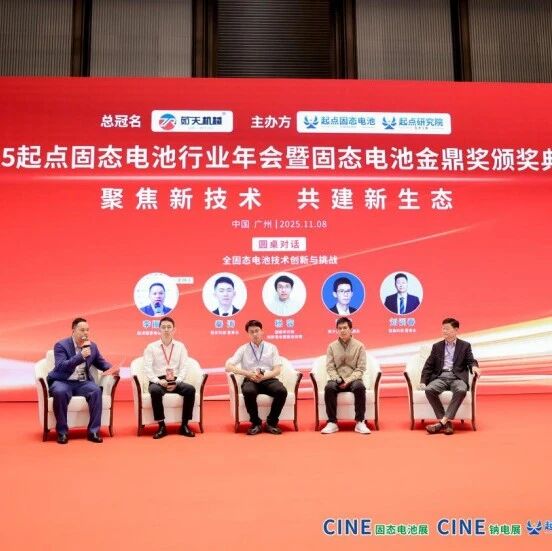
圆桌对话:全固态电池技术创新与挑战
起点锂电· 2025-11-08 12:40
Core Viewpoint - The 2025 Solid-State Battery Industry Annual Conference highlighted the rapid advancements and challenges in solid-state battery technology, emphasizing the need for innovation and collaboration within the industry to overcome existing barriers and achieve commercialization. Group 1: Industry Trends and Developments - The solid-state battery industry is experiencing significant technological advancements, with improvements in materials and battery processes noted in recent reports [5] - The industry is still facing challenges in achieving cost-effective mass production, as the current supply chain is not as mature as that of liquid batteries, necessitating collective efforts to reduce costs [6] - The timeline for mass production is projected between 2027 and 2030, with expectations for substantial commercial progress during this period [13] Group 2: Technical Challenges and Innovations - Key challenges for solid-state batteries include safety and energy density, with current materials like sulfide batteries still posing risks under certain conditions [7][8] - The industry recognizes that while solid-state batteries are perceived as a solution to many issues faced by lithium-ion batteries, they are not without their own set of challenges [9] - Innovations in polymer electrolytes are being pursued, with a focus on improving ionic conductivity and simplifying mass production processes [6][12] Group 3: Market Dynamics and Future Outlook - The solid-state battery market is expected to grow, driven by strategic national interests and the need for safer, more efficient energy storage solutions [13] - The industry is currently exploring various sulfide solid electrolyte routes, with no definitive consensus on the best approach, indicating ongoing research and development efforts [14] - The importance of environmental stability in battery production is emphasized, particularly for applications in aerospace and military sectors, which require high reliability [10][11]
Panasonic to return to Japanese leadership as India chairman Manish Sharma steps down
ETRetail.com· 2025-11-08 04:22
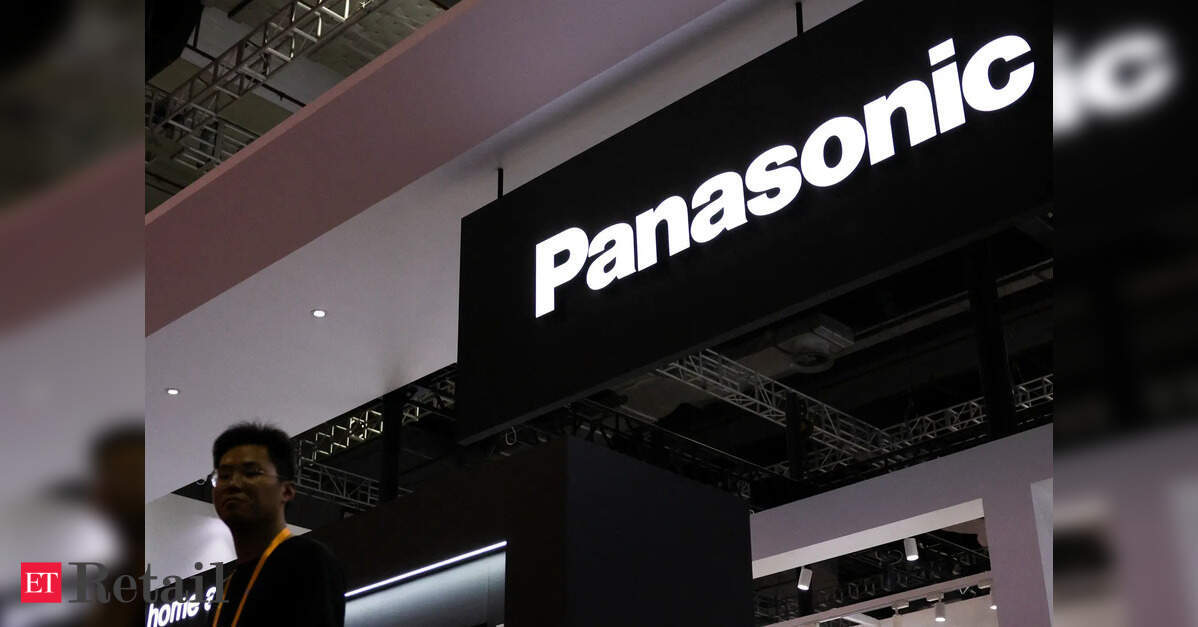
Core Insights - Panasonic India has appointed Tadashi Chiba as the new head, replacing Manish Sharma, who has resigned after a 17-year tenure [1][6] - The company is shifting back to Japanese management after previously being led by an Indian executive, marking a significant change in its leadership strategy [2][6] - Panasonic has exited the refrigerators and washing machine business due to losses and is now focusing on televisions and air-conditioners, with India becoming the second-largest market for ACs [2][5] Company Performance - Panasonic India reported a revenue of approximately Rs 11,100 crore and a net profit of Rs 1,100 crore for the fiscal year 2024-25 [5] - In the previous fiscal year 2023-24, the group revenue was Rs 9,700 crore with a net profit of Rs 830 crore, indicating a growth trajectory [5] Strategic Shift - The company has transitioned from a consumer electronics focus to a technology-oriented approach, emphasizing B2B solutions, including EV batteries and smart factory solutions [2][6] - Panasonic's industrial devices and smart factory solutions segments have surpassed Rs 1,000 crore, driven by initiatives like "Make in India" and electrification [6]

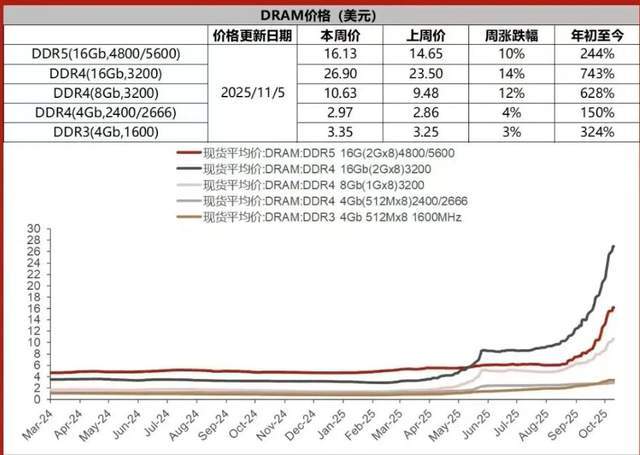
涨幅最高740%!2025年的“电子茅台”,让雷军都直呼受不了
Sou Hu Cai Jing· 2025-11-08 03:45
Core Insights - The price of memory, particularly DRAM, has seen an unprecedented increase in 2025, with DDR4 memory prices rising over 700% since the beginning of the year, while DDR5 has increased by 244% [1][2][9] Price Trends - DDR4 16GB memory has surged from approximately $26.90 to $23.50, reflecting a 743% increase, while DDR4 8GB has risen from $10.63 to $9.48, marking a 628% increase [2] - The average price of DDR3 and DDR5 has also seen significant increases, with DDR3 4GB rising by 324% [2] Market Dynamics - The memory price surge is attributed to several factors, including a previous downturn in the storage chip market leading to reduced production by major manufacturers like Samsung, SK Hynix, and Micron [5][7] - The transition to new CPUs that only support DDR5 has prompted manufacturers to exit the DDR4 market, creating a supply-demand imbalance for DDR4 [5][7] Impact on Industries - The skyrocketing memory prices are affecting manufacturers in sectors such as smartphones and PCs, where profit margins are already thin, leading to increased costs for end products [9][11] - Companies like Xiaomi have publicly acknowledged the impact of rising memory prices on product pricing, as seen in the case of the Redmi K90 [11] Profitability of Manufacturers - Major memory manufacturers, including Samsung, SK Hynix, and Micron, are experiencing substantial profits due to the price increases, while domestic manufacturers like Changxin and Changcun are also expected to perform well this year [11]
越南努力提升外资质量
Shang Wu Bu Wang Zhan· 2025-11-07 16:11
近年来,越南不断努力为重大项目制定具备国际竞争力的激励与优惠政策,使越南成为全球投资者 眼中的理想目的地,吸引了众多涉及半导体、人工智能等高科技领域的战略性投资者和大型项目,如英 伟达(NVIDIA)、高通(Qualcomm)、SAP研发中心项目、瑞典SYKE、丹麦乐高(LEGO)、三 星、LG、富士康(Foxconn)、歌尔(Goertek)、立讯(Luxshare)等。 多位国会代表建议,越南应制定有选择性的招商政策,优先吸引承诺技术转让、使用越南劳动力并 与本土企业对接的项目;给予外企相应的投资优惠政策;建立"私企—国家—外企"三方联动机制,减少 对进口的依赖、提高本土化率、促进创新和技术转让,增强竞争力与全球价值链参与能力。 汇丰银行在《越南经济报告》也指出:"尽管全球贸易环境波动不定,中国和美国世界两大经济体 仍在持续加大对越南的投资力度。" (原标题:越南努力提升外资质量) 《西贡解放日报》11月6日援引《越通社》报道,2021—2025年,越南外资注册总额达1850亿美 元,高于2016—2020年的1700亿美元,成为越南经济亮点。仅2025年1—9月,外资注册总额超285.4亿 美元,同比增 ...
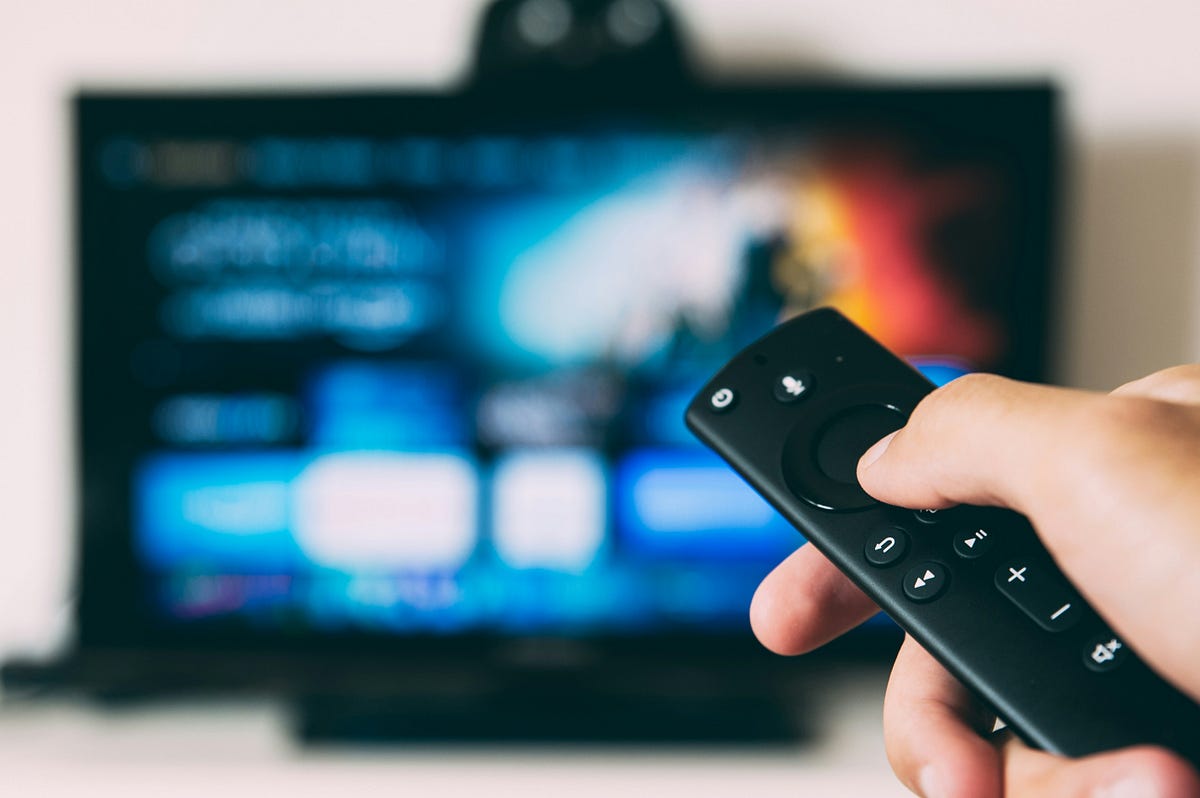
Your Smart TV Is the Cookie Now—And It’s Bigger Than Meta
Medium· 2025-11-07 10:29
Core Insights - The article discusses the rise of Automatic Content Recognition (ACR) technology in smart TVs, highlighting its ability to monetize viewer data more effectively than traditional cookie-based tracking methods [1][10]. Group 1: ACR Technology Overview - ACR captures a 2-second screen and audio sample every 5-7 seconds, creating a 256-bit fingerprint that is sent over a secure connection [2]. - Major TV manufacturers like Samsung, LG, Sony, TCL, Vizio, and Roku have integrated ACR into their firmware, allowing for extensive data collection [1][4]. - The technology matches data against a 6 PB reference library updated nightly, covering various content sources including cable and streaming services [4]. Group 2: Data Monetization and Market Impact - Companies like Samba TV and Alphonso are monetizing ACR data, with Samba paying OEMs $0.10 to $0.25 per active set monthly for raw data feeds [5]. - LG Ads Solutions reported $1.1 billion in revenue for 2024, a 41% year-over-year increase, indicating the profitability of ACR-driven advertising [7]. - 87% of U.S. households are now addressable through ACR, with a CPM premium of 3.2 times compared to cookie-based advertising due to its cross-device capabilities [6]. Group 3: User Engagement and Compliance Issues - 78% of smart TV users do not opt out of ACR features, suggesting a lack of awareness or concern regarding data collection [6]. - Legal challenges exist, as seen in Vizio's $2.2 million FTC fine for data collection practices, raising questions about compliance with regulations like GDPR and CCPA [7]. Group 4: Security and Privacy Concerns - The article highlights potential security vulnerabilities, including risks of camera and microphone hijacking through unpatched software [8]. - ACR technology poses a significant attack surface, with demonstrated exploits that could compromise user privacy [8]. Group 5: User Control and Mitigation Strategies - Users can take steps to limit data collection, such as disabling specific settings on their TVs and blocking certain DNS addresses at the router level [9]. - Recommendations include using separate streaming devices and rotating advertiser IDs to enhance privacy [9].