中国广核

Search documents
各地新政限制售电盈利,有利电价企稳
Haitong Securities International· 2025-11-27 07:29
Investment Rating - The report maintains a positive outlook on the thermal power sector, indicating an investment rating of "Outperform" for the industry [1][21]. Core Insights - The report highlights that restrictions on power company profits are stabilizing electricity prices. In October, total electricity consumption reached 857.2 billion kWh, reflecting a year-on-year increase of 10.4%. This growth is attributed to low base effects from the previous year, with industrial, commercial, and residential usage increasing by 6.2%, 17.1%, and 23.9% respectively [3][4]. - The report anticipates that annual electricity consumption growth will exceed 5%, with concerns regarding long-term contract prices and coal prices expected to ease after agreements are finalized [3][4]. Summary by Sections Regional Policies - Various regions are implementing profit-sharing policies for power companies. For instance, Henan limits user losses to 10%, while Guangdong shares excess profits above RMB 0.01/kWh at a 1:9 ratio. Other regions like Shaanxi, Anhui, Jiangxi, and Sichuan have also introduced price caps, with Guangdong's sharing ratio being notably favorable to users [5][6]. Market Forecasts - The China Energy Investment Corporation forecasts that the peak load for 2024 will be 1.44 billion kW, with coal power expected to provide 55% of the energy. By 2030, coal capacity is projected to reach 1.54 billion kW, with gas power adding 40-50 million kW [7][8]. Profitability and Recommendations - The report notes that profits in Q3 2025 for thermal power companies are improving, with a price-to-earnings (PE) ratio below 10. It suggests that dividends are likely to rise, and compares this favorably to global leaders in the sector, which typically have a PE around 20. Recommended companies include Huadian Power International, Beijing Jingneng Power, and others [8].
解码以质取胜的“张家港路径”
Su Zhou Ri Bao· 2025-11-27 07:00
Core Viewpoint - Zhangjiagang is recognized as a model for quality-driven development, showcasing its "quality first" philosophy at a national event, emphasizing its unique path to high-quality county development [1] Group 1: Quality Improvement Initiatives - Zhangjiagang has integrated the "quality first" concept into its urban development, creating a new model for comprehensive quality enhancement through mechanisms, industry renewal, service integration, and civilizational coexistence [1] - The city has invested over 1 billion yuan in quality development initiatives, leading to more than 12 billion yuan in corporate quality technology investments [4] - The establishment of a 30-minute quality service circle has benefited nearly 10,000 small and micro enterprises, addressing over 500 quality needs [4] Group 2: Corporate Success Stories - Jiangsu Yonggang Group implemented a digital detection system funded by 200,000 yuan in government support, resulting in a 53 million yuan profit increase [2] - Zhangjiagang Zhonghui Medical Plastic Technology Co., Ltd. improved its eye drop bottle quality rate from 80% to 96%, saving 530,000 yuan annually [3] - Qianlima Socks achieved a 20% year-on-year increase in domestic sales through quality management services [3] Group 3: Collaborative Innovation and Regional Synergy - Zhangjiagang has established five quality innovation alliances across various industries, enhancing collaboration and addressing critical technological challenges [6] - The city has led quality improvement projects in the Yangtze River Delta, resulting in 92 regional quality innovation outcomes [7] - Collaborative efforts between companies have led to significant advancements, such as a tenfold increase in welding efficiency for thick plates [7] Group 4: Community Engagement and Quality Culture - The "You Point, I Test" public testing initiative has engaged over 160,000 participants, enhancing community involvement in quality assurance [9] - Zhangjiagang has integrated quality culture into its civilizational framework, promoting standardized volunteer services and quality awareness [10] - The city has developed a comprehensive quality development index to monitor and improve quality across various sectors [10] Group 5: Future Development Goals - Zhangjiagang aims to deepen quality innovation practices and contribute to national quality development efforts, positioning itself as a model for other counties [11]
开源证券: 电改加速深化 预期有望趋稳
智通财经网· 2025-11-27 03:57
Core Viewpoint - The report from Kaiyuan Securities indicates that during the "14th Five-Year Plan" period, a supply-demand pattern of "abundant electricity generation, tight electricity supply" is expected, with comprehensive electricity prices likely to stabilize [1][2]. Group 1: Electricity Demand and Pricing - From January to November 2025, the overall performance of dividend-style sectors has been poor, while electricity demand has maintained steady growth, with total electricity consumption in China reaching 8.62 trillion kilowatt-hours, a year-on-year increase of 4.8% [2]. - The price of thermal coal has bottomed out and is expected to drive a rebound in electricity prices. From the end of 2023 to mid-2025, thermal coal prices have been on a downward trend, but began to rebound in July 2025, with the monthly clearing price in Jiangsu's electricity market reaching 395.60 yuan per megawatt-hour, an increase of 82.80 yuan per megawatt-hour [3]. Group 2: Hydropower and Nuclear Power - Hydropower operations remain stable, with major river basin water levels holding steady. The net interest margin for hydropower has increased by 69 basis points compared to the average from May 2023 to April 2024, indicating long-term allocation value in a low-interest-rate environment [4]. - The marketization ratio of nuclear power is gradually increasing, with the marketization electricity volume cap for Lingao and Yangjiang nuclear power plants set at 31.2 billion kilowatt-hours in 2026, a 14.3% increase from 2025. The impact of natural uranium price fluctuations on operators is minimal [5]. Group 3: Green Energy and Grid Equipment - The implementation of policy uncertainties regarding green electricity income has been established, with market reforms entering a deeper phase. The wind power tax rebate has been reduced, indicating that the policy bottom has been reached [6]. - Investment in domestic grid equipment shows structural differentiation, with cumulative procurement of State Grid transmission and transformation equipment reaching 78.747 billion yuan, a year-on-year increase of 19.6%. The cumulative procurement for ultra-high voltage equipment reached 20.319 billion yuan, a year-on-year increase of 13.3% [7].
中国电力行业:10 月电力需求全面加速-China – Power-October Broad-based Acceleration in Power Demand
2025-11-26 14:15
Summary of Key Points from the Conference Call Industry Overview - The report focuses on the **China Power** industry, highlighting significant trends in power consumption and generation in the country [1][2]. Key Insights on Power Consumption - **National power consumption** increased by **5.1% YoY** in the first ten months of 2025, up from **4.6%** in the previous months [3][9]. - In **October 2025**, power demand surged by **10.4% YoY**, with notable increases in various sectors: - **Primary sector**: +13.2% YoY - **Secondary sector**: +6.2% YoY - **Tertiary sector**: +17.1% YoY - **Residential demand**: +23.9% YoY [3][9]. Sector-Specific Growth Drivers - The **tertiary sector** growth was primarily driven by: - **Retail services**: +24.4% YoY - **IT services**: +21.0% YoY - The **accommodation and catering** sector also saw an increase of **18.4% YoY**, attributed to the strong National Day holiday [4][9]. - **Residential power consumption** growth was influenced by temperature variations, with regions like Jiangxi, Zhejiang, and Shanghai experiencing significant increases of **66%**, **63%**, and **47%** YoY, respectively [4]. Power Generation Insights - Total power generation in **10M25** rose by **2.3% YoY** to **8,063 billion kWh**. - Renewable energy sources showed strong growth: - **Solar power generation**: +23.2% YoY - **Wind power generation**: +7.6% YoY - The share of wind and solar in the energy mix increased to **16%**, up from **14%** in the same period last year [5][9]. Capacity Expansion - China added **398 GW** of power capacity in **10M25**, marking a **42.4% YoY** increase, including: - **253 GW** from solar (up **39.5% YoY**) - **70 GW** from wind (up **52.9% YoY**) - **65 GW** from thermal sources (up **54.3% YoY**) [5][9]. Investment Trends - Investments in power generation capacity reached **Rmb722 billion**, a **0.7% YoY** increase, while investments in the power grid rose to **Rmb482 billion**, up **7.2% YoY** [9]. Analyst Ratings and Industry Outlook - The overall view of the **China Utilities** sector is considered **attractive**, with several companies rated positively, including: - **China Resources Power**: Overweight - **China Longyuan Power Group**: Overweight - **Huaneng Power International Inc.**: Equal-weight [7][59]. Additional Considerations - The report emphasizes the potential for continued growth in the renewable energy sector, driven by government policies and increasing demand for cleaner energy sources [7][9]. - Analysts caution that while the growth is promising, investors should remain aware of potential risks associated with market fluctuations and regulatory changes [7][9].
看好海风成长潜力,火水核价值回归可期:电力行业2026年度投资策略
Huachuang Securities· 2025-11-26 10:46
Group 1 - The report maintains a positive outlook on offshore wind growth potential, while the value recovery of thermal, hydropower, and nuclear power is expected [2][10] - The overall performance of the power sector in 2025 is projected to lag behind the Shanghai Composite Index, with thermal power showing some performance release due to lower coal prices [5][12] - The report emphasizes the changing positioning of offshore wind in the 14th and 15th Five-Year Plans, indicating a potential growth inflection point due to a low current base [10][20] Group 2 - The report highlights the favorable policy environment and potential for valuation recovery in traditional green energy, particularly offshore wind, which is still in its early stages of development [6][21] - The traditional green energy sector is under pressure, but there are expectations for a pricing rebound as subsidy payments accelerate and outstanding issues are resolved [25][29] - The report notes that the valuation framework for green energy may undergo reconstruction, with a shift towards favoring companies with higher return on equity (ROE) [27][29] Group 3 - Thermal power is expected to transition from a cyclical to a utility-like asset, with long-term contract prices stabilizing and potential increases in capacity prices in 2026 [39][46] - The report identifies several thermal power companies, such as Jianneng Power and Huadian International, as having strong relative performance and dividend yields exceeding 5% [47][48] - The report anticipates that the market may reassess the value of hydropower and nuclear power assets, which have underperformed recently but are expected to regain attention as market conditions change [51][56] Group 4 - Hydropower and nuclear power are viewed as having long-term value recovery potential, with hydropower expected to return to a defensive allocation logic if market conditions shift [51][52] - The report indicates that nuclear power is experiencing a valuation reset due to stable growth expectations and the approval of new units, which could attract more investment if market risk appetite declines [56]
电投产融重组标的电投核能毛利率下滑至31.14% 会计师详解成本构成及减值合理性
Xin Lang Cai Jing· 2025-11-25 13:38
Core Viewpoint - The recent developments regarding the major asset swap and share issuance for asset acquisition by State Power Investment Corporation (SPIC) indicate a focus on addressing financial concerns related to the acquired assets, particularly the financial status of the nuclear power segment, with a low risk of continued decline in gross profit margins [1][3]. Financial Status and Cost Structure - The main business costs of the nuclear power segment are primarily composed of depreciation, fuel costs, repair costs, spent fuel disposal funds, and employee compensation, which collectively accounted for approximately 90% of the total business costs in recent periods [2]. - Depreciation costs represent the largest portion, with amounts of 1.772 billion, 1.814 billion, and 0.945 billion for the years 2023, 2024, and the first half of 2025, respectively [2]. - The spent fuel disposal fund is expected to significantly increase starting in 2024, reaching 458 million, which will impact overall cost structures [2]. Gross Profit Margin Trends - The gross profit margin for the nuclear power segment is projected to decline from 42.30% in 2023 to 31.14% in 2024, primarily due to the increased allocation of spent fuel disposal funds [3]. - The gross profit margin for electricity sales is expected to drop from 42.55% to 31.47%, while the heating business margin is anticipated to decrease from 24.95% to 19.15% [3]. - However, there is an indication of recovery in the first half of 2025, with the heating business margin rebounding to 30.31% due to the absence of major repairs [3]. Accounts Receivable and Inventory Management - The accounts receivable balance has remained stable at approximately 713 million, while inventory has increased from 1.416 billion to 2.004 billion without any impairment provisions, which has raised regulatory inquiries [4]. - Accounts receivable are primarily from State Grid Shandong Electric Power Company, which has a strong repayment history, and from Haiyang Haifa Water Group, with a 100% historical collection rate [4]. - Inventory mainly consists of nuclear fuel and spare parts, with a significant portion being specialized components for nuclear safety, aligning with industry practices [4]. Fixed Assets and Depreciation Policies - As of the end of 2024, fixed assets totaled 40.709 billion, representing 37.09% of total assets, while construction in progress amounted to 34.974 billion, accounting for 31.87% [5]. - The depreciation policies for fixed assets are consistent with industry standards, with no significant impairment detected, thus no provisions have been made [5]. - The detailed financial disclosures provided in response to regulatory inquiries are intended to enhance market understanding of the asset quality involved in the major asset restructuring [5].

2025M1-10用电量同增5.1%,各地区电力市场化交易实施方案逐步出台 | 投研报告
Zhong Guo Neng Yuan Wang· 2025-11-25 02:04
Core Viewpoint - The report highlights a significant increase in electricity consumption across various sectors, with a total electricity consumption of 857.2 billion kWh in October, representing a year-on-year growth of 10.4% [2][3]. Summary by Category Electricity Consumption - In the first ten months of 2025, total electricity consumption reached 8.17 trillion kWh, showing a year-on-year increase of 5.1%. The breakdown by sector includes: - Primary industry: 1.262 billion kWh, up 10.5% - Secondary industry: 54.781 billion kWh, up 3.7% - Tertiary industry: 16.671 billion kWh, up 8.4% - Urban and rural residents: 353.2 billion kWh, up 6.9% [2][3]. Electricity Pricing and Coal Prices - The national average electricity purchase price in November 2025 decreased by 2% year-on-year but increased by 2.8% month-on-month. The price of thermal coal remained stable at 821 yuan/ton as of November 21, 2025 [3]. Hydropower Data - As of November 21, 2025, the water level at the Three Gorges Reservoir was 174 meters, consistent with previous years. The inflow and outflow rates showed significant increases of 41% and 70% year-on-year, respectively [3]. Generation Capacity and Power Generation - Cumulative power generation for the first ten months of 2025 was 7.43 trillion kWh, reflecting a year-on-year growth of 2.3%. The breakdown of generation sources includes: - Thermal power: -0.4% - Hydropower: -1.6% - Nuclear power: +8.7% - Wind power: +7.6% - Solar power: +23.2% [3]. Investment Recommendations - The report suggests focusing on undervalued thermal power investments, particularly in the Beijing-Tianjin-Hebei region, and highlights opportunities in charging pile and photovoltaic infrastructure investments. Key companies to watch include: - Thermal power: Jingtou Energy, Jingneng Power, Datang Power - Charging pile equipment: Teradyne, Shenghong Co. - Photovoltaic assets: Nanshan Energy, Longxin Group - Hydropower: Changjiang Power [4].


装备制造行业周报(11月第3周):储能电芯价格持续上行-20251124
Century Securities· 2025-11-24 06:30
Investment Rating - The report does not explicitly state an investment rating for the industry [1]. Core Views - The price of energy storage cells continues to rise, with mainstream lithium iron phosphate cell prices increasing across various models. Major cell manufacturers have orders extending into Q1 2026, indicating strong demand. The National Development and Reform Commission and the National Energy Administration have emphasized enhancing renewable energy consumption capacity, which is expected to drive the energy storage industry forward. Global energy storage installations are projected to grow over 50% in 2025, reaching approximately 300 GWh, with domestic independent storage expected to exceed 200 GWh [4][18]. - The engineering machinery sector shows a positive trend, with October domestic sales remaining strong. Notably, sales of truck cranes and crawler cranes increased by 41.7% and 54% year-on-year, respectively. Despite a slight slowdown in excavator sales, the overall trend in engineering machinery remains upward, suggesting continued investment opportunities in this sector [4][18]. - In the automotive sector, retail sales of passenger vehicles saw a slight decline in early November, but long-term growth is still anticipated. The decrease is attributed to high base effects from last year and tightening of trade-in and scrappage subsidy policies. However, the upcoming reduction in vehicle purchase tax for electric vehicles in 2026 is expected to stimulate consumption towards the end of the year, maintaining a positive outlook for passenger vehicle sales [4][18]. Summary by Sections Market Review - The mechanical equipment, power equipment, and automotive industry indices experienced declines of -4.78%, -10.54%, and -4.89%, respectively, ranking 13th, 31st, and 16th among 31 first-level industries in the Shenwan classification [9][11]. - The report highlights that engineering machinery, motorcycles, and commercial vehicles showed relatively better performance, while photovoltaic equipment and battery sectors faced significant declines [11]. Industry News and Key Company Announcements - The report discusses various industry developments, including the Ministry of Transport's initiatives to enhance transportation infrastructure and promote low-altitude economy and high-quality development of the car rental industry [18]. - It also mentions significant investments in robotics and AI, with companies like Xingdong Jiyuan and Blue Dot Touch completing substantial funding rounds to support their technological advancements [18]. - Noteworthy company announcements include Daikin Heavy Industries securing a contract worth approximately 1.339 billion yuan for an offshore wind farm project, which is expected to positively impact its 2027 performance [20].
中国担当全球光热发电主力
中国能源报· 2025-11-23 23:33
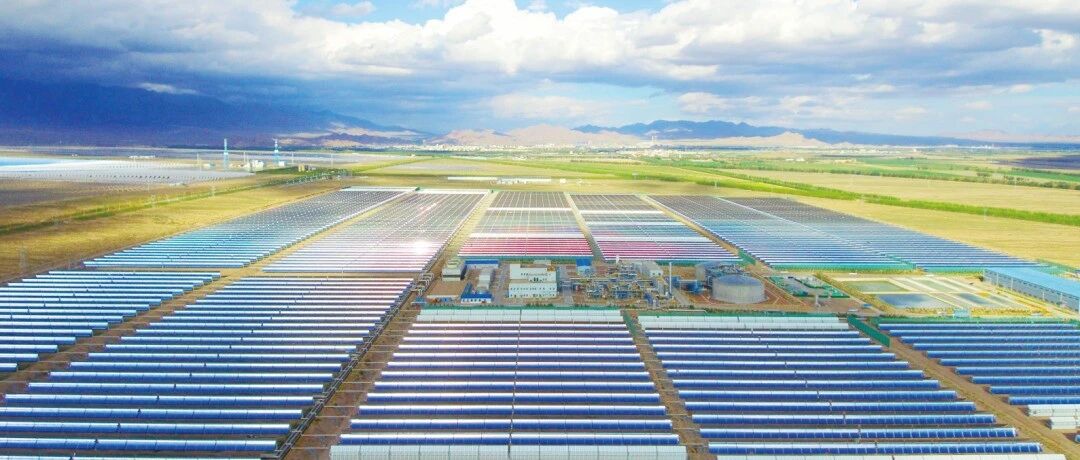
Core Viewpoint - The solar thermal power industry in China is rapidly developing, becoming a key player in supporting high proportions of renewable energy integration and ensuring the stability of the power system, particularly in the context of the "dual carbon" goals and the construction of a new power system [1][4][13]. Industry Development - As of September 2025, China's solar thermal power generation capacity reached 157,000 kilowatts, ranking third globally [3][7]. - The average annual compound growth rate of China's solar thermal power industry is 11.7%, significantly higher than the global average of 4.24% [3][7]. - The levelized cost of solar thermal power has decreased from 1.15 yuan per kilowatt-hour to approximately 0.6 yuan per kilowatt-hour, indicating a substantial improvement in economic viability [3][11]. Technological Advancements - China has mastered mainstream solar thermal technologies, including tower, trough, and Fresnel systems, with a domestic equipment localization rate exceeding 95% [3][11]. - The country has developed a comprehensive solar thermal power industry chain and has published over 40 relevant standards covering manufacturing, design, construction, and operation [11][14]. Strategic Importance - Solar thermal power is recognized as a stabilizing force in the energy system, effectively addressing challenges posed by high proportions of renewable energy sources [6][8]. - The National Energy Administration has emphasized the strategic role of solar thermal power in its recent policy documents, advocating for its integration as a regulatory power source [8][14]. Project Highlights - The Golmud 350 MW tower solar thermal project, currently under construction, is set to be the largest single-unit solar thermal project globally, expected to generate approximately 960 million kilowatt-hours of clean electricity annually [6][10]. - The successful operation of the 50 MW solar thermal demonstration project in Delingha has provided valuable experience for future large-scale projects [10][11]. Future Outlook - By 2030, global installed capacity for solar thermal power is projected to reach 22.4 million kilowatts, with about 10% of global electricity supply expected to come from solar thermal by 2050 [13]. - The industry is anticipated to transition from being a supplementary power source to a supportive power source as its economic viability and application scale continue to expand [11][15].

公用事业行业周报(2025.11.17-2025.11.21):用电高增有望延续,火电增速由负转正-20251123
Orient Securities· 2025-11-23 01:42
Investment Rating - The report maintains a "Positive" outlook on the utility sector, indicating a favorable investment environment for utility assets [7]. Core Insights - The high growth in electricity consumption is expected to continue, with a significant increase in electricity generation from thermal power, which has turned from negative to positive growth [10][19]. - The report highlights the need for further market reforms to support the integration of renewable energy into the power system, emphasizing the importance of pricing mechanisms for various electricity attributes [7]. - The report suggests that utility assets at low valuations are worth considering for investment, given their defensive characteristics in the current market environment [7]. Summary by Sections Electricity Consumption and Generation - In October 2025, total electricity consumption increased by 10.4% year-on-year, significantly higher than the previous month's growth of 5.9% [10]. - The growth in electricity consumption was driven by temperature factors and a low base from the previous year, with notable increases across various sectors [10]. - In October 2025, the generation from thermal power increased by 7.3% year-on-year, marking a recovery from previous declines, while hydropower generation saw a substantial increase of 28.2% [19]. Market Dynamics - The report notes that the coal prices at ports remained stable, while prices at production sites saw slight increases, indicating a stable supply environment [31]. - The average electricity market clearing price in Guangdong decreased by 31.8% year-on-year, reflecting market pressures [27]. Investment Recommendations - The report recommends focusing on utility stocks, particularly in thermal and hydropower sectors, due to their strong dividend potential and improving business models [7]. - Specific stocks mentioned for thermal power include Guodian Power (600795), Huadian International (600027), and Huaneng International (600011) [7]. - For hydropower, recommended stocks include Yangtze Power (600900) and Sichuan Investment Energy (600674) [7]. Performance Overview - The utility sector underperformed the broader market indices, with the Shenwan Utility Index declining by 4.3% during the week, slightly lagging behind the CSI 300 Index [56]. - Among sub-sectors, hydropower showed the least decline, while solar power experienced the most significant drop [58].