
中国海油

Search documents
“双碳”快报:2025年度上海产业绿色转型和发展十件大事
Xin Lang Cai Jing· 2026-02-03 12:47
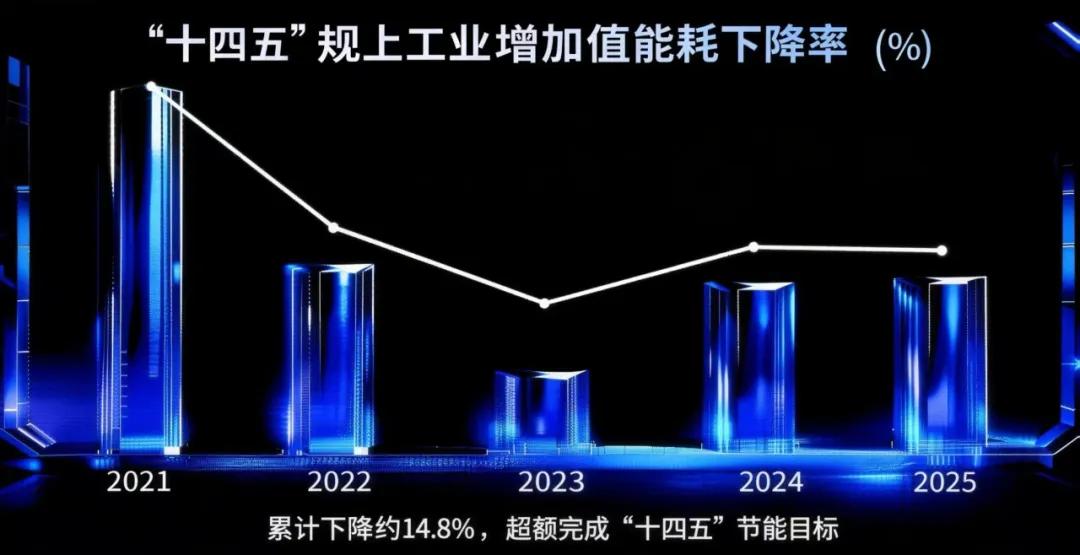
Group 1 - The core objective of the "14th Five-Year Plan" for the industrial communication sector in Shanghai is to achieve energy conservation and carbon reduction, with significant progress made in energy audits and diagnostics, resulting in a total energy saving of 125,000 tons of standard coal [1][3][21] - Shanghai has established a local carbon footprint accounting system and is advancing the construction of green and low-carbon supply chains, with over 160 companies completing carbon footprint reports [4][6][26] - By the end of the "14th Five-Year Plan," Shanghai has created 196 national-level green factories and 17 national-level green supply chain management enterprises, with a focus on zero-carbon manufacturing as an advanced form of green manufacturing [9][29][31] Group 2 - A new energy storage testing base has been established in collaboration with various institutions, aimed at bridging the gap between basic research and large-scale application [5][11][34] - The city is promoting a dual transformation of digitalization and greening, with numerous technologies compiled into a catalog to support the development of smart and green factories [6][13][35] - Policies have been introduced to optimize the business environment, allowing companies to access funding support without application, significantly reducing the cost of project submissions [7][16][37] Group 3 - The first "Green and Low-Carbon Exhibition" was held at the China Industry Fair, showcasing Shanghai's zero-carbon park construction and the latest developments in industrial green transformation [9][18][39] - The establishment of the Yangtze River Delta Offshore CCUS Industry Alliance aims to create a collaborative innovation system, with significant advancements in carbon capture technology [10][20][41]

油气开采板块2月3日跌0.7%,洲际油气领跌,主力资金净流入7651.72万元
Zheng Xing Xing Ye Ri Bao· 2026-02-03 09:10
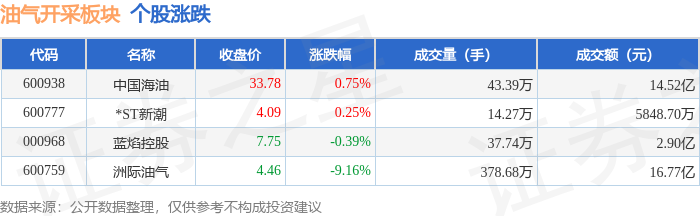
Core Viewpoint - The oil and gas extraction sector experienced a decline of 0.7% on February 3, with Intercontinental Oil and Gas leading the drop, while the overall market indices showed positive performance with the Shanghai Composite Index rising by 1.29% and the Shenzhen Component Index increasing by 2.19% [1]. Group 1: Market Performance - The oil and gas extraction sector's decline was primarily driven by Intercontinental Oil and Gas, which saw a significant drop of 9.16% in its stock price [1]. - The Shanghai Composite Index closed at 4067.74, reflecting an increase of 1.29%, while the Shenzhen Component Index closed at 14127.1, up by 2.19% [1]. Group 2: Individual Stock Performance - The closing prices and performance of key stocks in the oil and gas extraction sector included: - China National Offshore Oil Corporation (CNOOC) at 33.78, up by 0.75% with a trading volume of 433,900 shares and a transaction value of 1.452 billion [1]. - ST Xinchao at 4.09, up by 0.25% with a trading volume of 142,700 shares [1]. - Blue Flame Holdings at 7.75, down by 0.39% with a trading volume of 377,400 shares and a transaction value of 290 million [1]. - Intercontinental Oil and Gas at 4.46, down by 9.16% with a trading volume of 3,786,800 shares and a transaction value of 1.677 billion [1]. Group 3: Fund Flow Analysis - The oil and gas extraction sector saw a net inflow of 76.5172 million from institutional investors, while retail investors experienced a net outflow of 21.8852 million [1]. - Detailed fund flow for key stocks included: - CNOOC with a net inflow of 62.6866 million from institutional investors, but a net outflow of 5.11433 million from retail investors [2]. - Intercontinental Oil and Gas with a net inflow of 60.1285 million from institutional investors, but a net outflow of 2.04715 million from retail investors [2]. - ST Xinchao with a net inflow of 1.4906 million from institutional investors, but a net outflow of 336.70 thousand from retail investors [2]. - Blue Flame Holdings with a significant net outflow of 47.7885 million from institutional investors [2].




收盘速递 | 石化ETF(159731)上涨2.87%,近19天获得连续资金净流入
Xin Lang Cai Jing· 2026-02-03 08:20
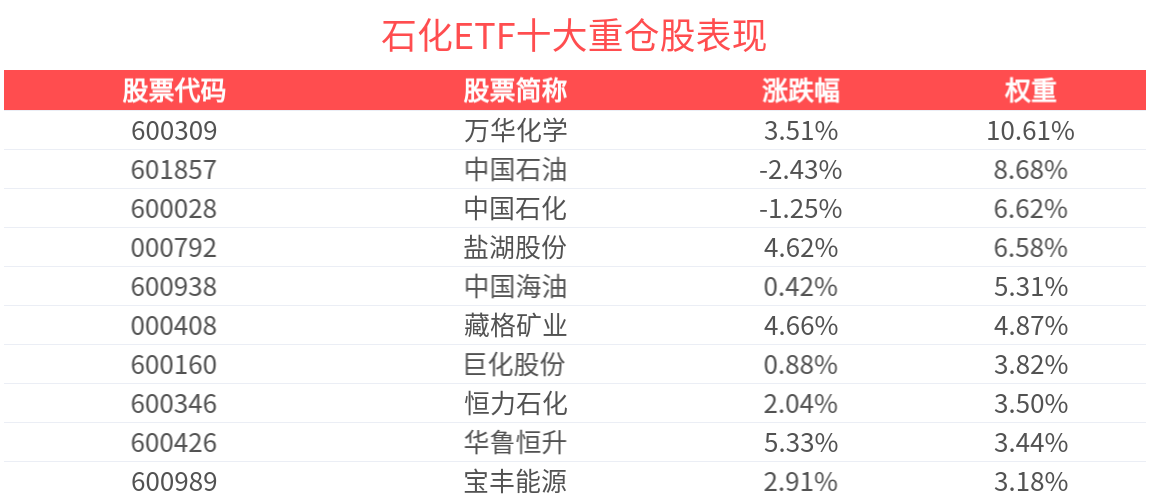
Core Viewpoint - The petrochemical sector is experiencing significant growth, as evidenced by the strong performance of the China Petrochemical Industry Index and related ETFs, indicating a positive market sentiment and investment opportunities in this industry [1][2]. Group 1: Index Performance - As of February 3, 2026, the China Petrochemical Industry Index (H11057) rose by 2.89%, with notable increases in constituent stocks such as Cangge Mining (+6.76%), Hualu Hengsheng (+6.17%), and Guangwei Composites (+5.94%) [1]. - The Petrochemical ETF (159731) increased by 2.87%, reaching a latest price of 1 yuan, and has accumulated a 6.21% rise over the past month [1]. Group 2: Liquidity and Trading Activity - The Petrochemical ETF recorded a turnover rate of 12.19% during the trading session, with a transaction volume of 200 million yuan, indicating active market participation [1]. - Over the past week, the average daily trading volume of the Petrochemical ETF was 329 million yuan [1]. Group 3: Fund Flows and Share Performance - The latest share count of the Petrochemical ETF reached 1.656 billion, marking a one-year high [2]. - The ETF has seen continuous net inflows for 19 days, with a peak single-day net inflow of 348 million yuan, totaling 1.413 billion yuan in net inflows [2]. Group 4: Return Metrics - Since its inception, the Petrochemical ETF has achieved a maximum monthly return of 15.86%, with the longest streak of consecutive monthly gains being 9 months and a total increase of 60.75% during that period [2]. - The average return during the months of increase is 5.59% [2]. Group 5: Index Composition - As of January 30, 2026, the top ten weighted stocks in the China Petrochemical Industry Index include Wanhua Chemical, China Petroleum, and Yilong Co., among others, collectively accounting for 55.71% of the index [2].
高股息策略配置性价比进一步提升,港股通红利ETF广发(520900)涨1.34%
Xin Lang Cai Jing· 2026-02-03 08:04
Group 1 - The core viewpoint of the articles emphasizes the increasing interest in high dividend yield stocks, particularly in the context of declining bond yields and the need for investors to seek higher returns in equity investments [1][2][3] - Long-term value in dividend investing is shifting from merely seeking high dividend rates to focusing on sustainable dividend capabilities, with a recommended expected return rate of over 3%-5% and a strong safety margin [1][2] - The performance of high dividend sectors has shown recovery, driven by strong demand for insurance funds and favorable pricing logic in cyclical high dividend sectors such as oil, steel, and coal [1][2] Group 2 - The market is experiencing challenges in restoring risk premiums, with significant volatility in cyclical products affecting market profitability, leading to a potential "small platform period" for investor risk appetite [2][3] - The insurance sector is seeing robust growth in new business, particularly in dividend insurance sales, which is increasing the allocation of investment funds towards long-duration assets [2][3] - The dividend strategy remains a key focus for equity investments, with pressures on cash investment returns expected to increase by 2026, reinforcing the importance of dividend strategies for companies [2][3] Group 3 - Looking ahead to 2026, dividend strategies are expected to continue serving as a stabilizing force in investment portfolios, with dividend assets showing lower valuation levels and volatility compared to other asset classes [3][9] - The Hong Kong Stock Connect Dividend ETF (520900) closely tracks the CSI National New Hong Kong Stock Connect Central Enterprise Dividend Index, which selects stable dividend-paying companies from the central state-owned enterprises [3][9] - The top five industries in the CSI National New Hong Kong Stock Connect Central Enterprise Dividend Index include oil and petrochemicals (28.63%), telecommunications (21.75%), coal (11.80%), transportation (10.47%), and public utilities (7.94%), indicating a strong value and defensive characteristic [4][10]

对硝基氯化苯、LLDPE等涨幅居前,建议关注进口替代、纯内需、高股息等方向
Huaxin Securities· 2026-02-03 07:45
Investment Rating - The report maintains a "Buy" rating for several companies including Xinyangfeng, Senqilin, Ruifeng New Materials, Sinopec, Juhua, Yangnong Chemical, CNOOC, Tongkun, Daotong Technology, and others [10]. Core Views - The report highlights significant price increases in products such as p-nitrochlorobenzene (up 27.91%) and LLDPE (up 24.72%), while products like natural gas and LDPE saw substantial declines [6][18]. - It suggests focusing on investment opportunities in areas such as import substitution, domestic demand, and high dividend stocks, particularly in light of fluctuating international oil prices [6][19]. - The report anticipates that international oil prices will stabilize around $65 per barrel in 2026, influenced by geopolitical uncertainties and expectations of price declines [19]. Summary by Sections Product Price Movements - Notable price increases this week include p-nitrochlorobenzene (27.91%), LLDPE (24.72%), and liquid chlorine (20.90) [18]. - Conversely, significant declines were observed in natural gas (-22.34%) and LDPE (-18.02%) [5][21]. Industry Performance - The chemical industry remains in a weak position overall, with mixed performance across sub-sectors due to past capacity expansions and weak demand [21]. - Specific sectors like the glyphosate industry are showing signs of potential recovery, with decreasing inventories and rising prices, suggesting a possible entry into a favorable cycle [21]. Investment Recommendations - The report recommends focusing on companies with strong competitive positions and growth potential, such as Ruifeng New Materials and Baofeng Energy [21]. - It emphasizes the importance of domestic chemical fertilizer and pesticide sectors, which are expected to maintain stable demand due to self-sufficiency [21]. - The report also highlights the benefits for major oil companies like Sinopec, which are expected to gain from lower raw material costs due to declining oil prices [21].




中国建行章更生等大案披露,最高检晒2025年反腐败成绩单
2 1 Shi Ji Jing Ji Bao Dao· 2026-02-03 07:33
Core Insights - The article highlights the significant progress made by the Chinese judicial system in combating corruption, with a notable increase in the number of cases accepted and prosecuted in 2025 compared to the previous year [2][3]. Group 1: Corruption Prosecution Statistics - In the first eleven months of 2025, over 27,000 individuals were accepted for prosecution for corruption-related offenses, with approximately 26,000 already prosecuted, marking increases of about 11% and 20% year-on-year respectively [2]. - The Supreme People's Procuratorate received 48 cases involving senior officials from the National Supervisory Commission, a 6% increase year-on-year, and guided local prosecutors to file charges against 54 individuals, up 28% [3]. - Over 1,300 judicial staff were investigated for crimes such as abuse of power and coercion, with over 1,000 cases leading to prosecution [4]. Group 2: Focus on Key Sectors - The prosecution of corruption in key sectors saw over 7,800 cases in finance, state-owned enterprises, energy, and construction, alongside 4,100 cases in healthcare and education, and 1,200 cases in local organizations [4]. - The Supreme Procuratorate emphasized collaboration in addressing corruption in areas affecting public welfare, such as housing, elderly care, and healthcare funds [4]. Group 3: Anti-Bribery Measures - The judicial system is committed to investigating both bribery and corruption together, with a 7.6% increase in the prosecution of bribery cases, totaling 2,982 individuals in 2025 [6]. - Efforts to recover illicit gains from bribery are being enhanced, with a focus on establishing mechanisms for asset recovery and correcting non-monetary benefits [6]. Group 4: International Cooperation and Asset Recovery - The "Sky Net" operation, aimed at pursuing fugitives and recovering assets, has seen significant results, with 12 individuals repatriated and 23 arrest warrants issued for those suspected of corruption abroad [7]. - The judicial system is actively involved in refining regulations for cross-border corruption and enhancing cooperation with law enforcement agencies [7]. Group 5: Addressing New Forms of Corruption - The emergence of new and hidden forms of corruption is a current challenge, prompting the judicial system to adapt its strategies and legal frameworks to effectively combat these issues [11]. - The development of guidelines for investigating new types of corruption is underway, focusing on evidence collection and legal definitions [11].
化工行业ETF易方达(516570)上涨3.32%,近12天获得连续资金净流入
Xin Lang Cai Jing· 2026-02-03 07:05
Core Viewpoint - The chemical industry ETF managed by E Fund has shown strong performance, with significant increases in both stock prices and fund inflows, indicating a positive market sentiment towards the chemical sector [1][2]. Group 1: Index Performance - As of February 3, 2026, the China Petroleum Industry Index (H11057) rose by 2.92%, with notable gains from stocks such as Cangge Mining (+6.53%) and Hualu Hengsheng (+6.38%) [1]. - The E Fund Chemical Industry ETF (516570) increased by 3.32%, reaching a latest price of 1.09 yuan [1]. - Over the past month, the E Fund Chemical Industry ETF has accumulated a total increase of 6.14% [1]. Group 2: Trading Volume and Liquidity - The E Fund Chemical Industry ETF had a turnover rate of 2.72% during the trading session, with a transaction volume of 42.92 million yuan [1]. - The average daily trading volume over the past week for the ETF was 162 million yuan [1]. Group 3: Fund Size and Shares - The latest size of the E Fund Chemical Industry ETF reached 1.537 billion yuan, marking a one-year high [1]. - The total number of shares for the ETF is now 1.453 billion, also a one-year high [1]. Group 4: Fund Inflows - The E Fund Chemical Industry ETF has seen continuous net inflows over the past 12 days, with a peak single-day inflow of 391 million yuan, totaling 1.357 billion yuan in net inflows [1]. - The average daily net inflow for the ETF is 113 million yuan [1]. Group 5: Top Holdings - As of January 30, 2026, the top ten weighted stocks in the China Petroleum Industry Index account for 55.71% of the index, including major companies like Wanhua Chemical and China Petroleum [2].
化工行业ETF易方达(516570)涨2%,机构:“三桶油”及油服有望强化资源领军地位
Sou Hu Cai Jing· 2026-02-03 06:09
Group 1 - The core viewpoint of the articles highlights the strong performance of the chemical industry ETF, with significant capital inflows and a bullish outlook for the "three oil giants" amid geopolitical tensions and resource competition [1][2] Group 2 - As of February 2, the chemical industry ETF managed by E Fund reached a new high in scale at 1.537 billion yuan and a total of 1.453 billion shares, indicating strong investor interest [1] - The ETF has seen continuous net inflows over the past 12 days, with a peak single-day inflow of 391 million yuan, totaling 1.357 billion yuan in net inflows [1] - The "three oil giants" are expected to maintain high capital expenditures and strengthen their positions in the natural gas market, which will support long-term growth despite oil price fluctuations [2] Group 3 - The domestic high upstream capital expenditure is expected to benefit oil service companies, with improved operational quality and performance even during periods of declining oil prices [2] - The E Fund chemical industry ETF offers a cost-effective investment option with a management and custody fee rate of 0.15% + 0.05% per year, lower than similar products in the petrochemical sector [2] - The ETF tracks a diversified index that includes leading companies in the petrochemical and basic chemical industries, providing exposure to both high dividend and high growth components [2]
欧洲部分装置有望加速退出,中国化工行业推行反内卷,石化ETF(159731)涨超2.4%
Sou Hu Cai Jing· 2026-02-03 06:04
Group 1 - The core viewpoint of the news highlights the strong performance of the petrochemical sector, with the China Petrochemical Industry Index rising by 2.41% and significant gains in individual stocks such as Zhejiang Longsheng and Guangwei Composites [1][2] - The Petrochemical ETF (159731) has seen a price increase of 2.46%, with a trading volume of 1.78 billion yuan and a turnover rate of 10.87%, indicating active market participation [1] - Over the past 19 days, the Petrochemical ETF has experienced continuous net inflows, totaling 14.13 billion yuan, with a peak single-day inflow of 3.48 billion yuan [1][2] Group 2 - The severe winter storm affecting the Gulf Coast of the United States has led to production disruptions among major chemical companies, resulting in a 3.1% increase in PVC prices and signs of supply tightness in some regions [2] - The outlook for the chemical industry in 2026 suggests a potential upward cycle due to supply constraints and recovering demand, with a recommendation to maintain a positive rating for the sector [2] - The top ten weighted stocks in the China Petrochemical Industry Index account for 55.71% of the index, with companies like Wanhua Chemical and China Petroleum being significant contributors [2][4]




能源化工成2026年稳增长支撑力量
Zhong Guo Hua Gong Bao· 2026-02-03 02:54
Group 1: Economic Growth Targets - Multiple provinces, including Shandong, Shaanxi, and Tianjin, have set economic growth targets for 2026, with a focus on the petrochemical industry as a key area of development [1][2][3] - Shandong aims for a 5% year-on-year increase in the added value of the petrochemical industry, with a target for high-end chemical revenue to account for approximately 60% of the sector [1] - Shaanxi plans to establish 12 trillion-level industrial chains and aims for strategic emerging industries to account for over 30% of its industrial output [2] Group 2: Key Projects and Initiatives - Shandong is advancing major projects such as Qilu Petrochemical and the Shandong Times New Energy Battery Base, with a focus on optimizing the petrochemical industry [1] - Shaanxi is developing fine chemicals and launching projects in clean energy and advanced materials, including the construction of hydrogen energy industry clusters [2] - Tianjin is focusing on green petrochemical projects and aims to establish a green chemical new materials base, with significant investments in technology innovation [3] Group 3: Industry Transformation and Sustainability - Shandong is promoting the transformation and upgrading of the petrochemical industry towards green and low-carbon development [1] - Shaanxi emphasizes the need for energy industry stability and the development of functional materials and biodegradable products [2] - Tianjin is committed to enhancing effective demand and improving project execution in the green chemical sector [3]