
AI产业投资

Search documents
宏观经济专题:基于原油价格的情景测算:通胀上行幅度与持续性或超预期
KAIYUAN SECURITIES· 2026-03-24 06:42
Group 1: PPI Trends - Recent PPI has risen significantly, from -3.6% in July 2025 to -0.9% in February 2026, with a month-on-month increase of 0.4% in January and February 2026, the highest since 2024[1] - The main contributor to the recent PPI increase is the non-ferrous metal smelting and rolling industry, contributing 0.36 and 0.32 percentage points to the month-on-month PPI in January and February 2026, respectively[1][12] - High-frequency data suggests that March PPI may reach approximately +0.6%, likely driven by the petrochemical chain due to rising oil prices[2][19] Group 2: Oil Price Impact - The cost transmission effect of oil is approximately five times greater than that of non-ferrous metals, indicating that oil price increases will have a more significant impact on downstream prices[4][38] - If oil prices rise to $160 per barrel, the PPI is expected to increase by around 5.0% year-on-year in 2026, with CPI at approximately 2.0%[5][46] - In a scenario where oil prices stabilize at $120 per barrel, the PPI is projected to be 3.4% year-on-year, with CPI at 1.6%[6][47] Group 3: Future Projections - The average month-on-month PPI from July 2025 to February 2026 is approximately 0.13%, indicating that maintaining a month-on-month PPI above -0.08% for the next 10 months could lead to a positive year-on-year PPI in 2026[3][32] - If geopolitical conflicts persist, the upward pressure on PPI may increase, further enhancing the duration and magnitude of inflationary trends[4][38] - In a scenario where oil prices decrease to $80 per barrel, the PPI is expected to be around 1.8% year-on-year, with CPI at 1.4%[6][48]
软银旗下“日版支付宝”据传3月登陆美股市场
Xin Lang Cai Jing· 2026-02-12 13:05
Core Viewpoint - SoftBank Group is preparing to push its QR code payment platform, PayPay, to go public in the U.S. stock market, aiming for a valuation exceeding 3 trillion yen (approximately 19.6 billion USD) [1] Group 1: IPO Details - PayPay plans to submit its prospectus to the U.S. Securities and Exchange Commission (SEC) this month, with the goal of listing on the Nasdaq in March [1] - The company intends to sell about 10% of its shares, adjusting the offering size based on demand to achieve a free float ratio of approximately 10%, which is a key threshold for inclusion in the Nasdaq-100 index [1] Group 2: Company Background - PayPay was established in 2018 as a joint venture between SoftBank Group's telecommunications subsidiary and Yahoo Japan (now known as LY Corp.), with both parties holding a combined 66% stake [1] - The remaining 34% is owned by SoftBank's Vision Fund 2 [1] Group 3: Market Position and Financial Performance - PayPay currently holds approximately 70% of the smartphone payment market in Japan [1] - The company achieved EBITDA profitability in the fiscal year 2023, marking a turnaround from previous losses [1]
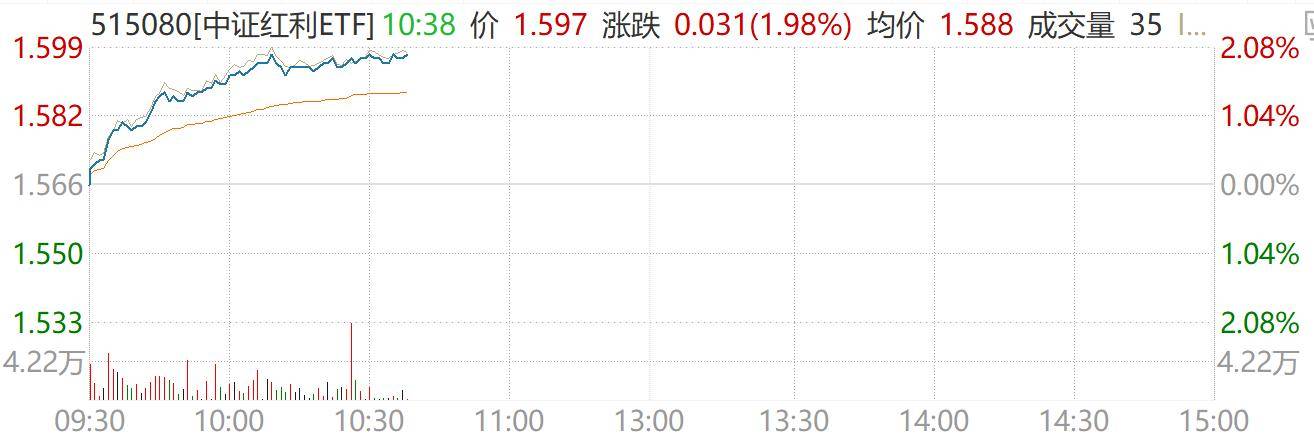
煤炭股集体大涨!兖矿能源、晋控煤业涨停,中证红利ETF(515080)盘中涨近2%、连续两日吸金近2亿
Sou Hu Cai Jing· 2026-02-04 02:55
Group 1 - The coal sector is experiencing a strong rally, with companies like Yanzhou Coal Mining and Jinkong Coal Industry hitting their daily price limits, and Lu'an Environmental Energy rising over 9% [1][3] - The China Securities Index reported that the China Securities Red Chip ETF (515080) saw a 1.98% increase, with a trading volume exceeding 1.8 billion yuan and a total scale of over 8.2 billion yuan [1][4] - Recent data indicates a net inflow of approximately 193 million yuan into the China Securities Red Chip ETF over the last two trading days, suggesting a shift towards risk-averse sentiment in the market [1][3] Group 2 - Reports indicate that some countries have suspended spot coal exports due to government-imposed production cuts, with production quotas reduced by 40% to 70% compared to 2025 levels as part of a plan to boost coal prices [3] - Analysts recommend focusing on coal-power integrated companies with stable cash flows and high dividend yields, as well as flexible stocks benefiting from a rebound in demand [3][4] - The coal supply-demand fundamentals are expected to improve due to production cuts and seasonal heating demand, with many coal companies maintaining a high dividend payout intention [3][4] Group 3 - The China Securities Red Chip ETF tracks the China Securities Red Chip Index, which selects 100 stocks with high cash dividend yields and consistent dividends for over three years, reflecting the overall performance of high-dividend stocks in the A-share market [4][5] - As of February 3, the index's latest dividend yield was 4.98%, significantly higher than the 10-year government bond yield of 1.82%, highlighting the value of high-dividend investments [5] - The index primarily focuses on traditional undervalued sectors such as banking and coal, which are characterized by low valuations and high dividend yields [5]



高股息策略配置性价比进一步提升,港股通红利ETF广发(520900)涨1.34%
Xin Lang Cai Jing· 2026-02-03 08:04
Group 1 - The core viewpoint of the articles emphasizes the increasing interest in high dividend yield stocks, particularly in the context of declining bond yields and the need for investors to seek higher returns in equity investments [1][2][3] - Long-term value in dividend investing is shifting from merely seeking high dividend rates to focusing on sustainable dividend capabilities, with a recommended expected return rate of over 3%-5% and a strong safety margin [1][2] - The performance of high dividend sectors has shown recovery, driven by strong demand for insurance funds and favorable pricing logic in cyclical high dividend sectors such as oil, steel, and coal [1][2] Group 2 - The market is experiencing challenges in restoring risk premiums, with significant volatility in cyclical products affecting market profitability, leading to a potential "small platform period" for investor risk appetite [2][3] - The insurance sector is seeing robust growth in new business, particularly in dividend insurance sales, which is increasing the allocation of investment funds towards long-duration assets [2][3] - The dividend strategy remains a key focus for equity investments, with pressures on cash investment returns expected to increase by 2026, reinforcing the importance of dividend strategies for companies [2][3] Group 3 - Looking ahead to 2026, dividend strategies are expected to continue serving as a stabilizing force in investment portfolios, with dividend assets showing lower valuation levels and volatility compared to other asset classes [3][9] - The Hong Kong Stock Connect Dividend ETF (520900) closely tracks the CSI National New Hong Kong Stock Connect Central Enterprise Dividend Index, which selects stable dividend-paying companies from the central state-owned enterprises [3][9] - The top five industries in the CSI National New Hong Kong Stock Connect Central Enterprise Dividend Index include oil and petrochemicals (28.63%), telecommunications (21.75%), coal (11.80%), transportation (10.47%), and public utilities (7.94%), indicating a strong value and defensive characteristic [4][10]



从“高股息”到“可持续分红”,新时代红利投资策略进化,中证红利ETF(515080)单日吸金1.8亿元
Sou Hu Cai Jing· 2026-02-03 07:17
Market Overview - The market has experienced increased volatility this week, with sectors such as liquor and food and beverage showing signs of rebound from low levels. The net inflow of 180 million yuan into the CSI Dividend ETF (515080) indicates a potential increase in market risk aversion [1] - As of the latest data, the CSI Dividend ETF (515080) has risen by 0.39% during the trading session, with several constituent stocks, including Zoomlion Heavy Industry and Conch Cement, seeing gains of over 3% [1] Dividend Strategy Insights - The latest dividend yield for the CSI Dividend Index is 5.02%, significantly higher than the 10-year government bond yield of 1.82%, highlighting the relative attractiveness of high dividend investments [2] - According to Guotai Junan Securities, the dividend strategy has underperformed the market due to a shift in investor focus towards growth sectors, particularly in AI-related industries. This trend is expected to continue into 2026, where dividend strategies will still serve as a stabilizing component in investment portfolios [3][21] Investment Recommendations - Long-term investment in high-dividend stocks is recommended, particularly those with a strong history of dividend payments and solid cash flow. The CSI Dividend ETF (515080) has outperformed its benchmark index by 71.28% since its inception, making it a viable option for investors seeking stable returns [5] - The focus of dividend investment should shift from merely seeking high dividend yields to ensuring sustainable dividend-paying capabilities, as this is crucial for long-term value [24] Performance Metrics - The CSI Dividend Index has shown a 40-day return difference of -7.04% compared to the Wind All A Index, indicating a recent recovery but still underperforming relative to the broader market [1][13] - Historical performance data shows that the CSI Dividend Index has delivered returns of 5.60% over the past year and 66.14% over the past decade, while the CSI Dividend Total Return Index has achieved 159.95% over the same period [8]

科技成长波动加剧,中证红利ETF(515080)单日吸金1.8亿元,机构:分红潜力是红利长期价值的关键
Sou Hu Cai Jing· 2026-02-03 06:25
Market Overview - The market has experienced increased volatility this week, with sectors such as liquor and food and beverage showing signs of rebound from low levels. The net inflow of 180 million yuan into the CSI Dividend ETF (515080) indicates a potential increase in market risk aversion [1] - As of the latest data, the CSI Dividend ETF (515080) has risen by 0.39% during the trading session, with notable gains in stocks like Zoomlion (over 7%) and several others exceeding 3% [1] Dividend Strategy Insights - The latest dividend yield for the CSI Dividend Index is 5.02%, significantly higher than the 10-year government bond yield of 1.82%, highlighting the relative attractiveness of high dividend investments [2] - According to Guojin Securities, the dividend strategy is expected to underperform the market by 2025 due to a shift in market focus towards growth sectors, particularly in AI-related investments. This indicates a transition in pricing drivers from dividend yields to growth rates [3] Future Outlook on Dividend Investments - Looking ahead to 2026, dividend strategies are still considered essential for many investors as a stabilizing component in their portfolios. The valuation levels of dividend assets in A-shares are currently the lowest, with relatively low volatility compared to other asset classes [4][21] - Long-term value in dividend investments should shift from merely seeking high dividend yields to focusing on sustainable dividend capabilities, as the potential for consistent dividends is crucial for long-term value [24] Performance Metrics - The CSI Dividend ETF (515080) has consistently outperformed its benchmark index since its inception, with a cumulative excess return of 71.28% over the benchmark since its establishment [5] - The performance of the CSI Dividend Index over the past five years has shown varied results, with annual returns of 13.37% in 2021, -5.45% in 2022, and 12.31% in 2024, indicating fluctuations in market conditions [26] Investment Strategy Recommendations - Huajin Securities recommends a "barbell" strategy that balances defensive and offensive investments. The defensive side should focus on essential consumer and service leaders with strong cash flows and dividend potential, while the offensive side should target sectors benefiting from policy catalysts and improving fundamentals [23] - Longjiang Securities emphasizes the need for a shift in focus towards dividend assets that can provide higher expected returns and safety margins, particularly in a declining bond yield environment [24]

一月还剩两个交易日 最近你赚钱了没?就看有没有踩中这条主线
Mei Ri Jing Ji Xin Wen· 2026-01-28 08:34
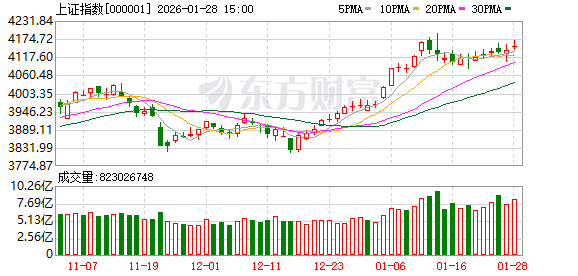
Market Overview - The A-share market showed mixed performance on January 28, with the Shanghai Composite Index rising by 0.27% to close at 4151.24 points, while the Shenzhen Component Index increased by 0.09% to 14342.89 points, and the ChiNext Index fell by 0.57% to 3323.56 points [2] - The total trading volume in Shanghai, Shenzhen, and Beijing reached 29.926 trillion yuan, an increase of 709 billion yuan compared to the previous day [2] - Over 1700 stocks rose, with more than 80 stocks hitting the daily limit up, while sectors such as photovoltaic equipment, medical devices, and aerospace saw declines [2] Sector Performance - The gold and non-ferrous metal sectors experienced significant gains, driven by rising product prices, particularly in gold, which reached a historical high of over $5200 per ounce [4] - The storage sector also benefited from increased demand for high-performance storage chips due to AI server consumption, with DDR5/DDR4 spot prices rising by 76% and 172% respectively compared to December [9] - Companies in the gold sector, such as Zijin Mining, are forecasting substantial profit increases, with Zijin Mining expecting a net profit of up to 52 billion yuan, a 62% year-on-year increase [9][10] Earnings Forecasts - As of January 27, 34 storage companies had disclosed earnings forecasts, with 19 reporting profitability. For instance, Baiwei Storage expects revenue of 10 to 12 billion yuan, a year-on-year increase of 49.36% to 79.23% [10] - The recent earnings forecasts align with the traditional trend of performance-driven market movements during the annual report season [12] Investment Strategy Insights - Analysts suggest that the traditional dividend stocks are losing appeal, with major banks like ICBC and CCB seeing declines of over 8% and 5% respectively [12][14] - The shift in market focus towards growth sectors, particularly those related to AI, indicates a potential change in investment strategies, moving from dividend yield to growth rate as the primary driver [16] - Despite the challenges faced by dividend stocks, they remain important for portfolio stability and risk reduction, with analysts recommending a structural shift in investment strategies for 2026 [17]
回望2025:有色/贵金属最值得关注的N个时刻
Sou Hu Cai Jing· 2026-01-01 00:18
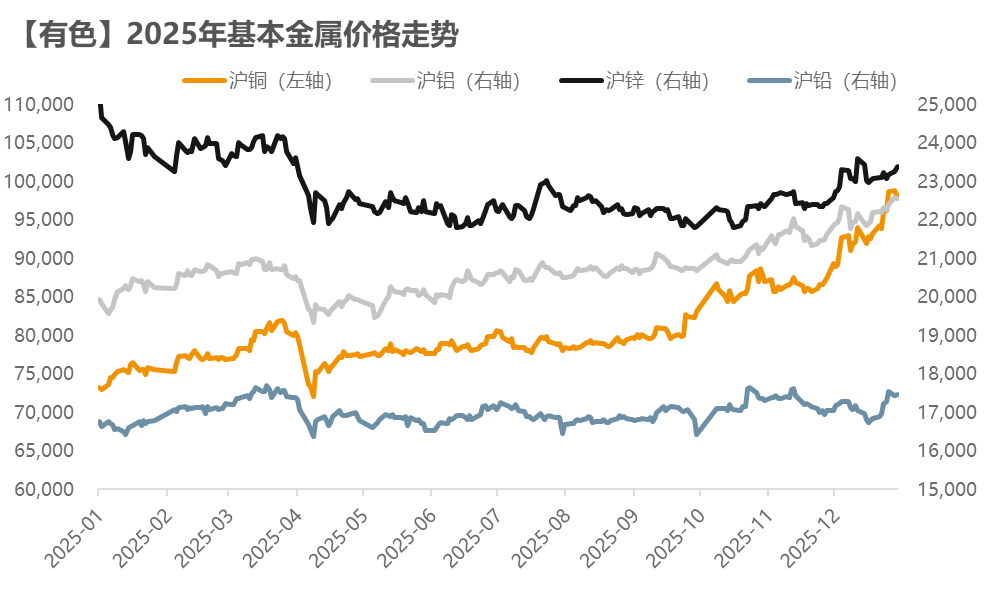
Core Insights - The year 2025 witnessed significant market movements in the non-ferrous and precious metals sectors, driven by geopolitical events and macroeconomic factors, leading to record price increases for gold and silver [3][4]. Copper Market - In late November to December 2025, copper prices surged, reaching historical highs of $12,960 per ton on the LME and over ¥100,000 per ton in Shanghai [5]. - The copper supply faced constraints due to structural issues, including declining resource grades and insufficient capital expenditure, alongside natural disasters [5]. - Demand for copper remained robust, driven by the dual forces of new energy and AI, leading to a three-phase price increase throughout the year [5]. - The investment strategy for 2026 suggests maintaining a focus on copper until mid-year, then diversifying into both copper and aluminum investments [5]. Aluminum Market - In early November 2025, aluminum prices rose sharply, driven by a significant increase in trading volume and a shift of capital from copper to aluminum [9]. - The rise in aluminum prices was supported by a tight supply situation and a growing belief in aluminum's long-term potential as a substitute for copper [9]. - The outlook for aluminum remains bullish, with expectations of a widening global primary aluminum deficit by 2026 [9]. Alumina Market - In July 2025, alumina prices experienced a notable increase despite a backdrop of oversupply, influenced by delayed market responses and macroeconomic sentiment [11]. - The market dynamics indicated a potential for further price declines in 2026, driven by cost pressures and competitive market conditions [11]. Zinc Market - In the fourth quarter of 2025, zinc prices began to rise due to domestic supply shortages and a shift in market dynamics towards replenishing inventories [13]. - The zinc market is transitioning from a bear market to a structural bull market, with expectations of a 2% increase in global zinc demand in 2026 [13]. Gold Market - From January to April 2025, gold prices surged due to geopolitical tensions and economic uncertainties, reaching $3,500 per ounce [17]. - The latter part of 2025 saw gold prices peak at $4,381 per ounce, driven by political pressures on the Federal Reserve and economic instability [22]. Silver Market - In late 2025, silver prices broke through a significant resistance level, reaching $80 per ounce, supported by high trading volumes and low domestic inventories [23]. - The price dynamics were characterized by strong investor interest and significant deviations from equilibrium price levels [23].
凯撒文化摘帽;《33 号远征队》获TGA年度游戏丨游戏周报
2 1 Shi Ji Jing Ji Bao Dao· 2025-12-15 11:11
Industry Highlights - The TGA 2025 awards concluded with "Light and Shadow: Expedition 33" by Sandfall Interactive winning nine awards, including Game of the Year and Best Narrative [1][2] - The Chinese game "Ming Chao" received the Player's Voice award at TGA 2025, marking another significant recognition for Chinese gaming [2] - In November 2025, 33 Chinese mobile game publishers made it to the global top 100 revenue list, collectively earning $1.95 billion, which accounts for 35.8% of the total revenue of the top 100 [3] - The esports industry in China is projected to generate revenue of 29.331 billion yuan in 2025, reflecting a year-on-year growth of 6.40% [9] Company Developments - Caesar Culture announced that its stock will resume trading without the ST designation starting December 11, 2025, after previously facing penalties for profit inflation [5] - Century Huatong disclosed its indirect investment in Moore Threads, with an estimated profit impact of 640 million yuan on its Q4 2025 net profit [6] - 37 Interactive Entertainment plans to invest up to $2 million in the Lighthouse Founders' Fund, which has a target size of $80 million, and has also acquired a 7.5% stake in Weihai Hanyuan Network [7] - Lingyoufang's action game "Shadow Blade Zero" is set to launch on September 9, 2026, showcasing a blend of dark martial arts and steampunk aesthetics [4] Regulatory Changes - Australia has enacted a strict law prohibiting users under 16 from owning social media accounts or accessing platforms like TikTok and Facebook, making it the first country to implement such a ban [8]


每日投行/机构观点梳理(2025-10-15)
Jin Shi Shu Ju· 2025-10-15 10:08
Group 1: Investment Sentiment - A majority of investors now consider "long gold" as the most crowded trade, with 43% of respondents favoring it over "long seven giants" at 39% [1] - Concerns about a global recession have dropped to the lowest level in two and a half years, with 33% of investors expecting a "no landing" scenario, a significant increase from 18% in September [2] - Morgan Stanley's CEO suggests that holding gold is a "semi-rational" choice in the current environment, indicating a potential price surge to $5,000 or $10,000 [3] Group 2: Economic Outlook - The expectation for a "soft landing" has decreased to a six-month low of 54%, down from 67% in September, while the "hard landing" expectation has slightly decreased to 8% [2] - The weakening confidence in the U.S. system is identified as a primary reason for the dollar's decline, with concerns about the independence of central institutions [4] Group 3: Market Dynamics - The UK labor market shows signs of slowing wage growth and a slight increase in unemployment, which supports further rate cuts by the Bank of England [5] - Standard Chartered Bank predicts that the EUR/USD exchange rate may drop to 1.13 by mid-2026 due to ongoing economic challenges and potential further rate cuts by the European Central Bank [7] - The British pound's downside potential is limited as the market has already priced in negative expectations [8] Group 4: Sector Analysis - Huatai Securities emphasizes the strategic opportunity in the brokerage sector, citing favorable policies and market conditions for growth [9] - The chemical industry is experiencing weak price differentials, indicating a "peak season not booming" scenario, but potential improvements in profitability are anticipated [10] - CITIC Securities highlights the attractiveness of dividend stocks, suggesting that Q4 2025 may be a key time for positioning [11] Group 5: Regulatory Impact - The introduction of "reporting and operation integration" in non-auto insurance is expected to optimize expense ratios and improve profitability for leading insurance companies [12]


