
今世缘

Search documents
研报掘金丨东方证券:维持今世缘“买入”评级增长确定性有望恢复
Xin Lang Cai Jing· 2025-11-19 09:09
Core Viewpoint - The report from Dongfang Securities indicates that external demand for liquor is expected to improve on a month-on-month basis, suggesting a potential bottoming out of performance for Jiushi Yuan [1] Group 1: Market Demand - The demand for liquor is gradually finding a bottom due to the ongoing deleveraging of households and enterprises, as well as the transformation of the consumer structure in the liquor market [1] - The report highlights that the liquor demand is becoming more stable, which is a positive sign for the industry [1] Group 2: Economic Factors - The analysis considers various factors such as the prices of major asset classes and the credit environment, which could influence the liquor market [1]




东方财富证券:食品饮料加速出清 板块投资价值有望提升
智通财经网· 2025-11-19 08:11
Core Viewpoint - The report from Dongfang Caifu Securities indicates that the supply-demand mismatch in 2024 will lead to deteriorating industry operations, but as companies gradually lower growth targets to adapt to demand in 2025, this will alleviate supply-demand conflicts and enhance investment value in the sector. The expectation is for positive growth in financial statements by the second or third quarter of next year [1]. Group 1: Industry Overview - In Q1-Q3 2025, under weak demand, industry revenue showed slight growth while profits were under pressure, with the food and beverage sector experiencing a revenue decline of -4.9% and a net profit drop of -14.6% in Q3 2025 [1]. - Traditional consumption is hindered by slow recovery in consumption scenarios, with the liquor sector, particularly baijiu, facing accelerated clearance and weak performance in beer demand [1]. - Sectors like snacks and beverages that have opportunities for new product launches and channel expansion continue to show positive momentum, with products like konjac experiencing rapid growth since 2024 [1]. Group 2: Category Analysis and Outlook - **Baijiu**: The industry is accelerating clearance with clearer turning points. In Q3 2025, overall revenue and net profit declined by -18.4% and -22.2% respectively, but demand is expected to improve, stabilizing prices and leading to better financial performance by Q2 2026 [2]. - **Low-Alcohol Beverages and Beer**: Beer revenue and net profit grew by +2.0% and +11.8% respectively in Q3 2025, with cost advantages continuing. Demand recovery is anticipated in 2026, influenced by changes in retail channels [3]. - **Dairy Products**: The raw milk sector is gradually bottoming out, with demand expected to stabilize and prices recover. The low-temperature fresh milk segment is projected to grow, replacing some ambient milk [4]. - **Snacks**: Categories like konjac and oats are expected to maintain high growth, with a shift towards emerging channels and significant growth in instant retail [4]. Group 3: Investment Recommendations - **Baijiu**: Focus on companies that are clearing inventory early and have strong brand momentum, such as Gujing Gongjiu and Luzhou Laojiao, as well as those with strong product matrices and channel capabilities like Moutai and Wuliangye [5]. - **Low-Alcohol Beverages**: Highlighting head companies like Kweichow Moutai and Qingdao Beer, which are expected to benefit from demand recovery [5]. - **Dairy and Snacks**: Emphasizing the potential for recovery in the raw milk sector and recommending companies like Yili and Mengniu, as well as snack companies that can leverage product and channel adjustments [6].

加速出清行业寻底,预期先行板块启动
East Money Securities· 2025-11-19 06:56
Investment Highlights - The report indicates a clear turning point for the food and beverage industry following accelerated clearance, with expectations for leading sectors to initiate recovery [2][7] - The overall revenue for the food and beverage sector showed a slight increase of 0.2% year-on-year, while net profit decreased by 4.6% in the first three quarters of 2025 [18][20] - In Q3 2025, the sector experienced a significant decline, with revenues and net profits dropping by 4.9% and 14.6% respectively [18][20] Sector Review 1. Overall Review - The food and beverage sector faced continuous pressure and adjustments, with traditional consumption accelerating clearance while new consumption trends continued to grow [18][20] - The white liquor segment saw a revenue decline of 18.4% and a net profit decline of 22.2% in Q3 2025, indicating significant pressure on the sector [20][22] - In contrast, sectors like snacks and beverages maintained double-digit growth due to product and channel innovations [20][21] 2. White Liquor - The white liquor industry is undergoing accelerated clearance, with varying rhythms among companies. The demand has weakened, leading to noticeable declines in revenue and net profit for most companies [22][25] - High-end liquor maintained some growth, with Moutai achieving a revenue increase of 0.3% in Q3 2025, while other brands like Wuliangye saw declines exceeding 50% [23][25] - The report emphasizes the importance of supply-demand balance and pricing as key indicators for the industry's recovery [22][23] 3. Low-Alcohol Beverages and Drinks - The beer segment showed stable performance with a revenue increase of 2.0% and a net profit increase of 11.8% in the first three quarters of 2025 [21][22] - The report highlights the potential for recovery in demand for low-alcohol beverages and drinks, driven by health trends and product innovation [22][23] 4. Consumer Goods - The dairy sector is gradually stabilizing, with upstream supply clearing and downstream processing demand increasing, leading to a potential balance in the raw milk cycle [31][33] - The snack sector, particularly the konjac and oat categories, is expected to maintain high growth rates, supported by the expansion of new retail channels [31][36] - The report notes that the overall demand for dining remains weak, but specific segments like Western-style condiments and frozen baking show structural opportunities [31][33] Investment Recommendations - The report suggests focusing on companies that are early in their clearance processes and have strong brand momentum, such as Gujing Gongjiu and Luzhou Laojiao [11][12] - For low-alcohol beverages, attention is drawn to leading companies like Kweichow Moutai and Tsingtao Brewery, which are expected to benefit from demand recovery [11][12] - In the consumer goods sector, companies with strong performance and cost advantages, such as Yili and Modern Dairy, are recommended for investment [11][12]



今世缘(603369):基础单品发力,状态有望趋稳
Orient Securities· 2025-11-18 14:12
Investment Rating - The report maintains a "Buy" rating and lowers the target price to 48.79 CNY from the previous 51.85 CNY [3][5] Core Views - The company is expected to face temporary pressure on its core products in 2025, with external demand likely remaining at a low point in 2026. The earnings per share (EPS) forecasts for 2025-2027 are adjusted to 2.29 CNY, 2.32 CNY, and 2.77 CNY respectively, down from previous estimates of 3.70 CNY and 4.40 CNY for 2025 and 2026 [3] - The report highlights that external demand is expected to improve sequentially, indicating a potential bottoming out of performance. The company maintains a competitive advantage during the adjustment period, with its products performing better than the market average [10] - The report emphasizes the company's focus on core products and its competitive advantages, suggesting that as the demand stabilizes, the company could see a recovery in growth driven by market share gains [10] Financial Summary - The projected revenue for 2025 is 10,289 million CNY, reflecting a year-on-year decline of 10.9%. The revenue is expected to recover to 11,584 million CNY by 2027, with a growth rate of 12.5% [8] - The gross margin is projected to be 75.0% in 2025, slightly improving to 76.7% by 2027. The net profit margin is expected to be 27.8% in 2025, increasing to 29.8% by 2027 [8] - The report provides a comparison of the company's valuation metrics with peers, indicating a dynamic price-to-earnings (PE) ratio of 21X based on the 2026 EPS [12]
单季净利最多降92.6%,白酒十年最差三季报如何解读?
凤凰网财经· 2025-11-18 13:52
Core Viewpoint - The Chinese liquor industry is experiencing its worst quarterly performance in a decade, with many companies reporting significant declines in revenue and profit due to insufficient market demand and changing consumer preferences [2][4][8]. Group 1: Quarterly Performance - The liquor industry has reported its most severe quarterly results, with some companies experiencing net profit declines of up to 92.6% [4]. - For instance, Kuaizi Liquor's third-quarter revenue dropped by 46.2%, with a net profit decrease of 92.6%, while Laobaigan Liquor saw declines of 47.6% in revenue and 68.5% in net profit [4]. - Other regional liquor companies like Jiuziyuan and Yingjiagong Liquor also reported significant revenue and profit declines, with Jiuziyuan's revenue down 26.8% and net profit down 48.7% [4]. Group 2: Reasons for Poor Performance - The overall consumption market environment has changed, particularly affecting high-end dining and business banquets, which are crucial for liquor sales [8][9]. - Consumers are becoming more pragmatic, moving away from high-end consumption and preferring more casual dining experiences, leading to a decline in liquor consumption in traditional settings [9]. - The younger generation's drinking habits are shifting, with a preference for lower-alcohol beverages and a rejection of traditional drinking culture, which has marginalized high-alcohol liquor [11]. Group 3: Market Dynamics - Previous price increase strategies have backfired, leading to inflated prices that exceed consumer willingness to pay, resulting in reduced sales and increased inventory pressure [13]. - Companies are now facing challenges in clearing excess inventory, which has led to price cuts that further compress profit margins and damage brand image [13]. Group 4: Future Strategies - Liquor companies must adapt to market changes by redefining their target consumer groups and focusing on family, youth, and female consumers [15]. - There is a need for innovation in product development, emphasizing lower-alcohol, healthier, and more fashionable options to appeal to modern consumers [15]. - Marketing strategies should shift from channel-driven to consumer-driven approaches, utilizing digital platforms to engage younger consumers and build brand loyalty [15].

产品“拥挤”、利润空间低 光瓶酒新生态重构进行时
Bei Jing Shang Bao· 2025-11-18 13:50
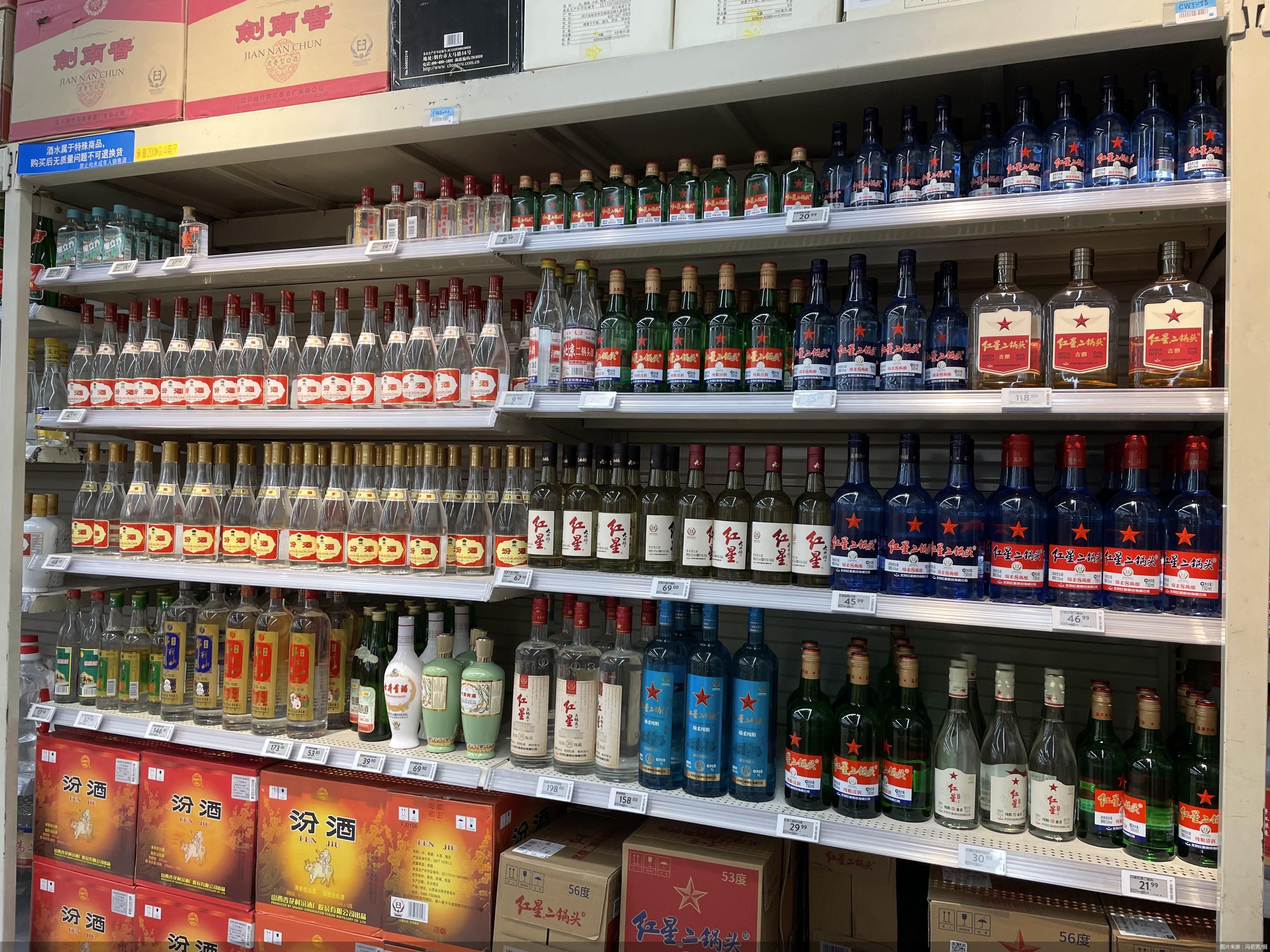
Core Insights - The light bottle liquor market is becoming one of the hottest segments in the liquor industry, with a growing number of new products entering the market while profit margins remain challenging [1][5][8] - The competition in the light bottle liquor sector is intensifying, leading to a potential reshuffling of market dynamics as new consumption logic and ecosystems emerge [1][10] Market Dynamics - Major brands in the light bottle liquor market include Niulanshan, Hongxing, Fenjiu, and Tuopai, with a significant focus on the 50 yuan price range [2][5] - Approximately 30% of light bottle liquor products are priced below 40 yuan, 50% between 40-100 yuan, and only 20% above 100 yuan [2] Competitive Landscape - The entry of numerous participants into the light bottle liquor market is driven by the contraction of high-end liquor consumption and a shift towards mass-market consumption [6][7] - Retailers are also entering the light bottle liquor space, with Walmart and Hema launching their own products, indicating a crowded market [6][7] Growth Potential - The light bottle liquor market is projected to exceed 150 billion yuan in 2024, with a compound annual growth rate of 17%, significantly outpacing the overall industry [7][8] - Companies like Shanxi Fenjiu are seeing substantial revenue growth, with the "other liquor" category, including light bottles, expected to reach 93.42 billion yuan in 2024 [7] Profitability Challenges - Despite the market's growth, light bottle liquor products face low profit margins, with many products below 50 yuan having gross margins of 40% or less, compared to the industry average of 67.32% [9][10] - The intense competition and low pricing strategies may lead to the elimination of some smaller liquor companies [9] New Ecosystem Development - The light bottle liquor market is transitioning from a low-price volume strategy to a focus on quality, creating a new industry ecosystem and pricing structure [10][11] - High-end light bottle products are becoming increasingly important, with a significant shift in consumer preferences towards products priced between 50-100 yuan [10][11] Marketing Evolution - The marketing strategies for light bottle liquor are evolving from traditional promotional tactics to more sophisticated, systematized approaches that emphasize brand and digital marketing [12] - A comprehensive and refined marketing management system is essential for the future development of light bottle liquor brands [12]
从A股十余家白酒上市公司,看市场这几年所发生的变化
Sou Hu Cai Jing· 2025-11-18 09:56
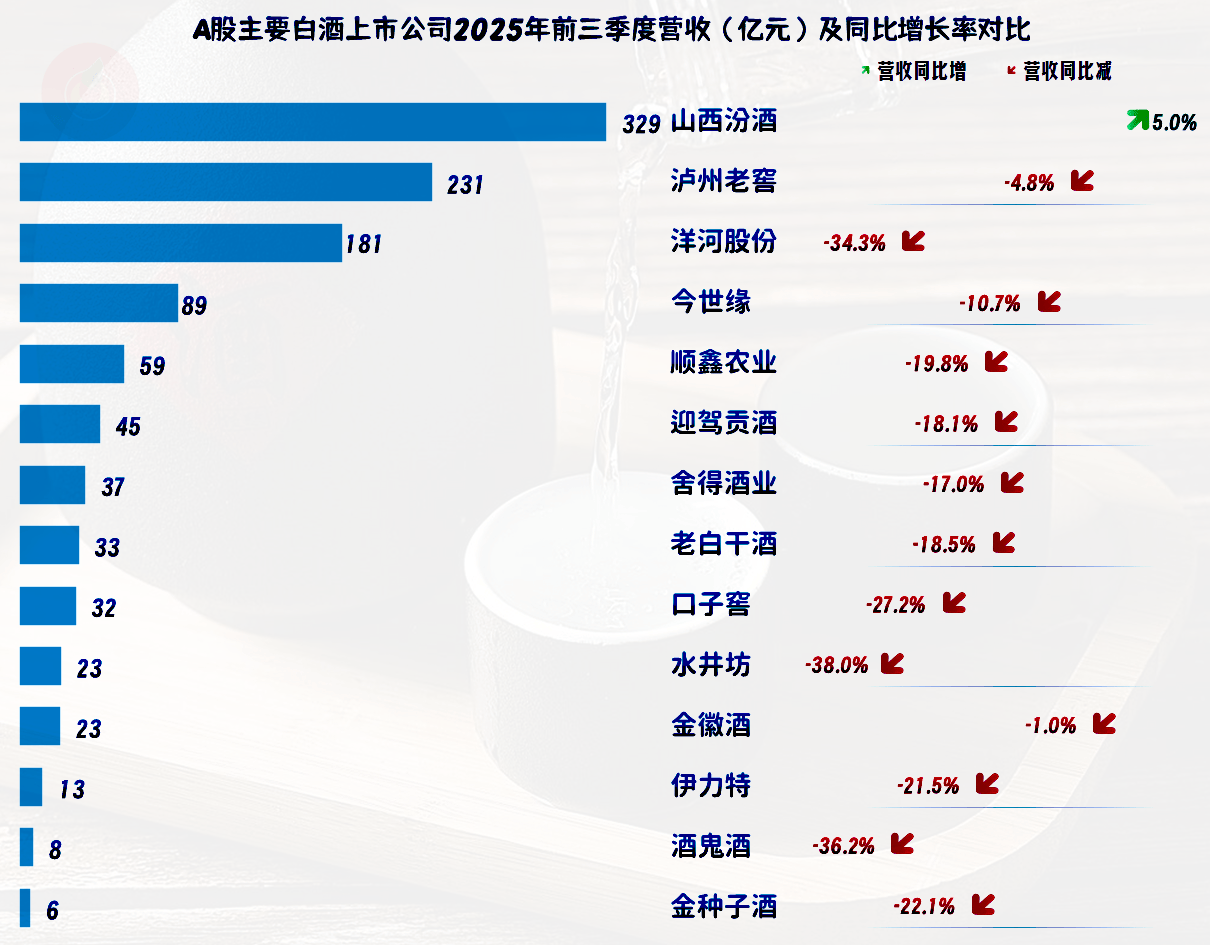
Core Insights - The overall trend in the liquor industry is a decline in revenue for most companies, with only Shanxi Fenjiu showing growth in the first three quarters of 2025 [3][5] - The top companies are likely to consolidate resources, leading to a more pronounced market share for larger firms [3][5] Revenue Comparison - Among the 14 liquor companies analyzed, only Shanxi Fenjiu experienced year-on-year growth, while 13 others saw declines, with significant drops exceeding 30% for brands like Shui Jing Fang, Jiu Gui Jiu, and Yanghe [3][4] - The revenue of the 14 companies increased from 955.4 billion to 1,536.3 billion from 2020 to 2024, marking a growth of 60.8%, with the largest three companies growing by 85.7% [5] Profitability Analysis - In terms of net profit, only Shanxi Fenjiu showed a slight increase, while the other 13 companies experienced declines, with some facing significant losses [6][7] - The net profit of the 14 companies grew by 82.6% over four years, outpacing revenue growth by over 20 percentage points [7][8] Market Dynamics - The concentration of profits is increasingly skewed towards larger companies, with the top three accounting for 75% of net profits by 2024, up from 70.1% in 2020 [8][12] - Smaller companies are struggling, with the smallest three seeing a 2.5% decline in net profit over four years, while the smallest five grew by only 36% [5][8] Margin and Efficiency - The average gross margin for the liquor companies was 65.7% in the first three quarters of 2025, showing a slight increase from 65.1% in 2020 [11][12] - The annualized return on equity decreased from 18% in 2020 to 12.3% in 2025, indicating a decline in capital efficiency despite increased net assets [12][10] Future Outlook - The industry faces challenges similar to those in real estate, with potential downward pressure on smaller brands as market conditions worsen [15][12] - There is speculation about the sustainability of high-end liquor pricing, with concerns that excessive price increases could alienate consumers [13][15]

单季净利最多降92.6%,白酒十年最差三季报如何解读?
Di Yi Cai Jing· 2025-11-18 06:47
Core Viewpoint - The Chinese liquor industry is experiencing its worst quarterly performance in a decade, with many companies reporting significant declines in revenue and profit due to insufficient market demand and changing consumer preferences [2][4]. Group 1: Financial Performance - The third-quarter financial reports of liquor companies show drastic declines, with some companies experiencing net profit drops of up to 92.6% [2][3]. - For instance, Kuozi Jiao reported a 46.2% drop in revenue and a 92.6% decline in net profit for the third quarter, while Laobai Gan Jiu saw declines of 47.6% in revenue and 68.5% in net profit [2][3]. - Even previously stable regional liquor companies like Jinshiyuan and Yingjiagong Jiu reported revenue declines of 26.8% and 20.8%, respectively [3]. Group 2: Market Challenges - The liquor industry is facing unprecedented challenges, primarily due to changes in the overall consumption market environment, particularly in high-end dining and business banquets, which have historically been significant for liquor sales [4][5]. - The shift in consumer behavior towards more practical and cost-effective dining experiences has led to a decline in high-end liquor consumption [5]. - Young consumers are increasingly rejecting traditional drinking culture, preferring lighter alcoholic beverages and more casual social experiences, which has further marginalized high-alcohol liquor [6]. Group 3: Strategic Responses - Liquor companies need to adapt to market changes by redefining their target consumer groups, focusing on family, young, and female consumers, and developing lower-alcohol, healthier, and more fashionable products [7][8]. - A shift in marketing strategies from "channel-driven" to "consumer-driven" is essential, utilizing digital tools like social media and live-streaming to connect with younger consumers [8]. - Companies should embrace innovation and consumer-centric approaches to revitalize the liquor industry and navigate through current challenges [8].

吃喝板块大涨!食品ETF(515710)单日吸金5000万!机构:食饮需求稳健龙头业绩可期
Xin Lang Ji Jin· 2025-11-18 01:59
Core Insights - The Food ETF (515710) showed strong performance with a 0.96% increase and a trading volume of 13.23 million yuan as of November 18 [1] - Key stocks such as Yili, Gujing Gongjiu, and Yangyuan Beverage performed well, with increases of 2.42%, 1.93%, and 1.38% respectively, while Jinhe Industrial, Yanjinpuzi, and Jindawei saw declines of 2.36%, 1.85%, and 1.51% [1] - The National Bureau of Statistics reported a 0.2% year-on-year increase in CPI for October, with core CPI expanding to 1.2% for six consecutive months, indicating a clear recovery trend in consumer demand [1] - Zhongyin International Securities suggested focusing on leading companies in frozen foods and condiments driven by the recovery of dining consumption scenarios, while Hualong Securities pointed out structural opportunities in high-end liquor and regional leading enterprises during the adjustment period of the liquor industry [1] - Ping An Securities noted stable performance in the food and beverage sector in Q3, with public funds increasing holdings by 360 million shares, while private equity and insurance funds also saw slight increases [1] - Shenwan Hongyuan Securities highlighted the steady demand in the food and beverage industry, with overall profitability stable and leading companies achieving growth through product structure optimization and refined channel operations [1] Company and Industry Summary - The Food ETF and its linked funds passively track a specific food index, with top ten weighted stocks including Kweichow Moutai, Wuliangye, Yili, and others [2] - The overall capital inflow in the food and beverage sector is moderate, with balanced market attention [1]
江苏今世缘酒业股份有限公司关于召开2025年第三季度业绩说明会的公告
Shang Hai Zheng Quan Bao· 2025-11-17 20:39
Core Viewpoint - The company, Jiangsu Jinshiyuan Liquor Co., Ltd., is set to hold a third-quarter performance briefing on November 26, 2025, to discuss its operational results and financial status for Q3 2025, allowing investors to engage in interactive communication [2][3][4]. Group 1: Meeting Details - The performance briefing will take place on November 26, 2025, from 16:00 to 17:00 [4]. - The meeting will be held at the Shanghai Stock Exchange Roadshow Center and will be conducted in an online interactive format [4][5]. - Investors can submit questions from November 19 to November 25, 2025, before 16:00, through the Roadshow Center website or via the company's email [5]. Group 2: Participants - Key participants in the meeting will include the Chairman and General Manager, Mr. Gu Xiangyue, and other senior executives such as the Vice General Manager and Chief Financial Officer, Mr. Wang Weidong [4]. - Independent directors and committee members will also be present to address investor inquiries [4]. Group 3: Investor Participation - Investors can join the performance briefing online on the specified date and time, with the opportunity to have their questions answered in real-time [4][5]. - After the meeting, the details and main content of the briefing will be available for review on the Roadshow Center website [5].