
华润啤酒

Search documents
300291,重大资产重组,即将停牌
Zhong Guo Ji Jin Bao· 2025-12-15 15:01
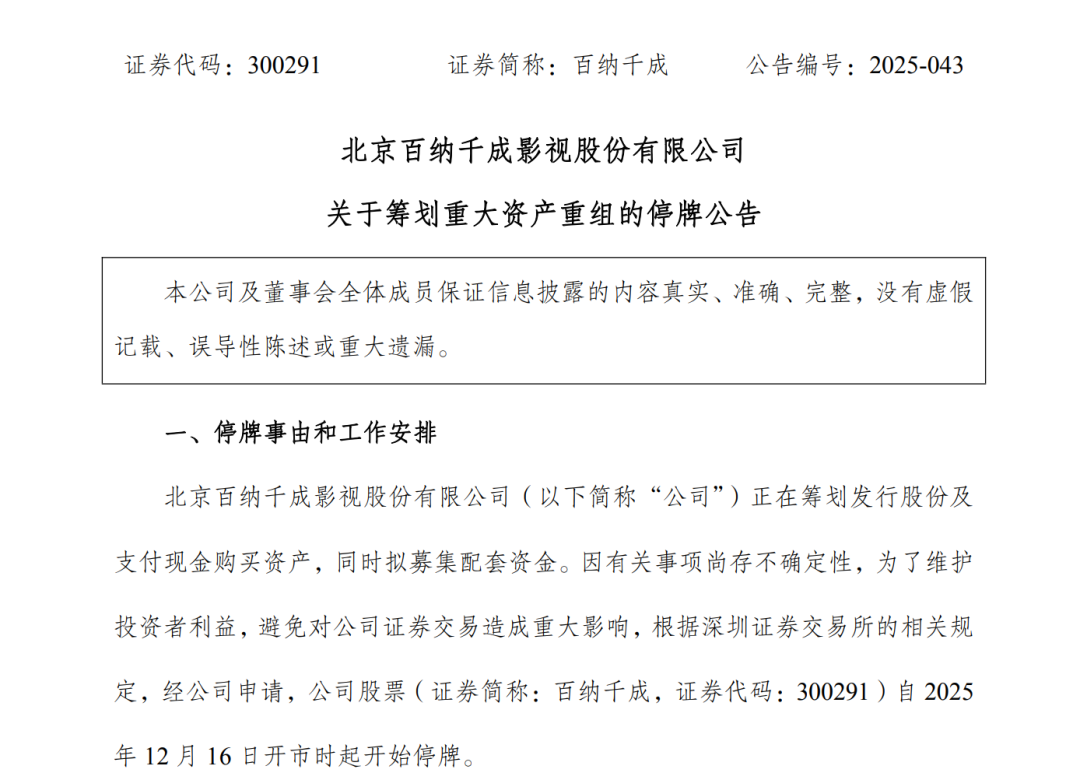
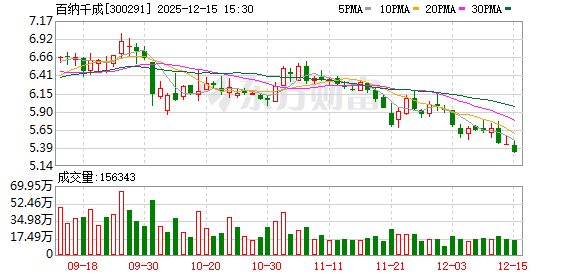
Core Viewpoint - The company Baina Qiancheng (stock code: 300291) is planning a significant asset restructuring to transition into the AI sector by acquiring 100% equity of Xiamen Zhonglian Century Co., Ltd. [1][3] Group 1: Acquisition Details - Baina Qiancheng announced on December 15 that it is in the process of planning to purchase 100% equity of Zhonglian Century and raise supporting funds through share issuance and cash payment [1][3] - The transaction is expected to constitute a major asset restructuring, with the company's stock being suspended from trading starting December 16 [1][3] - The company has signed a letter of intent for equity acquisition with some major counterparties and is currently in discussions with shareholders of the target company [3] Group 2: Target Company Overview - Zhonglian Century, established in 2013, is an AI and big data-driven technology enterprise headquartered in Xiamen, with branches in multiple locations including Beijing, Hong Kong, and Thailand [3] - The company has developed a comprehensive service model that includes three core business systems: one-stop smart marketing solutions, AI application scenario solutions, and digital channel construction [3] - Zhonglian Century has provided smart transformation services to over 3,000 industry clients across sectors such as telecommunications, finance, and e-commerce [3] Group 3: Baina Qiancheng's Business Context - Baina Qiancheng, formerly known as Hualu Baina, was established in 2002 and went public in 2012, but has seen a significant decline in its traditional film and television business [8] - The company has attempted multiple business transformations, including ventures into cultural tourism, marketing, and IP operations, but has not achieved satisfactory results [9] - For the first half of 2025, the film business revenue was only 1.607 million yuan, a decrease of 70.68%, accounting for less than 12% of total revenue [9] Group 4: Financial Performance - In the first three quarters of 2025, Baina Qiancheng's performance continued to deteriorate, with revenue of 177 million yuan, a year-on-year decline of 73.43%, and a net profit attributable to shareholders of -67.54 million yuan, with losses expanding [12] - As of December 15, the company's stock price was 5.33 yuan per share, with a total market capitalization of 5.02 billion yuan [12]



大别山红色文化培训基地在迎驾学院揭牌;华涛率队调研澳大利亚市场;酒鬼酒打造爱情主题街区
Sou Hu Cai Jing· 2025-12-15 14:56
Group 1: Cultural and Educational Initiatives - The Dabie Mountain Red Culture Training Base was inaugurated at Yingjia College, aiming to integrate local resources, academic expertise, and corporate strength to create a comprehensive platform for red education [1] - The base is expected to serve as a model for red culture inheritance and political education, contributing to the revitalization of the old revolutionary areas [1] Group 2: Market Expansion and Strategic Initiatives - Huatao, Vice Chairman and General Manager of Wuliangye, led a team to explore new cooperation models and market opportunities in Australia, focusing on adapting to local drinking habits and enhancing channel layouts [1] - This initiative aligns with Wuliangye's 2025 marketing strategy, emphasizing the importance of on-ground insights for channel development in the Oceania market [1] Group 3: Leadership Changes - Li Qiang has been appointed as the new Chairman of Yili Te, following the resignation of Chen Zhi due to retirement age, marking a leadership transition within the company [2] Group 4: Product and Facility Developments - The Xijiu Tank Storage Center in Guangzhou was officially opened, featuring a storage capacity for approximately 3,000 tanks of liquor, designed to enhance cultural experiences and social interactions [3] - The center promotes two main products, Tank Storage No. 1 and No. 2, each with a capacity of 25 liters [3] Group 5: Innovative Marketing Strategies - Jiugui Liquor has launched China's first love-themed street in Changsha, collaborating with a local media outlet to create a unique social space for young people [4] Group 6: Strategic Vision for Future Growth - Luzhou Laojiao plans to advance its ecological chain strategy during the 14th Five-Year Plan, focusing on cultural branding and technological innovation to build a collaborative network with global partners [5] Group 7: Corporate Relocation and Historical Recognition - China Resources Beer has officially relocated its headquarters from Beijing to Shenzhen, aligning with the national strategy for the Guangdong-Hong Kong-Macao Greater Bay Area [6] - Two distilleries in Shanxi have been recognized as industrial heritage sites, contributing to the preservation of local brewing history [6]

300291,重大资产重组!明起停牌
Zhong Guo Ji Jin Bao· 2025-12-15 14:48
Group 1 - The core point of the article is that Baina Qiancheng plans to acquire 100% equity of Zhonglian Century as part of its strategic shift towards the AI sector amid declining performance in its traditional media business [2][8] - The acquisition is expected to constitute a major asset restructuring, with the company's stock suspended from trading starting December 16, pending the announcement of the transaction plan within 10 trading days [2][4] - Baina Qiancheng has signed a letter of intent for the equity acquisition and is currently in discussions with shareholders of Zhonglian Century, which is a data-driven AI technology company established in 2013 [4][8] Group 2 - Baina Qiancheng, formerly known as Hualu Baina, was founded in 2002 and went public in 2012, becoming part of Yingfeng Group in 2018 [8] - The company has seen a significant decline in its traditional film and television business, with film revenue dropping to 16.08 million yuan, a decrease of 70.68% year-on-year, accounting for less than 12% of total revenue [8][9] - For the first three quarters of 2025, Baina Qiancheng reported revenue of 177 million yuan, a year-on-year decline of 73.43%, and a net profit attributable to shareholders of -67.54 million yuan, indicating an expanded loss [12]
中国啤酒一哥的总部“搬家”深圳,新大楼形如啤酒罐!
Sou Hu Cai Jing· 2025-12-15 13:42
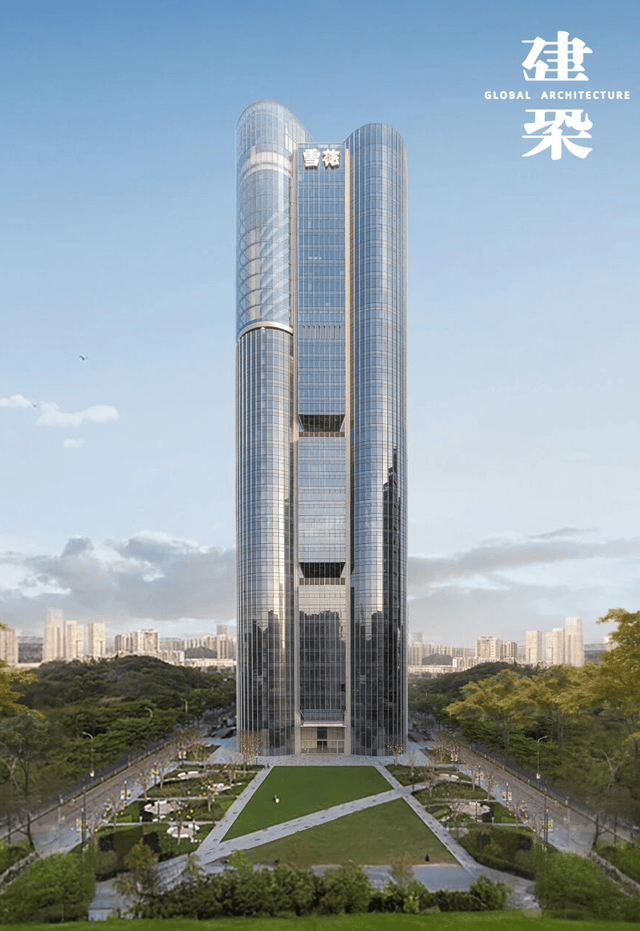
创城改造前 华润雪花科 作为中国销量最大的啤酒酿造商,华润啤酒此次南迁,是对粤港澳大湾区战略的呼应。其落址的雪花科 创城,前身正是金威啤酒的宝安二厂。这片承载过百年酿造历史的工业遗址,如今由华润置地与华润啤 酒共同改造,转型为一个总建筑面积约87万平方米的产城综合体。 华润雪花科 2025年12月8日,华润啤酒总部正式由北京迁入深圳雪花科创城。 对很多深圳人来说,"来深圳,喝金威"不只是一句广告,更是一段带着麦芽香的城市记忆。2013年,华 润啤酒完成对深圳本土品牌金威啤酒的并购,重塑了中国啤酒市场的格局。 创城改造后 这里不止是总部办公地,更是一个融合生产、研发、商业、居住等复合功能的产业社区。超过百亿元的 投资,旨在打造一个千亿级的产业集群,并通过"工业上楼"的模式,为高密度城区发展先进制造提供新 思路。 从昔日啤酒厂到今日科创城,这片土地的生长轨迹,亦折射出一座城市在产业演进中的传承与超越。 建筑群从中提取筒仓意象,错落的天际线间,高达188米的雪花啤酒总部大厦尤为醒目,形体呼应啤酒 罐体特征,通过三个体块组合而成,将大弧度曲线与平直线条巧妙融合。 圆润的塔楼造型以"雪花粮仓"的概念意向,延续了雪花和尖 ...
果味化、奶茶化、功能化,啤酒行业增长虽稳但竞争已入深水区
Di Yi Cai Jing· 2025-12-15 12:34
Core Insights - The beer industry is expected to maintain growth in 2025, driven by structural upgrades and flavor innovations, contrasting with the declining performance of the liquor and wine sectors [1][2] - High-end competition in the beer market is entering a new phase, focusing on quality and experience upgrades rather than just moving from low-end to high-end products [4] Industry Performance - From January to September, the beer sector is one of the few categories showing growth, while the domestic liquor and wine industries are experiencing declines in both production and sales [2] - The beer industry's revenue is projected to continue single-digit growth in 2025, with profits expected to grow in double digits [2] - Major brands like China Resources Beer, Tsingtao Brewery, and Yanjing Beer have reported revenue and net profit growth, primarily due to high-end product sales [3] Market Trends - The proportion of mid-to-high-end beer products has increased to over 40%, indicating a shift in consumer preferences towards premium offerings [2] - The entry of non-beer companies into the beer market is increasing, with various food and beverage firms announcing their foray into beer production, driven by the beer sector's growth amidst declines in other alcoholic beverages [3] Consumer Preferences - The younger generation (Z generation) is showing a higher participation rate in drinking, with 73% in 2025 compared to 66% in 2023, indicating a shift in drinking habits and preferences [6] - Young consumers prioritize taste, health, and aroma in their drinking choices, leading to a rise in low-alcohol, non-alcoholic, and functional beers [6] Innovation and New Products - The beer industry is witnessing rapid innovation in flavors, with fruit-flavored and tea-infused beers gaining popularity, reflecting a trend towards beverage-like characteristics [5] - The rise of instant retail channels is reshaping the beer market, allowing for quicker product development and consumer insights [7]

华润啤酒东北大撤退后工厂无人接:36家工厂关停、数亿安置费
Sou Hu Cai Jing· 2025-12-15 09:57
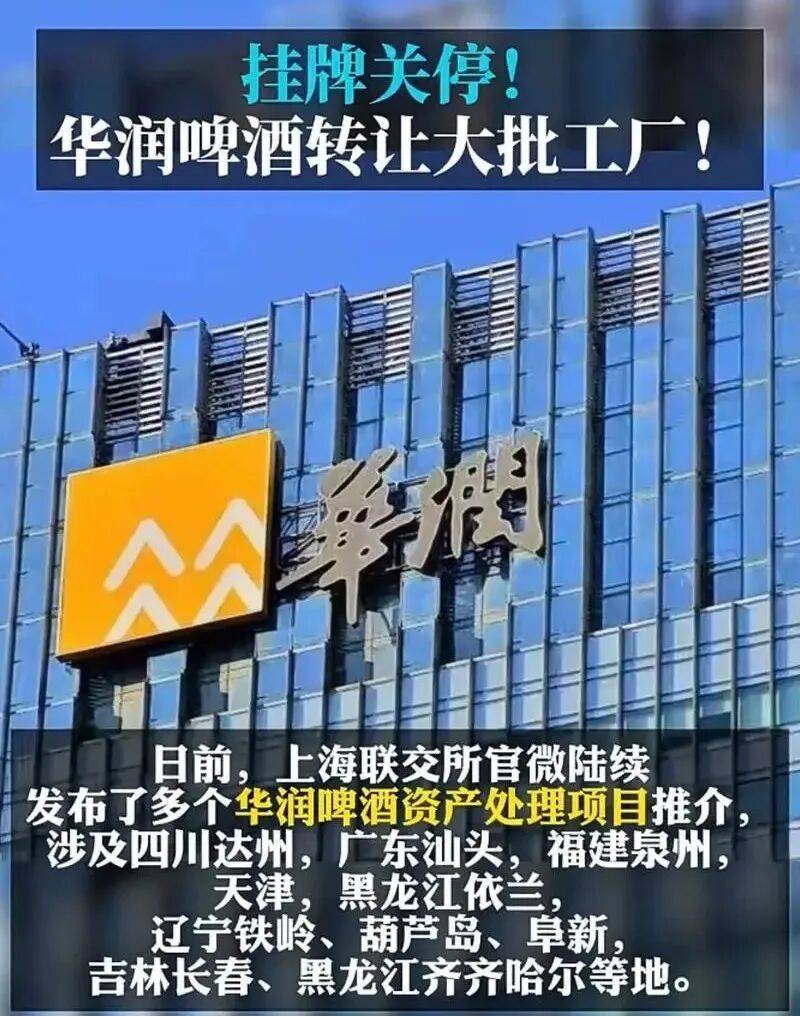
Core Insights - The article highlights the challenges faced by China Resources Beer in disposing of its assets in Northeast China, particularly the significant price drops and lack of buyers for its factories [1][5][6] Group 1: Asset Disposal Challenges - The land use rights and buildings of the Qiqihar factory were listed for transfer at a price reduced from 6.35 million yuan to 5.08 million yuan, a drop of over 1.2 million yuan, yet remained unsold [1] - The Changchun factory, which had been closed for six years, faced similar difficulties, with its transfer price dropping by over 40% in four attempts, but still found no buyers [1] - The closure of 36 breweries across the country, particularly in Northeast China, has resulted in significant challenges in asset disposal, with many low-efficiency capacities unable to sell even at reduced prices [1][5] Group 2: Historical Context and Market Dynamics - Northeast China was once a key market for China Resources Beer, with the company establishing a strong presence through aggressive acquisitions starting in 1993 [3] - By 2011, the company held a 68% market share in Liaoning, but began to face losses as the market entered a phase of excess capacity and declining demand [3][5] - The company initiated capacity optimization in 2017, focusing on eliminating low-efficiency production in Northeast China [3][5] Group 3: Financial Implications and Employee Issues - From 2016 to 2024, the number of factories decreased from 98 to 62, with 36 closures primarily in smaller cities, leading to substantial employee compensation costs totaling 1.823 billion yuan from 2017 to 2020 [5] - Labor disputes have arisen following factory closures, with over 180 disputes linked to the Changchun factory alone, highlighting ongoing challenges in employee relations [5] - The company has faced significant asset impairment losses, with a reported 1.301 billion yuan in fixed asset and inventory impairments in 2018 [5] Group 4: Strategic Shift and Future Outlook - In December 2025, the company announced the relocation of its headquarters from Beijing to Shenzhen, signaling a strategic shift away from reliance on the Northeast market [6] - Analysts suggest that the company's difficulties stem from the failure to effectively manage the historical burdens of its acquisitions, raising questions about balancing shareholder interests with social responsibilities [6] - The ongoing restructuring in the Northeast beer market may continue to have lasting effects on the company and the region [6]
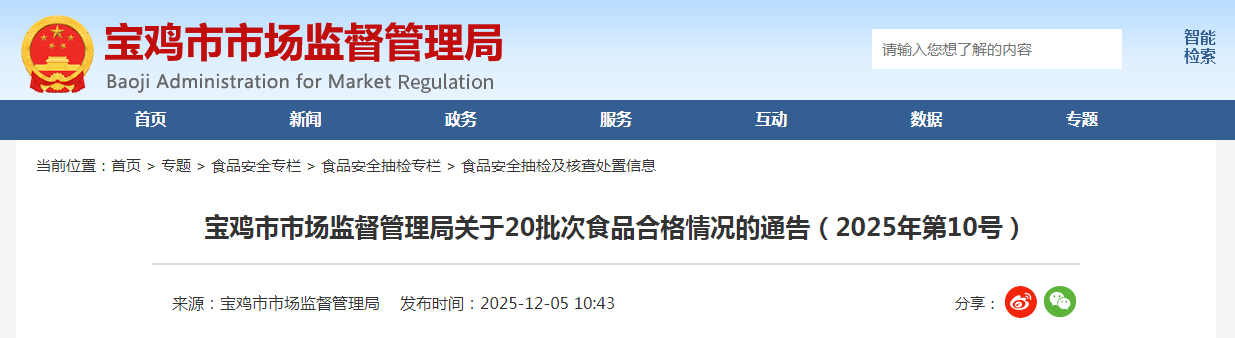
陕西省宝鸡市市场监督管理局关于20批次食品合格情况的通告(2025年第10号)
Zhong Guo Zhi Liang Xin Wen Wang· 2025-12-15 08:53
Core Points - The Baoji Administration for Market Regulation announced that all 20 batches of food samples tested, including beverages, alcoholic drinks, and edible agricultural products, were found to be compliant with safety standards [3]. Group 1: Food Safety Compliance - The announcement is part of the 2025 food safety initiative "You Choose, We Test," which aims to enhance food safety monitoring in the region [3]. - The tested samples included various types of beverages and food products, all of which passed the safety inspections [3]. Group 2: Sample Details - The samples tested included products from well-known companies such as Shandong Nairun Dairy Co., Ltd., and Nongfu Spring (Shaanxi) Honghe Valley Beverage Co., Ltd. [3]. - Specific products tested included flavored tea drinks, craft beers, and various edible agricultural products, all of which were sourced from local convenience stores in Baoji [3].
前三季度销售收入超1500亿元,啤酒企业未来增长“钱”景在哪里?
Mei Ri Jing Ji Xin Wen· 2025-12-15 06:37
Core Insights - The beer industry in China is experiencing a strong performance amidst dynamic changes, with beer production reaching 30.9525 million kiloliters and sales revenue of 151.748 billion yuan in the first nine months of 2025, showing a year-on-year growth of 0.82% [1][2][6] - High-end products are identified as the fastest-growing segment, becoming a new profit growth point for the industry, while trends towards smart, healthy, and green products are crucial for future competitiveness [1][3][8] Industry Overview - In 2023, global beer consumption is approximately 187.9 million kiloliters, with China holding a 20.1% share of the global market, maintaining its position as the world's largest producer and consumer for 23 consecutive years [2][7] - The number of beer enterprises in China is declining, with projections indicating 91 enterprises and 315 factories by 2024, leading to increased concentration among leading companies [2][7] Financial Performance - In the first nine months of 2025, the beer industry reported a total profit of 28.436 billion yuan, reflecting a year-on-year increase of 17.93% [2][7] - The top five beer companies are expected to account for 84.7% of production and sales volume by 2024, with revenue and profit shares also increasing significantly from 2019 levels [2][7] Market Trends - The beer market is shifting from a focus on low-end products to a competitive landscape emphasizing quality and value, with high-end product market growth at approximately 20% annually [3][8] - Consumer preferences are evolving towards rational, value-driven, and health-conscious choices, with a notable rise in demand for low-alcohol and non-alcoholic beers [3][9] Distribution and Innovation - The rise of home consumption and rapid growth in online sales are reshaping distribution channels, with companies embracing e-commerce and instant retail [4][9] - Innovations in the supply chain include local sourcing of raw materials, digital transformation for cost reduction, and environmentally friendly packaging designs [5][9]
摘要酒独家总冠名 总裁读书会年终演讲系列活动举办
Zheng Quan Ri Bao Wang· 2025-12-15 04:28
Group 1 - The event "Updating and Answering: My 2025 Reading List" was held from December 13 to December 14, sponsored by the brand "Summary Wine" [1] - The main theme of the event was "Reading, Understanding People, and Reading the World," featuring two formats: a year-end lecture and a year-end speech [1] - Ning Gaoning, a prominent entrepreneur, emphasized that true "updating" involves actively breaking cognitive boundaries and reconstructing thinking patterns [1] Group 2 - Fan Shikai, Vice President of China Resources Beer and Chairman of Jinsha Wine Industry, highlighted that the collaboration between Summary Wine and the CEO Reading Club has evolved into a journey of updating thinking and seeking answers [2] - The event was supported by various institutions, including Shenzhen Satellite TV, Zhigang Think Tank, and several universities and publishers [2]
“打通全国统一大市场堵点卡点”热点问题探析|破局“内卷” 开拓蓝海
Jing Ji Ri Bao· 2025-12-15 03:45
Core Viewpoint - The letter from Huang Ping, Chairman of Guangdong Youkai Technology Co., highlights the detrimental effects of vicious competition in the detergent industry, where low-quality products with less than 5% active ingredient content are capturing market share through low prices, putting quality products at a disadvantage [1] Group 1: Industry Challenges - The phenomenon of "involution" is causing irrational competition across various industries, leading to intensified price wars, shrinking profit margins, reduced innovation investment, and rising quality and safety risks [1][2] - Over 20 national and local industry associations have publicly called for a "counter-involution" approach, addressing issues in sectors such as steel, automotive, photovoltaic, catering, finance, and logistics [2] Group 2: Strategic Shifts - Companies like China Resources Beer have closed 40 factories and reduced over 5 million tons of redundant capacity, emphasizing a shift from "scale supremacy" to focusing on "good enterprises, good products, and good brands" [3] - The construction of a unified national market is essential for efficient market operation and removing barriers to fair competition, which is crucial for high-quality development [2] Group 3: Innovation Focus - Traditional manufacturing must break free from path dependence and scale bottlenecks by leveraging technology and innovation, as highlighted by companies like Weiqiao Chuangye Group, which collaborates with research institutions and utilizes AI for product development [4] - New Hope Group has innovated in the dairy industry by utilizing cold chain logistics and AI to ensure fresh products reach consumers quickly, demonstrating the importance of innovation in meeting consumer demands [4][5] Group 4: Brand Value - In a market with information asymmetry, low-quality products often mislead consumers, necessitating a focus on rebuilding trust in "quality for price" mechanisms to enhance user experience and brand value [6] - The shift in consumer preferences towards personalized and emotionally resonant experiences indicates that businesses must transition from merely providing functional value to creating meaningful connections with users [7] Group 5: Global Expansion - The construction of a unified national market should promote an open market that encourages companies to expand globally, alleviating domestic competition pressures and enhancing competitiveness in international markets [8] - Companies like Jack Technology and Miniso are successfully implementing global strategies that integrate local insights with global aesthetics, demonstrating the potential for Chinese brands to resonate with international consumers [8] Group 6: Future Outlook - The collective sentiment among industry leaders emphasizes that companies must focus on innovation, brand building, and global engagement to escape internal competition and drive China's economy towards high-quality development [9]