
海尔智家

Search documents
海尔智家2月4日斥资10.16万欧元回购5万股
Zhi Tong Cai Jing· 2026-02-05 09:46
海尔智家(600690)(06690)发布公告,该公司于2026年2月4日斥资10.16万欧元回购5万股股份,每股回 购价格为2.029-2.045欧元。 ...

海尔智家(06690) - 翌日披露报表
2026-02-05 09:38
FF305 翌日披露報表 (股份發行人 ── 已發行股份或庫存股份變動、股份購回及/或在場内出售庫存股份) 第 2 頁 共 7 頁 v 1.3.0 FF305 表格類別: 股票 狀態: 新提交 公司名稱: 海爾智家股份有限公司 呈交日期: 2026年2月5日 如上市發行人的已發行股份或庫存股份出現變動而須根據《香港聯合交易所有限公司(「香港聯交所」)證券上市規則》(「《主板上市規則》」)第13.25A條 / 《香港聯合交易所有限公司GEM證券 上市規則》(「《GEM上市規則》」)第17.27A條作出披露,必須填妥第一章節 。 | 第一章節 | | | | | | | | | | | | --- | --- | --- | --- | --- | --- | --- | --- | --- | --- | --- | | 1. 股份分類 | 普通股 | 股份類別 | 其他類別 (請註明) | | | 於香港聯交所上市 | | 否 | | | | 證券代號 (如上市) | 690D | 說明 | | | 普通股- D股面值每股人民幣1元 (於法蘭克福證劵交易所上市) | | | | | | | A. 已發行股份或 ...
中国企业出海的十大展望
Hua Xia Shi Bao· 2026-02-05 09:01
Group 1: Global Expansion of Chinese Manufacturing - The trend of Chinese manufacturing companies expanding globally is accelerating, particularly in tariff-sensitive sectors such as automotive, consumer electronics, and machinery, which are relocating production to countries with lower tariffs or favorable policies to reduce costs and mitigate trade risks [2][3] - Chinese manufacturers are diversifying their global supply chains by exploring emerging markets in Latin America, the Middle East, and Africa, thereby enhancing supply chain stability and risk resilience [2][3] - The implementation of regional economic cooperation mechanisms and free trade agreements, such as RCEP, is creating a more favorable policy environment for the globalization of Chinese manufacturing [3] Group 2: Overseas Mergers and Acquisitions - Chinese manufacturing companies are leveraging overseas mergers and acquisitions to transition from OEMs to self-owned brands, gaining market share, sales channels, and high-end brand images [3][4] - The focus of these acquisitions is shifting towards strategic alignment in brand, market, technology, and supply chain integration, enhancing global competitiveness [3][4] - Companies like Haier exemplify this trend by achieving breakthroughs in the European and American markets through acquisitions, thereby strengthening their global competitive advantage [3][4] Group 3: Labor-Intensive Industries and Cost Migration - Labor-intensive industries are increasingly relocating to low-cost regions such as Southeast Asia and South Asia, benefiting from local labor advantages and policy support [4][5] - The trend of regional industrial clusters is forming as companies seek to reduce costs and improve response efficiency through localized production [4][5] - The global supply chain is becoming more regionalized, with multinational companies establishing collaborative industrial clusters in emerging regions to enhance supply chain resilience [4][5] Group 4: Resource Sector Globalization - Chinese resource companies are accelerating their global expansion by constructing complete industrial chains from mining to processing and application, enhancing their control and influence in the global resource sector [6][7] - The focus is shifting from merely acquiring resources to deep integration of upstream and downstream operations, utilizing diverse cooperation methods such as equity investments and joint ventures [6][7] - Notable examples include the acquisition of cobalt mines in the Democratic Republic of Congo and lithium companies in Australia, showcasing the strategic foresight of Chinese enterprises [6][7] Group 5: Digital Transformation and Brand Value - Chinese companies are transitioning from low-cost manufacturing to brand value creation, utilizing digitalization to enhance brand building and global competitiveness [9][10] - Companies like Anker and Xiaomi are leveraging localized operations and digital marketing to establish strong brand identities and achieve significant sales growth [9][10] - The focus on digital transformation is enabling companies to create differentiated brand matrices and improve supply chain management, enhancing market competitiveness [9][10] Group 6: Compliance and Localization - Compliance and localized operations are becoming core competitive advantages for Chinese enterprises in international markets, with a focus on establishing robust global compliance systems [11][12] - Companies are actively building global compliance monitoring systems to ensure adherence to regulations in areas such as data security and environmental standards [11][12] - The ability to navigate compliance challenges is increasingly seen as integral to brand value and international market acceptance [11][12] Group 7: Policy Support for Globalization - Recent policy initiatives from the Chinese government are creating unprecedented opportunities for enterprises to expand internationally, emphasizing high-level openness and integration into the global economy [13][14] - The focus on developing new production capabilities and promoting the integration of the real economy with the digital economy is expected to provide clear guidance for companies in the new round of global competition [13][14] - Structural monetary policies are anticipated to offer targeted financial support to foreign trade enterprises, aiding their internationalization efforts [14] Group 8: Cultural and Ideological Export - Chinese enterprises are increasingly integrating cultural content with brand ideology to enhance cultural soft power and global brand value [18][19] - The growth of cultural consumption globally is driving the export of diverse cultural products, including games and films, with significant revenue growth reported [18][19] - The focus on building a robust IP ecosystem and localizing content production is crucial for enhancing global appeal and emotional resonance with audiences [18][19]




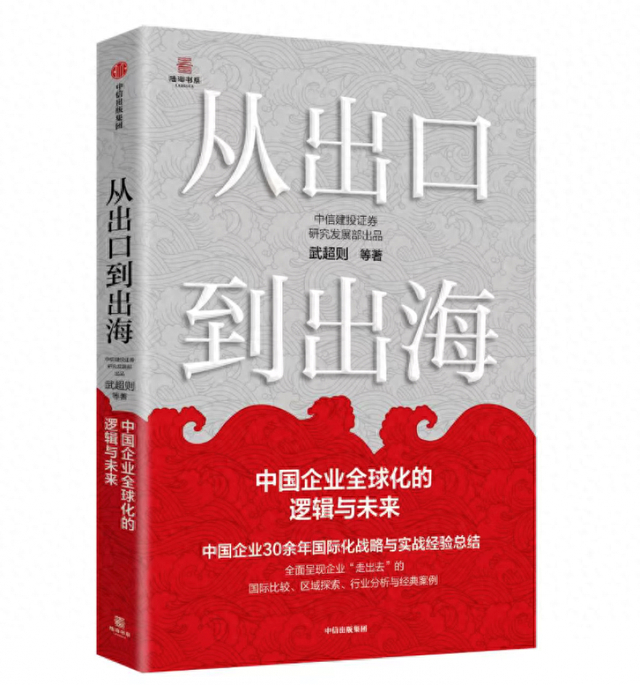
从海尔孵化到独立IPO,卡奥斯再造商业新叙事
Mei Ri Jing Ji Xin Wen· 2026-02-05 08:46
Core Viewpoint - The industrial internet platform leader, Kaos IoT Technology Co., Ltd. (referred to as "Kaos"), has submitted its prospectus to the Hong Kong Stock Exchange, aiming to become the "AI + Industrial Internet first stock" and marking a significant step in the industrial digitalization wave [1]. Financial Performance - For the first three quarters of 2025, Kaos achieved a revenue of 4.42 billion yuan, with data intelligence solutions contributing 1.28 billion yuan, reflecting a growth of 59.6% year-on-year. The net profit from continuing operations reached 146 million yuan, a year-on-year increase of 156% [1][6]. Market Position and Strategy - Kaos is positioned as an independent third-party platform serving the entire industry, having transitioned from serving Haier to over 160,000 global enterprise clients. The company plans to use the funds raised from the IPO to enhance its core platform and product capabilities, expand business opportunities, and pursue potential investments and acquisitions [1][5]. - According to a Frost & Sullivan report, Kaos ranks first in the Chinese industrial digitalization solutions market based on platform revenue for 2024, with over 600 national specialized customers and the establishment of 17 "lighthouse factories" globally [2][3]. Technological Advancements - Kaos has developed the COSMOPlat industrial internet platform, integrating IoT, big data, and AI technologies to create replicable industrial intelligent software products and solutions. The platform supports cross-industry applications and has established a dual-core architecture with BaaS industrial brain and BaaS industrial operating system [3][4]. - The company has created high-quality intelligent agents, increasing their number to 57, and has developed several industry-leading models, including the Tianzhi industrial model and the first carbon-neutral lighthouse factory [4][5]. Business Model and Expansion - Kaos employs a "data + intelligence" dual-engine strategy, focusing on smart manufacturing, green manufacturing, and specialized platform construction. The company has successfully assisted in creating 17 "lighthouse factories" and has implemented green manufacturing solutions in over 500 enterprises [5][6]. - The company has expanded its business from the home appliance sector to key industrial fields such as machinery, electronics, automotive, and energy chemicals, serving over 16,000 enterprises, with more than 9,500 paying clients [6]. Future Outlook - Looking ahead, Kaos aims to build an integrated product and solution system that combines platforms, industrial intelligent software/agents, and industrial terminals, focusing on data and intelligence to empower the digital transformation of manufacturing enterprises and expand its user ecosystem [7].
东方证券:家电中高端卡位机会显现 推荐经营稳健龙头公司
智通财经网· 2026-02-05 07:40
涨价对大盘销量无明显影响,但能促进格局集中 除了本轮大宗上行外,过去10年还经历了2轮原材料上涨周期,分别为供给侧改革驱动(2016-2017)和疫 情后的流动性与供应链短缺(2020-2021)。复盘每轮原材料大幅上涨后,家电企业都会采取一定的提价动 作,且基本为龙头企业带头提价。提价和后续大盘销量并无明显关系,即提价并未明显影响家电板块销 量,板块销售更多还是受到地产政策、更新替换周期和外部补贴政策(如以旧换新)三重因素影响。但每 轮提价动作后,行业格局呈现出集中趋势。如2020-2021年铜价(其他大宗类似)价格上行后,空调/冰箱 终端销售均价同比提升均超过10%,提价后空调在21年6月~22年2月显示出CR3市占率持续提升趋势;冰 箱也在21年9月~22年1月CR3市占率提升明显。龙头企业格局更稳固,产品定位也多为中高端,价格向 下游传导也更为顺畅。 智通财经APP获悉,东方证券发布研报称,家电企业陆续宣布涨价,将原材料成本向下游传导。龙头企 业格局更稳固,产品定位也多为中高端,价格向下游传导也更为顺畅。该行判断定位中高端用户的细分 赛道(如3D打印、AI眼镜)存在加速渗透机会。该行推荐经营稳健的龙头 ...

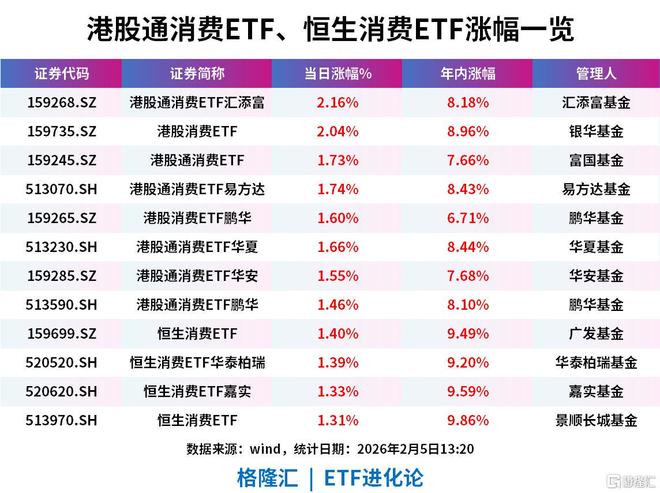
百胜中国涨超9%,名创优品涨超5%,港股通消费ETF、港股消费ETF、恒生消费ETF上涨
Ge Long Hui· 2026-02-05 05:42
Core Viewpoint - The Hong Kong stock market's consumer stocks have seen significant gains, driven by strong performances from companies like Yum China and Miniso, which have positively influenced various consumer ETFs [1][5]. Group 1: Stock Performance - Yum China experienced a rise of over 9%, reaching a new high since October 2023, following the announcement of its strong financial results for 2025 [5]. - Miniso's stock increased by over 5% after announcing a share buyback program [6]. - Multiple consumer ETFs, including those managed by Huatai-PB, E Fund, and others, have also shown positive growth, with increases ranging from 1.31% to 2.16% on the day [2]. Group 2: Financial Highlights - Yum China's operating profit for the year reached $1.3 billion, reflecting a robust year-on-year growth of 11%, with plans to open 1,706 new stores, expanding its network to over 18,101 locations across more than 2,500 cities in China [5]. - The fourth quarter of 2025 saw a significant 25% year-on-year increase in operating profit for Yum China, with same-store sales rising for the third consecutive quarter [5]. Group 3: Market Trends and Consumer Sentiment - The upcoming Chinese New Year is expected to boost consumer spending, supported by various government-led promotional activities aimed at stimulating consumption [7]. - The integration of diverse sectors such as commerce, culture, tourism, and exhibitions is anticipated to enhance consumer engagement and spending during the festive season [7].
中国智能家电市场趋势洞察
益普索· 2026-02-05 05:35
Investment Rating - The report does not explicitly provide an investment rating for the smart home appliance industry Core Insights - The Chinese home appliance market is transitioning from scale expansion to quality upgrades, with a focus on deep competition driven by changing demand structures [3] - The Z generation, accounting for nearly 20% of the population and contributing about 40% of consumption, is driving a shift in consumer logic towards emotional value, personalization, and aesthetic appeal [4] - Consumers are moving from "external display" to "internal experience," emphasizing the need for brands to innovate based on local user demands [5] - Companies must build a forward-looking insight system to identify future opportunities through macro and micro trend research [5] - The focus on sustainable growth and core competitiveness is essential, guiding product innovation, brand communication, and marketing strategies [6] Market Trends - The market is experiencing a "micro-segmentation" wave, moving away from universal products to innovative categories that match the evolving lifestyle and spatial needs of consumers [9][19] - The design philosophy is shifting from "highlighting presence" to "small and refined," maximizing functional value through technology stacking in limited spaces [10][62] - Aesthetic integration is becoming crucial, with appliances designed to blend seamlessly into home environments, transforming them into art pieces rather than mere functional devices [11][35] - The importance of aesthetics is highlighted, with 84% of consumers considering appearance when purchasing appliances, and 69% willing to pay more for high-quality designs [36] Consumer Behavior - Consumers are increasingly prioritizing emotional value and personalized experiences over mere functionality, with 88% considering functionality as a key purchasing factor [12][86] - The demand for "zero-maintenance" solutions is rising, with users seeking appliances that require minimal effort and provide seamless integration into their lives [13][99] - Health has become a core value in appliance offerings, with consumers looking for products that enhance both physical and mental well-being [15][111] Product Innovation - The trend towards multi-functional products is replacing standalone devices, with integrated solutions becoming mainstream [75][81] - The report emphasizes the need for appliances to provide not just utility but also emotional and sensory experiences, bridging the gap between product functionality and user lifestyle [86][92] - The shift towards proactive health management solutions is evident, with consumers willing to invest in appliances that offer comprehensive health benefits [113][116] Future Outlook - The report suggests that brands must adapt to the evolving consumer landscape by offering personalized, aesthetically pleasing, and health-oriented products [18][126] - The integration of AI and smart technology is expected to enhance user experiences, with a focus on seamless, intuitive interactions [135][140] - The future of home appliances lies in creating ecosystems that connect various devices, providing a cohesive and intelligent living environment [138][139]
“围剿”中国工厂
3 6 Ke· 2026-02-05 05:27
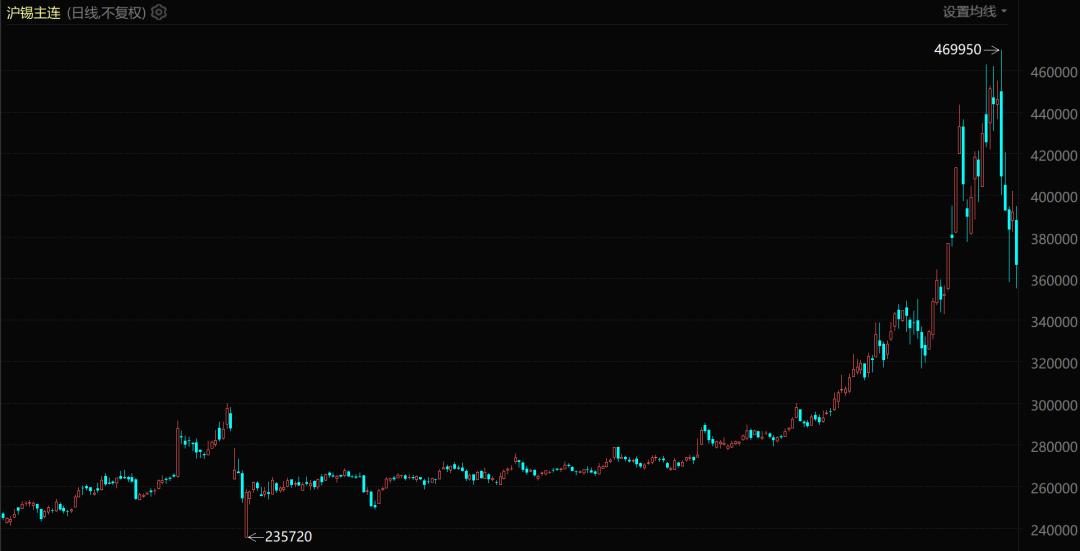
Core Viewpoint - The surge in metal prices, particularly copper, is significantly impacting downstream manufacturing industries in China, leading to squeezed profit margins for manufacturers while upstream companies benefit from rising raw material prices [3][5][9]. Group 1: Price Surge in Raw Materials - In 2025, copper prices increased by 34.34%, and the upward trend continued into 2026 [2]. - The price of lithium carbonate, essential for electric vehicle batteries, skyrocketed from 75,700 yuan per ton in January 2025 to 175,250 yuan per ton by January 23, 2026, marking a 131.4% increase [7]. - Tungsten concentrate prices surged to 520,000 yuan per ton, while tungsten carbide prices rose from approximately 300,000 yuan per ton to 1,200,000 yuan per ton [7]. Group 2: Impact on Manufacturing Industries - The home appliance industry is heavily affected by rising copper prices, with copper accounting for over 20% of the total cost of air conditioners. The copper price reached 105,020 yuan per ton in February 2026, up 42.25% from early 2025, leading to an 8.45% increase in air conditioner costs [10]. - The electric vehicle industry faces significant cost inflation, with UBS reporting that the cost increase for pure electric vehicles (BEVs) due to metal prices alone is approximately 5,600 yuan per vehicle, primarily driven by lithium price increases [12]. - The automotive industry's single vehicle gross profit was only 13,000 yuan in 2025, making it challenging for manufacturers to pass on rising costs to consumers amid fierce competition [13]. Group 3: Upstream vs. Downstream Dynamics - Upstream mining companies are experiencing explosive profit growth due to rising raw material prices, with Zijin Mining forecasting a net profit of 51 to 52 billion yuan for 2025, a year-on-year increase of 59% to 62% [8]. - In contrast, manufacturing companies are facing unprecedented cost pressures, leading to a decline in profit margins. The manufacturing sector's profit margin was only 4.7% in 2025, compared to 15.9% for the mining sector [21][19]. - The overall revenue of China's industrial enterprises has been increasing, but profit margins have been declining, indicating a challenging environment for manufacturers [19][21]. Group 4: Strategies for Survival and Growth - Many Chinese manufacturing companies are exploring ways to extend their business scope internationally, moving beyond low-end products to high-value items like electric vehicles and industrial robots [24]. - Some companies are actively integrating vertically by acquiring upstream resources, such as copper mines, to mitigate the impact of rising raw material prices [24]. - Technological advancements are also being pursued, with companies investing in alternatives to reduce dependency on expensive raw materials, such as the development of sodium-ion batteries [26].




AI空调卷疯了:格力、美的、海尔集体押注,核心价值是「省钱省电」?
3 6 Ke· 2026-02-05 04:13
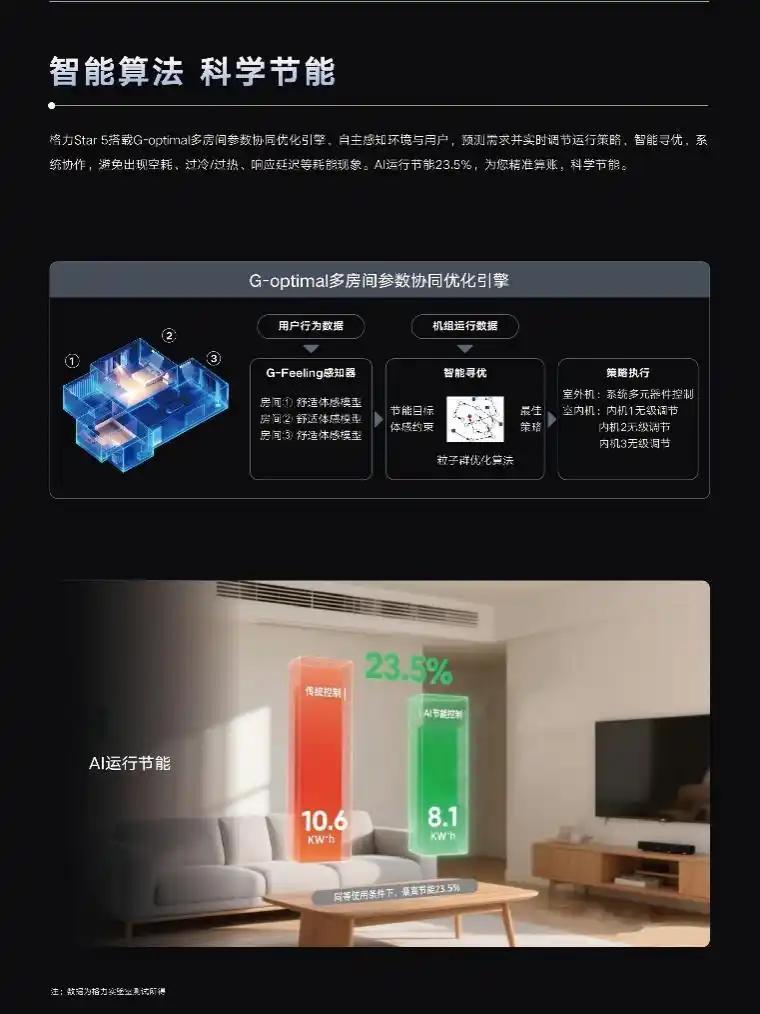
Core Viewpoint - The air conditioning industry is rapidly evolving with the integration of AI technology, moving from traditional cooling and heating systems to more intelligent solutions that focus on user comfort and energy efficiency [1][3][12]. Group 1: AI Integration in Air Conditioning - AI air conditioners, such as Gree's Star 5 AI, aim to enhance user experience by maintaining optimal comfort levels rather than just achieving set temperatures [3][4]. - Traditional air conditioning systems often waste energy and respond slowly to changes in user needs, while AI systems optimize energy use and adjust dynamically based on real-time conditions [4][6]. - Gree's Star 5 AI claims to achieve energy savings of up to 23.5% under ideal conditions, although actual performance may vary based on individual household factors [6][12]. Group 2: Competitive Landscape - Major appliance manufacturers, including Gree, Midea, and Haier, are heavily investing in AI technology, indicating a shift in the market towards algorithm-driven air conditioning solutions [12][15]. - The introduction of AI in air conditioning is expected to create a competitive divide, favoring companies with established data and technology capabilities, while smaller firms may struggle to keep up [16]. - As the market for household air conditioning approaches saturation, consumers are likely to prioritize smart features over cost when upgrading their systems [16].
平安证券(香港)港股晨报-20260205



Ping An Securities Hongkong· 2026-02-05 02:59
Market Overview - The Hong Kong stock market showed mixed performance with the Hang Seng Index closing at 23,831 points, down 145 points or 0.61% [1] - The market turnover decreased to 82.799 billion [1] - The net inflow of funds through the Hong Kong Stock Connect was 484 million, with Shanghai Stock Connect contributing 283 million and Shenzhen Stock Connect 201 million [1] Sector Performance - Energy and real estate sectors performed well, with coal-related assets rising due to supply constraints from Indonesia, leading to Yanzhou Coal Mining increasing over 10% and China Shenhua Energy rising over 5% [1] - Domestic property stocks also saw gains, with Shimao Group up over 14%, Sunac China up over 8%, Vanke up over 6%, and Yuexiu Property up over 6% [1] - Conversely, chip and tech stocks declined, with Shanghai Fudan down over 5%, Hua Hong Semiconductor down nearly 5%, and Tencent Holdings down nearly 4% [1] US Market Performance - The US stock market had mixed results, with the Dow Jones up 0.53%, while the S&P 500 and Nasdaq fell by 0.51% and 1.51% respectively [2] - Notable gainers included Amgen, which rose over 8%, and Nike, which increased by over 5% [2] - The tech sector faced challenges, with the Nasdaq China Golden Dragon Index down 1.95% and major chip stocks like AMD dropping over 17% [2] Investment Opportunities - The report emphasizes the importance of "technological self-reliance" and AI applications as key themes for future growth in the Hong Kong stock market, suggesting that leading companies in these sectors may see medium to long-term development opportunities [3] - It is recommended to focus on sectors supported by policies aimed at expanding domestic consumption, such as sports apparel and non-essential services [3] - The report highlights the continued value of Hong Kong stocks centered around Chinese assets, particularly in technology, consumer sectors, and undervalued state-owned enterprises [3] Company Highlights - ZTE Corporation (0763.HK) is noted for its comprehensive communication manufacturing capabilities, with a projected revenue of 121.299 billion for 2024, despite a slight decline [10] - The company maintains a high gross margin of 37.91% and is expected to see significant growth in its server and storage revenue, particularly in the AI computing sector [10] - Analysts predict ZTE's net profits for 2025 and 2026 to be 7.98 billion and 8.81 billion RMB respectively, indicating a relatively low valuation compared to its earnings potential [10]