
金风科技

Search documents
绿色甲醇-航运脱碳与低碳原料的双重机遇
2026-01-29 02:43
Summary of Key Points from Conference Call on Green Methanol Industry Overview - The conference call discusses the green methanol industry, particularly its application in the shipping sector driven by IMO and EU policies aimed at significantly reducing carbon emissions by 2030 [1][4][5]. Core Insights and Arguments - **Green Methanol as a Fuel**: Green methanol can reduce carbon emissions by 65% compared to traditional heavy oil over its lifecycle, making it suitable for maritime, road transport, and shipping industries [2]. - **Cost Comparison**: Currently, green methanol vessels are 20% more expensive than traditional heavy oil vessels. However, as carbon prices rise and domestic refueling prices decrease, green methanol's economic viability is expected to improve [6]. - **Production Costs**: Different production methods for green methanol have varying costs. The highest cost method is CO2 capture, exceeding 4,000 RMB/ton, while biomass gasification and other methods range from 3,000 to 3,500 RMB/ton [7]. - **Policy Support**: The current policy environment is favorable for green methanol development, with the IMO aiming for a 40% reduction in carbon intensity and a 20% reduction in total greenhouse gas emissions by 2030 [4][5]. Company-Specific Insights - **CIMC Enric**: The company is highlighted as a key player benefiting from the shipping industry's transition to environmentally friendly solutions, with expected annual net profit increases of 1-2% and a growth rate close to 10% [1][8]. - **Production Capacity**: CIMC Enric has launched a 50,000-ton biomass methanol project with a 90% utilization rate and plans to expand capacity to 350,000-450,000 tons, including projects in Zhanjiang and Hainan [1][9]. - **Hydrogen Business**: The company is expected to enter a growth phase in its hydrogen business starting in 2025, leveraging synergies with its main operations [10]. Additional Important Content - **Investment Recommendations**: Besides CIMC Enric, other companies such as Jiazhe New Energy, China Tianying, FJ Technology, and Goldwind Technology are recommended for their potential in the green methanol sector [13]. - **Cash Flow and Shareholder Returns**: The company has strong cash flow with a dividend payout ratio of around 50%, indicating limited downside risk and significant upside potential [12]. - **Overall Industry Outlook**: The green methanol sector is expected to see increased demand not only for shipping fuel but also for chemical raw materials, supported by strong government backing [14]. This summary encapsulates the critical insights from the conference call regarding the green methanol industry and specific company developments, highlighting both opportunities and challenges in the sector.

中国电力:2025 年风光装机超预期;电力需求增长符合预期-China – Power-2025 More Wind and Solar Installation Than Expected; Power Demand Growth In-line
2026-01-29 02:42
Summary of Key Points from the Conference Call Industry Overview - The report focuses on the **China Power** sector, specifically highlighting the growth in **wind and solar energy installations** in 2025, which exceeded expectations [1][5]. Core Insights and Arguments - **Power Demand Growth**: - National power consumption increased by **5.0% year-over-year (yoy)** in 2025, aligning with the China Electricity Council's (CEC) projections [8]. - Power demand by sector showed varied growth: - Primary: **9.9%** - Secondary: **3.7%** - Tertiary: **8.2%** - Residential: **6.3%** - This represents a moderation compared to 2024's growth rates [2]. - **Power Generation Statistics**: - Total power generation rose by **2.2% yoy** to **9,716 billion kWh** in 2025. - Solar and wind power generation increased significantly, with solar up **24.4%** and wind up **9.7%**, contributing **17%** of total generation (up from **14%** in 2024) [3]. - Thermal generation decreased by **1.0% yoy** to **6,295 billion kWh**, while hydro and nuclear generation rose by **2.8%** and **7.7%** respectively [3]. - **Capacity Additions**: - China added **543 GW** of power capacity in 2025, marking a **26.5% yoy** increase. This included: - **315 GW** of solar (up **13.7%**) - **119 GW** of wind (up **50.4%**) - **95 GW** of thermal, which accelerated from previous years [4]. - By the end of 2025, total installed power capacity reached **3,891 GW**, with solar and wind comprising **47.3%** of this total [4]. - **Sector-Specific Drivers**: - The major drivers for tertiary power consumption were identified as **electric vehicle (EV) charging** and **software & IT services**, which grew by **48.8%** and **17.0% yoy** respectively [8]. Additional Important Insights - The report indicates that the growth in renewable energy installations was higher than previously forecasted, with cumulative solar and wind capacity reaching **1,202 GW** and **640 GW** respectively by the end of 2025 [8]. - The thermal power installation for 2025 was below the CEC's forecast of **106 GW**, indicating a potential area of concern for future thermal energy investments [8]. This summary encapsulates the key findings and insights from the conference call regarding the state of the power sector in China, particularly focusing on the growth of renewable energy sources and the overall demand for power.
电新行业2025Q4公募基金持仓分析
Shanghai Aijian Securities· 2026-01-28 10:08
Investment Rating - The report rates the electric power equipment industry as "Outperforming the Market" [3] Core Insights - In Q4 2025, the electric power equipment industry saw a decrease in the proportion of shares held by active management funds, declining by 0.36 percentage points. This contrasts with 15 other industries that experienced an increase in shareholding [6][18] - The top five industries with increased shareholding were transportation, non-ferrous metals, basic chemicals, oil and petrochemicals, and non-bank financials, while the industries with decreased shareholding included media, real estate, computers, defense, and telecommunications [6] - Notable increases in holdings were observed in companies such as Tianhua New Energy, Tianci Materials, and Sany Heavy Energy, while significant reductions were seen in companies like Yiwei Lithium Energy, Goldwind Technology, and Longi Green Energy [10][13] Summary by Sections 1. Overall Industry Situation - The electric power equipment industry, which includes 398 stocks, experienced a decrease in the proportion of shares held by active management funds in Q4 2025, with a decline of 0.36 percentage points [6][7] 2. Individual Stocks - Tianhua New Energy saw the largest increase in holdings, with a staggering 34,198.66% increase in market value and a 15,595.36% increase in the number of shares held [11] - Other companies with significant increases included Tianci Materials (87.72% increase in market value) and Sany Heavy Energy (946.94% increase in market value) [11] 3. Institutional Holding Changes - Major fund companies such as GF Fund and Huatai-PineBridge significantly reduced their holdings in the electric power equipment sector, with GF Fund's holdings decreasing by 37.51% [15][16] - The top five fund companies by market value in the electric power equipment sector were GF Fund, Huatai Fund, HSBC Jintrust, Huitianfu Fund, and China Europe Fund, with respective holdings of 128.07 billion, 121.79 billion, 88.12 billion, 84.72 billion, and 82.48 billion [15] 4. Active Management Fund Holdings in Electric Power Equipment - The total number of shares held by the top 20 public funds in the electric power equipment sector decreased by 12.89% to 1.516 billion shares, with a corresponding market value of 989.10 billion [18][19]

5单REITs为何集体叫停
经济观察报· 2026-01-28 10:01
Core Viewpoint - The recent collective termination of public REITs applications is significantly influenced by the decline in underlying asset valuations, marking a critical shift in the regulatory landscape and market dynamics [1][10][12]. Group 1: Termination of REITs Applications - On January 23, 2026, both the Shanghai and Shenzhen Stock Exchanges announced the termination or withdrawal of five public infrastructure REITs applications, marking the first instance of such a collective termination since the pilot program began [2]. - The terminated projects include various types of underlying assets such as rental housing, industrial parks, logistics, new energy, and water treatment, all structured as "public funds + infrastructure asset-backed securities" [5][6]. - The termination is attributed to the new regulatory guidelines effective December 31, 2025, which stipulate that applications not responding to feedback within a specified timeframe will be automatically terminated [10]. Group 2: Underlying Asset Challenges - The underlying assets of the terminated REITs face structural challenges that hinder compliance with regulatory requirements, such as the need for stable cash flows and operational stability [11][12]. - For instance, the rental housing REIT faced issues related to compliance verification and operational stability, leading to a lack of response to inquiries for over a year [5][11]. - The logistics REIT encountered declining rental prices and high tenant concentration, complicating its ability to demonstrate operational stability [12]. Group 3: Market Dynamics and Regulatory Changes - The public REITs market has grown significantly, with over 78 products launched and a cumulative financing scale exceeding 210 billion yuan, positioning it as the largest in Asia and the second largest globally [15]. - However, the market is now transitioning from a focus on quantity of issuance to an emphasis on the quality of underlying assets and the stability of cash flows [3][15]. - The decline in asset valuations, particularly in the real estate sector, has led to increased reluctance among original equity holders to proceed with applications, as they may not find the valuations acceptable [13][16]. Group 4: Future Outlook - The termination of these applications is viewed as a necessary phase for the high-quality development of public REITs, with expectations that the market will optimize and enhance resilience amid ongoing challenges [17]. - The introduction of commercial real estate REITs, which do not require approval from the National Development and Reform Commission, is anticipated to accelerate the approval process and improve market conditions [16][17].

5单REITs为何集体叫停
Jing Ji Guan Cha Wang· 2026-01-28 09:29
Core Viewpoint - The Shanghai and Shenzhen Stock Exchanges announced the termination or withdrawal of five public infrastructure REITs applications, marking the first occurrence of such terminations since the pilot program began in 2021 [1][2]. Group 1: Termination of REITs Applications - Five REITs projects have been terminated, including those focused on rental housing, industrial parks, logistics, and renewable energy, with the aim of achieving stable cash flow for dividends [1][3]. - The terminated projects include: - Jianxin Jianrong Rental Housing REIT - Chuangjin Hexin Electronic City Industrial Park REIT - Huaxia Wanwei Logistics REIT - Jianxin Jinfeng Renewable Energy REIT - Fuguo Shouchuang Water REIT [1][5]. - The termination is attributed to the projects not responding to regulatory feedback within the required timeframe, as per the new guidelines effective from December 31, 2025 [6][11]. Group 2: Market Context and Regulatory Changes - The public REITs market has surpassed 200 billion yuan in scale, transitioning to a phase of normalized development, with a shift in regulatory focus from quantity to the quality of underlying assets and cash flow stability [2][10]. - The new regulatory guidelines introduced a "termination" mechanism for applications that do not meet response deadlines, aiming to enhance market efficiency and quality [6][11]. Group 3: Challenges Faced by Terminated Projects - The terminated projects faced various structural challenges, such as compliance issues, rental stability, and cash flow predictability, which hindered their ability to meet regulatory requirements [7][8]. - Specific issues included: - Jianxin Jianrong Rental Housing REIT struggled with compliance for non-residential housing conversions and high short-term rental ratios [7]. - Chuangjin Hexin Electronic City Industrial Park REIT had concerns regarding tenant stability and lease renewal risks [7]. - Huaxia Wanwei Logistics REIT faced declining rental prices and high tenant concentration [7]. - Jianxin Jinfeng Renewable Energy REIT was impacted by subsidy reductions affecting cash flow [7][8]. Group 4: Future Outlook for REITs Market - The termination of these projects is seen as a necessary phase for the high-quality development of public REITs, with expectations for structural optimization and resilience in the market as commercial real estate REITs trials deepen [12]. - However, the market still faces challenges related to the stability of underlying assets and macroeconomic cycles [12].
智通AH统计|1月28日
智通财经网· 2026-01-28 09:24
Core Viewpoint - The report highlights the AH premium rates of various stocks, indicating significant disparities between H-shares and A-shares, with some stocks showing extremely high premiums while others exhibit negative premiums [1][2]. Group 1: Top AH Premium Rates - Northeast Electric (00042) leads with an AH premium rate of 847.37%, followed by Zhejiang Shibao (01057) at 349.31% and Beijing Jingcheng Machinery Electric (00187) at 279.42% [1][2]. - The lowest AH premium rates are recorded for Contemporary Amperex Technology (03750) at -14.34%, China Merchants Bank (03968) at -4.99%, and Heng Rui Medicine (01276) at -1.15% [1][2]. Group 2: Top AH Deviation Values - Junshi Biosciences (01877) has the highest deviation value at 22.43%, followed closely by Beijing Jingcheng Machinery Electric (00187) at 22.18% and CanSino Biologics (06185) at 21.90% [1][3]. - The lowest deviation values are observed in Changfei Optical Fiber (06869) at -50.58%, Zhejiang Shibao (01057) at -45.38%, and Nanhua Futures (02691) at -27.12% [1][4]. Group 3: Detailed AH Premium and Deviation Rankings - The top ten AH stocks by premium rate include companies like Hongye Futures (03678) with a premium of 271.30% and Sinopec Oilfield Service (01033) at 248.51% [2]. - The bottom ten AH stocks by premium rate include WuXi AppTec (02359) with a slight premium of 0.42% and Midea Group (00300) at 6.75% [2]. - The top ten stocks by deviation also feature companies like Goldwind (02208) at 19.35% and Andeli Juice (02218) at 19.04% [3].

高旭东:把“能力培养”放在企业战略最核心位置
Sou Hu Cai Jing· 2026-01-28 08:15
Core Insights - The article emphasizes that the core capabilities of enterprises, such as technological innovation, leadership, talent development, coordination, and dynamic capabilities, are essential for navigating the current complex business environment [2][4] Group 1: Challenges Facing Chinese Enterprises - Chinese enterprises are currently facing multiple challenges, including geopolitical tensions, technological blockades, and structural contradictions within organizations [2][3] - The shift from a high-growth era to a more competitive and demanding market requires companies to focus on building core capabilities rather than merely relying on strategic planning [3][4] Group 2: Importance of Core Capabilities - High Xudong argues that the effectiveness of a strategy is highly dependent on the underlying capabilities of the enterprise, making capability development a priority [4][5] - The five core capabilities identified are: technological innovation, leadership, talent development, coordination and integration, and dynamic capabilities [4][5] Group 3: Misconceptions About Digital Transformation - There is a prevalent misconception that digital technology alone can solve business challenges; however, the true value of digital transformation lies in the enterprise's ability to integrate technology with its operational capabilities [5][6] - Companies must develop the ability to discern effective digital solutions and ensure that technology aligns with their specific business needs [6][7] Group 4: Leadership and Organizational Structure - Leadership capability is deemed the most critical among the five core capabilities, with a focus on evolving leadership styles to adapt to changing market conditions [9][10] - High Xudong suggests that leaders should embrace a distributed leadership model to enhance decision-making and foster collective intelligence within the organization [12][13] Group 5: Learning and Adaptation - Continuous learning is highlighted as a vital quality for leaders, especially in a rapidly changing environment where traditional business practices may no longer apply [13][14] - Companies must cultivate a culture of learning and adaptability to navigate uncertainties and leverage new opportunities effectively [13][14]

邱慈观专栏 | “新能源+储能+产业场景化”趋势下,金融如何赋能?
Xin Lang Cai Jing· 2026-01-28 03:06
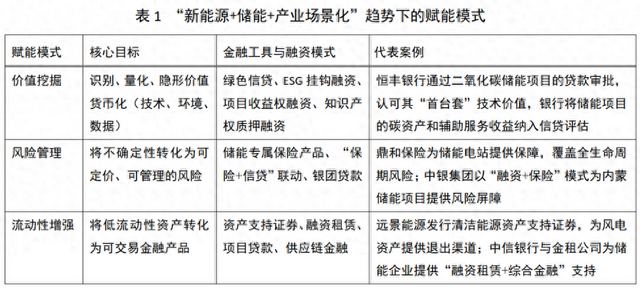
Core Viewpoint - The energy revolution in China has transitioned from a land-grabbing development model to a systematic reform phase, emphasizing the importance of scenario integration in the renewable energy sector [1] Group 1: Industry Development - The renewable energy industry is currently tasked with ensuring supply, stabilizing the foundation, transitioning, and tackling challenges, with scenario integration being a key focus [1] - The integration of renewable energy, storage, and industrial scenarios is essential for maximizing value through intelligent interaction among sources, networks, loads, and storage [1] - The shift from policy-driven to market-driven dynamics necessitates the use of diversified and creative financial tools to adapt to changing scenarios [1] Group 2: Financing Stages - The financing development of the renewable energy industry can be divided into two stages: 1.0, which relies on subsidy-driven debt financing, and 2.0, which utilizes diversified financial tools for innovative growth [2] - In the 1.0 stage, reliance on subsidies helped lower funding barriers, but the withdrawal of subsidies has led to increased financing costs and project terminations, as seen in the case of Ørsted's offshore wind projects in the U.S. [2] - The 2.0 stage requires financial institutions to become proactive value enablers, utilizing innovative tools like equity-debt linkage to support the scaling of renewable energy projects [2] Group 3: Value Extraction - Project value now extends beyond tangible assets and electricity revenue to include technological advancement, environmental services, and data management [5][6] - Financial institutions must recognize and price the potential of emerging technologies, as demonstrated by the credit approval for a carbon molten salt storage project [5] - The value of environmental services and data management must be identified and leveraged to enhance financing advantages, with examples of successful integration of these values into project assessments [6] Group 4: Risk Management - Financial institutions should address risks related to technology, revenue volatility, and operational safety by transforming uncertainties into manageable financial products [7] - Insurance models can mitigate technology-related risks, with examples of comprehensive insurance products tailored for the renewable energy sector [7][8] - Collaborative risk assessment approaches, such as the "iron triangle" service team model, can enhance project viability by considering technology, market, and industry chain value [8] Group 5: Liquidity Enhancement - The large investment scale and long payback periods in renewable energy necessitate financial institutions to enhance liquidity and facilitate a cycle of investment and reinvestment [10] - Asset securitization is a common method to convert stable future revenue rights into tradable financial products, providing liquidity for operational renewable energy projects [10] - Financing leasing models can offer flexible funding solutions for projects in the construction phase, alleviating short-term financial pressures [10] Group 6: Ecosystem Approach - Financial institutions should shift their evaluation focus from individual enterprises to the entire industrial chain, assessing the stability of trade relationships and receivables [11] - Financing models centered around leading enterprises can extend creditworthiness throughout the supply chain, ensuring financial support for smaller firms [11] - Examples of successful financing collaborations highlight the importance of integrating core enterprises' stability and credit into broader financing strategies [11] Conclusion - In the context of "renewable energy + storage + industrial scenario integration," financial institutions must evolve from mere fund providers to ecosystem builders, leveraging technology, market insights, and data to better serve the real economy [12] - By employing value extraction, risk management, and liquidity enhancement strategies, the financial system can activate the value of multi-dimensional assets and address industry risks [12] - The future of renewable energy finance will depend on the ability to optimize resource allocation and risk-sharing among stakeholders, positioning financial institutions as key players in the energy transition [12]
国信证券(香港)股票市场概览
Guoxin Securities· 2026-01-28 02:50
资讯日报:阿里巴巴发布最新人工智能推理模型 股票市场概览 港股市场表现 美股市场表现 ⚫ 周一(1月26日),美股三大指数高开高收,集体上涨。受 地缘政治与财政风险攀升影响,避险情绪推动贵金属价格显 2026 年 1 月 27 日 资讯日报 海外市场主要股市上日表现 | 指数 | 收盘价 | 日常跌 | 間微跌 | 年初至今 | | --- | --- | --- | --- | --- | | | | (%) | (%) | 湖铁 | | | | | | (%) | | 恒生指数 | 26.766 | 0.06 | 0.06 | 4.43 | | 恒生科技 | 5,726 | (1.24) | (1.24) | 3.81 | | 恒生国企 | 9.147 | (0.15) | (0.15) | 2.62 | | ┣证指数 | 4.133 | (0.09) | (0.09) | 4.13 | | 日经225 | 53.847 | (1.79) | (1.79) | 5.06 | | 新加坡海峡 | 4.891 | (0.62) | (0.62) | 0.00 | | 标普500 | 6,950 | 0.50 ...
有力度 有速度 有温度
Xin Lang Cai Jing· 2026-01-27 21:04
Core Viewpoint - Inner Mongolia Autonomous Region is focusing on high-quality development and implementing the "1571" work deployment as a guiding framework for its future growth, aiming to ensure a strong start for the 14th Five-Year Plan [1][2]. Group 1: "1571" Work Deployment - The "1571" work deployment includes: "1" focusing on building a model autonomous region with a strong sense of national community; "5" emphasizing the construction of two barriers, two bases, and one bridgehead; "7" targeting seven key tasks to develop a modern industrial system with Inner Mongolia's characteristics; and "1" reinforcing the comprehensive leadership of the Party [2][3]. - The deployment is characterized by its political, strategic, systematic, and continuity aspects, providing clear direction for economic work in 2026 and beyond [2]. Group 2: Key Development Initiatives - The completion of the 500 kV power transmission project in Keshiketeng Banner enhances the regional grid's capacity by 30%, facilitating the delivery of green energy [2]. - The opening of the Baoyin High-Speed Railway connects Inner Mongolia to the national market, promoting regional economic integration and opportunities [3]. - The construction of the China Mobile Intelligent Computing Center in Hohhot and Linhe New District is part of the focus on developing a modern industrial system [3]. Group 3: Improvement of Business Environment - The establishment of a major project review and approval mechanism in Xingan League has reduced the time for obtaining land pre-approval for wind power projects to just 2 working days, enhancing the business environment [4]. Group 4: Social Welfare Initiatives - The implementation of the "Ten Major Livelihood Projects" aims to improve the quality of life for residents, including healthcare reforms that reduce patient costs [5][6]. - The introduction of electronic consumer vouchers for elderly care services is part of the efforts to enhance the quality of life for senior citizens [6]. - The overall goal of these initiatives is to ensure that the benefits of development are more equitable and accessible to all residents, laying a solid social foundation for achieving economic and social development goals [6].