分众传媒

Search documents
分众传媒:在电梯媒体智能投放、数据分析及AI工具等方面不断加强布局
Zheng Quan Ri Bao Wang· 2026-02-25 09:44
Group 1 - The core viewpoint of the article emphasizes the importance of technological innovation for the company's business empowerment, particularly in areas such as elevator media intelligent placement, data analysis, and AI tools [1] - The company is continuously enhancing its layout in technology innovation to improve media operation efficiency and customer service levels [1] - The goal is to transition from high reach, high attention, high frequency, and high completion to a model that is precise, attributable, interactive, and optimizable [1]

浙商证券:大模型发展重视投入效率及商业化落地 C端入口争夺白热化
Zhi Tong Cai Jing· 2026-02-24 07:24
Group 1: Core Insights - The large model industry is evolving towards reasoning and multi-modality, emphasizing the feasibility of commercial application and improving ROI efficiency [1] - The new Qwen3.5-Plus model from Alibaba has significantly improved reasoning efficiency, with a total parameter count of 397 billion and a 60% reduction in deployment memory usage [2] - During the Spring Festival, the DAU of Qianwen reached 73.52 million, indicating a competitive edge in capturing C-end traffic [3] Group 2: Industry Trends - Since 2025, the development of large models has shown trends such as evolution from "generation" to "reasoning," emphasis on native multi-modality, and a focus on commercial scene implementation and ROI returns [1] - The AI application landscape is shifting from "buying traffic" to "buying mindset" and "buying pathways" to achieve customer retention [3] Group 3: Recommended Stocks - Companies to focus on include Zhizhu (02513), MiniMax-WP (00100), and Alibaba-W (09988) [2] - Additional recommendations include Cao Cao Travel (02643), SF Express City (09699), Damai Entertainment (01060), Focus Media (002027), and Bilibili-W (09626) [2]



整个社会都在喊没钱了,为什么这些公司反而年赚百亿?
创业家· 2026-02-18 09:33
Core Viewpoint - The article emphasizes that despite the prevailing narrative of economic hardship, certain industries are thriving and generating significant profits, particularly in the context of Japan's "lost 30 years" and the evolving consumer behavior in China [3][4]. Group 1: Emerging Business Opportunities - The article identifies eight key industries that are experiencing growth, highlighting that a low-desire society does not equate to a lack of opportunities [4]. - The concept of consumption upgrading and demand migration is presented as the largest business opportunity [5]. Group 2: Second-Hand Economy - In the context of reduced spending on luxury goods, the second-hand economy is flourishing, with companies like "大黑屋" in Japan and "红布林" and "胖虎" in China seeing substantial revenue increases [6][7]. - The article notes that platforms like "闲鱼" and "转转" are experiencing significant user engagement and transaction volume growth [9][10]. Group 3: Pet Economy - The pet economy is highlighted as a growing sector, with young consumers spending on premium pet products despite having fewer children [12]. - Companies like "中宠" and various pet brands are witnessing strong sales growth, indicating a shift in consumer spending towards pet care [13][14][15]. Group 4: Adult Care Products - The adult diaper market in Japan has surpassed $10 billion, showcasing the potential of the aging population as a significant economic driver [18][19]. - The article suggests that aging should be viewed as an opportunity rather than a burden, contributing to a multi-trillion dollar "sunset economy" [19]. Group 5: Health Food and Beverages - The rise in health consciousness and demographic changes are driving demand for sugar-free beverages and functional foods, with brands like "东方树叶" and "简醇" gaining traction in China [21][22]. Group 6: Beauty and Aesthetics - The beauty industry continues to thrive, with products like collagen supplements and home beauty devices achieving significant sales, indicating a persistent consumer desire for beauty enhancements [23][24][26]. Group 7: Outdoor and Leisure Activities - The outdoor equipment market is growing, with brands like "凯乐石" and "骆驼" benefiting from increased consumer interest in outdoor activities [29][31]. - The article notes that even in economic downturns, consumers are willing to invest in experiences and leisure [32]. Group 8: Convenience and Time-Saving Products - The "lazy economy" is emerging, with increased demand for frozen foods and smart home appliances that save time, reflecting a shift in consumer priorities towards convenience [39][40]. - The article posits that in a low-desire economy, time-saving solutions may hold greater commercial value than cost-saving measures [42].


经济越来越差,这八大行业越赚爆!
创业家· 2026-02-17 09:22
Core Insights - The article discusses how certain industries are thriving despite a general perception of economic downturn, highlighting eight key sectors that present significant business opportunities in a low-desire society [3][4]. Group 1: Key Industries - **Second-Hand Economy**: The second-hand luxury market in Japan, represented by companies like Daikokuya, has seen a surge in revenue. In China, platforms like Hongbulin and Panghu are experiencing similar growth, indicating a shift in consumer spending towards second-hand goods [6][7][8][9]. - **Pet Economy**: With declining birth rates, young people are spending more on pets, leading to significant growth in pet food and healthcare products. Companies like Inaba in Japan and Guobao in China are capitalizing on this trend [11][12][14][15]. - **Adult Care Products**: The adult diaper market in Japan has surpassed $10 billion, indicating a growing demand for adult care products in China, with companies like Kexin poised for growth [16][17][18]. - **Health Food and Beverages**: The rise in health consciousness has led to increased demand for sugar-free beverages and functional drinks, with brands like Dongfang Shuye and Jianchun gaining traction in China [21][22]. - **Beauty Economy**: The demand for beauty products, including collagen supplements and at-home beauty devices, is on the rise, with companies like Jinbo Bio and U like seeing significant sales growth [23][25]. - **Outdoor Recreation**: The outdoor equipment market is booming, with brands like Kailas and Camel experiencing rapid sales growth as consumers seek leisure activities [25][26][27]. - **Emotional Economy**: Products that provide emotional comfort, such as low-alcohol beverages and lifestyle brands, are gaining popularity, reflecting a dual consumer behavior of frugality and indulgence [28][29][30]. - **Convenience Economy**: The demand for convenience foods and smart home appliances is increasing as younger generations spend less time cooking. Brands like Anjijia and Kewotai are seeing steady growth [33][35][36]. Group 2: Market Trends - The article emphasizes that the current economic climate, often viewed as a "winter," presents opportunities for those willing to invest in counter-cyclical sectors [39]. - It suggests that the key to success in a low-desire society is to identify and capitalize on emerging trends and consumer needs, rather than retreating from the market [39].

整个社会都在喊没钱了,为什么这些公司反而年赚百亿?
创业家· 2026-02-13 10:10
Core Insights - The article discusses how certain industries are thriving despite a general perception of economic downturn, highlighting eight key sectors that present significant business opportunities in a low-desire society [3][4]. Group 1: Key Industries - **Second-Hand Economy**: The second-hand luxury market in Japan, represented by companies like Daikokuya, has seen a surge in revenue. In China, platforms like Hongbulin and Panghu are experiencing similar growth, indicating a shift in consumer spending towards second-hand goods [6][7][8][9]. - **Pet Economy**: With a decline in birth rates, young consumers are increasingly spending on pets, leading to significant growth in pet food and healthcare products. Companies like Inaba in Japan and Guobao in China are capitalizing on this trend [12][13][15][16]. - **Adult Care Products**: The adult diaper market in Japan has surpassed $10 billion, showcasing the potential of the aging population as a lucrative market segment [17][18][19]. - **Health Food and Beverages**: Changing demographics and rising health awareness have led to the growth of sugar-free beverages and functional foods in both Japan and China, with brands like Suntory and Dongpeng gaining traction [21][22]. - **Beauty and Aesthetic Products**: The demand for beauty products, including collagen supplements and at-home beauty devices, remains strong, indicating that consumers prioritize personal care even in economic downturns [23][24][26]. - **Outdoor Recreation**: Companies in the outdoor equipment sector, such as Snow Peak in Japan and various Chinese brands, are benefiting from increased interest in outdoor activities as a form of stress relief [29][31][32]. - **Convenience Economy**: The rise of frozen foods and smart home appliances reflects a shift towards convenience, with brands like Anjijia and Kewell seeing steady growth as consumers seek time-saving solutions [39][40][42]. - **Lazy Economy**: The trend of reduced cooking time among younger generations has led to a preference for ready-to-eat meals and smart appliances that automate household tasks, indicating a shift in consumer priorities [39][40][42]. Group 2: Market Dynamics - The article emphasizes that even in a low-desire economy, there are significant opportunities for those willing to invest in counter-cyclical sectors. Companies that can identify and act on these opportunities are likely to emerge as winners [44].



从字节Seedance-2
2026-02-13 02:17
Summary of AI Video Industry Insights from ByteDance's CPS 2.0 Industry Overview - The report focuses on the AI video industry, particularly the advancements brought by ByteDance's CPS 2.0 model, which significantly enhances the usability and generation quality in complex interactions and motion scenarios, aligning closely with industrial-grade content creation needs [2][3]. Core Insights and Arguments - **CPS 2.0 Enhancements**: The CPS 2.0 model supports multimodal inputs including images, videos, audio, and natural language instructions, improving video generation controllability and reducing content production costs in film, advertising, and other sectors [2][3]. - **Disruptive Impact on Gaming**: AI video technology is revolutionizing content creation processes in the gaming industry, facilitating innovative applications such as AI-driven narrative games and companion applications, thus accelerating IP visualization and commercialization [2][5]. - **Future Development Directions**: - Integration with social interaction features to meet everyday entertainment and creative needs of ordinary users [6]. - Shift towards platform integration, utilizing consumer applications as traffic entry points for broader user engagement [6]. - Deep integration with assistant functionalities to provide comprehensive solutions for video creation [6]. Investment Opportunities - Companies with strong IP reserves, such as Light Media and Yuedu Group, are expected to see significant commercial value enhancement due to advancements in AI video technology, presenting potential returns for investors [2][5]. - Leading internet companies like Tencent and platform-based companies such as Bilibili, Mango TV, and Focus Media are identified as having investment potential in the AI video sector [4][7]. - Companies focusing on short dramas and comics, such as Kunlun Wanwei, Huanrui Century, and Zhongwen Online, are also highlighted as worthy of attention [4][7]. Additional Important Points - CPS 2.0's capabilities include high-quality multi-shot audio-video output and dual-channel audio, which significantly lowers production costs across various content creation scenarios [3]. - The model's ability to maintain consistency and adherence to instructions enhances the creative capabilities of ordinary users, allowing them to produce content at a professional level [3].
未知机构:中信证券传媒分众传媒草根调研2026M2W2数据总结根据-20260213
未知机构· 2026-02-13 01:55
【中信证券传媒】分众传媒草根调研 2026M2W2 数据总结 根据草根调研,26M2W2 分众上海四张网去重广告主数量为 17 家,环比 26M2W1 回落。 根据草根调研,26M2W2 分众上海四张网去重广告主数量为 17 家,环比 26M2W1 回落。 但从结构看,广告主投放集中度提升,阿里千问APP投放力度显著。 广告主结构方面:互联网平台中京东、淘宝闪购、淘宝维持露出,春节假期前最后一周电商平台投放以促销与流 量获取为主,整体投放时长占比接近15%。 【中信证券传媒】分众传媒草根调研 2026M2W2 数据总结 但从结构看,广告主投放集中度提升,阿里千问APP投放力度显著。 广告主结构方面:互联网平台中京东、淘宝闪购、淘宝维持露出,春节假期前最后一周电商平台投放以促销与流 量获取为主,整体投放时长占比接近15%。 < 本周最大亮点来自 AI 应用类广告主阿里千问,投放时长占比达30%+,成为本周绝对核心广告主,体现出春节前 为流量争夺关键窗口期,大厂正加大 AI 应用运营投入,通过集中曝光提升用户规模与活跃度。 #本周千问已正式启动线下渠道投放,标志着头部互联网大厂在 AI 应用端进入主动获客与品牌心 ...
经济越来越差,这八大行业越赚爆!
创业家· 2026-02-12 10:52
Core Insights - The article emphasizes that despite the prevailing narrative of economic hardship, certain industries are thriving and generating substantial profits, particularly in the context of Japan's "lost 30 years" and its implications for various sectors [3]. Group 1: Economic Trends and Opportunities - The concept of a "low-desire society" does not equate to a lack of opportunities, as there are still significant business prospects available [4]. - The article identifies "consumption stratification" and "demand migration" as the largest commercial opportunities in the current market [5]. - As consumers shift away from purchasing homes and luxury goods, money is flowing into the second-hand economy, with notable growth in Japan's second-hand luxury market represented by companies like Daikokuya [6]. - In China, platforms like Hongbulin and Panghu are experiencing significant business growth in the second-hand market [7]. Group 2: Emerging Consumer Trends - The article highlights the rise of the pet economy, noting that while young people may not be having children, they are willing to spend on premium pet products [11]. - Companies like Inaba in Japan and Guobao (Zhongchong) in China are seeing strong stock performance due to the growing demand for pet food and related services [12]. - The adult care market is also expanding, with Japan's adult diaper market surpassing $10 billion, indicating a significant growth potential for similar products in China [16][18]. - Health-conscious food and beverage products are gaining traction, with brands like Suntory and Meiji seeing substantial growth due to changing population demographics and rising health awareness [21]. Group 3: Lifestyle and Emotional Spending - The "beauty economy" is thriving, with products like collagen supplements and home beauty devices achieving significant sales, indicating that consumers prioritize beauty even in challenging economic times [23]. - Outdoor leisure activities are becoming popular, with brands like Snow Peak in Japan and various Chinese outdoor brands experiencing rapid sales growth [25][26]. - The emotional economy is also on the rise, with brands like Labubu and Rio catering to consumers' desires for emotional fulfillment and experiences [28][29]. - The "lazy economy" reflects a trend where younger generations prefer convenience, leading to increased demand for frozen foods and smart home appliances that save time [33][35]. Group 4: Market Resilience and Strategic Insights - The article argues that the current economic climate, often perceived as a "winter," presents opportunities for those willing to invest in counter-cyclical sectors [39]. - Companies that can identify and capitalize on these emerging trends are likely to emerge as winners in the low-desire era, as time-saving solutions may hold more commercial value than cost-saving measures [36].

年销10亿仍然破产,自嗨锅营销窟窿有多大?
36氪· 2026-02-12 10:18
Core Viewpoint - The article discusses the decline of the once-popular self-heating hot pot brand "自嗨锅" (Self-Heating Pot), highlighting its financial struggles, consumer dissatisfaction, and the competitive landscape of the ready-to-eat food market [5][10][40]. Financial Performance - At its peak, 自嗨锅 achieved a valuation of 7.5 billion and annual sales of 1 billion, but it has faced significant losses, with a net profit of -1.51 billion in 2020 and over 3 billion in losses in 2021 [7][14][15]. - In 2022, the company reduced marketing expenses to below 30 million, resulting in a slight recovery in gross profit margin and net profit, which reached 1.99 million [16][18]. - Despite a revenue drop of 17.34% in 2022, the company managed to improve its gross profit margin to 33.47% [18]. Consumer Sentiment - Consumer feedback has shifted negatively, with many expressing dissatisfaction over the taste and quality of the products, leading to a perception of high prices for low-quality offerings [22][25][26]. - Social media is filled with complaints about the product's taste and quality, with consumers noting that the self-heating mechanism poses safety risks [31][22]. Market Dynamics - The self-heating hot pot market is shrinking, with competitors like 卫龙 and 海底捞 also scaling back their offerings due to changing consumer preferences [35][36]. - The rise of pre-prepared meals and the convenience of delivery services have further eroded the unique selling proposition of self-heating hot pots [37][40]. Brand Strategy and Positioning - 自嗨锅's marketing strategy heavily relied on celebrity endorsements and social media, but it failed to innovate or adapt to changing consumer tastes, leading to a loss of relevance [11][40]. - The brand's attempts to diversify its product line have not resonated with consumers, and its pricing strategy has not effectively positioned it against cheaper alternatives [26][28]. Future Outlook - The one-person meal market continues to grow, with projections indicating a market size of 1.8 trillion by 2025, but 自嗨锅 has not capitalized on this trend effectively [38][40]. - The company faces significant challenges in regaining market share and consumer trust, as it struggles to differentiate itself in a crowded and competitive landscape [40][41].

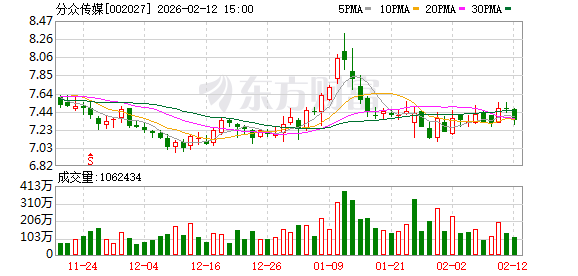
分众传媒:公司将持续夯实主业经营,提升经营质量
Zheng Quan Ri Bao· 2026-02-12 08:37
Group 1 - The company stated that it operates in strict compliance with laws, regulations, and regulatory requirements [2] - The fluctuations in the secondary market stock price are influenced by multiple factors, including macroeconomic environment, industry cycles, and market sentiment [2] - The company aims to strengthen its core business operations and improve operational quality to provide stable performance for investors [2]