华润微

Search documents
巨头定调存储芯片进入卖方市场!半导体设备ETF(561980)强势拉升涨超2.5%
Sou Hu Cai Jing· 2026-02-25 04:17
Core Insights - The semiconductor equipment and materials sector is experiencing a strong V-shaped rebound, with significant increases in ETF values and individual stock performances [1] - SK Hynix has indicated a shift in the global memory chip market to a seller's market, with low inventory levels and strong demand leading to price increases expected through 2026 [3] - A widespread price increase is occurring across the semiconductor industry, driven by AI demand and supply constraints, affecting all segments from wafer manufacturing to end products [4] Market Performance - The semiconductor equipment ETF (561980) has seen a net inflow of over 9.2 million in the previous trading day, with a current trading volume exceeding 1.14 billion [1] - As of February 24, 2026, the semiconductor industry index has increased by 277% since 2020, outperforming other semiconductor indices [6][7] Industry Trends - The AI-driven semiconductor cycle is expected to continue its upward trajectory, with domestic wafer manufacturers operating at full capacity and price increases being reported by various companies [4] - The demand for AI servers has led to a significant shortage in packaging and testing capacity, prompting price hikes from manufacturers like Silan Micro, Infineon, and China Resources Microelectronics [4] Future Outlook - The semiconductor equipment market is projected to grow significantly due to sustained demand for AI computing power and the upward cycle of memory chips, with a strong expectation for continued growth in 2026 [5][6]

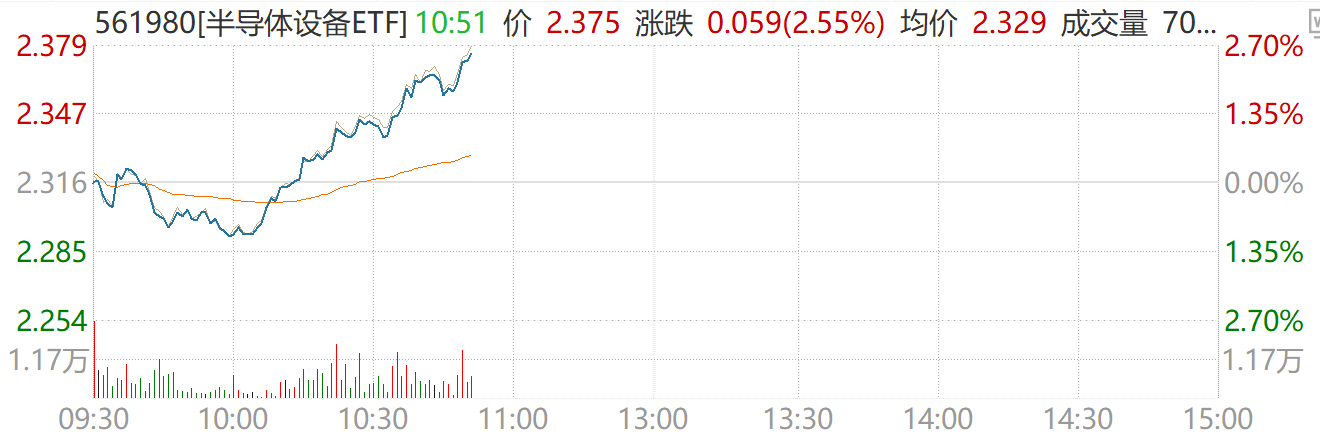
AI驱动存储格局逆转,设备需求确定性强化,半导体设备ETF(561980)直线拉升涨超2.5%!
Sou Hu Cai Jing· 2026-02-25 03:06
Core Signal - SK Hynix has indicated a significant shift in the global memory chip industry, stating it has transitioned to a seller's market with DRAM and NAND flash inventory levels at historical lows of approximately 4 weeks, leading to unmet demand from all customers [3] - The company's high bandwidth memory (HBM) capacity for 2026 is fully sold out, and the supply of standard DRAM remains tight, enhancing the bargaining power of manufacturers [3] - Due to the rigid demand from AI infrastructure and supply constraints, SK Hynix predicts a quarterly price increase for memory chips starting in 2026 [3] Industry Transmission - The semiconductor cycle is expected to rise from 2025 to 2026, driven by AI, with domestic wafer fabs operating at full capacity and price increases already observed in certain process nodes [4] - The surge in demand for AI servers has led to a severe shortage in packaging and testing capacity, prompting manufacturers to raise prices [4] - A systemic price increase is occurring across the entire semiconductor industry, affecting upstream wafer manufacturing, packaging, testing, and downstream products like storage chips and power semiconductors [4] High Rebound Sharpness - The semiconductor equipment ETF (561980) tracks the CSI semiconductor industry index, with over 90% weight in upstream sectors, and the top ten constituent stocks accounting for about 75% [6] - As of February 24, the ETF has a total size of 3.516 billion, with a net inflow of 9.21 million on that day [6] - Since 2020, the CSI semiconductor index has increased by 277%, significantly outperforming other semiconductor indices, indicating a stronger rebound and potential resilience in the upcoming semiconductor cycle [6][7]
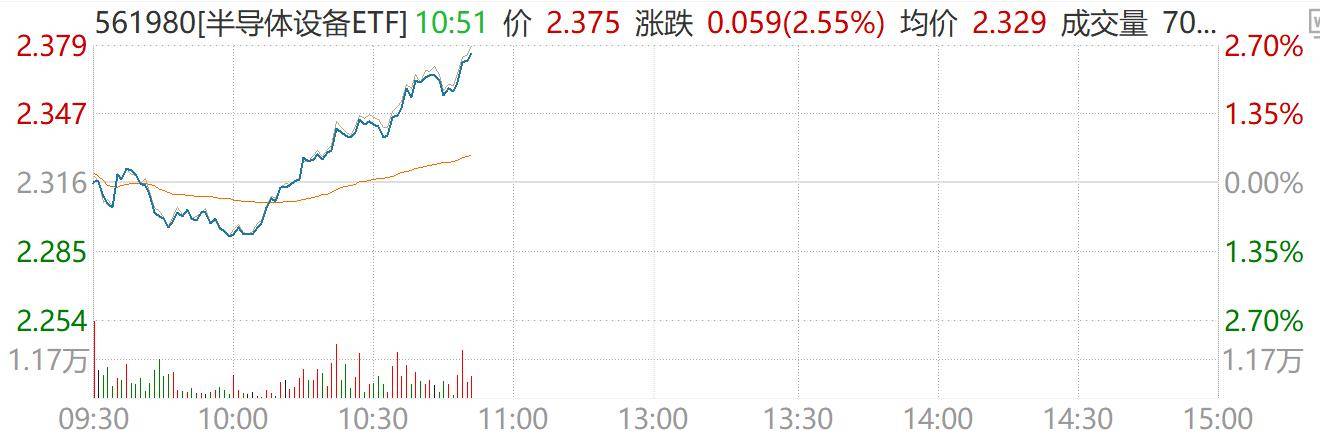
又一半导体厂商涨价,盘中突然拉涨超11%,宏微科技回应
2 1 Shi Ji Jing Ji Bao Dao· 2026-02-24 11:01
Core Viewpoint - The recent price increase notice from Hongwei Technology has drawn attention to the power semiconductor sector, indicating a broader trend of price hikes across the industry due to rising raw material costs [2][3]. Group 1: Company Developments - Hongwei Technology announced a price increase of approximately 10% for key products such as IGBT and MOSFET devices, effective March 1, due to fluctuations in upstream metal material prices [2]. - Following the announcement, Hongwei Technology's stock price surged over 11% at one point, closing at 34.24 yuan per share, marking a nearly one-year high with a daily increase of 4.29% [2]. - The company confirmed that the price hike is a common industry phenomenon and has communicated with long-term customers, indicating no significant obstacles to the price increase [2]. Group 2: Industry Trends - The power semiconductor industry is experiencing a recovery in demand, driven by sectors such as AI servers, new energy vehicles, and industrial control, leading to a surge in market demand [3][5]. - Major international players like Infineon and domestic firms such as China Resources Microelectronics and Silan Microelectronics have also announced price increases, reflecting a widespread trend in the industry [4][5]. - The semiconductor market is expected to reach a historical high in sales by 2025, with price increases spreading from memory chips to power, analog, and MCU sectors, driven by robust demand from AI infrastructure and other applications [5].

FINE2026火热招展!机器人轻量化/热管理,数据中心液冷、固态电池、AI芯片热管理......
DT新材料· 2026-02-18 16:04
Core Viewpoint - The 2026 Future Industries New Materials Expo (FINE 2026) aims to lead global innovation in new materials, emphasizing their critical role in the transformation of high-tech industries and future economic development [1][2]. Group 1: Event Overview - FINE 2026 will take place from June 10 to June 12, 2026, at the Shanghai New International Expo Center, featuring a total exhibition area of 50,000 square meters and over 300 strategic and cutting-edge technology reports [2][18]. - The expo will focus on popular innovations applicable to various industries, including artificial intelligence, aerospace, smart vehicles, and renewable energy, while addressing five common needs in future industries: advanced semiconductors, advanced batteries, lightweight functionalization, low-carbon sustainability, and thermal management [2][10]. Group 2: Historical Context and Participation - The previous editions of the expo, including the 2025 International Carbon Materials Expo and the 2025 Thermal Management Expo, achieved record attendance with over 35,000 professional visitors from 27 countries and regions, showcasing more than 500 exhibitors [7][36]. - The event is expected to attract over 100,000 professional visitors, including representatives from major companies such as BYD, Huawei, and Xiaomi, as well as over 5,000 industry investors [37][36]. Group 3: Thematic Focus and Special Features - FINE 2026 will feature seven specialized thematic exhibition areas, including advanced semiconductors, AI chips, thermal management, and sustainable materials, aiming to present a comprehensive chain of innovation from components to cutting-edge technologies [13][15]. - The expo will host over 30 forums with more than 300 renowned experts discussing trends in technology, investment strategies, and advanced manufacturing techniques related to new materials [22][24]. Group 4: Strategic Importance - The event is positioned as a critical opportunity for companies to connect with industry funds, government parks, and project resources, facilitating the integration of technological and industrial innovation in the new materials sector [2][10]. - The timing of the expo in June is highlighted as a strategic window for seizing business opportunities in the second half of the year, leveraging Shanghai's advantages as a major international exhibition platform [10].
半导体材料新势力 IPO 辅导启动,聚焦封装核心部件
Sou Hu Cai Jing· 2026-02-15 12:01
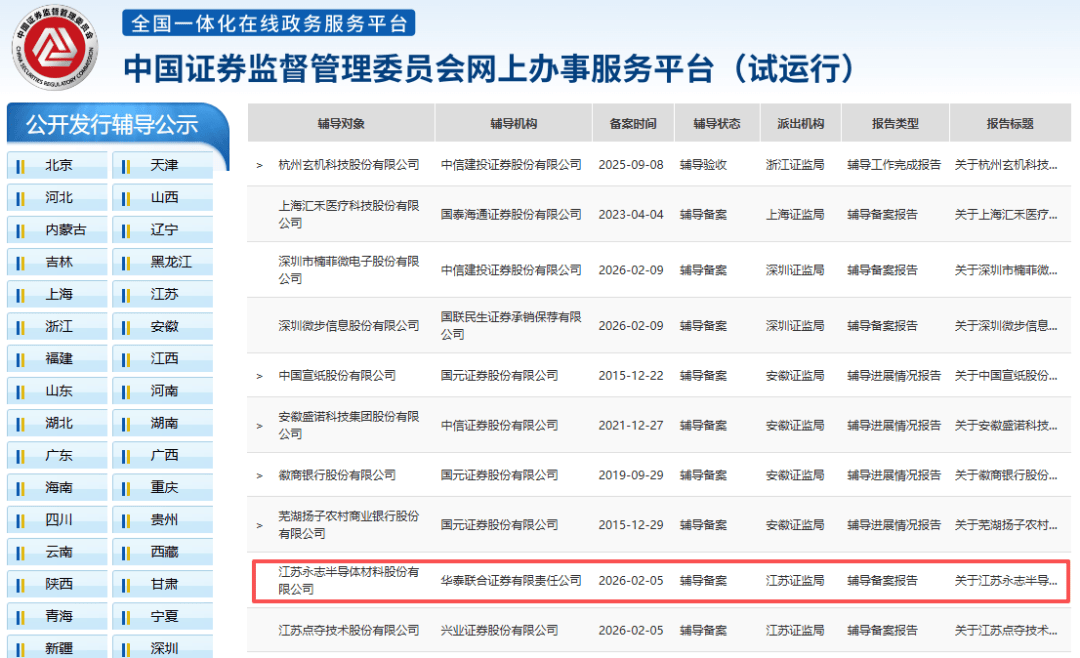
Core Viewpoint - Yongzhi Co., Ltd. is positioned as a national-level "little giant" enterprise and a national high-tech enterprise, focusing on the semiconductor chip packaging materials sector, and aims to support the independent and controllable development of the domestic semiconductor industry chain [2]. Group 1: Company Overview - Yongzhi Co., Ltd. was established on October 15, 2007, with a registered capital of 1.133 billion yuan, and is located in Taixing City, Jiangsu Province [1]. - The company specializes in the research, production, and sales of semiconductor packaging materials, particularly lead frames and packaging substrates [2]. Group 2: Product and Technology - Yongzhi's core products include lead frames and packaging substrates, with lead frames being critical materials in semiconductor packaging that provide electrical connections, mechanical support, and thermal management [2]. - The company utilizes advanced high-precision stamping, etching, and metal surface treatment technologies, offering both stamped and etched lead frames primarily for medium to high-power discrete devices [2]. Group 3: Market Position and Partnerships - Yongzhi has established itself as a key supplier for major chip manufacturers such as Silan Micro, China Resources Micro, and BYD Semiconductor, and has close collaborations with global top ten packaging and testing companies [3]. - The company has been recognized as a qualified supplier by ASE, indicating strong market acceptance [3]. Group 4: Intellectual Property and Future Prospects - Yongzhi has obtained a total of 128 patents, including 47 invention patents, showcasing its strong research and development capabilities [3]. - Market participants are optimistic about Yongzhi's successful completion of the guidance acceptance and its potential listing on the capital market, which would mark the beginning of a new sustainable development journey [3].
半导体材料新势力 IPO 辅导启动,聚焦封装核心部件
是说芯语· 2026-02-15 11:52
Core Viewpoint - Yongzhi Co., Ltd. is positioned as a national-level specialized and innovative "little giant" enterprise in the semiconductor chip packaging materials sector, focusing on providing high-performance and reliable packaging material solutions to support the independent and controllable development of the domestic semiconductor industry [2]. Group 1: Company Overview - Yongzhi Co., Ltd. was established on October 15, 2007, with a registered capital of 113.33 million yuan, and is located in Taixing City, Jiangsu Province [1]. - The company specializes in the research, production, and sales of semiconductor chip packaging materials, with core products including lead frames and packaging substrates [2]. Group 2: Product and Technology - The lead frame, a key material in semiconductor packaging, plays crucial roles in electrical connection, mechanical support, and thermal management, while the packaging substrate serves as the core connection bridge between bare chips and external circuits [2]. - Yongzhi's lead frame products are categorized into stamped lead frames and etched lead frames, primarily used in medium to high-power discrete devices across various critical sectors such as consumer electronics, industrial control, new energy, and automotive [2]. Group 3: Market Position and Partnerships - Yongzhi has established itself as a significant supplier to renowned chip manufacturers such as Silan Micro, China Resources Micro, and BYD Semiconductor, and has formed close collaborations with global top ten packaging and testing companies [3]. - The company has been recognized as a qualified supplier by ASE, indicating strong market acceptance [3]. Group 4: Intellectual Property and Future Prospects - As of now, Yongzhi has obtained a total of 128 patents, including 47 invention patents, showcasing its robust research and development capabilities that support product innovation and technological breakthroughs [3]. - Market participants express anticipation for Yongzhi to successfully complete its guidance acceptance and enter the capital market, marking the beginning of a new sustainable development journey [3].
未来已来 抢抓时代机遇!2026未来产业新材料博览会(6月10-12日 上海)
DT新材料· 2026-02-15 07:20
Core Viewpoint - The 2026 Future Industries New Materials Expo (FINE 2026) aims to lead global innovation in new materials, emphasizing their critical role in the transformation of high-tech industries and future economic development [1][2]. Group 1: Event Overview - FINE 2026 will take place from June 10 to June 12, 2026, at the Shanghai New International Expo Center, featuring a total exhibition area of 50,000 square meters and over 300 strategic and cutting-edge technology reports [2][18]. - The expo will focus on popular innovations applicable to various industries, including artificial intelligence, aerospace, smart vehicles, and renewable energy, while addressing five common needs in future industries: advanced semiconductors, advanced batteries, lightweight functionalization, low-carbon sustainability, and thermal management [2][10]. Group 2: Historical Context and Participation - The previous events, including the 2025 International Carbon Materials Expo and the 2025 Thermal Management Expo, achieved record attendance with over 35,000 professional visitors from 27 countries and regions, showcasing more than 500 exhibitors [7][36]. - The expected participation for FINE 2026 is over 100,000 professional visitors, with targeted invitations to over 5,000 industry investors to facilitate connections between startups and industry resources [35][37]. Group 3: Thematic Focus and Special Features - FINE 2026 will feature seven specialized thematic exhibition areas, including advanced semiconductors, AI chips, thermal management, and sustainable materials, aiming to present a comprehensive chain of innovation from components to cutting-edge technologies [13][15]. - The event will host over 30 forums with more than 300 renowned experts discussing trends in technology, investment strategies, and advanced manufacturing techniques related to new materials [22][24]. Group 4: Strategic Importance - The expo is positioned as a critical platform for technology transfer and industry innovation, leveraging China's growing influence in sectors like new energy vehicles, photovoltaics, and robotics, which are expected to create significant market opportunities for new materials [10][36]. - The timing of the event in June is seen as a strategic opportunity to capture business prospects for the second half of the year, supported by Shanghai's robust industrial and technological ecosystem [10][36].
台积电改写GaN格局
半导体行业观察· 2026-02-15 01:37
Core Viewpoint - TSMC's decision to exit the GaN foundry service by July 2027 is reshaping the GaN industry landscape, transitioning from reliance on advanced foundries to a focus on specialty process foundries [2][19]. Group 1: TSMC's Exit and Industry Impact - TSMC has been a crucial player in the GaN industry, being the only foundry capable of providing both high and low voltage GaN solutions [2]. - The exit of TSMC is prompting second-tier foundries to accelerate their capacity to fill the void left behind, leading to a reconfiguration of GaN manufacturing capabilities [2][5]. - GlobalFoundries (GF) has signed a GaN technology licensing agreement with TSMC, aiming to establish itself as a strategic GaN production center in the U.S. with over $80 million in federal funding [3]. Group 2: New Entrants and Strategic Moves - World Advanced (VIS), a TSMC subsidiary, is also entering the GaN market by expanding its GaN-on-Si capabilities, targeting mid-to-low margin orders previously handled by TSMC [3]. - Navitas, a major GaN customer of TSMC, is diversifying its supply chain by partnering with PSMC for 200mm GaN-on-Si production and strengthening ties with GF to mitigate manufacturing risks [4]. - ROHM is shifting from relying on TSMC to producing GaN devices in-house, establishing a new 8-inch wafer production line in Japan [7]. Group 3: Market Dynamics and Growth Projections - The GaN market is expected to grow significantly, with projections indicating a market size of approximately $3 billion by 2030 and a compound annual growth rate (CAGR) of 42% from 2024 to 2030 [10]. - The demand for GaN is expanding beyond consumer applications into high-reliability sectors such as data centers and electric vehicles, with automotive applications projected to grow at a CAGR of 73% from 2024 to 2030 [13]. - The shift in GaN applications is moving from consumer electronics to critical systems in data centers and automotive power supplies, emphasizing the need for reliability and efficiency [19]. Group 4: Structural Changes in the GaN Industry - The exit of TSMC is not a sign of declining GaN demand but rather a transition towards a decentralized manufacturing model, where multiple foundries share the production load [19]. - The industry is witnessing a redistribution of power, with IDM manufacturers regaining control over core processes and Fabless companies gaining more flexible manufacturing options [19]. - The GaN industry is evolving into a more independent and scalable sector, moving away from dependence on a single advanced foundry [19].



中芯国际、华润微、闻泰科技热度领跑 | 上市企业热度观测日志
Xin Lang Cai Jing· 2026-02-14 05:45
Core Viewpoint - The article highlights the current ranking of listed companies based on market sentiment, with a focus on supply-demand dynamics, pricing strategies, technological advancements, and legal disputes affecting investor sentiment. Group 1: Company Rankings - The top 20 companies in the "Listed Company Heat Ranking" include: SMIC, Huazhu Microelectronics, Wingtech Technology, BOE Technology, Zhaoxin Microelectronics, Aerospace Science and Technology, Huatian Technology, Cambricon, Changdian Technology, Southeast Electronics, Ruilian Technology, Naiko Equipment, Silan Microelectronics, ST Lifan, Northern Huachuang, Jinhong Gas, Zhongwei Semiconductor, Tongfu Microelectronics, Jinchengzi, and Hangyu Microelectronics [1][3][24]. Group 2: Supply-Demand and Pricing Dynamics - SMIC provided detailed responses regarding pricing strategies amid tightening capacity, emphasizing that price adjustments are driven by supply-demand relationships, with increases in prices for memory and BCD products [14][34]. - Huazhu Microelectronics announced a price increase effective February 1 due to rising costs of raw materials and manufacturing, indicating a broader trend of cost transmission in the semiconductor industry [14][34]. Group 3: Technological Advancements and Collaborations - Hangyu Microelectronics developed the Yulong 810 AI chip with a computing power of 12 TOPS, which is now used in the "Zhuhai No. 1" satellite for real-time image recognition [15][35]. - Huazhu Microelectronics received authorization for a patent on "smart power modules," which is expected to benefit applications in electric vehicles and industrial control [16][36]. - Silan Microelectronics secured a utility model patent for power modules, reinforcing its technological capabilities in the power semiconductor sector [17][37]. - BOE Technology applied for a patent related to display panels, further solidifying its technological barriers in the display sector [18][38]. Group 4: Legal Disputes and Governance - Wingtech Technology expressed strong dissatisfaction with a recent court ruling regarding the Nexperia case, which has significant implications for the company's control over core assets [20][40]. Group 5: Stock Price Movements and Market Attention - Naiko Equipment's stock rose by 5.59%, indicating active trading and market speculation regarding its advancements in semiconductor packaging equipment [21][41]. - BOE Technology's stock has declined for six consecutive days, with a cumulative drop of 5.22%, raising concerns about short-term demand in the industry [21][41].



华润微、士兰微、英飞凌等多家半导体厂商涨价!
Xin Lang Cai Jing· 2026-02-14 05:12
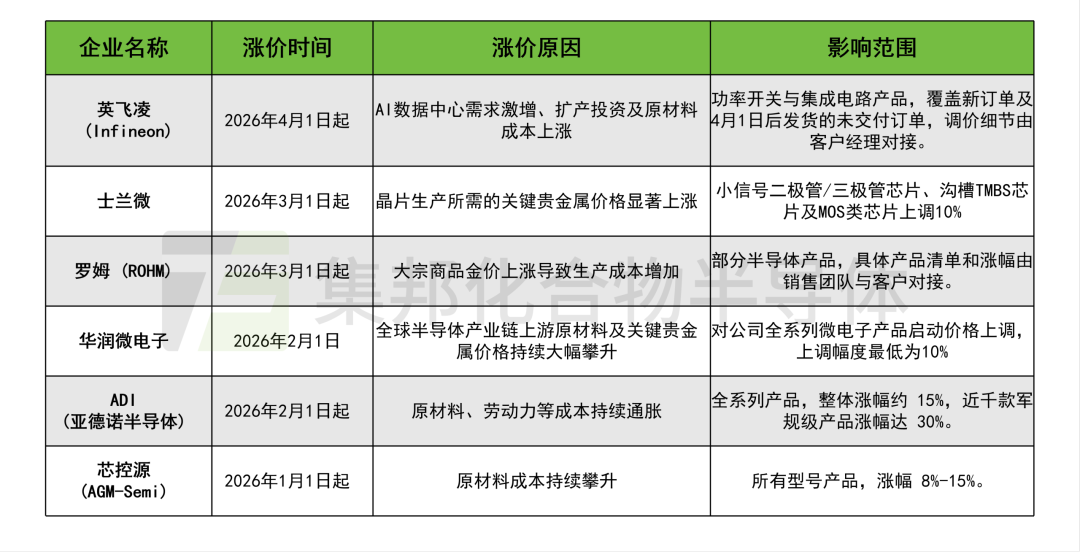
Core Viewpoint - The recent price increase announcements from multiple power semiconductor companies, including Silan Micro, Infineon, and China Resources Microelectronics, have drawn significant industry attention, indicating a broader trend of rising costs and demand in the semiconductor sector [1][14]. Price Increase Details - Infineon will raise prices for power switches and integrated circuit products starting April 1, 2026, due to surging demand from AI data centers, expansion investments, and rising raw material costs [2][19]. - Silan Micro will implement a 10% price increase on small signal diodes, transistors, trench TMBS chips, and MOS chips effective March 1, 2026, driven by significant increases in key precious metal prices [2][17]. - ROHM will also increase prices for certain semiconductor products starting March 1, 2026, due to rising commodity prices [2]. - China Resources Microelectronics will raise prices for its entire range of microelectronic products by at least 10% starting February 1, 2026, citing significant increases in upstream raw material prices [2][20]. - Analog Devices (ADI) will increase prices by approximately 15% across its entire product range, with some military-grade products seeing increases of up to 30% starting February 1, 2026 [2]. - AGM-Semi will raise prices by 8%-15% for all models starting January 1, 2026, due to rising raw material costs [2]. Reasons for Price Increases - The primary driver for the price increases is the sustained pressure on production costs, influenced by rising commodity prices, particularly precious metals, and increased costs in wafer manufacturing and packaging [10][23]. - The tightening of wafer foundry capacity, as leading foundries shift focus away from mature processes, has further exacerbated cost pressures [10][23]. - Demand for power semiconductors is structurally increasing due to rapid growth in sectors such as AI data centers, electric vehicles, energy storage, and industrial control [10][24]. Market Dynamics - The value of power components in AI servers has increased significantly, with the price per server component rising from $6-7 to $30-50, a nearly fivefold increase, which has driven demand for power switches and power management chips [11][24]. - The ongoing development in automotive electronics and energy storage is further amplifying the demand gap for power semiconductors, supporting price increases [10][25]. Impact on Third-Generation Semiconductors - The price increases from major power semiconductor manufacturers may facilitate a shift towards third-generation semiconductors, as the price gap between traditional silicon-based devices and SiC/GaN devices narrows [12][25]. - As traditional power device prices rise, downstream companies may reconsider their cost structures, potentially favoring SiC devices for their efficiency and reduced thermal management needs [12][26]. - In the AI server power market, rising traditional silicon power prices may drive manufacturers to adopt more efficient GaN solutions to lower operational costs [12][26]. Conclusion - The price increase trend among power semiconductor companies is a reflection of supply-demand imbalances, rising costs, and technological advancements, marking a significant phase of structural adjustment in the global power semiconductor industry [13][27]. - This trend not only accelerates the domestic substitution process for silicon-based power semiconductors but also acts as a catalyst for the cost-effective application of third-generation semiconductors, promoting a transition towards high-efficiency, energy-saving, and miniaturized high-end fields [13][27].