
峰飞航空

Search documents
中国软件技术发展洞察和趋势预测研究报告2026
极客邦科技· 2026-02-05 07:26
Investment Rating - The report does not explicitly state an investment rating for the industry Core Insights - The artificial intelligence (AI) sector continues to dominate investment, accounting for 88.1% of total financing in the technology field in 2025, an increase of 5.3 percentage points from 2024 [21] - The humanoid robot sector has emerged as a significant area of investment, capturing 16.8% of the total technology financing [28] - The report highlights the rapid evolution of AI technologies, particularly in reasoning models and multimodal models, which are reshaping the landscape of AI applications [36][38] Summary by Sections 2025 Technology Market Review - In 2025, the technology sector saw a total financing of 738.4 billion yuan across 644 events, with AI leading the way [21] - Key developments included the rise of humanoid robots and advancements in AI models, such as the release of various reasoning models by major companies [19][36] 2026 Technology Trend Outlook - The report anticipates continued growth in AI and humanoid robotics, with significant investments expected in these areas [28] - The integration of AI into various applications is expected to accelerate, driven by advancements in multimodal models and reasoning capabilities [36][38] Financing Events and Trends - The AI sector experienced 212 financing events exceeding 100 million yuan, representing 88.7% of all such events in the technology field [29] - The report notes a shift towards more substantial financing rounds, with seed and A rounds making up 67.7% of total financing events [31] Key Companies and Innovations - Notable companies in the AI sector include Zhiyuan AI, Minimax, and Yuzhi Technology, which have raised significant funds in recent rounds [32] - The report highlights the emergence of new technologies and models, such as DeepSeek and various multimodal models, which are expected to drive future growth [36][38]
欣旺达,航空级固态电池量产
DT新材料· 2026-01-28 16:04
Core Viewpoint - XWANDA has achieved mass production of its aviation-grade solid-state batteries, marking a significant milestone in the commercialization of solid-state battery technology in China, with energy densities reaching up to 380Wh/kg [1][2]. Group 1: Product Development - The company has launched two generations of semi-solid state battery products: Gen1 with an energy density of 320Wh/kg and Gen2 with 380Wh/kg, targeting various low-altitude economic applications [1]. - Gen2 batteries can charge to 80% in 10 minutes and have a range of 320 kilometers, addressing the energy and charging challenges of electric vertical takeoff and landing aircraft (eVTOL) [1][2]. - The Gen2 product utilizes a lithium-zirconium-aluminum-chloride solid-state electrolyte developed in collaboration with the University of Science and Technology of China, which offers cost advantages and good interface compatibility [2]. Group 2: Production Capacity - XWANDA's dedicated aviation battery production line in Shenzhen has achieved full capacity with an annual output of 3GWh, utilizing a roll-to-roll dry production process with over 95% material utilization and a yield rate exceeding 92% [2]. - The production line's high reuse rate with existing power battery production equipment significantly reduces investment and operational costs [2]. Group 3: Market Expansion - The company has established partnerships with leading low-altitude economy enterprises such as Fengfei Aviation, Xiaopeng Huitian, and Yihang Intelligent, enhancing its market presence [3]. - The high energy density batteries for eVTOL applications have a high premium capability, while the drone battery segment focuses on scaling production, creating a beneficial combination of high margins and high sales volume [3]. - Aviation-grade batteries, being high-value products, have significantly higher profit margins compared to traditional power batteries, providing strong support for profitability [3].



“eVTOL五小龙”齐聚 上海争夺低空经济先发优势
Xin Lang Cai Jing· 2026-01-23 19:56
Core Insights - Shanghai is focusing on developing electric vertical takeoff and landing aircraft (eVTOL) to capture the low-altitude economy, with the establishment of a significant transportation node in the Yangtze River Delta [2][4] - The city aims to achieve a core industry scale of approximately 80 billion yuan in the low-altitude economy by 2028, creating a complete industrial chain for new aviation vehicles [4][5] - Shanghai's strategic initiatives are part of a broader transition towards a future-oriented manufacturing model, integrating advanced manufacturing, digital technology, and artificial intelligence [3][5] Policy Initiatives - Shanghai has introduced several supportive policies for the low-altitude economy and commercial aerospace, including the "Measures" and "Action Plan" aimed at fostering investment and innovation in these sectors [2][4] - The government is providing financial support for eVTOL projects, with funding up to 10 million yuan for key manufacturing capabilities and technology breakthroughs [5][6] Industry Development - As of December 2025, Shanghai is home to at least 251 low-altitude economy startups, with 66 eVTOL and drone manufacturers, representing over 50% of the country's leading eVTOL companies [6][7] - The city has a robust aviation industry ecosystem, including expertise in aircraft design, manufacturing, and airworthiness certification, which supports the growth of eVTOL enterprises [6][7] Infrastructure and Challenges - Infrastructure development is identified as a major bottleneck for the low-altitude economy, with calls for improved vertical takeoff and landing sites and enhanced low-altitude communication and navigation systems [8][9] - The industry is in its early stages, with public concerns about the safety of eVTOL products, necessitating a focus on compliance and safety verification throughout the development process [9]
低空赛道加速跑:2026年eVTOL行业新机遇
Xin Lang Cai Jing· 2026-01-23 04:26
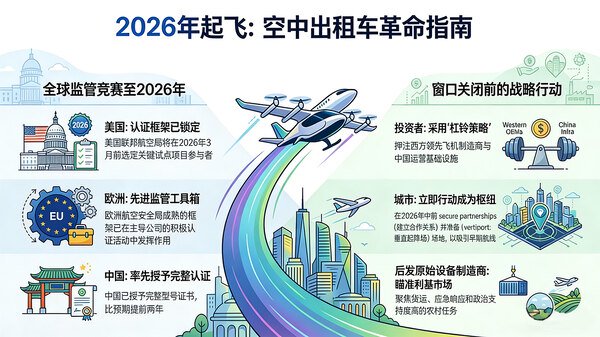
(来源:中国航空报) ly 第 -10 LID 8.9% N ● ■■ LTER 495 E: 1 vio t 美国联邦航空局已率先敲定全套动力升力类航空器法规体系,不仅出台了专项管理条例《特殊联邦航空 条例第120号》、更新了适配eVTOL运营的飞行员评级标准,还针对性优化了《联邦航空条例》第91部 和第135部内容,为eVTOL运营提供明确规则依据。其电动垂直起降飞行器集成试点计划(eIPP)将于 2026年3月敲定最终参与方,入选企业可在3个月内凭借预认证机型,在严格受控的城市短途接驳、特定 区域通勤等场景下开展初期运营。其中,乔比航空、阿彻航空两家企业领跑西方市场,凭借清晰可落地 的2026年认证路径,以及持续稳定的技术迭代进度,成为当前西方整机制造商中执行风险最低的头部玩 家。 欧洲的认证框架推进速度"更胜一筹",欧洲航空安全局(EASA)的垂直起降飞行器认证体系 (SCVTOL)已迭代至第三版,配套的符合性验证方法(MoC-4/5)也已全部落地生效,形成完整的监 管工具链。英国民用航空局更是为垂直航空航天公司开辟了专属绿色通道,允许其自行批准部分特定飞 行条件,这一特殊许可并非监管宽松,而是充分体 ...
【要闻】何朝晖率队赴上海开展招商考察
Sou Hu Cai Jing· 2026-01-22 06:08
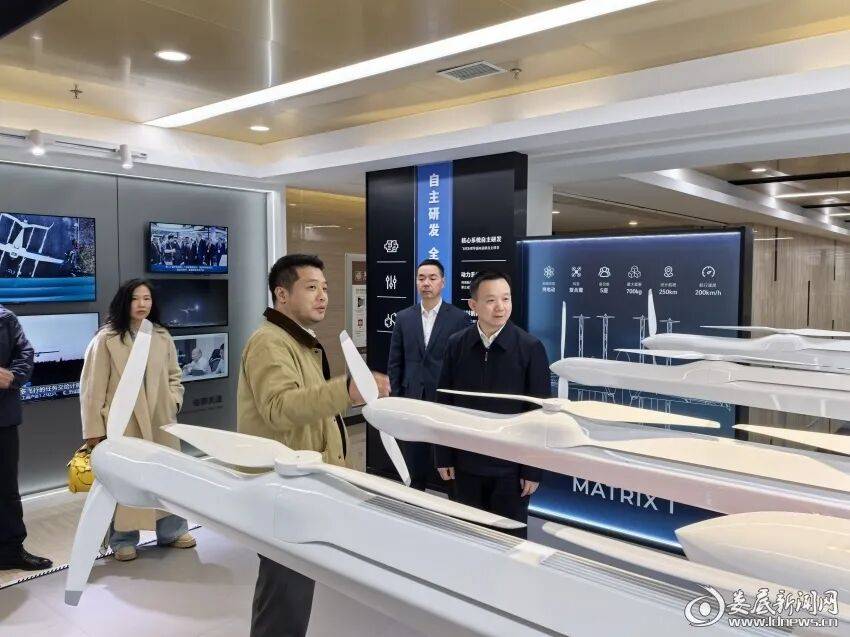
Group 1 - The mayor of Loudi, He Zhaohui, led a delegation to Shanghai from January 18 to 20 to explore investment opportunities, focusing on industrial collaboration, technological innovation, and regional cooperation [2][3] - During the visit, He Zhaohui highlighted Loudi's strengths in titanium materials, aiming to integrate local products into the supply chain of Commercial Aircraft Corporation of China (COMAC) to support large-scale production of key components [3] - Discussions were held with Shanghai Jiao Tong University regarding collaboration in material science, technology research and development, and talent cultivation, leveraging the Hunan Higher Research Institute platform [3] Group 2 - He Zhaohui promoted Loudi's advantages in developing a low-altitude economy to aviation technology companies, inviting them to explore establishing fixed logistics routes between Loudi and Changsha-Zhuzhou-Xiangtan [3] - The mayor requested more support from the provincial government office in Shanghai to facilitate regular and precise connections in industry, technology, and talent between Loudi and the Yangtze River Delta [4] - He Zhaohui emphasized the importance of optimizing the business environment and invited local entrepreneurs in Shanghai to invest in Loudi, aiming to create new development opportunities [4]
“eVTOL五小龙”齐聚 上海争夺低空经济“制空权”
Zhong Guo Jing Ying Bao· 2026-01-20 17:37
Core Viewpoint - Shanghai is actively developing the low-altitude economy and commercial aerospace sectors, aiming to establish itself as a global hub for electric vertical takeoff and landing (eVTOL) aircraft by implementing supportive policies and infrastructure development [1][3][2]. Group 1: Policy Initiatives - Shanghai has introduced multiple policies to support the low-altitude economy, including a target to reach a core industry scale of approximately 80 billion yuan by 2028 [3]. - The city aims to build a complete industrial chain for new low-altitude aircraft and establish a national advanced manufacturing cluster for the low-altitude economy [3]. - Financial incentives are provided, with up to 10 million yuan in support for eVTOL manufacturing projects, encouraging investment in low-altitude and commercial aerospace sectors [3][6]. Group 2: Industry Development - As of December 2025, Shanghai is home to at least 251 startups in the low-altitude economy, with 66 companies focused on eVTOL and drones, representing over 50% of the leading eVTOL firms in China [5]. - Companies like Volant, Peak Aviation, and Shide Technology are recognized as key players in the eVTOL sector, achieving significant milestones in flight testing and certification [6][9]. - The city has also attracted several commercial aerospace companies, contributing to a robust ecosystem for low-altitude economic activities [6]. Group 3: Infrastructure and Ecosystem - Infrastructure development is identified as a critical challenge, with calls for improved facilities for flight testing and operational deployment of eVTOLs [7][8]. - Experts suggest enhancing the layout of takeoff and landing points, particularly in transportation hubs and business districts, to facilitate low-altitude operations [7]. - The establishment of a comprehensive regulatory framework and streamlined approval processes is essential for the successful implementation of low-altitude economic initiatives [7][8]. Group 4: Talent and Experience - Shanghai's aviation industry benefits from a wealth of talent and experience, with a strong background in civil aviation and aircraft certification processes [4][5]. - The city has produced a skilled workforce through successful projects like the domestically developed C919 aircraft, which supports the growth of the low-altitude economy [5]. - The presence of experienced regulatory bodies enhances the industry's ability to develop and implement eVTOL technologies effectively [4].
深化场景定制 补全基础设施:低空经济冲刺规模化商业闭环
Zhong Guo Zheng Quan Bao· 2026-01-19 23:16
Core Viewpoint - The low-altitude economy is transitioning from early-stage large-scale applications to a critical phase of deep penetration, with a focus on converting blueprints into valuable commercial scenarios [1] Industry Challenges - The low-altitude economy faces several challenges before achieving large-scale operations, including the need for improved infrastructure networks, significant technological iteration pressure, and precise market demand alignment [1] - Current low-altitude infrastructure is not yet complete, necessitating accelerated development of takeoff and landing points, application scenarios, and demonstration zones [4] Infrastructure Development - Shenzhen plans to establish over 1,200 low-altitude takeoff and landing points and open more than 1,000 low-altitude commercial flight routes by the end of 2026 [5] - Chongqing aims to build over 1,500 new general aviation takeoff and landing points by 2027, promoting a "town-to-town" low-altitude flight network [5] - The construction of a comprehensive low-altitude perception network and unified control platform is essential to address the complexities of high-density and frequent low-altitude operations [5] Technological Advancements - Tilt-rotor technology is becoming a core development direction for aviation-grade drones, combining the advantages of vertical takeoff and landing with high-speed cruising [3] - Companies are focusing on industrial-grade drones and large unmanned transport aircraft, with clearer commercialization paths [2] Regulatory Environment - The new Civil Aviation Law of the People's Republic of China has restructured the airworthiness management system, allowing for "special flight certificates" for aircraft that have not yet obtained airworthiness certificates, thus providing a legal flight path while ensuring safety [6] Financial Support and Investment - The industry requires substantial financial backing due to rapid technological updates and long R&D cycles, with investments often reaching billions [7] - There is a structural mismatch between traditional financial products and the characteristics of technology companies, leading to high financing costs and limited efficiency [7]
2026年八大科技风向标来了
21世纪经济报道· 2026-01-16 03:03
记者丨陶力 倪雨晴 彭新 孔海丽 董静怡 骆轶琪 编辑丨骆一帆 科技的迭代速度,正愈发超越人们想象。 2025年,人工智能、量子计算、聚变能源、航天工程等关键领域,均迎来突破性进展,中国 与美国在核心赛道的引领与竞争,推动全球科技格局发生深刻变革。从开源AI模型打破算力 垄断到"人造太阳"刷新能源探索纪录,从量子计算逐步突破到商业航天技术成熟,一系列重 大科技事件不仅重塑了产业生态,也改写了技术发展的底层逻辑。 随着技术积累的持续深化与应用场景的不断拓展, 2026年成为科技从"实验室走向产业化"的 关键一年 ,AI与物理世界的深度融合、脑机接口探索商业化、低空经济的规模化发展等趋 势,将进一步推动科技与民生、产业的深度绑定,开启新一轮全球科技革命与产业变革。 21世纪经济报道科技团队在采访行业专家和资深从业人员的基础上,经过深入讨论和研究, 系统梳理出了2025年全球重大科技事件,观察和透视2026年行业发展新趋势,力图呈现科技 浪潮下的产业变革与未来图景。 2 0 2 5年全球科技重大事件回顾 1.DeepSeek引领全球开源AI模型 2025年春节期间,DeepSeek火爆出圈,迅速在全球应用市场霸榜, ...

四大证券报精华摘要:1月9日
Zhong Guo Jin Rong Xin Xi Wang· 2026-01-09 00:50
Group 1: Lithium Battery Industry - Longpan Technology has announced plans to build a new production base for high-pressure lithium iron phosphate with an annual capacity of 240,000 tons, with a total investment not exceeding 2 billion yuan, due to existing capacity being insufficient to meet customer demand [1] - Multiple companies, including Fulin Precision, Dongfang Zirconium, Zhongkuang Resources, and Xinzhoubang, have announced lithium battery project investments, continuing the expansion trend seen since 2025 [1] - Industry experts predict that the investment boom in the lithium battery sector will continue into 2026, driven by improving supply-demand dynamics [1] Group 2: Fund Sales and Regulations - The public fund industry is at a critical transformation point as the scale continues to reach new heights, with recent regulations aimed at reducing fund subscription and sales service fees to enhance investor experience [2] - The new regulations are designed to guide the fund industry back to long-term investment and strengthen investor satisfaction [2] Group 3: State-Owned Enterprise Restructuring - The restructuring of China Petroleum & Chemical Corporation and China Aviation Oil Group has been approved, aiming to reduce aviation fuel supply costs and enhance competitiveness in the aviation fuel industry [3] - This merger aligns with the trend of state-owned enterprise reform focused on optimizing capital layout and avoiding homogeneous competition [3] Group 4: H-Share Listings - Several A-share companies, including 聚辰股份 and 鹏辉能源, have announced plans for H-share listings, indicating a trend of companies seeking to capitalize on favorable policies and financing needs [4] - This "batch southward" movement is expected to reshape the Hong Kong stock market structure and enhance the global resource allocation capabilities of leading Chinese enterprises [4] Group 5: Commercial Aerospace - Several companies, dubbed "China's version of SpaceX," are vying to become the first commercial rocket stock, with valuations exceeding 10 billion yuan [6] - The commercial space race is intensifying, with significant capital influx and project competition, indicating a shrinking investment window [6] Group 6: Margin Trading in A-Shares - As the A-share market becomes more active, the margin trading balance has reached a historical high of 2.6047 trillion yuan, marking a significant increase [7] - The trading volume of margin transactions has also surged, with a notable increase in daily trading amounts [7] Group 7: Advanced Manufacturing in Guangzhou - Guangzhou's government has released a plan to accelerate the construction of an advanced manufacturing city, aiming for significant progress by 2030 [8] - The plan includes optimizing industrial structure and enhancing quality and efficiency, with a focus on creating world-class manufacturing clusters [8] Group 8: AI and Semiconductor Market - Beijing Zhiyu Huazhang Technology has become the first Hong Kong-listed company focused on original general models, with a market capitalization of 57.9 billion HKD [10] - The demand for AI computing power is driving a surge in storage chip prices, with significant increases noted in server memory costs due to structural supply-demand imbalances [10]

飞向实际场景 低空应用有序落地
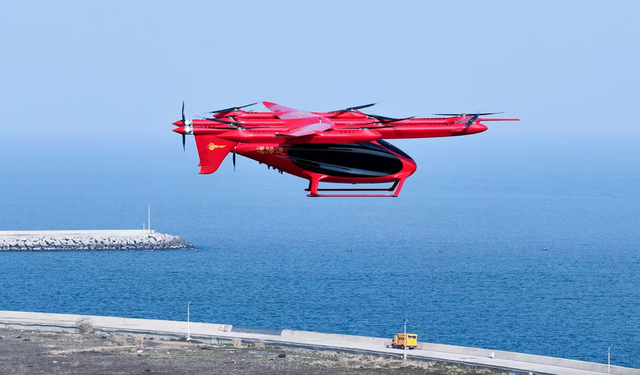
Zhong Guo Zheng Quan Bao· 2026-01-08 20:50
1月4日,上海发布《上海市关于链接长三角加快建设低空经济先进制造业集群的若干措施》,其中明确 提出,到2028年,上海低空经济核心产业规模达到800亿元左右,要有序开展低空经济场景应用。 与之对应的是,业内在应用层面正积极拓展。近日,电动垂直起降飞行器(eVTOL)企业峰飞航空宣 布,旗下2吨级eVTOL"凯瑞鸥"从海南海口明珠岛起飞,仅用9分钟便稳稳降落在广东湛江徐闻港,实现 全国首例吨级无人驾驶eVTOL跨琼州海峡运输场景验证。在低空经济应用场景拓展与产业生态构建层 面,沃兰特等公司也相继宣布与多家企业达成深度合作。 接受中国证券报记者采访的业内人士普遍认为,单个产品的成功和单一场景的繁荣,并非是这片低空领 域的最终答案。低空经济要真正成为驱动城市发展的新引擎,必须升维竞争,这就需要构建更加完整的 产业生态。 事实上,从企业间的"产品竞赛",升级为区域间的"生态系统协同",也是上海此次出台政策对行业健康 稳步发展的一个重要指引方向。 ● 本报记者 乔翔 物流场景"率先起飞" 低空经济的生命力在于真实、可使用的应用场景,其中低空物流场景已成为业内企业积极布局的领域。 "应用层面,国内吨级无人驾驶载货eVTO ...