Kioxia

Search documents
Silicon Motion Named a Clarivate Top 100 Global Innovator 2026
Prnewswire· 2026-01-28 17:16
Core Insights - Silicon Motion Technology Corporation has been recognized as a Top 100 Global Innovator for 2026, highlighting its leadership in NAND flash controller innovation [1][2] - The recognition emphasizes the company's commitment to innovation, particularly in AI storage technologies, and its robust intellectual property strategy [2][3] Company Overview - Silicon Motion is the global leader in supplying NAND flash controllers for solid-state storage devices, shipping more SSD controllers than any other supplier worldwide [7] - The company also leads in providing eMMC and UFS embedded storage controllers for smartphones, IoT products, and automotive applications [7] Innovation Metrics - Clarivate evaluates organizations based on metrics such as patent influence, success, globalization, and technical distinctiveness, with Silicon Motion showing strong performance in patent volume and 'Grant Rate' [2][3] - The Top 100 Global Innovators collectively contribute 16% of the world's highest-strength AI inventions, indicating a significant role in shaping future innovations [3] Market Position - Silicon Motion delivers customized, high-performance solutions for hyperscale data centers, industrial systems, and automotive SSDs, focusing on high performance, low power, and reliability [8] - The company's customer base includes major NAND flash vendors, data center providers, and leading OEMs, relying on its controller technologies for innovative storage solutions [9]




AI 供应链:TPUASIC 动态;ICMS 存储芯片需求测算Asia-Pacific Technology-AI Supply Chain TPUASIC updates; ICMS NAND demand calculation
2026-01-28 03:03
January 27, 2026 10:15 PM GMT Asia-Pacific Technology | Asia Pacific AI Supply Chain: TPU/ASIC updates; ICMS NAND demand calculation We sense that AI semi vendors have started securing critical 2027 components – T-Glass/ABF, HBM, and TSMC 3nm – (e.g., MediaTek's 3nm TPU). Downgrade Egis to EW, as its 2026 appears to be shaping up as a year of transition. ASIC – Volume upside for MediaTek's 3nm TPU project in 2027: In our Target Price Up report, we highlighted the supply chain's bull case of 6-7mn TPU units ...


Seagate Technology stock hits key resistance ahead of its earnings: buy or sell?
Invezz· 2026-01-26 14:13
Core Viewpoint - Seagate Technology's stock has experienced significant growth due to the increasing demand for memory devices driven by the artificial intelligence boom, with a price increase of 452% since April of the previous year [1][2]. Company Performance - Seagate Technology manufactures data storage devices, including hard drives and solid-state drives, which are essential for personal computers and data centers [2]. - The company's revenue for the third quarter rose to $2.62 billion, up from $2.16 billion [3]. - Gross margins improved to 39.4% from 32.9%, and net income increased from $305 million to $549 million, with earnings per share rising to $2.43 [4]. Future Expectations - Upcoming earnings are anticipated to show revenue of $2.75 billion, an 18% increase from the same period in 2024 [4]. - Earnings per share is expected to reach $2.84, a 40% increase from $2.03 in Q4'24, with annual revenue projected at $11.12 billion, up 22% year-over-year [5]. - Analysts predict annual revenue could reach $13.2 billion, reflecting an 18.7% year-over-year growth due to the AI boom and ongoing PC refresh [5]. Industry Context - Seagate's performance aligns with other companies in the memory industry, such as Kioxia, Micron, Sandisk, Western Digital, SK Hynix, Samsung, and Toshiba, which have also seen positive results [3]. - The memory industry is currently experiencing a boom, but there are concerns about potential volatility in the future [6]. Technical Analysis - The stock has been in a strong uptrend, forming an ascending channel, and is currently near the upper side of this channel [9]. - The stock remains above the 50-day and 100-day Exponential Moving Averages, with rising Relative Strength Index (RSI) and Percentage Price Oscillator (PPO) [10]. - There is a possibility of a pullback towards $300, but a breakout above the channel could lead to further gains, potentially reaching $400 [10].


全球存储市场NAND闪存演变、创新与展望
2026-01-26 02:49
Summary of J.P. Morgan's Long-Term NAND Market Dynamics Industry Overview - The report focuses on the **NAND Flash Memory** sector within the **semiconductors** industry, highlighting its evolution, current innovations, and future outlook [3][10][11]. Key Insights Long-Term Market Dynamics - The **Total Addressable Market (TAM)** for NAND is expected to grow at a **CAGR of 34%** over the next three years, driven by a **20% CAGR in bit demand** and a **low-teens percentage increase in ASP** [3][18]. - Historical trends show that NAND bit demand growth has decelerated due to maturing end markets like smartphones and PCs, but the introduction of **eSSD** has shifted growth dynamics [3][14][17]. Demand Drivers - **eSSD** demand is projected to grow significantly, with a **CAGR of 49%** from 2025 to 2028, driven by AI applications and data center needs [3][17]. - As of 2024, **SSDs account for 54%** of NAND bit demand, while smartphones represent approximately **30%** [17][90]. Pricing and Revenue Trends - NAND revenue per Kwfpm is forecasted to increase from **US$55k in 2025** to **US$102k by 2027** [3]. - The ASP for NAND has historically been under pressure but is expected to rise due to strategic production cuts and strong demand from AI-driven data centers [3][40]. Comparison with DRAM - NAND is viewed as less attractive compared to DRAM due to market fragmentation and lower exposure to AI applications. However, the **AI NAND TAM** is expected to reach **US$70 billion** by 2028, compared to **US$220 billion** for AI DRAM [3][37]. - The capital intensity for NAND is projected to average **16%** from 2025 to 2027, compared to **26%** for DRAM, indicating stricter capex discipline among NAND suppliers [3][37]. Technology and Capacity Trends - The transition to **3D NAND technology** has allowed for increased storage capacity without a proportional rise in cost, supporting ASPs [39]. - The industry is experiencing a **capacity shrink** due to technology migration, which may impact future production capabilities [4][39]. Additional Insights - The NAND industry has not seen the same level of consolidation as DRAM due to its diverse applications and technological differentiation, allowing smaller players to thrive [87][88]. - The report emphasizes the importance of **AI** in shaping future demand, with AI memory expected to account for nearly half of the global memory TAM by 2027, growing at an **80% CAGR** during 2024-2027 [59][60]. Conclusion - The NAND Flash Memory market is poised for significant growth driven by technological advancements, particularly in eSSD applications and AI integration. The competitive landscape remains dynamic, with opportunities for both established and emerging players in the sector.
行业周报:台积电计划新建4座先进封装设施,CPU、存储、封测涨价
KAIYUAN SECURITIES· 2026-01-25 07:45
Investment Rating - The industry investment rating is "Overweight" (maintained) [2] Core Insights - The electronic industry index experienced a weekly change of +1.58%, with semiconductors rising by 2.7% and consumer electronics declining by 1.4% [4] - TSMC plans to build four advanced packaging facilities to enhance backend capacity, driven by strong demand for AI [6] - The AI hardware market is expected to see a surge in product launches, including OpenAI's AI audio headphones with projected shipments of 40-50 million units in the first year [5] Market Review - The semiconductor sector is witnessing a significant increase in demand, with TSMC's 3nm capacity fully booked until 2027 due to AI demand [6] - Major storage companies are entering a price increase cycle as they face unprecedented chip shortages, with Micron indicating that its HBM orders for 2026 are already filled [5] - The import value of key semiconductor equipment in China reached 15.5 billion yuan in December 2025, marking a 244% month-on-month increase [6] Industry Developments - AI infrastructure is rapidly developing, with domestic GPU manufacturers accelerating their self-sufficiency processes [5] - Companies like SK Hynix and Kioxia have reported that their chip and flash memory production capacities for 2026 are already sold out, exacerbating NAND supply pressures [5] - The Nasdaq index saw a slight decline of 0.06% this week, while notable gains were observed in companies like SanDisk (+14.56%) and AMD (+12.01%) [4]



行业周报:台积电计划新建4座先进封装设施,CPU、存储、封测涨价-20260125
KAIYUAN SECURITIES· 2026-01-25 05:41
Investment Rating - The industry investment rating is "Overweight" (maintained) [2] Core Insights - The electronic industry index experienced a weekly change of +1.58%, with semiconductors rising by 2.7% and consumer electronics declining by 1.4% [4] - TSMC plans to build four advanced packaging facilities to enhance backend capacity, driven by strong demand for AI and advanced 3nm processes [6] - Major storage companies are entering a price increase cycle due to unprecedented chip shortages, with Micron and SK Hynix reporting full order books for 2026 [5] Market Review - The semiconductor sector showed a weekly increase of 2.7%, while the consumer electronics sector saw a decline of 1.4% [4] - Notable stock performances included SanDisk up 14.56%, AMD up 12.01%, and Micron up 10.17% [4] Industry Updates - AI hardware is expected to see a surge in releases, with OpenAI planning to launch AI audio headphones with projected shipments of 40-50 million units in the first year [5] - The demand for AI infrastructure is increasing, with domestic GPU manufacturers accelerating their development processes [5] - TSMC's advanced 3nm production capacity is fully booked until 2027, indicating strong market demand [6] Beneficiary Stocks - Beneficiary stocks include Huahong Semiconductor, Zhongwei Company, Jingce Electronics, and several others [6]



这一创新,打破内存微缩死局!
半导体芯闻· 2026-01-23 09:38
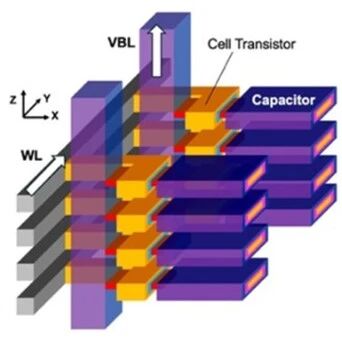
Core Insights - The demand for low-power memory close to computing logic is driven by artificial intelligence workloads, leading to new memory designs and material explorations across various applications [1][11] - DRAM remains the preferred technology for most applications despite challenges in miniaturization and increasing demand from AI data centers, resulting in a memory shortage in the industry [1][11] Group 1: DRAM and Memory Technologies - The miniaturization of DRAM faces challenges, with designers looking to vertical structures to increase density while avoiding high lithography costs [1] - Low-leakage transistors are being explored to reduce refresh power in large storage arrays, with materials like IGZO showing promise due to their acceptable carrier mobility and low leakage [1][2] - Research from Samsung indicates that zinc migration during IGZO annealing can lead to uncoordinated indium sites, affecting performance, but optimizing electrode materials can mitigate interface migration and oxygen loss [2] Group 2: Innovations in Oxide Semiconductors - Researchers from Changxin Storage Technology successfully created functional IGZO devices by optimizing deposition processes and reducing hydrogen content, achieving a drive current of 60.9 μA/μm [3] - Kioxia demonstrated a 3D DRAM oxide channel replacement process that helps reduce thermal degradation, achieving over 30 μA per cell in prototype storage units [5] - A hybrid design using oxide semiconductors and silicon in a 256×256 array improved density by 3.6 times and reduced energy consumption by 15% compared to high-density SRAM [6] Group 3: Advanced Memory Architectures - A fully self-aligned design by Georgia Tech improved performance by 10 times and reduced energy-delay-area product by 75% to 80% compared to traditional SRAM cells [8] - Researchers are exploring the integration of transistor-based memory into backend processes, balancing speed and maturity of silicon technology with simpler but lower-performing alternatives [8] - Non-volatile memory designs using ferroelectric layers and IGZO as channel materials have shown promising durability and performance, with a wide storage window of 1.6 V [9]
Jim Cramer Says AI Stocks Micron and Sandisk (Up Over 600% Since January 2023) Can Go Even Higher
The Motley Fool· 2026-01-21 08:59
Core Viewpoint - The unprecedented memory chip supply shortage is driving significant stock price increases for Micron Technology and Sandisk, with expectations for continued momentum due to ongoing demand, particularly from AI applications [1][2]. Micron Technology - Micron has seen a stock price increase of 625% since January 2023, indicating strong market performance [2]. - The company develops memory and storage solutions, including DRAM and NAND flash memory products, and is gaining market share in both categories [3][4]. - Micron reported a 20% revenue increase to $13.6 billion in Q1 fiscal 2026, with adjusted earnings rising 167% to $4.78 per diluted share [5]. - The CEO highlighted that the supply shortage is driven by increased demand for AI data centers, with expectations that industry supply will remain short of demand for the foreseeable future [6]. - Wall Street anticipates Micron's earnings to grow at 37% annually through fiscal 2029, making its current valuation of 32 times earnings appear reasonable [6]. Sandisk - Sandisk's stock has surged 1,050% since its spin-off from Western Digital in February 2025, reflecting strong market interest [2][11]. - The company designs and manufactures NAND flash-based data storage devices, which are critical for AI workloads [7]. - Sandisk reported a 23% revenue increase to $2.3 billion in Q1 fiscal 2026, although non-GAAP earnings dropped 33% to $1.22 per diluted share [9]. - Management expects non-GAAP earnings to nearly triple sequentially in the second quarter, indicating potential for recovery [10]. - Wall Street projects Sandisk's adjusted earnings to increase at 79% annually through fiscal 2029, although its current valuation of 170 times earnings is considered very high [11].

未知机构:开源电子AI早餐会01211行情催化美欧贸易摩擦预-20260121
未知机构· 2026-01-21 02:00
1、行情催化 美欧贸易摩擦预期下,美股半导体普遍回调,不过存储与CPU相关股票逆势大涨,闪迪涨8.0%、美光涨1.3%、西 部数据涨2.7%,英特尔涨6.4%、AMD涨2.9%、ARM涨2.9%。 2、行业速递 开源电子|AI早餐会 0121 ① 据"数码闲聊站",华为将发布首款AI眼镜,支持拍照、音频、同传翻译等功能。 Meta全球事务主管JoelKaplan在世界经济论坛上表示可穿戴设备将是下一代计算技术,眼镜将会是AI终端的正确形 态。 ② DeepSeek新模型"MODEL1"曝光。 MODEL1可能采用架构,代码中的具体差异体现在KV缓存布局、稀疏性处理和FP8解码方面,在内存优化上有多 处不同。 此外,CPU缺货涨价继续发酵。 ③ 据朝鲜日报,三星与海力士将在今年削减NAND闪存产量,以转向DRAM生产从而实现利润最大化,NAND短 缺加剧。 ① 据"数码闲聊站",华为将发布首款AI眼镜,支持拍照、音频、同传翻译等功能。 Meta全球事务主管JoelKapl 开源电子|AI早餐会 0121 1、行情催化 美欧贸易摩擦预期下,美股半导体普遍回调,不过存储与CPU相关股票逆势大涨,闪迪涨8.0%、美光 ...
APLD vs. Sandisk: Which Data Infrastructure Stock is the Better Buy?
ZACKS· 2026-01-19 17:15
Core Insights - Applied Digital (APLD) and Sandisk (SNDK) are positioned to benefit from the rapid growth of AI-driven data infrastructure, with APLD focusing on data center development and SNDK providing high-performance NAND flash storage [1][6] Industry Overview - The global digital infrastructure market was valued at approximately $360 billion in 2025 and is projected to exceed $1.06 trillion by 2030, indicating a compound annual growth rate (CAGR) of about 24.10% [2] Applied Digital (APLD) - APLD's strategy involves building data centers in cost-effective locations, such as North Dakota, which offers inexpensive energy and favorable regulations, thus reducing operational costs [3] - APLD has secured a $5 billion, 15-year lease for 200 megawatts at Polaris Forge 2, with total contracted capacity reaching 600 megawatts and prospective lease revenues of approximately $16 billion over 15 years [4] - The company is investing in advanced liquid cooling and collaborating with Babcock & Wilcox for grid power expansion, enhancing its position in the data center ecosystem [4] - The Zacks Consensus Estimate for APLD's fiscal 2026 loss is projected at 36 cents per share, indicating an annual improvement of 55% [5] Sandisk (SNDK) - SNDK supplies NAND flash storage that meets critical AI infrastructure needs, with disciplined capacity expansion to support sustainable market growth [6] - The company’s BiCS8 technology, developed with Kioxia, enhances capacity and energy efficiency, accounting for 15% of bit shipments in the fiscal first quarter [7][8] - SNDK's data center segment grew 26% sequentially in the first quarter, with a focus on high-bandwidth flash technology for AI inference applications [9] - The Zacks Consensus Estimate for SNDK's fiscal 2026 EPS is projected at $13.46, reflecting a substantial improvement from the previous year's EPS of $2.99 [10] Price Performance and Valuation - Over the past six months, SNDK shares have increased by 894%, while APLD shares have risen by 237.2%, with SNDK's performance driven by improving earnings visibility and data center demand [11] - SNDK trades at a forward price-to-sales ratio of 5.08x, compared to APLD's 22.98x, indicating that SNDK's fundamentals are not fully reflected in its valuation [14] Conclusion - Both APLD and SNDK are positioned to benefit from AI-driven data infrastructure expansion, but SNDK's growth profile appears more balanced, with improving earnings visibility and disciplined capacity expansion [16][18]