
东方财富

Search documents
中际旭创上周获融资资金买入超187亿元丨资金流向周报
2 1 Shi Ji Jing Ji Bao Dao· 2026-01-19 03:24
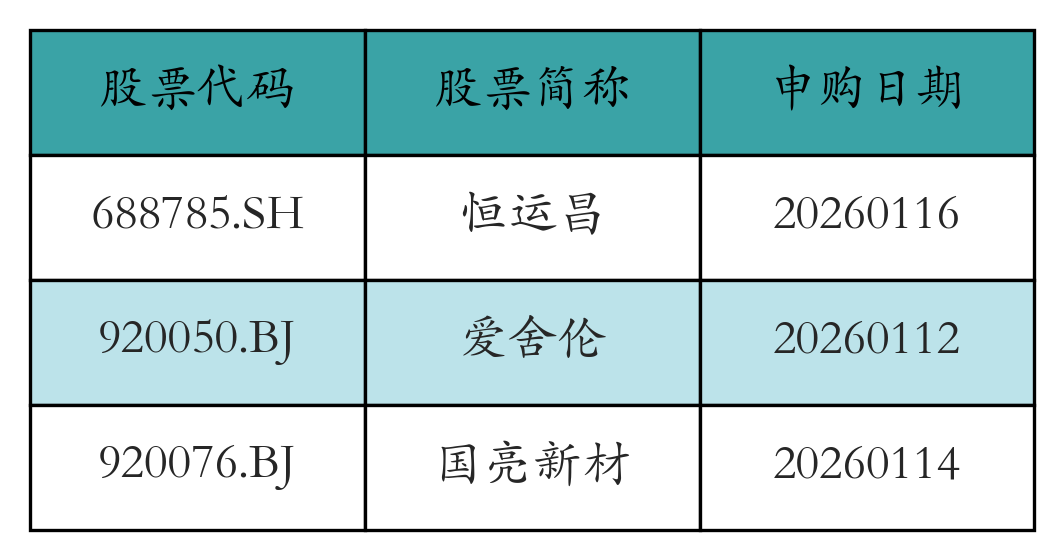
Market Overview - The Shanghai Composite Index fell by 0.45% last week, closing at 4101.91 points, with a high of 4190.87 points [1] - The Shenzhen Component Index increased by 1.14%, closing at 14281.08 points, with a high of 14459.21 points [1] - The ChiNext Index rose by 1.0%, closing at 3361.02 points, with a high of 3416.84 points [1] - In the global market, the Nasdaq Composite Index decreased by 0.66%, the Dow Jones Industrial Average fell by 0.29%, and the S&P 500 dropped by 0.38% [1] - In the Asia-Pacific region, the Hang Seng Index increased by 2.34%, and the Nikkei 225 Index rose by 3.84% [1] New Stock Issuance - Three new stocks were issued last week, with details as follows: - Stock Code: 688785.SH, Stock Name: 恒运昌, Subscription Date: 20260116 - Stock Code: 920050.BJ, Stock Name: 爱舍伦, Subscription Date: 20260112 - Stock Code: 920076.BJ, Stock Name: 国亮新材, Subscription Date: 20260114 [2] Margin Trading Situation - The total margin trading balance in the Shanghai and Shenzhen markets reached 27225.56 billion yuan, with a financing balance of 27054.52 billion yuan and a securities lending balance of 171.04 billion yuan [3] - The margin trading balance increased by 1034.04 billion yuan compared to the previous week [3] - The Shanghai market's margin trading balance was 13731.98 billion yuan, up by 519.85 billion yuan from the previous week, while the Shenzhen market's balance was 13493.58 billion yuan, up by 514.18 billion yuan [3] - A total of 3484 stocks had margin buying, with 424 stocks having buying amounts exceeding 1 billion yuan, led by 中际旭创 (187.63 billion yuan), 蓝色光标 (144.42 billion yuan), and 新易盛 (135.9 billion yuan) [3][4] Fund Issuance - One new fund was issued last week: 中邮睿信增强债券C [5][6] Company Buyback Amounts - Nine companies announced buybacks last week, with the top five by execution amount being: - Stock Code: 301536, Stock Name: 星宸科技 - Stock Code: 603605, Stock Name: 珀莱雅 - Stock Code: 605588, Stock Name: 冠石科技 - Stock Code: 300407, Stock Name: 凯发电气 - Stock Code: 600566, Stock Name: 济川药业 [7] - The highest buyback amounts were concentrated in the electronics, beauty care, and power equipment industries [7]


机构称头部险企优势强化,证券保险ETF鹏华(515630)交投活跃
Xin Lang Cai Jing· 2026-01-19 02:53
消息面上,上周受监管降温信号影响,非银金融板块全周下跌2.63%,保险板块领跌(-3.59%)。 证券保险ETF鹏华紧密跟踪中证800证券保险指数,中证800证券保险指数是在中证800指数的基础上, 选择证券保险行业内对应的证券作为指数样本,为投资者提供更多样化的投资标的。 数据显示,截至2025年12月31日,中证800证券保险指数(399966)前十大权重股分别为中国平安、东方 财富、中信证券、国泰海通、中国太保、华泰证券、中国人寿、广发证券、招商证券、新华保险,前十 大权重股合计占比64.71%。 机构指出,本次板块回调核心系市场情绪传导带来的短期扰动,而非行业基本面恶化:一方面,年 初"开门红"大涨,存在获利盘兑现需求;另一方面,杠杆资金收缩引发市场对权益资产波动担忧,险资 投资收益预期短期受压制。从行业银保渠道维度看,头部险企期交保费规模与市场份额实现双重提升, 中长期分红险已成为渠道核心供给品类,有效缓解Margin下行压力。短期来看,市场监管降温引发的情 绪波动对保险板块形成一定压制,但中长期来看,行业基本面向上逻辑清晰:资产规模AUM扩容与利 差率修复形成双轮驱动,推动投资收益确定性提升,叠加 ...
关于新增东方财富证券股份有限公司为部分基金流动性服务商的 公告
Zhong Guo Zheng Quan Bao - Zhong Zheng Wang· 2026-01-18 22:55
Core Viewpoint - The announcement details the addition of Dongfang Securities Co., Ltd. as a liquidity service provider for three specific index funds managed by Dongcai Fund Management Co., Ltd., effective January 19, 2026, aimed at enhancing market liquidity and stability [1]. Group 1 - The funds involved are the Tibet Dongcai CSI 300 Exchange-Traded Open-Ended Index Securities Investment Fund (159330), the Tibet Dongcai CSI 500 Exchange-Traded Open-Ended Index Securities Investment Fund (159337), and the Tibet Dongcai CSI A500 Exchange-Traded Open-Ended Index Securities Investment Fund (159380) [1]. - The decision is made in accordance with the relevant regulations outlined in the Shenzhen Stock Exchange's guidelines for securities investment fund business [1].


非银金融周报:融资保证金比例上调,金监总局部署2026年监管工作-20260118
HUAXI Securities· 2026-01-18 14:52
Investment Rating - The industry rating is "Recommended" [5] Core Insights - The adjustment of the financing margin ratio from 80% to 100% aims to cool down excessive leverage and maintain market stability. This change will take effect on January 19, 2026, and applies only to new financing contracts [3][4][15][7] - As of January 14, 2026, the total market financing balance reached a historical high of 2.68 trillion yuan, with the margin balance accounting for 2.59% of the A-share market capitalization, indicating an increase from the average level of 2.40% in 2025 [4][15] - The non-bank financial sector index fell by 2.63%, underperforming the CSI 300 index by 2.06 percentage points, ranking 26th among all primary industries. The securities sector decreased by 2.21%, while the financial technology sector increased by 1.34% [2][13] Summary by Sections Market and Sector Performance - The average daily trading volume of A-shares for the week of January 11-17, 2026, was 34.651 billion yuan, a 21.5% increase week-on-week and a 189.4% increase year-on-year. The average trading volume for the first quarter of 2026 is 31.585 billion yuan, up 107.7% from the same period in 2025 [19] - In the same week, three new stocks were issued, raising 2.025 billion yuan, while two new stocks were listed, raising 1.484 billion yuan. Year-to-date, three A-share IPOs have raised 3.039 billion yuan [19] Financing Margin Ratio Adjustment - The financing margin ratio adjustment is a regulatory measure to prevent systemic risks and protect investors' rights. The increase in the minimum margin requirement is intended to curb market overheating and ensure a smooth market transition [4][7][15] Regulatory Developments - The National Financial Supervision Administration held a regulatory work meeting on January 15, 2026, outlining five key tasks for the year, including risk resolution for small and medium-sized financial institutions and enhancing regulatory quality. The focus for 2026 is on preventing systemic risks and ensuring high-quality industry development [8][16][17]






券商开年密集发债 重资本业务扩张需求激增
Zhong Guo Ji Jin Bao· 2026-01-18 14:11
Core Viewpoint - The bond issuance by securities firms has surged significantly at the beginning of 2026, driven by a strong A-share market and increased capital demand for business expansion and transformation [1][2]. Group 1: Bond Issuance Growth - As of January 17, 2026, the total bond issuance by securities firms reached 119.52 billion yuan, marking a year-on-year increase of 71.87% [2]. - The number of bonds issued totaled 44, which is an increase of 2 compared to the same period last year [2]. - Major firms like China Galaxy and Shenwan Hongyuan have received approval for substantial bond issuances, indicating a trend towards diversification in bond issuance among both traditional and internet-based securities firms [2]. Group 2: Market and Policy Factors - The increase in bond issuance is attributed to a combination of business transformation, policy guidance, and a low-cost financing environment [3]. - The active A-share market has led to a growing demand for capital-intensive business models, prompting securities firms to seek additional capital through bond issuance [3]. - The current low interest rate environment has made bond issuance an attractive option for firms looking to refinance existing high-interest debt and optimize their financial structures [3][4]. Group 3: Implications for the Industry - The bond issuance trend is expected to continue in the short to medium term, as long as market activity remains robust [5]. - The competitive landscape is shifting towards a "stronger gets stronger" dynamic, where leading firms are more willing and able to finance their operations [6]. - Increased capital strength among securities firms is likely to enhance their market-making and liquidity provision capabilities, contributing to market stability and supporting the real economy [6][7]. Group 4: Differentiation Among Firms - The current bond issuance trend is characterized by a concentration among leading firms, which benefit from higher credit ratings and lower financing costs [7]. - This differentiation may lead to a widening gap in financing capabilities between large and small securities firms, potentially increasing industry concentration [7].

金融科技行业双周报第二十一期:AI应用加速落地,利好金融科技板块-20260118
GUOTAI HAITONG SECURITIES· 2026-01-18 13:43
Investment Rating - The report assigns an "Increase" rating for the financial technology sector, indicating a positive outlook compared to the benchmark index [5][34]. Core Insights - The acceleration of AI applications is driving growth in the financial technology sector, with significant increases in stock prices observed during the reporting period [2][8]. - The financial technology index rose by 7.4% from January 4 to January 16, 2026, outperforming the Shanghai and Shenzhen 300 index, which increased by 2.2% [8][12]. - Key segments within the financial technology sector, such as financial IT and financial information services, have shown remarkable performance due to the positive impact of AI applications [9][12]. Summary by Relevant Sections AI Applications and Financial Technology Growth - The financial technology sector has seen a surge in stock prices, with notable increases in financial IT and financial information services, attributed to the recent advancements in AI applications [9][12]. - The financial IT segment experienced a growth of 10.59%, while financial information services grew by 13.06% during the reporting period [12]. Financial IT Upgrades and Market Stability - Collaborations between financial institutions and technology companies are enhancing operational efficiency and service delivery, such as the partnership between UnionPay and Industrial and Commercial Bank of China to utilize digital RMB for elder care services [13][14]. - The introduction of AI-driven operational frameworks is transforming financial operations, exemplified by the collaboration between Huawei and Bank of Communications [14]. Regulatory Developments in Financial Information Services - Recent regulatory changes, including the adjustment of margin requirements for financing transactions, aim to mitigate leverage risks in the market [15]. - The tightening of regulations in the financial information services sector is expected to enhance market stability and investor confidence [15][17]. Third-Party Payment and Compliance Enhancements - The People's Bank of China has introduced new anti-money laundering regulations that will significantly impact compliance processes within financial institutions [17]. - Adjustments in transaction fees by payment platforms aim to improve user experience while adhering to regulatory requirements [18]. Consumer Finance Sector Developments - A notable case of regulatory action was taken against a bank for imprudent loan practices, marking a significant enforcement action in the consumer finance sector [19]. Individual Company News and Announcements - Key developments include the completion of a cross-border acquisition by Jiufang Zhitu and the implementation of share reduction plans by executives at Dongfang Caifu [20][22]. - Innovations in AI assessment benchmarks and data management platforms have been introduced by companies like Qifu Technology and Changliang Technology, enhancing their competitive positioning in the market [20][21]. Investment Recommendations - The report highlights several companies poised to benefit from the ongoing digital RMB initiatives and AI advancements, including Changliang Technology, Yuxin Technology, and Jiufang Zhitu [26]. - The potential for growth in the consumer finance sector is also noted, with recommendations for companies focusing on intelligent customer service and marketing solutions [26].


券商开年密集发债,重资本业务扩张需求激增
Zhong Guo Ji Jin Bao· 2026-01-18 12:35
Group 1 - The core viewpoint of the article highlights a significant surge in bond issuance by securities firms at the beginning of 2026, driven by a strong A-share market and an increase in capital demand, with a total issuance of 119.52 billion yuan, representing a year-on-year growth of 71.87% [1][2] - The bond issuance is characterized by diversification, with both traditional leading firms like China Galaxy and internet brokers like East Money participating, and various types of products being issued, including conventional corporate bonds and perpetual subordinated bonds [2][3] - The bond issuance trend is a continuation from 2025, where the total issuance exceeded 1.89 trillion yuan, with both the number and scale of bonds issued showing over 44% year-on-year growth [3] Group 2 - The increase in bond issuance is attributed to a combination of business transformation, policy guidance, and a low-cost environment, with firms transitioning from traditional channel businesses to capital-intensive models [4][5] - The active A-share market has led to a growing demand for capital-intensive business expansion, prompting firms to leverage debt financing to seize profit opportunities [4][6] - The current low interest rate environment has made bond issuance an attractive option for firms to refinance high-interest debt and optimize financial structures, thereby enhancing profit margins for future business expansion [4][6] Group 3 - The regulatory environment has positively influenced the expansion of financing channels, with securities firms being included in the issuance of technology innovation bonds, aligning fundraising with national strategic goals [5][6] - The bond issuance trend is expected to continue in the short to medium term, as long as market activity remains robust, sustaining the demand for capital [6][7] - The competitive landscape is shifting towards a "stronger gets stronger" dynamic, where leading firms are better positioned to capitalize on low-cost debt financing, potentially widening the gap between them and smaller firms [7][8]


券商开年密集发债,重资本业务扩张需求激增
中国基金报· 2026-01-18 12:33
Core Viewpoint - The bond issuance by securities firms in China has surged significantly at the beginning of 2026, driven by a strong A-share market and increased capital demand for business expansion and transformation [2][4]. Group 1: Bond Issuance Growth - As of January 17, 2026, the total bond issuance by securities firms reached 119.52 billion yuan, marking a year-on-year increase of 71.87% [4]. - The number of bonds issued totaled 44, which is an increase of 2 compared to the same period last year [4]. - The bond issuance is characterized by diversification, with both traditional and internet securities firms participating, and various types of bonds being issued, including conventional corporate bonds and perpetual subordinated bonds [4]. Group 2: Drivers of Bond Issuance - The increase in bond issuance is attributed to three main factors: business transformation, policy guidance, and a low-cost financing environment [6]. - The active A-share market has led to a growing demand for capital-intensive business models, prompting securities firms to seek additional capital [6]. - The current low interest rate environment has made bond issuance an attractive option for refinancing high-interest debt and optimizing financial structures [6][10]. Group 3: Policy and Market Impact - Regulatory support has expanded financing channels for securities firms, allowing them to issue bonds aligned with national strategies, particularly in technology innovation [7]. - The trend of bond issuance is expected to continue in the short to medium term, as long as market activity remains robust [10]. - The issuance of bonds by securities firms is likely to enhance market liquidity by providing high-quality assets and facilitating capital flow into the market [10][11]. Group 4: Competitive Landscape - The bond issuance trend is leading to a "stronger gets stronger" dynamic, where leading firms are better positioned to capitalize on financing opportunities due to their higher credit ratings and larger business scales [11]. - The differentiation among firms is expected to accelerate, with larger firms solidifying their competitive advantages through low-cost debt, while smaller firms may struggle to keep pace [11].

金融行业周报(2026、01、18):央行宣布结构性降息,衍生品交易监管更规范-20260118
Western Securities· 2026-01-18 11:43
Investment Rating - The report does not explicitly state an overall investment rating for the financial industry, but it provides specific recommendations for various sectors and companies within the industry [3][21]. Core Insights - The financial industry experienced a decline this week, with the non-bank financial index down by 2.63%, underperforming the CSI 300 index by 2.06 percentage points. The banking sector saw a decline of 3.03%, also underperforming the CSI 300 index by 2.46 percentage points [1][9]. - The report highlights a structural interest rate cut by the central bank, which is expected to impact various financial sectors, particularly banks and insurance companies. The insurance sector is viewed as being in a critical window for performance and valuation recovery [3][21]. - Regulatory measures have been introduced to stabilize the derivatives market, which is expected to benefit well-capitalized and compliant brokerage firms [2][17]. Summary by Sections 1. Weekly Performance and Sector Insights - The non-bank financial index decreased by 2.63%, with the securities, insurance, and diversified financial indices down by 2.21%, 3.59%, and 1.83% respectively [1][9]. - The banking sector's performance was notably poor, with state-owned banks, joint-stock banks, city commercial banks, and rural commercial banks experiencing declines of 2.20%, 4.08%, 2.40%, and 2.20% respectively [1][9]. 2. Insurance Sector Insights - The insurance sector's index fell by 3.59%, underperforming the CSI 300 index by 3.02 percentage points. The report indicates that regulatory cooling measures have created short-term pressure on the insurance sector, but the long-term outlook remains positive due to asset growth and interest margin recovery [1][13][15]. - Key companies such as China Pacific Insurance, China Life, and New China Life are recommended for investment due to their strong fundamentals and recovery potential [3][16]. 3. Brokerage Sector Insights - The brokerage sector saw a decline of 2.21%, with the report emphasizing the potential benefits of new regulatory measures aimed at enhancing the derivatives market. The focus is on larger, well-capitalized firms that can navigate the evolving regulatory landscape [2][17]. - Recommendations include major brokerages like Guotai Junan and Huatai Securities, which are expected to benefit from the anticipated recovery in profitability and valuation [2][18]. 4. Banking Sector Insights - The banking sector's index fell by 3.03%, with the central bank's recent interest rate cut expected to support the sector's performance in the long run. The report suggests that banks may see a gradual recovery in net interest income and profitability [3][21][22]. - Specific banks such as Hangzhou Bank and Ningbo Bank are highlighted as potential investment opportunities, particularly those with previously undervalued positions [3][22].



2025年12月份证券类APP月活达1.75亿
Xin Lang Cai Jing· 2026-01-17 06:24
Core Insights - The report highlights the increasing competition among brokerage firms as they enhance their apps to provide comprehensive wealth management services, with a focus on investment advisory and insurance sales [1][4]. Group 1: App Usage and Growth - As of December 2025, the monthly active users (MAU) of securities apps reached 175 million, marking a 1.75% month-on-month increase and a 2.26% year-on-year increase, setting a new monthly record for 2025 [1]. - Huatai Securities' "Zhangle Wealth" and Guotai Junan's "Guotai Junan Junhong" led the brokerage apps with MAUs of 12.12 million and 10.40 million, respectively, showing month-on-month growth of 2.59% and 2.12% [2]. - The app "Xingye Securities Youlibao" exhibited the most significant year-on-year growth, with a 20.66% increase, reaching an MAU of 1.87 million in December [2]. Group 2: Wealth Management Transformation - Brokerage firms are focusing on optimizing their apps by enhancing investment advisory services and introducing insurance sections to meet diverse user investment needs [4]. - The introduction of new investment advisory services, such as "Stock Selection Treasure" and "Beixin Lingdong+", aims to provide tailored services for different customer segments [4]. - The shift towards comprehensive wealth management is seen as essential for brokerages to overcome challenges posed by declining commission rates, with a focus on offering a full range of asset allocation services [5].

