
国泰基金

Search documents
超630亿元“跑了”
Xin Lang Cai Jing· 2026-01-23 06:01
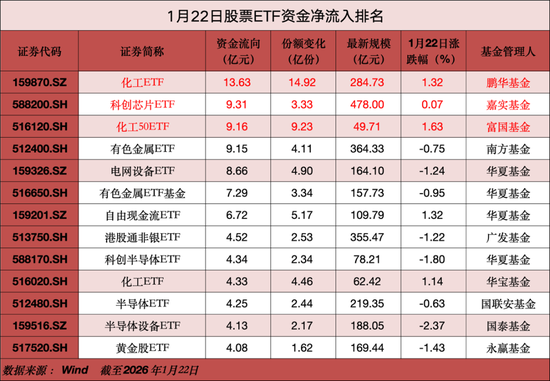
Core Viewpoint - On January 22, the A-share market experienced a mixed performance with a significant net outflow of 633.12 billion yuan from stock ETFs, indicating a preference for stability amid market volatility [1][9]. ETF Market Overview - As of January 22, the total scale of 1,314 stock ETFs (including cross-border ETFs) reached 4.62 trillion yuan, with an overall net outflow of 633.12 billion yuan for the day [2][10]. - The industry theme ETFs and commodity ETFs saw substantial inflows, with net inflows of 120.35 billion yuan and 19.95 billion yuan, respectively [3][10]. Sector Performance - The semiconductor sector had the most notable net inflow, amounting to 38.6 billion yuan on January 22, with the Galaxy Fund's Sci-Tech Chip ETF leading with a net inflow of 9.31 billion yuan [3][10]. - The chemical sector also showed significant inflows, with a total of 29.67 billion yuan, where Penghua Fund's Chemical ETF recorded a net inflow of 13.63 billion yuan [3][10]. - Other sectors with notable inflows included electric grid equipment, non-ferrous metals, gold, and pharmaceuticals, with the Huaxia Fund's electric grid equipment ETF seeing a net inflow of 8.66 billion yuan [3][10]. Major ETF Outflows - The broad-based ETFs experienced substantial outflows, totaling 769.54 billion yuan, with the CSI 300 ETF leading the outflows at 467.6 billion yuan [5][13]. - Other significant outflows included the CSI 1000 ETF with 166 billion yuan, the SSE 50 ETF with 52 billion yuan, and the ChiNext ETF with 35.4 billion yuan [5][13]. Institutional Insights - E Fund's ETFs reported a total scale of 7590.4 billion yuan, with a decrease of 161.8 billion yuan on the previous day, including a net outflow of 179.8 billion yuan [12]. - Notably, E Fund's gold ETF and pharmaceutical ETF saw net inflows of 2.6 billion yuan and 2 billion yuan, respectively [12]. - Huaxia Fund's electric grid equipment ETF and non-ferrous metals ETF were among the top gainers, with net inflows of 8.66 billion yuan and 7.29 billion yuan, respectively [12].

超630亿元“跑了”
中国基金报· 2026-01-23 05:56
Core Viewpoint - On January 22, the stock ETF market experienced a significant net outflow of 63.31 billion yuan, indicating a preference for stability amid market volatility [2][4]. Group 1: ETF Market Overview - As of January 22, the total scale of all stock ETFs in the market reached 4.62 trillion yuan, with a net outflow of 63.31 billion yuan on that day [4]. - The industry theme ETFs and commodity ETFs saw substantial inflows, with net inflows of 12.04 billion yuan and 1.99 billion yuan, respectively [5]. Group 2: Sector Performance - The semiconductor sector had the most notable net inflow, amounting to 3.86 billion yuan on January 22, with the Jiashan Fund's Sci-Tech Chip ETF leading with a net inflow of 0.93 billion yuan [5]. - The chemical sector also performed well, with a net inflow of 2.97 billion yuan, driven by the Penghua Fund's chemical ETF, which saw a net inflow of 1.36 billion yuan [5]. - Other sectors with significant inflows included electric grid equipment, non-ferrous metals, gold, and pharmaceuticals, with the Huaxia Fund's electric grid equipment ETF receiving a net inflow of 0.87 billion yuan [5]. Group 3: Outflows from Broad-based ETFs - Broad-based ETFs experienced substantial outflows, totaling 76.95 billion yuan, with the CSI 300 ETF leading the outflows at 46.76 billion yuan [10]. - Other notable outflows included the CSI 1000 ETF with 16.6 billion yuan, the SSE 50 ETF with 5.26 billion yuan, and the ChiNext ETF with 3.54 billion yuan [10].

两市ETF两融余额减少15.51亿元丨ETF融资融券日报
2 1 Shi Ji Jing Ji Bao Dao· 2026-01-23 05:40
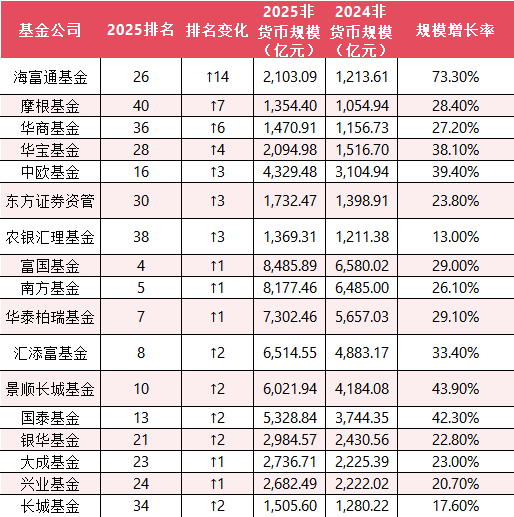
Market Overview - As of January 22, the total ETF margin balance in the two markets is 123.947 billion yuan, a decrease of 1.551 billion yuan from the previous trading day [1] - The financing balance is 116.303 billion yuan, down by 1.503 billion yuan, while the securities lending balance is 7.6444 billion yuan, a decrease of 47.2885 million yuan [1] - In the Shanghai market, the ETF margin balance is 87.505 billion yuan, a decrease of 1.171 billion yuan, with a financing balance of 80.803 billion yuan, down by 1.119 billion yuan [1] - In the Shenzhen market, the ETF margin balance is 36.442 billion yuan, a decrease of 379 million yuan, with a financing balance of 35.5 billion yuan, down by 385 million yuan [1] Top ETF Margin Balances - The top three ETFs by margin balance on January 22 are: - Huaan Yifu Gold ETF (7.34 billion yuan) - E Fund Gold ETF (4.102 billion yuan) - Fortune China Bond 7-10 Year Policy Financial Bond ETF (4.052 billion yuan) [2] Top ETF Financing Amounts - The top three ETFs by financing amount on January 22 are: - Hai Fu Tong Zhong Zheng Short Bond ETF (6.068 billion yuan) - Bosera Zhong Zheng Convertible Bonds and Exchangeable Bonds ETF (1.047 billion yuan) - E Fund Zhong Zheng Hong Kong Securities Investment Theme ETF (763 million yuan) [4] Top ETF Net Financing Amounts - The top three ETFs by net financing amount on January 22 are: - Hai Fu Tong Zhong Zheng Short Bond ETF (134 million yuan) - Hua Xia Zhong Zheng Electric Grid Equipment Theme ETF (84.3793 million yuan) - E Fund Hu Shen 300 Medical and Health ETF (34.3428 million yuan) [5] Top ETF Securities Lending Amounts - The top three ETFs by securities lending amount on January 22 are: - Huatai Bairui Hu Shen 300 ETF (23.7919 million yuan) - Southern Zhong Zheng 1000 ETF (6.9137 million yuan) - Hua Xia Zhong Zheng 1000 ETF (5.8598 million yuan) [6]
从“万亿俱乐部”扩容到排名剧烈洗牌:2025年公募基金走向质量竞争新阶段(附TOP40榜单)
Xin Lang Cai Jing· 2026-01-23 04:21
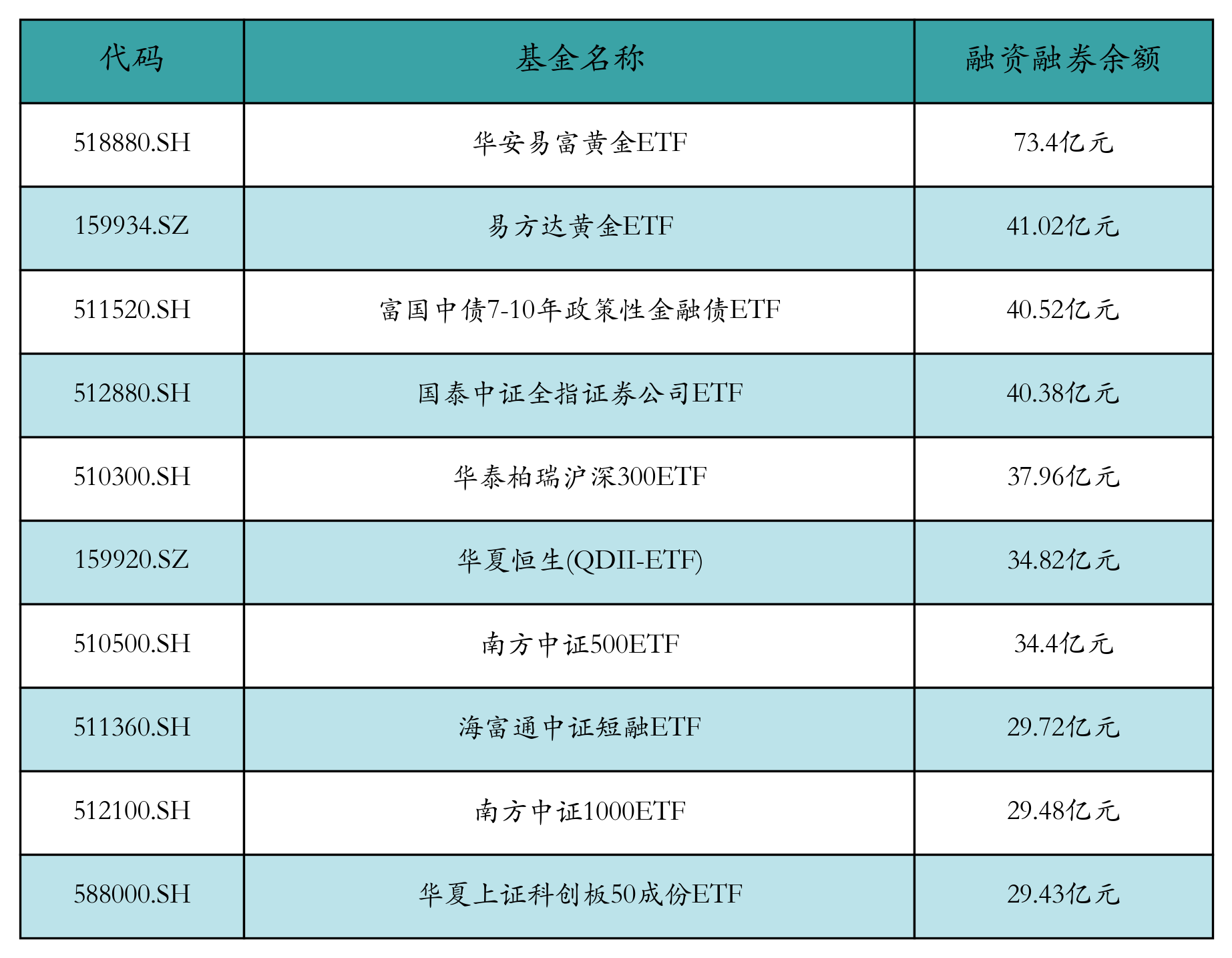
Core Insights - The public fund industry is experiencing significant growth, with a shift from "scale expansion" to "quality and distinctive competition" among companies [1][14][25] - Ten fund companies have surpassed a management scale of 1 trillion yuan, with Huatai and Penghua becoming new members of the "trillion club" in 2025 [1][14] Fund Management Scale - The total net asset value of public funds in 2025 reached 241,724.2 million yuan for E Fund, 215,817.0 million yuan for Huaxia, and 159,190.0 million yuan for GF Fund, among others [2][15] - The top three companies, E Fund, Huaxia, and GF Fund, have maintained their positions for two consecutive years, with an average growth rate of approximately 20% for most companies [2][15] Growth and Ranking Changes - E Fund's non-monetary asset scale grew by 24.5% to 16,645.57 million yuan, while Huaxia's increased by 24.4% to 14,467.51 million yuan [3][16] - Hai Futong Fund emerged as the biggest "dark horse," rising 14 places to 26th with a 73.3% increase in non-monetary scale, reaching 2,103 million yuan [5][17] - Companies like Morgan Fund and Huashang Fund also saw significant ranking improvements, reflecting the effectiveness of their differentiated strategies [5][18] Declines in Rankings - Wanji Fund dropped 5 places to 35th, with a scale decrease of 11.4%, marking the most significant decline among the top 40 [7][20] - Companies such as Jiao Yin and Pu Yin An Sheng also faced declines, with scale reductions of 11.7% and 12.0% respectively, attributed to challenges in their traditional fixed-income sectors [7][20] Industry Trends - The industry is transitioning from a phase of "universal growth" to one characterized by "structural differentiation and survival of the fittest," as indicated by the competitive landscape [10][23] - Companies that have successfully adapted to market changes and focused on innovative product lines are showing robust growth, with median scale increases exceeding 25% [5][18]
2025非货规模“上升榜”揭晓:海富通成最大黑马,摩根、华商等中小公司异军突起
Xin Lang Cai Jing· 2026-01-23 04:21
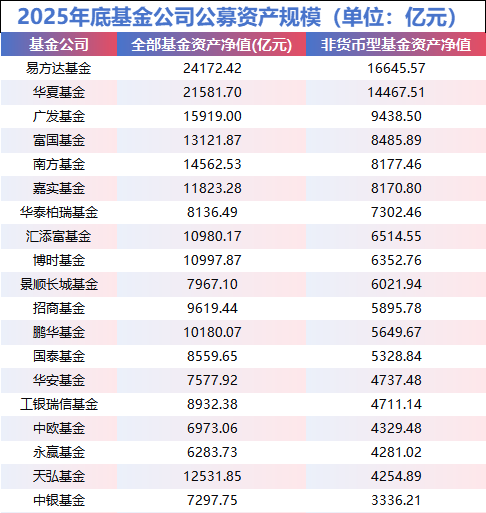
Core Insights - The public fund industry is experiencing significant growth in management scale, with notable disparities in growth rates among companies, indicating a shift from "scale expansion" to "quality and differentiation competition" [1][6][10] Group 1: Company Performance - Hai Fu Tong Fund emerged as the biggest "dark horse," rising 14 places to rank 26th, with a non-monetary scale increase of 73.3% to 210.3 billion yuan, driven by dual efforts in "fixed income +" and equity products, particularly in pension management and customized institutional services [1][7] - China Europe Fund moved up 3 places to 16th, with a scale growth of 39.4%, reinforcing its position as an "active equity expert" [1][7] - Invesco Great Wall Fund and Guotai Fund each rose 2 places, with scale increases exceeding 42%, benefiting from their strategies in ETF and active quantitative fields [1][7] - Huatai-PB Fund improved its ranking by 1 place to 7th, with a scale growth of 29.1%, solidifying its leading position in broad-based and dividend ETFs [1][7] - Huitianfu Fund climbed 2 places to 8th, with a scale increase of 33.4%, as consumer and pharmaceutical-themed products continued to attract capital [1][7] Group 2: Emerging Companies - Among smaller firms, Morgan Fund (China) and Huashang Fund rose 7 and 6 places respectively, reflecting the potential of "boutique" and "specialized" strategies in a competitive market [2][7] - Companies that saw ranking improvements generally exhibited three characteristics: focused product lines in advantageous sectors, dual-driven growth from institutional and retail businesses, and proactive layouts in innovative areas like ETFs and quantitative strategies [2][7] Group 3: Industry Trends - The median growth rate of companies that improved their rankings exceeded 25%, significantly surpassing the industry average, indicating their sustained active management capabilities [2][7] - The dramatic changes in the non-monetary scale rankings serve as a clear "scorecard" of the industry's fierce competition and evolving landscape, primarily reflecting capital flows and market enthusiasm [5][10]
雷电微力股价涨5%,国泰基金旗下1只基金位居十大流通股东,持有165.1万股浮盈赚取473.84万元
Xin Lang Cai Jing· 2026-01-23 03:17
Group 1 - The core viewpoint of the news is that 雷电微力 (Lightning Micro Power) has seen a stock price increase of 5%, reaching 60.26 CNY per share, with a trading volume of 804 million CNY and a turnover rate of 6.48%, resulting in a total market capitalization of 14.897 billion CNY [1] - 雷电微力 is based in Chengdu, Sichuan Province, and was established on September 11, 2007. The company went public on August 24, 2021, and its main business involves the research, development, manufacturing, testing, and sales of millimeter-wave active phased array microsystems [1] - The revenue composition of 雷电微力 is heavily reliant on array antennas, which account for 99.96% of its main business income, while other sources contribute only 0.04% [1] Group 2 - 国泰中证军工ETF (Guotai CSI Military Industry ETF) is one of the top ten circulating shareholders of 雷电微力, having reduced its holdings by 355,400 shares to a total of 1.651 million shares, representing 0.79% of the circulating shares [2] - The estimated floating profit from the current holdings of 国泰中证军工ETF is approximately 4.7384 million CNY [2] - 国泰中证军工ETF was established on July 26, 2016, with a current scale of 10.652 billion CNY. It has achieved a year-to-date return of 11.17%, ranking 1088 out of 5546 in its category, and a one-year return of 54.21%, ranking 1097 out of 4261 [2] Group 3 - The fund manager of 国泰中证军工ETF is 艾小军, who has a cumulative tenure of 12 years and 14 days. The total asset scale of the fund is 186.973 billion CNY [3] - During his tenure, the best fund return achieved was 319.05%, while the worst return was -46.54% [3]
2026年买铜还是买金?多只有色金属主题基金业绩翻倍,回报最高超139%
Hua Xia Shi Bao· 2026-01-23 02:57
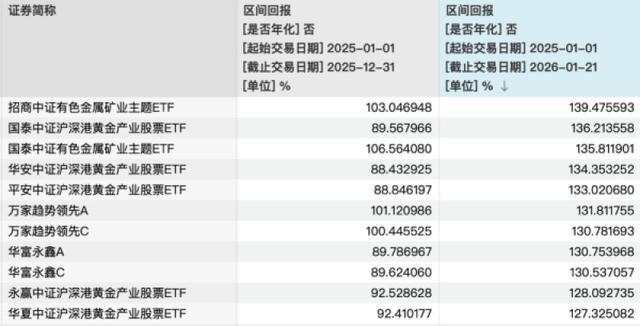
Core Viewpoint - The performance of metal and mining-themed funds has significantly improved over the past year, with several funds achieving returns exceeding 100% due to a market recovery and rising commodity prices, particularly in the metals sector [2][3]. Fund Performance Summary - The top-performing fund, the招商中证有色金属矿业主题ETF, recorded a return of 139.48% from January 1, 2025, to January 21, 2026 [2][3]. - Other notable funds include: - 国泰中证沪深港黄金产业股票ETF with a return of 136.21% [3]. - 国泰中证有色金属矿业主题ETF at 135.81% [3]. - 华安中证沪深港黄金产业股票ETF at 134.35% [3]. - 平安中证沪深港黄金产业股票ETF at 133.02% [3]. - Active management products like 万家趋势领先A and C achieved returns of 131.81% and 130.78%, respectively [3][4]. Annual Performance Overview - In the complete year of 2025, major metal and mining-themed funds showed strong performance, with 15 products reporting annual returns exceeding 95%, and five funds achieving returns over 100% [6][8]. - The top annual performers included: - 国泰中证有色金属矿业主题ETF at 106.56% [8]. - 招商中证有色金属矿业主题ETF at 103.05% [8]. - 万家趋势领先A and C at 101.12% and 100.45%, respectively [8]. - 南方中证申万有色金属ETF at 100.11% [8]. Market Trends and Insights - The international gold price increased by over 73% from early 2025 to January 21, 2026, contributing to the rise in net values of gold-themed funds [3]. - Experts express a divided outlook on gold prices for 2026, with some suggesting a potential decline compared to 2025, while others highlight copper as a promising investment opportunity [2][10].
激烈!公募基金最新数据出炉!非货万亿俱乐部再添新丁,5家机构规模缩水超百亿元
Sou Hu Cai Jing· 2026-01-23 01:37
Core Insights - The public fund industry in China has experienced significant changes in fund sizes and investor preferences, with a notable shift towards index funds and mixed bond funds while actively managed equity funds continue to face net redemptions [1][2][3][4][7][9] Fund Performance and Trends - As of December 31, 2025, the total net asset value of public funds exceeded 37.64 trillion yuan, marking a historical high, with continued net inflows into the public fund market [1] - Actively managed equity funds faced net redemptions despite improved performance, indicating a lack of investor confidence [1] - Index equity funds, particularly the A500 index ETFs, saw significant inflows, with several funds growing by over 10 billion yuan in the fourth quarter [2] Bond Fund Dynamics - Bond fund sizes rebounded, with a quarterly increase of over 300 billion yuan, reaching nearly 11 trillion yuan, driven mainly by mixed bond funds and bond ETFs [3] - Six out of ten bond funds that grew by over 10 billion yuan in the quarter were bond ETFs, highlighting their appeal due to low fees [3] Multi-Asset Fund Growth - 2025 marked a year of explosive growth for multi-asset funds, with overseas investment funds, commodity funds, and FOFs (funds of funds) seeing substantial increases in size [4] - Commodity funds experienced a quarterly growth rate exceeding 45%, with significant increases in gold and silver products [4] Competitive Landscape - The public fund industry exhibits a pronounced "Matthew Effect," where leading firms maintain strong positions while smaller firms face intense competition [7][9] - The top ten public fund companies by non-monetary scale remained unchanged compared to the previous quarter, with three firms surpassing the trillion-yuan mark [8] - Notable growth was observed among mid-sized firms, with some achieving substantial quarterly increases in non-monetary scale [9]
激烈!公募基金最新数据出炉!非货万亿俱乐部再添新丁,5家机构规模缩水超百亿元
券商中国· 2026-01-23 01:17
Core Viewpoint - The public fund industry in China is experiencing significant shifts in product scale and investor preferences, with a notable divergence in risk appetite among investors, leading to a mixed environment of opportunities and challenges for the industry [2]. Group 1: Market Trends - Since the fourth quarter of last year, there has been a rapid rotation in market styles, with a clear adjustment in the scale of industry products. Index funds, mixed bond funds, commodity funds, overseas investment funds, and FOFs have all seen growth, while actively managed equity funds and pure bond funds continue to shrink [2]. - As of December 31, 2025, the total net asset value of public funds exceeded 37.64 trillion yuan, marking a historical high, with continued net inflows into the public fund market [3]. - The bond fund sector has rebounded, with a quarterly growth exceeding 300 billion yuan, bringing the total scale close to 11 trillion yuan, also a historical high [4]. Group 2: Fund Performance - Actively managed equity funds faced net redemptions, with investors losing confidence despite improved performance. The overall share of these funds showed a net outflow in the fourth quarter [3]. - In contrast, investors favored index equity funds, particularly the A500 index ETFs, which saw significant inflows, with several funds growing by over 10 billion yuan in the fourth quarter [3]. Group 3: Multi-Asset Growth - 2025 is marked as a year of explosive growth for multi-asset funds, with overseas investment funds, commodity funds, and FOFs experiencing substantial increases in scale. The commodity fund sector saw a quarterly increase of over 45%, with gold and silver products leading the growth [5][6]. - The FOF products regained popularity, with several newly established funds achieving impressive fundraising results in the fourth quarter [6]. Group 4: Competitive Landscape - The public fund industry exhibits a pronounced "Matthew Effect," where leading firms maintain strong competitive positions, while mid-tier firms face intense competition. The top three firms in non-monetary fund scale are E Fund, Huaxia Fund, and GF Fund, with GF Fund recently surpassing the 1 trillion yuan mark for the first time [7][8]. - Smaller firms, some with non-monetary scales below 100 billion yuan, have also shown significant growth, with several achieving over 10 billion yuan in quarterly increases [9].

“拥抱康波”!公募鏖战ETF,谁将定义下半场?
Sou Hu Cai Jing· 2026-01-23 00:18
Core Viewpoint - The ETF market in China is experiencing rapid growth, reshaping the public fund industry and becoming a critical factor for survival among fund companies [1][2][3]. Group 1: ETF Market Growth - The total scale of ETFs in China is projected to grow from 2 trillion yuan in 2024 to 3.7 trillion yuan, and further to 6 trillion yuan by 2026, marking a 60% increase [1]. - By the end of 2025, the scale of public ETFs is expected to reach an unprecedented 6 trillion yuan, equivalent to about 5% of the total market capitalization of A-shares [3]. - The growth rate of domestic ETFs from 2016 to mid-2025 is approximately 30% annually, making it the largest ETF market in Asia [4]. Group 2: Competitive Landscape - Leading companies like Huaxia Fund have reached significant milestones, with its ETF scale surpassing 1 trillion yuan, while other firms like E Fund and Southern Fund are also building substantial positions [5]. - The disparity in ETF scale among fund companies is widening, with over 100 firms yet to enter the ETF market, and about one-third of those that have entered having ETF scales below 10 million yuan [5][6]. - The competition is shifting from simple product offerings to a more complex ecosystem involving brand recognition and operational depth [10][12]. Group 3: Fee Structure and Policy Impact - The average management fee for stock ETFs has decreased from 0.46% at the beginning of 2024 to 0.25% by mid-2025, significantly reducing investor costs [7]. - Regulatory policies have facilitated the expansion of the ETF market, including simplified product approval processes and encouragement of capital inflow [6][8]. - A wave of fee reductions has intensified competition, leading to a concentration of resources among more efficient leading players [7][10]. Group 4: Brand and Product Differentiation - Fund companies are increasingly focusing on brand differentiation through product renaming and enhanced visibility, addressing the issue of product homogeneity in the ETF market [8][9]. - The shift towards a more systematic brand competition reflects a broader understanding of the need for trust and ecosystem cohesion in the ETF business [9][14]. - Huaxia Fund's strategy includes a diverse product matrix and proactive engagement in index development, enhancing its competitive edge in the ETF space [11][12].