
景顺长城

Search documents
多只创业板人工智能ETF周涨超6%丨ETF基金周报
Sou Hu Cai Jing· 2025-06-09 03:26
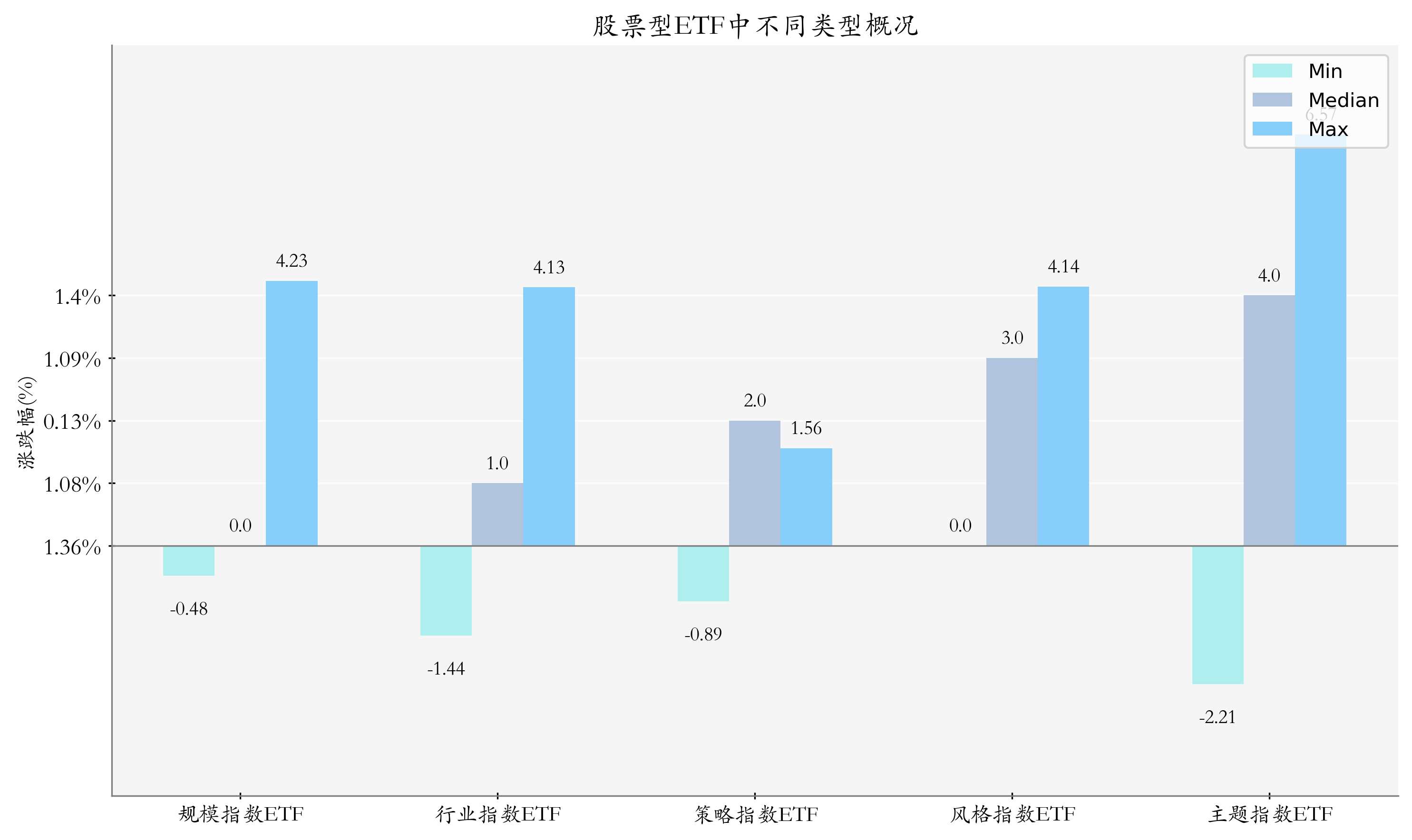
Market Overview - The Shanghai Composite Index rose by 1.13% to 3385.36 points, with a weekly high of 3391.45 points [1] - The Shenzhen Component Index increased by 1.42% to 10183.7 points, reaching a peak of 10223.56 points [1] - The ChiNext Index saw a rise of 2.32%, closing at 2039.44 points, with a maximum of 2053.56 points [1] - Global markets mostly experienced gains, with the Nasdaq Composite up by 2.18%, the Dow Jones Industrial Average up by 1.17%, and the S&P 500 up by 1.5% [1] - In the Asia-Pacific region, the Hang Seng Index increased by 2.16%, while the Nikkei 225 Index fell by 0.59% [1] ETF Market Performance - The median weekly return for stock ETFs was 1.16% [2] - The highest weekly return among scale index ETFs was 4.23% for the China Asset Management CSI 2000 Enhanced Strategy ETF [2] - The top-performing industry index ETF was the Southern CSI 500 Information Technology Index ETF, with a return of 4.13% [2] - The highest return for strategy index ETFs was 1.56% for the China Asset Management ChiNext Low Volatility Value ETF [2] - The leading theme index ETF was the China Asset Management ChiNext Artificial Intelligence ETF, achieving a return of 6.57% [2] ETF Liquidity - Average daily trading volume for stock ETFs increased by 10.6%, while average daily turnover rose by 2.7% [7] ETF Fund Flows - The top five stock ETFs by inflow were: - China Asset Management CSI Information Technology Application Innovation Industry ETF (inflow of 531 million yuan) - Guotai Junan National Index Information Technology Innovation Theme ETF (inflow of 339 million yuan) - Harvest SSE Sci-Tech Innovation Board Chip ETF (inflow of 278 million yuan) - Fortune CSI Military Industry Leaders ETF (inflow of 246 million yuan) - Fortune National Index Information Technology Innovation Theme ETF (inflow of 234 million yuan) [9] - The top five stock ETFs by outflow were: - Invesco Great Wall CSI A500 ETF (outflow of 208 million yuan) - E Fund CSI 300 ETF (outflow of 195 million yuan) - Southern CSI 1000 ETF (outflow of 188 million yuan) - Bosera SSE Sci-Tech Innovation Board 100 ETF (outflow of 185 million yuan) - Da Cheng CSI A50 ETF (outflow of 179 million yuan) [10] ETF Financing and Margin Trading - The financing balance for stock ETFs decreased from 41.2208 billion yuan to 40.7357 billion yuan [12] - The highest financing buy amount was 477 million yuan for the China Asset Management SSE Sci-Tech Innovation Board 50 Component ETF [12] ETF Market Size - The total market size for ETFs reached 4160.02 billion yuan, an increase of 61.934 billion yuan from the previous week [15] - Stock ETFs accounted for 2984.777 billion yuan, representing 71.7% of the total ETF market size [17] ETF Issuance and Establishment - No new ETFs were issued last week, but seven new ETFs were established, including: - Great Wall CSI Low Volatility 100 ETF - Penghua CSI All-Index Free Cash Flow ETF - Harvest SSE Sci-Tech Innovation Board Comprehensive Enhanced Strategy ETF - E Fund SSE Sci-Tech Innovation Board 200 ETF - Tianhong CSI A500 Enhanced Strategy ETF - Huatai-PB SSE Sci-Tech Innovation Board New Materials ETF - Tibet Dongcai ChiNext ETF [18] Institutional Perspectives - Huaxin Securities suggests that the AI overseas chain valuation is likely to continue recovering, with strong upward expectations for the domestic chain logic [19] - Zhongyin International believes that the AI industry chain may experience a rebound, indicating that now is an optimal time for allocation [20]







红利风格投资价值跟踪(2025W23):红利风格缩量,ETF资金小幅净流入
Xinda Securities· 2025-06-08 08:15
Quantitative Models and Construction Methods 1. Model Name: Dividend Timing Model - **Model Construction Idea**: This model uses macroeconomic indicators such as the 10-year US Treasury yield, domestic M2 growth, and the M1-M2 scissors difference to predict the relative excess return of the CSI Dividend Index compared to the Wind All A Index[8][12] - **Model Construction Process**: - The model incorporates three key indicators: 1. **Global Liquidity**: 10-year US Treasury yield 2. **Internal Liquidity**: Domestic M2 year-on-year growth 3. **Domestic Economic Expectations**: Domestic M1-M2 year-on-year scissors difference - Historical data from 2010 onward is used to calculate the annualized excess return of the timing strategy, which is 8.14%[8] - **Model Evaluation**: The model demonstrates strong predictive power for excess returns, but its performance in 2025 YTD shows a negative excess return of -5.36%, indicating potential short-term challenges[8] 2. Model Name: Regression-Based Valuation Model - **Model Construction Idea**: This model uses the CSI Dividend Index's absolute and relative PETTM valuation levels to predict future absolute and excess returns[19][21] - **Model Construction Process**: - **Absolute Valuation**: - The absolute PETTM valuation of the CSI Dividend Index is calculated using a weighted factor adjustment to align with its dividend yield characteristics - Historical data shows a correlation coefficient of -29.66% between the absolute PETTM percentile and future absolute returns, with a regression T-statistic of -15.61[19] - Regression formula: $ y = -0.281x + 0.2635 $ - $y$: Future absolute return - $x$: Absolute PETTM percentile[23] - **Relative Valuation**: - The relative PETTM is calculated as the ratio of the CSI Dividend Index's PETTM to the Wind All A Index's PETTM - Historical data shows a correlation coefficient of -34.10% between the relative PETTM percentile and future excess returns, with a regression T-statistic of -18.23[21] - Regression formula: $ y = -0.1233x + 0.0984 $ - $y$: Future excess return - $x$: Relative PETTM percentile[30] - **Model Evaluation**: The model effectively identifies valuation extremes, with higher PETTM levels indicating greater downside risk. However, the current valuation levels suggest limited upside potential[19][22] 3. Model Name: Price-Volume Regression Model - **Model Construction Idea**: This model uses price and volume metrics, such as the weight of stocks above the 120-day moving average and trading volume percentiles, to predict future returns[25][31] - **Model Construction Process**: - **Price Dimension**: - The weight of CSI Dividend Index constituents above the 120-day moving average is calculated - Historical data shows a correlation coefficient of -43.92% between this weight and future absolute returns, with a regression T-statistic of -20.70[25] - Regression formula: $ y = -0.2344x + 0.2115 $ - $y$: Future absolute return - $x$: Weight above the 120-day moving average[27] - **Volume Dimension**: - Absolute trading volume percentiles are calculated for the CSI Dividend Index - Historical data shows a correlation coefficient of -39.91% between trading volume percentiles and future absolute returns, with a regression T-statistic of -21.87[31] - Regression formula: $ y = -0.3821x + 0.3434 $ - $y$: Future absolute return - $x$: Trading volume percentile[31] - **Model Evaluation**: The model highlights the importance of price and volume extremes in predicting returns. Current metrics suggest moderate upside potential[25][31] 4. Model Name: Dividend 50 Optimized Portfolio - **Model Construction Idea**: This portfolio combines high dividend yield stocks with a linear multi-factor model to enhance capital gains while maintaining a stable dividend style exposure[45] - **Model Construction Process**: - High dividend yield stocks are selected as the base - A linear multi-factor model is applied to optimize capital gains - Barra style factor constraints are used to ensure consistent dividend style exposure - Timing adjustments are made based on the three-dimensional dividend timing model to further enhance returns[45] - **Model Evaluation**: The portfolio demonstrates strong performance, with significant excess returns over the CSI Dividend Index[45] --- Model Backtest Results 1. Dividend Timing Model - Annualized excess return since 2010: 8.14%[8] - 2025 YTD excess return: -5.36%[8] 2. Regression-Based Valuation Model - **Absolute Valuation**: - Current absolute PETTM: 9.35x - 3-year percentile: 98.53% - Predicted future absolute return: -1.34%[19][22] - **Relative Valuation**: - Current relative PETTM: 0.49x - 3-year percentile: 72.36% - Predicted future excess return: 0.92%[22][30] 3. Price-Volume Regression Model - **Price Dimension**: - Weight above 120-day moving average: 57.03% - Predicted future absolute return: 7.78%[25][27] - **Volume Dimension**: - Absolute trading volume percentile: 47.40% - Predicted future absolute return: 16.23%[31] - Relative trading volume percentile: 7.21% - Predicted future excess return: 0.81%[32] 4. Dividend 50 Optimized Portfolio - **Performance Metrics**: - 1-year absolute return: 9.53% - 1-year excess return: 6.20% - 3-month absolute return: 6.04% - 3-month excess return: 2.91%[46]
太火爆!知名医药基金经理发声
Zhong Guo Ji Jin Bao· 2025-06-06 08:39
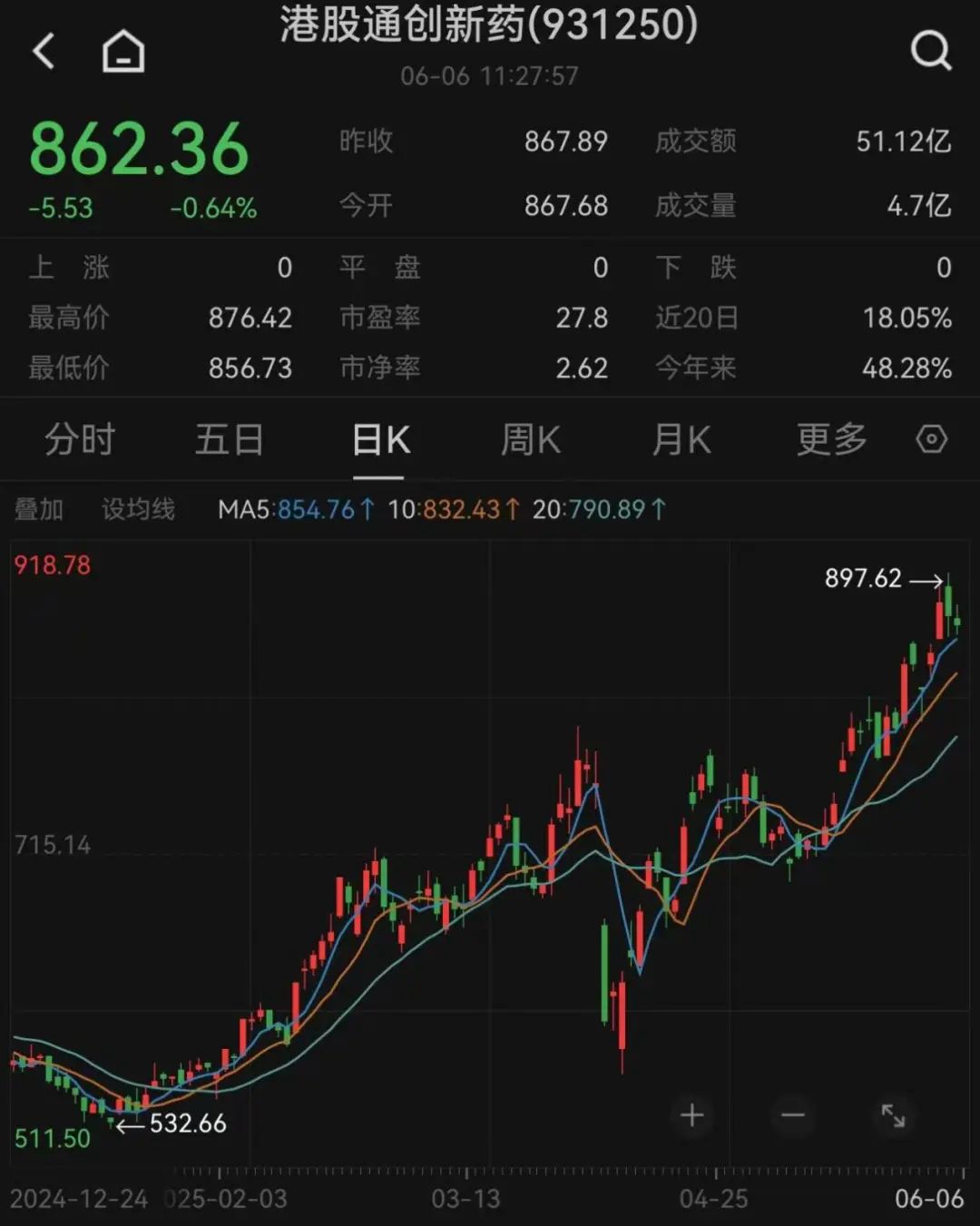
Group 1 - The innovative drug sector has seen a significant surge this year, attracting considerable market attention and investment [1][3] - Wan Minyuan, a fund manager at Rongtong Fund, emphasizes the long-term positive trend of China's innovative drug industry due to policy support, technological breakthroughs, and international expansion [3][4] - There is a concern that the influx of capital into innovative drug companies may overlook inherent risks, leading to inflated stock prices and potential valuation bubbles [3][5] Group 2 - Wan Minyuan highlights that the Chinese innovative drug industry is transitioning from "catching up" to "leading," with a record number of domestic innovative drugs being recognized at international conferences [4][5] - The Chinese innovative drug companies are increasingly collaborating with international firms, with a reported $45.5 billion in licensing deals in the first five months of the year, surpassing the total for the first half of 2024 [5] - Investment managers express optimism about the innovative drug sector, citing historical opportunities and the potential for valuation recovery as domestic companies develop globally competitive products [7][8] Group 3 - Medical funds heavily invested in the innovative drug sector have dominated the performance rankings for public funds this year, with several funds reporting significant gains [9][10] - The top-performing fund, Changcheng Medical Industry Selection A, achieved a net value growth rate of 72%, benefiting directly from the innovative drug boom [10][11] - A substantial number of medical-themed funds have reported year-to-date growth exceeding 50%, indicating strong market interest and investment in the innovative drug sector [11]
浮动管理费产品,业绩说了算!
Xin Lang Ji Jin· 2025-06-06 05:12
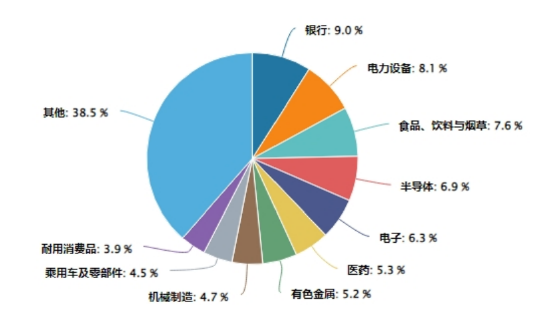
Core Viewpoint - The floating fee rate products are gaining market attention, with a focus on the specific fee structures and new features of the Invesco Great Wall Growth Fund [1] Group 1: Performance Benchmark - The performance benchmark for the Invesco Great Wall Growth Fund is designed to include A+H shares and bonds, using a combination of 60% of the China Securities A500 Index return, 20% of the China Securities Hong Kong Stock Connect Composite Index return, and 20% of the China Securities Comprehensive Bond Index return [2] - The A500 Index is representative of core A-share assets, featuring leading companies across various industries, and has a higher concentration in sectors like semiconductors, pharmaceuticals, and machinery compared to the CSI 300 Index, aligning with economic development trends [2][4] - The inclusion of Hong Kong stocks, which are driven by AI narratives and attract significant capital, helps diversify revenue sources and mitigate the impact of single market volatility on net value [4] Group 2: Fee Structure - The new product features a dual floating fee model, where management fees are differentiated based on holding duration and excess returns, allowing for both upward and downward adjustments [5] - For holdings of less than one year, a uniform management fee of 1.2% is charged [6] - For holdings over one year, if the annualized excess return relative to the benchmark is below -3%, a reduced fee of 0.6% is applied; if the return is between -3% and 6%, or positive but below 6%, the fee remains at 1.2%; if the excess return exceeds 6% with positive performance, an additional 0.3% fee is charged on top of the 1.2% [7] Group 3: Investment Strategy - The fund manager, Nong Bingli, focuses on growth-oriented investments, identifying industries with potential for non-linear growth through in-depth research, rather than chasing short-term high-growth opportunities [8] - Recent advancements in AI technology have led Nong Bingli to identify significant growth potential in the AI industry, focusing on sectors such as computing power, hardware, and new consumer segments benefiting from AI [8] - The manager remains optimistic about the evolution and monetization of the AI cycle in domestic companies, anticipating more application scenarios in the second half of the year, while also identifying structural opportunities in military and semiconductor sectors [8]
普通投资者,要如何把握港股投资机遇?
Zhong Guo Ji Jin Bao· 2025-06-06 00:43
(原标题:普通投资者,要如何把握港股投资机遇?) 2025年初至今的港股市场相当热闹。年初以来,港股主流指数表现领跑全球资本市场,出现了很多现象 级的股票。近期,政策暖风吹拂下,不少大公司纷纷赴港二次上市,丰富了港股市场的可投资选择。 从Wind数据显示的行情表现来看,截至5月30日,今年以来恒生指数、恒生中国企业指数、恒生科技指 数三大指数均实现超15%的正收益,在全球重要资本市场指数中领跑。尽管4月受关税政策以及全球经 济形势数据等因素的影响,港股行情出现波动,但5月以来回暖显著。 另据Wind数据,截至5月30日,今年以来,南向资金共计净买入港股市场6509.42亿港元,不到半年的时 间,该金额已经是历年第三高,仅暂时排在2024年、2020年分别创下的8079亿港元、6721亿港元的纪录 之后。这意味着,香港市场愈发成为内地投资者配置重要的一环,而南向资金的净流入也带来了港股市 场的流动性繁荣。 在基本面向好、流动性改善等多重因素推动下,港股市场正迎来复苏的新格局,走向价值重估的新时 代。其中,科技、创新药和消费三大板块表现尤为突出,成为推动市场上涨的核心动力。 在这背后,港股市场的生态环境发生深刻改 ...
渠道大比拼!浮动费率基金中东方红核心价值提前结募,博时、兴证全球跟随自购
Sou Hu Cai Jing· 2025-06-05 01:27
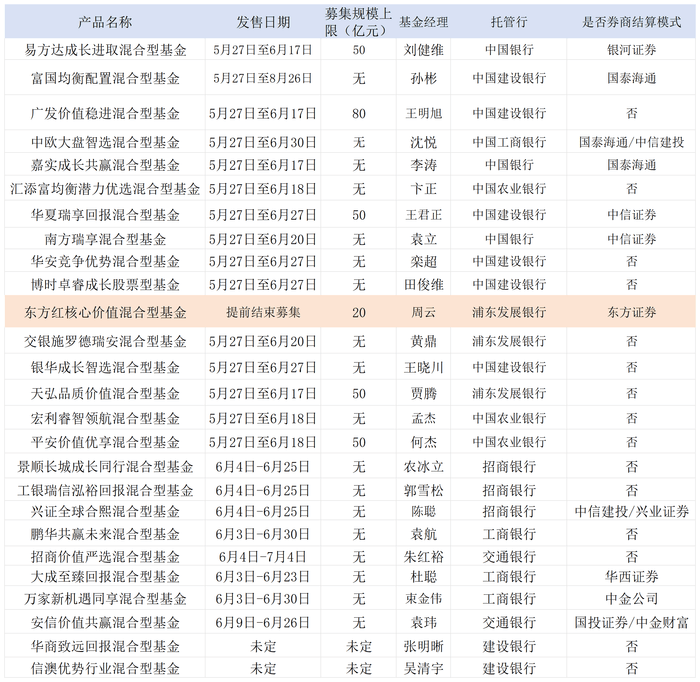
Core Insights - The first batch of 16 floating management fee rate funds has seen significant interest, with some products reaching their fundraising limits and ending their subscription early [1] - The Oriental Red Core Value Fund achieved a fundraising limit of 2 billion yuan, leading the pack due to strong customer service capabilities from distribution channels like Pudong Development Bank and Oriental Securities [1] - The shift in the public fund industry is moving from a focus on scale to a focus on returns, with only 6 out of 26 products setting fundraising limits [2] Fund Details - The Oriental Red Core Value Mixed Fund was the first to reach its fundraising cap of 2 billion yuan and will no longer accept new subscriptions from June 5 [1] - Other funds in the first batch include E Fund Growth Progress Mixed Fund with a cap of 5 billion yuan, and GF Value Steady Mixed Fund with a cap of 8 billion yuan [2] - As of June 4, the combined issuance of E Fund Growth Progress, GF Value Steady, and Harvest Growth Winning reached 760 million yuan [3] Market Dynamics - Following the Dragon Boat Festival, new floating fee rate products are being launched, indicating a competitive sales environment among distribution channels [6][7] - Institutions are increasingly investing their own funds into floating fee rate funds to demonstrate commitment to investors [9] - The China Securities Regulatory Commission has introduced a plan to promote high-quality development in public funds, emphasizing investor interests and performance-based fee structures [10]
6月公募新发市场迎“小高峰”;公募最新调研聚焦硬科技与全球化方向
Mei Ri Jing Ji Xin Wen· 2025-06-03 07:28
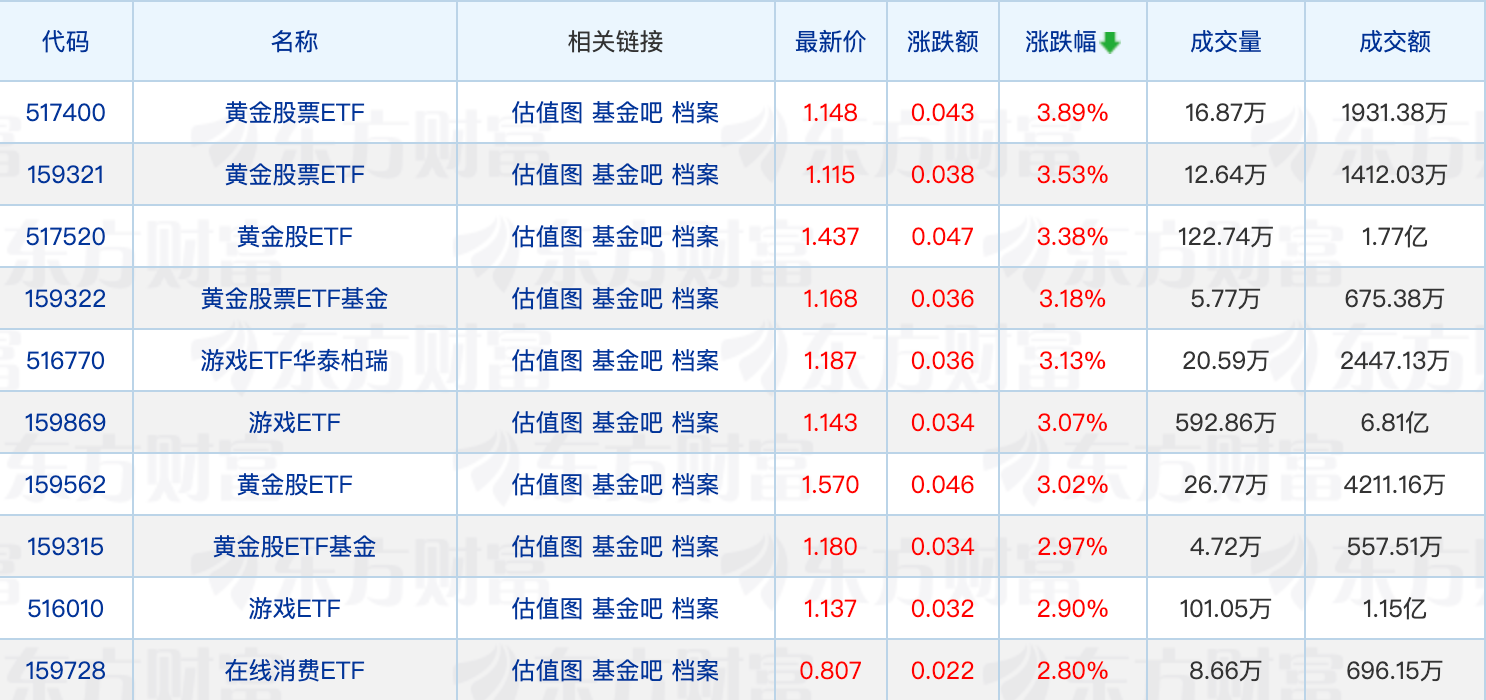
Group 1: Fund Market Overview - In June, the public fund issuance market experienced a "small peak" with 89 funds entering the sale period, including 41 funds launched on the first trading day after the Dragon Boat Festival [1] - Public REITs have seen a significant market trend this year, with the CSI REITs total return index rising by 12.62% year-to-date, although it has recently shown signs of high volatility [2] - In May, public fund research focused on hard technology and globalization, with 156 public funds participating in A-share listed company research, covering 629 stocks and totaling 4,791 research instances [3] Group 2: Notable Fund Manager Insights - Song Jialing, head of the consumer research team at Hengyue Fund, indicated that new targets in the emerging consumer sector are expected to continue to emerge, driven by cultural trends from demographic changes [4] - Despite some stocks in the emerging consumer sector experiencing significant short-term gains, the price movements are closely tied to performance data, with many companies planning new products for the second half of the year [4] Group 3: ETF Market Performance - The market showed a rebound with the Shanghai Composite Index rising by 0.43%, and the Shenzhen Component Index increasing by 0.16%, with a total trading volume of 1.14 trillion yuan [3] - Gold-related ETFs performed strongly, with the highest increase reaching 3.89%, while the automotive parts ETF led the decline with a drop of 1.94% [4][5] Group 4: ETF Thematic Opportunities - Human-shaped robots and smart vehicles share many commonalities in hardware and software, with automotive companies increasingly entering the robotics sector, suggesting potential growth in automotive parts related ETFs [6] Group 5: Upcoming Fund Launches - The upcoming fund "Invesco Great Wall Growth Mixed Fund" is a mixed equity fund managed by Nong Bingli, with a performance benchmark based on a combination of indices [7] - Another fund, "招商价值严选混合" (招商 Value Select Mixed Fund), is also set to launch, managed by Zhu Hongyu, with a performance benchmark linked to the CSI 300 Index and the Hang Seng Composite Index [9]
固收+爆火,年内业绩怎样?业绩首尾差近20%,融通、汇丰晋信、金鹰基金旗下产品垫底
Sou Hu Cai Jing· 2025-05-28 11:46
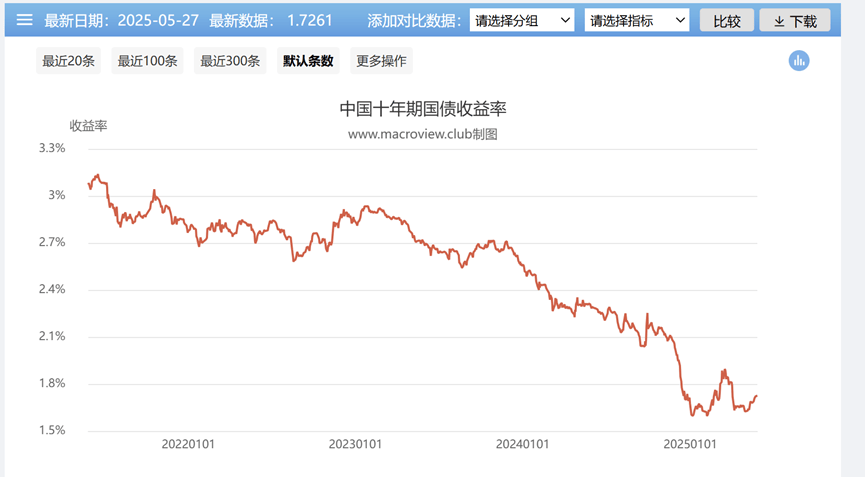
Core Viewpoint - The "fixed income +" funds have experienced explosive growth in early 2025, with the total market size surpassing 2 trillion yuan, marking a significant recovery from previous lows [1][3]. Group 1: Market Performance - As of the end of Q1 2025, there are 2,161 "fixed income +" funds with a total scale exceeding 2 trillion yuan, reflecting a quarter-on-quarter increase of 6.7% and a net subscription scale of nearly 50 billion units [1]. - The low interest rate environment has driven a migration of funds towards "fixed income +" products, as evidenced by the historical low of 1.68% for 10-year government bond yields in 2024, which fell by 88 basis points [1]. Group 2: Product Characteristics - "Fixed income +" products, represented by the Wind偏债混合型基金指数, have shown unique yield elasticity with an equity allocation of 20%-30%, outperforming equity funds over three and five-year periods [3]. - The maximum drawdown for the index over the past ten years is 8.17%, significantly better than the 45.42% volatility of mixed equity funds [3]. Group 3: Fund Performance - As of May 28, 2025, 23 "fixed income +" funds have achieved returns greater than 5% year-to-date, with 工银聚享A leading at 13.65% [4]. - Other notable funds include 富国久利稳健配置A at 12.20% and several others surpassing the 5% return threshold [4]. Group 4: Risks and Challenges - Despite the overall positive performance, there are concerns as five high-volatility "fixed income +" products have reported losses exceeding 4%, with some experiencing declines over 5% [5].
持续上涨!一天8只QDII基金提示溢价风险
Bei Jing Shang Bao· 2025-05-27 12:41
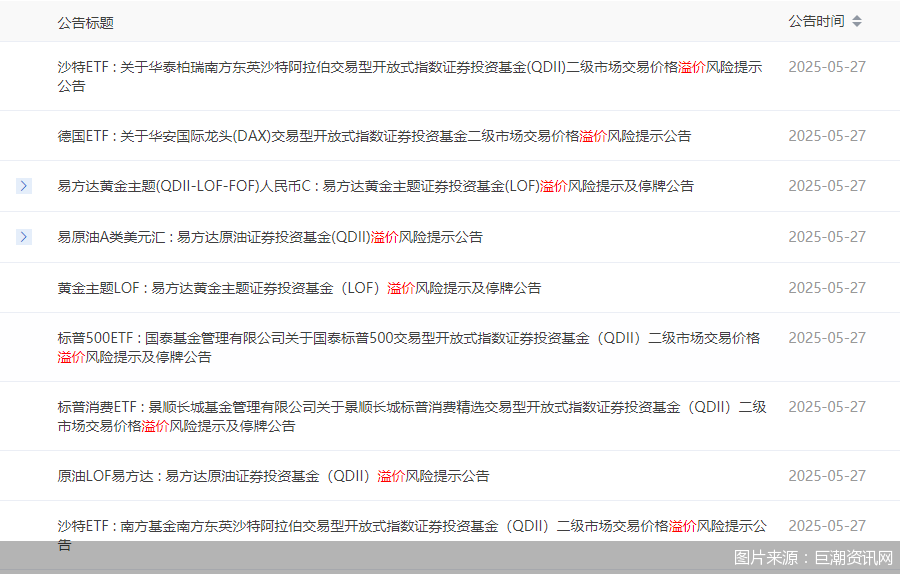
Core Insights - The QDII funds have shown significant performance this year, but many products are frequently warning about premium risks due to price discrepancies between the market and net asset values [1][5] - As of May 27, eight QDII funds issued premium risk alerts, with some funds having issued multiple warnings throughout May [1][2] - Investors are advised to monitor premium rates closely, especially when they exceed 10%, and to wait for a return to reasonable levels before investing [1][5] Performance Overview - As of May 23, out of 650 QDII funds, 425 achieved positive returns this year, representing 65.38% of the total, with 46 funds exceeding a 30% return [4] - The top-performing fund, Huatai-PineBridge Hong Kong Advantage Selection Mixed Fund (QDII), recorded a year-to-date return of 68.45%, while its C-class shares achieved 67.96% [3][4] - The strong performance of QDII funds is largely attributed to investments in the Hong Kong stock market, which has seen significant gains this year [4] Market Context - The Hang Seng Index and the Hang Seng Tech Index have risen by 16.56% and 15.99% respectively since the beginning of the year, contributing to the positive performance of QDII funds focused on Hong Kong stocks [4] - In contrast, some QDII funds investing in US and European markets have reported negative returns, highlighting the variability in performance based on market focus [4]
基金市场与ESG产品周报:医药主题基金表现亮眼,被动资金加仓科技赛道-20250526
EBSCN· 2025-05-26 09:14
- The report does not contain any quantitative models or factors related to the requested topic[1][2][3]