三星电子

Search documents
高盛:韩国和日本市场还有进一步上涨空间
Xin Lang Cai Jing· 2026-02-17 01:45
888、666、188……专属炒股靓号来了!新年定制福利,开启马年投资好运>> 格隆汇2月17日|高盛对冲基金业务全球主管托尼.帕斯夸里洛(Tony Pasquariello)表示,首尔的韩国综合 股价指数上周上涨8%,创下五年来最佳单周表现。自2024年底以来,该指数已增长逾一倍。KOSPI指 数今年已上涨31%。不难看出推动此轮涨势的主要力量是什么。该指数中市值遥遥领先的两家公司是三 星电子和SK海力士,在人工智能相关需求猛增的背景下,这两家芯片制造商的股价今年迄今已分别飙 升51%和35%。帕斯夸里洛说,考虑到涨幅如此之大,许多投资者一直在问是否应该减持韩国头 寸。"我们认为现在减持还为时尚早,"他说。"我们维持增持评级,并将韩国综合指数的目标点位上调 至6,400点,这意味著还有超过20%的上涨空间。"在日本,日经指数今年已经上涨了12.9%。帕斯夸里 洛表示,他看好日本市场有两个原因。首先,高盛分析师认为仓位并未过高。帕斯夸里洛指出,外国投 资者的仓位仍未回到2024年7月日本央行加息造成市场剧烈波动之前的水平。他说,第二个问题是"相关 性模式发生了转变"。近年来的普遍趋势是,相对较低的日本利率导致 ...
高盛:对冲基金 正以十年来最快的速度抄底亚洲市场
Hua Er Jie Jian Wen· 2026-02-16 23:58
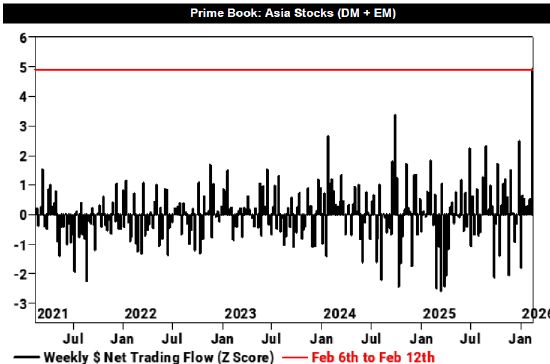
高盛在给客户的报告中表示,上周亚洲市场的交易主要由做多买入推动,多头建仓与空头回补的比例为 8.4比1。 从全球行业来看,高盛表示,信息技术、工业、日常消费品和原材料板块的买入力度超过其他板块的卖 出力度。而可选消费、通信服务和金融板块则遭到最严重的抛售。 在连续四周净卖出后,对冲基金对美国股票的买家数量略多于卖家。 由于市场对人工智能基础设施公司的乐观情绪升温,对冲基金对新兴及发达亚洲市场的净买入规模在上 周录得自2016年高盛开始追踪相关数据以来的最大。对亚洲股票的敞口已升至至少自2016年以来的最高 水平。 根据高盛的一份报告,对冲基金上周转为全球股票的净买方,这是三周以来首次,资金流入所有主要市 场,但亚洲表现最为突出。对冲基金将其看涨交易集中在韩国、中国,印度市场出现"温和卖出"。 报告称,对冲基金在亚洲发达市场和新兴市场的大多数行业中买入股票,包括房地产、科技公司、工业 股和可选消费股,但未涉及金融股。 高盛的报告指出,随着投资者从动量交易中轮动出来,同时对美元走弱作出反应,新兴市场持续跑赢。 MSCI新兴市场指数今年以来上涨11%,而韩国综合股价指数(Kospi)已上涨逾30%,受三星电子和SK ...
高盛称对冲基金对亚洲股票买入规模创十年来最高
Xin Lang Cai Jing· 2026-02-16 17:03
来源:环球市场播报 上周,对冲基金对亚洲新兴和发达市场的净买入规模创下高盛Prime Services交易台自2016年开始追踪 该数据以来的最高纪录,该地区受益于市场对人工智能基础设施企业的乐观预期。 MSCI新兴市场指数年内累计上涨11%,韩国Kospi指数飙升逾30% —— 三星电子和SK海力士等主要制 造商功不可没。相比之下,截至上周五收盘,标普500指数微跌0.1%。 高盛交易部门在致客户报告中指出,上周亚洲市场行情主要由多头买盘驱动,多头买盘与空头回补的比 例高达8.4:1。 就全球板块而言,该交易台表示,信息技术、工业、必需消费品和材料板块的买盘量超过了其他所有领 域的卖盘量。可选消费品、通信服务和金融板块的抛售最为激烈。 该交易部门报告显示,上周对冲基金成为全球股票净买方,这是三周以来的首次,资金涌入所有主要市 场 —— 但亚洲尤为突出。随着投资者轮换退出动量趋势,同时对美元走弱作出反应,新兴市场持续跑 赢。 ...


韩国股市今年已上涨超30%,政府“5000点计划”奏效了?
Jing Ji Guan Cha Bao· 2026-02-16 08:07
(原标题:韩国股市今年已上涨超30%,政府"5000点计划"奏效了?) 2026年以来,韩国综合股价指数(KOSPI)已上涨超过30%,韩国政府此前推出的"股市5000点"计划, 以及AI热潮对半导体的需求被认为是韩国股市此轮上涨的重要推动因素。 2月16日周一,韩国交易所(KRX)因农历新年假期休市,节前最后一个交易日2月13日,KOSPI指数收 于5507点,尽管当日小幅回落0.28%,但较年初涨幅已超过30%,超过全球主要指数的表现。 韩国股市总市值超过德国 2025年6月,新一届韩国政府提出大力推进资本市场改革,推动KOSPI指数突破5000点,并将"价值提升 计划"升级为政府核心议程,此被视为公司价值提升的2.0阶段。此后,韩国推进一系列政策,包括设 立"KOSPI 5000特别委员会"、引入股息分离课税优惠、建立"回归国内市场账户"(鼓励海外资金回流并 免税)、要求上市公司取消库存股等。这些改革叠加半导体周期复苏,显著提振市场预期,导致KOSPI 从2025年下半年加速上行,从约3000点突破至2026年初的5000点以上。 市场分析认为,这些改革有效缓解"韩国折扣"。一直以来,韩国股市长期受家族 ...
存储巨头四季报“五大关键点”:当前周期强度超越2017-18“云繁荣周期”
Hua Er Jie Jian Wen· 2026-02-16 06:17
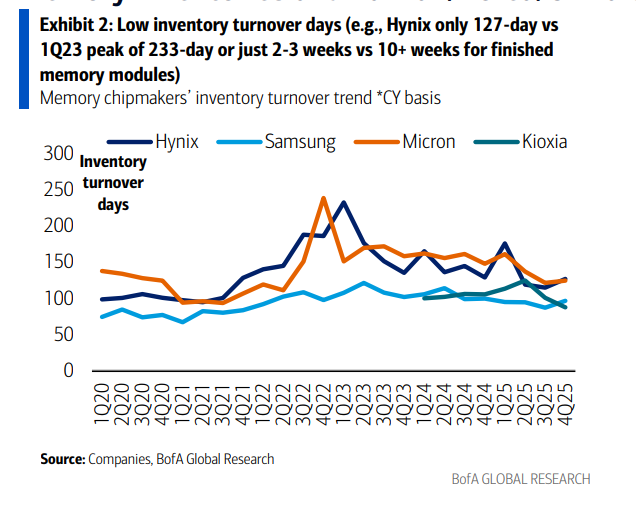
Core Insights - The storage industry is emerging from a downturn and entering a "super cycle" driven by AI demand, as indicated by the recent earnings reports from major storage companies [1] Group 1: Key Signals from Earnings Reports - Inventory levels have dropped below the "warning line," with SK Hynix's inventory turnover days decreasing from a peak of 233 days in Q1 2023 to just 127 days, indicating potential supply chain shortages [2] - Average Selling Prices (ASP) are experiencing significant recovery, with Samsung's DRAM ASP soaring by 40% quarter-over-quarter and SK Hynix's NAND prices increasing by 32% [2] - Major companies are aggressively increasing capital expenditures in response to surging demand for High Bandwidth Memory (HBM), with SK Hynix's capital spending projected to rise from 7 trillion KRW in Q4 2024 to 12 trillion KRW by Q3 2025 [2] Group 2: Market Trends and Price Movements - HBM4 production is exceeding expectations, which will influence future market share in AI computing [3] - The industry outlook is extremely optimistic, with projections for a long-term "storage super cycle," as noted by Nanya Tech's president, who claims the current cycle is better than the 2017-2018 cloud server boom [3] - The Memory Indicator from Bank of America has risen to 124, indicating an upward cycle, compared to an average of 103 in the first half of 2025 [4] Group 3: Current Market Conditions - DRAM spot prices remain high, with 16Gb DDR5 prices at $38, a year-on-year increase of 709%, and 16Gb DDR4 prices reaching $78, up 2445% year-on-year [6] - Despite some OEMs indicating temporary assembly line halts due to rising storage costs, overall sales data from Taiwan shows significant month-over-month growth exceeding 20% and year-on-year doubling for several manufacturers [7] - SSD prices have surged, with a weekly increase of 40% and a monthly increase of 60%, reflecting market concerns about potential shortages in the second half of the year [9] Group 4: Insights from Semicon Korea - The recent Semicon Korea event showcased a booming industry, with equipment suppliers benefiting from record capital expenditures by major players like Samsung and SK Hynix [10] - HBM production is time-consuming, requiring extensive equipment to maintain high output levels, which may impact supply timelines [12] - The adoption of Hybrid Bonding technology may face delays, as manufacturers prefer existing methods for HBM production [12]
港股蛇年收官:三大指数低开高走,恒指收涨0.52%全年累涨超32%,恒生科指涨0.13%盘中一度跌近2%,港股“AI双雄”齐创新高
Jin Rong Jie· 2026-02-16 05:05
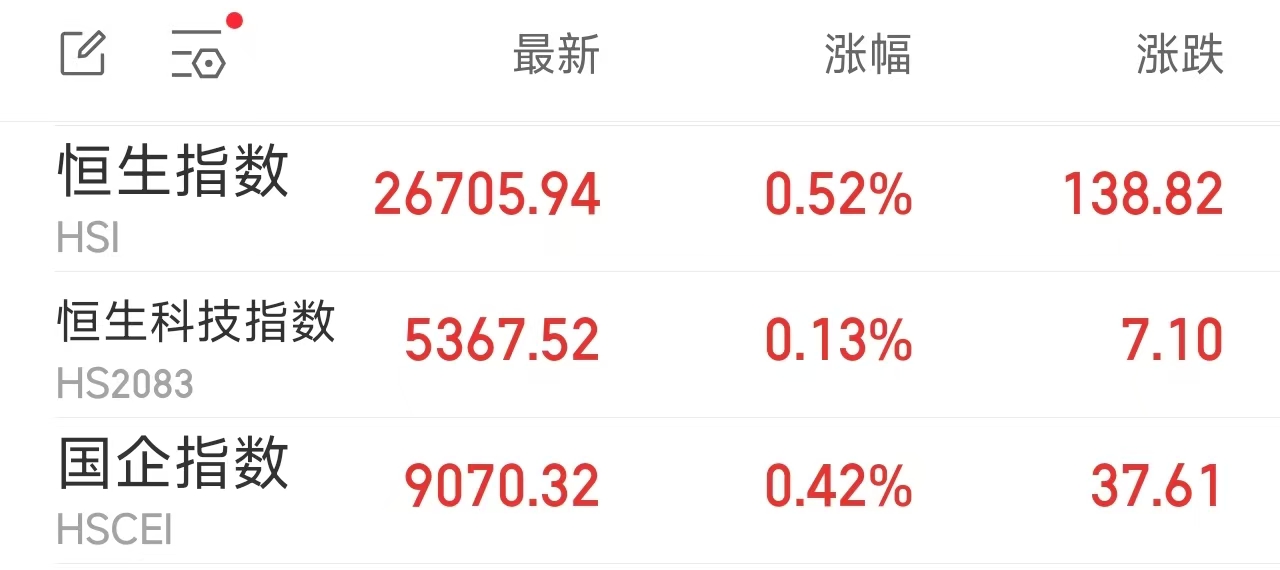
Market Performance - The Hong Kong stock market experienced a half-day trading session on February 16, with the Hang Seng Index closing up 0.52% at 26,705.94 points, the Hang Seng Tech Index up 0.13% at 5,367.52 points, and the National Enterprises Index up 0.42% at 9,070.32 points [1][2] - For the year of the Snake, the Hang Seng Index has increased by over 32%, the Hang Seng Tech Index by over 13%, and the National Enterprises Index by over 23% [1] Sector Performance - The precious metals, semiconductor, and oil & petrochemical sectors showed strength, while defense, consumer discretionary, and hardware equipment sectors underperformed [2] - Notable movements among major tech stocks included Alibaba down 0.26%, Tencent up 0.47%, JD.com down 2.26%, Xiaomi down 0.16%, NetEase up 2.32%, Meituan up 0.43%, Kuaishou up 0.15%, and Bilibili up 0.67% [2] AI Sector Developments - AI application stocks saw significant gains, with Hong Kong's AI leaders, Zhizhu and MiniMax-WP, reaching new highs, with Zhizhu up 4.74% and MiniMax-WP up 24.26% [4] - Zhizhu launched its flagship model GLM-5, which has gained popularity overseas, and announced a price increase for its AI programming subscription plan [5] Semiconductor Sector Insights - The semiconductor sector showed strength, with stocks like Zhaoyi Innovation and Lanke Technology rising over 17%, closing at increases of 9.78% and 14.05% respectively [7] - A price increase trend in storage chips is emerging, with Kioxia expected to raise average selling prices by approximately 50% starting Q1 2026, which is anticipated to significantly improve profitability in the NAND industry [9][10] Precious Metals Market - The precious metals sector is experiencing a surge, with companies like Luoyang Molybdenum rising over 5% and others like Zijin Mining and Ganfeng Lithium also seeing gains of over 4% [6] - Analysts from ANZ have raised their Q2 gold price forecast from $5,400 to $5,800 per ounce, citing ongoing structural drivers despite recent price corrections [6]
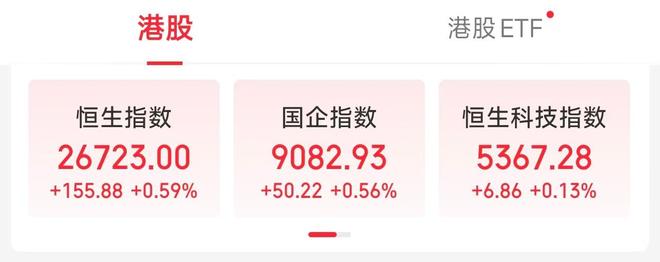
港股蛇年收官:三大指数收红, 恒指涨0.59%全年累涨超32%,恒生科指涨0.13%盘中一度跌近2%,港股“AI双雄”齐创新高
Jin Rong Jie· 2026-02-16 04:28
Market Performance - The Hong Kong stock market experienced a half-day trading session on February 16, with the Hang Seng Index rising by 0.59% to close at 26,723 points, while the Hang Seng Tech Index increased by 0.13% to 5,367.28 points, and the National Enterprises Index rose by 0.56% to 9,082.93 points [1] - For the year of the Snake, the Hang Seng Index has accumulated a gain of over 32%, the Hang Seng Tech Index has risen over 13%, and the National Enterprises Index has increased by over 23% [1] Sector Performance - The precious metals, semiconductor, and oil sectors showed strength, while defense, consumer discretionary, and hardware sectors underperformed [3] - Major technology stocks saw declines, with Alibaba down 0.26%, JD.com down 2.26%, and Xiaomi down 0.16%, while NetEase and Meituan saw gains of 2.32% and 0.43%, respectively [3] AI Sector Developments - AI application stocks surged, with Hong Kong's "AI twins" Zhizhu and MiniMax-W reaching new highs, with Zhizhu rising by 4.74% and MiniMax-W increasing by 24.26% [4] - Zhizhu launched its new flagship model GLM-5, which has gained popularity overseas, and announced a price increase for its AI programming subscription plan by at least 30% [6][7] Semiconductor Sector Insights - The semiconductor sector showed localized strength, with stocks like Zhaoyi Innovation and Lanke Technology rising by over 17% [9] - A price increase trend for storage chips is emerging, with Kioxia expected to implement a pricing policy that will raise average selling prices by approximately 50% starting in Q1 2026 [12] Precious Metals Market - The precious metals sector is performing strongly, with companies like Luoyang Molybdenum and Zijin Mining seeing gains of over 5% [8] - Analysts from ANZ have raised their Q2 gold price forecast from $5,400 to $5,800 per ounce, citing ongoing structural drivers despite recent price corrections [8]
港股半导体板块,全线爆发!
Xin Lang Cai Jing· 2026-02-16 03:36
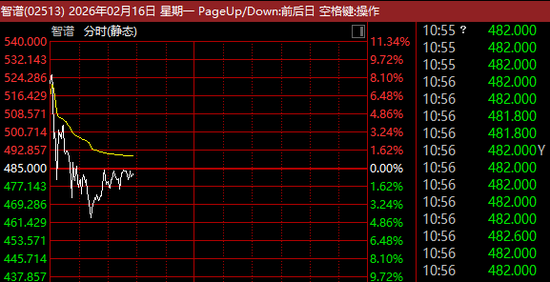
Market Overview - On February 16, the Hong Kong stock market opened slightly lower, with the Hang Seng Index down 0.25% and the Hang Seng Tech Index down 1.14% [1] - The market saw strength in sectors such as precious metals, semiconductors, and oil, while sectors like defense, consumer discretionary, and hardware struggled [1] Technology Sector - The Hang Seng Tech Index has experienced significant declines recently, creating potential value for investors [9] - Recent market volatility is attributed to liquidity shocks, and the current situation is compared to market conditions in November 2025 [10] - Analysts recommend buying on dips and holding stocks through the holiday season [10] AI Application Stocks - AI application stocks in Hong Kong saw gains, with Zhiyu (智谱) opening up over 7% and later experiencing fluctuations [11] - Zhiyu's stock price has increased by 130% since February, with a total market capitalization exceeding 230 billion HKD [11] IPO Developments - Zhiyu has withdrawn its IPO guidance submitted in April 2025 and is now pursuing a new listing on the Sci-Tech Innovation Board [13] - The company has changed its IPO advisory firms to Guotai Junan Securities and China International Capital Corporation [13] Semiconductor Sector - The semiconductor sector showed strength, with stocks like Zhaoyi Innovation (兆易创新) rising over 17% [16] - A price increase in storage chips is expected, with Kioxia planning to raise average selling prices by approximately 50% starting in Q1 2026 [17] - Analysts predict significant improvements in profitability for the NAND industry, with Samsung's NAND business operating margin expected to rise to 37% and SK Hynix to 42% in Q1 2026 [18] Precious Metals Market - The precious metals sector is experiencing a boost, with gold prices expected to rise due to seasonal demand and investment interest [14] - ANZ analysts have raised their gold price forecast for Q2 from $5,400 to $5,800 per ounce [14]
下一代功率半导体,韩国发力
半导体行业观察· 2026-02-16 01:58
Core Viewpoint - The South Korean government aims to double its technological autonomy in power semiconductors from 10% to 20% by 2030, prioritizing infrastructure applications [2] Group 1: Government Initiatives - The Ministry of Trade, Industry and Energy has established a "Next-Generation Power Semiconductor Promotion Team" to enhance the country's capabilities in power semiconductors [2] - The team is led by Professor Koo Sang-mo, an expert in compound power semiconductors [5] Group 2: Importance of Power Semiconductors - Power semiconductors are critical components for controlling and converting electricity in national infrastructure, including electric vehicles, national grids, AI data centers, and defense systems [2][4] - The failure of power semiconductors could lead to the collapse of essential national infrastructure, highlighting their importance [4] Group 3: Strategic Focus and Challenges - The global competitive landscape in the power semiconductor industry is unfavorable for South Korea, which has lagged behind Europe and the U.S. in technology development [5][6] - The promotion team's strategy is "demand-driven," focusing on identifying required specifications and performance in key sectors like electric vehicles and AI data centers [6] Group 4: Development Roadmap and Talent Cultivation - The team plans to complete a technology development roadmap for power semiconductors in the first half of the year, outlining performance indicators and long-term R&D directions [6] - There is a focus on ensuring that domestic power semiconductors can be effectively applied in public infrastructure through legal and institutional improvements [6][10] Group 5: Future Goals and Ecosystem Building - The target of achieving a 20% self-sufficiency rate by 2030 is seen as a minimum benchmark that must be exceeded [9] - The promotion team aims to create a self-sustaining ecosystem for power semiconductors, emphasizing the importance of public infrastructure and national security [10]
存储芯片,走向失控
半导体行业观察· 2026-02-16 01:58
Core Viewpoint - A global storage crisis is emerging, driven by a significant shortage of memory chips, particularly DRAM, which is impacting profits across various sectors, including consumer electronics and automotive industries [2][3][4]. Group 1: Causes of the Crisis - The shortage of DRAM is primarily attributed to the increasing demand from artificial intelligence data centers, which require high bandwidth memory (HBM) for processing large datasets [3][6]. - Companies like Alphabet Inc. and OpenAI are purchasing millions of memory chips for AI applications, leading to a competitive squeeze on supply for consumer electronics manufacturers [4][5]. - The price of DRAM has surged dramatically, with some prices increasing by 75% from December to January, reminiscent of hyperinflation [4][23]. Group 2: Impact on Companies - Major semiconductor manufacturers, including SK Hynix, Samsung, and Micron, control over 90% of global memory chip production and are experiencing record valuations due to the demand surge [4][5]. - The shift in production focus from traditional DRAM to HBM has resulted in reduced availability of standard memory chips for consumer electronics, affecting companies like Apple and Tesla [2][5]. - The memory crisis is causing significant disruptions in product release schedules, with companies like Sony considering delays for their next-generation gaming consoles [19][23]. Group 3: Market Predictions - TrendForce predicts that DRAM and NAND flash prices will rise by 90% to 95% and 55% to 60%, respectively, in the first quarter alone [4][6]. - The demand for HBM is expected to grow by 70% year-on-year by 2026, indicating a long-term shift in the memory market dynamics [6][22]. - The supply-demand imbalance is projected to persist throughout the year, with potential declines in smartphone shipments and increased prices for low-end devices [23][19].