海信视像

Search documents
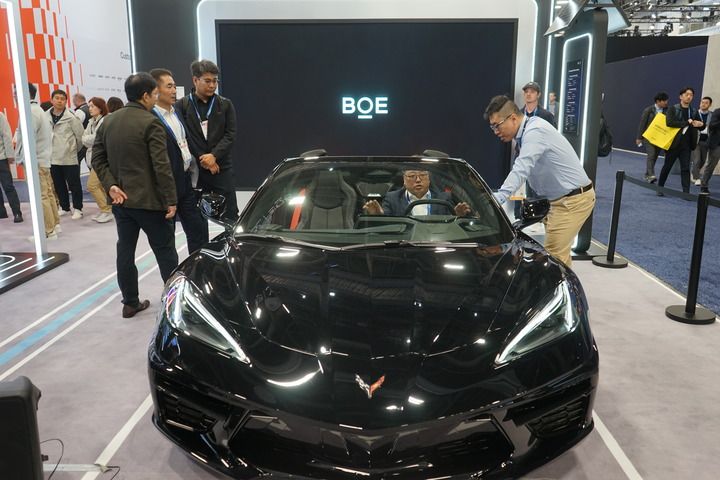
从概念到落地,“物理AI”的“ChatGPT时刻”来了吗
Xin Hua Wang· 2026-01-16 02:31
Core Insights - The "physical AI" era has arrived, as highlighted by NVIDIA's CEO Jensen Huang at the recent CES, indicating a transformative impact on industries such as manufacturing, logistics, and transportation [1] - The development of "physical AI" is expected to face multiple challenges despite its potential to reshape various sectors [1] Group 1: Definition and Mechanism - "Physical AI" builds upon generative AI by understanding 3D spatial relationships and physical laws, enabling robots to execute actions based on real-world data from sensors [2] - The three core elements of "physical AI" are data, platforms, and models, which involve creating a digital twin of real environments for virtual training [5] Group 2: Market Potential and Applications - The market for "physical AI" is projected to reach trillions of dollars by 2030, impacting sectors like manufacturing, logistics, healthcare, and autonomous driving [8] - "Physical AI" enhances the capabilities of machines, allowing them to perceive their environment and adapt to changing conditions, such as autonomous robots navigating complex warehouse environments [8][10] Group 3: Challenges and Risks - Creating high-precision physical simulation environments is costly and complex due to the need for multi-source data integration [13] - Discrepancies between simulated and real-world environments can lead to increased error rates during deployment, affecting operational efficiency [13][15] - The potential for decision-making errors in "physical AI" systems could result in significant operational risks, including material waste and safety incidents [15]

哈萨克斯坦最大城市,满街中国品牌
21世纪经济报道· 2026-01-16 02:25
Core Viewpoint - Chinese brands have established a strong presence in Kazakhstan, becoming integral to the local economy and daily life, with significant growth in trade and investment between China and Central Asia [1][2]. Group 1: Market Growth and Chinese Brand Presence - China has become Central Asia's largest trading partner, with trade volume reaching $60.7 billion from 2017 to 2024, a 1.5 times increase [1]. - By 2024, China's direct investment and loans to Central Asia are expected to exceed $24 billion, with over 9,000 Chinese companies operating in the region [1]. - Kazakhstan is emerging as a key hub for Chinese enterprises' overseas growth, with a young population and high smartphone penetration (95%) [1]. Group 2: Integration of Chinese Brands - Chinese brands, including Haier, BYD, and Xiaomi, are increasingly integrated into the daily lives of Central Asian consumers, with visible presence in various sectors [2][7]. - The automotive sector has seen rapid growth, with Chinese manufacturers' market share in Kazakhstan rising from 2% in 2020 to 38% by 2024 [8]. - In the first nine months of this year, Chinese automotive brands captured 34.5% of the market share, with local production initiated by brands like Changan and Chery [8]. Group 3: Marketing and Consumer Behavior - The shift in perception of Chinese automobiles from low-cost to reliable technology reflects a broader acceptance among Central Asian consumers [9]. - The rapid technological advancements in China provide a competitive edge, as local consumers are open to new experiences and innovations [9]. - The e-commerce market in Central Asia is projected to reach $14.7 billion in 2024, with Kazakhstan's market alone estimated at $6 billion [12]. Group 4: Challenges and Localization - Companies entering the Central Asian market must navigate complex local languages and cultural differences, as each country has unique consumer habits [13]. - The regulatory environment varies significantly across Central Asian countries, necessitating thorough market research and local partnerships to mitigate risks [14][15]. - A dual approach of utilizing mainstream e-commerce platforms and developing direct-to-consumer channels is recommended for effective market penetration [12].

20秒一台电视!海信灯塔工厂藏着中国智造密码
Huan Qiu Wang· 2026-01-16 01:48
Core Insights - Hisense TV has been recognized as the first company in the global television industry to be awarded the "Lighthouse Factory" title by the World Economic Forum, highlighting its advanced digital transformation through a user-centered and AI-driven approach [1][14] - This recognition signifies Hisense's achievement in efficiency, quality, and flexible production, marking a significant leap in China's manufacturing capabilities towards intelligent manufacturing [1] Group 1: Digital Transformation and AI Integration - Hisense's smart factory has reduced the time from user demand to product functionality input by 62%, leveraging big data and AI to gain deep insights into user needs [3] - The company has implemented over 40 advanced use cases integrating AI, big data, VR, and digital simulation technologies, resulting in significant breakthroughs in efficiency, quality, and flexible manufacturing [4] - The introduction of AI-driven digital process design has led to a 75% increase in efficiency, allowing for the automatic generation of comprehensive process plans in just 5 minutes [6] Group 2: Production Efficiency and Quality Improvement - Hisense's production line can complete an 85-inch TV every 20 seconds, showcasing the rapid efficiency of its manufacturing process [4] - The AI-powered quality inspection platform has improved detection efficiency by 70.7%, ensuring high-quality standards through a complete quality feedback loop [12] - The company has developed industry-first technologies, such as automated panel alignment, which enhances precision and reduces labor intensity [10][12] Group 3: Strategic Vision and Future Development - Hisense aims to lead advanced manufacturing centered on intelligence, having established multiple lighthouse factories and green factories to support sustainable manufacturing practices [14] - The company is committed to integrating new technologies like 5G and AI into its manufacturing processes, contributing to the transformation and upgrading of China's manufacturing industry [14]

全球电视行业首座灯塔工厂在山东点亮
Da Zhong Ri Bao· 2026-01-16 00:55
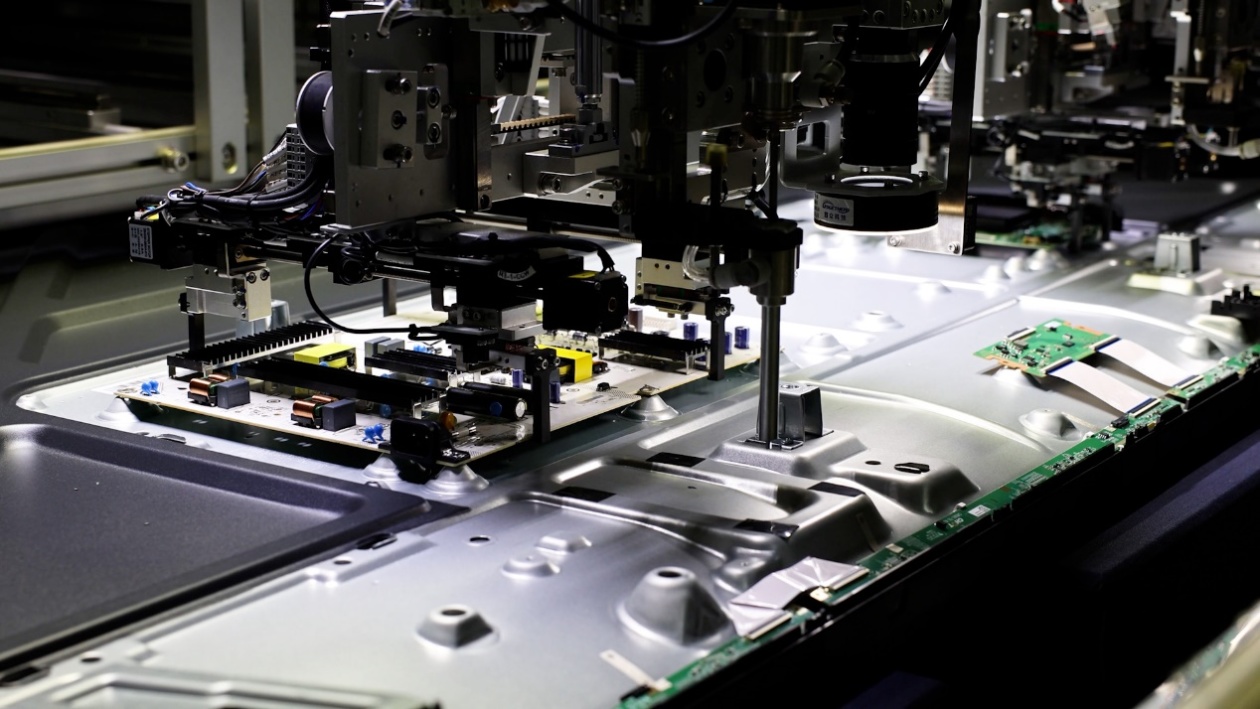
1月15日晚间,达沃斯世界经济论坛公布新一期全球"灯塔工厂"名单。23个新晋"灯塔工厂"中,中 国有16个工厂入选。 "灯塔工厂"被誉为全球制造业的"奥斯卡",一直被视作全球智能制造的"顶级认证"。自2025年9月 起,评选分为五种类型,分别是客户至上、生产效率、供应链韧性、可持续和人才灯塔。此次海信视像 青岛工厂凭借首个"以用户为中心+全链AI智造""双引擎"数字化转型工厂成功入选,成为全球电视行业 首座"灯塔工厂",标志着中国电视在效率、质量与柔性化生产领域达到全球顶尖水平。 传统的电视制造工艺设计复杂,涉及十多个模块、上百种工艺路线组合,高度依赖工程师经 验。"以前测算瓶颈工时,需要拿着秒表去产线一个个工序掐算、调整。"海信视像工艺工程师王永嘉 说。 如今,在这座灯塔工厂,AI的数字化工艺设计模式,仅需5分钟即可自动生成涵盖工序步骤、操作 要求、物料分配等全要素的工艺方案,效率提升75%。数字化高效电视生产线,集成了25项企业自研首 台套自动化设备,其中11项为业内首创……这些使得该工厂平均每20秒就有一台85英寸大屏电视成品下 线。(记者 戴岳 吕乐) ...
7个方面攻坚!青岛科创大走廊激活创新发展“新磁场”
Qi Lu Wan Bao· 2026-01-15 14:28
Core Viewpoint - The Qingdao Science and Technology Innovation Corridor aims to become a competitive innovation development hub both nationally and globally, focusing on integrating technology innovation with economic growth and enhancing the region's innovation ecosystem [1][4]. Group 1: Corridor Overview - The Qingdao Science and Technology Innovation Corridor officially started construction on November 7, 2025, stretching 53 kilometers along the coastal road and covering an area of approximately 190 square kilometers, connecting Laoshan District, Licang District, and Qingdao Blue Valley [1][2]. - The corridor is designed to highlight the natural features of mountains, seas, bays, rivers, islands, springs, and beaches, with a well-developed road network and metro connectivity [2]. Group 2: Innovation Resources - The corridor will leverage the Laoshan Laboratory as a leading entity, concentrating on marine science initiatives such as the "Transparent Ocean" project, and boasts the highest number of marine academicians in the country [2]. - It will gather eight universities, including Ocean University of China and Shandong University (Qingdao), along with eight national key laboratories, two national manufacturing innovation centers, 14 provincial-level research institutes, and 21 provincial-level new R&D institutions [2]. Group 3: Strategic Focus Areas - The construction plan includes seven focus areas and 24 specific tasks, such as establishing a global marine technology innovation source, building a high-level innovation platform system, and accelerating the integration of innovation chains and industrial chains [3]. - The corridor will also emphasize attracting high-level global innovation talent through the "Talent Strong Qingdao" initiative, enhancing the environment for talent development and entrepreneurship [3]. Group 4: Industry Development - The corridor will focus on four major industry directions: marine, digital intelligence, life sciences, and future technologies, creating an industry system referred to as "242N" [3]. - This includes high-end marine equipment, artificial intelligence, new generation information technology, and various advanced fields such as quantum information and satellite internet [3]. Group 5: Regional Cooperation and Environment - The initiative aims to foster regional innovation cooperation, engaging in international collaborations and integrating with advanced domestic innovation corridors [3]. - Efforts will be made to enhance the quality of the living and working environment, including smart city development and improving urban service facilities [3][4].
助力当家产品“行天下” 制造业大省广东政府牵头带货
Di Yi Cai Jing· 2026-01-15 13:49
Group 1 - The "Guangdong Goods Going Global" spring campaign was launched on January 15 in Foshan, focusing on promoting local home appliance brands through live streaming sales [1] - Over 1,900 home appliance companies participated in the first promotional event, with 55 major brands including Midea, Gree, and Hisense actively engaging in live streaming [1] - The campaign aims to boost revenue for industrial chain enterprises and promote consumption upgrades through new channels, aligning with China's 14th Five-Year Plan [1] Group 2 - The event received support from over 10 major commercial platforms, including Alibaba International, JD.com, and Douyin, as well as numerous offline supermarkets [1] - The chairman of Xinxuan Group emphasized that live e-commerce not only generates sales but also empowers quality industries and domestic brands through tailored content [2] - The Guangdong Provincial Department of Industry and Information Technology plans to organize 12 online promotional events covering various manufacturing sectors, including home appliances, mobile phones, and cosmetics [2]


开播即“卖爆”,超六千企业参与!“广货行天下”首日开门红
Nan Fang Du Shi Bao· 2026-01-15 12:07
Core Insights - The "Guangdong Goods Going Global" spring campaign has successfully boosted sales, with reports of a 100% increase in sales during the live broadcast event [1][6] - Over 6,000 enterprises from various sectors, including home appliances, electronics, and food, participated in the campaign, supported by major e-commerce platforms [2][9] - The campaign aims to enhance the competitiveness of Guangdong's manufacturing sector and promote local products both domestically and internationally [7][10] Group 1: Campaign Overview - The spring campaign features 12 online and offline promotional events throughout the first quarter, focusing on high-quality products from Guangdong [1][9] - Major brands like Midea, Gree, and Hisense showcased their products during the event, highlighting the strength of Guangdong's manufacturing base [2][3] - The campaign is designed to create a new sales trend for Guangdong products, leveraging both online and offline channels [1][7] Group 2: Product Quality and Innovation - Guangdong's manufacturing sector is characterized by a strong product base, with 44 industrial products accounting for over 10% of national output [2][3] - The campaign emphasizes product quality improvements and innovative features, such as AI technology in air conditioning units [5][6] - The introduction of "smart" products, including consumer drones and industrial robots, showcases Guangdong's technological advancements [3][5] Group 3: Marketing Strategies - The use of live streaming and influencer marketing has transformed traditional promotional methods, enhancing consumer engagement and driving sales [4][6] - The campaign's strategy includes creating immersive experiences for consumers, allowing them to interact with products in real-time [5][6] - E-commerce platforms are actively promoting Guangdong products through targeted marketing and special promotional sections [6][9] Group 4: Future Plans - The campaign aims to establish a sustainable promotional brand that will continue to drive sales and enhance market vitality [10] - Future events will focus on various product categories, including clothing and food, to further promote local advantages [9][10] - The collaboration between government, enterprises, and platforms is expected to create a positive feedback loop, enhancing brand recognition and consumer trust [7][10]
广东启动“广货行天下”春季行动 家电打头阵
Zhong Guo Xin Wen Wang· 2026-01-15 11:55
Group 1 - The "Guanghuo Xing Tianxia" spring action has been launched, marking the beginning of the 2026 online promotion activities for Guangdong products, covering 12 categories including home appliances, mobile phones, clothing, food, smart terminals, automobiles, beauty and daily chemicals, cultural tourism, and agriculture [1][2] - The first promotional event focused on home appliances, with over 1,900 large-scale home appliance enterprises in Guangdong participating, including 55 well-known companies such as Midea, Gree, Galanz, and Hisense, showcasing quality products and conducting live-streaming sales [1] - A multi-layered discount system has been established, combining government subsidies, enterprise discounts, and platform support, allowing consumers to enjoy various promotions including government "national subsidies," brand direct discounts, platform exclusive live prices, and consumer coupons [1] Group 2 - The Guangdong Provincial Department of Industry and Information Technology stated that the "Guanghuo Xing Tianxia" initiative aims to enhance the market exposure and influence of high-quality industrial products from Guangdong, promoting breakthroughs in online sales and supporting economic growth [2] - The department plans to hold 12 online promotional events in a weekly rhythm leading up to the Spring Festival, focusing on advantageous industries such as mobile phones, clothing, and food, to help Guangdong industrial products sell nationwide and globally [2]
“广货行天下”春季行动于1月15日启动 超6000家企业参与
Nan Fang Ri Bao Wang Luo Ban· 2026-01-15 10:08
"广货行天下"春季行动汇聚了家电、手机、服装、食品、智能终端、汽车、美妆日化、文旅、农业等各 大品类超6000家企业参与,获得阿里国际、淘天、京东、抖音、拼多多、唯品会、快手、辛选、希音、 苏宁易购、同程等大型商业平台和一大批线下商超支持。活动将遴选一批重点产业、重点品类,特别是 选取优秀品牌企业、产品质量"红榜"企业,推动企业拿出最新、最好、最具性价比的产品,按照"一周 一品"的节奏进行推广和促销。同时,积极对接零售商、经销商、采购商等销端资源,收集厂商需求, 开展好产销对接活动。 全省各地市将结合本地特色产业,发动各大龙头企业、产业园区、产业集群等积极参与,并结合地方节 庆活动、文旅活动、年俗民俗等,组织系列推广活动和促销活动,将产品与文旅相结合,产业与文化相 关联,通过文化赋能好产品。全省媒体将充分发挥"媒体+"功能,积极参与"广货行天下"春季行动,助 力广货品牌提升和产品销售。 想要淘最新、最好、最具性价比的广货?1月15日,"广货行天下"春季行动启动仪式在佛山举行,超 6000家企业参与,10余家大型商业平台和一大批线下商超齐发力,全方位助力广货出彩、出圈、出海。 "广货行天下"春季行动由省委宣传部 ...
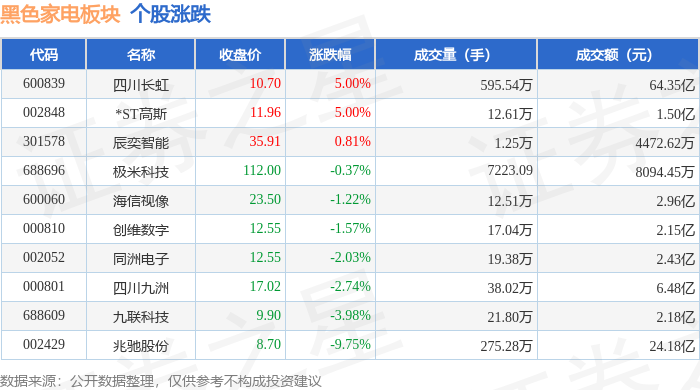
黑色家电板块1月15日跌1.85%,兆驰股份领跌,主力资金净流入3.1亿元
Zheng Xing Xing Ye Ri Bao· 2026-01-15 08:53
Market Overview - The black home appliance sector experienced a decline of 1.85% on January 15, with Zhaochi Co., Ltd. leading the drop [1] - The Shanghai Composite Index closed at 4112.6, down 0.33%, while the Shenzhen Component Index closed at 14306.73, up 0.41% [1] Stock Performance - Sichuan Changhong (600839) saw a price increase of 5.00%, closing at 10.70, with a trading volume of 5.9554 million shares [1] - ST Gauss (002848) also increased by 5.00%, closing at 11.96, with a trading volume of 126,100 shares [1] - Other notable performers included Chenyi Intelligent (301578) with a slight increase of 0.81% and a closing price of 35.91 [1] - Conversely, stocks like Feichi Co., Ltd. (002429) experienced a significant decline of 9.75%, closing at 8.70, with a trading volume of 2.7528 million shares [1] Capital Flow - The black home appliance sector saw a net inflow of 310 million yuan from institutional investors, while retail investors experienced a net outflow of 129 million yuan [1] - The capital flow data indicates that Sichuan Changhong had a net inflow of 5.90 billion yuan from institutional investors, while retail investors had a net outflow of 2.56 billion yuan [2] - Zhaochi Co., Ltd. reported a net outflow of 1.89 billion yuan from institutional investors, with a retail net inflow of 717.1 million yuan [2]