
上海瀚讯

Search documents
6G+卫星应用加速落地,航空航天 ETF(159227)成交额 2.23 亿稳居同类第一
Mei Ri Jing Ji Xin Wen· 2025-12-03 06:27
Core Viewpoint - The aerospace sector is experiencing fluctuations, with the Aerospace ETF (159227) showing a decline of 0.96% as of 1:34 PM, while maintaining the highest trading volume among its peers, indicating ongoing investor interest despite market adjustments [1] Group 1: Aerospace ETF Performance - The Aerospace ETF (159227) has a current scale of 2.126 billion yuan and 1.851 billion shares, both reaching new highs since its inception [1] - The ETF is tracking the Guozheng Aerospace Index and is deeply invested in the aerospace industry chain, focusing on leading companies in the military industry [2] Group 2: Technological Developments - The successful delivery of China's first rocket recovery sea platform, named "Navigator," marks a significant advancement in reusable rocket technology, enhancing China's core competitiveness in rapid launches and low-cost space access [1] - The acceleration of commercial aerospace development is expected to promote applications such as direct satellite connections for mobile phones and Beidou messaging services [1] Group 3: Future Prospects - The rapid development of satellite internet is anticipated, with regular satellite launches increasing communication capacity and reducing latency, paving the way for applications like mobile broadband direct satellite connections and low-orbit satellite network integration for intelligent driving systems [1]
600343,早盘“地天板”,午后炸板再涨停
第一财经· 2025-12-03 05:36
12月3日午后,早盘上演"地天板"行情的航天动力一度炸板,但此后再度回封涨停,日内换手率超27%,成交额超43亿元。 编辑 | 钉钉 商业航天板块午后走势反复, 上海瀚讯此前一度涨停,观想科技、航天智装、航天发展等涨幅居前。 ...



“朱雀三号”成功发射,航空航天ETF(159227)跌幅收窄,上海瀚讯涨超15%
Mei Ri Jing Ji Xin Wen· 2025-12-03 05:28
Group 1 - The Aerospace ETF (159227) experienced a slight decline of 0.17% but saw a recovery with a trading volume of 216 million yuan, maintaining its position as the largest aerospace ETF in the market with a total size of 2.126 billion yuan [1] - The successful launch of the Zhuque-3 rocket by Blue Arrow Aerospace marks a significant step towards the reusable era in China's commercial space sector, despite the failure of the first-stage rocket's vertical recovery [1] - According to Dongfang Securities, the progress of satellite networking in China has accelerated this year, with an increase in satellite launch frequency and the rapid rise of private rocket companies entering the listing guidance phase [1] Group 2 - The Aerospace ETF closely tracks the Guozheng Aerospace Index, with a high military industry concentration of 98.2%, covering key sectors such as aerospace equipment, satellite navigation, and new materials [2] - The ETF includes leading companies in the military sector, with a significant weight of 56.5% allocated to commercial aerospace concepts among its top holdings [2] - Major stocks in the ETF include Aerospace Development, China Satellite, and AVIC Aircraft, representing the forefront of the industry [2]





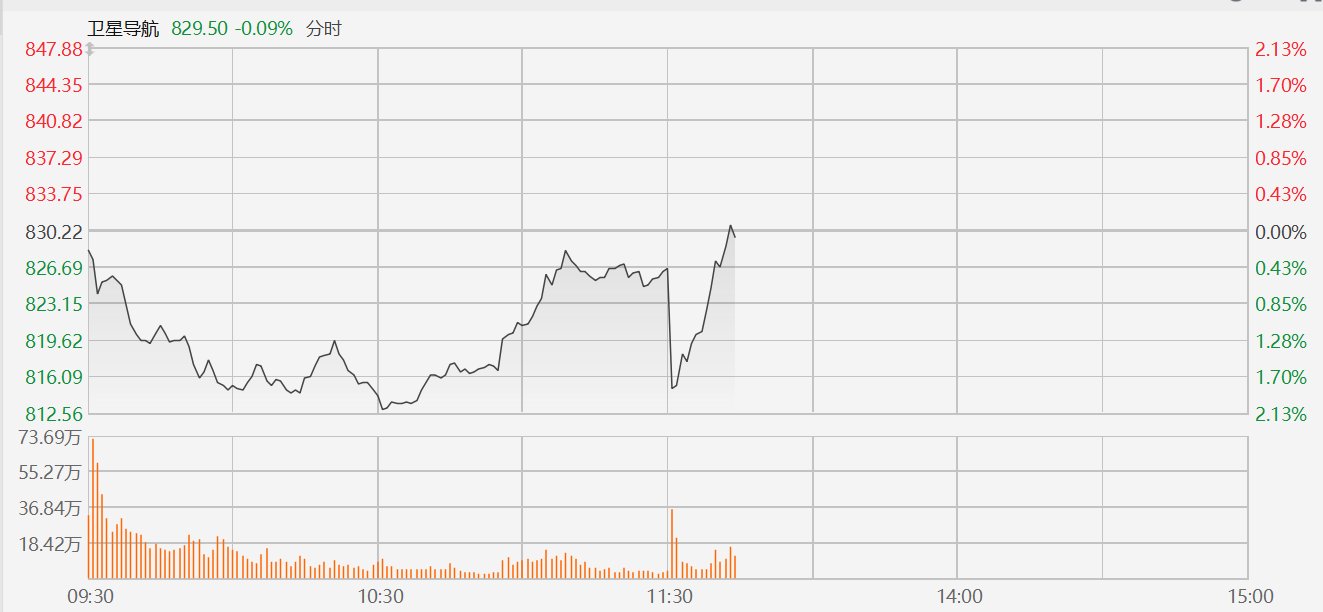
A股卫星导航板块短线跳水后快速反弹
Ge Long Hui A P P· 2025-12-03 05:19
Group 1 - The A-share satellite navigation sector experienced a short-term plunge followed by a rapid rebound, indicating volatility in the market [1] - Shanghai Hanxun hit a historical high with a limit-up increase, showcasing strong investor interest [1] - Other companies in the sector, including Shanghai Huguang, Shaanxi Huada, Huace Navigation, Aerospace Development, Aerospace Zhizhuang, and Tianyin Machinery, also showed positive performance [1] Group 2 - The formation of a MACD golden cross signal suggests a bullish trend for these stocks, indicating potential for further gains [1]



光大证券晨会速递-20251203
EBSCN· 2025-12-03 01:05
Group 1: Automotive Industry - The delivery data for new forces in November shows a weakening of the year-end peak season effect, with significant purchase discounts from automakers [1] - Recommended stocks include NIO and Xpeng Motors, with a focus on low valuation and performance realization [1] - In the parts sector, recommended stocks are Fuyao Glass for its strong performance and overseas expansion, and Wuxi Zhenhua, Huguang Co., and Bojun Technology for their cheap valuations [1] Group 2: Aerospace and Construction Materials - The commercial aerospace sector is entering a new phase of rapid development, with a three-year action plan recently announced [2] - Investment opportunities are highlighted in the rocket sector with companies like Chaojie Co., Gaohua Technology, and Zhongheng Design, as well as in the satellite sector with firms such as Shaanxi Huada and Shanghai Port [2] Group 3: Real Estate - The sales amount for the top 100 real estate companies in November was 244.3 billion yuan, a year-on-year decrease of 36.8% and a month-on-month decrease of 11.7% [3] - Cumulative sales for the top 100 companies from January to November reached 3 trillion yuan, with a year-on-year decline of 18.8%, indicating a worsening trend [3] - Investment suggestions focus on structural alpha opportunities, recommending China Jinmao, China Merchants Shekou, China Resources Mixc Life, and Greentown Service [3] Group 4: Company Research - Water Sheep Co. has announced an employee stock ownership plan, reflecting confidence in long-term development [4] - The plan involves up to 938 participants and a funding source of no more than 51.04 million yuan, with shares repurchased at 20.46 yuan per share [4] - The repurchased shares will not exceed 2.49 million shares, accounting for 0.64% of the total share capital [4]
薪智:2025卫星互联网产业典型企业人才与薪酬分析报告
Sou Hu Cai Jing· 2025-12-02 22:41
Core Insights - The report focuses on the talent and compensation analysis in the satellite internet industry, highlighting the industry's strategic importance and growth potential as it transitions into a phase of scale expansion and commercialization [1][4]. Group 1: Industry Overview - The satellite internet industry constructs space-based network infrastructure through satellite constellations, providing broadband communication services globally, especially in remote areas [11]. - China's satellite internet industry has developed a complete supply chain, including satellite manufacturing, rocket launching, and ground terminal equipment, and is experiencing significant growth driven by technological advancements and policy support [11][12]. Group 2: Compensation Characteristics - The industry exhibits characteristics of high-level scarcity, technical premium, and scale-driven compensation, with a notable demand for senior management and technical talent [15][17]. - Senior management positions, such as directors, earn significantly higher total cash compensation compared to lower-level positions, with directors in large enterprises earning approximately 979,916 yuan, which is 79.4% higher than their counterparts in smaller firms [19][23]. - Compensation levels are strongly correlated with company size, with larger firms offering higher salaries across all levels, indicating a competitive advantage in attracting top talent [20][23]. Group 3: Graduate Compensation Trends - Graduate compensation is driven by high educational qualifications, with master's degree holders from key institutions earning starting salaries of 25,900 yuan per month in 2024, reflecting a 62.9% increase from 2022 [26][27]. - The salary gap between graduates from key universities and those from ordinary institutions is widening, with the starting salary for key university graduates being 35% higher than that of ordinary university graduates [27][29]. - Regional strategies are reshaping the compensation landscape, with cities like Suzhou and Changsha attracting talent through competitive salaries and favorable policies, despite lower living costs compared to major cities like Shanghai [29][31]. Group 4: Job Market Dynamics - The demand for technical positions is high, with many roles requiring at least three years of experience, pushing graduates to gain practical experience through internships [30]. - The job market shows significant fluctuations, with recruitment data indicating a "V-shaped" recovery pattern, followed by a decline in hiring activity in subsequent months [40][48].

上海瀚讯连亏2年3季 A股募15亿元IPO长城证券保荐
Zhong Guo Jing Ji Wang· 2025-12-02 03:42
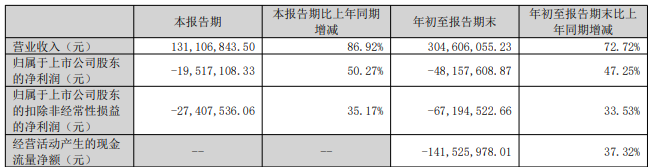
Core Viewpoint - Shanghai Hanxun reported significant growth in revenue for the first three quarters of 2025, with a revenue increase of 72.72% year-on-year, although it still recorded a net loss [1][2]. Financial Performance - The company's operating revenue for the first three quarters of 2025 reached 305 million yuan, reflecting a year-on-year growth of 72.72% [1][2]. - The net profit attributable to shareholders was -48.16 million yuan, an improvement from -91.30 million yuan in the same period last year, marking a 50.27% reduction in losses [1][2]. - The net profit attributable to shareholders after deducting non-recurring gains and losses was -67.19 million yuan, compared to -101 million yuan in the previous year, showing a 33.53% reduction in losses [1][2]. - The net cash flow from operating activities was -14.15 million yuan, an improvement from -22.60 million yuan year-on-year, indicating a 37.32% reduction in cash outflow [1][2]. Historical Context - Shanghai Hanxun went public on March 14, 2019, raising a total of 543 million yuan, with a net amount of 490 million yuan after expenses, aimed at various military communication projects [3]. - In 2020, the company raised approximately 999.99 million yuan through a private placement, netting around 993.31 million yuan after fees [4]. - The total funds raised by Shanghai Hanxun from both public and private placements amounted to 1.54 billion yuan [5].

中邮证券:太空算力角逐AI时代新战场 开启算力布局“升维”竞赛
智通财经网· 2025-12-02 03:01
Core Insights - The report from Zhongyou Securities highlights the emergence of space computing technology as a new direction for tech companies and governments to address the surging demand for AI computing power and the energy and cooling bottlenecks faced by terrestrial data centers [1][2] Group 1: Space Computing Technology - Space computing is a technology that deploys data centers and computing capabilities in space, utilizing satellites and onboard computing hardware for on-orbit data processing [2] - The unique vacuum environment and lighting conditions in space provide advantages such as real-time response, distributed collaboration, and energy efficiency, making space computing a preferred solution for addressing challenges in the AI era [2] Group 2: Global Developments in Space Computing - Major tech giants like NVIDIA, SpaceX, and Google are actively testing and planning space data centers, marking a shift from concept to practical implementation [3] - NVIDIA successfully sent its H100 GPU to space for testing, while SpaceX plans to expand its Starlink V3 satellite scale to establish a space data center with a target of deploying 100GW of data centers annually within 4-5 years [3] Group 3: Domestic Progress in Space Computing - China's commercial aerospace company ADASpace launched its first batch of 12 intelligent computing satellites, achieving a total computing power of approximately 5POPS, marking the practical application of space computing [4] - The National Space Administration of China has established a dedicated management agency for commercial aerospace, which is expected to promote high-quality development in the industry [4] Group 4: Investment Recommendations - Companies to watch include Xingtong Measurement and Control, Zhongke Xingtong, Aerospace Hongtu, SuperMap Software, Holley Well, Shengbang Security, Shanghai Hantong, Shanghai Port, Aisino Technology, and Putian Technology [5]
西部证券晨会纪要-20251202
Western Securities· 2025-12-02 02:27
Core Conclusions - The commercial rocket capacity breakthrough is a key variable for the turning point of China's commercial aerospace industry and the formation of capital market trends, with a high certainty of significant improvement in aerospace capacity next year [1][4]. Industry Dynamics - The satellite internet and commercial aerospace industries in China are expected to reach a fundamental turning point next year, supported by recent policies, commercial rocket launch schedules, and changes in core industry orders [3]. - The national "14th Five-Year Plan" emphasizes the construction of a modern industrial system, with commercial aerospace being a key focus area, as highlighted by the establishment of a Commercial Aerospace Office by the National Space Administration [3]. - The satellite internet industry is projected to maintain a compound annual growth rate (CAGR) of over 100% during the "14th Five-Year Plan" period, with a total of 100 satellite constellations registered, including 88 commercial projects and 12 national strategic projects [3]. - The construction of low-orbit constellations is expected to generate a market of 101.1 billion yuan for rocket capacity and 207.4 billion yuan for satellite manufacturing over the next five years, with respective CAGRs of 82% and 95% [3]. Key Variables - The upcoming launches of mainstream commercial rockets such as Zhuque-3, Tianlong-3, and Long March 12A are anticipated to significantly enhance China's commercial rocket capacity, marking a critical turning point for the industry [4]. Satellite Internet Sub-sectors and Key Companies - Key companies in the satellite internet sub-sector include: - Satellite Payloads: Zhenlei Technology, Xinke Mobile, Chengchang Technology, Shaanxi Huada, Shanghai Hantong, Chuangyi Information, Jiayuan Technology [5]. - Rocket Components: Chaojie Co., Sry New Materials, Gaohua Technology [5]. - Satellite Platform Components: Tianyin Electromechanical, China Satellite, Aerospace Huanyu, Qianzhao Optoelectronics, Shanghai Port, Fudan Microelectronics, Shanghai Huguang, Aerospace Electronics [5]. - Inspection and Testing: Sikrui, Xice Testing, Holiwo, Kunheng Shunwei [5]. - Ground Stations and Terminals: Zhenyou Technology, Tongyu Communications, Guobo Electronics, Sanwei Communications, Nanjing Panda, Mengsheng Electronics, Huali Chuantong, Changjiang Communications [5]. - Space Computing: Putian Technology, Zhongke Xingtou, Zhongke Shuguang, Xingtou Measurement and Control, Shengbang Security [5].
第七届金麒麟计算机行业最佳分析师第一名国盛证券刘高畅最新研究观点:太空计算有望开启新纪元(附5股)
Xin Lang Zheng Quan· 2025-12-01 06:33
Core Insights - The emergence of space computing and satellite industries is expected to revolutionize data center deployment, with significant advancements in technology and cost efficiency [2][3][5]. Group 1: Space Computing Developments - Nvidia has launched its H100 GPU into space, marking a significant step towards establishing large-scale computing infrastructure in orbit, with Starcloud predicting that most new data centers will be built in space within the next decade [2]. - Elon Musk anticipates that deploying large-scale AI systems in space will be more cost-effective than on Earth due to the availability of free solar energy and efficient cooling methods, estimating future AI computing needs could reach 200 to 300 gigawatts [3]. - Google's Project Suncatcher aims to develop satellites equipped with TPU AI chips to create a scalable computing network in space, with plans to launch test satellites by early 2027 [4]. Group 2: China's Space Computing Initiatives - China successfully launched the world's first space computing satellite constellation, "Body Computing Constellation," which is expected to achieve a total computing power of 1000 Peta Operations Per Second (POPS) [5]. - The constellation features advanced onboard computing capabilities and high-speed inter-satellite communication, enabling significant advancements in space-based data processing [5]. Group 3: Investment Opportunities - Companies such as Potevio Technology, Shunhao Co., China Satellite, Haige Communication, and Shanghai Hantong are identified as potential investment opportunities in the burgeoning space computing sector [6].



