
中国商飞

Search documents
比亚迪、陕煤、隆基、宁德时代,盘点院士增选中的“明星资本”
2 1 Shi Ji Jing Ji Bao Dao· 2025-08-22 13:45
Core Insights - The announcement of the 2025 academician candidate list reflects the evolving landscape of China's industrial innovation, showcasing the rise of technology companies in sectors like new energy and high-end equipment, alongside the transformation of traditional industries [1][2] Group 1: Technological Leadership - The candidate list prominently features representatives from the new energy, aerospace, and digital technology sectors, indicating a strong presence of listed companies in these fields [3] - Notable figures include Wu Kai, Chief Scientist of CATL, and Lian Yubo, Chief Scientist of BYD, both of whom are recognized for their contributions to the global battery and electric vehicle markets [3] - In the aerospace sector, key designers from China Commercial Aircraft Corporation and Aviation Industry Corporation of China have been included, highlighting advancements in large aircraft and helicopter technologies [3] - The software sector is represented by Wu Qingbo from Kirin Software, which has become a leading player in China's push for software independence, boasting over 500 patents and extensive ecosystem compatibility [3] Group 2: Traditional Industry Transformation - The list also features experts from traditional industries, showcasing their innovative capabilities and value redefinition [5] - Notable candidates include Shang Jian, Chief Engineer of Shaanxi Coal and Chemical Industry Group, which holds significant coal reserves and plays a crucial role in energy supply [5] - Zhang Jianguo from China Pingmei Shenma Group and Wang Xiangzeng from Yanchang Petroleum Group are also recognized for their contributions to the coal and oil sectors, respectively, emphasizing the ongoing evolution within traditional energy [5][6] - China Baowu Steel Group's Chief Scientist, Li Guobao, represents advancements in low-carbon metallurgy, with the group being a major player in the global steel industry [6] Group 3: Market Reactions and Future Outlook - The capital market has responded positively to the candidate list, with companies like CATL and BYD achieving market capitalizations exceeding 1 trillion yuan, reflecting investor confidence in the integration of industry and academia [7] - The ongoing entry of more industry giants into the academician ranks signals China's acceleration towards a technology innovation system that is enterprise-led and market-oriented, contributing to high-quality economic development [7]

华东局组织完成C909乌鲁木齐—卡拉干达航线国际验证飞行任务
Zhong Guo Min Hang Wang· 2025-08-20 05:26
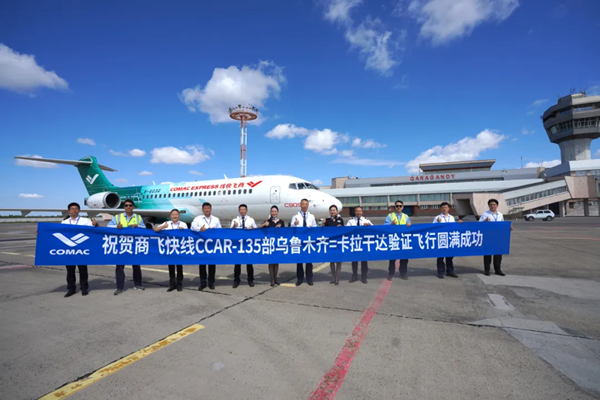
Core Points - The successful test flight of the C909 aircraft from Urumqi to Karaganda marks the first international verification flight of a domestic aircraft under the CCAR-135 regulations along the "Belt and Road" route, indicating a significant step for domestic aircraft in entering international markets [1][4] Group 1 - The C909 aircraft, registered as B-603Q, took off from Urumqi Tianshan International Airport and landed at Karaganda Airport after a flight duration of 2 hours and 4 minutes [1] - This verification flight is part of the efforts to promote high-quality construction of the "Belt and Road" initiative and the internationalization strategy of COMAC [4] - The Civil Aviation Administration of China (CAAC) East China Bureau emphasized the importance of compliance with operational manuals, specialized personnel training, operational control and support, and operational risk analysis for the international operation qualification certification [4] Group 2 - Following the test flight, the verification team held an online review meeting to summarize the international operation qualification certification, aiming to solidify the experiences and results from the flight [4] - The company plans to enhance work efficiency through procedural revisions, manual improvements, and institutional implementation based on the feedback received during the document review phase [4]

日本为何造不出商用飞机?
Hu Xiu· 2025-08-17 14:43
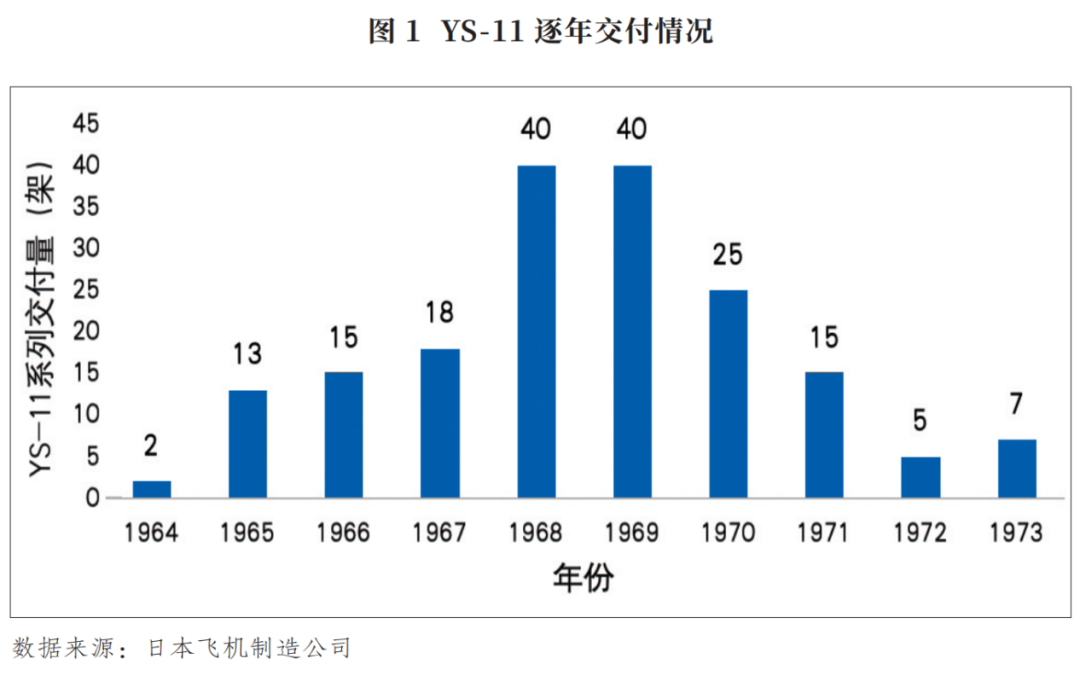
Core Viewpoint - Mitsubishi Heavy Industries has made the difficult decision to abandon its regional jet project, marking a significant setback for Japan's aviation industry, which has seen a decline from its historical prominence in aircraft manufacturing over the past 67 years [1][2]. Group 1: Historical Context of Japanese Aviation Industry - The Japanese aviation industry began in the early 20th century, primarily driven by military needs, with significant government support and investment [3][4]. - Post-World War II, Japan's aviation industry faced severe restrictions from the U.S., leading to a complete collapse of its aircraft manufacturing capabilities [4][5]. - The YS-11 project, Japan's first post-war commercial aircraft, was launched in 1956 but ultimately failed due to market misjudgments and safety concerns, resulting in significant financial losses [10][11][12]. Group 2: Shift to International Cooperation - In the 1980s, Japan shifted its strategy from independent aircraft development to international cooperation, primarily with Boeing, to mitigate risks and align with global production trends [19][20]. - Japanese companies participated in various Boeing projects, contributing to components but remained excluded from core design and development roles, limiting their technological advancement [24][26]. Group 3: Recent Developments and Challenges - The MRJ project, initiated in 2008, aimed to revive Japan's commercial aircraft manufacturing but faced numerous setbacks, including design changes and financial pressures, leading to its eventual cancellation [33][35]. - Japan's reliance on the U.S. market and technology has hindered its ability to independently develop competitive aircraft, as seen in the struggles of the SpaceJet project [39][40]. - In contrast, China's ARJ21 project has successfully entered the market, highlighting the differences in approach and outcomes between the two countries' aviation industries [40][41].
低空经济,新消息
Zheng Quan Shi Bao· 2025-08-16 11:36
Core Insights - Shanghai Low Altitude Economic Industry Development Co., Ltd. aims to establish an innovative ecosystem for the low-altitude industry this year, with a focus on creating the Shanghai Low Altitude Industry Fund to lead project investments [1][3] - The company plans to set up a standard system for low-altitude operations, spearheaded by the establishment of the Shanghai Low Altitude Economic Industry Standardization Technical Committee and the Low Altitude Economic Standard Innovation Alliance [1][4] - A key project includes the construction of the Minhang Low Altitude Testing Base in the Wujing area of Shanghai, which will focus on creating a collaborative environment for testing unmanned aerial vehicles [1][4] Company Overview - Shanghai Low Altitude Economic Industry Development Co., Ltd. was established in December 2024 with a registered capital of 900 million yuan, backed by several well-known state-owned enterprises in Shanghai [2] - The company is positioned as a functional state-owned enterprise platform that combines investment and technological innovation, focusing on building and operating the "four networks" of low-altitude operations [2] Strategic Initiatives - The company plans to create the Shanghai Low Altitude Economic Research Institute and the East China Low Altitude Economic Industry Alliance, forming a closed-loop operational system that integrates government, academia, research, industry, investment, and application [3] - The establishment of a city-level low-altitude flight service center is also a priority for the company this year [4] Testing and Development - The Minhang Low Altitude Testing Base is in the planning stage, designed to address the lack of standards in the low-altitude industry and to create a realistic testing environment for urban scenarios [4] - The company aims to collaborate with national testing facilities to provide various environmental conditions for testing [4] Market Potential - Shanghai has significant advantages for developing the low-altitude economy, including a concentration of 70% of aviation talent and over 50% of eVTOL companies originating from the city [5] - According to the "Shanghai Low Altitude Economic Industry High-Quality Development Action Plan," the goal is to establish a complete industrial system for low-altitude new aircraft by 2027, with a core industry scale exceeding 50 billion yuan [5]
中哈Jet A-1航油基地项目奠基仪式在萨雷阿尔卡机场举行
人民网-国际频道 原创稿· 2025-08-15 10:11
人民网阿斯塔纳8月14日电 (记者李强)8月14日,中哈Jet A-1航油基地项目奠基仪式在哈萨克斯 坦卡拉干达州萨雷阿尔卡机场举行。卡拉干达州州长叶尔玛甘别特·布列克帕耶夫、中国石油国际(哈 萨克斯坦)有限公司总经理耿健等嘉宾出席活动并致辞。 值得注意的是,在哈萨克斯坦民航委员会大力支持下,乌鲁⽊齐代表团此次乘坐中国商飞C909型 机抵达卡拉干达,实现了该型机在哈萨克斯坦的首次落地。 据悉,Jet A-1航油基地建成后将用于接收、储存和加注来自中国独山子炼油厂的Jet A-1航空燃料, 该项目由中国石油国际(哈萨克斯坦)有限公司、丝路(新疆)航空机场发展有限公司与哈方合作实 施。此外,独山子炼油厂也是距离哈萨克斯坦最近的大型炼化基地,构建"独山子—阿拉山口—卡拉干 达"汽铁联运体系,可以打通中哈跨境航油运输路径,旨在为共建"一带一路"提供稳定航油保障。 耿健说,依托哈中能源领域合作新阶段,中国石油国际(哈萨克斯坦)有限公司作为卡拉干达机场 航空燃料供应项目的主要参与方,将为机场提供高品质Jet A-1航空燃料,为哈萨克斯坦航空运输基础设 施发展作出贡献。 乌鲁木齐国际陆港区与临空经济区空港服务局副局长鞠慧在 ...
辉煌60载 魅力新西藏丨从高原“孤岛”到“枢纽” 航线延展架起了“空中金桥”
Yang Shi Xin Wen Ke Hu Duan· 2025-08-14 09:21
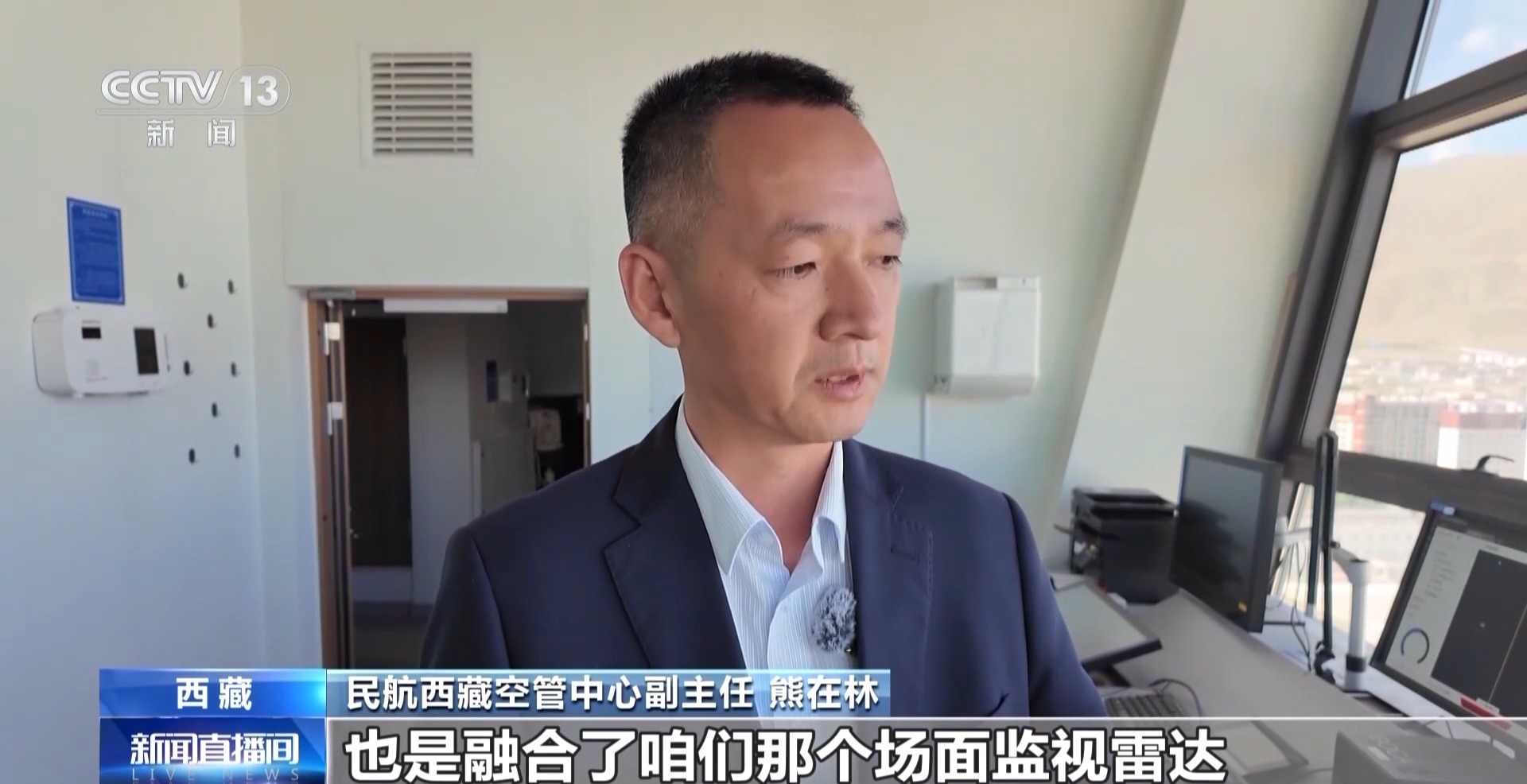
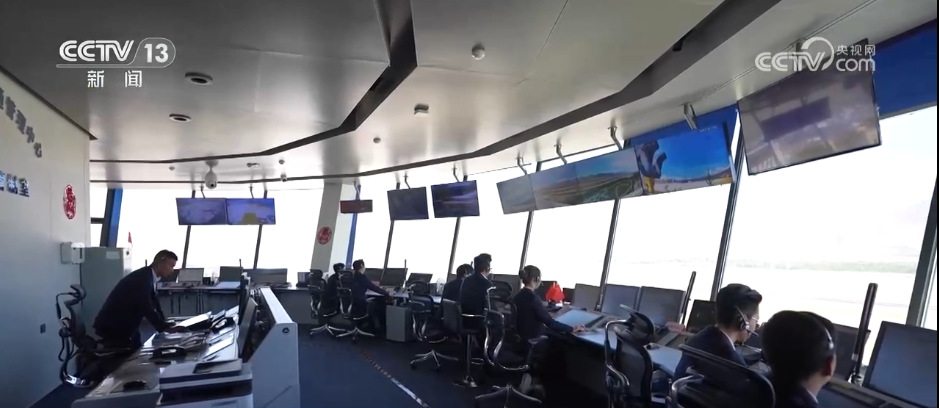
Core Insights - The development of civil aviation in Tibet has significantly improved over the past 60 years, evolving from a single airport to a comprehensive network connecting major cities in China and international destinations [1][5][9] - The new high-altitude airport control tower at Lhasa Gonggar International Airport, set to be operational by September 2024, will enhance air traffic management capabilities and operational efficiency in challenging weather conditions [1][3] - The growth in passenger traffic and flight frequency in Tibet is remarkable, with annual increases of over 10%, reflecting the region's transformation from an "island" to a "hub" [5][9] Infrastructure Development - The number of airport terminals in Tibet has increased from 1 to 10, with total terminal area expanding from 1,661 square meters to over 150,000 square meters, and runways from 1 to 10 [7] - Lhasa Gonggar International Airport currently handles an average of 170 flights daily, contributing to over 200 flights across the region [7] Future Projections - By the end of 2030, Tibet's civil aviation is expected to reach a passenger throughput of 9.8 million, cargo throughput of 66,000 tons, and a total of 85,000 flight operations [9] - The establishment of regular cargo flights by SF Express marks a significant step in facilitating the exchange of local products and industrial goods, enhancing economic connectivity [9][11] Economic Impact - The development of the airport has transformed the previously barren area around Gonggar Airport into a thriving economic zone, with 70% of local residents engaged in airport-related economic activities [11] - The collaboration with Chinese manufacturers for the development of domestically produced aircraft, such as the C919, is underway, indicating a commitment to advancing aviation technology in the region [13][15]
辉煌60载 魅力新西藏 | 航线网编织天路之翼 高原“孤岛”变“枢纽”
Yang Shi Wang· 2025-08-14 03:52
Core Viewpoint - The development of civil aviation in Tibet over the past 60 years has significantly improved connectivity, contributing to the region's social and economic growth, with a comprehensive network of routes now established [1][3]. Group 1: Infrastructure Development - The number of airports in Tibet has increased from 1 to 10, and the number of runways has grown from 1 to 10, with Lhasa Gonggar International Airport now handling an average of 170 flights daily, and the entire region exceeding 200 flights [3]. - As of now, civil aviation in Tibet connects 81 cities and operates 193 routes, with projections indicating that by the end of 2030, passenger throughput could reach 9.8 million and cargo volume could hit 66,000 tons [3]. Group 2: Technological Advancements - A new high-altitude airport control tower is set to be operational by September 2024, enhancing air traffic management capabilities and operational efficiency in the complex terrain of Tibet [4]. - The integration of advanced technologies in communication, navigation, and weather monitoring is expected to significantly improve safety and service quality in the region's aviation sector [4]. Group 3: Economic Impact - The establishment of a dedicated air freight route by SF Express on July 10, 2025, has facilitated the exchange of local Tibetan products and industrial goods from mainland provinces, with parcel throughput increasing from 20,000 to 14 million annually by 2024 [6]. - The development of the aviation sector has transformed previously desolate areas, such as the town of Jiazhulin, into thriving urban centers [8]. Group 4: Future Prospects - The ongoing collaboration between Tibet Airlines and COMAC aims to advance the development of domestically produced C919 high-altitude aircraft, enhancing operational capabilities in the region [8]. - The 60th anniversary of Tibet's establishment is viewed as a pivotal moment for future aviation developments, with aspirations for pilots to operate domestic large aircraft in the Tibetan skies [10].
人工智能加速赋能实体经济
Xin Hua Wang· 2025-08-12 05:54
Core Insights - In 2021, the global artificial intelligence (AI) industry investment and financing amounted to $71.47 billion, with China contributing $20.12 billion, reflecting a year-on-year growth of 40.4% in China's AI investment [8] Group 1: Industry Growth and Trends - The scale of China's AI industry reached 404.1 billion RMB in 2021, with a significant increase in investment and financing [1] - The integration of AI technology with the real economy is accelerating, driving the transformation and upgrading of traditional industries [1][6] - The number of core AI enterprises in China has exceeded 3,000, marking a 15% increase compared to 2019 [6] Group 2: Technological Advancements - New AI technologies showcased at the 2022 World Artificial Intelligence Conference include high-precision simulation models for large aircraft, digital twin factories, and 3D holographic digital factories [1][7] - The development of multi-modal AI is emerging as a new trend, combining various data types for advanced decision-making [9] Group 3: Infrastructure and Collaboration - The launch of the first phase of the national computing network, "Zhi Computing Network," has facilitated the connection of multiple AI computing centers across China [5] - Baidu's "PaddlePaddle" platform has attracted 4.77 million developers and created 560,000 AI models, enhancing accessibility for various industries [5] Group 4: Application in Various Sectors - The application of AI in robotics has expanded, with robots performing tasks such as coffee making and cleaning [3] - The development of intelligent connected vehicles is progressing, with several brands demonstrating autonomous driving capabilities [4] Group 5: Challenges and Future Directions - Despite rapid advancements, challenges remain in industrial applications due to insufficient training data and complex dynamic scenarios [10] - The need for supportive policies is emphasized to facilitate the integration of AI with the real economy, particularly in the field of autonomous driving [10]

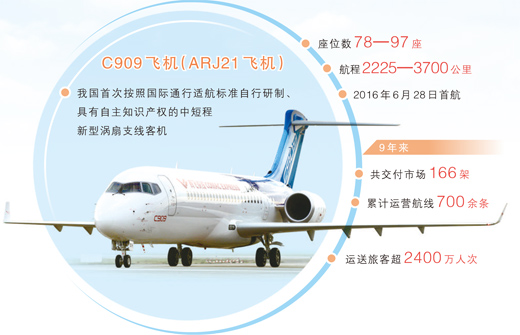
C909,飞得更高更远——累计运营700余条航线,运送旅客超2400万人次
Xin Hua Wang· 2025-08-12 05:45
Core Viewpoint - The successful launch of the C909 aircraft marks a significant milestone in China's aviation industry, demonstrating the country's capability to develop and operate domestically produced commercial jets, thereby enhancing its position in the global aviation market [2][4]. Group 1: C909 Aircraft Development and Operations - The C909 aircraft, developed by China Commercial Aircraft Corporation (COMAC), is China's first domestically produced regional jet that meets international airworthiness standards, with its first flight occurring on June 28, 2016 [2]. - As of now, a total of 166 C909 aircraft have been delivered, operating over 700 routes and transporting more than 24 million passengers [2]. - The C909 has expanded its operational network significantly, with 22 aircraft currently operating in Xinjiang, opening over 120 routes and connecting 26 airports [3]. Group 2: Technological Advancements and Achievements - The C909 has successfully integrated advanced technologies, including supercritical wing design and turbofan engine layout, achieving subsonic flight without shock wave resistance [4]. - The aircraft has undergone continuous improvements, with thousands of design optimizations enhancing its performance and adaptability to various operating environments, including high-altitude routes [5]. Group 3: International Expansion and Market Contribution - The C909 has made strides in international markets, with its first international route launched in October 2019, connecting Harbin to Vladivostok, and further expanding to Central Asia in June 2024 [5][6]. - The aircraft has been successfully operated by foreign airlines, including in Indonesia and Vietnam, with a total of 7 C909 aircraft currently in operation across Southeast Asia, serving 15 routes and transporting over 370,000 passengers [7]. Group 4: Series Development and Future Prospects - The C909 has diversified into multiple variants, including cargo, emergency rescue, medical, and business aircraft, to meet various market demands [8]. - The aircraft is also exploring sustainable aviation fuel (SAF) applications, with the capability to operate with up to 50% SAF blend, aligning with global trends towards green and low-carbon aviation [9].
港机集团与利勃海尔-航空签订新部件维修协议,为中国商飞C909和C919飞机提供服务
Xin Lang Cai Jing· 2025-08-08 10:42
Core Viewpoint - The partnership between Hong Kong Aircraft Engineering Company (HAECO) and Liebherr-Aerospace aims to enhance maintenance services for the COMAC C909 and C919 aircraft, ensuring safety and performance standards as the fleet expands [1] Group 1 - HAECO and Liebherr-Aerospace signed a new component maintenance agreement on August 8 [1] - The agreement focuses on providing comprehensive repair and overhaul services for hydraulic system components of the C909 and C919 aircraft [1] - The collaboration supports COMAC's ongoing fleet expansion while maintaining high safety and performance standards [1]