小马智行

Search documents
闪迪飙涨15%,美股半导体深夜爆发,国际油价大跳水,特朗普称将降低印度关税至18%
2 1 Shi Ji Jing Ji Bao Dao· 2026-02-02 23:18
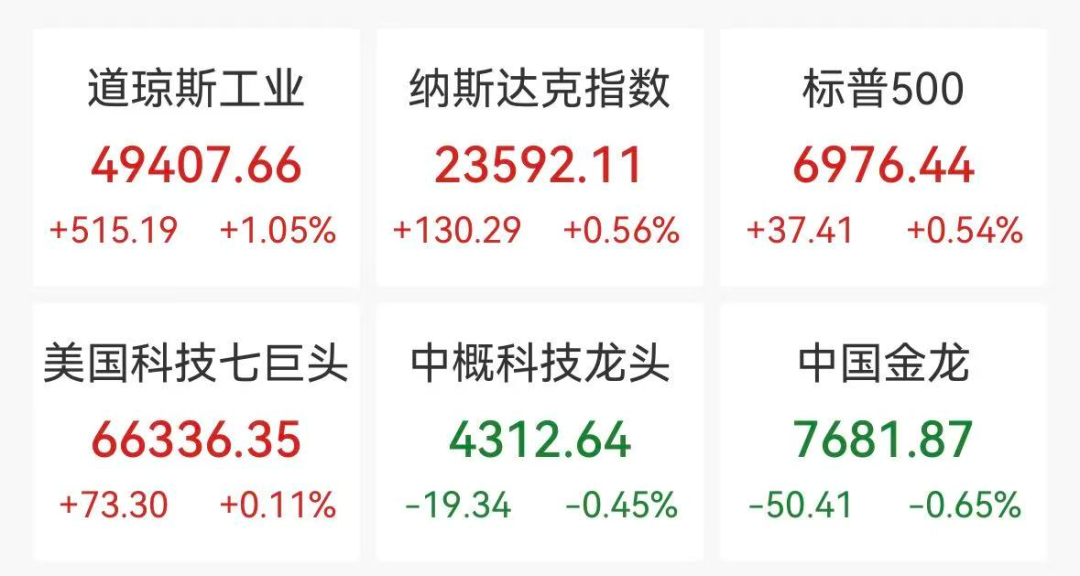
Group 1: Technology Sector - Major tech stocks showed mixed performance, with Apple rising over 4%, Google and Amazon up over 1%, while Nvidia fell nearly 3% and Tesla dropped nearly 2% [2] - Apple is exploring a new model with a smaller size and a square flip-fold design [2] - Semiconductor stocks mostly increased, with the Philadelphia Semiconductor Index up 1.7%, Micron Technology rising over 5%, Intel nearly 5%, and Texas Instruments over 4% [2] - The storage sector strengthened, with SanDisk up over 15%, Western Digital nearly 8%, and Seagate Technology over 6%. SanDisk's performance exceeded expectations [2] - NAND flash memory average selling prices (ASP) increased by over 30% according to data from SK Hynix and SanDisk [2] Group 2: Energy Sector - The energy sector declined across the board, with ExxonMobil down over 2%, Chevron falling over 1%, ConocoPhillips down over 2%, Schlumberger down 0.68%, and Occidental Petroleum dropping over 3% [2] Group 3: Precious Metals - Spot gold briefly returned to $4,800 per ounce before closing at $4,658 per ounce, while spot silver saw a decline of 7% to $79 per ounce [3] - On February 3, spot gold opened up over 1% at $4,703 per ounce, with spot silver at $81 per ounce, rising over 2% [3] Group 4: Oil Market - International crude oil prices fell, with WTI crude futures down 4.71% to $62.14 per barrel and Brent crude futures down 4.36% to $66.30 per barrel [4] Group 5: Cryptocurrency Market - Major cryptocurrencies saw price increases, with Bitcoin returning above $78,000 after dipping to $74,560 [4] - Over the past month, Bitcoin has faced liquidity issues, with a net outflow of $1.61 billion from Bitcoin ETFs in January 2026 [4] Group 6: U.S. Federal Reserve - CME's "FedWatch" indicates an 8.9% probability of a 25 basis point rate cut by March, with a 91.1% chance of maintaining current rates [6] - The probability of a cumulative 25 basis point cut by April is 22.5%, while the chance of maintaining rates is 76.0% [6] Group 7: U.S.-India Trade Relations - President Trump announced a trade agreement with Indian Prime Minister Modi, reducing tariffs on U.S. goods from 25% to 18% [7] - Modi committed to significantly increasing purchases of U.S. products, including over $500 billion in energy, technology, agricultural products, and coal [7] - India agreed to stop purchasing Russian oil and increase purchases from the U.S. [8]


闪迪飙涨15%,美股半导体深夜爆发,国际油价大跳水,特朗普称将降低印度关税至18%
21世纪经济报道· 2026-02-02 23:15
Market Overview - On February 2, US stock indices closed higher, with the Dow Jones up 1.05%, S&P 500 up 0.54%, and Nasdaq up 0.56% [1] - Major technology stocks showed mixed results, with Apple rising over 4% and Nvidia falling nearly 3% [2] Technology Sector - The Philadelphia Semiconductor Index increased by 1.7%, with Micron Technology up over 5% and Intel up nearly 5% [2] - SanDisk's stock surged over 15% due to better-than-expected earnings, while Western Digital and Seagate also saw gains [3] - NAND flash memory prices are expected to rise by over 30% according to reports from SK Hynix and SanDisk [3] Energy Sector - The energy sector experienced declines, with ExxonMobil down over 2% and Chevron down more than 1% [3] - WTI crude oil futures fell by 4.71%, closing at $62.14 per barrel, while Brent crude oil futures dropped by 4.36% to $66.30 per barrel [4] Cryptocurrency Market - Bitcoin prices rose above $78,000 after previously dipping to around $74,560, with significant market volatility leading to over 170,000 liquidations [4] - Bitcoin ETF saw a net outflow of $1.61 billion in January 2026, indicating liquidity issues in the market [4] International Relations and Trade - A trade agreement between the US and India was announced, reducing tariffs on Indian goods from 25% to 18%, effective immediately [5] - India is expected to increase its procurement of US products, including energy and agricultural goods, valued at over $500 billion [5] - The Indian stock index Nifty 50 saw a rise in futures, and the Indian Rupee strengthened against the US dollar following the trade announcement [6]




美国高校学者:我们在华试乘无人驾驶出租车
Huan Qiu Wang Zi Xun· 2026-02-02 22:40
Core Insights - China is emerging as a significant player in the autonomous driving sector, with several companies actively operating and expanding their services both domestically and internationally [1][2] - The three major autonomous taxi companies in China are Baidu's Apollo Go, Pony.ai, and WeRide, which are conducting pilot programs in various cities [1] - Major cities for autonomous taxi services in China include Beijing, Shanghai, Wuhan, Guangzhou, and Shenzhen, with Beijing serving as a key area for understanding the industry [1] Company and Industry Overview - The autonomous taxi service in Wuhan, particularly Baidu's Apollo Go, is highlighted as a reliable option for commuters, showcasing the potential for automated vehicles in everyday travel [2] - In Guangzhou, many autonomous taxis still have human safety operators, while autonomous buses are being tested in certain urban areas [2] - The user experience for foreign tourists may be challenging due to language barriers, but advancements in technology and the willingness of locals to assist can enhance accessibility [2] - Overall, China's autonomous taxi services are considered to be ahead of similar services in most other countries, making it an attractive destination for those interested in experiencing this technology [2]
中国无人驾驶“军团”,“武装”阿布扎比行业报告预测阿联酋自动驾驶市场规模
Mei Ri Jing Ji Xin Wen· 2026-02-02 13:08
Core Insights - The article highlights the rapid development and commercialization of autonomous driving technology in Abu Dhabi, driven primarily by Chinese companies [1][2][3] Group 1: Autonomous Driving Technology Development - Chinese companies, including WeRide and Baidu, have successfully launched the world's first fully autonomous Robotaxi service integrated with Uber in Abu Dhabi [2][3] - The testing of autonomous vehicles in extreme conditions has shown promising results, with WeRide achieving a daily driving distance of over 200 kilometers without human intervention [3] - The Abu Dhabi government has issued commercial operation licenses for fully autonomous vehicles, allowing companies like WeRide and Baidu to operate without safety drivers [3][4] Group 2: Government Support and Ecosystem - The Abu Dhabi government has adopted a proactive role in supporting autonomous driving initiatives, creating a collaborative ecosystem that integrates regulatory bodies, private sectors, and academia [5][6] - The establishment of the Smart and Autonomous Systems Committee facilitates efficient coordination among various departments to address operational challenges for autonomous vehicles [5][6] - The unique governmental approach has significantly reduced barriers to entry for Chinese companies, making Abu Dhabi an attractive destination for investment in autonomous driving technology [5][6] Group 3: Market Potential and Economic Impact - The operational model for Robotaxi in Abu Dhabi requires only 200 vehicles to achieve breakeven, significantly lower than the thousands needed in other markets, due to favorable market conditions [6][8] - Abu Dhabi aims to reduce its reliance on oil by investing in AI and autonomous driving, with a target for AI to contribute 335 billion dirhams (approximately 63.36 billion yuan) to GDP by 2031 [8][9] - The UAE's investment commitments in AI and autonomous driving exceeded $2 billion in the first half of 2025, indicating strong market potential [9][10] Group 4: Industry Growth and Future Prospects - The autonomous driving market in the UAE is projected to reach $2.73 billion by 2030, with a compound annual growth rate of 19.2% [10] - Chinese companies are positioned to become key players in the global autonomous driving sector, leveraging their technological advancements and operational models [10][12] - The presence of over 6,000 Chinese enterprises in the UAE, with a significant portion achieving profitability, underscores the growing influence of Chinese firms in the region's autonomous driving landscape [12][13]

中国无人驾驶“军团”,“武装”阿布扎比 行业报告预测阿联酋自动驾驶市场规模
Mei Ri Jing Ji Xin Wen· 2026-02-02 13:04
当北京的气温跌破0℃,波斯湾南岸阿联酋首都阿布扎比仍被日均30℃以上的热浪包裹。 2025年11月15日,阿布扎比亚斯码头F1赛道上,引擎轰鸣声刺破晴空,时速超200公里的赛车在弯道处 精准飘移,座舱内空无一人。《每日经济新闻》记者在现场了解到,这是中国团队参与研发的自动驾驶 赛车正在接受极限测试,来自中国的激光雷达在赛车上表现出色。 赛道旁的观测屏上,实时跳动的数十项数据,印证着自动驾驶技术在极端环境下的稳定性。 赛道之外,一场更贴近日常生活的技术革命,正在阿布扎比街头上演。中国企业文远知行的无人驾驶汽 车在城市里自主穿梭,百度"萝卜快跑"全无人化测试一次次搭载游客安全抵达终点,滴滴自动驾驶加入 当地产业集群。还有曹操出行、小马智行、小鹏汇天、星星充电等数十家中国智驾企业已入驻阿布扎 比。 中国智驾企业集体"登陆" 纯无人驾驶规模化商营 2025年11月的一个傍晚,阿布扎比亚斯岛的游客通过打车软件叫车后,一辆车缓缓驶来,车门自动解 锁,座舱内无安全员。游客上车后,车辆平稳汇入车流,驶向目的地。这是中国企业文远知行当月底在 阿布扎比启动的、全球首个在美国以外接入Uber(优步,美国硅谷的科技公司)打车平台的R ...
133家AI公司源于这里:百度为何是科技圈的“黄埔军校”?
Sou Hu Cai Jing· 2026-02-02 07:26
Core Insights - Baidu is recognized as a "Huangpu Military Academy" for AI entrepreneurs, with over 133 AI companies founded or co-founded by former Baidu employees, including 25 new startups in 2023 and 2024 [2][3] Group 1: AI Entrepreneurship Landscape - The majority of Baidu's former employees have ventured into three main areas: autonomous driving, large models and data analysis, and AI hardware [3][4] - In the autonomous driving sector, notable companies include Xiaoma Zhixing, WeRide, and Horizon Robotics, with founders having significant roles at Baidu [3][4][7] - The large models and data analysis field features companies like Zero One Wan Wu and Deep Space Ling Zhi, with founders who held key positions at Baidu [3][4][7] Group 2: Baidu's Influence on AI Development - Baidu's early investment in AI, starting with the establishment of its Deep Learning Institute in 2013, has created a comprehensive ecosystem from research to application [5] - The Apollo platform has been pivotal in accumulating capabilities in perception, regulation, simulation, and data closure for autonomous driving [5] - Baidu's focus on system-level problem-solving rather than just model development has equipped its former employees with the skills necessary for complex, long-term projects [5] Group 3: Notable Entrepreneurs and Their Backgrounds - Key figures include Peng Jun and Lou Tiancheng from Xiaoma Zhixing, Yu Kai from Horizon Robotics, and Ma Jie from Zero One Wan Wu, all of whom have extensive experience at Baidu [7] - Other notable entrepreneurs include Liu Bo Cong from Guangzhi Shikong and Gu Jia Wei from Ling Yuzhou, both of whom have backgrounds in Baidu's research divisions [4][7]

“中国何以挑战美国AI霸权?这就是答案”
Guan Cha Zhe Wang· 2026-02-02 03:51
文章写道,"天才班"持续为中国科技行业培育领军人物,其对中国科技企业发展的重要性再怎么强调都 不为过,如今这些企业正在AI、机器人和高端制造领域,挑战美国的科技主导地位。 【文/观察者网 柳白】 当全球还在为中国AI的发展速度感到惊讶时,一股静默而庞大的"人才溪流"早已汇成江河。 "中国制胜AI竞赛的天才计划开始奏效。"当地时间1月31日,英国《金融时报》亚洲科技领域作者吴子 静以此为题发表长文,聚焦中国中学的理科人才培养体系。她在文中写道,正是凭借"天才班""实验 班"或"竞赛班"这类机制,中国实现了从AI人才空白到规模化培育的转变,大批本土精英人才不仅撑起 国内科技企业,也跻身国际顶尖AI研究机构。这一体系不仅带来高强度学习体验,也培养了终身受益 的思辨、推理与探索精神。 "天才班"毕业生遍布中国顶尖科技企业:字节跳动创始人及核心算法研发者、淘宝和拼多多的掌舵人、 美团创始人、寒武纪创始兄弟,还有DeepSeek、阿里巴巴通义大模型的核心工程师,以及从Open AI挖 来的腾讯新任首席AI科学家,这份名单不胜枚举。 中国的"天才班"在多方面与西方的人才培养路径迥异。首先,这一体系的规模远超国际同行。其次, ...
秦朔:中国新质企业家时代的来临
Xin Lang Cai Jing· 2026-02-02 00:21
Core Viewpoint - The event "For China's Economy, Cheers to Entrepreneurs" highlighted the emergence of a new generation of entrepreneurs in China, focusing on advanced technologies such as brain-machine interfaces, autonomous driving, and low-altitude economy, showcasing their impact on society and the economy [1][3][29]. Group 1: Technological Innovations - Strong Brain Technology's smart bionic hand has assisted over 10,000 individuals with upper or lower limb disabilities, allowing them to live and work normally [29]. - The L4 autonomous vehicle from Pony.ai operates without a driver, demonstrating advancements in autonomous driving technology [29]. - The flying car developed by Huitian has received 7,000 global orders and plans to start deliveries by the end of 2026, with a next-generation model capable of carrying six people for 500 kilometers [29]. Group 2: New Quality Entrepreneurs - The 2025 "Top Ten Economic Figures" includes four entrepreneurs associated with cutting-edge technologies: Liu Debing from Zhipu, Peng Jun from Pony.ai, Han Bicheng from Strong Brain Technology, and Zhao Deli from Huitian [31]. - The evaluation committee also recognized groups involved in "China's Chip Infrastructure," highlighting the shift towards new quality productivity driven by technological breakthroughs and innovative resource allocation [31][32]. Group 3: Economic Strategy and Consumer Focus - The "14th Five-Year Plan" emphasizes enhancing the competitiveness of traditional industries while promoting new demand to drive supply [32]. - Three representatives from the consumer and lifestyle sector were recognized: Leng Youbin from China Feihe, Ma Yin from Anaya, and Wu Xiangdong from Zhenjiu Lidu Group [32]. Group 4: Historical Context of Entrepreneurs - The evolution of Chinese entrepreneurs has gone through 15 stages since the reform and opening up, from the emergence of individual private economies to the current focus on high-quality development and innovation [35][36][37]. - The current entrepreneurial landscape is characterized by a significant shift towards new quality productivity, with a focus on advanced manufacturing and technology-driven solutions [51]. Group 5: Future Outlook - The future of China's economy is expected to continue along the path of high-quality development, leveraging new technologies and innovative business models [52]. - The "single person + AI as a company" model represents a new entrepreneurial path empowered by technology, indicating a shift in how businesses operate and innovate [52].

汽车行业周报(20260126-20260201):有色波动影响中上游短期议价,继续看好新产业方向
Huachuang Securities· 2026-02-01 13:30
Investment Rating - The report maintains a "Buy" recommendation for the automotive industry, focusing on new energy vehicles and related technologies [1]. Core Insights - The automotive market is currently experiencing a cautious atmosphere, with stakeholders observing the recovery of terminal demand and the impact of policies and costs on profitability. Short-term fluctuations in the non-ferrous sector are affecting pricing negotiations in the upstream and midstream segments. The report suggests monitoring factors that could lead to a rebound in vehicle sales in Q1, including retail and export performance, while remaining optimistic about the automotive parts sector, particularly in areas like intelligent driving, liquid cooling, and robotics [1][3]. Data Tracking - In late January, the industry discount rate decreased to 9.5%, showing a year-on-year increase of 0.6 percentage points but a month-on-month decrease of 0.1 percentage points. The average discount amount was 21,541 yuan, up by 1,294 yuan year-on-year but down by 718 yuan month-on-month [3]. - December saw a decline in wholesale and retail sales of passenger vehicles, with wholesale sales at 2.85 million units, down 8.7% year-on-year and 6.3% month-on-month. Retail sales of domestic passenger vehicles were 2.28 million units, down 16.8% year-on-year but up 13.7% month-on-month [3]. - The report highlights specific automotive companies to watch, including Geely, JAC Motors, and BYD, with Geely being favored due to its low valuation and expected better-than-expected performance in domestic sales [5]. Industry News - In January, the China Passenger Car Association reported that the automotive industry generated revenues of 1,117.96 billion yuan in 2025, a year-on-year increase of 7.1%, while costs rose by 8.1% to 984.98 billion yuan, resulting in a profit of 46.1 billion yuan, up 0.6% [31]. - The report notes significant developments in the electric vehicle sector, including a partnership between a Vietnamese manufacturer and BYD to establish a commercial electric vehicle battery factory, and the launch of new electric models by various companies [31][32]. - The report also mentions the implementation of new national standards for automotive steering systems and automatic emergency braking systems, which are expected to enhance safety and technology in the industry [31][32].

汽车行业周报:有色波动影响中上游短期议价 继续看好新产业方向
Xin Lang Cai Jing· 2026-02-01 12:35
Core Viewpoint - The market remains cautious, observing the recovery of terminal demand and the impact of policies and costs on profitability, with increased volatility in the non-ferrous sector affecting short-term pricing in the upstream and midstream segments [1] Investment Recommendations - **Complete Vehicles**: Recommended stocks include Geely Automobile, JAC Motors, and BYD. Geely is favored due to its low valuation of over 6 times, with expectations of better-than-expected domestic profitability. JAC's S800 model shows stable order performance, and the company plans to launch 2-3 new models this year [2] - **Auto Parts**: - Robotics sector continues to be a catalyst, with recommendations for Foresight Technology, Minth Group, Top Group, Yinlun Machinery, Haoneng Co., Shuanghuan Transmission, and New Spring Co., with a suggestion to pay attention to Joyson Electronics - AI/Smart Driving is a key area with potential supply order catalysts from policy support and Nvidia's involvement, recommending Horizon Robotics and Hesai Technology, while suggesting to monitor SOTERIA, Black Sesame Technologies, and Pony.ai - Liquid cooling orders are clear, with continued recommendations for Minth Group, Yinlun Machinery, and Lingyun Industrial, and a suggestion to watch Feilong Co. [2] - **Heavy Trucks**: Weichai Power has shown strong performance, reflecting market recognition of its position in AIDC diesel engines and natural gas generators, with continued recommendations. Concerns over short-term shareholder reductions in China National Heavy Duty Truck have dissipated, suggesting a focus on fundamentals [2] Data Tracking - In late January, industry discounts decreased month-on-month, with a discount rate of 9.5%, up 0.6 percentage points year-on-year and down 0.1 percentage points month-on-month. The discount amount was 21,541 yuan, up 1,294 yuan year-on-year and down 718 yuan month-on-month [3] - December wholesale and retail sales of passenger vehicles declined year-on-year, with wholesale sales at 2.85 million units, down 8.7% year-on-year and 6.3% month-on-month. Retail sales of domestic passenger vehicles were 2.28 million units, down 16.8% year-on-year but up 13.7% month-on-month [3] Market Performance - The automotive sector saw a decline of 5.12% this week, ranking 28th out of 29 sectors. The overall index performance included a decrease of 0.44% for the Shanghai Composite Index, an increase of 0.08% for the CSI 300, and a decrease of 0.09% for the ChiNext Index. The automotive index's performance included a drop of 5.12% for the automotive sector, 6.70% for parts, 3.64% for passenger vehicles, 1.10% for commercial vehicles, and 3.42% for circulation services [6]