Apollo平台

Search documents
133家AI公司源于这里:百度为何是科技圈的“黄埔军校”?
Sou Hu Cai Jing· 2026-02-02 07:26
Core Insights - Baidu is recognized as a "Huangpu Military Academy" for AI entrepreneurs, with over 133 AI companies founded or co-founded by former Baidu employees, including 25 new startups in 2023 and 2024 [2][3] Group 1: AI Entrepreneurship Landscape - The majority of Baidu's former employees have ventured into three main areas: autonomous driving, large models and data analysis, and AI hardware [3][4] - In the autonomous driving sector, notable companies include Xiaoma Zhixing, WeRide, and Horizon Robotics, with founders having significant roles at Baidu [3][4][7] - The large models and data analysis field features companies like Zero One Wan Wu and Deep Space Ling Zhi, with founders who held key positions at Baidu [3][4][7] Group 2: Baidu's Influence on AI Development - Baidu's early investment in AI, starting with the establishment of its Deep Learning Institute in 2013, has created a comprehensive ecosystem from research to application [5] - The Apollo platform has been pivotal in accumulating capabilities in perception, regulation, simulation, and data closure for autonomous driving [5] - Baidu's focus on system-level problem-solving rather than just model development has equipped its former employees with the skills necessary for complex, long-term projects [5] Group 3: Notable Entrepreneurs and Their Backgrounds - Key figures include Peng Jun and Lou Tiancheng from Xiaoma Zhixing, Yu Kai from Horizon Robotics, and Ma Jie from Zero One Wan Wu, all of whom have extensive experience at Baidu [7] - Other notable entrepreneurs include Liu Bo Cong from Guangzhi Shikong and Gu Jia Wei from Ling Yuzhou, both of whom have backgrounds in Baidu's research divisions [4][7]


新能源的故事快讲完了,智能驾驶才刚刚开始
格隆汇APP· 2025-12-15 12:34
Core Viewpoint - The article emphasizes that smart driving is currently undervalued and is transitioning from a future concept to a core competitive factor in the automotive industry, as the market shifts focus from electrification to smart driving technologies [5][14]. Industry Analysis - Smart driving is at a stage where technological feasibility has been validated, but commercial scale is yet to be fully realized, indicating a ripe opportunity for long-term investors [7]. - The industry is moving from exploratory phases to cost and efficiency optimization, which is a significant signal for accelerated commercialization [8]. - The essence of smart driving lies in platform capabilities rather than mere functional upgrades, highlighting the importance of a comprehensive system that includes hardware, algorithms, and data platforms [10]. Commercialization Path - Revenue sources and realization timelines in the smart driving sector are becoming clearer, with high-level driving transitioning from one-time sales to subscription models, enhancing profit quality [11][12]. - Applications of smart driving technology are already being implemented in various business scenarios, such as ports and logistics, providing a solid revenue foundation [13]. Investment Opportunities - In the Hong Kong stock market, companies with comprehensive smart driving capabilities are limited, with Baidu being a notable example due to its long-term strategic investments and unique data accumulation capabilities [15]. - Companies like Pony.ai and WeRide serve as critical benchmarks for the industry's potential, focusing on complex urban driving scenarios and L4-level automation, which could unlock significant replication potential if successful [16][17]. Strategic Approach - The smart driving theme is better suited for long-term investment strategies rather than short-term trading, with a focus on platform companies that maintain stable cash flows while investing in smart driving [22]. - The article concludes that smart driving represents a gradual but inevitable trend, with real opportunities arising from a deep understanding of the industry and companies before market sentiment fully aligns [23][24].

新能源的故事快讲完了,智能驾驶才刚刚开始
3 6 Ke· 2025-12-15 10:45
Core Insights - The core viewpoint is that intelligent driving is transitioning from being undervalued and perceived as a future concept to becoming a key factor in reshaping valuation systems as it moves from the early to the mid-stage of its development [1][6]. Industry Stage - Intelligent driving is currently at a stage where technological feasibility has been repeatedly validated, but commercial scale has not yet fully unfolded, indicating a time for long-term investment value to emerge [2]. - L2+ advanced driver assistance systems have achieved scale in the passenger vehicle market, with features like highway NOA and city NOA transitioning from optional to essential functionalities [2]. - The industry is moving from exploratory phases to cost and efficiency optimization, which is a significant signal for accelerated commercialization [2]. Competitive Landscape - The essence of intelligent driving is not merely an upgrade in functionality but a competition of platform capabilities, which includes hardware, algorithms, vehicle control systems, and cloud data platforms [4]. - Long-term competitive advantage lies with platform companies that can replicate their capabilities across various models, cities, and scenarios, rather than single technology providers [4]. Commercialization Path - The revenue sources and realization rhythm in intelligent driving are becoming clearer, with advanced driving features shifting from one-time selling points to software subscriptions, enhancing profit quality [5]. - In the ride-hailing sector, Robotaxi's impact on the cost structure of transportation will lead to changes in industry attributes and valuation logic once it stabilizes as a replacement for human drivers [5]. Investment Perspective - Intelligent driving is moving towards a phase where it can be quantified and valued, with the investment logic maturing accordingly [6]. - Baidu is highlighted as an undervalued platform asset in the Hong Kong market, with a comprehensive stack in intelligent driving that connects automakers, cities, and real road scenarios [7]. - Companies like Pony.ai and WeRide serve as critical samples for understanding the upper limits of the industry, focusing on complex urban driving scenarios and L4 capabilities [8]. Investment Strategy - The investment strategy for intelligent driving should focus on a configuration mindset rather than short-term trading, favoring platform companies with stable cash flows and ongoing investments in intelligent driving [10]. - The risks associated with intelligent driving stem from the pace of development rather than its direction, with policy, technology, and commercialization progress potentially causing short-term fluctuations [10]. Conclusion - Intelligent driving represents a trend that unfolds gradually but is certain to happen, with significant opportunities arising from a deep understanding of the industry and companies before market sentiment fully aligns [11].
多空双杀?AI应用王者归来!
格隆汇APP· 2025-11-07 10:38
Core Viewpoint - Palantir Technologies (PLTR) is positioned as a leading player in the global AI application sector, demonstrating strong performance despite significant short-selling activity, particularly from notable investors like Michael Burry [2][14]. Financial Performance - In Q3 2025, PLTR reported a revenue of $1.181 billion, exceeding expectations of $1.09 billion, marking a year-over-year increase of 63% and a quarter-over-quarter increase of 18% [5]. - The company provided guidance for Q4 2025, expecting revenue between $1.327 billion and $1.331 billion, which represents a year-over-year growth of 61% [5]. - Adjusted operating income reached $600.5 million, with an operating margin of 51%, setting a historical high [5]. - Free cash flow for the quarter was $539.9 million, a 24% increase year-over-year, with total cash and equivalents amounting to $6.4 billion [5]. Business Segments - PLTR's business model is driven by both government and commercial sectors, with commercial revenue surpassing government revenue for four consecutive quarters [8][9]. - Commercial revenue for Q3 was $548 million, a 73% increase year-over-year, with U.S. commercial revenue growing by 121% [8]. - Government revenue was $633 million, reflecting a 55% year-over-year increase, with international government revenue contributing significantly [9]. Technological Edge - PLTR has developed a robust technological barrier over 20 years, focusing on a comprehensive AI decision-making system that addresses core business challenges [11]. - The company's unique ontology and AIP platform facilitate enterprise-wide AI transformation, enhancing operational efficiency [12]. Market Position and Future Outlook - PLTR's growth is supported by three main drivers: government demand for advanced defense capabilities, expanding commercial client base, and international market penetration [16][17][19]. - The company has a significant opportunity for growth, with a projected revenue growth rate of 53% over the next few years, indicating substantial market potential [20].


军事智能化:新质战斗力核心,掌握制智权关键
AVIC Securities· 2025-09-12 03:01
Investment Rating - The report maintains an "Overweight" investment rating for the defense industry [3]. Core Insights - Military intelligence is not a future concept but a current reality, driven by advancements in artificial intelligence and technology [3][19][28]. - The military sector is undergoing significant transformation due to the integration of AI, which is reshaping defense strategies, operational capabilities, and equipment systems [17][30]. - The global military AI market is projected to reach approximately $21.003 billion by 2027, with the U.S. military AI market expected to grow to $3.133 billion by 2025 [9][10]. Summary by Sections Military Intelligence: New Quality Combat Power - Military intelligence is characterized by self-perception, decision-making, execution, learning, adaptation, and enhancement capabilities [3][18]. - The current era is witnessing a rapid evolution in military operations, with AI technologies being pivotal in this transformation [19][28]. Transformation of Defense Systems - AI is not just upgrading equipment but is fundamentally changing the defense system, structure, and operational models [3][30]. - Companies like Palantir have seen significant market success, with stock prices increasing by over 1263.68% since the onset of the Russia-Ukraine conflict [3][8]. Main Application Paths of Military Intelligence - AI encompasses various technologies, including machine learning, robotics, computer vision, biometrics, and natural language processing, which are applied across different military domains [8][9]. - The military AI market is expected to grow significantly, with the U.S. market projected to reach $3.133 billion by 2025 and the global market reaching $12.428 billion [9][10]. Key Industry Segments - The report identifies several companies involved in the military AI sector, including aerospace electronics, Chengdu Huami, and others focusing on computing power, sensors, algorithms, and intelligence analysis [10][11].
要被阿里分拆上市的斑马,成色几何
虎嗅APP· 2025-08-21 14:11
Core Viewpoint - Alibaba Group plans to spin off Zhibo Network Technology Co., Ltd. (Zhibo Zhixing) for independent listing on the Hong Kong Stock Exchange, aiming to enhance funding and operational transparency while addressing competitive pressures in the smart automotive sector [2][3]. Group 1: Company Background and Market Position - Zhibo Zhixing was established in 2015 through a joint investment by Alibaba Group and SAIC Group, focusing on integrating technology with automotive manufacturing capabilities [4]. - As of Q1 2025, Zhibo Zhixing has collaborated with over 40 automotive brands, including Volkswagen and BMW, and has deployed smart vehicles exceeding 10 million units, achieving a market share of over 15% in China by 2024 [4]. - The company primarily focuses on smart vehicle operating systems and related solutions, indicating a strong market presence despite increasing competition [4]. Group 2: Financial Performance and Challenges - Zhibo Zhixing's revenue has remained stable since 2022, but its gross margin has been declining, reflecting intensified competition in the industry [6]. - The company has invested heavily in research and development, with R&D expenses exceeding revenue, leading to a cash loss of 3 billion yuan since 2022 [8]. - As of June 30, 2025, Zhibo Zhixing's cash and cash equivalents stood at 3.16 billion yuan, with total equity at 4.743 billion yuan, indicating financial strain [9]. Group 3: Strategic Shift and Future Outlook - To sustain significant investments in artificial intelligence, Zhibo Zhixing views the IPO as a crucial step for securing long-term and stable funding sources [10]. - The company is shifting its strategic focus towards AI-driven technologies, as evidenced by the launch of the "Yuan Shen AI" brand, which aims to redefine smart cabin experiences [12]. - Zhibo Zhixing faces fierce competition from major players like Huawei and Baidu, as well as from self-developing automakers, which will impact its future profitability and survival [14].
1天能跑2.4万单,李彦宏低调透露萝卜快跑在武汉盈亏平衡了
3 6 Ke· 2025-08-21 11:05
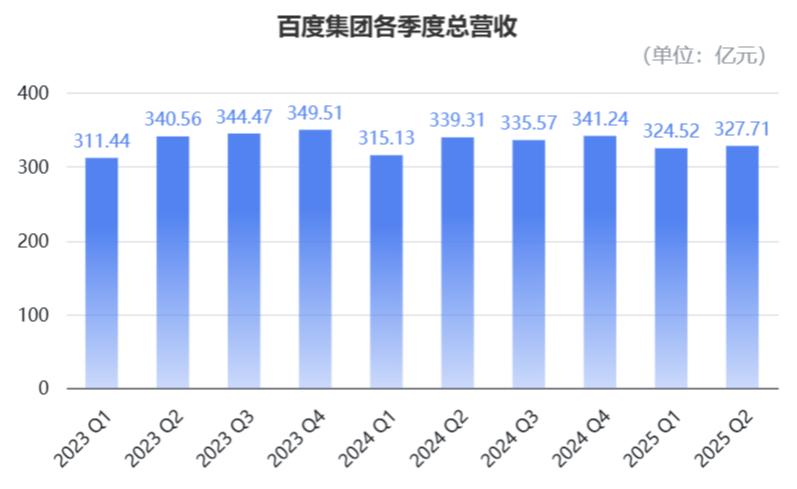
Core Insights - Baidu's Robotaxi service, "LuoBo Kuaipao," has achieved a record high in weekly orders, reaching 169,000, with a year-on-year increase of 148%, marking the highest growth rate in two years [1][7] - The service has reached a significant milestone in Wuhan, achieving unit economic balance, indicating that each autonomous vehicle's revenue covers its operational costs [10][22] Financial Performance - Baidu's total revenue for Q2 was 32.7 billion yuan, a year-on-year decrease of 3.42% but a quarter-on-quarter increase of 0.98% [2] - Core revenue amounted to 26.3 billion yuan, accounting for over 80% of total revenue, with a year-on-year growth of 3% [4] - AI-related revenue surpassed 10 billion yuan for the first time, growing by 34% year-on-year and representing 38% of core revenue [4] - Net profit attributable to Baidu's core business was 7.4 billion yuan, reflecting a year-on-year increase of 35% [4] Growth Drivers - AI is becoming a new growth engine for Baidu, with significant investments in autonomous driving as a key area of focus [6] - The increase in orders for "LuoBo Kuaipao" is attributed to Baidu's long-term strategic positioning and technological advancements in the autonomous driving sector [12][14] - The service has expanded its operational scale, entering markets in the Middle East and Europe, and collaborating with local partners like Uber and Lyft [18][20] Operational Milestones - "LuoBo Kuaipao" has completed over 2.2 million rides globally in Q2, with a year-on-year increase of 148% and a quarter-on-quarter growth of 57% [7] - The service has provided over 14 million rides across 16 cities, with a safety driving mileage exceeding 170 million kilometers [9] - The operational cost advantages and rapid expansion have allowed "LuoBo Kuaipao" to achieve profitability sooner than competitors [20][24]
【兴证计算机】Palantir 启示录:从大数据巨擘,到 Agent 标杆
兴业计算机团队· 2025-07-26 04:27
Core Viewpoint - Palantir is a leading player in data analysis and AI applications, experiencing significant growth through its AIP platform and commercial agent business, with a revenue of $2.866 billion and a net profit of $468 million in 2024, marking year-on-year increases of 28.79% and 115.26% respectively [1][2]. Business Logic - The company focuses on high-value government and large commercial clients, evolving from deep customization to a subscription and service model, creating a closed-loop AI system that enhances customer retention and revenue [2]. - In 2024, the average annual revenue per client was $4.03 million, with the top 20 clients averaging $64.6 million, indicating strong customer expansion and retention capabilities [2]. Growth Drivers - The AIP platform integrates large models with existing data, providing significant advantages in various sectors such as healthcare, manufacturing, retail, finance, energy, and construction, leading to over 50% growth in commercial business revenue in 2024 [2]. Stock Price Review - Following the launch of the AIP platform, Palantir's market capitalization increased approximately 20 times, with the price-to-sales (PS) ratio rising from around 10 times to over 100 times, reflecting strong investor confidence driven by AI and commercial agent growth [3].