东风汽车

Search documents
前5月新能源轻卡累销5.6万辆大增94%!远程破万 福田份额大涨 跃进稳前三 | 头条
第一商用车网· 2025-06-18 06:56
2025年的"金三银四"旺季,新能源轻卡连续两个月销量破万,并在4月份创造了史上最高的 单月销量(1.56万辆)。 5月份,新能源轻卡市场能否继续保持超万辆水准? 5月实销1.41万辆,同比增长66%,收获"17连增" 根据第一商用车网掌握的最新数据,2025年5月份,国内新能源轻卡市场共计销售1.41万辆 (注:本文轻卡指总质量3.5-6T货车,数据来源为交强险实销口径,不含出口,下同),环 比今年4月份下降9%,同比则继续实现增长,增幅达到66%,同比增幅较上月(+120%)有 所缩窄。 截止到2025年5月份,新能源轻卡市场这一轮的连增势头已达到"17连增"。 由最近四年国内新能源轻卡终端销量月度走势图可见,无论是1月份、2月份,还是3月份、4 月份和5月份,代表2025年的红色柱体比之前任何一年都"高"出一大截。如果仅看5月份销 量,新能源轻卡市场1.41万辆的销量远高于2024年月均8700辆左右的水平,这一销量放到整 个新能源轻卡发展史上看,也是高位水准(史上第五,如上图)。截止到2025年5月份,新能 源轻卡月销量共8次超过1万辆,其中有三次就发生在最近的3-5月份,因此而言,新能源轻卡 市场最 ...





最新通报!唐腾被查
中国基金报· 2025-06-18 05:43
据了解,东风畅行科技股份有限公司成立于2019年,是东风汽车集团股份有限公司控股的出 行科技服务企业。天眼查信息显示,唐腾于2023年10月卸任该公司相关任职。 【导读】东风汽车集团有限公司原战略规划部副总经理兼战略发展研究中心总经理唐腾接受 纪律审查和监察调查 中国基金报记者 晨曦 最新反腐通报来了! 6月18日,中央纪委国家监委官网通报:东风汽车集团有限公司原战略规划部副总经理兼战略 发展研究中心总经理唐腾涉嫌严重违纪违法,目前正接受中央纪委国家监委驻东风汽车集团 有限公司纪检监察组和湖北省十堰市监委纪律审查和监察调查。 公开信息显示,唐腾出生于1963年,中共党员,高级工程师,毕业于武汉工学院(现武汉理 工大学)机械制造专业。 唐腾于1984年进入东风汽车公司,在底盘零件厂工作;1993年任职神龙汽车有限公司商务部 售后服务分部;1996年出任神龙汽车有限公司厦门销售服务分公司总经理。1999年,唐腾出 任神龙汽车有限公司北京商务代表处首席代表;2002年任神龙汽车有限公司总经理助理兼东 风标致项目负责人;2003年任神龙汽车有限公司东风标致商务部副总经理。 2009年,唐腾转任神龙公司战略规划部部长兼 ...


118秒造一辆车 探寻央企造车“新姿势”
Zhong Guo Jin Rong Xin Xi Wang· 2025-06-18 05:34
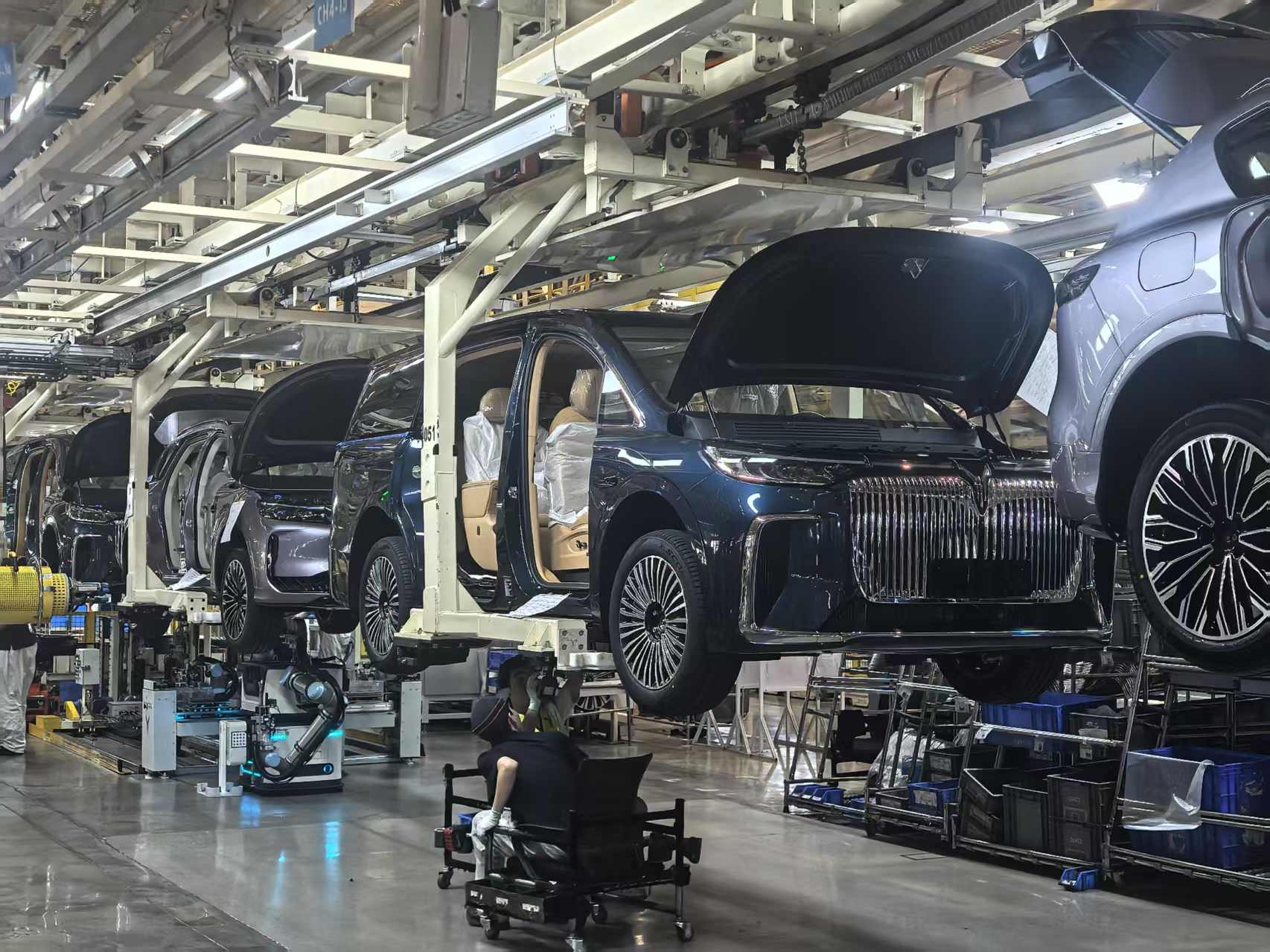
Core Viewpoint - Dongfeng Motor Corporation is advancing its transformation in the new energy vehicle sector, showcasing its capabilities in smart manufacturing and a comprehensive brand matrix across various vehicle categories [3][5]. Group 1: Smart Manufacturing and Production - The Dongfeng Lantu smart factory utilizes 5G and big data technologies to achieve mixed-flow production of various vehicle types, with a new car rolling off the line every 118 seconds [1][3]. - The factory is recognized as a national-level smart manufacturing demonstration site, highlighting the integration of advanced technologies in automotive production [1]. Group 2: Sales and Market Performance - In the first five months of this year, Dongfeng delivered 905,000 vehicles, with 536,000 from its own brands, and achieved a 4.9% year-on-year increase in exports, totaling 94,000 vehicles [5]. - The company reported significant growth in exports of its own brands and new energy vehicles, with increases of 30% and 331% respectively [5]. Group 3: Product Development and Innovation - Dongfeng is accelerating the launch of new products, including the M817 SUV with Huawei's advanced driving system and the Lantu FREE+ with cutting-edge technology [5][9]. - The company has established a comprehensive powertrain brand structure, including energy-efficient, hybrid, and pure electric systems, and has made significant advancements in hydrogen energy technology [7][8]. Group 4: Strategic Partnerships and Technological Advancements - Dongfeng has signed a strategic cooperation agreement with Huawei to enhance automotive intelligence and digital transformation, focusing on smart cockpits and intelligent vehicle control [9]. - The company is developing a comprehensive ecosystem for new energy vehicles, including battery recycling and smart charging infrastructure [8].
超长账期问题:整车厂之后,零部件巨头该出来说话了
经济观察报· 2025-06-18 01:55
Core Viewpoint - The article highlights the hidden truth within the automotive supply chain, where large parts manufacturers impose longer payment terms, creating significant pressure on small and medium-sized enterprises (SMEs) [4][7]. Group 1: Payment Terms and Their Impact - A recent lawsuit involving a mold company and a joint venture parts manufacturer illustrates the underlying issue of payment terms, where SMEs complete their work but face delayed payments from larger firms [2]. - The automotive industry has seen a positive response to commitments from automakers to a 60-day payment term, previously criticized for exploiting SMEs [3]. - However, large parts manufacturers, such as Huayu Automotive and Dongfeng Technology, have payment turnover days of 163 and 196 days respectively, indicating a trend of extended payment cycles that adversely affect SMEs [5][6]. Group 2: Industry Dynamics and Power Shifts - The payment turnover days are not equivalent to the contractual payment terms, as they reflect the actual payment cycles, which can serve as an indirect indicator of a company's payment practices and credit cycles [6]. - Some suppliers, while not directly affiliated with automakers, also exert pressure on SMEs, as seen with companies like CATL, which has a payment turnover day exceeding 258 days, indicating a trend of stringent payment practices [6]. - Large parts manufacturers leverage their negotiating power to impose even stricter payment terms on their suppliers, exacerbating the financial strain on SMEs [7]. Group 3: Need for Transparency and Fairness - To address the challenges posed by extended payment terms, there is a call for large enterprises to publicly disclose their payment policies, which is seen as a crucial first step towards restoring fairness in the industry [8]. - The article argues that while long payment terms may appear as a financial strategy, they should not undermine fair competition and the integrity of the industry credit ecosystem [9]. - The question is raised whether large parts manufacturers should also take a stance on the issue of extended payment terms, emphasizing the need for collective responsibility within the industry [10].




“中国速度”走向世界
Zhong Guo Qi Che Bao Wang· 2025-06-18 01:54
Core Viewpoint - The automotive industry is undergoing a transformation towards electrification and intelligence, with "Chinese speed" becoming a benchmark for efficiency and competitiveness in product development [2][3][4]. Group 1: Industry Trends - The traditional automotive product development cycle, which used to take 3 years or more, has been significantly reduced to 12-18 months in China, reflecting a shift towards faster iteration and innovation [3][4]. - Major global automakers like Volkswagen and Nissan are adopting strategies to shorten their product development timelines, with Volkswagen aiming to reduce its new model development time from 54 months to 36 months [3][5]. - The shift towards a "fast consumer era" is prompting automotive companies to align their development processes more closely with those in the consumer electronics sector, leading to quicker product launches and iterations [3][6]. Group 2: Impact of Chinese Companies - Chinese automakers such as BYD, Chery, and Leap Motor are leveraging their rapid development capabilities to expand globally, responding quickly to local market demands [2][4]. - The competitive pressure from Chinese companies is forcing international automakers to accelerate their own product development cycles to keep pace [4][5]. - Nissan has committed to reducing its product development cycle in China to under 24 months, emphasizing the need to maintain "Chinese rhythm" in its global strategy [5][11]. Group 3: Technological Innovations - Advances in technology, including AI, big data, and cloud computing, are reshaping the automotive industry's development processes, enabling faster product iterations [6][8]. - The application of digital twin and virtual simulation technologies is significantly shortening vehicle development cycles, while modular architectures enhance efficiency [6][8]. - The integration of new technologies in electric and intelligent vehicles is allowing for more frequent product updates and iterations [6][8]. Group 4: Global Collaborations - International automakers are increasingly collaborating with Chinese companies to enhance their product development capabilities, as seen in partnerships between Volkswagen and local firms like Xpeng Motors [9][10]. - The trend of "reverse technology transfer" is emerging, where Chinese innovations are being adopted globally, with companies like Mercedes-Benz leveraging Chinese R&D for global projects [10][11]. - Chinese automotive companies are expanding overseas, establishing production bases and R&D centers in various countries, thus promoting "Chinese speed" on a global scale [12][13].



东风汽车集团有限公司原战略规划部副总经理兼战略发展研究中心总经理唐腾接受纪律审查和监察调查
news flash· 2025-06-18 01:20
东风汽车集团有限公司原战略规划部副总经理兼战略发展研究中心总经理唐腾接受纪律审查和监察调查 智通财经6月18日电,据中央纪委国家监委驻东风汽车集团有限公司纪检监察组、湖北省纪委监委消 息:东风汽车集团有限公司原战略规划部副总经理兼战略发展研究中心总经理唐腾涉嫌严重违纪违法, 目前正接受中央纪委国家监委驻东风汽车集团有限公司纪检监察组和湖北省十堰市监委纪律审查和监察 调查。 ...
厂家“60天账期”承诺不能丢下经销商
Zhong Guo Qi Che Bao Wang· 2025-06-18 01:11
Group 1 - Major automotive companies, including FAW, Dongfeng, and GAC, have committed to a payment term of no more than 60 days to suppliers, aiming to create a collaborative ecosystem in the industry [2][16] - This initiative responds to the "Regulations on Payment for Small and Medium-sized Enterprises" effective from June 1, which seeks to alleviate the long payment cycles and pressure on suppliers [2][17] - The automotive market is facing intense competition, leading to a significant decline in profit margins for dealers, with 50.8% of dealers projected to incur losses in the first half of 2024 [3][10] Group 2 - Dealers are experiencing severe cash flow issues due to delayed rebates and payments from manufacturers, exacerbated by the competitive environment [5][9] - The average loss per dealership is reported to be 1.78 million yuan, with net profit margins dropping from 3% in 2018 to 0.7% [3][10] - Approximately 75% of dealers have an inventory coefficient above 1.5, indicating excessive stock levels and financial strain [3][10] Group 3 - The Ministry of Commerce is actively working to address the challenges in the automotive consumption market, focusing on fair competition and the health of the industry [5][6] - The traditional business model of dealers, which relies heavily on cash flow and inventory financing, makes them vulnerable to financial instability [6][10] - The introduction of the "Regulations on Payment for Small and Medium-sized Enterprises" aims to ensure timely payments and protect the rights of small dealers [16][17] Group 4 - The new laws provide a framework for financial institutions to offer differentiated policies for small and micro enterprises, potentially easing the funding challenges faced by dealers [12][19] - The regulations also emphasize the importance of timely payments from large enterprises to small businesses, with penalties for overdue payments [17][18] - The automotive industry is encouraged to adopt practices that shorten rebate cycles and extend interest-free financing periods to alleviate cash flow pressures on dealers [22]

香港构筑汽车产业出海新高地
Ren Min Ri Bao Hai Wai Ban· 2025-06-18 00:42
Group 1 - The 2025 International Automobile and Supply Chain Expo marks a significant milestone in showcasing China's automotive industry, featuring 11 mainland vehicle manufacturers and nearly 40 supply chain companies [1] - The event highlights the rapid development of China's automotive industry, with notable displays such as GAC Group's first flying car, GOVY AirCab, and Dongfeng Motor's nine new energy models [1] - The expo serves as a platform to demonstrate China's complete automotive industry chain, showcasing its global competitive advantages in research and development and cost control [1] Group 2 - The low-altitude economy is emerging in Hong Kong, with GAC Group's mass-produced unmanned multi-rotor flying car set for demonstration operations in the Guangdong-Hong Kong-Macao Greater Bay Area by 2026 [2] - Hong Kong's government is actively promoting the automotive industry, attracting leading domestic and international new energy vehicle companies to establish R&D centers and headquarters, creating quality job opportunities [2] - Hong Kong is positioned as a strategic hub for Chinese automotive companies to expand internationally, leveraging its unique "one country, two systems" advantage [2] Group 3 - Hong Kong's robust financing market and high-quality financial services connect global capital with investors, exemplified by CATL's IPO in Hong Kong, which raised significant funds for international expansion [3] - The city is described as a "charging station" for Chinese automotive companies, with its mature capital market and regulatory framework playing a crucial role in the globalization of Chinese manufacturing [3] - Dongfeng Motor announced its strategy to use Hong Kong as a key point for expanding into overseas markets, particularly in Southeast Asia and the Middle East [3] Group 4 - The four-day expo not only showcases the hard power of China's automotive industry but also illustrates the deep integration of Hong Kong with national strategies [4]
超长账期问题:整车厂之后,零部件巨头该出来说话了
Jing Ji Guan Cha Wang· 2025-06-17 14:40
Core Viewpoint - The article discusses the ongoing issues in the automotive supply chain, particularly focusing on the extended payment terms imposed by large parts manufacturers on smaller suppliers, despite recent commitments from automakers to shorten their payment periods [3][4]. Group 1: Payment Terms and Industry Dynamics - A recent lawsuit highlights the contract disputes between a mold company and a joint venture parts manufacturer, revealing underlying issues related to payment terms and cash flow for small enterprises [3]. - Automakers have received praise for their commitment to a 60-day payment term, but the larger issue lies with major parts manufacturers who impose even longer payment terms on smaller suppliers [3][4]. - For instance, Huayu Automotive, a major parts supplier under SAIC, has an accounts payable turnover period of 163 days, while Dongfeng Technology has a turnover period exceeding 196 days [4]. Group 2: Impact on Smaller Suppliers - The accounts payable turnover days do not equate to the contractual payment terms, indicating that actual payment cycles can be significantly longer, affecting the cash flow of smaller suppliers [4]. - Larger parts manufacturers, such as CATL, have been able to maintain a favorable accounts receivable turnover period of around 60 days, while their own accounts payable turnover days exceed 258 days, further straining smaller suppliers [4][5]. - The article suggests that these large manufacturers are leveraging their negotiating power to impose harsher terms on smaller suppliers, exacerbating the financial strain within the supply chain [5]. Group 3: Call for Transparency and Fairness - The article advocates for greater transparency in payment policies from large manufacturers, similar to the commitments made by automakers, to foster a healthier competitive environment [5]. - It emphasizes that while extended payment terms may seem like a financial strategy, they should not undermine fair competition and the integrity of the supply chain [5]. - The article questions whether large parts manufacturers should also take responsibility and clarify their payment practices to ensure fairness across the industry [5].

日媒:大量中国车企正在推出完全自研自制芯片
Guan Cha Zhe Wang· 2025-06-17 11:20
Core Viewpoint - Chinese automakers, including SAIC, Changan, Great Wall, BYD, Li Auto, and Geely, are preparing to launch models equipped with 100% self-developed chips, with at least two brands aiming for mass production by 2026 [1] Group 1: Industry Trends - The goal is to achieve 100% self-research and manufacturing of automotive chips by 2027, driven by increasing tensions with the U.S. [1] - The self-sufficiency rate of automotive chips in China is currently around 15%, showing improvement from the previous year but still heavily reliant on foreign manufacturers [5] Group 2: Company Developments - Several Chinese automakers have announced their self-developed or produced automotive chips, including those for smart cockpits and intelligent driving systems [3] - Geely's chip subsidiary has produced the Long Eagle No. 1 7nm smart cockpit chip, which has already entered mass production [3] - NIO has released its self-developed intelligent driving chip, Shenji NX9031, based on 5nm technology, with a computing power exceeding 1000 TOPS [4] Group 3: Collaborations and Partnerships - Global automotive chip leaders like STMicroelectronics, NXP, and Infineon are strengthening collaborations with Chinese chip foundries to enhance production capacity for Chinese automakers [3] - Volkswagen plans to procure the self-developed 7nm Turing AI chip from Xiaopeng Motors, which has a maximum computing power of 700 TOPS [4]