
Stellantis N.V.

Search documents
加拿大计划借华技术造本土电车,“已提前告知美方”
Xin Lang Cai Jing· 2026-01-18 03:00
【文/观察者网 张菁娟】在加拿大总理卡尼访华行程接近尾声之际,加方主动向中国电动汽车技术靠拢。 加拿大广播公司(CBC)17日援引一加拿大高官的话报道称,加拿大计划未来三年内,通过与中国企业开展合资合作及投资,依托中国技术打造加拿大本土 电动汽车,目标是成为北美首个实现这一愿景的国家。 加方的政策松动首先体现在关税与配额的调整上。该官员表示,加拿大已于周五(16日)决定,将中国电动汽车年进口配额提升至4.9万辆。 2026年1月16日,加拿大总理记者会在北京日坛公园召开。 IC photo 值得注意的是,该官员称,加拿大的上述决定已提前通报特朗普政府,美方全程知情。加拿大驻美大使希尔曼(Kirsten Hillman)知晓中加双方的磋商情 况,在中加两国元首会面后,便向美国贸易代表格里尔(Jamieson Greer)通报了相关事宜,美方当时反应中立。 这位高级官员说,加拿大的这一决定并未令美国感到意外。 美联社报道称,该配额还将在五年内增至7万辆。综合美媒统计数据,2023年中国对加拿大的电动汽车出口量为4.1678万辆,其中超八成来自特斯拉上海工 厂。 关税调整力度更为显著。加拿大将此前设定的100%大幅 ...


到欧洲北非去系列之四|西班牙,正上演中国汽车的“诺曼底登陆”
汽车商业评论· 2026-01-17 23:06
Core Viewpoint - The article discusses the strategic importance of Spain as a key entry point for Chinese automotive companies into the European market, highlighting various partnerships and investments that are reshaping the automotive landscape in Spain and beyond [4][12][20]. Group 1: Chinese Automotive Expansion in Spain - The establishment of a joint venture, EBRO, between Chery Automobile and Spanish company EV Motor in Barcelona marks a significant step in revitalizing the local automotive industry [6][24]. - Other Chinese companies, such as Leap Motor and Dongfang Automotive, are also setting up manufacturing bases in Spain, indicating a broader trend of Chinese automotive firms entering the European market [9][12]. - The article emphasizes that Spain serves as a strategic hub for Chinese automotive companies to access the EU market, leveraging its favorable trade conditions and logistical advantages [20][28]. Group 2: Economic and Market Context - Spain is the fifth largest new car market in the EU, with new car registrations expected to reach approximately 1.017 million in 2024, reflecting a 7.1% year-on-year growth [18]. - The EU's electric vehicle penetration rate is around 38%, making it a lucrative market for Chinese electric vehicle manufacturers [16]. - The article notes that by 2025, Chinese electric vehicle brands had captured over 11% of the European market share, indicating significant growth potential [16]. Group 3: Strategic Advantages of Spain - Spain's geographical position allows for efficient access to key markets in Europe, Latin America, and North Africa, enhancing the logistics and distribution capabilities for Chinese automotive firms [20][28]. - The country offers attractive tax incentives for new automotive ventures, including tax reductions and subsidies for companies that create jobs and invest in local production [27][28]. - The existing automotive ecosystem in Spain, characterized by a mature supply chain and skilled workforce, provides a conducive environment for Chinese companies to establish operations and innovate [34][35]. Group 4: Challenges and Adaptation - Chinese automotive companies face challenges in fully integrating into the local market and supply chain, necessitating a deep commitment to local partnerships and community engagement [29][32]. - The article highlights Chery's strategic approach of leveraging local assets and forming partnerships to mitigate risks associated with entering the European market [24][29]. - The need for Chinese firms to adapt to local regulations and consumer preferences is emphasized as crucial for long-term success in Spain and the broader European market [29][32].






比亚迪“阳谋”押中欧盟考题
财富FORTUNE· 2026-01-17 13:13
Core Viewpoint - A significant breakthrough has been achieved in the trade dispute between the EU and China regarding electric vehicles, allowing Chinese automakers to submit a "price commitment" application to replace previously imposed high anti-subsidy taxes [1][3]. Group 1: EU-China Electric Vehicle Negotiations - The EU Commission initiated an anti-subsidy investigation into Chinese electric vehicles in the second half of 2023, leading to a consensus that Chinese exporters can apply for price commitments [1][3]. - The EU will issue guidelines for submitting price commitment applications, ensuring non-discriminatory treatment and adherence to WTO rules [3]. - The Chinese Chamber of Commerce for Import and Export of Machinery and Electronic Products described the negotiation outcome as a "soft landing" for the electric vehicle tariff dispute, but entering the European market remains challenging for Chinese automakers [3]. Group 2: BYD's Strategic Moves - BYD has shifted its focus overseas, increasing investments as the domestic electric vehicle market becomes saturated, leading to price cuts and declining domestic sales [4]. - BYD aims to surpass Volkswagen, Tesla, and Stellantis to become the largest electric vehicle seller in Europe by 2030, with plans for substantial investments in factories and distribution networks [5]. - Despite domestic sales pressures, BYD's pure electric vehicle sales are projected to exceed 2.257 million units in 2025, surpassing Tesla's 1.636 million units, making it the global sales leader [5]. Group 3: Local Production and Market Integration - BYD's early investments in Europe align with EU requirements, enhancing its ability to meet local market demands and regulations [6]. - The company plans to establish local production in Hungary, which will be the first passenger vehicle production base for a Chinese automaker in the EU, with production expected to start by the end of 2026 [6]. - BYD is negotiating with hundreds of European suppliers and aims to open over 1,000 stores across 32 European countries by the end of 2025 [6]. Group 4: Challenges and Market Dynamics - BYD faces challenges from external factors, including multiple recalls affecting over 200,000 vehicles due to battery issues, which could impact brand perception in overseas markets [7]. - The recent EU-China agreement is not a fixed standard, as geopolitical dynamics and tariff policies may change, requiring companies to adapt quickly to evolving rules [8]. - The current automotive landscape emphasizes rapid adaptation, with industry leaders needing to seize opportunities within the next three to five years to remain competitive [8].

Nobody really wants electric cars, Vauxhall owner executive claims
Yahoo Finance· 2026-01-17 12:00
Core Viewpoint - The automotive industry, particularly Stellantis, is facing challenges in selling electric vehicles (EVs) without significant discounts, as there is no natural demand for them, leading to potential losses for car manufacturers [1][4][5]. Group 1: Industry Challenges - Stellantis executives claim that government regulations mandating increased EV sales are detrimental, leaving "no room for profit" and not aligning with consumer preferences [4][5]. - The company warns that profit margins in Europe are shrinking and may soon turn negative due to the pressure to comply with EV sales regulations [5]. - There is a growing concern that increasing market share for EVs is resulting in losses for manufacturers, as demand is primarily driven by subsidies or price reductions [6][10]. Group 2: Market Dynamics - Demand for EVs is reportedly only stimulated through subsidies or aggressive price cuts by manufacturers, indicating a reliance on external financial support [2][5]. - The automotive industry is lobbying for relaxed regulations on the sale of new petrol and hybrid cars, reflecting concerns over the feasibility of current EV targets [3][9]. - The competition from Chinese manufacturers, who offer lower-priced vehicles, is prompting Western brands to shift their focus to higher-end markets [11]. Group 3: Counterarguments - Advocates for EVs argue that inflation, rather than the transition to electric vehicles, is the primary factor affecting car company profits [3][7]. - There is a belief that consumer demand for EVs is genuine, with improvements in pricing, choice, and vehicle quality contributing to this demand [8][9].
Chinese EVs are making inroads in North America. That worries industry experts
Yahoo Finance· 2026-01-16 21:11
Core Insights - Chinese automakers are gaining global market share with their high-tech, stylish, and affordable electric vehicles, raising concerns among competitors, especially after Canada agreed to reduce tariffs on Chinese EVs in exchange for concessions on Canadian agricultural products [1][2] Group 1: Market Dynamics - The easing of trade barriers in Canada is expected to significantly benefit Chinese carmakers as they aim to dominate the global market, particularly in light of a weakening domestic market [2] - U.S. officials have expressed concerns about the Chinese Communist Party's investments in the auto industry, suggesting that these efforts are aimed at taking over the industry and potentially threatening American jobs [2] Group 2: Competitive Advantages - Chinese vehicles are noted for their high quality, stylish design, and affordability, making them increasingly popular in various markets, including those that are significant to U.S. automakers [3] - The competitive pricing of Chinese-made vehicles ranges from $10,000 to $20,000, while the average cost of new vehicles in the U.S. is around $50,000, with EVs typically priced even higher [4] Group 3: Manufacturing Efficiency - Chinese companies possess unique advantages in auto manufacturing, including production efficiency and the ability to create lighter vehicles, which enhances the driving range of electric vehicles [5] - The focus on small and mid-sized cars by Chinese manufacturers contrasts with the trend among U.S. automakers, who have largely abandoned these segments in favor of more profitable larger vehicles [5]
美股盘前全线飘红!苹果将华为小米纳入以旧换新,OpenAI微软反诉申请遭驳回
Sou Hu Cai Jing· 2026-01-16 14:14
Group 1 - U.S. stock index futures are up ahead of the market opening, with Nasdaq 100 futures rising by 0.49%, S&P 500 futures by 0.27%, and Dow futures by 0.10% [1] - Micron Technology shares increased by over 5% after an insider purchased 23,200 shares at a price between $336.63 and $337.50, totaling approximately $7.8 million, marking the first insider buy since 2022 [1] - Apple is adjusting its trade-in values for devices, including iPhones, iPads, and Macs, now accepting Android models from Huawei and Xiaomi [1] - Tesla has applied to register two "Tesla Smart" trademarks in China, related to scientific instruments and website services, currently awaiting substantive review [1] - Stellantis Group has ruled out the possibility of closing factories in Europe by 2026 and plans to announce a new strategic plan in the first half of the year [1] Group 2 - Mitsubishi Corporation has agreed to acquire the shale gas business of Aisen Energy Management in Haynesville for approximately $5.2 billion, marking its first direct entry into the U.S. shale gas sector [2] - The acquisition will provide Mitsubishi with upstream natural gas assets in Louisiana and Texas, with a production capacity of about 2.1 billion cubic feet per day [2] - Several Federal Reserve officials have signaled their policy stance, with Chicago Fed President Austan Goolsbee emphasizing the need to reduce inflation to 2% and Kansas City Fed President Jeff Schmid opposing further rate cuts [2] Group 3 - A bipartisan group of U.S. lawmakers has proposed establishing a $2.5 billion "Strategic Resilience Reserve" to ensure stable supply of critical minerals [3] - Japan and Italy have agreed to collaborate on critical mineral supply after a summit between their leaders, enhancing bilateral relations [3] - The U.S. White House National Economic Council Director Hassett revealed that Trump plans to announce a program allowing the use of 401(k) funds for home down payments if he is elected Fed Chair [3]
花旗:欧洲汽车制造商今年在欧洲的销量可能下降2%
Xin Lang Cai Jing· 2026-01-16 13:55
Group 1 - The core viewpoint is that European automakers are expected to see a 2% decline in sales this year due to challenging consumer conditions and high vehicle prices [1][2] - Chinese brands are projected to increase their market share in Europe to nearly 10% this year, while European brands will continue to focus on selling high-priced, low-margin electric vehicles [1] Group 2 - Citigroup has lowered Stellantis' 2026 EBIT margin forecast from 3.1% to 2.5%, with expected European sales of 2.48 million units and global sales remaining flat at 5.6 million units [2] - Volkswagen's 2026 EBIT margin forecast has been reduced to 4.9%, with expected EBIT of €16.1 billion and annual sales projected to remain around 9 million units [2] - Renault is expected to have European sales of 2.63 million units in 2026, with global sales remaining stable and an EBIT margin of 5.4% [2]
蜂巢能源2025年出货41GWh
起点锂电· 2026-01-16 10:17
Core Viewpoint - The article highlights the significant achievements of Honeycomb Energy, including its first quarterly profit in Q4 2025 and a total shipment volume of 41 GWh, representing a 53% year-on-year growth compared to 2024, surpassing the industry average growth rate [2]. Group 1: Performance Metrics - In the first eleven months of 2025, Honeycomb Energy ranked ninth globally in power battery installation, with overseas installation growth reaching 321%, making it one of the fastest-growing battery companies worldwide [2]. - The company secured over 7 new designated customers and more than 25 new projects in 2025, including partnerships with Hyundai, Vinfast, Smart, and others, with deliveries starting in 2025 [2]. Group 2: Product Highlights - The "Short Blade" battery, launched in 2022, has gained significant market recognition, with cumulative shipments exceeding 1 million units, making it one of the fastest-growing battery categories [3]. - Notable vehicle deliveries include over 80,000 units of Haval plug-in hybrids and over 30,000 units of Ora pure electric vehicles [3]. Group 3: Global Expansion and Strategy - Honeycomb Energy has signed strategic cooperation agreements in Germany and India to establish localized supply chains and service systems, aiming to reduce transportation and operational costs [5]. - The company targets a battery shipment of 61 GWh in 2026, a 50% increase year-on-year, and aims to achieve profitability for the full year [7]. Group 4: Technological Innovations - New product developments include the Fortress 2.0, a hybrid battery pack with a capacity of 80 kWh and a peak fast charging capability of 6C, suitable for D-class hybrid vehicles [8]. - The company is also focusing on the energy storage market with advanced battery cells, such as the 588Ah and 684Ah cells, which have high cycle life and efficiency [9]. Group 5: Future Outlook - The global electric vehicle market is expected to exceed 30 million units in 2026, with increasing penetration rates, while emerging markets in Southeast Asia and South America are anticipated to experience rapid growth [6]. - Honeycomb Energy expects to maintain high growth in orders, with over 30 new vehicle models and a continued overseas shipment ratio exceeding 30% [10]. Group 6: IPO Plans - Honeycomb Energy is actively advancing its latest IPO plans, indicating a strategic move towards capital market engagement [11].

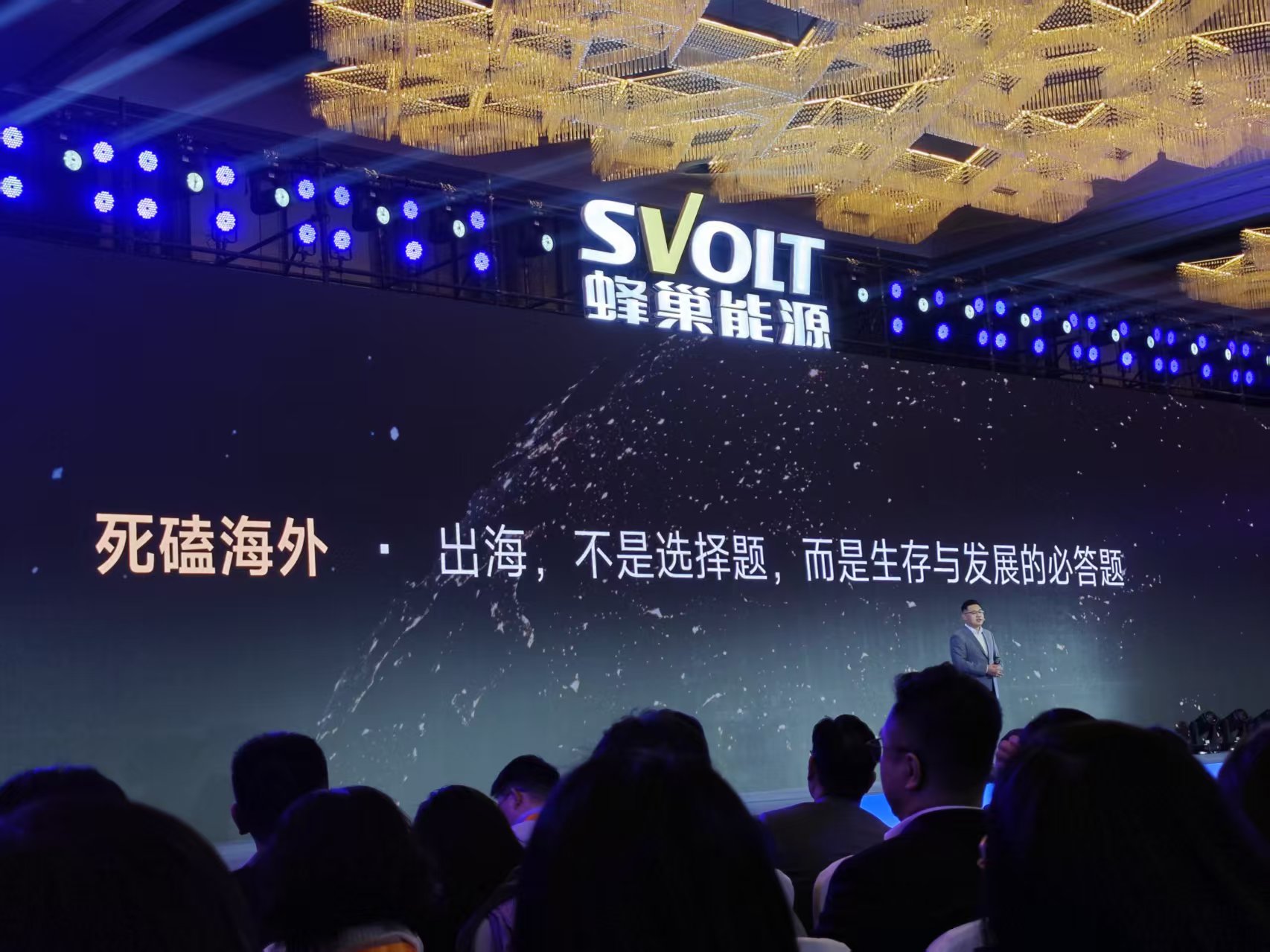
蜂巢能源杨红新:2026年,死磕海外
Xin Lang Cai Jing· 2026-01-16 09:45
Core Viewpoint - The company, Hive Energy, emphasizes its strategy of expanding into overseas markets as a critical component for survival and growth, given the anticipated stagnation of the domestic battery market until 2026 [1][5]. Group 1: Market Strategy - Hive Energy aims to achieve a battery shipment volume of 41 GWh by 2025, representing a 53% year-on-year increase, with overseas shipments exceeding 30% for the first time [4]. - The company has identified key international clients, including Stellantis, a joint venture of Great Wall Motors and BMW, and Vietnam's VinFast, which together account for a 6% increase in shipment volume compared to 2024 [4]. - The company plans to focus on sales expansion in the Asia-Pacific, Europe, and Africa, targeting major clients and large-scale energy storage projects [7]. Group 2: Operational Goals - By 2026, Hive Energy expects to reach a shipment volume of 61 GWh, a 50% increase, with overseas business maintaining over 30% of total shipments [8]. - The company has established a dedicated overseas team of approximately 200-300 employees across various functions, including sales, technology, and legal compliance [7]. Group 3: Challenges and Responses - Hive Energy faces challenges from changes in export tax policies, trade barriers, and intellectual property issues, which could impact profit margins [9]. - The company plans to negotiate with clients to share the increased costs due to policy changes, while also considering localizing some production to mitigate these challenges [10][12]. - The company has already established an overseas production base in Thailand, focusing on electric vehicle battery packs and planning to upgrade to local production of energy storage and cells [13]. Group 4: Financial Performance - After years of losses, Hive Energy achieved its first quarterly profit in the last quarter of the previous year, with a goal to achieve full-year profitability by 2026 [14]. - The company acknowledges that rising raw material prices pose a significant uncertainty, which may affect its ability to pass costs onto customers [16].
Stellantis宣布欧宝将在阿尔及利亚建厂
Shang Wu Bu Wang Zhan· 2026-01-16 04:30
Core Viewpoint - Stellantis Group's German manufacturer Opel has selected Algeria as a new production base outside of Europe, aiming to enhance local automotive industry development and better serve customers in Algeria and the broader Middle East and Africa region [1] Group 1: Company Strategy - Stellantis Group's COO for Africa and the Middle East announced the decision but did not provide a specific timeline or confirm if the project has received approval from the Algerian government [1] - The initiative will focus on local production, industrial integration, and long-term investment to support the automotive sector in Algeria, aligning with Opel's localization strategy [1] Group 2: Market Context - Opel will become the second brand under Stellantis to establish a factory in Algeria, following Fiat, which began production at its Oran facility by the end of 2023 [1] - In 2023, Opel, Fiat, and Jianghuai Automobile became the first foreign automotive brands to obtain import licenses in Algeria, successfully entering the Algerian automotive market [1] Group 3: Production Details - Stellantis has not disclosed the scale or specific location of the new production facility [1]