
上美股份

Search documents
深度|细胞自噬,美妆抗老赛道的“隐藏王牌”
FBeauty未来迹· 2025-10-31 14:09
Core Viewpoint - Autophagy is a crucial mechanism for cellular self-cleaning and repair, playing a significant role in maintaining cellular homeostasis and vitality, and is increasingly recognized as a key pathway in anti-aging research within the beauty industry [3][5][30]. Group 1: Importance of Autophagy - Autophagy has been validated in the scientific community, with significant recognition such as the Nobel Prize awarded in 2016 for its role in aging [4]. - The loss of autophagic function is now considered a core marker of cellular aging, highlighting its importance in anti-aging science [4]. - Major beauty brands like L'Oréal, Procter & Gamble, and Shiseido have initiated research into the application of autophagy in skin aging, although this research is still in a relatively early stage [4][9]. Group 2: Current Research and Applications - Many beauty companies are incorporating autophagy into their research agendas, viewing it as a new scientific pathway connecting multiple benefits such as anti-aging, whitening, and repair [7][9]. - Shiseido utilizes ingredients like tranexamic acid and camellia seed extract to activate autophagy pathways, enhancing skin cell regeneration [9]. - Procter & Gamble's SK-II and OLAY brands are exploring the potential of ingredients like Pitera™ to promote autophagy and clear damaged proteins [9]. Group 3: Market Position and Challenges - Despite the growing research on autophagy, it remains a "behind-the-scenes" concept in market communication, often not highlighted as a core selling point [10][11]. - Brands tend to integrate autophagy into broader efficacy claims, making it less visible to consumers [11]. - The complexity of the autophagy concept poses challenges for consumer education and market positioning, requiring brands to translate scientific terms into relatable benefits [35][36]. Group 4: Future Prospects - The understanding of aging biology is evolving, shifting from external repair to internal optimization, with autophagy emerging as a central mechanism [34]. - There is a need for brands to effectively communicate the benefits of autophagy to consumers, establishing it as a recognized and valuable anti-aging mechanism [35]. - As research progresses and consumer education deepens, more products centered around autophagy are expected to emerge in the market [38].


上美股份(02145) - 公司章程
2025-10-31 10:12
上海上美化妝品股份有限公司 公司章程 (2021年12月21日經公司2021年第一次臨時股東會通過, 2022年6月29日經公司2021年年度股東會修訂, 2022年12月7日經公司2022年度第三次臨時股東會修訂, 2023年10月16日經公司2023年度第一次臨時股東會修訂, 2024年9月30日經公司2024年度第一次臨時股東會修訂, 2025年5月6日經公司2024年年度股東會修訂, 2025年6月25日經公司2025年度第一次臨時股東會修訂, 2025年9月25日經公司2025年度第二次臨時股東會修訂) 1 | 第一章 | 總則 | 3 | | --- | --- | --- | | 第二章 | 經營宗旨和範圍 | 5 | | 第三章 | 股份 | 5 | | 第四章 | 股東和股東會 | 10 | | 第五章 | 董事會 | 33 | | 第六章 | 高級管理人員 | 43 | | 第七章 | 財務會計制度、利潤分配和審計 | 45 | | 第八章 | 通知和公告 | 48 | | 第九章 | 合併、分立、增資、減資、解散和清算 | 49 | | 第十章 | 修改章程 | 54 | | 第十一章 ...
上美股份(02145) - 修订公司章程
2025-10-31 10:08
香港交易及結算所有限公司及香港聯合交易所有限公司對本公告之內容概不負責,對其準確性 或完整性亦不發表任何聲明,並明確表示概不就因本公告全部或任何部分內容而產生或因倚賴 該等內容而引致之任何損失承擔任何責任。 承董事會命 (於中華人民共和國註冊成立的股份有限公司) (股份代號:2145) 修訂公司章程 本公告乃根據香港聯合交易所有限公司(「聯交所」)證券上市規則第13.51(1)條作 出。茲提述上海上美化妝品股份有限公司(「本公司」)日期為2023年11月24日的 通函(「該通函」)及本公司日期為2025年9月30日的公告,內容有關(其中包括)根 據限制性股票單位激勵計劃授出限制性股票單位。除文義另有所指外,本公告所 用詞彙與該通函所界定者具有相同涵義。 根據限制性股票單位激勵計劃發行及配發35,223股H股完成(「完成發行」)後,本 公司的註冊資本及股份總數分別為人民幣398,107,102元及398,107,102股股份。為 反映本公司的註冊資本及股本結構的相關變動,根據本公司於2023年12月14日舉 行的臨時股東大會通過的決議案的授權,董事會授權人士於完成發行後對本公司 章程中有關本公司註冊資本及股份總 ...
美妆零售商押注自有品牌,传统品牌怎么办?
Xin Lang Cai Jing· 2025-10-31 06:18
Core Insights - The acceptance of private label products among Chinese urban households has increased significantly, with over 48% purchasing such products by Q3 2025, a 10 percentage point rise from the previous year [1] - Retailers are increasingly focusing on private label development as a key strategy for innovation and market penetration, leading to a surge in private label offerings in the retail sector [1][4] Group 1: Private Label Growth in Beauty Industry - Major beauty retailers like Sephora and Walgreens have seen significant success with their private label products, with Walgreens reporting a 75 basis point increase in market penetration to 17.8% in Q1 2025 [2] - Retailers such as Jin Jia Chong and beauty collective stores are transforming from channel operators to brand owners, with private label sales exceeding 60% in some stores [2][4] - The trend of private labels is also evident in convenience stores like FamilyMart, which leverage their extensive networks to enhance consumer access to beauty products [2][4] Group 2: Competitive Landscape and Challenges - The rise of private labels is reshaping the competitive landscape, putting pressure on traditional beauty brands to adapt or risk being marginalized [3][6] - Traditional brands are facing challenges in maintaining market share as consumers shift their focus from brand recognition to product quality and value [8][9] - Retailers are now taking on a more active role in product development, directly sourcing from manufacturers to enhance profit margins and consumer appeal [4][5] Group 3: Strategies for Traditional Brands - Traditional beauty brands are responding by reinforcing their core values and establishing deeper connections with consumers through innovative product offerings [9] - Some brands are investing in direct-to-consumer channels to gain better control over user data and experiences, thereby avoiding reliance on third-party retailers [9] - Emphasis on technological innovation and product diversification is crucial for traditional brands to maintain a competitive edge [9] Group 4: Quality and Market Positioning - The challenge for retailers lies in ensuring the quality of their private label products, as any quality issues could damage their reputation [10][11] - The competitive environment for private labels is intensifying, particularly in the lower price segments where established brands already exist [11] - Retailers must focus on filling market gaps with unique offerings rather than merely competing on price against existing brands [11][12]

研报丨全球多肽化妆品竞赛,TOP3是谁?
FBeauty未来迹· 2025-10-30 11:29
Core Viewpoint - The cosmetics industry is undergoing a strategic transformation from basic moisturizing to efficacy-driven and scientific approaches, with peptides emerging as key active ingredients in anti-aging skincare products [3][4]. Market Size and Growth Trends - The global peptide cosmetics market is rapidly growing, with projections indicating a market size of $2.566 billion in 2024, expected to reach $5.716 billion by 2031, reflecting a compound annual growth rate (CAGR) of 12.3% during the forecast period [6][8]. - In 2024, over 55 million consumers are expected to use peptide skincare products, with 68% targeting wrinkle reduction and skin tightening [9]. Regional Market Performance - The Asia-Pacific region is the largest market for peptide cosmetics, accounting for 36% of global sales, with South Korea alone selling over 12.7 million units in 2023 [10][11]. - North America follows closely, representing 34% of global sales, with the U.S. having over 16.2 million active peptide skincare users [12][13]. - Europe contributes 28% of global sales, with Germany, the UK, and France leading the market [11][12]. Segment Market Performance - Serums are the largest segment, accounting for 38% of global sales, with over 480 peptide serums launched in 2023 [15]. - Moisturizing repair creams hold a 26% market share, while anti-aging creams account for 17% [15]. - Eye creams represent 11% of the segment, with 95 peptide SKUs recorded in 2023 [15]. Sales Channel Performance - Online sales dominate the market, accounting for 46% of total sales, with over 37 million peptide products sold through e-commerce platforms in 2023 [16]. - Specialty cosmetics stores contribute 27% to global sales, while supermarkets account for 18% [16]. Capital Flow and Investment Trends - In 2023, the global peptide cosmetics market attracted over $1.12 billion in funding, primarily directed towards R&D, clinical trials, and sustainable packaging [18][19]. - North America received over $360 million in investments, focusing on biotechnology-based peptide platforms [18]. Product Innovation - Over 110 new peptide products were launched globally between 2023 and 2024, showcasing a trend towards multi-peptide formulations and precision delivery systems [20]. - Brands are increasingly integrating AI for personalized skincare solutions, with over 145 brands utilizing AI skin diagnostic systems [20]. Competitive Landscape - The competitive landscape is shifting, with L'Oréal leading the market, followed by Estée Lauder and emerging brands like Han Shu [21][22]. - Han Shu's Red Waist 2.0 series achieved remarkable sales, emphasizing innovative raw material development and effective marketing strategies [22][25]. Raw Material Market Expansion - The peptide manufacturing market is projected to reach $2.574 billion by 2025, with a CAGR of 5.4% from 2025 to 2035 [26]. - There is a growing trend towards sustainable sourcing of peptides, with plant-based peptides gaining traction [26]. Challenges and Development - High costs and stability issues remain significant challenges, with 41% of brands reporting delays in product launches due to packaging and preservation difficulties [27]. - Regulatory fragmentation is also a concern, with only 27 countries having established guidelines for peptide ingredients [27]. Conclusion - The global peptide cosmetics market is in a phase of high growth and innovation, driven by technological advancements and evolving consumer demands, with a competitive landscape characterized by both established leaders and emerging players [29][31].



国证国际港股晨报-20251030
Guosen International· 2025-10-30 11:10
Group 1: Market Overview - The Hong Kong stock market experienced a decline, with the Hang Seng Index falling by 0.33%, the Hang Seng China Enterprises Index down by 0.97%, and the Hang Seng Tech Index decreasing by 1.26% [2][3] - The total market turnover was HKD 242.7 billion, with short selling amounting to HKD 33.6 billion, representing 15.99% of the total turnover [2] - Southbound capital inflow decreased to HKD 2.26 billion, with the most net buying in China Mobile, Hua Hong Semiconductor, and Pop Mart, while Alibaba, Tencent, and ZTE saw the most net selling [2] Group 2: Sector Performance - Defensive stocks and resource stocks were sold off due to a rebound in market risk appetite, leading to a significant drop in gold prices [3] - The gold and non-ferrous metal sectors saw notable declines, with major gold stocks like Zijin Mining, Zhaojin Mining, and Shandong Gold all falling [3] - The consumer sector also faced downward pressure, with sports goods, luxury goods, tobacco, and local retail stocks all weakening [3] - The pharmaceutical and biotech sectors continued to adjust, with companies like Heng Rui Pharmaceutical experiencing significant declines post-earnings [3] Group 3: Company Analysis - Tmall (6110.HK) - Tmall reported a 6.6% year-on-year decline in revenue to HKD 27.01 billion and a 41.9% drop in net profit to HKD 1.29 billion, which was in line with expectations [8][9] - The company declared a final dividend of HKD 0.02 per share and a special dividend of HKD 0.12 per share, resulting in an annual payout ratio of 135% [9] - Despite the revenue decline, Tmall achieved a 20% increase in operating cash flow, reaching HKD 3.8 billion, due to effective working capital management [9] Group 4: Strategic Initiatives - Tmall is focusing on optimizing its store structure, with a 18.3% reduction in the number of direct stores to 5,020 and a 12.4% decrease in sales area [10] - The company is implementing stricter standards for store openings and locations to enhance operational efficiency [10] - Tmall is deepening collaborations with high-end brands like SOAR Running and Norda to diversify its brand matrix and strengthen its market presence [10] Group 5: Future Outlook - The report predicts a gradual recovery in performance as the retail consumption environment improves, with expected EPS of HKD 0.21, 0.22, and 0.23 for FY26, FY27, and FY28 respectively [10] - A target price of HKD 3.6 is set for the 2026 fiscal year, maintaining a "Buy" rating based on the company's high dividend policy and potential for recovery [8][10]
美妆行业公私域融合经营白皮书
Sou Hu Cai Jing· 2025-10-30 02:53
Core Insights - The beauty industry is transitioning from "traffic competition" to "full-domain operation," driven by refined consumer demand and diverse touchpoints [5][11] - The report highlights the integration of public and private domains in the beauty sector, emphasizing the importance of Tencent's ecosystem in facilitating this transition [5][11] Market Overview - The retail scale of China's cosmetics market is projected to reach 435.7 billion yuan in 2024, with online sales surpassing offline for the first time, accounting for over 51% [11][12] - The industry is experiencing a slowdown, with a forecasted growth rate of -1.1% in 2024, marking a shift to structural growth [11][12] Consumer Insights - Skincare products dominate consumer purchases, with 87.3% of users buying them, followed by color cosmetics (50.7%) and perfumes (49.0%) [24][25] - There is a notable generational difference in purchasing behavior, with younger consumers (post-00s and post-90s) being more influenced by KOLs and collaborations, while older generations prioritize efficacy and personal enjoyment [24][25] Channel Dynamics - Traditional e-commerce remains the leading channel (62.6%), but the WeChat ecosystem is rapidly gaining traction, with 56.2% of transactions occurring through it [11][24] - WeChat mini-programs are becoming the primary transaction entry point, and social trust significantly influences purchasing decisions, with 45.5% of users buying based on friends' recommendations [11][24] Product Trends - High-end functional skincare products and male skincare (projected market size of 17 billion yuan in 2024, with a CAGR of 11% from 2025 to 2029) are experiencing significant growth [11][12] - Multi-functional and "makeup and skincare combined" products are gaining popularity, reflecting a trend towards convenience and efficiency in beauty routines [16][26] Brand Strategies - Leading brands are leveraging public-private domain integration to drive growth, with examples including Huahua Xizi and Proya utilizing mini-programs and KOLs for effective marketing [11][24] - Future strategies should focus on product innovation, targeted audience engagement, and leveraging video content for brand awareness and conversion [11][24]

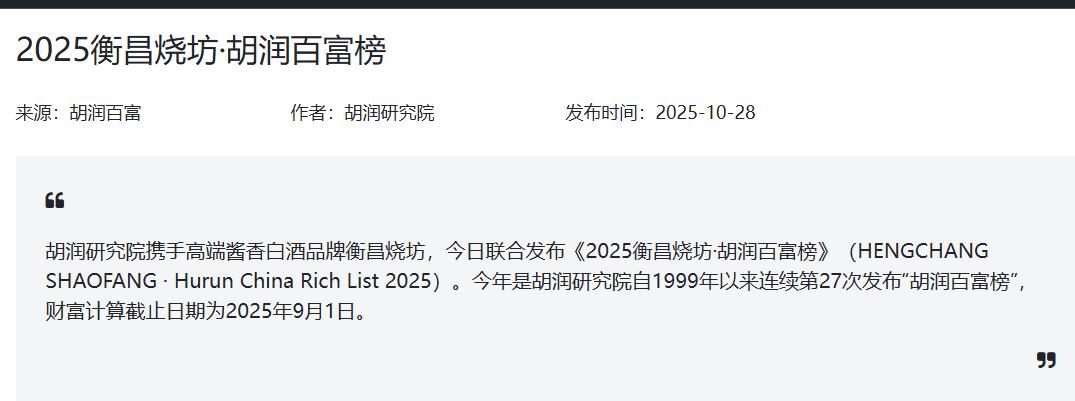
吕义雄成为化妆品行业新首富
3 6 Ke· 2025-10-28 23:58
Core Insights - The 2025 Hurun Rich List reveals a significant increase in the number of Chinese billionaires, with 1,434 individuals having wealth exceeding 5 billion yuan, marking a 31% year-on-year growth [3] - The total wealth of the listed billionaires reached nearly 30 trillion yuan, an increase of 9 trillion yuan, representing a growth rate of 42% compared to the previous year [3] - The beauty industry has shown resilience, with notable entries such as Mao Geping and his wife, who debuted on the list with a wealth of 20.5 billion yuan, and the founder of Up Beauty, Lü Yixiong, whose wealth surged by 16 billion yuan [4][5] Industry Overview - The growth in total wealth is largely attributed to a significant recovery in the stock market, with major indices like the Shanghai Composite Index and the Hang Seng Index rising by 40-50% compared to the previous year [4] - The beauty industry, while not traditionally a wealth accumulation powerhouse, has demonstrated positive trends despite market volatility, with key players like Giant Biological and Mao Geping showing substantial wealth increases [4][9] - The beauty sector is undergoing a transformation characterized by "hard technology replacing traffic dividends," indicating a shift in business strategies within the industry [6] Notable Individuals - The couple Fan Daidi and Yan Jianya from Giant Biological topped the beauty sector with a wealth of 33 billion yuan, reflecting a 35% increase from the previous year [4][5] - Mao Geping and his wife ranked 9th among new entrants with a wealth of 20.5 billion yuan, highlighting their prominence in the beauty industry [5][9] - Lü Yixiong, founder and CEO of Up Beauty, saw his wealth increase by over 50 billion yuan, making him the richest in the cosmetics sector [13] Market Dynamics - The wealth rankings in the beauty industry have experienced significant fluctuations, with some founders seeing their wealth decrease due to stock market volatility [13][17] - The market capitalization of Giant Biological has seen a dramatic decline, impacting the wealth of its founders, while other companies like Mao Geping have shown resilience in their market performance [15][17] - The competitive landscape in the beauty industry remains intense, with the wealth of top entrepreneurs reflecting the ongoing capital-driven dynamics of the sector [18]
深度|673个产品“持证上岗”,防脱赛道迎来两重挑战
FBeauty未来迹· 2025-10-28 13:20
Core Insights - The current market for hair care brands in China is experiencing significant growth, with a clear delineation of brand tiers based on sales thresholds [3][4] - The scalp health market is expanding rapidly, with a projected market size of 600 billion yuan by 2025, reflecting a stable growth rate of around 10% [5] - The anti-hair loss segment is the most competitive area within the hair care market, with the Chinese market expected to reach 300 billion yuan by 2030, accounting for nearly one-third of the overall hair care market [6] Market Dynamics - The hair care market is characterized by high growth, high prices, and low consumer trust, driven by increasingly discerning consumers and tightening industry regulations [11][12] - The demand for anti-hair loss products has evolved from traditional concepts to a more systematic approach to scalp health management, with a younger and more diverse consumer base [12] - Regulatory frameworks are becoming more stringent, requiring anti-hair loss products to meet high standards of proof regarding efficacy and safety [13][14] Competitive Landscape - The market is witnessing a division among brands, with a focus on "certified" products and specialized offerings, as evidenced by the significant number of new certifications issued for anti-hair loss products [17][19] - Major international brands dominate the high-end market, while local brands leverage unique concepts and certifications to differentiate themselves [21] - The competition is shifting towards technological innovation and trust-building, with brands needing to demonstrate clinical validation and effective solutions [23][31] Innovation and Trust - The industry faces challenges related to ingredient efficacy and consumer skepticism, necessitating breakthroughs in formulation and delivery methods [25][28] - Brands are increasingly focusing on establishing trust through transparent communication of product efficacy and user experiences [29][31] - The successful brands in the future will likely be those that can balance technical advancements with consumer trust and emotional connections [31]

申万宏源证券晨会报告-20251028
Shenwan Hongyuan Securities· 2025-10-28 03:14
Core Insights - The report highlights a significant decline in investment growth across various sectors, including infrastructure, services, manufacturing, and real estate, with fixed asset investment growth dropping to historical lows since mid-2025 [11][5][4] - The central bank's decision to resume government bond trading is expected to have a short-term positive impact, but the long-term effects may be neutral due to ongoing economic pressures [12][14] - China Shenhua's Q3 2025 performance showed stable growth despite challenges, with revenue and net profit exceeding market expectations, driven by cost control measures [4][13] Investment Growth Decline - Investment growth has sharply decreased, with fixed asset investment growth falling 9.2 percentage points to -6.5% in September 2025, marking the lowest point in five years [11] - Major sectors such as infrastructure, services, real estate, and manufacturing have all experienced declines, with specific drops of 13.1%, 11.1%, 9.3%, and 9.1% respectively [11] - The decline in construction and installation investment is identified as a primary factor contributing to the overall drop in fixed asset investment [11] Reasons for Investment Slowdown - The acceleration of debt resolution has occupied investment funds, explaining over half of the investment decline, with the issuance of special refinancing bonds significantly impacting available government investment funds [11][5] - Companies are being pressured to clear debts, which has further constrained their ability to invest, particularly affecting state-owned enterprises and the real estate sector [11] - A lack of new projects is also contributing to the investment slowdown, with new construction projects seeing a significant drop in growth [11] Policy Optimization Effects - Recent fiscal measures are aimed at alleviating the impact of debt resolution on investment, with targeted policies already showing some positive effects [11] - The report suggests that improving cash flow for enterprises through debt resolution could restore investment vitality, particularly for small and medium-sized enterprises [11] Company Performance Insights - China Shenhua reported a Q3 2025 revenue of CNY 750.42 billion, a 9.51% increase from Q2, although it represents a 13.10% year-on-year decline [13] - The company’s net profit for Q3 was CNY 144.11 billion, reflecting a 13.54% increase from the previous quarter but a 6.24% year-on-year decline [13] - The company maintains a high dividend payout ratio, planning to distribute CNY 194.71 billion in dividends for the first half of 2025, which is 79% of its net profit [13][17] Market Trends and Future Outlook - The report indicates that the market may experience a short-term boost from the resumption of government bond trading, but the overall economic environment remains challenging [12][14] - The performance of various sectors, including the coal and energy sectors, is under scrutiny, with expectations of continued pressure on profit margins due to fluctuating prices [17][18] - Companies are advised to focus on optimizing costs and enhancing operational efficiency to navigate the current economic landscape [17][18]