
银华基金

Search documents
大消息!“逆周期调节”,来了
Zhong Guo Ji Jin Bao· 2025-12-01 12:49
Core Viewpoint - The approval of fund products is initiating a counter-cyclical adjustment mechanism to better protect investor interests under the guidance of the "Action Plan for Promoting High-Quality Development of Public Funds" [1][2] Group 1: Regulatory Adjustments - Regulatory scrutiny on new equity fund approvals has increased, particularly for those with high performance benchmarks, requiring recent five-year rolling valuations to be below the 90th percentile and three-month valuations below the 80th percentile [2][3] - The approval process is being optimized to maintain a rational and restrained approach during market highs while increasing counter-cyclical investments during market lows [2][6] Group 2: Fund Issuance and Management - Fund companies are exhibiting restraint in issuing new equity funds, with many setting initial fundraising caps at 2 billion to 3 billion yuan, contrasting with the past trend of launching large-scale funds [5][6] - Over 50% of the 1,045 new equity funds established this year have set fundraising limits, with 57% of these limits below 3 billion yuan [5] Group 3: Market Response and Strategy - The approval of new funds has focused on sectors with relatively low valuations, such as healthcare and consumer electronics, especially during periods of market volatility [3][4] - The industry is shifting from a focus on scale to quality, aiming to attract more long-term capital and enhance investor satisfaction through better fund management practices [7] Group 4: Performance Evaluation and Investor Experience - The regulatory framework has been restructured to emphasize fund performance over size and revenue, with new metrics introduced to evaluate fund managers based on investor service and experience [6][7] - The implementation of counter-cyclical adjustment mechanisms is expected to improve the overall investment experience for investors and stabilize the capital market [7]
大消息!“逆周期调节”,来了
中国基金报· 2025-12-01 12:47
Core Viewpoint - The approval of fund products is undergoing a counter-cyclical adjustment mechanism to better protect investor interests, with a more cautious approach towards new equity fund approvals due to high valuation benchmarks [2][4][11]. Group 1: Regulatory Adjustments - Regulatory scrutiny has increased for new equity funds, requiring that the performance benchmark index's rolling valuation over the last five years be below the historical 90th percentile and the last three months below the 80th percentile [5][6]. - The approval process has been optimized, with a focus on sectors with relatively low valuations, such as healthcare, food, and consumer electronics [5][6]. Group 2: Market Behavior and Fund Management - Despite a bullish A-share market, fund companies are exercising restraint in new equity fund launches, with many setting initial fundraising caps at 2 billion to 3 billion yuan [2][9]. - A significant number of new equity funds launched this year have set fundraising limits, with 57% of these limits below 3 billion yuan [9]. Group 3: Investor Experience and Fund Performance - The industry is shifting from a focus on scale to quality, aiming to enhance investor experience and long-term returns [11]. - Fund companies are implementing measures such as subscription limits and dynamic allocation to ensure fair investment experiences for all investors [9][11]. Group 4: Long-term Investment Ecosystem - The deepening implementation of the counter-cyclical adjustment mechanism is expected to attract more long-term capital into the public fund industry, enhancing investor satisfaction [11]. - The regulatory framework is evolving to emphasize long-term performance and investor returns, moving away from traditional metrics like scale and revenue [9][11].


天府证券ETF日报2025.12.01-20251201
天府证券· 2025-12-01 11:03
Report Industry Investment Rating - Not provided in the content Core Viewpoints - On December 1, 2025, the A-share market showed an upward trend, with the Shanghai Composite Index rising 0.65%, the Shenzhen Component Index rising 1.25%, and the ChiNext Index rising 1.31%. The trading volume of the two markets reached 1889.5 billion yuan. The top-performing industries were non-ferrous metals, communication, and electronics, while the bottom-performing industries were agriculture, forestry, animal husbandry, and fishery, environmental protection, and real estate [2][6]. Summary by Directory Market Overview - The Shanghai Composite Index closed at 3914.01, up 0.65%; the Shenzhen Component Index closed at 13146.72, up 1.25%; the ChiNext Index closed at 3092.50, up 1.31%. The trading volume of the two A-share markets was 1889.5 billion yuan. The top-performing industries were non-ferrous metals (2.85%), communication (2.81%), and electronics (1.58%), while the bottom-performing industries were agriculture, forestry, animal husbandry, and fishery (-0.43%), environmental protection (-0.23%), and real estate (-0.06%) [2][6]. Stock ETF - The top-trading-volume stock ETFs were Huaxia CSI A500 ETF (up 1.23%, discount rate 1.18%), Huatai-PineBridge CSI A500 ETF (up 1.32%, discount rate 1.14%), and Guotai CSI A500 ETF (up 1.13%, discount rate 1.16%) [3][7]. Bond ETF - The top-trading-volume bond ETFs were Haifutong CSI Short-term Financing ETF (up 0.00%, discount rate 0.00%), Huaxia Shanghai Stock Exchange Benchmark Market-making Treasury Bond ETF (up 0.10%, discount rate 0.13%), and Guotai CSI AAA Scientific and Technological Innovation Corporate Bond ETF (up 0.04%, discount rate 0.00%) [4][9]. Gold ETF - Gold AU9999 rose 1.09%, and Shanghai Gold rose 1.02%. The top-trading-volume gold ETFs were Huaan Gold ETF (up 1.04%, discount rate 1.06%), Boshi Gold ETF (up 1.02%, discount rate 1.08%), and E Fund Gold ETF (up 1.03%, discount rate 1.07%) [12]. Commodity Futures ETF - Huaxia Feed Soybean Meal Futures ETF fell 2.52%, with a discount rate of 0.63%; Dacheng Non-ferrous Metals Futures ETF rose 1.48%, with a discount rate of 1.76%; Jianxin Yisheng Zhengzhou Commodity Exchange Energy and Chemical Futures ETF rose 0.65%, with a discount rate of 0.99% [15]. Cross-border ETF - The previous trading day, the Dow Jones Industrial Average rose 0.61%, the Nasdaq Composite rose 0.65%, the S&P 500 rose 0.54%, and the German DAX rose 0.29%. On December 1, the Hang Seng Index rose 0.67%, and the Hang Seng China Enterprises Index rose 0.47%. The top-trading-volume cross-border ETFs were E Fund CSI Hong Kong Securities Investment Theme ETF (up 0.20%, discount rate -0.07%), Huatai-PineBridge Hang Seng Technology ETF (up 0.54%, discount rate 0.60%), and Huaxia Hang Seng Technology ETF (up 0.53%, discount rate 0.75%) [17]. Money ETF - The top-trading-volume money ETFs were Yin Hua Ri Li ETF, Hua Bao Tian Yi ETF, and Money ETF Jian Xin Tian Yi [19].
震荡市追求稳健增值 银华盛安六个月持有混合今起发行
市值风云· 2025-12-01 10:10
Group 1 - The core viewpoint of the article highlights the emergence of "fixed income +" as an ideal investment choice for diversifying portfolios amid increasing market volatility and a low interest rate environment, with total net assets of "fixed income +" funds reaching approximately 2.75 trillion yuan by the end of Q3 2025, marking a historical high [1] - "Fixed income +" products are defined as mixed investment strategies that primarily allocate to fixed income assets while including a small portion of equity assets to enhance returns, aiming for absolute returns that exceed pure fixed income products while controlling volatility [1] - Historical backtesting of the representative index for "fixed income +" products, the hybrid bond fund index, shows its ability to perform well in rising markets (52% increase from 2012 to 2015) while maintaining lower losses in declining markets (-3.36% from 2021 to 2024) compared to mixed fund indices [1] Group 2 - The newly launched Yin Hua Sheng An Six-Month Holding Mixed Fund is a hybrid bond fund that invests 10%-30% of its assets in equity and convertible bonds, with at least 10% allocated to domestic stocks and a maximum of 50% in Hong Kong Stock Connect stocks [1] - The fund is managed by Yu Lei, who has over 20 years of experience in pension management, focusing on maximizing long-term returns while controlling performance drawdowns, as evidenced by the 6.81% net value growth of her representative product since her appointment [1] - The fund also imposes a minimum holding period of six months for each share, encouraging investors to maintain their positions [1] Group 3 - Looking ahead, the liquidity and risk appetite of investors are expected to weaken in Q4, leading to a market characterized by consolidation, suggesting that investment portfolios should be balanced to reduce volatility [2] - Investors are encouraged to consider the Yin Hua Sheng An Six-Month Holding Mixed Fund as a means to participate in equity market opportunities while managing risk [2]
超700亿!加仓
Zhong Guo Ji Jin Bao· 2025-12-01 05:45
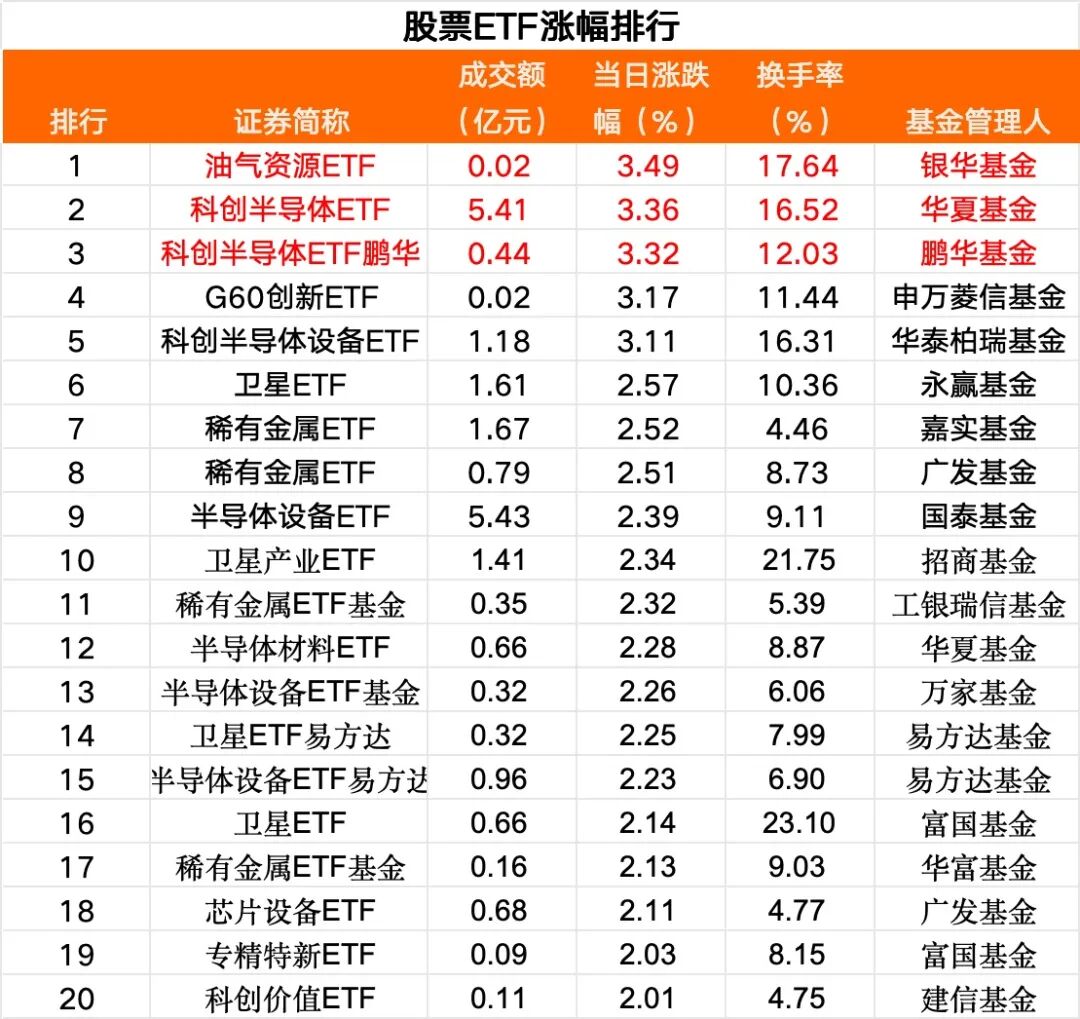
上周五(11月28日),A股市场低开高走,三大指数集体收涨,沪深两市成交量缩至1.59万亿元。 【导读】上周五股票ETF资金净流出44亿元,11月净流入超700亿元 数据显示,截至11月28日,全市场1268只股票ETF总规模达4.55万亿元。 当日股票ETF成交额合计1421.21亿元,与前一交易日1777.47亿元相比缩量超350亿元。其中,易方达基金旗下A500ETF当日成交56.37亿元,位居首位。 此外,A500ETF易方达、中证A500ETF(国泰基金)成交额在40亿元以上。创新药ETF(广发)、A500ETF基金华泰柏瑞、中韩半导体ETF(华泰柏 瑞)、A500ETF(南方)、恒生科技ETF(华泰柏瑞)成交额也在30亿元以上。 从股票ETF二级市场表现看,科创半导体板块领涨。当日除了油气资源ETF(银华基金)以3.49%的涨幅领涨,华夏、鹏华、华泰柏瑞、国泰、万家、易 方达、华夏旗下科创半导体ETF、科创半导体设备ETF或半导体材料ETF,以及永赢、易方达、富国基金旗下卫星ETF等涨幅较为靠前。 稀有金属ETF二级市场涨幅也较大。稀有金属ETF(嘉实)、稀有金属ETF(广发)、稀有金属ETF(工 ...
超700亿!加仓
中国基金报· 2025-12-01 05:43
Core Viewpoint - The stock ETF market experienced a net outflow of 4.4 billion yuan on November 28, while the total net inflow for November exceeded 70 billion yuan, indicating a strong interest in stock ETFs despite short-term profit-taking [2][7][10]. Market Performance - On November 28, the A-share market opened lower but closed higher, with total trading volume in the Shanghai and Shenzhen markets shrinking to 1.59 trillion yuan [2]. - The total scale of all stock ETFs reached 4.55 trillion yuan, with a trading volume of 142.12 billion yuan on the same day, down over 35 billion yuan from the previous trading day [4][8]. ETF Inflows and Outflows - In November, stock ETFs attracted significant capital, with the Hang Seng Technology ETF receiving nearly 20 billion yuan in net inflows [10]. - On November 28, 19 stock ETFs saw net outflows exceeding 1 billion yuan, particularly in industry-themed and broad-based ETFs [9][10]. Sector Performance - The semiconductor, satellite, and rare metals ETFs led the market gains, with the semiconductor sector showing strong performance [3][5]. - The rare metals ETFs also recorded substantial daily gains, with several funds increasing by over 2% [5]. Notable ETFs - The top-performing ETFs included the Oil and Gas Resources ETF, which rose by 3.49%, and various semiconductor-related ETFs, which also showed significant increases [6]. - The A500 ETF from E Fund had a trading volume of 5.64 billion yuan, leading the market on that day [4]. Fund Management Insights - Major fund companies like E Fund and Huaxia Fund reported continued inflows into their ETFs, with E Fund's total ETF scale reaching 805.53 billion yuan, an increase of 204.88 billion yuan since 2025 [12]. - Fund managers expressed optimism about emerging industries such as AI, innovative pharmaceuticals, and robotics, which are expected to see further development due to supportive policies [13].

震荡市“固收+”规模创新高,银华盛安六个月持有混合今起发行
Zhong Guo Zheng Quan Bao· 2025-12-01 05:00
Group 1 - The core viewpoint of the article highlights the emergence of "fixed income plus" (固收+) as a preferred investment strategy amid increasing market volatility and a low interest rate environment, with total net assets of such funds reaching approximately 2.75 trillion yuan by the end of Q3 2025, marking a historical high [1] - "Fixed income plus" products are designed to combine fixed income assets with a small allocation to equity assets to enhance returns, aiming for absolute returns that exceed pure fixed income products while controlling volatility [1] - Historical backtesting of the representative index for "fixed income plus" products shows their ability to perform well in both rising and declining markets, with a 52% increase from 2012 to 2015, significantly outperforming the long-term pure bond fund index, which rose by 21.81% [1] Group 2 - The newly issued Yin Hua Sheng An Six-Month Holding Mixed Fund is a type of hybrid bond fund, with investments in equity assets and convertible bonds ranging from 10% to 30% of the fund's total assets, and a minimum of 10% allocated to domestic stocks [2] - The fund will be managed by Yu Lei, who has over 20 years of experience in pension management, focusing on maximizing long-term returns while controlling performance drawdowns, as evidenced by the 6.81% net value growth of her previous fund since her appointment [2] - The fund has a minimum holding period of six months for each share, encouraging investors to maintain discipline in their investment strategy [3]
银华基金于蕾:打造“固收+”精品 致力于提升持有人体验
Sou Hu Cai Jing· 2025-12-01 03:44
Core Insights - The core focus of the article is on the importance of asset allocation in the "fixed income plus" (固收+) business, emphasizing the need for a professional team to effectively manage this aspect [1][7]. Group 1: Asset Allocation Strategy - The primary contradiction in each market phase must be identified, and the emphasis should be on cost-effectiveness [1][7]. - The philosophy of asset allocation is to maximize returns while controlling drawdowns, with a strong focus on the cost-effectiveness of various investment options across different sectors and asset classes [1][7]. - A long-term perspective is essential for maximizing portfolio returns, with all asset types serving the overall risk-return profile of the portfolio [1][7]. Group 2: Market Trends and Product Demand - In a declining interest rate environment, "fixed income plus" has become a preferred choice for wealth management among residents, with the total market size reaching 2.44 trillion yuan by the end of Q3 2025, an increase of over 500 billion yuan from Q2 2025 [5]. - The appeal of "fixed income plus" products lies in their ability to address asset allocation challenges and provide a relatively stable long-term return in volatile market conditions [5][6]. Group 3: Team Structure and Investment Approach - The team at Yinhua Fund consists of over 50 members, including specialists in equity, ensuring a balanced approach to both offensive and defensive strategies [6]. - The integration of AI technology is enhancing the team's efficiency, helping to identify investment opportunities and manage risks more effectively [6]. Group 4: Future Outlook and Investment Focus - The company anticipates a gradual reduction in the economic drag from real estate over the next two to three years, with potential recovery in consumer and business confidence, leading to overall investment opportunities in A-shares and Hong Kong stocks [9]. - The focus on technological innovation remains a long-term strategy, with an emphasis on sectors such as consumption recovery, aviation, tourism, and cyclical products related to PPI recovery [9].

通信ETF上周领涨,机构看好光通信产业链机会丨ETF基金周报
2 1 Shi Ji Jing Ji Bao Dao· 2025-12-01 03:22
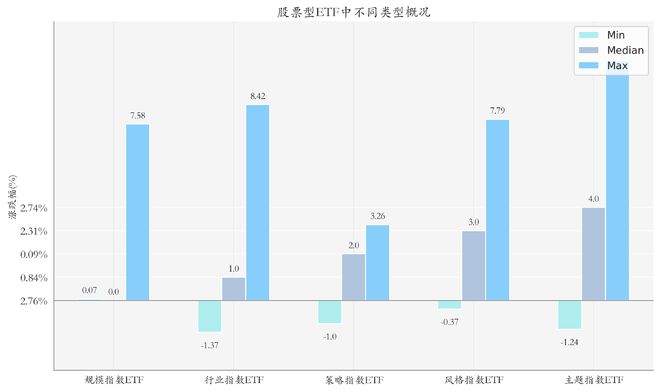
Market Overview - The Shanghai Composite Index rose by 1.4% to close at 3888.6 points, with a peak of 3895.59 points during the week from November 24 to November 28 [1] - The Shenzhen Component Index increased by 3.56% to 12984.08 points, reaching a high of 13082.77 points [1] - The ChiNext Index saw a rise of 4.54%, closing at 3052.59 points, with a maximum of 3113.44 points [1] - Global markets also experienced gains, with the Nasdaq Composite up by 4.91%, the Dow Jones Industrial Average up by 3.18%, and the S&P 500 up by 3.73% [1] - In the Asia-Pacific region, the Hang Seng Index increased by 2.53%, and the Nikkei 225 rose by 3.35% [1] ETF Market Performance - The median weekly return for stock ETFs was 2.33% [2] - The highest weekly return among scale index ETFs was 7.58% for the E Fund Shanghai Stock Exchange Science and Technology Innovation Board 200 ETF [2] - The highest return in the industry index ETFs was 8.42% for the Harvest National Index Communication ETF [2] - The top five stock ETFs by weekly return included the Fortune National Communication Equipment Theme ETF at 10.3% [4][5] ETF Liquidity and Fund Flows - Average daily trading volume for stock ETFs decreased by 7.3%, while average daily trading volume increased by 17.8% [6] - The top five stock ETFs by fund inflow included the Huaxia SSE 50 ETF with an inflow of 417 million yuan [9][10] - The largest outflows were seen in the Huabao National Bank ETF, which had an outflow of 428 million yuan [10] ETF Financing and Inventory - The financing balance for stock ETFs decreased from 50.5535 billion yuan to 47.097 billion yuan [11] - The total number of existing ETFs reached 1363, with 1069 being stock ETFs [12] - The total market size for ETFs reached 5687.882 billion yuan, an increase of 84.359 billion yuan from the previous week [14] Institutional Insights - Zhongyuan Securities highlighted a supply-demand imbalance in high-end optical chips, predicting price increases due to tight supply and accelerated domestic innovation [17] - Guoyuan Securities noted that the demand for computing power remains strong, driven by the accelerated penetration of model applications in the AI sector [17]


年底冲刺!40只基金本周开售,权益基金居多
Zhong Guo Ji Jin Bao· 2025-12-01 02:23
Core Insights - The public fund industry is experiencing a surge in new fund launches as the year-end approaches, with 40 new funds being introduced this week, primarily focusing on equity funds [1][2] Fund Launch Overview - A total of 40 new public funds are being launched this week, with equity products being the main focus for various fund companies [2] - Among the new funds, 16 are actively managed equity funds and 13 are index funds, indicating a strong emphasis on equity investment strategies [2] Thematic Focus of New Funds - Many newly launched funds are targeting current hot themes, such as overseas expansion and consumer trends. For instance, the Yongying Qihang Huixuan fund focuses on growth opportunities from overseas contributions, highlighting that the gross margin of non-financial A-share companies has been higher overseas since 2021 [3] - The Caitong Consumer Preferred fund is aimed at young consumer trends, including brand expansion and innovative consumption, with the fund manager optimistic about the growth potential in the consumer sector [3] Experienced Fund Managers - Several new funds are managed by seasoned professionals, such as Teng Yue from China Merchants, who has nearly 16 years of investment research experience and focuses on sectors like technology, manufacturing, and healthcare [4] - Yang Dong from Guangfa Quality Preferred fund, with 19 years in the securities industry, plans to use a strategy combining subjective long positions, active quantification, and AI enhancement to identify quality assets with growth potential [4] Variety in Index Funds - The newly launched index funds include a range of enhanced index products and broad-based ETFs, such as the Penghua Shanghai Stock Exchange Sci-Tech Innovation Board 100 Index Enhanced Fund and the Jiayin China Securities Index Selection Hong Kong and Shanghai Technology 50 ETF [4] Popularity of Fixed Income and FOF Products - Recent trends show that fixed income plus ("固收+") and Fund of Funds (FOF) products are gaining popularity, with several products achieving significant fundraising success [5] - For example, the Huatai Fuyin Stable Preferred Fund raised approximately 2.498 billion yuan, while other FOF products also saw fundraising in the range of 1 billion to 1.5 billion yuan [5] AI ETF Launch Success - The launch of seven AI-themed ETFs by various fund companies has been met with strong market interest, with the Yongying China Securities Sci-Tech Innovation Entrepreneurship AI ETF selling out in just one day, raising over 900 million yuan [6] - The rapid sale of these AI ETFs reflects the growing enthusiasm for the AI sector, as the domestic AI industry continues to advance across various segments [6]