名创优品

Search documents
名创优品(09896) - 翌日披露报表
2026-01-18 10:41
FF305 翌日披露報表 (股份發行人 ── 已發行股份或庫存股份變動、股份購回及/或在場内出售庫存股份) 表格類別: 股票 狀態: 新提交 公司名稱: 名創優品集團控股有限公司 呈交日期: 2026年1月18日 如上市發行人的已發行股份或庫存股份出現變動而須根據《香港聯合交易所有限公司(「香港聯交所」)證券上市規則》(「《主板上市規則》」)第13.25A條 / 《香港聯合交易所有限公司GEM證券 上市規則》(「《GEM上市規則》」)第17.27A條作出披露,必須填妥第一章節 。 | 第一章節 | | | | | | | | --- | --- | --- | --- | --- | --- | --- | | 1. 股份分類 | 普通股 | 股份類別 | 不適用 | 於香港聯交所上市 | 是 | | | 證券代號 (如上市) | 09896 | 說明 | | | | | | A. 已發行股份或庫存股份變動 | | | | | | | | | | | 已發行股份(不包括庫存股份)變動 | 庫存股份變動 | | | | | 事件 | 已發行股份(不包括庫存股份)數 目 | 佔有關事件前的現有已發 行股份(不包括 ...
16元盒饭自助杀疯了,这届打工人彻底不装了
虎嗅APP· 2026-01-18 03:27
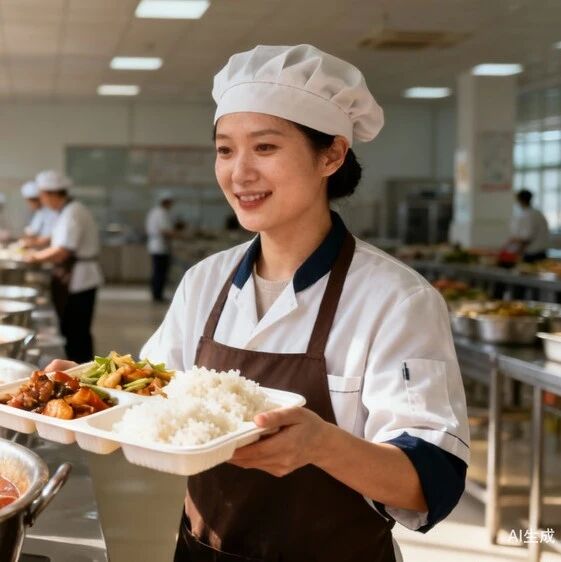
Core Viewpoint - The article discusses the shift in consumer preferences in the Chinese dining industry, highlighting the rise of affordable self-service meals and the decline of high-end dining experiences, reflecting a broader trend towards value for money and practicality in consumer behavior [4][10]. Group 1: Rise of Affordable Dining - The emergence of "box lunch self-service" meals priced under 20 yuan has become a popular choice among workers, serving as a "lifeline" for many [5][12]. - By May 2025, the number of self-service restaurants in China is projected to reach 66,000, with a net increase of over 10,000 locations compared to the previous year, driven primarily by affordable fast-casual dining options [5]. - The appeal of these self-service meals lies in their variety, affordability, and the ability to satisfy hunger without breaking the bank, contrasting sharply with the struggles of high-end dining establishments [9][15]. Group 2: Decline of High-End Dining - High-end restaurants are facing significant challenges, with notable closures including Opera BOMBANA and L'Atelier 18, indicating a downturn in the luxury dining sector [6][7]. - The closure of establishments like the Michelin-starred Ultraviolet by Paul Pairet, which charged 6,800 yuan per meal, underscores the shift in consumer spending away from luxury dining experiences [7]. Group 3: Changing Consumer Behavior - The trend towards value-driven dining reflects a broader change in consumer attitudes, with a focus on practicality and cost-effectiveness becoming paramount [10][18]. - The rise of brands like Mixue Ice City and the popularity of low-cost meal options illustrate a market shift where consumers prioritize affordability over brand prestige [19][22]. - Data indicates that while the Engel coefficient for Chinese households is decreasing, indicating a rise in living standards, consumer spending is becoming more cautious and value-oriented [19][22]. Group 4: Generational Shifts in Consumption - The Z generation, characterized by their strong sense of national identity and skepticism towards brand premiums, is driving a new wave of consumption focused on cost-effectiveness [28][30]. - Over 85% of the Z generation prioritize value for money, leading to a culture where frugality is celebrated and luxury is scrutinized [28][30]. - This generation's consumption patterns reflect a strategic retreat from traditional markers of success, opting instead for practical spending in the face of economic pressures [30][34]. Group 5: The Complexity of Modern Consumption - The article posits that the current consumer landscape is marked by a duality of frugality and indulgence, where consumers are both budget-conscious and willing to splurge on experiences that matter to them [41][42]. - The popularity of affordable self-service meals serves as a reflection of a broader societal trend towards finding balance between survival and dignity in consumption choices [36][40].

任泽平年度演讲:中国经济十大预测2025
泽平宏观· 2026-01-17 02:42
Core Viewpoint - The article presents ten major predictions for the Chinese economy in 2025, emphasizing the emergence of a new cycle and era, the global interest rate reduction, the fourth technological revolution, and the importance of adapting to new trends and opportunities in various sectors [2][3][4][5][6][7][8][9][10][11]. Group 1: New Economic Cycle and Global Trends - A new economic cycle and era are emerging, encouraging adaptation to new trends and opportunities [2][3]. - The global economy is entering a new interest rate reduction cycle, with significant implications for monetary policy and economic growth [3][40]. - The return of Trump to the White House (Trump 2.0) is expected to create uncertainties, including inflation and trade tensions, impacting global economic dynamics [3][42][44]. Group 2: Technological Revolution - The fourth technological revolution is underway, with breakthroughs in artificial intelligence, renewable energy, commercial aerospace, low-altitude economy, and biomanufacturing [4][55][57]. - AI is expected to experience explosive growth, with applications in image recognition, humanoid robots, AI assistants, and consumer electronics [6][11]. - The low-altitude economy is gaining traction, with potential applications in logistics and urban management, creating a multi-trillion market [8][59]. Group 3: Economic Policies and Domestic Growth - China is initiating macroeconomic easing to boost confidence and economic growth, focusing on new infrastructure and productivity [5][73]. - The government is implementing policies to stabilize the real estate market and promote consumption, with a focus on enhancing the business environment for private enterprises [78][87]. - The emphasis on new infrastructure includes advancements in new energy systems, digital economy, and artificial intelligence, positioning China for future growth [81][84]. Group 4: Globalization and Market Expansion - Chinese enterprises are shifting from export to global expansion, tapping into larger international markets [6][92]. - The rise of successful Chinese companies in overseas markets, such as SHEIN and TikTok, illustrates the potential for growth beyond domestic borders [96][111]. - Southeast Asia is identified as a key target for Chinese companies due to its growing market and favorable conditions for investment [101]. Group 5: Aging Population and Consumer Trends - The aging population presents opportunities in the silver economy, emphasizing the need for policies to boost birth rates and early childhood development [11]. - Consumer behavior is shifting towards interest-based spending, with cultural consumption and local trends gaining popularity among younger demographics [9][30].



以人为本:中国最优秀的企业如何引领转型浪潮
Globenewswire· 2026-01-16 18:49
Group 1 - The core point of the article highlights the unprecedented rapid development in the Chinese job market, driven by a shrinking labor force and a talent war among employers [1] - 60% of companies report difficulties in hiring qualified employees, particularly in high-growth sectors like AI and semiconductors [1] - The younger generation is redefining the nature of work, prioritizing benefits, flexibility, and personal growth over traditional career paths [1] Group 2 - The HR Asia Best Employer Awards return to China to recognize organizations that set new benchmarks for the future workplace [1] - Award-winning companies demonstrate innovation and empathy, focusing on employee development through internal training, transparent career paths, and flexible work arrangements [1] - The HR Asia project is reshaping how companies formulate talent strategies, providing insights and data to help businesses understand workplace trends and employee engagement gaps [2] Group 3 - The 2025 HR Asia Best Employer Award winners include a mix of large Chinese enterprises and multinational companies, showcasing a commitment to employee-centric practices [3] - The awards cover 15 Asian markets, making it the largest employee engagement survey and recognition project in the region [2] - The awards serve as a testament to leadership in a transformative era, with companies retaining core talent and inspiring others in the industry [2] Group 4 - The 2025 HR Asia Technology Empowerment Award winners and other specific award categories highlight companies excelling in various aspects of employee engagement and care [4] - Notable winners include A.MENARINI CHINA HOLDING CO., LTD., BOROUGE, and HANG LUNG MANAGEMENT (CHINA) LTD. among others [4] - The awards reflect a growing emphasis on sustainability and care within the workplace, aligning with modern employee expectations [4]

“谷子”引流 服务“上新” 新供给推动线下零售回暖
Shang Hai Zheng Quan Bao· 2026-01-16 18:34
Core Viewpoint - The article highlights the recovery of offline retail driven by new supply and consumer engagement, particularly through popular products and experiential shopping environments. Group 1: Offline Retail Trends - The popularity of the "Right Right Sauce" character and related blind boxes has attracted significant consumer interest, with over 7,000 units sold in a month at a single store in Wuhan [4] - The national business conference emphasized "expanding domestic demand and boosting consumption" as a key focus for the year, enhancing confidence among retail operators [4] - New supply is creating demand, as seen in the rise of snack retail stores where consumers engage with products in innovative ways [4] Group 2: Emerging Retail Formats - By 2025, retail channels are expected to show significant differentiation, with traditional supermarkets under pressure while new formats like bulk snack stores and membership supermarkets are experiencing growth [5] - The parent company of "Snack Busy" is set to become the first bulk snack stock in Hong Kong, with plans to expand its store count to 19,500 by September 2025, focusing on store expansion and supply chain optimization [6] - The snack retail leader, Wancheng Group, anticipates a continued market recovery in 2026, emphasizing refined operations and innovative consumer experiences [6] Group 3: Traditional Retail Adaptation - Traditional retail companies are adapting by enhancing service and product offerings to meet changing consumer trends, such as transforming some supermarkets into food-themed stores [7] - Wu Shang Group is entering the membership retail space, focusing on personalized consumer needs and plans to open two new stores by 2026 based on the success of its first membership store [7] - The integration of cultural and experiential elements in retail is becoming a focus, with plans to introduce more popular IP content and toys in the future [7] Group 4: Consumer Supply Shift - Industry experts note a shift in consumer supply from "scale expansion" to "quality enhancement and scene refinement," with opportunities arising in green and health-conscious consumption [8] - The combination of supply-side innovation and policy support is expected to further boost offline retail recovery [8]

近500万执行标的!名创优品核心公司被列为被执行人
Yang Zi Wan Bao Wang· 2026-01-16 15:24
Core Viewpoint - MINISO (Guangzhou) Co., Ltd. faces legal risks, including a court execution order for an amount of 4,968,784 yuan, which may negatively impact its brand image and commercial reputation [1][3] Company Overview - MINISO (Guangzhou) Co., Ltd. was established on October 18, 2017, with a registered capital of approximately 147 million yuan and a paid-in capital of about 140 million yuan [2] - The company is wholly owned by MINISO Development Hong Kong Limited and operates as a Hong Kong-funded enterprise [2] - It completed its IPO in 2022, raising 567 million HKD, and is a core operational entity within the MINISO Group in China [2] - The company has a wide range of business operations, including daily necessities, cosmetics wholesale, medical device sales, food operations, import and export business, and supply chain management [2] - With 689 employees, it is classified as a large enterprise and holds a significant position in the retail industry [2] Legal Risks - The company currently faces 37 internal risks, 180 external risks, and 98 warning alerts, indicating a complex legal landscape [2] - In addition to being listed as an executed party, the company has multiple judicial risks, including court rulings and announcements [2] - The specific reasons for the execution order against MINISO (Guangzhou) Co., Ltd. have not been disclosed, and further details are awaited [3] Market Implications - The legal issues faced by the core operating company of a well-known retail brand like MINISO could adversely affect consumer confidence and trust among business partners [3] - As the legal environment in China becomes more transparent, managing legal risks and maintaining brand reputation will be ongoing challenges for large enterprises [3]
2025年上海市一次性用品定量包装商品净含量监督抽查结果公布
Zhong Guo Zhi Liang Xin Wen Wang· 2026-01-16 08:51
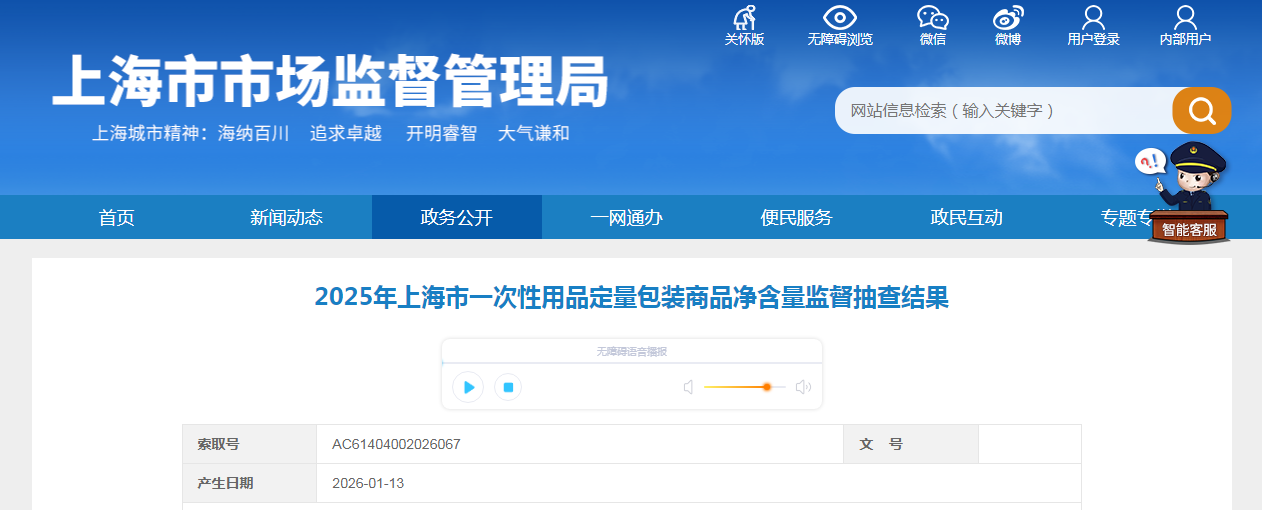
Core Viewpoint - The Shanghai Municipal Market Supervision Administration conducted a quality inspection of disposable products' net content in 2025, finding no non-compliant products among the 10 batches tested [1] Group 1: Inspection Overview - The inspection was based on the JJF 1070-2023 "Measurement Inspection Rules for Net Content of Quantitative Packaged Goods" and included checks on net content labeling and actual net content [1] - All sampled products met the relevant standards, indicating compliance in the market for disposable goods [1] Group 2: Sampled Products - The inspection included various products such as: - "Heart to Heart" facial tissues, 150 sheets per pack, produced by Hunan Hengan Paper Industry Co., Ltd. [1] - "Purple Ding" disposable gloves, 40 pieces, produced by Sichuan Hongchang Plastic Industry Co., Ltd. [1] - "Sofy" ultra-sleeping pants, 5 pieces, produced by Unicharm Life Products (China) Co., Ltd. [1] - "Pampers" adult diapers, 10 pieces, produced by Vinda Trading Co., Ltd. [1] - "Mingchuang" disposable dental floss sticks, 180 pieces per box, produced by Mingchuang (Guangzhou) Co., Ltd. [1]
早报 | 贾国龙回应西贝关闭102家门店;常熟官方回应姚振华举报;iPhone 18高配机型或迎来大幅涨价;特朗普暂缓对伊朗动武决定
虎嗅APP· 2026-01-16 00:22
大家早上好!这里是今天的早报,每天早上,我都会在这里跟你聊聊昨夜今晨发生了哪些大事儿。 昨夜今晨 【 特朗普:暂缓对伊朗动武决定 】 当地时间15日,美国白宫新闻秘书莱维特表示,特朗普及其团队正在密切关注伊朗局势,并保留所有选项。莱 维特称,特朗普与以色列总理内塔尼亚胡进行了通话,但她不会在未经总统本人明确批准的情况下透露二者谈 话细节。 同日,央视记者获悉,特朗普暂缓决定是否对伊朗发动军事打击。多名美国、以色列及阿拉伯国家消息人士 称,军事选项仍在桌面上,但不确定性明显上升。 顾问团队向特朗普表示,若实施大规模打击,美国需要在中东地区部署更多军事力量,不仅用于发动攻击,还 要在伊朗可能报复的情况下,保护驻中东美军以及包括以色列在内的盟友。 【OpenAI发力机器人与AI设备,被爆寻找美国供应商】 据美东时间15日周四的报道,OpenAI正寻找美国本土的硬件供应商,为其计划中的消费设备、机器人和云数 据中心扩张寻找合作伙伴。公司已向在美制造的硬件厂商发出提案请求(RFP),涵盖芯片、电机、包装材料 及数据中心冷却设备等组件。 此举正值OpenAI加速进军硬件领域之际。2025年5月,OpenAI宣布收购"iP ...

中国消费板块 2026 展望:消费信心复苏是否已开启?-China Consumer Sector_ 2026 Outlook_ are we at the beginning of consumer confidence recovery_
2026-01-15 06:33
Summary of the Conference Call Transcript Industry Overview - **Industry**: China Consumer Sector - **Outlook**: The sector is believed to be in the early stage of a multi-year recovery cycle that began in Q3 2024, with expectations for gradual improvement in consumer sentiment and spending through 2026E [2][11][12] Key Insights - **Valuation**: MSCI China Consumer Discretionary and Staples are trading at 17x and 15x 12-month forward PE, approximately one standard deviation below the 10-year averages, indicating that current valuations do not reflect a potential consumption recovery [2][9] - **Consumer Confidence**: The China Consumer Confidence Index has been trending upwards since September 2024, suggesting a gradual restoration of consumer confidence despite ongoing challenges in the property market [12][19] - **K-shaped Recovery**: The recovery is characterized by a K-shaped trend, where mid- to high-income consumers in tier-1 cities are expected to lead spending, while lower-tier city consumers remain focused on value for money [3][48] Consumer Behavior Trends - **Shifting Preferences**: A UBS Evidence Lab survey indicates a divergence in consumer behavior, with over 50% of mid- to high-income consumers reporting investment gains and showing strong spending intentions, particularly in premium and experiential categories [3][37] - **Spending Intentions**: The strongest spending intentions are noted in beauty and skincare (41%) and tourism (37%), reflecting a shift towards experiential and premium spending [51] - **Investment Gains**: 64-74% of mid- to high-income consumers reported increased investment returns, with many planning to reinvest or spend on travel, health services, and consumer electronics [40][41] Stock Implications - **Company Ratings**: - Upgrades to Neutral for Fenjiu due to expected benefits from non-business baijiu consumption - Buy ratings maintained for companies like MIXUE, Guming, China Foods, CR Beer, and YUM China, among others [4] - **Dividend Payouts**: Premium baijiu companies are noted for their >75% dividend payout, which is expected to protect share prices from downside risks [4] Structural Growth Opportunities - **Emerging Themes**: Key investment themes for 2026E include changing consumer preferences, corporate restructuring, and industry consolidation, particularly in sectors like home appliances and mass-market consumption [14][50] - **Corporate Restructuring**: Companies are expected to adapt their business models to align with changing consumer behaviors, which may lead to sustainable long-term earnings growth [4][50] Risks and Challenges - **Property Market Downturn**: The ongoing downturn in the property market is anticipated to weigh on household balance sheets, potentially impacting consumer spending [13][48] - **Policy Support**: The pace of recovery is contingent on stabilizing the property market and effective policy implementation to boost consumption [13][48] Conclusion - The China consumer sector is poised for a recovery, driven by improving consumer confidence and shifting spending patterns. However, the recovery will be uneven across different income groups and city tiers, necessitating a nuanced investment approach to capture emerging opportunities while being mindful of potential risks associated with the property market downturn.




北京首个年轻力主题庙会春节期间推出
Zhong Guo Xin Wen Wang· 2026-01-15 06:08
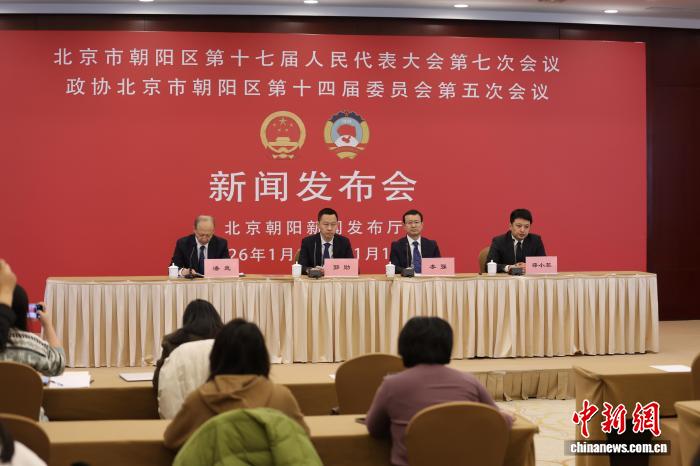
Core Viewpoint - The Chaoyang District of Beijing will launch its first youth-themed temple fair during the 2026 Spring Festival, focusing on cultural landmarks and incorporating panda elements through various activities [1][3]. Group 1: Event and Theme - The theme of the event is "潮朝阳·潮庙会" (Trendy Chaoyang·Trendy Temple Fair), targeting young people and featuring cultural landmarks such as the Chaowai UIC area, Dongyue Temple, and Ritan Park [1]. - The event will utilize thematic light displays and pop-up consumer experiences to engage the youth demographic [1]. Group 2: Urban Development and Cultural Projects - During the 14th Five-Year Plan, Chaoyang District has focused on urban renewal, creating several benchmark cultural and tourism landmarks, including the first immersive theme park, the largest esports venue in Beijing, and various innovative public spaces [3][4]. - The district has introduced over 50 flagship stores and brands in the Chaowai UIC area, establishing it as a vibrant center for youth culture and innovation [4]. Group 3: Future Plans and Activities - The district plans to continue upgrading four major areas, including the Olympic Center and the Liangma River cultural economic belt, with projects like the second phase of the Bubble Mart theme park and the development of waterfront commercial streets [4][5]. - A series of cultural and tourism events will be held, such as the Beijing Chaoyang International Light Consumption Season and the Beijing Chaoyang International Craft Beer Festival, to enhance the district's cultural offerings [6].