携程集团

Search documents
携程被立案调查背后,谁在博弈
Di Yi Cai Jing Zi Xun· 2026-01-17 10:37
Core Viewpoint - The online travel agency (OTA) industry is facing significant scrutiny as Ctrip Group is under investigation for alleged monopolistic practices, which may impact its operations and market dynamics [2] Group 1: Regulatory Actions - The State Administration for Market Regulation has initiated an investigation into Ctrip Group for suspected abuse of market dominance under the Anti-Monopoly Law of the People's Republic of China [2] - Ctrip has stated that its business operations are normal and that it will cooperate with regulatory authorities to ensure compliance [2] - Ctrip has faced multiple regulatory discussions since 2025, including issues related to "choose one from two" practices and price manipulation [2] Group 2: Financial Performance - In Q3 2025, Ctrip reported a net operating revenue of 18.3 billion RMB, a year-on-year increase of 16% and a quarter-on-quarter increase of 24% [3] - For the first three quarters of 2025, Ctrip's total revenue reached 47.011 billion RMB, with a net profit attributable to shareholders of 29.013 billion RMB [3] - The accommodation booking segment contributed over 40% of Ctrip's revenue [3] Group 3: Market Dynamics - The hotel industry in China has approximately 570,000 facilities and 19.27 million rooms, with a chain rate of 26.75% for hotels and 40.09% for rooms, indicating significant room for growth compared to developed countries [3] - The low chain rate suggests many hotels lack strong direct sales capabilities, relying heavily on large OTAs for room distribution, which strengthens the market position of major OTAs [3] Group 4: Pricing and Competition Issues - Some OTAs exert pressure on hotels regarding pricing, promotion, and platform rankings, leading to conflicts where hotels may have to subsidize lower prices while OTAs profit [4][5] - Smaller accommodation providers, such as guesthouses, face challenges without reliance on large OTAs, exacerbating the power imbalance between platforms and merchants [5] - The imbalance in revenue and commission structures has led to dissatisfaction among merchants, particularly in the hospitality sector [5] Group 5: Regulatory Framework - In December 2025, new regulations were issued to govern pricing behaviors on internet platforms, emphasizing that platform operators cannot force merchants to lower prices or impose unfair fees [6] - These regulations reflect a governmental effort to address conflicts between channels and merchants, ensuring fair practices in the OTA industry [6][7] Group 6: Future Considerations - The necessity of OTAs and e-commerce platforms is acknowledged, but there is a call for a balanced approach to commission structures to prevent merchant losses and market shrinkage [7] - The rise of live streaming and fragmented sales channels may divert consumers and merchants from traditional OTAs, prompting a need for these platforms to explore diversified business models [7]



携程被立案调查,背后OTA博弈该如何平衡
Di Yi Cai Jing· 2026-01-17 10:24
Core Viewpoint - The OTA (Online Travel Agency) industry is facing significant scrutiny due to long-standing imbalances between platform and merchant interests, highlighted by an investigation into Ctrip for alleged monopolistic practices [1][7]. Group 1: Regulatory Actions - The State Administration for Market Regulation has initiated an investigation into Ctrip for suspected abuse of market dominance under the Anti-Monopoly Law [1]. - Ctrip has stated that its operations are normal and that it will cooperate with regulatory authorities to foster a sustainable market environment [1]. - Since 2025, the OTA industry has faced multiple regulatory inquiries, including discussions about practices like "choose one from two," price manipulation, and other unfair practices [1][7]. Group 2: Financial Performance - Ctrip's revenue has remained robust, with a reported net operating income of 18.3 billion RMB in Q3 2025, marking a 16% year-over-year increase and a 24% quarter-over-quarter increase [2][8]. - For the first three quarters of 2025, Ctrip's total revenue reached 47.011 billion RMB, with a net profit attributable to shareholders of 29.013 billion RMB, where accommodation booking contributed over 40% of the revenue [2][8]. Group 3: Market Dynamics - The hotel industry in China has approximately 570,000 facilities and 19.27 million rooms, with a chain rate of 26.75% for hotel stores and 40.09% for rooms, indicating significant room for growth compared to over 70% in developed countries [2][8]. - The low chain rate suggests many hotels operate independently, lacking strong direct sales capabilities, which increases reliance on large OTAs for room distribution [2][8]. Group 4: Merchant-Platform Relations - Some OTAs exert pressure on hotels regarding pricing, promotion, and platform ranking, often requiring hotels to subsidize lower room rates, leading to profit erosion for hotels [3][9]. - Smaller accommodation providers, such as guesthouses and small restaurants, face challenges without the support of large OTAs, exacerbating the tension between merchants and platforms [3][9]. - The imbalance in revenue between OTAs and merchants has intensified post-pandemic, particularly affecting the hospitality sector [3][9]. Group 5: Regulatory Framework - In December 2025, new regulations were issued to govern pricing behavior on internet platforms, emphasizing that platform operators cannot force merchants to lower prices or impose unfair fees [4][10]. - These regulations reflect a governmental effort to address the conflicts between channels and merchants, aiming to create a more equitable environment [5][10]. Group 6: Future Considerations - The necessity of OTAs and e-commerce platforms is acknowledged, but there is a call for a balanced approach to commission structures to prevent merchant losses and market shrinkage [6][10]. - The rise of live streaming and fragmented sales channels is expected to diversify consumer options, prompting OTAs to explore varied business models for sustainable growth [6][10].
携程被立案调查,背后OTA博弈该如何平衡|乐言商业
Di Yi Cai Jing· 2026-01-17 10:18
Core Viewpoint - The OTA industry is facing significant scrutiny due to long-standing imbalances between platform and merchant interests, highlighted by an investigation into Ctrip for alleged monopolistic practices [1][2]. Group 1: Regulatory Actions - The State Administration for Market Regulation has initiated an investigation into Ctrip for suspected abuse of market dominance under the Anti-Monopoly Law of the People's Republic of China [1]. - Ctrip has previously faced multiple regulatory discussions since 2025, including being summoned by market regulators in Guizhou, Zhengzhou, and Yunnan for issues related to pricing and anti-competitive practices [1]. - In December 2025, new regulations were issued by the National Development and Reform Commission and other agencies, emphasizing that platform operators must not impose unfair pricing practices on merchants [4][5]. Group 2: Financial Performance - Ctrip reported a net operating revenue of 18.3 billion RMB in Q3 2025, marking a 16% year-on-year increase and a 24% quarter-on-quarter increase [2]. - For the first three quarters of 2025, Ctrip's total revenue reached 47.011 billion RMB, with a net profit attributable to shareholders of 29.013 billion RMB [2]. - The accommodation booking segment contributed over 40% of Ctrip's revenue, indicating its significance in the company's overall financial performance [2]. Group 3: Market Dynamics - The low chain rate in China's hotel industry, at 26.75% for stores and 40.09% for rooms, suggests significant room for growth compared to over 70% in developed countries, indicating a reliance on OTAs for distribution [2]. - Some OTAs exert pressure on hotels regarding pricing and promotions, leading to conflicts where hotels may have to subsidize lower prices while platforms profit [3]. - The imbalance between OTAs and smaller accommodation providers, particularly in the wake of the pandemic, has intensified tensions, especially in the vacation rental sector [3][6]. Group 4: Future Considerations - The emergence of new sales channels, such as live streaming and fragmented retail, is expected to divert some consumers and merchants away from traditional OTAs, prompting a need for these platforms to explore diversified business models [6]. - The necessity of OTAs in the digital age is acknowledged, but there is a call for fair commission structures to prevent merchant losses and ensure sustainable market growth [6].
反携程,到底反的什么?
商业洞察· 2026-01-17 09:22
Core Viewpoint - The article discusses the recent antitrust investigation against Ctrip, highlighting the shift from a reminder to serious action against monopolistic practices in the online travel industry. It emphasizes that antitrust measures aim to ensure fair competition and prevent platforms from exploiting their market dominance to the detriment of merchants and consumers [4][5][14]. Group 1: Antitrust Investigation - The State Administration for Market Regulation has initiated an investigation into Ctrip for alleged monopolistic practices, marking a significant escalation in regulatory scrutiny [4]. - Ctrip holds over 56% of the domestic online travel market and reported a daily net profit of 216 million yuan in Q3 2025, which exceeds the total net profit of the entire A-share tourism sector [5]. Group 2: Platform Dynamics - Platforms, initially designed to connect merchants and consumers, have increasingly become "harvesters," extracting commissions from merchants while inflating prices for consumers [7][10]. - The article notes that platforms like Ctrip have evolved from being helpful intermediaries to monopolistic entities that dictate terms to merchants, often leading to unsustainable business practices for those merchants [11][12]. Group 3: Revenue Models and Practices - Ctrip's commission structure includes three tiers: 10% for basic cooperation, 12% for gold cooperation with price guarantees, and 15% for exclusive partnerships, which can pressure merchants into unfavorable agreements [13]. - The investigation likely stems from practices such as "choose one from two," which restricts merchants' options and creates a coercive environment [13][14]. Group 4: Long-term Business Models - The article argues that a successful business model should focus on creating value for all participants rather than exploiting them, advocating for a shift back to a cooperative approach where platforms help merchants succeed [16][18]. - It emphasizes that sustainable business practices should prioritize long-term relationships and mutual benefits among platforms, merchants, and consumers [19][20]. Group 5: Regulatory Perspective - Effective antitrust measures should restore competition rather than impose blanket restrictions, allowing platforms to innovate while preventing exploitative practices [24][25]. - The article suggests that healthy competition will naturally regulate commission rates and service quality, benefiting both merchants and consumers [24]. Group 6: Conclusion - The article concludes that platforms must remember their original purpose of facilitating commerce rather than dominating it, advocating for a collaborative ecosystem where all parties can thrive [28][29].

反垄断调查:商家苦携程久矣
经济观察报· 2026-01-17 04:59
Core Viewpoint - Ctrip has faced increasing tensions with merchants despite its commission rates remaining unchanged for six years, leading to investigations into its market practices and potential antitrust violations [1][3]. Group 1: Commission Structure and Merchant Relations - Ctrip's commission costs for merchants have reached 30%-40%, with many merchants feeling they are working for the platform due to declining traffic and prices [2][3]. - The introduction of promotional tools like "Pyramid" and "Cloud Ladder" has increased the financial burden on merchants, with some reporting costs of several thousand yuan per month just for advertising [2][14]. - Merchants in Yunnan have reported that Ctrip's special label ("Te Pai") restricts their ability to sell on other platforms, leading to significant pushback against Ctrip's practices [5][8]. Group 2: Antitrust Investigations - Ctrip is under investigation by the National Market Supervision Administration for potential monopolistic behavior, which includes its hotel and flight booking services [3][18]. - The investigation may lead to penalties, including fines based on Ctrip's previous annual sales, which could be between 3%-4% of its revenue [19][21]. - The antitrust inquiry is expected to address whether Ctrip has abused its market dominance, particularly through practices that may harm competition [18][19]. Group 3: Market Dynamics and Competition - Ctrip's market share in the hotel and travel sector is projected to reach 56% by the end of 2024, significantly outpacing competitors like Meituan and Fliggy [18]. - The competitive landscape has intensified, with merchants reporting that the effectiveness of advertising has diminished as competition increases, leading to higher costs without guaranteed returns [13][14]. - The overall market for tourism in China is experiencing "involution," where excessive competition is driving down profitability for many operators [20]. Group 4: Future Outlook - Ctrip is focusing on international expansion to seek new growth opportunities, particularly in attracting foreign tourists to China [20][21]. - The company has committed to cooperating with regulatory investigations and aims to maintain its service quality for users and partners [21].

美股芯片股强势,电力股暴跌
第一财经· 2026-01-17 00:53
Market Overview - The three major U.S. stock indices closed lower, with the Dow Jones down 83.11 points (0.17%) at 49,359.33, the Nasdaq down 0.06% at 23,515.39, and the S&P 500 down 0.06% at 6,940.01 [3] - For the week, the Dow fell 0.29%, the Nasdaq dropped 0.66%, and the S&P 500 decreased by 0.38% [4] - The upcoming earnings season will see major companies like Netflix, Johnson & Johnson, and Intel reporting their results [4] Sector Performance - Chip stocks showed strong performance, with Broadcom up 2.5%, AMD up 1.7%, and TSMC up 0.2% [6] - Bank stocks stabilized, with JPMorgan up 1.0%, Bank of America up 0.7%, and Citigroup up 0.5%, despite concerns over credit card interest rate caps proposed by Trump [6] - The Nasdaq Golden Dragon China Index fell 1.1%, with notable movements including NetEase up 1.4% and Alibaba down 3.2% [6] Economic Indicators - U.S. industrial production increased by 0.4% month-over-month in December, matching the revised growth from November and exceeding market expectations [8] - The National Association of Home Builders reported a surprising decline in builder confidence for January, dropping 2 points to 37, the first decrease since August [8] - Fed Vice Chair Michelle Bowman indicated that the Fed should be ready to adjust monetary policy if labor market conditions do not show clear improvement [8] Treasury Yields - The 10-year Treasury yield rose by 7.1 basis points to 4.23%, marking the largest increase since November [9] - The 2-year Treasury yield increased by 3.5 basis points to 3.60% [9] - Concerns about the independence of the Federal Reserve were raised, suggesting that political motivations may influence future leadership decisions [9] Commodity Market - International oil prices saw a slight increase, with WTI crude up 0.42% at $59.44 per barrel and Brent crude up 0.58% at $64.13 per barrel [10] - Precious metals experienced a decline, with COMEX gold futures down 0.82% at $4,588.10 per ounce and silver futures down 4.12% at $88.09 per ounce [10]

芯片股强势电力股暴跌,金属抛售再起白银伦锡跌逾4%,金龙指数回落超1%
第一财经网· 2026-01-17 00:25
Market Overview - The U.S. stock market recorded a weekly decline, with the Dow Jones falling by 0.29%, the Nasdaq down by 0.66%, and the S&P 500 decreasing by 0.38% [4] - The market experienced volatility as investors assessed President Trump's comments regarding the Federal Reserve and geopolitical issues [3] - The upcoming earnings season is expected to peak next week, with major companies like Netflix, Johnson & Johnson, and Intel set to report [4] Sector Performance - Chip stocks showed strong performance, with Broadcom rising by 2.5% and AMD increasing by 1.7% [6] - Bank stocks stabilized, with JPMorgan up by 1.0% and Bank of America by 0.7%, despite concerns over credit card interest rate caps raised by Trump [6] - The energy sector faced pressure, particularly electric utility companies, due to Trump's push for tech firms to bear costs for new power plants, leading to a 10% drop in Constellation Energy's stock [6] Economic Indicators - U.S. industrial production increased by 0.4% month-over-month in December, supported by a rebound in the utilities sector, aligning with market expectations [7] - The National Association of Home Builders reported a surprising decline in builder confidence for January, dropping 2 points to 37, attributed to affordability issues and rising construction costs [7] - Federal Reserve Vice Chair Michelle Bowman indicated readiness to adjust monetary policy if labor market conditions do not show clear improvement [7] Treasury Yield Movement - The 10-year Treasury yield rose by over 7 basis points, reaching 4.20%, following Trump's comments about the potential nomination for the next Federal Reserve chair [2][8] - The 2-year Treasury yield also increased by 3.5 basis points to 3.60%, reflecting market concerns over the Fed's independence and political influences [8]
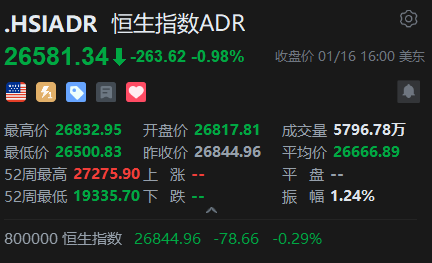
智通ADR统计 | 1月17日
智通财经网· 2026-01-16 23:57
Group 1 - Major blue-chip stocks mostly declined, with HSBC Holdings closing at HKD 128.695, up 0.15% from the previous close in Hong Kong; Tencent Holdings closed at HKD 612.833, down 0.76% [2] - Tencent Holdings reported a latest price of HKD 617.500, with a decrease of HKD 4.500 or 0.72%; its ADR price is HKD 612.833, reflecting a decline of HKD 4.667 [3] - HSBC Holdings had a latest price of HKD 128.500, increasing by HKD 0.300 or 0.23%; its ADR price is HKD 128.695, showing a slight increase of HKD 0.195 [3] Group 2 - Other notable stocks include China Construction Bank at HKD 7.830, down 0.25%, and Xiaomi Group at HKD 37.100, down 2.01% [3] - AIA Group saw a decline of HKD 1.300 or 1.53%, closing at HKD 83.550; its ADR price is HKD 83.075, down HKD 0.475 [3] - Meituan-W closed at HKD 100.000, down 0.79%, while JD.com saw a decrease of HKD 1.500 or 1.30%, closing at HKD 113.600 [3]





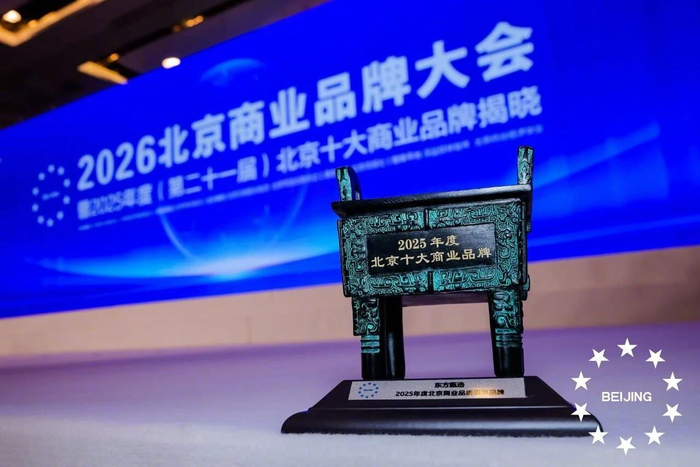
创新、跨界、融合,2025年度北京十大商业品牌揭晓
Bei Jing Shang Bao· 2026-01-16 15:00
Core Insights - The 2026 Beijing Commercial Brand Conference and the announcement of the "2025 Top Ten Commercial Brands in Beijing" took place, focusing on the theme of "New Demand, New Supply" [2] - The event highlighted the importance of quality, taste, and branding in the development of Beijing's commercial landscape, emphasizing that successful brands must maintain quality and innovate to stand out in a competitive market [4][6] - The conference underscored the shift in consumer focus from production capacity to understanding market needs and stimulating demand, creating new opportunities for brands [6][8] Group 1: Brand Recognition - The "2025 Top Ten Commercial Brands in Beijing" includes notable brands such as Beijing Daoxiangcun, Beijing Huatian, and JD.com, representing the highest level of commercial development in the city [13][14] - These brands span various sectors, including shopping centers, dining, e-commerce, and traditional brands, showcasing their role as leaders in driving sustainable commercial growth in Beijing [14] Group 2: Subcategories and Special Awards - In addition to the main list, four subcategories were established: "Beijing Commercial Quality Service Brands," "Beijing Commercial Model Innovation Brands," "Beijing Commercial Craftsmanship Brands," and "Beijing Commercial New Star Brands" [16] - The "Beijing Commercial Quality Service Brands" list includes brands like 58 Tongcheng and Haidilao, recognized for their exceptional service quality [19] - The "Beijing Commercial Model Innovation Brands" features brands such as Sam's Club and Xibei, which are noted for their innovative business models that enhance industry quality [23] Group 3: Industry Trends and Insights - The conference highlighted the importance of expanding domestic demand as a key driver for economic growth, with consumer spending contributing 53.5% to economic growth in the first three quarters of 2025, an increase of 9% from the previous year [8] - The role of commercial brands in urban development was emphasized, with brand innovation being a new benchmark for market vitality [10] - The establishment of the Fashion and Trendy Toy Professional Committee aims to promote the trendy toy industry and enhance consumer engagement in cultural consumption [51][53] Group 4: Cross-Industry Collaboration - The launch of the Beijing Cultural, Commercial, Tourism, and Sports Cross-Industry Cooperation Information Release Platform aims to facilitate collaboration across various sectors, enhancing resource sharing and market innovation [57] - The platform will support efficient project releases and cooperation, contributing to the overall enhancement of consumption levels and industrial innovation in the capital [57]




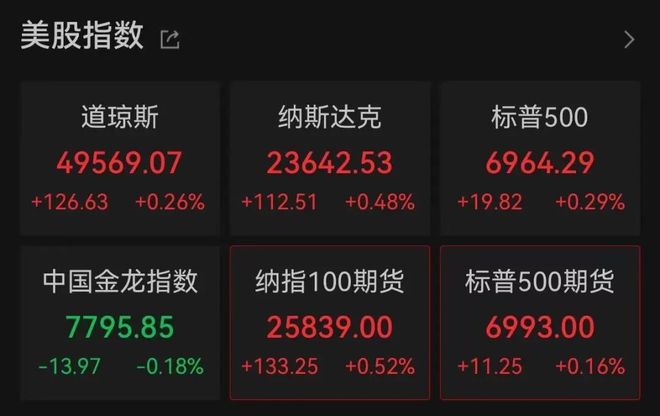
美股大型科技股集体上涨
Di Yi Cai Jing Zi Xun· 2026-01-16 14:56
| 美股指数 △ | | | | --- | --- | --- | | 道琼斯 | 纳斯达克 | 标普500 | | 49569.07 | 23642.53 | 6964.29 | | +126.63 +0.26% | +112.51 +0.48% | +19.82 +0.29% | | 中国金龙指数 | 纳指100期货 | 标普500期货 | | 7795.85 | 25839.00 | 6993.00 | | -13.97 -0.18% | +133.25 +0.52% | +11.25 +0.16% | 大型科技股普涨,美光科技涨超7%,闪迪涨近4%,超威半导体、台积电涨逾2%,英伟达、特斯拉、谷 歌、英特尔均走高。 | 名称 | 现价 | 涨跌幅 | | --- | --- | --- | | 英伟达(NVIDIA) | 190.150 | 1.66% | | NVDA.O | | | | 闪迪 | 424.500 | 3.73% | | SNDK.O | | | | 美光科技(MICRON T | 360.246 | 7.02% | | MU.O | | | | 台积电 | 349.388 | 2 ...