中芯国际

Search documents
港股三大指数蛇年收涨
Sou Hu Cai Jing· 2026-02-16 05:45
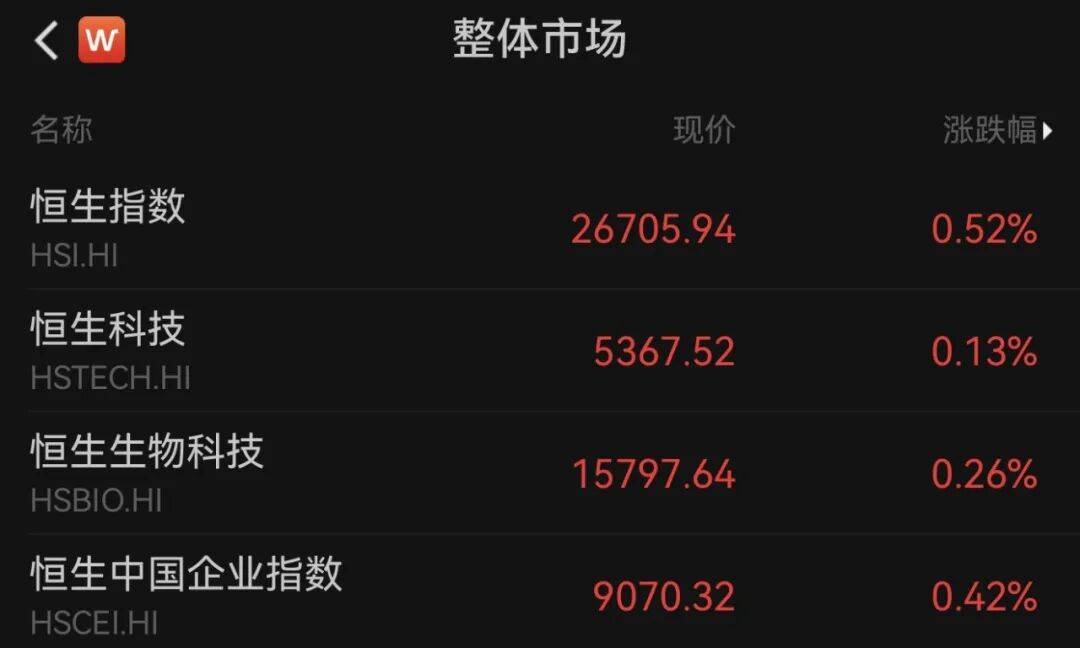
Market Performance - The Hong Kong stock market closed positively on the last trading day of the Year of the Snake, with all three major indices rising: Hang Seng Index up 0.52%, Hang Seng China Enterprises Index up 0.42%, and Hang Seng Tech Index up 0.13% [1][2] - The Hang Seng Composite Industry Index saw all 12 sectors increase, with the materials, energy, and industrial sectors leading the gains at 3.96%, 2.21%, and 0.94% respectively [2][3] Yearly Performance - For the Year of the Snake (January 29, 2025, to February 16, 2026), the Hang Seng Index increased by 32.04%, the Hang Seng China Enterprises Index by 22.87%, and the Hang Seng Tech Index by 13.63% [3][4] - The top three performing stocks during this period were Junyu Foundation, Base Champion Group, and Jingxi International, with significant percentage increases [4] Sector Performance - Among the 31 primary industries, all sectors experienced growth, with 24 sectors rising over 30%, 10 sectors over 50%, and 2 sectors over 100%. The top three performing sectors were non-ferrous metals (189.59%), defense and military (103.90%), and machinery equipment (74.18%) [4][5] - The artificial intelligence, non-ferrous metals, and innovative pharmaceuticals sectors led the market, with major stocks like Huahong Semiconductor rising by 337.20%, China Life by 143.70%, and SMIC by 83.95% [5][6] Market Outlook - Analysts suggest that the Hong Kong market's performance exceeded global investor expectations, driven by factors such as the Federal Reserve's interest rate cuts, technology sector revaluation, and significant inflows of southbound and foreign capital [6] - Looking ahead, analysts predict a positive market trend post-Spring Festival, with a focus on sectors like consumption, precious metals, energy, and technology [6]

除夕,金价跳水!港股全线上涨,腾讯、百度、网易等齐涨!黄金股爆发,半导体板块拉升丨港股收盘
Mei Ri Jing Ji Xin Wen· 2026-02-16 05:04
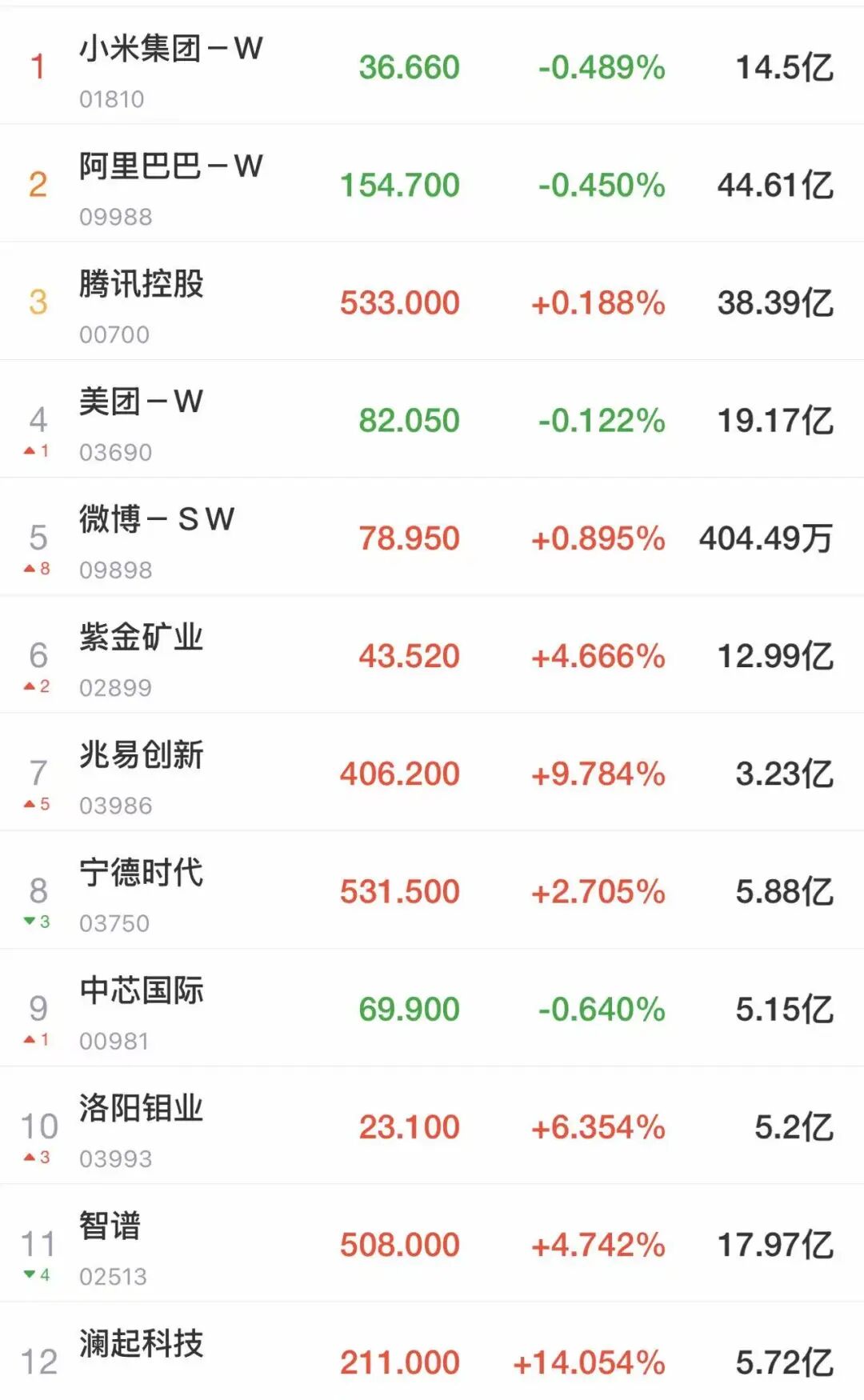
Market Performance - On February 16, the Hong Kong stock market saw all three major indices rise, with the Hang Seng Index increasing by 0.523% to close at 26,705.939 points, the Hang Seng Tech Index rising by 0.132%, and the National Enterprises Index up by 0.416% [1] Sector Performance - Technology stocks showed mixed results, with Tencent, Baidu, and NetEase experiencing gains, while Alibaba, Meituan, and JD.com saw slight declines [1] - AI application stocks performed well, with MINIMAX-WP surging by 24% and Zhiyun rising by 4% [1] - Gold stocks saw significant increases, with Laopu Gold rising over 6%, and Zijin Mining and Lingbao Gold both up by more than 4% [1] - The semiconductor sector strengthened, with Lanke Technology increasing by over 14% and Zhaoyi Innovation rising by over 9% [1] Stock Specifics - Xiaomi Group's stock decreased by 0.489% to 36.660, with a trading volume of 1.45 billion [2] - Alibaba's stock fell by 0.450% to 154.700, with a trading volume of 4.461 billion [2] - Tencent Holdings saw a slight increase of 0.188% to 533.000, with a trading volume of 3.839 billion [2] - Meituan's stock decreased by 0.122% to 82.050, with a trading volume of 1.917 billion [2] - Zijin Mining's stock rose by 4.666% to 43.520, with a trading volume of 1.299 billion [2] - Zhaoyi Innovation's stock increased by 9.784% to 406.200, with a trading volume of 323 million [2] Market Outlook - According to China Merchants Securities, the recent significant decline in the Hang Seng Tech Index presents substantial allocation value. The firm suggests that the current market volatility is primarily due to liquidity shocks and that favorable factors are accumulating, recommending buying on dips and holding stocks through the holiday [3]



港股开盘,恒指走弱,科网股普跌
Di Yi Cai Jing Zi Xun· 2026-02-16 02:21
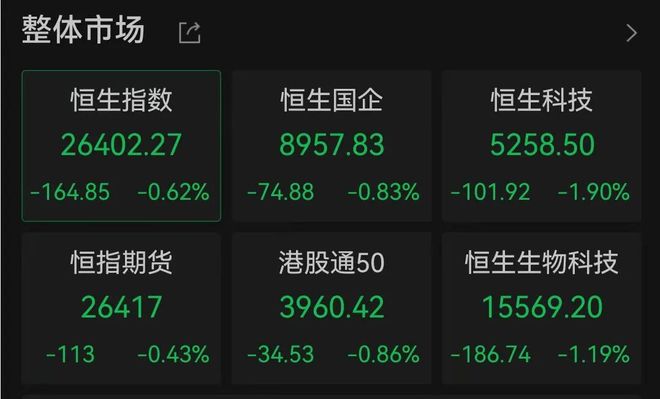
Market Overview - The Hang Seng Index opened lower by 0.25% and later expanded its decline to nearly 1% [1] - The Hang Seng Technology Index initially fell by 0.19% and then increased its drop to nearly 2% [1] - The Hang Seng Index closed at 26,402.27, down 164.85 points or 0.62% [2] - The Hang Seng Technology Index closed at 5,258.50, down 101.92 points or 1.90% [2] Stock Performance - Alibaba (9988.HK) decreased by 3.02% to a price of 150.700 [3] - Tencent Holdings (0700.HK) fell by 0.45% to 529.620 [3] - Meituan (3690.HK) dropped by 3.16% to 79.550 [3] - Xiaomi Group (1810.HK) saw a decline of 3.47% to 35.560 [3] - Zijin Mining (2899.HK) increased by 3.37% to 42.980 [3] - Pop Mart (9992.HK) rose by 2.02% to 252.400 [3] - MINIMAX-WP (0100.HK) surged by 6.47% to 724.000 [3] - Semiconductor Manufacturing International Corporation (0981.HK) decreased by 1.56% to 69.250 [3] Sector Performance - AI application stocks in the Hong Kong market showed strength, with Haizhi Technology Group rising by 23.65% and MINIMAX-WP increasing by 6.47% [4] - The non-ferrous metals sector also performed well, with Lingbao Gold rising over 7% and Luoyang Molybdenum increasing over 5% [4]
港股开盘,恒指走弱,科网股普跌
第一财经· 2026-02-16 02:14
港股科网股普跌, 阿里巴巴、 小米集团、美团 跌超3% 。宁德时代涨超2.8%。 港股AI应用股走强。 海致科技集团涨23.65%、阜博集团涨4.11%、MINIMAX-WP涨6.47%。 2月16日,港股开盘, 恒指低开0.25%,此后 ,跌幅扩大至近1%。 恒生科技指数跌0.19%,此后跌幅扩大至近2%。 | 登体市场 [4 | | | | --- | --- | --- | | 恒生指数 | | 恒生国企 恒生科技 | | 26402.27 | | 8957.83 5258.50 | | -164.85 -0.62% | | -74.88 -0.83% -101.92 -1.90% | | 恒指期货 | | 恒生生物科技 港股通50 | | 26417 | | 3960.42 15569.20 | | -113 | -0.43% | -34.53 -0.86% -186.74 -1.19% | | 名称 | 现价 | 涨跌幅 | | --- | --- | --- | | 阿里巴巴-W | 150.700 | -3.02% | | 9988.HK | | | | 腾讯控股 | 529.620 | -0. ...
矽电股份股价大涨超10% 半导体设备板块迎行业反弹
Jing Ji Guan Cha Wang· 2026-02-16 01:32
Group 1: Stock Performance - The semiconductor industry is experiencing a strong rebound, with the equipment sector performing notably well, leading to a more than 10% increase in the stock price of Silicondale (stock code: 001309) [1] - This price surge is driven by multiple factors, including capital operations and merger activities from leading companies in the industry, such as SMIC and Huahong [1] Group 2: Industry Status - The semiconductor industry is witnessing active mergers and acquisitions, with companies like Zhongwei and Huahong announcing acquisition plans to strengthen their supply chain [2] - This trend of vertical integration is expected to enhance the synergy within the supply chain, indirectly impacting Silicondale as a semiconductor equipment supplier [2] Group 3: Industry Policy - The semiconductor equipment market maintains a high level of prosperity, with the global semiconductor industry entering a recovery phase, reinforcing the logic of domestic substitution [3] - The National Integrated Circuit Industry Investment Fund's (Big Fund) increased stake in SMIC demonstrates ongoing governmental support for the supply chain, providing a favorable macro environment for the equipment sector [3] Group 4: Future Development - The World Semiconductor Trade Statistics (WSTS) predicts significant growth in the global semiconductor market by 2026 [4] - The demand for computing power driven by emerging applications such as artificial intelligence and the Internet of Things, along with the expansion of advanced process capacity, are key factors for the long-term growth of semiconductor equipment demand [4]
智通港股通资金流向统计(T+2)|2月16日
智通财经网· 2026-02-15 23:33
Key Points - Tencent Holdings (00700), Yingfu Fund (02800), and Shandong Gold (01787) ranked the top three in net inflow of southbound funds, with net inflows of 736 million, 423 million, and 393 million respectively [1] - Alibaba-W (09988), SMIC (00981), and Hua Hong Semiconductor (01347) ranked the top three in net outflow of southbound funds, with net outflows of -524 million, -391 million, and -199 million respectively [1] - In terms of net inflow ratio, China Overseas Macro Holdings (00081), Xinhua Wencuan (00811), and China Oriental Education (00667) led the market with ratios of 55.30%, 50.59%, and 49.55% respectively [1] - Conversely, Zhengzhou Bank (06196), China Energy Construction (03996), and Hongye Futures (03678) had the highest net outflow ratios at -50.51%, -49.70%, and -48.03% respectively [1] Top 10 Net Inflow Stocks - Tencent Holdings (00700) had a net inflow of 736 million, representing a 5.67% increase, with a closing price of 548.000 [2] - Yingfu Fund (02800) saw a net inflow of 423 million, with a 5.13% increase, closing at 27.480 [2] - Shandong Gold (01787) experienced a net inflow of 393 million, with a significant 31.27% increase, closing at 40.180 [2] - Bilibili-W (09626) had a net inflow of 335 million, with a 27.53% increase, closing at 252.800 [2] - China National Offshore Oil (00883) had a net inflow of 301 million, with a 22.88% increase, closing at 24.800 [2] Top 10 Net Outflow Stocks - Alibaba-W (09988) faced a net outflow of -524 million, with a -6.30% decrease, closing at 160.100 [2] - SMIC (00981) had a net outflow of -391 million, with a -6.39% decrease, closing at 70.000 [2] - Hua Hong Semiconductor (01347) saw a net outflow of -199 million, with a -15.56% decrease, closing at 99.600 [2] - Changfei Optical Fiber (06869) experienced a net outflow of -172 million, with a -5.33% decrease, closing at 107.500 [2] - Minmetals Resources (01208) had a net outflow of -168 million, with a -32.19% decrease, closing at 10.160 [2] Top 10 Net Inflow Ratios - China Overseas Macro Holdings (00081) led with a net inflow ratio of 55.30%, with a net inflow of 8.1564 million, closing at 2.650 [3] - Xinhua Wencuan (00811) followed with a net inflow ratio of 50.59%, with a net inflow of 5.2208 million, closing at 11.080 [3] - China Oriental Education (00667) had a net inflow ratio of 49.55%, with a net inflow of 15.9379 million, closing at 6.100 [4] Top 10 Net Outflow Ratios - Zhengzhou Bank (06196) had the highest net outflow ratio at -50.51%, with a net outflow of -3.1282 million, closing at 1.150 [4] - China Energy Construction (03996) followed with a net outflow ratio of -49.70%, with a net outflow of -16.9578 million, closing at 1.180 [4] - Hongye Futures (03678) had a net outflow ratio of -48.03%, with a net outflow of -5.2165 million, closing at 3.220 [4]

后怕!幸好当年没听许小年的建议,否则中国可能倒退整整20年
Sou Hu Cai Jing· 2026-02-15 19:43
Group 1 - The article discusses the potential consequences if China had followed the advice of economist Xu Xiaonian, who advocated for minimal government intervention and reliance on market forces [3][17][21] - It highlights the success of China's high-speed rail system, which has expanded to over 45,000 kilometers, transforming logistics and economic geography despite initial financial losses [6][14][22] - The article emphasizes the importance of self-reliance in the semiconductor industry, arguing that without early investments in domestic chip development, China would have faced severe economic repercussions during U.S. sanctions [10][11][21] Group 2 - The narrative includes the evolution of the electric vehicle industry in China, showcasing how government subsidies were crucial for the growth of companies like BYD, which might not have survived without them [13][14][22] - It critiques the reliance on Western economic theories, suggesting that they do not account for the unique challenges faced by developing nations, as illustrated by the experiences of South American countries [17][18][21] - The article concludes that China's strategic decisions, which diverged from purely market-driven approaches, have led to significant advancements in various industries, including high-speed rail, semiconductors, and electric vehicles [19][23][24]

新股消息 | 哥瑞利递表港交所 在国内泛半导体智能制造软件解决方案提供商中排名首位
智通财经网· 2026-02-15 13:35
Company Overview - The company, Shanghai Goraili Software Co., Ltd., is a leading provider of intelligent manufacturing software solutions tailored for the semiconductor industry, focusing on advanced manufacturing [3][4] - Since its establishment in 2007, the company has strategically concentrated on the semiconductor sector, utilizing AI, big data, and automation technologies to develop comprehensive intelligent manufacturing software solutions [3][4] - According to Frost & Sullivan, the company ranks first among domestic providers of semiconductor intelligent manufacturing software solutions in China by revenue in 2024 [3][6] Product and Market Position - The company has successfully delivered a fully automated intelligent manufacturing software solution for 12-inch wafer manufacturing, becoming one of the first domestic suppliers to achieve this milestone [4] - The company has established partnerships with over 290 clients in the semiconductor industry, including major players like SMIC and Tianma Microelectronics, enhancing its competitive edge [6] - The company offers end-to-end solutions covering all aspects of the semiconductor value chain, from materials to downstream applications [6] Financial Performance - The company's revenue for the fiscal years ending April 30 is projected as follows: approximately RMB 111 million in 2022, RMB 165 million in 2023, RMB 249 million in 2024, and RMB 81 million in the first four months of 2025 [7] - The company reported losses of approximately RMB 86.88 million in 2022, RMB 127.19 million in 2023, RMB 103.12 million in 2024, and RMB 43.34 million in the first four months of 2025 [8] - The gross profit margins for the same periods were 16.9% in 2022, 3.4% in 2023, 13.2% in 2024, and 6.1% in the first four months of 2025 [9] Industry Outlook - The Chinese semiconductor intelligent manufacturing software solutions market is expected to grow significantly, with the total market size projected to increase from RMB 1.1 billion in 2020 to RMB 6.6 billion by 2029, reflecting a compound annual growth rate (CAGR) of 25.4% from 2024 to 2029 [11] - The semiconductor segment is anticipated to lead this growth, with an expected increase from RMB 800 million in 2020 to RMB 5.2 billion by 2029, representing a CAGR of 26.2% from 2024 to 2029 [11] - The overall market for semiconductor intelligent manufacturing software solutions is on an upward trajectory, with a projected growth from RMB 800 million in 2020 to RMB 1.6 billion by 2024, and further expansion expected from 2024 to 2029 [13]
3万亿美元豪赌AI!中芯国际CEO泼冷水:世界根本没想清楚建那么多数据中心干什么
Sou Hu Cai Jing· 2026-02-15 12:35
Core Viewpoint - The blind expansion of AI data centers may lead to a significant bubble in the AI era, as warned by Zhao Haijun, co-CEO of SMIC [1] Group 1: Investment Trends - Major tech companies are projected to spend a staggering $660 billion on capital expenditures in 2026 alone, with a total global AI-related infrastructure spending potentially exceeding $3 trillion over the next five years [4] - Chinese internet giants are also increasing their investments, with Alibaba raising its budget for AI infrastructure and cloud computing from 380 billion yuan to 480 billion yuan, and ByteDance expected to spend 160 billion yuan in 2026 [4] Group 2: Concerns Over Utilization - Zhao Haijun highlighted the absurdity of companies rushing to build data centers equivalent to ten years of usage within just two years, without a clear understanding of their actual utility [6] - Historical parallels were drawn to the late 1990s internet bubble, where telecom companies over-invested in fiber optics, resulting in underutilization and financial losses [6] Group 3: Technological Risks - Data centers are not ordinary real estate; the chips within them have a limited lifespan, with Meta's AI chips lasting about 5.5 years, and some investors suggesting an effective lifespan of only 2 to 3 years due to rapid technological advancements [8] - If demand falls short, the resulting waste could be irreparable, leading to significant financial losses [8] Group 4: Market Reactions - Despite announcing massive capital expenditure plans, the combined market value of the four tech giants dropped by $950 billion, indicating investor skepticism about the return on such investments [10] - The market is shifting from a focus on "technological imagination" to "commercial realization," reflecting a critical reassessment of AI valuations [10] Group 5: Strategic Recommendations - Zhao Haijun's warnings emphasize the need for rational planning in AI infrastructure to avoid repeating the mistakes of the internet bubble, advocating for alignment with future demand rather than blind over-investment [12] - For Chinese companies, the focus should shift from merely competing in computational scale to creating value in local scenarios, ensuring that data centers serve practical purposes rather than being underutilized assets [14]

未来已来 抢抓时代机遇!2026未来产业新材料博览会(6月10-12日 上海)
DT新材料· 2026-02-15 07:20
Core Viewpoint - The 2026 Future Industries New Materials Expo (FINE 2026) aims to lead global innovation in new materials, emphasizing their critical role in the transformation of high-tech industries and future economic development [1][2]. Group 1: Event Overview - FINE 2026 will take place from June 10 to June 12, 2026, at the Shanghai New International Expo Center, featuring a total exhibition area of 50,000 square meters and over 300 strategic and cutting-edge technology reports [2][18]. - The expo will focus on popular innovations applicable to various industries, including artificial intelligence, aerospace, smart vehicles, and renewable energy, while addressing five common needs in future industries: advanced semiconductors, advanced batteries, lightweight functionalization, low-carbon sustainability, and thermal management [2][10]. Group 2: Historical Context and Participation - The previous events, including the 2025 International Carbon Materials Expo and the 2025 Thermal Management Expo, achieved record attendance with over 35,000 professional visitors from 27 countries and regions, showcasing more than 500 exhibitors [7][36]. - The expected participation for FINE 2026 is over 100,000 professional visitors, with targeted invitations to over 5,000 industry investors to facilitate connections between startups and industry resources [35][37]. Group 3: Thematic Focus and Special Features - FINE 2026 will feature seven specialized thematic exhibition areas, including advanced semiconductors, AI chips, thermal management, and sustainable materials, aiming to present a comprehensive chain of innovation from components to cutting-edge technologies [13][15]. - The event will host over 30 forums with more than 300 renowned experts discussing trends in technology, investment strategies, and advanced manufacturing techniques related to new materials [22][24]. Group 4: Strategic Importance - The expo is positioned as a critical platform for technology transfer and industry innovation, leveraging China's growing influence in sectors like new energy vehicles, photovoltaics, and robotics, which are expected to create significant market opportunities for new materials [10][36]. - The timing of the event in June is seen as a strategic opportunity to capture business prospects for the second half of the year, supported by Shanghai's robust industrial and technological ecosystem [10][36].