海信视像

Search documents
环球直击美国CES展:更少和更强大的中国企业正在重新定义AI竞争的规则
Huan Qiu Wang Zi Xun· 2026-01-10 05:33
Core Insights - The CES 2026 showcased AI as the central theme, emphasizing human-centric applications and the integration of AI into various sectors [1][3][6] - The competition in the chip industry was highlighted, with major players like NVIDIA, AMD, Intel, and Qualcomm presenting their advancements in AI infrastructure [3][9] - The exhibition marked a shift from hardware-centric displays to a focus on ecosystem definition and strategic collaboration among companies [4][16] AI and Robotics - CES 2026 introduced a dedicated area for AI and quantum innovation, showcasing practical applications of embodied intelligence and advancements in autonomous driving [3][4] - The event demonstrated a transition from conceptual robot designs to practical solutions addressing real-world challenges in home services and industrial logistics [3][11] - Chinese companies showcased significant advancements in robotics, with a focus on self-developed core components and solutions for logistics and manufacturing [11][13] Chinese Companies' Participation - The number of Chinese exhibitors in the core professional pavilion decreased to 207 from 1,475 in 2025, indicating a structural adjustment in participation [4][5] - The remaining Chinese companies at CES were required to demonstrate AI-related functionalities, reflecting a shift towards more innovative and integrated product offerings [5][6] - Major Chinese firms like Lenovo showcased their global influence by hosting large-scale events, indicating a strategic focus on ecosystem development [6][16] Competitive Landscape - The competition is evolving from hardware specifications to a comprehensive narrative that includes both foundational technology and application capabilities [7][16] - The contrasting approaches of Chinese and American tech companies in building AI ecosystems highlight differences in strategic thinking and resource allocation [8][15] - Chinese automotive companies emphasize full-stack self-research and vertical integration, while Western firms focus on open software ecosystems and long-term evolution [15][16] Future Implications - The CES 2026 signals a shift in global tech competition towards defining future technology ecosystems and industry standards [16][17] - Companies that can navigate the complexities of AI and contribute to ecosystem building are likely to remain at the forefront of technological advancement [17]




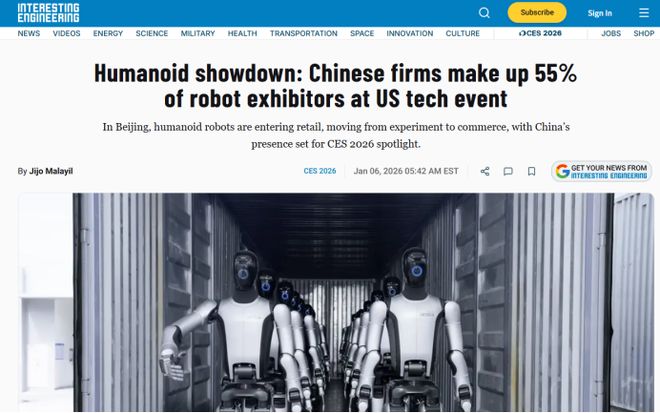
“物理AI”成CES热议新词
Jing Ji Ri Bao· 2026-01-09 21:57
Core Insights - The 2026 CES in Las Vegas highlighted "Physical AI" as a key term, indicating a shift in AI technology focus from algorithms to real-world applications [1][4] - NVIDIA's CEO emphasized "Physical AI" in his keynote, suggesting its importance in enabling autonomous systems to perceive, understand, and act in the physical world [1][4] Group 1: Definition and Applications of Physical AI - "Physical AI" refers to the capability of systems like cameras, robots, and autonomous vehicles to operate in the physical world, moving beyond mere information provision to actively changing environments [1][4] - Various companies showcased applications of "Physical AI," including home robots that assist with chores and public life solutions like urban infrastructure models that integrate AI for energy management and facility inspections [2][3] Group 2: Industry Perspectives on Physical AI - Qualcomm's China Chairman noted that "Physical AI" and "Personal AI" are evolving simultaneously, with the former focusing on real-world applications in vehicles and robotics [3] - Lenovo's CEO described "Physical AI" as "machines with brains," highlighting the transition of robots from simple mechanical tasks to complex decision-making capabilities [3] Group 3: Industry Consensus and Future Directions - The rise of "Physical AI" reflects a broader industry consensus that AI is becoming integral to real-world production, life, and public scenarios, serving as a bridge between digital and physical realms [4]
中国科技闪耀国际消费电子展
Sou Hu Cai Jing· 2026-01-09 21:23
Group 1 - The CES 2026 showcased a transformation in the Chinese tech industry, highlighting a shift from traditional home appliance giants to a diverse representation of both established and emerging companies, reflecting the industry's ecological vitality and innovative resilience [2][3][4] - Major Chinese companies like Hisense and TCL are focusing on technological breakthroughs to redefine industry standards, with Hisense launching a new RGB-Mini LED display technology, predicting a shipment of 500,000 units by 2026 [2] - Companies are moving from showcasing individual products to demonstrating systematic capabilities, with firms like Lens Technology and Guangdong Lingyi demonstrating comprehensive AI hardware ecosystems [4] Group 2 - The integration of AI with hardware is a key highlight, with numerous humanoid robot companies participating, indicating a significant advancement in the execution capabilities of robots, which is expected to drive commercialization in this sector [5] - The CES 2026 featured 23 AI glasses booths, with 16 from Chinese brands, showcasing their innovation in AR/VR hardware and interaction experiences [5] - Chinese companies are pursuing deep localization and compliance in their global operations, moving away from a simplistic export model to a more integrated approach, as seen with Aiper's strategy of local R&D and distribution [6] Group 3 - The competition in the AI sector is intensifying, with a focus on practical applications and the efficiency of chips, as companies like NVIDIA, Intel, AMD, and Qualcomm compete for advancements in AI computing [7][8] - The emergence of embodied intelligence is reshaping the participation landscape, with a significant presence of humanoid robot companies at CES, indicating a structural change in the representation of Chinese enterprises [8] - The CES serves as a platform for showcasing the future of technology, where the integration of AI with physical products is expected to drive growth engines for the next decade [8]
CES观察|智能眼镜群雄逐鹿 清洁电器进化“具身智能”
Xin Jing Bao· 2026-01-09 15:03
Group 1: Core Insights - CES 2026 focuses on systemic transformations in artificial intelligence technology, with smart glasses emerging as a key highlight of the event [1] - The year 2026 is anticipated to be a golden period for the development of smart glasses, driven by an increasing number of players entering the market [2][3] - AI is being fully integrated into home appliances and consumer electronics, with traditional companies merging with new entrants [1][6] Group 2: Smart Glasses Development - Over 50 companies, including notable brands like Thunder Innovation, XREAL, and Rokid, showcased their smart glasses at CES 2026 [2] - New lightweight models were introduced, such as Rokid's AI+AR glasses weighing only 49 grams and another model at 38.5 grams [2] - The Chinese market is seeing a surge in AI glasses from various brands, including Xiaomi and Lenovo, since 2025 [2][3] Group 3: Market Trends and Opportunities - The introduction of new national subsidy policies in China has expanded the categories eligible for subsidies, including smart glasses [3] - The global shipment of smart glasses is projected to exceed 11 million units in 2026, indicating a competitive and diverse market landscape [3] - The penetration rate of cleaning robots in global households remains below 10%, suggesting significant growth potential in the cleaning appliance sector [4] Group 4: Cleaning Appliances and AI Integration - Cleaning appliances, particularly robotic vacuums, are advancing towards embodied intelligence, with innovations like bionic designs enabling multi-floor cleaning [4] - Chinese brands have rapidly increased their market share in the global robotic vacuum sector, capturing 65.7% of the market in the first three quarters of 2025 [5] - AI is becoming a core capability across home appliances, with companies like TCL and Hisense showcasing advanced AI-integrated products at CES [6][7]
智能眼镜群雄逐鹿,清洁电器进化“具身智能”
Xin Jing Bao· 2026-01-09 15:02
作为全球规模最大、最具权威性及影响力的科技盛会CES(国际消费电子展)2026正在进行,展会聚焦 人工智能技术的系统级变革。 其中,智能眼镜成为展会上的"最靓仔",随着越来越多的玩家加入,2026年成为智能眼镜发展黄金期。 而清洁电器率先体现"具身智能"趋势,多家品牌通过仿生机械臂、轮足设计等创新,突破跨楼层清洁等 长期瓶颈。AI全面融入家电与消费电子领域,老牌企业融合新生。 2025年以来,在中国市场,小米、联想、海信、李未可、360、阿里、小度、理想、老凤祥、KTC康冠 等来自各领域的品牌纷纷布局AI眼镜。 同时,CES成为多元智能终端展示平台,越来越多的智能终端正在各场景落地。 智能眼镜新晋玩家增多,不断轻量化 智能眼镜就已经成为CES2026当之无愧的主角之一。在今年的展览中,洛图科技统计,包括雷鸟创新、 XREAL、INMO、Rokid、星纪魅族、阿里、光峰、歌尔、联想在内超过50家相关产业企业参展。 AR品牌雷鸟创新带来了首款支持eSIM功能的AR眼镜,支持微信、抖音、B站等多款主流应用,可以在 AR眼镜与智能手机间切换。乐奇Rokid亮相量产的轻质全功能AI+AR眼镜,重量仅49克。乐奇现场发布 ...
安徽企业突破秸秆制糖成本瓶颈 非粮生物制造万亿级赛道迎来黄金发展期
Xin Hua Wang· 2026-01-09 12:22
Core Viewpoint - Anhui Province is accelerating the construction of a green closed loop in the biomanufacturing industry, transitioning from "straw resource utilization" to "material decarbonization," driven by technological breakthroughs and industry chain collaboration [1][2]. Policy Guidance - The State Council's implementation opinions aim to promote the widespread application of biotechnology in new materials, construction, energy, and environmental protection, focusing on biobased material substitution and low-carbon conversion [2]. - Various regions are formulating biomanufacturing industry plans and policies to optimize the industrial environment, with Anhui's biomanufacturing cluster expected to exceed 30 billion yuan in output value by 2026 [2]. Technological Breakthroughs - Biomanufacturing is transitioning from "natural extraction" to "life programming," with the industry expected to enter a golden development period during the 14th Five-Year Plan, driven by national strategy, technological advancements, and market demand [3]. Innovations in Biomanufacturing - Anhui Fengyuan Biotechnology Co., Ltd. has developed a second-generation biomanufacturing technology using straw as raw material, achieving high conversion rates and significant cost advantages [4][5]. - The technology allows for the production of 1 ton of mixed sugar from 3 tons of straw, with a cellulose hydrolysis rate exceeding 90% and a cost of mixed sugar not exceeding 1,000 yuan per ton, significantly lower than corn-based glucose production [4]. Industry Implementation - The "distributed factory" model is activating the county economy, with projects in Shandong and Anhui demonstrating a closed-loop industrial chain from straw processing to biobased materials and energy [6]. - Fengyuan Group is establishing modular projects across multiple provinces, creating a complete industrial chain from agricultural waste collection to biobased product production [6]. Ecological Closure - Anhui Province aims to transform straw from agricultural waste into a "green carbon source," reducing reliance on food resources and promoting green agriculture through high-value byproducts [7]. - The technology addresses the challenges of the polylactic acid market, which faces issues such as small scale and insufficient policy support [7]. Recommendations for Development - Experts suggest implementing a comprehensive ban on plastic in Anhui, promoting biobased materials in government and educational institutions, and establishing a "green procurement list" [8][9]. - Strengthening policy and financial support for straw sugar projects and encouraging the listing of key biomanufacturing enterprises to broaden financing channels [8][9]. Market Expansion - Encouraging the use of polylactic acid composite materials in automotive and construction sectors, and promoting biobased products through events and e-commerce platforms [9]. - The establishment of a biobased materials innovation laboratory in Zhejiang marks a significant step in digital research and development in the field, providing a model for Anhui [9].
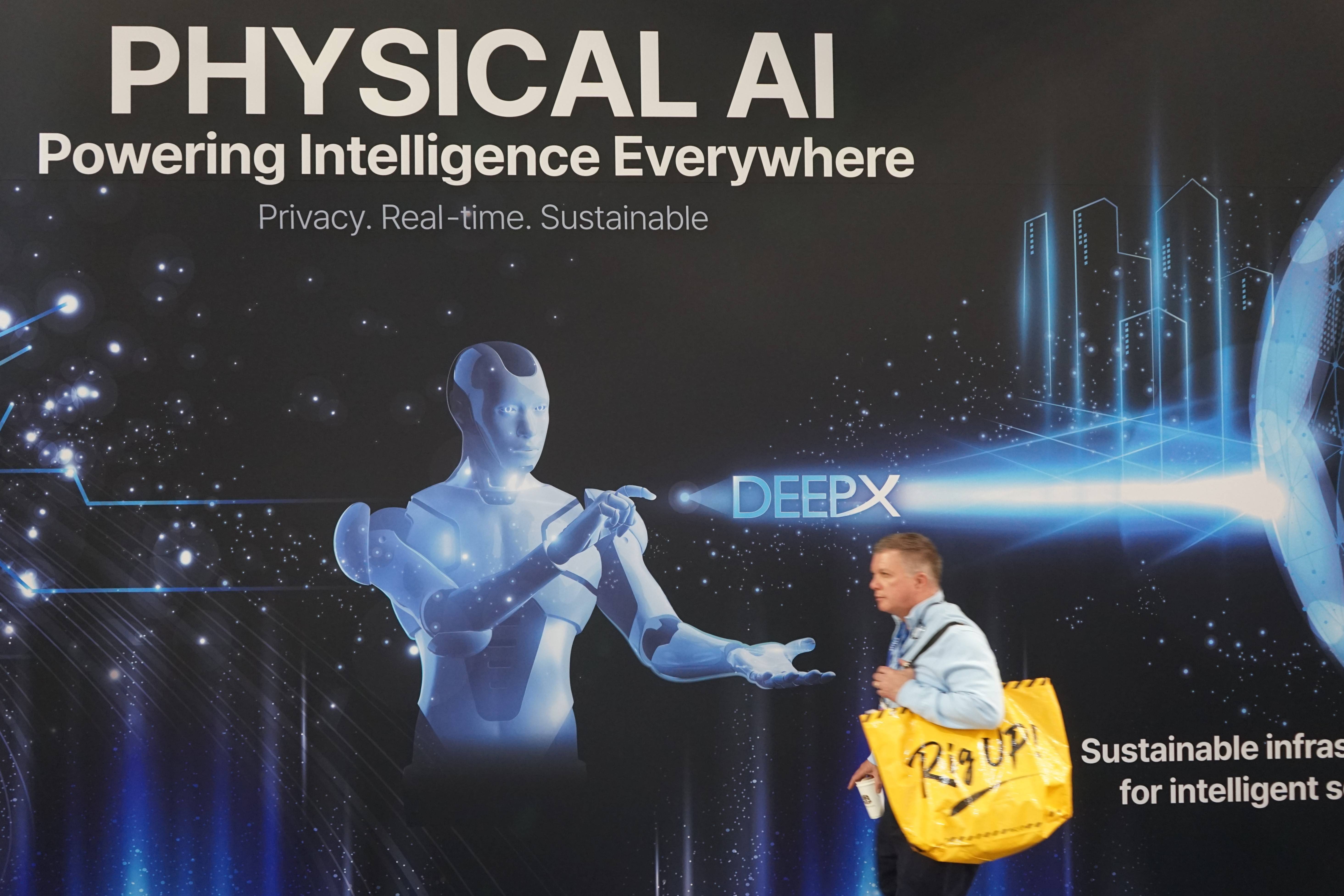
记者手记|“物理AI”成为美消费电子展热议新词
Sou Hu Cai Jing· 2026-01-09 11:40
Core Insights - The 2026 Consumer Electronics Show (CES) in Las Vegas highlights "Physical AI" as a key trend, reflecting a shift in AI technology development and industry focus [1][5][10]. Group 1: Definition and Importance of Physical AI - "Physical AI" refers to enabling autonomous systems like cameras, robots, and self-driving cars to perceive, understand, reason, and execute complex actions in the physical world [5][10]. - Unlike previous AI discussions focused on algorithms and computing power, "Physical AI" emphasizes the integration of AI into robots, autonomous vehicles, and smart devices, allowing them to actively change their environments [5][14]. Group 2: Industry Applications and Innovations - At CES, various demonstrations showcased "Physical AI" in action, including smart robots navigating spaces, self-driving concept cars, and smart home devices executing commands accurately [5][9]. - Companies like Hisense and Xiaomi presented products such as companion robots and AI-driven cleaning devices, illustrating the practical applications of "Physical AI" in everyday life [9][10]. Group 3: Industry Perspectives and Future Directions - Industry leaders, such as Qualcomm and BOE, noted that "Physical AI" is evolving alongside "Personal AI," with applications expanding into wearables, personal devices, and public life scenarios [10][14]. - The integration of display technology and sensors is expected to enhance the capabilities of "Physical AI," leading to machines that not only perform tasks but also think and collaborate [14].
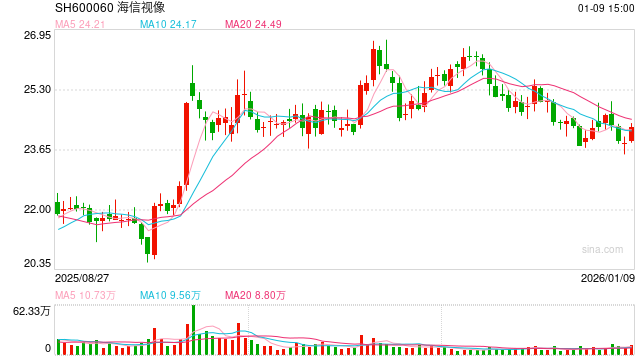
海信视像营收滞涨关联收购用于扩产 退税补助占比4成、销售费用率远超同行|光学成像并购潮
Xin Lang Cai Jing· 2026-01-09 11:09
Core Viewpoint - The optical imaging industry is experiencing a wave of capital operations characterized by mergers, acquisitions, and financing, driven by the promising market prospects in emerging technologies such as automotive lenses, AR/VR optics, and machine vision [2][14]. Company Summary - Hisense Visual Technology has engaged in multiple asset acquisitions and sales, primarily involving related parties within the Hisense group, without extending into new fields through external mergers [2][3]. - In 2025, Hisense Visual's revenue growth is nearly stagnant, with a year-on-year increase of only 5.36%, yet the company has made consecutive acquisitions of related party assets to expand production capacity [6][18]. - The company sold a 26% stake in its kitchen and bath business just three years after acquiring it, citing a focus on core business development [7][19]. Financial Performance - Hisense Visual's sales expense ratio has consistently exceeded 6%, significantly higher than the approximately 4% R&D expense ratio and far above comparable companies like Sichuan Changhong and TCL Technology [9][21]. - In 2023 and 2024, the company reported net profits of 2.096 billion and 2.246 billion, respectively, with approximately 42.9% and 35.2% of net profits derived from tax refunds, government subsidies, and various investment income, indicating a diminished actual profitability from core operations [11][23]. Strategic Focus - The company is accelerating the application of new business areas such as commercial displays, cloud services, and chips, while actively laying out plans in artificial intelligence and AR/VR to create new growth engines for the future [8][20].

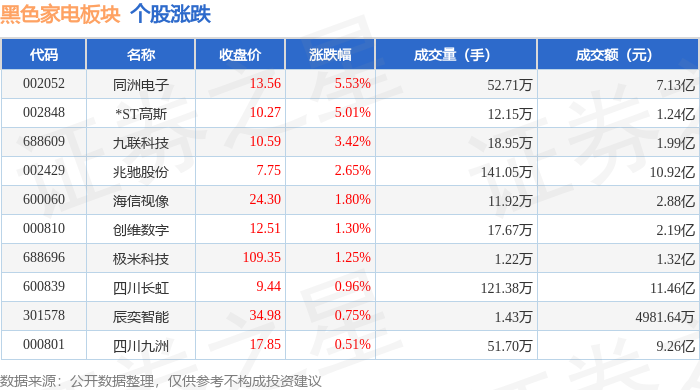
黑色家电板块1月9日涨1.82%,同洲电子领涨,主力资金净流入8144.05万元
Zheng Xing Xing Ye Ri Bao· 2026-01-09 08:54
Market Overview - The black home appliance sector increased by 1.82% on January 9, with Tongzhou Electronics leading the gains [1] - The Shanghai Composite Index closed at 4120.43, up 0.92%, while the Shenzhen Component Index closed at 14120.15, up 1.15% [1] Stock Performance - Key stocks in the black home appliance sector showed varied performance, with Tongzhou Electronics closing at 13.56, up 5.53% on a trading volume of 527,100 shares and a transaction value of 713 million [1] - Other notable performers included *ST Gauss, which rose by 5.01% to 10.27, and Jiulian Technology, which increased by 3.42% to 10.59 [1] Capital Flow - The black home appliance sector saw a net inflow of 81.44 million in main funds, while retail funds experienced a net outflow of 104 million [1] - Retail investors contributed a net inflow of 22.16 million, indicating a mixed sentiment among different investor types [1] Detailed Capital Flow Analysis - Non-Chi Holdings had a main fund net inflow of 10.9 million, but retail funds saw a significant outflow of 78.86 million [2] - Tongzhou Electronics experienced a main fund net inflow of 19.50 million, while retail funds had a net outflow of 1.20 million [2] - Hisense Visual had a main fund net inflow of 14.99 million, with retail funds showing a net inflow of 0.43 million [2]


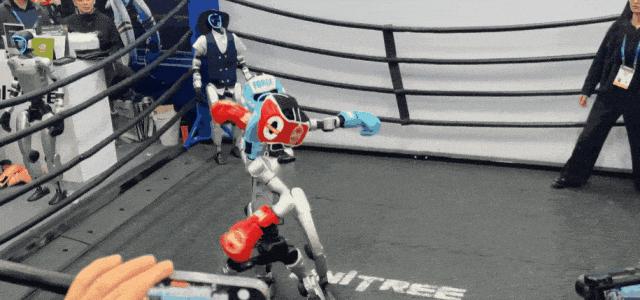
CES变成中国科技秀:机器人跳舞、熊猫获奖
3 6 Ke· 2026-01-09 08:24
Group 1: Core Themes of CES 2026 - The main theme of CES 2026 is "human-centered" AI applications, marking a shift from traditional consumer electronics to AI-centric technological transformations [1] - Chinese companies are increasingly taking center stage at CES, with 942 exhibitors, accounting for approximately 22% of the total, maintaining their position as the second-largest exhibiting nation [1] - In specific sectors, Chinese firms dominate, with 55% of humanoid robot exhibitors and nearly 70% of AI glasses brands coming from China [1] Group 2: Robotics and AI Innovations - Chinese manufacturers are expected to continue leading in cost reduction and efficiency improvements in humanoid robots, showcasing their capabilities in unstructured environments [2] - Notable products include the Unitree H1 humanoid robot with advanced sensing capabilities and the latest generation of the "绝影" series robotic dogs, which excel in indoor navigation [4][11] - The "Care-bot" humanoid robot by Fourier demonstrates embodied intelligence in real-life interaction scenarios [7] Group 3: Consumer Electronics and Smart Devices - Over 80% of global smart glasses supply chain manufacturers are from China, with 16 Chinese companies showcasing their products at CES [15] - Innovations in smart home devices include the AI-driven "安安" companion robot designed for elderly and cognitively impaired individuals [16] - Companies like Alibaba and XREAL are launching advanced AI glasses, with features such as ultra-lightweight designs and integration with various AI services [19][20] Group 4: Automotive and AI Integration - The automotive industry is transitioning from "software-defined" to "AI-defined" vehicles, with companies like Geely and Great Wall showcasing new technologies [28] - Geely's G-ASD smart driving solution and Great Wall's focus on new energy technologies highlight the industry's shift towards AI integration [30][32] - New products like the AI-driven logistics solutions from New Stone and advanced lidar technology from Hesai demonstrate the growing importance of AI in transportation [34][35] Group 5: Home Appliances and AI - Hisense introduced new RGB-Mini LED display technology and AI-controlled smart refrigerators, showcasing the integration of AI in home appliances [41] - TCL's innovations in display technology, including the world's first printed OLED car screen, reflect advancements in consumer electronics [43][44] - Companies are increasingly focusing on AI capabilities in home security and smart home management systems [51][49] Group 6: Overall Impact of AI - CES 2026 emphasizes the profound impact of AI on the consumer electronics industry, with expectations for AI user numbers to grow significantly [59] - The event serves as a platform for global tech companies to set the foundation for future technological development and transformation [59] - The integration of AI into various sectors, including robotics, automotive, and consumer electronics, indicates a trend towards deeper AI adoption in everyday life [59]