联发科

Search documents
一种“新型”的光刻技术
半导体行业观察· 2025-10-13 01:36
Core Insights - The article discusses the geopolitical landscape of semiconductor manufacturing, emphasizing the dominance of ASML's EUV lithography systems as the only means to access advanced nodes below 5nm, which has locked the innovation pace of major companies like Apple, TSMC, Samsung, and Intel [1] - The emergence of AI is shifting the demand for semiconductor manufacturing technologies, leading to a renewed interest in non-EUV technologies such as electron beam lithography (E-Beam Lithography) and others that were previously sidelined [1][14] Group 1: Non-EUV Technologies - Non-EUV technologies like E-Beam Lithography, Nanoimprint Lithography (NIL), and Maskless Lithography (ML2) have been considered alternatives but have struggled to enter mass production [1] - SecureFoundry's Hyper-Beam Array (HBA) lithography system utilizes 65,000 independently controlled electron beams, allowing AI chip designers to test multiple design variants simultaneously, significantly reducing production time and costs [5][7] - The HBA system is designed for flexible batch production, making it suitable for small-batch prototypes and advanced designs, and it operates effectively within the 22nm to 65nm process nodes [7] Group 2: Historical Context of E-Beam Technology - E-Beam technology has two main applications: mask writing and direct lithography, with the latter being less successful due to low throughput and high costs associated with batch production [8][9] - The multi-beam approach was explored by various companies, including TSMC, but faced challenges in commercialization due to technical difficulties and funding issues [9][10] - Mapper Lithography's multi-beam system was an early attempt to commercialize this technology but ultimately failed due to financial constraints, leading to its acquisition by ASML [10][11] Group 3: Current Developments and Future Prospects - The rise of AI and the need for flexible, rapid, and customizable lithography solutions have reignited interest in multi-beam electron beam technologies [14][15] - Multibeam has announced the industry's first multi-column electron beam lithography system (MEBL), claiming it offers over 100 times the throughput of traditional E-Beam systems, with configurations for 150mm, 200mm, and 300mm wafers [15][18] - The funding received by Multibeam will accelerate the development of next-generation MEBL platforms, catering to the semiconductor industry's demand for lower power and higher performance chips in the AI era [18][19]


台积电明年资本支出拼创高 年营收估逾3万亿元新台币将写新猷
Jing Ji Ri Bao· 2025-10-12 23:10
Core Insights - TSMC is set to hold an earnings call on October 16, with strong demand for its upcoming 2nm capacity, leading major clients like Apple, AMD, Qualcomm, and MediaTek to fully book the capacity for next year [1] - The company is expected to see capital expenditures in 2026 exceed NT$3 trillion, marking a new record [1] - TSMC's 2nm production facilities in Hsinchu and Kaohsiung are in trial production, with a yield rate nearing 70%, and mass production is anticipated to begin by the end of the year [1] Group 1 - TSMC's initial monthly production capacity for the 2nm process is projected to reach 40,000 wafers by the end of the year, with expectations to increase to nearly 100,000 wafers by the end of next year as additional facilities come online [1] - The company is currently in a quiet period before the earnings call, but supply chain sources indicate that all 2nm capacity has been booked by major clients [1] - The demand for advanced packaging is also rising, with TSMC's overall advanced packaging monthly capacity expected to exceed 150,000 units next year [2] Group 2 - TSMC plans to continue expanding its overseas facilities, alongside increasing production capacity at its Hsinchu and Kaohsiung sites, which will contribute to a significant rise in capital expenditures in 2026, potentially surpassing the current range of US$38 billion to US$42 billion [2] - The company is expected to maintain high utilization rates for its advanced packaging processes, driven by increased demand from clients like Apple and AMD [2] - The overall outlook for TSMC remains positive, with expectations for continued growth in both production capacity and capital expenditures [2]
5Gredcap出货量,直逼8000万
半导体行业观察· 2025-10-12 01:17
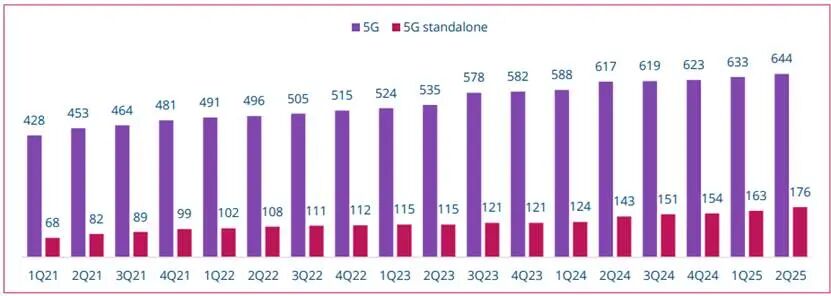
Core Insights - ABI Research predicts a significant transformation in the cellular IoT sector, with shipments of 5G Reduced Capability (RedCap) modules expected to reach 80 million units between 2024 and 2029, with enhanced RedCap (eRedCap) modules accounting for 71% of this total [1][2] Group 1: Market Trends - The transition to 5G RedCap and eRedCap modules indicates a rapid shift towards cost and power-optimized 5G connectivity for IoT applications, particularly for manufacturers currently using LTE Cat-1 or Cat-4 in Europe [1] - eRedCap is set to provide a cost-effective upgrade path to 5G, offering data rates comparable to LTE while simplifying device design and reducing power consumption [1][2] Group 2: Industry Competition - Major chip suppliers, including Qualcomm, MediaTek, Unisoc, and Sequans, have entered the RedCap chip market, accelerating the adoption of the IoT ecosystem [2] - The introduction of eRedCap in 3GPP Release 18 is expected to further lower device complexity and costs, creating new opportunities for low-end IoT devices [2] - Companies are competing fiercely in the semiconductor sector to capture customer loyalty early in this rapidly expanding market segment [2]

生成式 AI 深入百工百业 将成企业数位转型关键技术
Jing Ji Ri Bao· 2025-10-11 23:35
Core Insights - Generative AI is rapidly transforming the technology industry and human life, with tools like ChatGPT and Microsoft Copilot enhancing productivity and creativity across various sectors [1][2][3] Market Growth - The generative AI market is projected to reach nearly $970 billion by 2032, with a compound annual growth rate (CAGR) of 39.6% [1] Business Applications - In marketing and operations, generative AI helps brands create precise marketing strategies by analyzing consumer behavior, significantly reducing labor costs and time [1] - AI can quickly adjust content and delivery methods based on real-time market feedback, enhancing customer engagement and conversion rates [1] Healthcare Applications - In healthcare, generative AI improves diagnostic efficiency and accuracy by processing large amounts of medical data and generating preliminary diagnostic suggestions [2] - AI accelerates drug development and optimizes clinical trial conditions, particularly benefiting remote healthcare scenarios [2] Supply Chain and Manufacturing - Generative AI aids in predicting future demand and optimizing inventory and logistics, reducing costs and improving production efficiency [2] - AI enhances quality control by automatically identifying product defects and generating inspection reports [2] Software Development - Tools like GitHub Copilot and Cursor AI automate code generation and error correction, improving development speed and quality [3] - The transition from cloud-based models to local deployment on devices reflects growing concerns over privacy and latency [3] Hardware Developments - Major manufacturers like Qualcomm, MediaTek, and Apple are launching devices that support local large language model (LLM) operations, with AI smartphone shipments expected to reach 150 million units by the end of 2024 [4] - The integration of AI into smart home devices and industrial IoT is expanding, enhancing user interaction and operational efficiency [4] Competitive Landscape - The generative AI market is becoming increasingly competitive, requiring companies to possess strong technical capabilities and cost management to succeed [5] - Companies must demonstrate flexibility and forward-thinking strategies to capitalize on the evolving digital landscape and future growth opportunities in AI [6]
苹果手表为5G RedCap注入强心剂,但RedCap规模化尚需合力
3 6 Ke· 2025-10-09 10:14
Core Insights - Apple has introduced its first 5G smartwatches, the Apple Watch Series 11 and Apple Watch Ultra 3, utilizing 5G RedCap technology, which is expected to promote the adoption of RedCap across the industry [1][2] - The adoption of RedCap by Apple, a leading manufacturer, signifies a strong endorsement for the technology, although broader industry support is necessary for widespread implementation [1][10] Group 1: Apple's Commitment to RedCap - Apple is not the first to adopt RedCap in wearable devices but is among the most proactive major manufacturers, indicating confidence in RedCap's future [3][5] - As of August 2025, only 34 operators in 24 countries are investing in RedCap, representing just 0.5% of the global market, highlighting the limited current infrastructure [5][6] - Apple's decision to implement RedCap in its smartwatches demonstrates a commitment to the technology despite the current limitations in network infrastructure [5][6] Group 2: Impact on Industry Standards - The introduction of RedCap in Apple's smartwatches aligns with the 3GPP's vision for wearable devices, fulfilling commitments made during the standard's development [6][10] - RedCap is designed for specific applications, including industrial sensors, smart city monitoring, and wearables, with defined performance metrics [6][10] Group 3: Market Dynamics and Growth Potential - In Q2 2025, Apple Watch shipments reached 7.4 million units, a 28.8% year-on-year increase, while the global smartwatch market grew by 8% [8] - Despite a decline in Apple's overall shipment volume, the brand remains influential in the wearable market, potentially encouraging other manufacturers to adopt RedCap technology [9][10] - The global smartwatch market has surpassed 100 million units annually, with a significant portion featuring cellular IoT capabilities, which could facilitate RedCap's broader application [9][10] Group 4: Future Directions for RedCap - The successful application of RedCap requires overcoming barriers across various industries, with a focus on 5G native applications and private networks [10][13] - The integration of RedCap in sectors like smart connected vehicles and AI applications is seen as a promising avenue for growth [14][10] - The collaboration across industries is essential for the proliferation of RedCap, as its success is not solely dependent on consumer products but requires a collective effort [14][10]

亚太精选ETF长假归来涨近3% 中国资产重估逻辑不断强化 半导体企业显著受益AI浪潮
Zhi Tong Cai Jing· 2025-10-09 06:21
Core Viewpoint - The Asia-Pacific Selected ETF (159687) has shown strong performance after the holiday, with a current increase of 2.6% to 1.576 yuan and a trading volume of 30.45 million yuan, reflecting positive sentiment in the market driven by favorable overseas news and strong performance in global risk assets [1] Group 1: Market Performance - The ETF rose nearly 3% during intraday trading after the holiday, indicating robust investor interest [1] - The trading volume reached 30.45 million yuan, showcasing active market participation [1] Group 2: Positive Market Sentiment - Overseas markets displayed positive trends during the holiday, with major global risk assets such as US stocks, Japanese stocks, and gold reaching historical highs [1] - Huaxi Securities suggests that the Chinese technology industry is at a critical breakthrough point, which may lead to more "DeepSeek" moments across various sectors, reinforcing the revaluation logic of Chinese assets [1] Group 3: ETF Composition - The Asia-Pacific Selected ETF is the only ETF tracking the Asia-Pacific Selected Index, covering 11 countries and regions in the Asia-Pacific [1] - The ETF includes high-quality dividend assets from the region, such as Toyota, Tencent, Alibaba, and Mitsubishi Group, as well as leading semiconductor companies like TSMC, Samsung, Tokyo Electron, and MediaTek [1] Group 4: Strategic Partnerships - NVIDIA announced a partnership with Japanese telecom and computer manufacturer Fujitsu to jointly build a full-stack AI infrastructure, indicating a growing focus on AI technologies in the region [1]
亚太精选ETF(159687)长假归来涨近3% 中国资产重估逻辑不断强化 半导体企业显著受益AI浪潮
智通财经网· 2025-10-09 06:17
Core Viewpoint - The Asia-Pacific Select ETF (159687) has shown strong performance after the long holiday, with a current increase of 2.6% to 1.576 yuan and a trading volume of 30.45 million yuan, reflecting positive sentiment in the market [1] Group 1: Market Performance - The Asia-Pacific Select ETF (159687) rose nearly 3% during intraday trading after the long holiday, indicating robust market activity [1] - The ETF's current price is 1.576 yuan, with a trading volume of 30.45 million yuan [1] Group 2: Market Sentiment - During the holiday, overseas market news was generally positive, with major global risk assets, including US stocks, Japanese stocks, and gold, reaching historical highs [1] - Huaxi Securities believes that the Chinese technology industry is at a critical breakthrough point, suggesting a potential for further upward movement in various sectors [1] Group 3: ETF Composition - The Asia-Pacific Select ETF is the only ETF tracking the Asia-Pacific Select Index, covering 11 countries and regions in the Asia-Pacific [1] - The ETF includes high-quality dividend assets from the Asia-Pacific region, such as Toyota, Tencent, Alibaba, and Mitsubishi Group, as well as leading semiconductor companies like TSMC, Samsung, Tokyo Electron, and MediaTek [1] Group 4: Strategic Partnerships - NVIDIA announced a partnership with Japanese telecommunications and computer manufacturer Fujitsu to jointly build a full-stack AI infrastructure, which may enhance the technological landscape in the region [1]
为了让2nm显得不贵,台积电3nm涨价
半导体行业观察· 2025-10-09 02:34
Core Viewpoint - TSMC's advancement in wafer fabrication technology is leading to increased costs, impacting clients like Apple, Qualcomm, and MediaTek, although the premium for the new 2nm process may be less severe than initially expected, ranging from 10% to 20% compared to the 3nm process [1][2]. Pricing Dynamics - The anticipated price for TSMC's 2nm wafers is projected to be around $30,000 each, with the potential for a 50% price increase next year [5]. - TSMC's current 3nm process is expected to see price hikes, with the second-generation N3E reaching approximately $25,000 and the third-generation N3P around $27,000 [2][5]. Client Adaptation - Major clients like Qualcomm and MediaTek are adapting to the price increases, with Qualcomm planning to transition to the 2nm process for its Snapdragon 8 Elite Gen 6 SoC by 2026, and MediaTek already having successfully taped out its first 2nm SoC [3][5]. - Despite the cost pressures, clients are still willing to invest in TSMC's latest technology, indicating a strong demand for advanced semiconductor processes [3]. Market Demand and Competition - TSMC is reportedly experiencing high demand for its 2nm process, with 15 major companies preparing to adopt it, including AMD and MediaTek, and expectations that Apple will also become a client [5][6]. - The semiconductor industry is facing inflationary pressures, with rising prices for memory and storage components contributing to overall cost increases [5]. Production Capacity - TSMC is expanding its production capabilities by constructing multiple 2nm fabs in Taiwan and a third fab in Arizona, aiming to meet the growing market demand [6].
台积电终结一个时代
半导体行业观察· 2025-10-06 02:28
Core Insights - The global semiconductor industry is undergoing a profound economic transformation, with TSMC at its center, marking the end of an era characterized by predictable declines in transistor costs [2] - TSMC's unprecedented price increases for advanced logic chips are driven by astronomical capital expenditures, geopolitical pressures, and fundamental physical limitations in manufacturing at the angstrom scale [2][4] Price Increases and Market Dynamics - TSMC plans to implement a 5-10% price increase for its advanced nodes below 5nm starting in 2026, with a significant jump of over 50% for 2nm wafers, raising costs from approximately $20,000 to $30,000 or more [4][7] - This shift indicates that the cost of manufacturing will now rise faster than the economic benefits derived from density scaling, signaling a structural change in the industry [4] Geopolitical and Operational Costs - TSMC's rising cost structure is significantly influenced by the need for massive capital expenditures for global diversification, particularly in response to geopolitical pressures, with a total investment of $165 billion in its Arizona facility [6][8] - Chips produced in Arizona are reported to be 5% to 30% more expensive than those made in Taiwan, reflecting the higher operational costs of overseas factories [6][8] Technological Complexity and Manufacturing Challenges - The transition from 3nm to 2nm nodes involves a major architectural shift from FinFET to GAA transistors, which increases manufacturing complexity and costs significantly [10][14] - The required capital expenditures for advanced facilities are estimated to be between $15 billion and $20 billion, with critical equipment like EUV lithography machines costing around $350 million each [14] Customer Reactions and Market Implications - TSMC's pricing strategy is reshaping the technology landscape, compelling major customers like Nvidia and Apple to adapt to the new cost structure [16][17] - Nvidia's CEO supports the price increases, emphasizing that TSMC's value is not reflected in current pricing, while Apple faces challenges from rising wafer costs and geopolitical tariffs [16][17] Impact on the Digital Economy - The new cost structure is expected to lead to price increases for flagship consumer devices starting in 2026, ending the trend of declining prices for high-end smartphones and PCs [19] - In the data center sector, the high costs of 2nm wafers will set a new price floor for AI and high-performance computing components, accelerating the industry's shift towards chiplet architectures [19][20]
处理器市场,大洗牌
半导体行业观察· 2025-10-05 02:25
Core Insights - The processor market is experiencing significant growth driven by the rapid demand for generative AI applications, with the market size expected to nearly double from $288 billion to $554 billion between 2024 and 2030, primarily due to widespread adoption by enterprises, individuals, and governments [4] - 2024 is projected to be a turning point for the processor industry, as the GPU market is expected to surpass the APU market for the first time, driven by the demand for high computing power to run large language models like ChatGPT, Gemini, and Copilot [4] - The GPU market will face intense competition from hyperscale cloud providers like Google and AWS, which are developing their own AI ASICs to reduce capital expenditure costs [4] Market Dynamics - The processor market is highly concentrated, with three out of five segments dominated by single manufacturers holding over 50% market share; Intel controls 66% of the CPU market, while Nvidia holds over 90% of the GPU market [7] - The APU and AI ASIC & DPU markets are more fragmented, with active participation from companies like Apple, Qualcomm, MediaTek, Google, Samsung, Huawei, NXP, and Texas Instruments [7] - Emerging players from China, such as Xiaomi in the smartphone APU market and NIO in the automotive ADAS APU sector, are beginning to make their mark [7] Technological Advancements - Processor manufacturers share a common goal of launching the most powerful solutions faster than competitors, facing challenges related to cost pressures and technological limitations [11] - A trend towards advancing process nodes annually is evident, with advanced processes previously limited to smartphone APUs now being adopted in server CPUs and other processors [11] - Foundries play a crucial role in this technological race, with a significant reduction in the number of foundries capable of producing advanced process nodes over the past 20 years, and the transition to 2nm may further decrease this number [11]