
迈瑞医疗

Search documents
医药生物行业资金流出榜:药明康德、迈瑞医疗等净流出资金居前
Zheng Quan Shi Bao Wang· 2025-12-31 09:19
Market Overview - The Shanghai Composite Index rose by 0.09% on December 31, with 15 industries experiencing gains, led by defense and military industry at 2.13% and media at 1.54% [1] - The communication and agriculture, forestry, animal husbandry, and fishery sectors saw the largest declines, down 1.35% and 1.10% respectively [1] - The pharmaceutical and biotechnology sector fell by 0.45% [1] Capital Flow Analysis - The main capital outflow from the two markets totaled 32.27 billion yuan, with 9 industries seeing net inflows [1] - The defense and military industry had the highest net inflow of 6.06 billion yuan, followed by the media sector with 4.45 billion yuan [1] - A total of 22 industries experienced net capital outflows, with the electronics sector leading at 11.20 billion yuan, followed by the power equipment sector at 7.25 billion yuan [1] Pharmaceutical and Biotechnology Sector - The pharmaceutical and biotechnology sector saw a net outflow of 3.54 billion yuan, with 178 of the 478 stocks in the sector rising and 276 falling, including one stock hitting the daily limit down [2] - The top three stocks with net inflows in this sector were Meinian Health (84.95 million yuan), Huaren Health (75.69 million yuan), and Xingqi Eye Medicine (64.86 million yuan) [2] - The stocks with the largest net outflows included WuXi AppTec (468.14 million yuan), Mindray Medical (321.35 million yuan), and Hefei China (276.65 million yuan) [3]



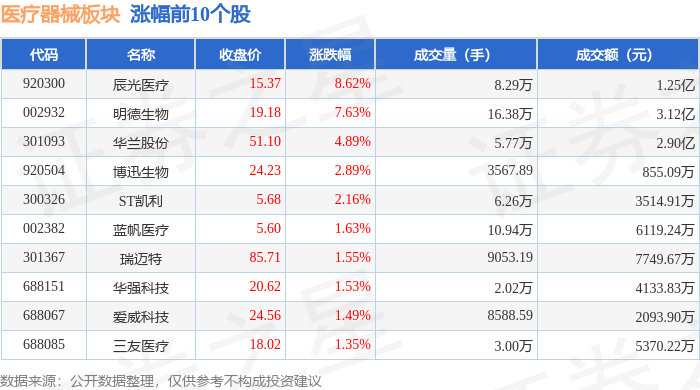
医疗器械板块12月31日跌0.89%,浩欧博领跌,主力资金净流出9.32亿元
Zheng Xing Xing Ye Ri Bao· 2025-12-31 09:07
| 代码 | 名称 | 收盘价 | 涨跌幅 | 成交量(手) | 成交额(元) | | --- | --- | --- | --- | --- | --- | | 688656 | 浩欧博 | 153.80 | -8.03% | 2.07万 | 3.29 乙 | | 301122 | 采纳股份 | 26.06 | -3.80% | 1.61万 | 4256.87万 | | 301363 | 美好医疗 | 24.05 | -3.80% | 7.34万 | 1.78亿 | | 688767 | 博拓生物 | 37.78 | -3.08% | 1 2.31万 | 8813.10万 | | 300760 | 迈瑞医疗 | 190.45 | -2.63% | 11.37万 | 21.82亿 | | 600807 | 济高发展 | 3.08 | -2.53% | 36.60万 | 1.13亿 | | 920278 | 鹿得医疗 | 8.91 | -2.41% | 4.04万 | 3626.05万 | | 688805 | 健信超导 | 42.14 | -2.23% | 5.73万 | 2.42 乙 | | 603205 ...



迈瑞医疗接待205家机构调研,包括淡水泉(北京)投资管理有限公司、MY.Alpha Management HK Advisors Limited等
Jin Rong Jie· 2025-12-31 08:59
Core Viewpoint - Mindray Medical is facing temporary pressure in the domestic market due to multiple factors, but sees a historic opportunity for import substitution in the IVD market, aiming to double its market share in the next three years in the fields of chemiluminescence, biochemistry, and coagulation [1][3][4]. Market and Business Outlook - The domestic market has experienced a decline in capacity over the past two years, but the company believes this impact is temporary. The demand for quality improvement and cost control in medical institutions presents a significant opportunity for high-end breakthroughs and import substitution [3][4]. - The company expects positive growth in domestic business by 2026, with IVD leading the growth of three major product lines and emerging businesses achieving rapid growth [4]. Emerging Business Segments - Mindray's emerging businesses, including minimally invasive surgery, minimally invasive intervention, and animal healthcare, are projected to reach nearly 3.9 billion RMB in 2024, contributing over 10% to total revenue, and exceed 2.6 billion RMB in the first half of 2025, contributing over 15% [2][14]. - The minimally invasive surgery market is expected to grow significantly, with a projected market size of approximately 37.3 billion RMB in China by 2024, and a growth rate of 10.8% from 2024 to 2030 [15]. - The minimally invasive intervention market is also rapidly expanding, with a projected market size of approximately 32.5 billion RMB in China by 2024, driven by factors such as aging population and increasing prevalence of cardiovascular diseases [16]. Technological and Competitive Advantages - Mindray has established significant core advantages in the ultrasound market through nearly 30 years of investment, including a comprehensive product line, deep clinical insights, and a global platform [2][6][7]. - The company is leveraging AI technology and clinical expertise to create intelligent solutions that enhance operational efficiency and improve patient care [7][8]. Integration and Collaboration - The integration with Huatai Medical is progressing as planned, with a focus on enhancing operational efficiency and management standards while respecting the independence of Huatai [10][11]. - Mindray aims to deepen collaboration across various functions to strengthen Huatai's competitiveness in the cardiovascular field [11]. AI and Digital Solutions - Mindray's AI models have been successfully implemented in top hospitals, enhancing digital transformation and supporting precision medicine [12][13]. - The company is committed to integrating AI solutions with hardware and IT systems to maximize the effectiveness of its digital healthcare offerings [13].
海王生物新一届董事局履新 战略聚焦驱动高质量发展
Quan Jing Wang· 2025-12-31 07:41
Core Insights - The company has completed a new board election, marking a new development phase with a focus on enhancing sales margins, ensuring asset security, improving financing channels, and optimizing capital returns [1] - The company is transitioning from scale expansion to a profound transformation focused on quality and efficiency, demonstrating clear strategic vision and strong execution [1] Financial Performance - In the first three quarters of 2025, the company achieved operating revenue of 21.513 billion yuan, with significant investment gains of approximately 878 million yuan from the disposal of non-core and inefficient assets [1] - The overall cash flow remains robust, with positive operating cash flow per share, supporting strategic transformation and ongoing operations [1] Business Segments - The company focuses on three core sectors: pharmaceutical distribution, pharmaceutical manufacturing, and pharmaceutical research and development [2] - The pharmaceutical distribution segment has shown significant improvement, with medical device agency business generating revenue of 4.986 billion yuan in the first half of 2025, becoming a key growth driver [2] - The pharmaceutical manufacturing segment, while smaller in revenue, has a high profit potential with a gross margin of 36.14% in the first half of 2025, crucial for optimizing profit structure [2] Innovation and R&D - The company invested 31.68 million yuan in R&D in the first three quarters of 2025, with positive progress in its R&D pipeline, including the completion of Phase I clinical trials for the innovative drug HW130 injection [2] - The management emphasizes a focus on profitability, planning to exit low-margin businesses and concentrate resources on high-value areas to enhance overall profitability and asset return levels [2] Governance and Sustainability - The company has revised 26 internal management systems and improved the operation mechanism of committees led by independent directors, reinforcing internal controls and shareholder return systems [3] - Under the new board's leadership, the company is steadily advancing along the path of focusing on core business and enhancing quality and efficiency, injecting strong momentum for future development [3]

迈瑞医疗(300760) - 2025年10月31日-12月31日投资者关系活动记录表
2025-12-31 06:45
Market Overview - The domestic market for medical devices has experienced a contraction over the past two years, impacting various business lines, although market share has been steadily increasing [2][3] - The IVD (In Vitro Diagnostics) sector is expected to lead growth among three major product lines, with significant market opportunities remaining, particularly in high-end hospital segments [3][4] Business Growth Projections - The domestic business is projected to achieve positive growth in 2026, with IVD driving this growth, while emerging businesses are expected to grow rapidly [3][4] - By 2024, the overall scale of emerging businesses is anticipated to reach approximately RMB 3.9 billion, contributing over 10% to total revenue [12][13] Competitive Landscape - The ultrasound imaging market is characterized by high specialization and significant barriers to entry, requiring extensive strategic investment and technological accumulation [4][5] - The entry of competitors like United Imaging is seen as a sign of a vibrant industry, with the market for ultrasound imaging expected to continue growing [4][5] Technological Innovations - The company has developed AI-driven solutions for chronic disease management, utilizing wearable sensors for continuous monitoring and data integration [6][7] - The launch of multiple AI models across various medical specialties has positioned the company as a leader in the medical AI domain, with applications in critical care and perioperative settings [10][11] Strategic Acquisitions - The integration of Huatai Medical is progressing as planned, with collaborative efforts in the cardiovascular field yielding positive results, including the development of a new atrial fibrillation solution [8][9] - The acquisition is expected to enhance the company's capabilities in the cardiovascular sector, leveraging existing strengths in medical imaging and diagnostics [15][16] Emerging Business Segments - The minimally invasive surgery market is projected to grow significantly, with a market size of approximately USD 33.8 billion globally and RMB 37.3 billion in China by 2024 [13][14] - The animal healthcare sector is also expanding, with a projected market size of nearly USD 4.4 billion in 2024, driven by the company's established technology and product offerings [16][17]
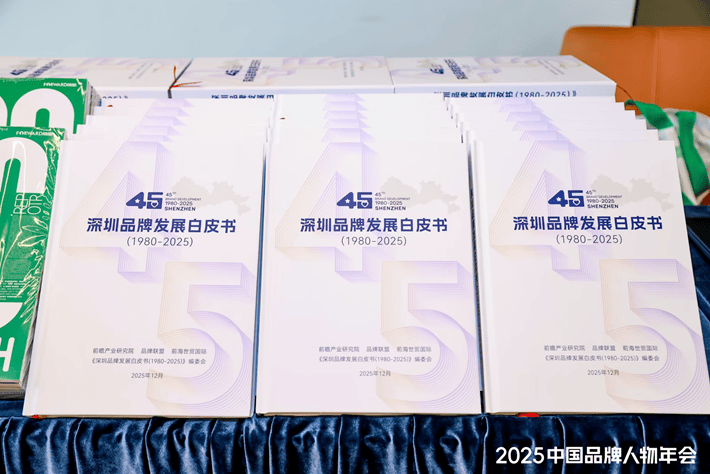
40万字重磅品牌白皮书发布:深圳45年的超级进化论
Sou Hu Cai Jing· 2025-12-31 06:11
Core Insights - Shenzhen has produced a number of globally impactful companies, showcasing a shift from "Made in China" to "Created in China" [2] - The 45th anniversary of Shenzhen Special Economic Zone marks a significant milestone in its rapid modernization and brand development [2][3] - The "Shenzhen Brand Development White Paper (1980-2025)" outlines the evolution of Shenzhen's brands and their internal logic and success factors [3][5] Group 1: Brand Evolution - Shenzhen's brand journey reflects a transition from manufacturing to innovation, with key phases including the emergence of local brands in the 1980s and 1990s, and the rise of autonomous brands in the early 2000s [7][10] - The current phase is characterized by cluster upgrades, with companies like Tencent, BYD, and DJI leading in various sectors [8][10] - As of now, Shenzhen has cultivated 1,220 notable local brands, including 13 billion-level brands and 7 trillion-level brands, with Tencent, Ping An, and Huawei each exceeding a brand value of 490 billion [10][11] Group 2: Economic Contributions - The 1,220 notable brands contribute 47.97% of the city's sales, 42.05% of tax revenue, and 32.87% of exports, serving as the backbone of Shenzhen's high-quality economic development [11] - These brands span critical sectors such as electronics, renewable energy, biomedicine, high-end equipment, financial services, and digital economy, forming a robust industrial structure [11] Group 3: Brand Development Factors - Shenzhen's brand success is attributed to a unique ecosystem supported by policy innovation, technological advancement, and collaborative industrial frameworks [15][16][19] - The government has played a crucial role in creating a conducive environment for brand growth through targeted policies and regulatory frameworks [16] - Innovation drives brand competitiveness, with companies investing over 10% of their annual revenue in R&D, fostering a comprehensive innovation ecosystem [17] Group 4: Global Expansion and Responsibility - Shenzhen brands have established clear pathways for international expansion, evolving from processing trade to localized operations and global standardization [20] - Social responsibility is ingrained in the corporate strategy, enhancing brand value and sustainability through practices like tax compliance and community support [21] Group 5: Future Outlook - The release of the white paper is a significant step in documenting Shenzhen's brand journey and providing strategic guidance for future brand development [31] - Shenzhen's brands are expected to continue thriving in emerging sectors like digital and low-altitude economies, contributing to the global narrative of Chinese brands [33][34]



【财经分析】何以持续“领跑”——广东上市公司高质量发展透视
Xin Hua Cai Jing· 2025-12-31 05:53
Core Viewpoint - Guangdong listed companies have demonstrated strong high-quality development during the "14th Five-Year Plan" period, with significant achievements in both quantity and quality, positioning themselves as leaders in the national market [1][2]. Group 1: Growth and Performance - As of November 2025, the total market value of listed companies in Guangdong is expected to exceed 30.75 trillion yuan, with a net increase of 14.55 trillion yuan over five years, surpassing the province's GDP for 2024 [2]. - The revenue compound annual growth rate (CAGR) for Guangdong listed companies is 9.2%, with total revenue projected to exceed 10 trillion yuan by the end of 2024 and net profit expected to surpass 800 billion yuan by 2025 [2]. - Over 70% of companies are profitable, with a return on equity of 7.97%, and key operational metrics such as asset turnover are above the national average, indicating strong profitability and operational efficiency [2]. Group 2: Structural Optimization - Among newly listed companies, 237 are technology-based, accounting for 95.18%, an increase of 6.4 percentage points from the end of the "13th Five-Year Plan" [3]. - Guangdong has 413 companies listed on the "Dual Innovation Board," ranking first in the country, creating a new matrix of technology-driven and gradient-growing enterprises [3]. - During the "14th Five-Year Plan," Guangdong listed companies raised over 4.95 trillion yuan through various channels, with high-tech and strategic emerging industries leading in financing amounts [3]. Group 3: Return to Investors - Guangdong listed companies have increased their cash returns to investors, with a cumulative dividend amount exceeding 1.2 trillion yuan during the "14th Five-Year Plan," accounting for 11% of the total dividends paid by listed companies nationwide [4]. - The dividend payout ratio has been steadily increasing, with projected ratios of 41% and 42% for 2023 and 2024, respectively, both above the overall market level by 2 percentage points [4]. Group 4: Innovation and R&D - Innovation is recognized as the greatest advantage and competitiveness of Guangdong listed companies, with 628 high-tech enterprises accounting for 71% of the total, the highest in the country [6]. - R&D personnel in Guangdong listed companies have exceeded 750,000, with a CAGR of R&D investment at 12% and a research intensity of 3.96%, leading to nearly 600,000 intellectual property rights [6]. Group 5: Industrial Structure and Ecosystem - Guangdong has formed a modern industrial system led by advanced manufacturing and strategic emerging industries, with 548 listed companies in key sectors like electronic information and high-end equipment manufacturing [7]. - The province has established nine trillion-yuan industrial clusters, with significant contributions from listed companies in driving the industrial ecosystem and enhancing international competitiveness [9]. - The overseas revenue of Guangdong listed companies increased from 1 trillion yuan in 2020 to 1.9 trillion yuan in 2024, with 78.6% coming from new productivity sectors [9].
券商2025年调研路线图!科技股占C位
Zhong Guo Zheng Quan Bao - Zhong Zheng Wang· 2025-12-31 04:30
在AI加持下,电子板块今年以来涨近50%,在31个申万一级行业中位居第三。尽管四季度以来,电子板 块呈现区间震荡态势,但展望2026年,其中不少细分领域仍获得机构青睐,AI有望继续成为产业和市 场行情向上的重要驱动力。 东兴证券认为,2025年适逢AI产业周期叠加业绩释放期,电子板块持续受到机构投资者青睐,2026年 建议沿AI创新周期,布局新技术、新需求和新周期,掘金优质赛道:存储行业迎来上行周期,AI驱动 供需失衡推动价格进入超级周期;AI算力发展推动AI芯片与高性能存储需求,显著提升测试复杂度与 时间,带动测试机市场量价齐升,半导体测试设备值得关注;算力网拉动承载算力需求的服务器磁性元 件规模增长,与此同时,高效算力也倒逼磁性元件高端化,看好相关受益标的。 Wind数据显示,2025年以来,A股有超2800家公司接待券商调研,其中科技股关注热度较高。接待券商 调研频次前十的标的中,来自电子行业的上市公司达5家,医药生物、计算机等行业同样是券商密集调 研的方向。 2026年,科技成长方向继续获得业内机构看好,部分行业景气度有望延续,机构建议关注存储、半导体 测试设备、创新药、AI应用等产业机会。 电子板块 ...
西南证券:2025年创新药迎来β行情 2026年创新药行情将进入精选个股阶段
Zhi Tong Cai Jing· 2025-12-31 03:52
Group 1: Core Insights - The report from Southwest Securities indicates that by early 2025, Hong Kong-listed companies will begin to achieve business development (BD) milestones, with innovative drugs leading the market surge [1] - The Chinese innovative drug sector is expected to accelerate following the government's support for drug pricing mechanisms and the development of innovative drugs and medical devices, as highlighted in the March government work report [1] - The innovative drug sector is predicted to transition from a broad market rally to a selective stock picking phase by 2026, with a focus on three key areas: overseas expansion, brain-computer interfaces, and AI in healthcare [1] Group 2: Overseas Expansion - By December 5, 2025, the number of BD projects for Chinese innovative drugs going overseas reached 166, an increase of 54 projects compared to the entire year of 2024 [1] - The upfront payments for these projects totaled $6.3 billion, representing a growth of over 199% from 2024 [1] - The total amount for overseas projects reached $141.97 billion, an increase of over 136.8% from 2024, with over 52% of the molecules in early clinical stages [1] Group 3: Brain-Computer Interfaces - The 15th Five-Year Plan emphasizes the development of brain-computer interfaces as a new economic growth point, with several provinces introducing fee standards and including some projects in medical insurance [2] - The application of brain-computer interface technology is primarily focused on medical rehabilitation, particularly for patients with stroke and spinal cord injuries, with potential expansion into education, entertainment, and industrial sectors [2] Group 4: AI in Healthcare - Five national departments issued guidelines to promote and regulate the application of AI in healthcare, setting clear short-term (by 2027) and long-term (by 2030) goals across eight major areas [3] - AI in healthcare is entering a new phase of technological integration and industry restructuring, with key applications including AI health management, clinical decision support systems, medical imaging diagnostics, surgical robotics, genetic sequencing, and drug development [3] Group 5: Recommended Companies - The report recommends several companies for investment, including Heng Rui Medicine, BeiGene, Mindray Medical, United Imaging Healthcare, and others, indicating a diverse portfolio in the healthcare sector [4]

迈瑞医疗跌2.01%,成交额10.96亿元,主力资金净流出1.80亿元
Xin Lang Cai Jing· 2025-12-31 03:14
Group 1 - The core viewpoint of the news is that Mindray Medical has experienced a significant decline in stock price and financial performance, indicating potential challenges ahead for the company [1][2]. - As of December 31, Mindray Medical's stock price dropped by 2.01% to 191.66 CNY per share, with a total market capitalization of 232.38 billion CNY [1]. - The company has seen a year-to-date stock price decrease of 23.45%, with a 3.27% drop over the last five trading days and a 21.56% decline over the last 60 days [1]. Group 2 - Mindray Medical's main business segments include in vitro diagnostic products (38.37%), life information and support products (32.73%), medical imaging products (19.78%), electrophysiology and vascular intervention products (7.25%), and other products (1.56%) [1]. - For the period from January to September 2025, Mindray Medical reported a revenue of 25.83 billion CNY, a year-on-year decrease of 12.38%, and a net profit attributable to shareholders of 7.57 billion CNY, down 28.83% year-on-year [2]. - The company has distributed a total of 35.34 billion CNY in dividends since its A-share listing, with 25.03 billion CNY distributed in the last three years [3]. Group 3 - As of September 30, 2025, the number of shareholders for Mindray Medical increased by 18.86% to 108,800, while the average circulating shares per person decreased by 15.87% to 11,139 shares [2]. - The top ten circulating shareholders include Hong Kong Central Clearing Limited, which holds 117 million shares, a decrease of 14.74 million shares from the previous period [3]. - Other notable shareholders include E Fund's various ETFs, which have also seen reductions in their holdings, indicating a potential shift in institutional investment [3].