康师傅控股

Search documents
2025年《财富》可持续发展峰会在福州成功举办
财富FORTUNE· 2025-10-10 15:26
Core Insights - The 2025 Fortune Sustainable Development Summit, themed "Intelligent Era, Shared Benefits," successfully gathered nearly 200 global practitioners, policymakers, and academic experts to discuss the harmonious coexistence of "human-technology-environment" [1][2]. Group 1: Summit Themes and Discussions - The summit highlighted the acceleration towards an intelligent era by 2025, emphasizing that digitalization and intelligence are key drivers for the global low-carbon transition, while also raising concerns about energy consumption and social ethics [1]. - Key discussions included how intelligent technologies can accelerate growth without excessive environmental consumption, the social responsibilities of multinational companies in a fragmented geopolitical landscape, and safeguarding human creativity and development rights in an algorithm-driven age [2]. Group 2: Notable Events and Partnerships - The summit commenced with a unique "zero-emission, no-power" water sports event, promoting water resource protection and a green, low-carbon lifestyle [6]. - The event featured the awarding ceremony for the 2025 Fortune China ESG Influence List, recognizing 100 Chinese and foreign companies for their outstanding practices in improving human conditions amid societal challenges [6]. - Key partners supporting the summit included Wuliangye as the chief strategic partner, along with several other strategic and media partners, showcasing a collaborative effort towards sustainable practices [6].


集体“背刺”无糖饮料?康师傅、农夫山泉坐不住了
3 6 Ke· 2025-10-10 11:56
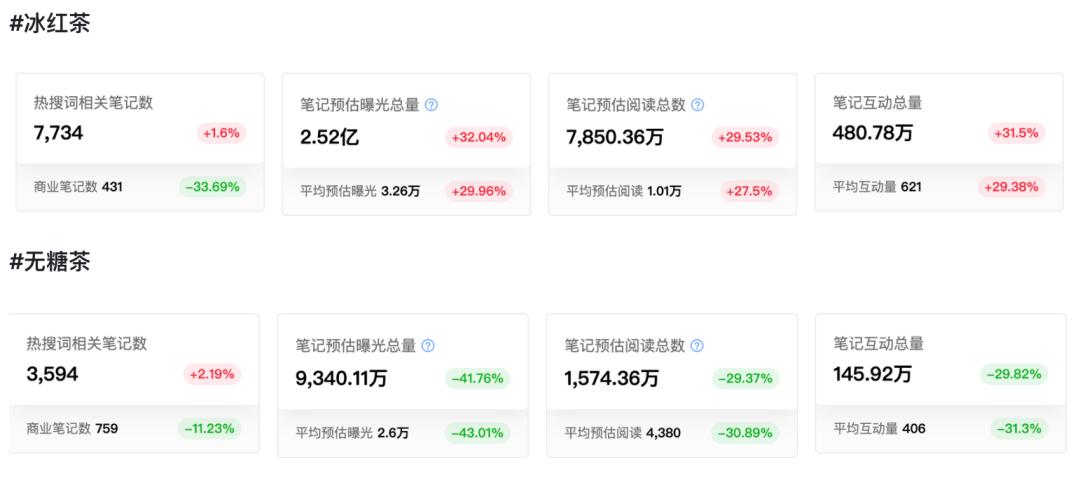
Core Insights - The beverage market is witnessing a resurgence of sugary tea drinks after a previous trend towards sugar-free options, with sugary tea beverages regaining prominence on social media platforms [1][5][11] Market Trends - Data from QianGua indicates that the topic of "iced black tea" has generated over twice the number of related posts compared to "sugar-free tea" on Xiaohongshu in the past 90 days, with significantly higher exposure and interaction rates [2] - The ready-to-drink tea market, valued at nearly 100 billion, still sees sugary tea holding a 65% market share in offline channels as of June 2025, indicating its strong presence despite the rise of sugar-free alternatives [6] Brand Strategies - Major brands, including leading players and new entrants, are launching a variety of low-sugar and sugary products, with Genki Forest's iced tea becoming a standout item, achieving over 100 million in monthly sales and a 150% market share growth in sugary ready-to-drink tea from July 2024 to June 2025 [5][6] - The introduction of reduced-sugar versions by Genki Forest has led to significant market penetration, with its iced tea reaching the fifth position in the sugary tea segment by August 2025 [7] Consumer Behavior - The primary consumer demographic for iced tea includes working individuals aged 24-40, predominantly male, who are attracted to the product's affordability, refreshing taste, and health-conscious reduced sugar options [8] - A significant 71.4% of consumers prioritize "sugar-free/reduced sugar" labels when purchasing iced tea, while 82.9% prefer reduced-sugar formulations, highlighting a shift in consumer preferences towards healthier options [10] Product Development - Current product development strategies among brands focus on two main approaches: one involves reducing sugar content using real sugar, while the other combines real sugar with alternative sweeteners to achieve a balance between taste and health [13] - The upcoming food safety regulations in 2025 will require brands to transparently label sugar content, pushing them to communicate their sugar reduction strategies more effectively to consumers [14]

“要表、要PPT、要业绩”,总部对区域越管越乱,盯的越严、销量越差
3 6 Ke· 2025-10-10 10:30
Core Insights - The phenomenon where products perform better when not closely monitored by headquarters is becoming common in the food and beverage industry [1][8] - Companies that shift focus away from certain products often see unexpected sales growth, indicating a disconnect between management strategies and market realities [2][8] Group 1: Company Management and Sales Performance - Companies that intensively manage specific products often see disappointing sales despite increased investment and resources [2][4] - For instance, a company focused on ice tea and electrolyte drinks saw poor sales despite heavy investment, while reducing focus led to a double-digit growth in sales [2][8] - Another company in the instant noodle sector experienced a similar trend, where reduced investment led to a 7-8% sales increase despite overall low growth in the industry [2][8] Group 2: Impact of Headquarters Management - Increased scrutiny and management from headquarters can lead to confusion and inefficiency at the regional level, resulting in distorted execution of sales strategies [3][4] - Headquarters often imposes numerous performance metrics and expectations, which can overwhelm sales staff and detract from effective selling practices [5][7] - The pressure to meet high expectations can lead to a focus on short-term results rather than sustainable growth, causing employees to feel demotivated [5][7] Group 3: Market Dynamics and Employee Experience - Employees with extensive market experience can adapt and sell traditional products effectively when given the autonomy to do so, leading to unexpected sales growth [8][10] - The disconnect between management and frontline employees can result in ineffective strategies that do not align with market conditions [10][11] - A culture of internal competition and excessive focus on metrics can lead to inefficiencies and a lack of meaningful progress in sales [11][13] Group 4: Recommendations for Management - Companies should consider granting more autonomy to regional teams to respond to market dynamics effectively, rather than imposing rigid controls from headquarters [13] - A balance between oversight and independence is crucial for fostering an environment where sales teams can thrive and adapt to changing market conditions [13]
百事第三季度营收超1700亿元,CEO大赞“全球韧性”,中国市场却成了“隐痛”?
3 6 Ke· 2025-10-10 09:56
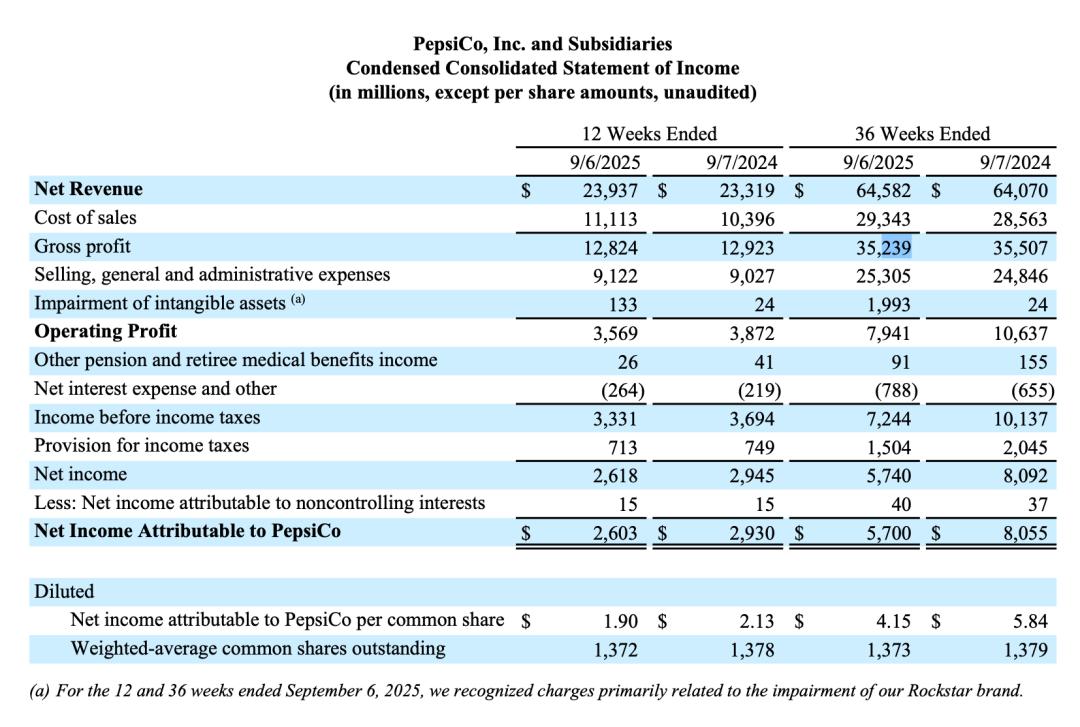
Core Viewpoint - PepsiCo's Q3 performance exceeded expectations, with strong global market results, particularly in international markets, but the performance in China raises concerns [1][2] Financial Performance - For Q3 2025, PepsiCo reported a revenue increase of 2.6% year-over-year to $23.94 billion (approximately ¥1746.42 billion), surpassing Wall Street expectations [2] - North American snack and beverage sales declined, while sales in Latin America and Asia increased [2] - Net income attributable to PepsiCo was $2.60 billion, down from $2.93 billion in the previous year [4] Market Performance - The Chinese market was not highlighted in the earnings report, indicating a lack of growth, with beverage sales showing a low single-digit decline [5][7] - In contrast, Coca-Cola has regained market share in China, with its flagship products performing well [5] Strategic Challenges - PepsiCo's cautious language regarding its beverage business in China suggests underlying issues, with a focus on snack performance instead [7] - Despite efforts to localize products and marketing, such as launching region-specific flavors and partnering with local brands, these initiatives have not yielded significant sales improvements [8][10] Competitive Landscape - PepsiCo's slower innovation pace in the beverage sector has allowed competitors like Coca-Cola to capture market share, particularly with health-oriented products [10][12] - The company's distribution strategy has faced challenges, with a fragmented channel network limiting its market penetration compared to Coca-Cola's established system [12][14] - Increased competition from local brands and new beverage categories has further complicated PepsiCo's position in the Chinese market [14]

康师傅控股(00322) - 持续关连交易
2025-10-09 08:33
香港交易及結算所有限公司及香港聯合交易所有限公司對本公告的內容概不負責,對其準確性或完 整性亦不發表任何聲明,並明確表示,概不對因本公告全部或任何部份內容而產生或因倚賴該等內 容而引致之任何損失承擔任何責任。 TINGYI (CAYMAN ISLANDS) HOLDING CORP. 康師傅控股有限公司* (於開曼群島註冊成立之有限公司) (股份編號:0322) 持續關連交易 於2025年10月9日,本公司與頂峰訂立供應協議,內容有關本集團將從頂峰採購 馬鈴薯變性澱粉、木薯變性澱粉及調味品,年期為截至 2028年12月31日止三個 財政年度。 由於頂峰由本公司董事會主席及執行董事魏宏名先生以及本公司執行董事魏宏丞 先生的家庭成員及親屬實益擁有,因此就上市規則第14A章而言,頂峰為本公司 關連人士,供應協議項下擬進行的交易將構成上市規則第 14A章項下的本公司持 續關連交易。 由於供應協議項下的年度上限額的適用百分比率將超過0.1%但低於5%,因此供 應協議項下擬進行的交易需遵守上市規則第 14A章項下的申報、年度審閱及公告 的規定,但豁免遵守獨立股東批准的規定。 – 1 – 背景 茲提述本公司於2022年12 ...
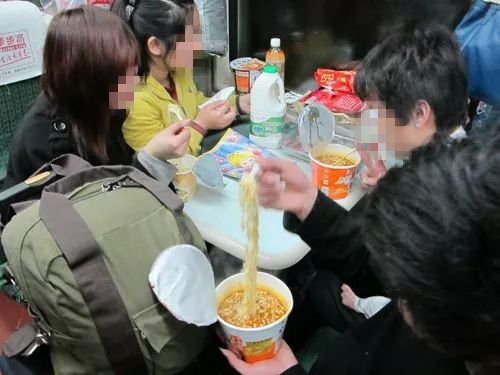
从泡面到文创雪糕,一节车厢,浓缩二十年食品饮料消费变迁
3 6 Ke· 2025-10-09 01:00
Core Insights - The article discusses the evolution of food consumption on trains in China, highlighting the shift from traditional snacks like instant noodles to more diverse and experiential food options that cater to modern consumer preferences [4][6][9]. Group 1: Historical Context - In 1999, the introduction of the "Golden Week" holiday led to a surge in domestic travel, with 28 million trips taken that year, generating 14.1 billion yuan in tourism revenue [5]. - By 2024, domestic travel during the National Day holiday reached 765 million trips, with total spending hitting 700.8 billion yuan [5][6]. - The transition from traditional green trains to high-speed trains has significantly reduced travel times, enhancing the travel experience [6]. Group 2: Changing Consumer Preferences - Consumers are increasingly seeking food and beverages that offer aesthetic appeal and emotional satisfaction during travel, moving beyond mere sustenance [6][9]. - New food items like specialty milk teas and creative snacks are becoming popular, reflecting a shift towards experiential consumption [7][9]. Group 3: Evolution of Train Food - Instant noodles, particularly brands like Kang Shifu, became iconic in train dining due to their convenience and affordability, with Kang Shifu's beef noodles launched in 1992 [12][14]. - The introduction of various snacks, including spicy chicken feet and ready-to-drink congee, has diversified the food options available on trains [18][20]. - The development of packaging technologies, such as modified atmosphere packaging, has improved the freshness and convenience of ready-to-eat foods like marinated meats [27][28]. Group 4: Regional and Cultural Influences - The rise of regional specialty foods on trains reflects a growing consumer desire for local experiences, with products like beef jerky and traditional snacks gaining popularity [42][47]. - The introduction of themed creative ice creams on trains showcases the blending of cultural elements with food offerings, enhancing the travel experience [38][39].

从泡面到文创雪糕,列车车厢浓缩20年消费变迁
Xin Lang Cai Jing· 2025-10-08 11:08
Core Insights - The article discusses the evolution of food and beverage consumption on trains in China, highlighting the shift from basic sustenance to experience-oriented products that enhance travel enjoyment [4][6][20]. Group 1: Historical Context - In 1999, the introduction of the "Golden Week" holiday led to a surge in domestic travel, with 28 million trips taken and a total tourism revenue of 14.1 billion yuan [1]. - By 2024, domestic travel during the National Day holiday reached 765 million trips, generating a total expenditure of 700.8 billion yuan [2]. Group 2: Changing Consumer Preferences - Consumers now prefer visually appealing and emotionally satisfying food and beverage options during travel, moving beyond mere hydration and sustenance [4][6]. - The demand for experience-oriented products is expected to surpass last year's levels during the National Day holiday [6]. Group 3: Food and Beverage Innovations - The introduction of instant noodles, particularly the iconic Kang Shifu beef noodles in 1992, revolutionized train food consumption, meeting the needs of travelers for convenience and affordability [8][11]. - The rise of various snack options, such as spicy chicken feet and eight-treasure porridge, reflects a diversification in train food offerings, catering to modern consumer tastes [12][16]. Group 4: Packaging and Preservation Advances - The introduction of "modified atmosphere packaging" by brands like Zhou Hei Ya has extended the shelf life of ready-to-eat products, making them more suitable for train travel [22][23]. - The growth of portable and fresh options, such as freeze-dried coffee and instant fruit teas, indicates a trend towards convenience and quality in travel snacks [25][26][28]. Group 5: Cultural and Regional Influences - The emergence of cultural-themed ice creams and regional snacks on trains highlights a growing emphasis on local experiences and culinary diversity during travel [34][36]. - Passengers are increasingly exposed to regional specialties, enhancing their travel experience and connecting them to local cultures [38][41].
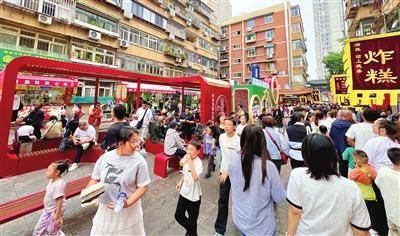
魅力商圈 消费提质|烟火气里藏新意 游客打卡“慢生活”
Sou Hu Cai Jing· 2025-10-05 04:49
除了西北角特色街区,红桥区还为市民游客精心打造了一场融合美食、购物、文化与潮玩的消费盛宴, 让市民游客在沉浸式的体验中,感受轻松愉快的假日氛围。 "我爱你,中国!""愿祖国繁荣昌盛,山河无恙!"在与西北角特色街区两站地铁之隔的洪湖里美食街区 内,"向祖国告白"的打卡墙前人流不断、热闹非凡,大家一饱口福后,纷纷拿起马克笔写下深情告白。 与此同时,街区还精心设置了10个打卡集章点,完成5个点位打卡即可兑换街区IP形象"洪小狸"的主题 冰箱贴。在洪湖南路与敦煌道交口,来自天津民族书画研究会的书画名家现场挥毫泼墨,免费赠送印 有"洪小狸"萌趣形象的书画团扇,让游客将独特的城市记忆带回家。 国庆、中秋双节期间,西北角特色街区经过近一个月的提升改造,以崭新面貌迎接着四面八方游客,打 卡"慢生活",享受"松弛感"。 国庆假期,红桥区西北角特色街区人头攒动,游客们品尝着地道的津味美食。 天津日报记者 孙立伟 摄 "为了提升游客们的'逛吃'体验,打造多元化消费新场景,今年9月,我们在西北角特色街区开展了包括 路面焕新、街心公园打造、早餐车焕新、文创升级等在内的'十大焕新'行动。"红桥区铃铛阁街道党工 委副书记申梦博介绍,主干道 ...
康师傅控股(00322) - 截至二零二五年九月三十日止之股份发行人的证券变动月报表
2025-10-03 10:00
股份發行人及根據《上市規則》第十九B章上市的香港預託證券發行人的證券變動月報表 截至月份: 2025年9月30日 狀態: 新提交 致:香港交易及結算所有限公司 公司名稱: 康師傅控股有限公司 | 1. 股份分類 | 普通股 | 股份類別 | 不適用 | | 於香港聯交所上市 (註1) | | 是 | | | --- | --- | --- | --- | --- | --- | --- | --- | --- | | 證券代號 (如上市) | 00322 | 說明 | | | | | | | | | | 已發行股份(不包括庫存股份)數目 | | 庫存股份數目 | | | 已發行股份總數 | | | 上月底結存 | | | 5,636,516,360 | | | 0 | | 5,636,516,360 | | 增加 / 減少 (-) | | | | | | 0 | | | | 本月底結存 | | | 5,636,516,360 | | | 0 | | 5,636,516,360 | 第 2 頁 共 10 頁 v 1.1.1 呈交日期: 2025年10月3日 I. 法定/註冊股本變動 | 1. 股份分類 | 普通 ...
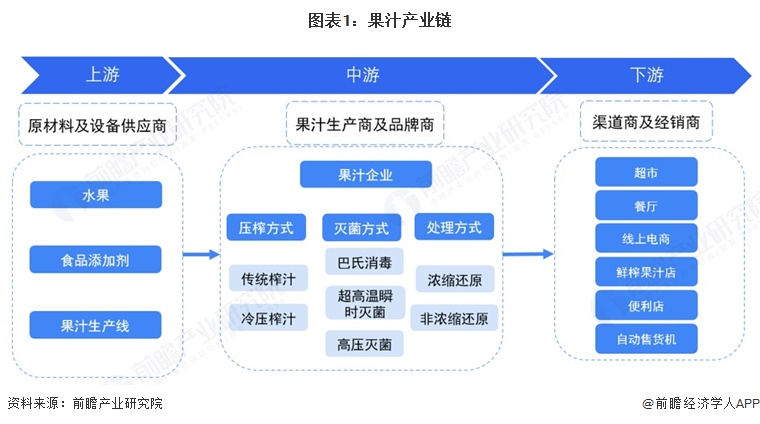
【干货】果汁产业链全景梳理及区域热力地图
Qian Zhan Wang· 2025-10-03 06:16
Core Insights - The juice industry chain encompasses upstream raw material supply, midstream processing and manufacturing, and downstream distribution and sales, forming a complete ecosystem [2][4] - The industry is characterized by a significant market share held by low-concentration juice products [6] - Major juice industry companies are concentrated in Guangdong, Taiwan, and regions like Zhejiang and Jiangsu [9][11] Upstream Supply - Upstream focuses on raw material supply, primarily involving the cultivation of fruits like apples, citrus, and mangoes, supported by large-scale bases and cooperative models [2] - Key upstream companies include Shaanxi Haisheng Fruit Industry, Guangxi Mango Planting Cooperative, and Shanghai Wodi Intelligent Equipment [4] Midstream Processing - The midstream involves processing steps such as washing, sorting, juicing, and filtering to produce various juice products, relying on advanced technologies like cold pressing and HPP [2] - Representative companies in this segment include Nongfu Spring and Huiyuan, along with emerging firms like Tianye Co. and Tiandi Yihua [4] Downstream Distribution - Downstream sales channels include supermarkets, convenience stores, e-commerce platforms, and restaurants, driven by brand marketing and consumer health trends [2] - Major distributors include China Resources Vanguard, KFC, and Taobao [4] Regional Distribution - The juice industry is predominantly concentrated in Guangdong, with significant representation in Taiwan, Zhejiang, and Jiangsu [9][11] Investment Trends - Since 2020, major juice companies have focused on acquisitions and establishing new factories to expand their market presence [14] - Notable investments include Huiyuan Group's 4.5 billion yuan investment in a smart cold chain processing park in Sichuan [16], and Nongfu Spring's 5 billion yuan investment in a comprehensive industrial base in Jiande [16]