
Figure AI

Search documents
2025商用具身智能白皮书
艾瑞咨询· 2026-01-26 00:07
Core Insights - Embodied intelligence has gained significant traction globally, with Figure achieving a valuation of $39 billion despite zero revenue, while domestic players are securing commercial orders and projecting substantial revenue growth [1][9] - The Chinese government has integrated embodied intelligence into its key industrial strategies, indicating a robust market potential [1][9] Definition and Understanding - Embodied intelligence is recognized as a crucial development in artificial intelligence, characterized by agents that interact with their environment through a physical body, showcasing autonomy and adaptability [2] - It represents a convergence of machine learning, computer vision, and robotics, marking a significant step towards practical AI applications [2] Commercial Scene Classification - Different forms of embodied intelligent robots are evolving to meet diverse needs across retail, dining, manufacturing, logistics, education, and healthcare [4] - Commercial applications focus on enhancing service experiences in dynamic environments, while industrial applications emphasize precision and stability in structured settings [4] Strategic Significance - Embodied intelligence is pivotal in narrowing the technological gap between China and the U.S., driving innovation across various sectors [6] - It plays a vital role in upgrading the technology supply chain and fostering new industries, impacting long-term economic benefits and national competitiveness [6] Policy Incentives - The Chinese government is actively promoting the standardization and implementation of embodied intelligence through various supportive policies and funding initiatives [9] Development Stages - The evolution of embodied intelligence can be categorized into three phases: conceptual development (1950s), technological accumulation (2000-2020), and application expansion driven by large models (2020 onwards) [11] - The competition between China and the U.S. is intensifying, with both countries leveraging their unique strengths to advance in foundational models and application deployment [11] Bottlenecks and Challenges - The industry faces significant challenges, including data scarcity, technological maturity, high costs, and long ROI cycles, which hinder large-scale commercialization [13] - Data collection methods are varied but still insufficient for driving model generalization and practical applications [16] Data Breakthroughs - The industry is exploring solutions to data challenges through innovative approaches like "world models" and data collection training grounds, which are expected to alleviate data scarcity issues [19] Model Evolution - The VLA model is emerging as a consensus for development, integrating large language model reasoning with real-world perception and action capabilities [21] - This evolution is expected to lead to a significant leap in embodied intelligence capabilities, akin to the breakthroughs seen with large language models [21] Commercialization Trends - The commercialization of embodied intelligence is progressing through various application scenarios, with initial focus on low-complexity, high-ROI environments [31] - The industry is transitioning from hardware sales to service subscription models, indicating a shift in business strategies [35] Global Market Predictions - The global market for embodied intelligence is projected to reach 19.2 billion RMB by 2025, with a compound annual growth rate of 73% over the next five years [46] - China's market is expected to experience significant growth, potentially exceeding 280 billion RMB by 2035 [50] International Expansion - Chinese companies are accelerating their international presence, demonstrating the feasibility of their technologies in global markets [53] - Successful case studies highlight the adaptability and competitiveness of Chinese firms in high-standard international markets [53] Competitive Landscape - The competition in the embodied intelligence sector is characterized by three main forces: AI-native challengers, traditional industrial players, and cross-industry giants [55] - The market is witnessing early signs of product homogenization, suggesting an impending consolidation phase [57] Startup Strategies - Startups must leverage their agility and innovation to survive against established giants, focusing on strategic partnerships and long-term value creation [59]



谁是去年人形机器人出货量第一?智元和宇树给出不同版本
Nan Fang Du Shi Bao· 2026-01-23 08:01
Core Viewpoint - The competition among humanoid robot manufacturers regarding shipment volumes for 2025 has sparked significant industry debate, with conflicting reports from various market research firms [2][3]. Group 1: Company Performance - Yuzhu Technology announced that its actual shipment volume for humanoid robots in 2025 will exceed 5,500 units, with over 6,500 units produced, clarifying that these figures only account for pure humanoid robots [2]. - Omdia's report estimated Yuzhu Technology's shipment volume at 4,200 units for 2025, while another report by Counterpoint suggested a similar figure of approximately 4,224 units [2]. - IDC's analysis projected Yuzhu Technology's humanoid robot sales at around 4,700 units, indicating a competitive position in the market [3]. Group 2: Market Dynamics - The global humanoid robot market is expected to reach approximately 18,000 units in shipments and $440 million in sales by 2025, with Yuzhu Technology and Zhiyuan being key players [3]. - The highest application scenario for humanoid robots remains in entertainment performances, with Yuzhu Technology focusing on research and education as its second-largest application area [3]. - The reports highlight that Chinese humanoid robot manufacturers are advancing their commercialization efforts more rapidly than their international counterparts, who are still in pilot phases [4]. Group 3: Competitive Landscape - The Omdia report faced criticism for not including other manufacturers like Accelerated Evolution and Galaxy General, which also have notable shipment volumes [4]. - Accelerated Evolution reported a shipment of 1,034 humanoid robots for 2025, indicating a growing competitive landscape [4]. - Tesla's humanoid robot, Optimus, is still in internal testing, with plans for public sale by the end of 2027, showcasing the different stages of development among global competitors [4].

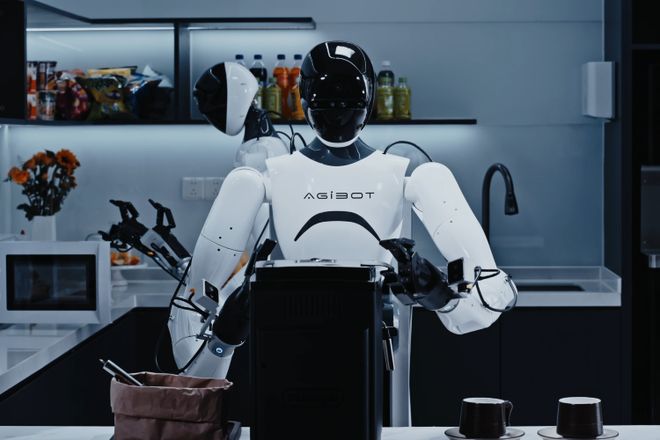
深度机智(北京)科技有限公司创始人陈凯:用人类“第一视角”重构具身智能“大脑”
Mei Ri Jing Ji Xin Wen· 2026-01-20 12:36
Core Viewpoint - The development of embodied intelligence in China is currently rated very low, with expectations for improvement by 2025 being minimal, around 1 to 0 out of 10 [1][2]. Group 1: Company Overview - Deep Intelligence (Beijing) Technology Co., founded by Chen Kai, aims to enhance the physical intelligence of foundational models using human "first-person" data [2][3]. - The company was established in May 2025, with a team that has a high proportion of PhD holders, focusing on a unique technical path that does not rely on expensive motion capture equipment [3][4]. Group 2: Technical Approach - The company collects "first-person" video data from real-world scenarios to build a general embodied intelligence model, which has faced skepticism from investors initially [2][4]. - Chen Kai believes that human "first-person" data contains deep laws of the physical world that cannot be fully described in words or rules, and this data needs to be compressed into large models for better understanding [4][6]. Group 3: Market Validation - The shift in Tesla's approach to reduce reliance on remote operation data in favor of "first-person" video learning has validated the company's technical direction [4][5]. - The emergence of Generalist AI and Physical Intelligence has further confirmed the importance of real-world data in enhancing model generality, aligning with the company's hypotheses [5][6]. Group 4: Data Collection and Goals - The company aims to reach a data collection scale of "one million hours" by mid-2026, which is expected to significantly improve the understanding of physical intelligence and validate the Scaling Law [7][8]. - Currently, the company collects over 1,000 hours of data daily, but achieving the target requires extensive data cleaning and processing [7]. Group 5: Industry Perspective - The gap between China and the U.S. in embodied intelligence is reportedly widening, primarily due to a lack of convergence in technical paths among many companies [10]. - However, there is optimism for 2026 as the industry is expected to accelerate, with increased investment and a clearer consensus on data collection methods [10][11]. Group 6: Future Outlook - Key themes for the future of embodied intelligence include acceleration, scaling of data and models, and a sense of hope for overcoming initial skepticism in the industry [11]. - The company believes that the cost advantages of collecting "first-person" data in China could lead to a competitive edge in the global market [10].
2025商用具身智能白皮书
艾瑞咨询· 2026-01-19 00:06
Core Insights - Embodied intelligence has gained significant traction globally, with Figure achieving a valuation of $39 billion despite zero revenue, while domestic players are securing commercial orders and projecting substantial revenue growth [1][4] - The Chinese market is integrating embodied intelligence into its strategic development plans, indicating a shift towards a trillion-dollar market landscape [1][9] Definition and Understanding - Embodied intelligence is recognized as a crucial development direction in artificial intelligence, characterized by agents that interact with their environment through a closed-loop of perception, understanding, decision-making, and action [2] - It represents a convergence of machine learning, computer vision, and robotics, marking a significant step towards practical AI applications [2] Commercial Scene Classification - Different forms of embodied intelligence robots are evolving to meet diverse needs across retail, dining, manufacturing, logistics, education, and healthcare [4] - Commercial applications focus on enhancing service experiences and operational flexibility in dynamic environments, while industrial applications emphasize precision, load capacity, and stability [4] Strategic Significance - Embodied intelligence is pivotal in upgrading the technology industry and fostering new sectors, contributing to the collaborative innovation of advanced components like chips and sensors [6] - The competition between China and the U.S. in this field is critical for economic benefits and national competitiveness, positioning it as a key battleground for the next decade [6] Policy Incentives - The Chinese government is actively promoting the development of embodied intelligence through various policies, funding, and standardization efforts [9] - Local governments are also implementing plans and initiatives to support the industry, including establishing funds for humanoid robots and fostering collaboration [9] Development Stages - The evolution of embodied intelligence can be divided into three phases: conceptual development from the 1950s, a technology accumulation phase from 2000 to 2020, and an application expansion phase post-2020 [11] - The U.S. has a head start due to its computational resources and capital ecosystem, while China is rapidly catching up through policy support and industry collaboration [11] Bottlenecks and Challenges - The industry faces significant challenges, including data collection difficulties, high costs of core components, and the need for improved training efficiency [13][16] - The lack of high-quality, real-world data and the immaturity of certain technologies are major constraints on large-scale commercialization [13] Data Acquisition and Breakthroughs - Current data acquisition methods include remote operation, simulation, motion capture, and internet video, but high-quality data remains scarce [16] - Efforts are underway to alleviate data challenges through innovative solutions like "world models" and data collection training grounds [19] Model Evolution - The VLA model is emerging as a consensus for development, integrating large language model reasoning with real-world perception and action capabilities [21] - This evolution is expected to lead to a significant leap in embodied intelligence capabilities, akin to the breakthroughs seen with large language models [21] Commercialization Trends - The commercialization of embodied intelligence is progressing through various application scenarios, with initial focus on low-complexity, high-ROI environments [31] - The industry is transitioning from hardware sales to service subscription models, indicating a shift towards more integrated business approaches [35] Global Market Predictions - The global market for embodied intelligence is projected to reach 19.2 billion RMB by 2025, with a compound annual growth rate of 73% over the next five years [46] - China's market is expected to experience significant growth, potentially exceeding 280 billion RMB by 2035, driven by a robust industrial ecosystem [50] International Expansion - Chinese companies are accelerating their international presence, moving from core capabilities to localized applications in global markets [53] - Successful case studies highlight the feasibility of Chinese embodied intelligence in meeting high international standards [53] Competitive Landscape - The competition in embodied intelligence features three main players: AI-native challengers like Figure, traditional industrial players like ABB, and cross-industry giants like Tesla [55] - The market is showing signs of product homogenization, suggesting an impending consolidation phase as competition intensifies [57] Startup Strategies - Startups must leverage their agility and innovation to survive against established giants, focusing on strategic partnerships and long-term value creation [59]

All in AI 的第一个三年|42章经
42章经· 2026-01-18 13:33
Core Insights - The article reflects on the evolution of AI over the past three years, emphasizing the importance of being "all in" on AI investments and recognizing the high value of early-stage projects [2][3][4] - The discussion highlights the need for openness in investment decisions, particularly regarding international projects, as missed opportunities can lead to significant losses [4][6] - The future is seen as a "big science era," where AI will empower young scientists, and the focus should be on individual authenticity and self-expression in the AI age [22][24][29] Investment Decisions - The most correct decision made was to invest heavily in AI, with a recognition that the cost-effectiveness of projects was much higher in the past [3][4] - There was a missed opportunity to invest in Figure AI, which has seen its valuation rise from $800 million to $40 billion, illustrating the importance of being open to international investments [4][6] - The investment strategy should focus on converting money into computational power, as the future will be defined by intelligence driven by AI [10][13] AI and AGI Perspectives - The belief in AGI (Artificial General Intelligence) remains strong, with the expectation that AI will soon surpass human capabilities in verifiable environments [19][21] - The response of large companies to AI developments has been unexpectedly strong, impacting the potential ceiling for startups [15][18] - The integration of AI and embodied intelligence is crucial for achieving AGI, with both being seen as complementary paths [87][94] Market Trends and Future Outlook - The market for AI and embodied intelligence is evolving, with a notable shift towards the Hong Kong market as a new exit channel for companies [78][81] - The structure of market participants is changing, with more domestic capital involved in AI investments, indicating a maturation of the investment landscape [79][81] - The expectation for the next three years is optimistic, with a belief that funding will increasingly flow into China as innovative projects gain recognition [100][103] Personal Insights and Reflections - The concept of "life force" is emphasized, suggesting that true vitality comes from living authentically and not merely conforming to external expectations [106][108] - The importance of focusing attention on long-term, low-frequency signals rather than short-term noise is highlighted as a key to improving life quality [128][129] - The future will require individuals to express their true selves, as authenticity will be essential in a world increasingly influenced by AI [151][153]

科技制造产业月报(2025年12月):奔跑的机器人,与变局的制造业-20260117
Huachuang Securities· 2026-01-17 14:01
Investment Rating - The report does not explicitly provide an investment rating for the industry Core Insights - The human-shaped robot's ability to run smoothly represents a significant technological leap from mere functionality to human-like capabilities, indicating a potential shift towards practical applications in complex environments [9][20] - The competition in the humanoid robot industry has evolved into a multi-dimensional strategic game, with different focuses across the supply chain, emphasizing the need for companies to integrate technology, establish standards, and meet real industry demands [22][30] - The future of humanoid robots hinges on overcoming five critical conditions: technological maturity, cost control, clear market positioning, infrastructure development, and societal acceptance [30][31] Summary by Sections Section 1: The Impact of Robot Running Demonstrations - The recent running demonstrations by Tesla's Optimus and Figure AI have generated significant global interest, suggesting a potential breakthrough in the commercialization of humanoid robots [5][6] - These demonstrations challenge the notion that advanced robotics can only exist in controlled environments, indicating a shift towards practical, scalable applications [31] Section 2: Technical Breakdown of Running Capabilities - Achieving running capabilities involves overcoming substantial technical challenges, including dynamic balance, rapid response times, and energy efficiency [10][19] - The transition from walking to running signifies a fundamental change in robotic capabilities, moving from static to dynamic balance, which is essential for operating in unpredictable environments [12][20] Section 3: Business Logic Behind the Demonstrations - The timing of these demonstrations reflects a strategic move by industry leaders to signal their technological advancements and readiness for market integration [32] - Both Tesla and Figure AI are pursuing different paths: Tesla aims for a universal platform while Figure AI focuses on specific industrial applications, highlighting the diverse strategies within the industry [26][30] Section 4: Industry Chain Dynamics - The competition among suppliers, manufacturers, and application developers is intensifying, with each segment vying for control over standards and market share [22][30] - The report emphasizes the importance of establishing a robust ecosystem that supports the development and deployment of humanoid robots in real-world applications [30] Section 5: Future Outlook - The next few years are critical for validating the feasibility of humanoid robots, with key indicators including commercial orders, supply chain formation, and cost reduction trends [31] - The industry is at a pivotal moment, transitioning from experimental demonstrations to practical implementations that can deliver economic value [31]




机器人“大脑”60年进化史:基础模型五代进化与三大闭源流派
3 6 Ke· 2026-01-15 03:48
Core Insights - The article discusses the advancements in robotics, particularly focusing on the emergence of foundational models in robotics, which are expected to revolutionize the industry by 2025 [6][23][35]. Group 1: Robotics Developments - Figure AI released its third-generation robot capable of performing various household tasks, but its success rate is questioned due to design issues [1]. - Tesla's robot has faced significant challenges in mass production, leading to a pause in production for hardware redesign [3]. - The article emphasizes the importance of foundational models in robotics, likening them to the capabilities of large language models [6][17]. Group 2: Historical Context of Robotics - The evolution of robotics is categorized into five generations, starting from programmed robots in the 1960s to the current vision-language-action (VLA) models [6][8][17]. - The first generation relied on strict programming, while the second introduced environmental perception through SLAM technology [9][11]. - The third generation utilized behavior cloning, allowing robots to learn from human demonstrations, but faced data efficiency issues [13][15]. Group 3: The Rise of VLA Models - The VLA model integrates vision, language, and action into a single neural network, enabling robots to understand complex instructions and perform tasks more efficiently [18][19]. - The emergence of VLA models is attributed to the maturity of large language models, which provide the necessary capabilities for understanding commands and reasoning [24][26]. - The article identifies three key factors contributing to the rise of foundational models in 2025: the maturity of large language models, reduced computing costs, and a mature hardware supply chain [27][31][33]. Group 4: Market Dynamics and Competition - The market for humanoid robots is projected to be massive, with estimates suggesting a $5 trillion market and the potential for one billion robots globally by 2025 [35]. - Dyna Robotics, a notable player in the field, has secured significant funding and aims to deploy robots in commercial settings, focusing on specific tasks like folding towels [37][56]. - The competition among robotics companies is categorized into three factions: full-stack integrators, vertical breakthrough specialists, and ecosystem platform developers, each with distinct strategies for achieving general-purpose robotics [41][72][81]. Group 5: Future Outlook - The article concludes that while impressive demonstrations have been made, the practical deployment of these technologies remains uncertain, with companies like Tesla and Figure AI still facing challenges in commercialization [82][85]. - The potential for household robots to assist with mundane tasks is highlighted as a near-future possibility, with companies aiming to introduce robots capable of performing specific functions in homes [85][86].


从CES看人形机器人叙事变化
2026-01-13 01:10
Summary of Key Points from Conference Call Records Industry Overview - The humanoid robot market is dominated by Chinese companies, with the top six companies expected to account for 87% of global shipments by 2025, indicating a significant lead in the market [1][2]. Core Insights and Arguments - The investment logic in humanoid robots is shifting from simple hardware production to a focus on AGI-related brain technologies and software applications, as hardware mass production becomes less meaningful due to the dominance of Chinese firms [1][3]. - There is a valuation inversion in the humanoid robot sector, exemplified by Figure AI, which holds a mere 1% market share but has a market capitalization of $39 billion, surpassing the combined market value of leading Chinese companies [1][4]. - Rising market risk appetite, influenced by geopolitical changes and ongoing government support for AI, is beneficial for the AI application sector, with humanoid robots being a key area of interest [1][5]. Notable Companies and Developments - Tesla is highlighted as a significant player, potentially integrating its Full Self-Driving (FSD) capabilities into humanoid robots, leveraging its extensive real-world data and algorithmic architecture [1][6][7]. - Hengli Hydraulic is expanding its operations in Mexico to meet the overseas production demands of clients like Tesla, with a notable increase in excavator exports expected [1][8]. - Starship Transmission is preparing for an IPO and plans to establish a production capacity of 1 million humanoid robot components annually, which could enhance its market position [1][9][10]. Market Segmentation and Key Players - The humanoid robot market is concentrated in vertical applications such as sewing, packaging, logistics, and automotive production, with companies like Jack Sewing, Yongchun Intelligent, Anhui Heli, Hangcha Group, and UBTECH being noteworthy [1][12]. - Future vertical models in humanoid robotics may emerge in agriculture, mining, and road transport, particularly from leading companies capable of accumulating data collaboratively [1][13]. Additional Important Insights - The integration of Tesla's FSD technology is expected to play a crucial role in the development of humanoid robots, with supply chain companies needing strong cost control and resilience to enhance their competitive edge [1][11].

机器人“大脑”60年进化史:基础模型的五代进化与三大闭源流派|机器人系列
硅谷101· 2026-01-13 01:01
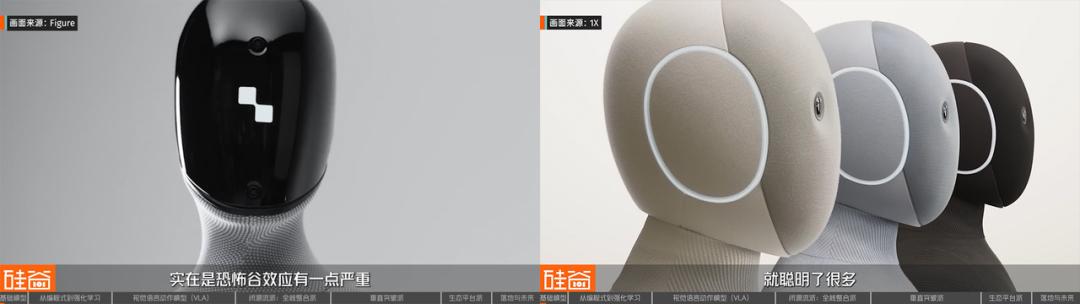
The demos released by robotics companies in 2025 are all somewhat fantastical, starting with the figures. In October, AI released its third-generation robot capable of performing various household chores. The demo was quite impressive , but the success rate of the tasks was met with considerable skepticism within the industry.I also want to criticize the design ; its face exhibits a rather pronounced uncanny valley effect . Meanwhile, another prominent company, 1X, released a demo at the end of October that ...

登顶全球第一后,这家中国公司把“具身大脑”开源了!
华尔街见闻· 2026-01-12 10:32
Core Viewpoint - The article highlights that the Chinese startup Qianxun Intelligent has achieved a significant milestone by ranking first globally in the RoboChallenge with its Spirit v1.5 VLA model, surpassing competitors like Physical Intelligence. This achievement signifies a shift in the field of embodied intelligence from hardware competition to a focus on advanced cognitive capabilities [1][6][30]. Group 1: RoboChallenge Results - Qianxun Intelligent's Spirit v1.5 VLA model scored 66.09 with a success rate of 50.33%, outperforming Physical Intelligence's pi 0.5 model, which scored 61.84 with a success rate of 42.67% [1][2]. - The RoboChallenge, initiated by organizations like Dexmal and Hugging Face, emphasizes real robot execution capabilities and covers various evaluation dimensions such as complex instruction understanding and cross-scenario stability [2]. Group 2: Technological Innovations - Spirit v1.5's success is attributed to Qianxun Intelligent's unique approach to data, moving away from overly controlled training environments to embrace chaos, allowing the model to learn in more realistic settings [4][10]. - The VLA (Vision-Language-Action) architecture enables the robot to perceive and act intuitively, contrasting with traditional robotic systems that separate perception, planning, and control [10][12]. Group 3: Practical Applications - Qianxun Intelligent plans to deploy its humanoid robot "Xiao Mo" in the Ningde Times battery PACK production line by the end of 2025, marking the world's first humanoid robot battery PACK production line [16]. - The robot's performance in this high-pressure industrial environment has shown a stable connection success rate of over 99% and a threefold increase in daily workload [18]. Group 4: Strategic Implications - By open-sourcing Spirit v1.5, Qianxun Intelligent aims to establish itself as a leader in the embodied intelligence ecosystem, potentially setting industry standards and enabling further development by researchers and startups [20][24]. - The shift from hardware-centric narratives to model-centric narratives positions Qianxun Intelligent as a platform company comparable to OpenAI, focusing on data and model ecosystems rather than just hardware capabilities [31][32]. Group 5: Industry Impact - The article suggests that the true barriers in the industry are transitioning from hardware to data, models, ecosystems, and standards, indicating a significant evolution in the competitive landscape of embodied intelligence [32][33]. - Qianxun Intelligent's advancements represent a critical turning point for China's embodied intelligence models, showcasing that robots can perform tasks like humans, with Spirit v1.5 being a pivotal starting point [33].
