
iRobot

Search documents
iRobot负债危机背后,中国服务机器人如何破局全球竞争?
Nan Fang Du Shi Bao· 2025-12-25 23:17
Core Viewpoint - iRobot has entered into a restructuring support agreement with its guarantor lenders and major supplier, Shenzhen Shanjun Robotics, which will acquire iRobot through a court-supervised process, marking a significant shift in the vacuum robot industry from foreign dominance to Chinese brand leadership [4]. Group 1: iRobot's Decline - At its peak, iRobot held an 80% global market share and sold over 50 million units, but has since lost its leading position due to over-reliance on a single product category and lack of innovation [5]. - iRobot's early patent barriers have diminished, and the company failed to adapt to technological advancements, leading to product issues in complex environments [5][6]. - The company's heavy reliance on a single contract manufacturer has weakened its supply chain resilience and quality control, contributing to its operational difficulties [6]. Group 2: Financial Performance - iRobot's revenue is projected to be $682 million in 2024, with 11 consecutive quarters of losses, unable to cover supply chain expenses through cash flow [7]. - The company's reliance on a "light asset model" has proven detrimental, as it lacks control over manufacturing and supply chain, leading to higher costs and reduced bargaining power [7]. Group 3: Competitive Landscape - Chinese brands like Ecovacs and Roborock have adopted a full-stack approach, integrating manufacturing capabilities and reducing costs, allowing them to price products competitively while maintaining healthy profit margins [8][9]. - Ecovacs has built a robust supply chain and invested heavily in R&D, resulting in significant product innovation and market responsiveness, contrasting with iRobot's slower innovation cycle [8][10]. Group 4: Industry Trends - The vacuum robot market is shifting from "incremental proliferation" to "stock competition," with emerging cleaning categories showing higher growth rates than traditional vacuum robots [9]. - Companies like Ecovacs and Roborock are diversifying their product lines, leading to substantial revenue growth and establishing a competitive edge in the smart home ecosystem [9][10]. Group 5: Technological Advancements - Chinese companies have transitioned from being global contract manufacturers to technology leaders, investing significantly in R&D to develop proprietary technologies and reduce reliance on foreign patents [10][11]. - The introduction of innovative products, such as integrated cleaning systems, has marked a new era in the vacuum robot industry, with Chinese firms leading in patent applications and technological advancements [11].


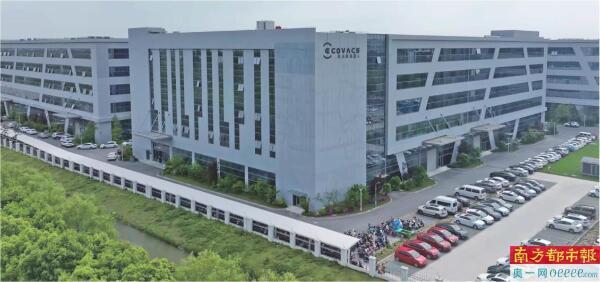
扫地机器人鼻祖iRobot的终结:一场从代工到反向收购的产业权力转移
Xin Lang Cai Jing· 2025-12-25 10:07
Core Insights - iRobot has filed for Chapter 11 bankruptcy protection and agreed to be fully acquired by its main supplier, Shenzhen Santrum Robotics, which will take over all shares and cancel outstanding debts [1][9] - Following the announcement, iRobot's stock plummeted over 70%, with its market value dropping to under $25 million, closing at $0.76 per share, resulting in significant losses for original shareholders [1][9] Group 1: Decline of iRobot - iRobot's decline is attributed to years of technological stagnation, strategic missteps, and the rise of Chinese brands [2][10] - Founded in 1990, iRobot initially focused on defense and rescue robots, achieving commercial success with the Roomba in 2002, capturing 70% of the global market at its peak [2][11] - A turning point occurred in 2022 when iRobot's revenue fell by 24% year-over-year, and it reported a net loss of $286.3 million due to stagnant core technology [2][11] - While Chinese brands adopted advanced navigation technologies, iRobot remained reliant on a single visual navigation system, leading to poor performance in complex environments and high R&D costs [2][11] - The price disparity between iRobot and Chinese brands exacerbated its crisis, with iRobot's products often costing two to three times more for similar features [2][11] - In April 2025, the U.S. imposed a 46% tariff on home appliances imported from Vietnam, increasing iRobot's operational costs by approximately $23 million [3][11] Group 2: Debt Crisis - As of Q3 2025, iRobot's cash reserves had dwindled to $24.8 million, with total liabilities exceeding $350 million and negative equity of $26.8 million, indicating insolvency [3][12] - A significant portion of iRobot's debt was owed to Shenzhen Santrum, its largest creditor, which had acquired $190.7 million in unpaid loans from the original creditor, Carlyle Group [4][13] - iRobot's total debt to Santrum exceeded $350 million, accounting for over 70% of its total liabilities, giving Santrum leverage over iRobot's production [4][13] Group 3: Acquisition by Shenzhen Santrum - The acquisition of iRobot by Shenzhen Santrum is seen as a strategic move to gain control over a well-established brand and its global sales channels [5][14] - Santrum's motivation for the acquisition includes leveraging iRobot as a platform to enter the North American market without the lengthy process of brand building [6][14] - This transition from supplier and creditor to owner signifies a profound shift in the power dynamics within the global robotic vacuum industry [6][14] Group 4: Market Dynamics - The acquisition marks a pivotal shift in the global robotic vacuum market, with Chinese brands now dominating the landscape [7][15] - By Q3 2025, iRobot's market share had plummeted to 7.9%, falling out of the top five, which are now all Chinese brands [7][16] - In North America, where iRobot once held over 80% market share, it is rapidly losing ground to Chinese competitors, who are expanding aggressively both online and offline [7][16] - The European market has become increasingly challenging for iRobot, which has downgraded its priority there, allowing Chinese brands to fill the void [7][16] - Japan, previously a stronghold for iRobot, is also under threat from the new ownership and competitive pressure from local brands [7][16] Group 5: Lessons from iRobot's Fall - iRobot's failure highlights the harsh realities of global tech competition, emphasizing the need for continuous innovation and adaptation [8][17] - The company's decline serves as a warning to other traditional giants that reliance on a single market model and slow technological evolution can lead to rapid obsolescence [8][17] - Post-acquisition, the branding of iRobot's Roomba products will be integrated with Santrum's brand, indicating a significant shift in profit flow and industry power [8][17]
如何做“爆款”,科沃斯太懂了
Feng Huang Wang· 2025-12-25 03:28
Core Insights - The commercialization capability of technology combined with scene applications and stable growth in R&D investment are fundamental elements for Ecovacs' entry into embodied intelligence [1][5] Group 1: Market Trends and Events - CES 2026 will focus on AI hardware, consumer electronics innovation, and automotive technology, with AI hardware expected to be a major topic, particularly edge AI devices and robots [1] - Ecovacs will showcase its embodied intelligence products at CES 2026, marking its continued presence in the service robot sector since its first participation in 2018 [1] Group 2: Product Development and Innovation - Ecovacs has mastered the art of creating "hit products" through technical innovation and integration of scene applications, particularly in the competitive vacuum cleaner market [3] - The X8 product integrates a "washing machine structure + intelligent robot capability," addressing the issue of secondary pollution from cleaning cloths [3][4] - The X11 team has upgraded the OZMO ROLLER 2.0 technology, enhancing cleaning capabilities and user experience, leading to significant sales growth in the X series [4] Group 3: Financial Performance and R&D Investment - Ecovacs' revenue reached 12.877 billion yuan, a year-on-year increase of 25.93%, with net profit growing by 130.55% to 1.418 billion yuan [7] - The company invested 885 million yuan in R&D in 2024, a 7.3% increase, with a total of 2,545 authorized patents, including 713 invention patents [5][6] Group 4: Supply Chain and Manufacturing - Ecovacs has established a complete and mature robot supply chain system, producing nearly 30,000 service robots daily, with over half of the components sourced locally [6][7] - The company plans to invest 200 million yuan in a new manufacturing project for core components in Huzhou, aiming for an annual output of 20 million parts [9] Group 5: Competitive Landscape and Future Outlook - Ecovacs is positioned as a strong competitor in the embodied intelligence sector, leveraging its extensive experience in product development and supply chain management [2][10] - The company aims to enhance its product offerings and market presence in the high-end segment, with a focus on meeting evolving consumer demands [5][11]
扫地机器人鼻祖iRobot破产了,但它死得一点都不冤
3 6 Ke· 2025-12-24 23:45
Core Viewpoint - iRobot, once a leader in the consumer robotics industry, has filed for bankruptcy restructuring and agreed to sell 100% of its shares to its major manufacturing partner, Shenzhen Sijuan Robotics Co., Ltd, in order to reduce its debt and continue operations [1][4]. Group 1: Company Performance and Financial Situation - iRobot's revenue peaked at nearly $1.57 billion in 2021 but has since declined significantly, with revenues of $1.18 billion, $891 million, and $682 million projected for 2022, 2023, and 2024 respectively, alongside substantial losses [5][30]. - The company faced a debt crisis, accumulating $350 million in debt, including $161.5 million owed to Sijuan and a $190.7 million loan from Carlyle Group [7][8]. - iRobot's market share has plummeted from over 60% to being surpassed by competitors like Roborock, with its market share dropping to 13.7% in 2024 [30][31]. Group 2: Acquisition and Strategic Moves - The acquisition by Sijuan is seen as a strategic move to preserve assets and mitigate losses, allowing Sijuan to leverage iRobot's brand and patents while integrating its own advanced technologies [8][17]. - Sijuan, a leading manufacturer in the cleaning appliance sector, aims to revitalize iRobot by combining its manufacturing capabilities with iRobot's established market presence [10][17]. Group 3: Historical Context and Innovation - iRobot was founded in 1990 and gained fame with the launch of the Roomba in 2002, which revolutionized the home cleaning robot market [18][22]. - The company initially focused on government and defense applications, but over time shifted its focus to consumer products, leading to a decline in innovation and market competitiveness [20][29]. - iRobot's failure to adapt to new technological advancements, such as laser navigation and AI integration, has contributed to its decline, as competitors have successfully adopted these innovations [34][35].
财经观察美“扫地机器人鼻祖”破产,谁在重塑行业未来?
Huan Qiu Wang· 2025-12-24 22:39
Core Insights - iRobot, a pioneer in the robotic vacuum industry, has filed for bankruptcy due to rising costs and intensified global competition, leading to its acquisition by Chinese supplier Shenzhen Shanjun Robotics [1][2] - The situation reflects a significant restructuring within the global robotic vacuum industry, highlighting the challenges faced by American companies in the consumer electronics sector [1][3] Company Overview - iRobot, founded in 1990, was once a market leader with over 60% market share, particularly known for its Roomba vacuum [2] - The company has faced financial difficulties, with assets and liabilities between $100 million and $500 million, and has seen a workforce reduction of over 30% in the past three years [2][3] - iRobot's stock price plummeted over 70% following the bankruptcy announcement, with a market value decline of approximately 45% this year [2] Industry Dynamics - The U.S. robotic vacuum industry is experiencing systemic disconnection, with iRobot's management compensation misaligned with performance and increasing competition from more cost-effective and rapidly iterating products [3] - Trade policies, such as a 46% tariff on imports from Vietnam, have added approximately $23 million to iRobot's costs, further straining its operations [3] - Despite Roomba maintaining a 42% market share in the U.S. and 65% in Japan, the competitive landscape is shifting significantly [3] Chinese Market Position - Chinese manufacturers dominate the global robotic vacuum market, with companies like Roborock leading in shipments, accounting for 21.7% of the market [4][5] - The Chinese robotic vacuum industry is characterized by high growth, with exports expected to increase by over 20% this year, and a diverse product range across various price segments [5][6] - Chinese brands are gaining traction in Europe, with high consumer ratings and significant market presence, particularly during the holiday shopping season [7][8] Technological Advancements - The rapid iteration of technologies such as laser navigation and AI in Chinese products has addressed earlier shortcomings in user experience, driving demand [6] - Chinese companies hold over 90% of global patents in the robotic vacuum sector, positioning them as leaders in research and development [6] Consumer Trends - European consumers are increasingly favoring Chinese robotic vacuums for their high technology content and competitive pricing, with many considering them as primary gift options [7][8] - The supply chain efficiency of Chinese manufacturers, coupled with improved logistics, has enhanced their competitiveness in international markets [9]
【财经观察】美“扫地机器人鼻祖”破产,谁在重塑行业未来?
Huan Qiu Shi Bao· 2025-12-24 22:36
Core Insights - iRobot, a pioneer in the robotic vacuum industry, has filed for bankruptcy due to rising costs and intensified global competition, leading to its acquisition by Chinese supplier Shenzhen Shanjun Robotics [1][2] - The situation of iRobot reflects a significant restructuring within the global robotic vacuum industry under consumer electronics logic, highlighting a four-year innovation gap compared to Chinese competitors [1][2] Company Overview - iRobot, co-founded in 1990, launched the Roomba in 2002, establishing itself as a market leader with over 60% market share at its peak [2] - The company has faced financial difficulties, with assets and liabilities between $100 million and $500 million, and has laid off over 30% of its workforce in the past three years [2][3] - iRobot's stock price plummeted over 70% following the bankruptcy announcement, with a market value decline of approximately 45% this year [2] Industry Dynamics - The U.S. robotic vacuum industry is experiencing systemic disconnection, with iRobot's management compensation misaligned with performance and increasing competition from cost-effective, rapidly iterating products [3] - Supply chain issues and high tariffs on imports from Vietnam have added approximately $23 million in costs for iRobot, further straining its operations [3] - Despite Roomba maintaining a market share of about 42% in the U.S. and 65% in Japan, the competitive landscape is shifting significantly [3] Chinese Market Position - Chinese manufacturers dominate the global robotic vacuum market, with companies like Roborock leading in shipments, accounting for 21.7% of the market share [4][5] - The Chinese robotic vacuum industry is characterized by high growth, with exports expected to increase by around 20% this year, and a diverse product range across various price segments [5][6] - Chinese brands are gaining popularity in Europe, with high consumer ratings and significant market presence, particularly during the holiday shopping season [7][8] Technological Advancements - The rise of Chinese robotic vacuum manufacturers is attributed to rapid advancements in laser navigation, AI technology, and a complete supply chain that enhances manufacturing efficiency and cost-effectiveness [6][9] - Chinese companies hold over 90% of global patents in the robotic vacuum sector, positioning them as leaders in research, manufacturing, and market share [6] Consumer Trends - European consumers are increasingly favoring Chinese robotic vacuums for their high technology content and competitive pricing, with many considering them as primary gift options during the holiday season [7][8] - The supply chain maturity of Chinese manufacturers allows for faster delivery times, enhancing their appeal to European distributors [9]
iRobot负债危机背后 中国服务机器人如何破局全球竞争
Nan Fang Du Shi Bao· 2025-12-24 15:57
Core Viewpoint - iRobot has entered into a restructuring support agreement with its lender and major supplier, Shenzhen Sanchuan Robotics, which will acquire iRobot through a court-supervised process, leading to iRobot becoming a wholly-owned private company and delisting from stock exchanges [1] Group 1: iRobot's Decline - At its peak, iRobot held an 80% global market share and sold over 50 million units, but has since lost its dominant position due to over-reliance on a single product category and lack of innovation [2] - iRobot's early patent advantages have diminished as competition from Chinese companies has intensified, leading to significant market pressure [2] - The company has lagged in adopting new technologies, such as laser radar and SLAM, while competitors have introduced innovative features, resulting in a decline in product appeal [2][4] Group 2: Supply Chain and Manufacturing Issues - iRobot's dependence on a single manufacturing partner has weakened its supply chain resilience and quality control, contributing to its operational difficulties [3] - The company's cost structure is adversely affected by its reliance on external suppliers for core components, leading to longer product development cycles and reduced competitiveness [6] Group 3: Competitive Landscape - Chinese companies like Ecovacs and Roborock have adopted a full-stack approach, integrating manufacturing and supply chain capabilities, which has allowed them to maintain cost advantages and higher profit margins compared to iRobot [4][5] - Ecovacs has significantly reduced its bill of materials (BOM) costs to below $110 per unit, while iRobot's costs are around $140 per unit, allowing Ecovacs to price its products more competitively [4] Group 4: Innovation and Market Trends - The shift in the cleaning appliance market is moving from "incremental proliferation" to "stock competition," with emerging categories like floor washing machines and window cleaning robots showing higher growth rates than traditional vacuum robots [6] - Ecovacs and Roborock have expanded their product lines to include various cleaning devices, resulting in substantial revenue growth, while iRobot has struggled to innovate and diversify its offerings [6][8] Group 5: R&D Investment and Technological Advancements - Chinese brands have significantly increased their R&D investments, with Ecovacs and Roborock each planning to spend nearly $1.5 billion in 2024, which is a 56.93% increase year-on-year [7] - The focus on R&D has led to breakthroughs in technology, allowing Chinese companies to file over 5,000 patents related to cleaning robots, establishing a strong technological barrier [8]
“制造强国”实干系列周报(12、21期)-20251224
Shenwan Hongyuan Securities· 2025-12-24 09:13
Group 1: Commercial Aerospace - Focus on core targets in manufacturing and launch sectors that may maintain stable or improving value amid cost reduction trends[3] - Key targets in satellite manufacturing include Shanghai Hanzhou, Zhenlei Technology, and Aerospace Electronics[3] - Anticipate strong merger and acquisition expectations for Aerospace Science and Technology Group due to its substantial off-balance-sheet assets[3] Group 2: Household Robotics - iRobot's bankruptcy and the acquisition of Jiamei by Chasing Technology are optimizing the landscape of the robotic vacuum industry[3] - iRobot's revenue in Q3 2025 was $146 million, with a loss of $22 million, indicating ongoing challenges[40] Group 3: Liquid Cooling Technology - Key recommended companies include Invid, which has a clear positioning advantage and has secured orders ahead of competitors[3] - The liquid cooling market is expected to grow significantly as cloud providers adopt self-developed ASIC chips, increasing demand for cooling solutions[47] Group 4: Tungsten Materials - Tungsten ore prices have surged, with 65% black tungsten ore increasing by 200.7% to 430,000 CNY per ton by December 19, 2025[65] - Recommended companies benefiting from rising tungsten prices include Zhongtung High-tech and Xiamen Tungsten[64] Group 5: Battery Technology - Zhongchuang Innovation is transitioning to a global battery leader, focusing on high-end products like 5C ultra-fast charging and high energy density batteries[3] - The company has established a comprehensive product system covering both power and energy storage applications[3]


丢掉产业链主导权的代价:iRobot负债危机背后,中国服务机器人如何破局全球竞争?
Nan Fang Du Shi Bao· 2025-12-24 04:12
Group 1 - iRobot has entered into a restructuring support agreement with its guarantor lenders and major supplier, Shenzhen SJC Robot Co., Ltd, which will acquire iRobot through a court-supervised process, leading to iRobot becoming a wholly-owned private company [1] - iRobot was once the largest player in the robotic vacuum market, holding an 80% global market share at its peak, with cumulative sales exceeding 50 million units [2][5] - The acquisition signifies a shift in the robotic vacuum industry from foreign dominance to a comprehensive leadership by Chinese brands [1][10] Group 2 - iRobot's decline is attributed to its over-reliance on a single product category and lack of innovation, which has made it vulnerable to competition from Chinese manufacturers that have diversified their product offerings [2][4] - The company's early patent barriers have diminished over time, and it has struggled to keep pace with technological advancements, particularly in laser radar and SLAM technology, which have been adopted by competitors [4][5] - iRobot's revenue has been declining, with projected total revenue of $682 million in 2024 and 11 consecutive quarters of losses, exacerbated by its inability to cover supply chain expenses [5][8] Group 3 - Chinese brands like Ecovacs and Roborock have successfully transitioned from being global OEMs to technology leaders, significantly increasing their market presence and revenue through innovation and product diversification [10][11] - Ecovacs has seen a 120.6% increase in overseas revenue, while Roborock has expanded into the laundry care sector, achieving an 86% year-on-year revenue growth in its floor cleaning business [10][11] - The shift in the industry growth logic from "incremental penetration" to "stock competition" indicates that companies must build smart ecosystems to enhance competitiveness [8][10] Group 4 - Chinese companies have invested heavily in R&D, with Ecovacs and Roborock planning to spend nearly $1.5 billion on R&D in 2024, significantly higher than international brands [11][13] - The number of patents related to cleaning robots filed by leading Chinese companies has surpassed 5,000, with a 35% global share of core technology patents, indicating a strong technological foundation [13]
“两新”政策优化及延续,11月家用空调内外销数据出炉
Jianghai Securities· 2025-12-23 12:13
Investment Rating - The industry rating is "Overweight" (maintained) [6] Core Insights - The Central Economic Work Conference emphasized the implementation of consumption-boosting actions and the optimization of the "Two New" policy, which is expected to support domestic demand growth in the household appliance sector [6] - In November 2025, China's household air conditioner production reached 10.577 million units, a year-on-year decline of 36.7%, with sales at 10.492 million units, down 31.8% year-on-year [6] - The "old-for-new" policy has significantly boosted sales, with related product sales exceeding 2.5 trillion yuan from January to November 2025, benefiting over 360 million consumers [6] - The household air conditioner market is currently experiencing a downturn due to multiple factors, including weak terminal demand following the reduction of national subsidies and high inventory levels in overseas markets [6] Summary by Sections Industry Performance - The relative performance over the last 12 months shows a decline of 9.87% compared to the CSI 300 index, while absolute returns were positive at 7.54% [3] Market Dynamics - The report highlights that the household appliance industry is under pressure, particularly in the air conditioning segment, which is facing a phase of adjustment [6] - The future competition in the vacuum cleaner market is expected to shift towards ecosystem building and service capabilities, moving beyond just product offerings [6] Investment Recommendations - The report suggests focusing on leading white goods companies such as Midea Group, Gree Electric Appliances, and Hisense Home Appliances, as well as black goods exporters like TCL Electronics and Hisense Visual [6]