
千禾味业

Search documents
三问“心机商标” :少玩文字游戏,多点真材实料
Nan Fang Nong Cun Bao· 2025-06-10 09:34
Core Viewpoint - The article discusses the controversy surrounding "clever trademarks" in the food industry, particularly focusing on the case of White Elephant Food's "Duoban" trademark, which misleads consumers regarding product weight and content [2][10][12]. Group 1: Trademark Controversy - White Elephant Food's "Duoban" trademark is criticized for misleading consumers into believing they are purchasing a larger quantity of noodles than what is actually provided [3][14]. - The term "Duoban" is a registered trademark rather than an actual weight measurement, leading to public outrage and perceptions of deception [4][7]. - The phenomenon of "clever trademarks" is not isolated, with other examples including "Yipin Beef Jerky" and "Qianhe 0" soy sauce, which also mislead consumers through similar tactics [8][26]. Group 2: Misleading Marketing Practices - The essence of "clever trademarks" lies in exploiting information asymmetry to mislead consumer perceptions [12][13]. - Companies often use visual marketing strategies that create misconceptions about product quantity or quality, as seen with the "Duoban" noodles and "Gongang" milk [15][16]. - The use of split terminology in trademarks can create positive associations in consumers' minds, further complicating the issue of misleading branding [20][21]. Group 3: Regulatory and Legal Framework - The registration of misleading trademarks often occurs because the trademark examination process does not identify them as deceptive at the time of application [39][40]. - The article highlights the challenges in trademark regulation, noting that existing laws may not adequately prevent the registration of misleading trademarks [31][38]. - Legal remedies exist for consumers misled by such trademarks, including the possibility of punitive damages and collective lawsuits [59][60]. Group 4: Recommendations for Improvement - The article suggests that stricter regulations and standards should be established to prevent the misuse of terms like "zero additives" and "natural" in marketing [71][72]. - Companies are encouraged to prioritize integrity and transparency in their branding practices to build consumer trust [76][78]. - Enhanced consumer education is recommended to help the public critically assess product labels and marketing claims rather than relying solely on trademarks [79].


河南方便面大王,摔了一跤
Hua Er Jie Jian Wen· 2025-06-10 04:16
Core Viewpoint - The company Bai Xiang, known for its instant noodles, has recently faced backlash over its "Duoban" trademark, which misled consumers regarding product quantity, leading to a public apology and potential brand image issues [1][2][3] Group 1: Company Overview - Bai Xiang has successfully positioned itself as the third-largest player in the instant noodle market, with a market share of 12% in 2023, trailing behind Kang Shifu and Uni-President [6][8] - The company reported a sales revenue of 9.175 billion yuan in 2023, showing double-digit growth and narrowing the revenue gap with Uni-President to less than 500 million yuan [6][8] - Bai Xiang's chairman, Yao Zhongliang, founded the company in 1997, leveraging local wheat resources and gaining popularity with its "1 yuan big bone noodle" product [8] Group 2: Recent Controversy - The controversy arose when consumers discovered that the "Duoban" label on Bai Xiang's noodle packaging was a trademark, not an indication of increased quantity, leading to public outrage and a swift apology from the company [2][3][5] - The backlash was significant, with the apology trending on social media, garnering 190 million views and 34,000 discussions within 16 hours [2][3] Group 3: Market Position and Strategy - Bai Xiang has capitalized on online sales channels, especially during the rise of live-streaming e-commerce, which has significantly boosted its visibility and sales [9][10] - The company has launched innovative products like the controversial cilantro-flavored noodles, which saw a nearly 2000% increase in online sales in August 2023 [10][11] - Bai Xiang's online presence is strong, with its Douyin flagship store amassing over 5.12 million followers, far surpassing competitors [11] Group 4: Challenges and Future Outlook - Despite its online success, Bai Xiang faces challenges in the offline market, where brand recognition varies significantly among different consumer demographics [12][13] - The company is expanding its presence in southern China, with a new production facility in Guangdong set to begin operations, aiming to enhance its market penetration [14][15] - The competitive landscape remains fierce, with established brands like Kang Shifu and Uni-President maintaining strong positions in offline retail, necessitating strategic adjustments from Bai Xiang [19][20]

酱油产品量增利减,千禾味业2024年遭遇业绩双降,今年Q1经销商负增长埋隐忧
Zheng Quan Zhi Xing· 2025-06-09 02:39
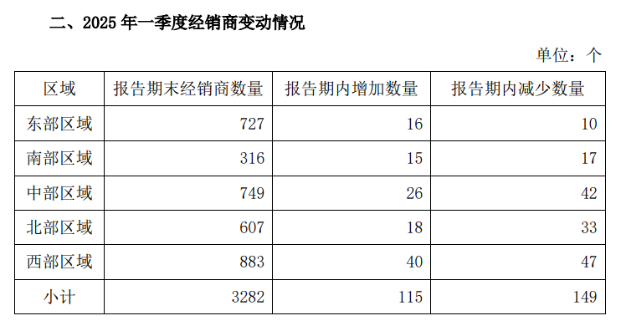
Core Viewpoint - The condiment industry is experiencing a decline in the "zero additives" trend, impacting Qianhe Flavor Industry's performance, which reported its first dual decline in earnings since its listing in 2016, with a 4.16% drop in annual revenue to 3.073 billion yuan [1][4]. Revenue and Sales Performance - In 2024, Qianhe Flavor Industry's core product, soy sauce, saw a revenue decline of 3.75% year-on-year, contributing to an overall revenue decrease of 4.16% [1]. - The company's revenue for Q1 2024 fell by 7.15% to 830 million yuan, with a net reduction of 34 distributors due to negative publicity [1][8]. - From 2021 to 2023, the company experienced significant revenue growth, with sales rising from 1.925 billion yuan in 2021 to 3.207 billion yuan in 2023, and a net profit increase of over 50% annually from 2022 to 2023 [4]. Distributor Network and Sales Model - Qianhe Flavor Industry's distributor count peaked at 3,560 in H1 2024 but fell to 3,316 by year-end, indicating a significant slowdown in expansion compared to previous years [7]. - The company transitioned its sales model from a focus on distributors to a division between online and offline sales, with offline revenue declining by 4% to 2.433 billion yuan [8]. Competitive Landscape - Competitors like Haitian Flavor Industry are rapidly expanding their "zero additives" product lines, with Haitian reporting a 60% increase in sales of its "zero additives" series in 2024 [6]. - Qianhe's soy sauce sales growth of 1.27% in 2024 is significantly lower than the previous years' growth rates of 27.49% in 2022 and 33.19% in 2023, reflecting increased competition [5]. Cost Structure and Profitability - Qianhe's soy sauce has a gross margin of 38%, which is 6.7 percentage points lower than Haitian's, despite having a lower direct material cost of approximately 1,933.45 yuan per ton compared to Haitian's 2,422.99 yuan [8]. - The lower gross margin is attributed to a higher proportion of lower-end products in Qianhe's portfolio, which dilutes overall profitability [8]. Regulatory Environment - New regulations set to take effect in March 2025 will prohibit the use of "zero additives" in marketing, requiring Qianhe to adjust its branding and product strategy within a two-year transition period [9].

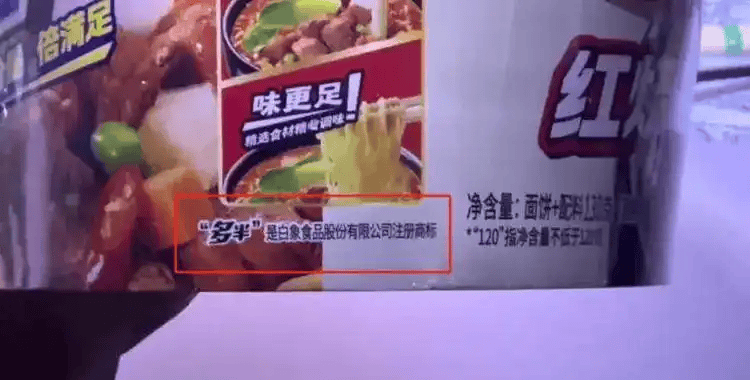
玩商标文字游戏“多半”“翻车”
Sou Hu Cai Jing· 2025-06-06 22:57
Core Viewpoint - The article discusses the controversy surrounding certain food products that use misleading branding and labeling, leading to consumer backlash and questions about the legality and ethics of such practices [1][2][3] Group 1: Misleading Branding - Several food products, such as "壹号土猪肉" and "千禾0酱油," have been criticized for using ambiguous terms that mislead consumers about their true nature [1] - The recent case of "多半袋面" and "多半桶面" highlights how consumers felt deceived when they discovered that the products did not contain the expected quantity [1] - Companies involved, like 壹号食品 and 白象集团, defended their practices by stating that they do not deceive consumers and that their products meet certain standards [1][2] Group 2: Legal and Regulatory Aspects - Experts indicate that the registration of such trademarks may not have been thoroughly scrutinized, as the concept of "土" (earthy) has gained popularity over time [2] - The legality of using these trademarks depends on the context and manner of their use, and even registered trademarks can be declared invalid if they violate legal standards [2] - The article emphasizes that companies must be cautious, as consumer protection laws can lead to penalties if products do not align with consumer expectations [2] Group 3: Consumer Trust and Perception - Consumer trust is crucial, as brands serve as a quick reference for product quality and origin; misleading branding can erode this trust [3] - When brands deviate from consumer understanding, they risk criticism and damage to their reputation, questioning the value of their branding strategies [3] - The article uses a humorous analogy to illustrate the absurdity of misleading branding, suggesting that companies should avoid becoming a joke in the eyes of consumers [3]
千禾味业(603027) - 千禾味业食品股份有限公司关于召开2024年度暨2025年第一季度业绩说明会的公告
2025-06-06 10:31
千禾味业食品股份有限公司 关于召开 2024 年度暨 2025 年第一季度业绩说明会的公告 证券代码:603027 证券简称:千禾味业 公告编号:2025-021 会议召开时间:2025 年 6 月 26 日 (星期四) 09:30-10:30 会议召开地点:上海证券交易所上证路演中心(网址:https://roadshow.s seinfo.com/) 会议召开方式:上证路演中心视频直播和网络互动 投资者可于 2025 年 6 月 19 日 (星期四) 至 6 月 25 日 (星期三)16:00 前登录上证路演中心网站首页点击"提问预征集"栏目或通过公司邮箱 irm@qia nhefood.com 进行提问。公司将在说明会上对投资者普遍关注的问题进行回答。 本公司董事会及全体董事保证本公告内容不存在任何虚假记载、误导性陈述 或者重大遗漏,并对其内容的真实性、准确性和完整性承担法律责任。 千禾味业食品股份有限公司(以下简称"公司")已于 2025 年 4 月 16 日发 布公司 2024 年年度报告及 2025 年第一季度报告,为便于广大投资者更全面深入 地了解公司 2024 年度、2025 年第一季度经营成 ...
千禾味业(603027) - 千禾味业食品股份有限公司关于召开2024年年度股东大会的通知
2025-06-06 10:30
证券代码:603027 证券简称:千禾味业 公告编号:2025-020 (四)现场会议召开的日期、时间和地点 召开的日期时间:2025 年 6 月 30 日 10 点 召开地点:四川省眉山市东坡区千禾味业食品股份有限公司 千禾味业食品股份有限公司 关于召开2024年年度股东大会的通知 本公司董事会及全体董事保证本公告内容不存在任何虚假记载、误导性陈述 或者重大遗漏,并对其内容的真实性、准确性和完整性承担法律责任。 重要内容提示: 一、 召开会议的基本情况 (一)股东大会类型和届次 2024年年度股东大会 (二)股东大会召集人:董事会 (三)投票方式:本次股东大会所采用的表决方式是现场投票和网络投票相结合的 方式 (七)涉及公开征集股东投票权 无 二、 会议审议事项 (五)网络投票的系统、起止日期和投票时间。 股东大会召开日期:2025年6月30日 本次股东大会采用的网络投票系统:上海证券交易所股东大会网络投票 系统 网络投票系统:上海证券交易所股东大会网络投票系统 网络投票起止时间:自2025 年 6 月 30 日 至2025 年 6 月 30 日 采用上海证券交易所网络投票系统,通过交易系统投票平台的投票时 ...
昆明市市场监督管理局2025年第5期食品安全监督抽检信息公告
Zhong Guo Zhi Liang Xin Wen Wang· 2025-06-06 08:34
Core Viewpoint - The announcement from the Kunming Market Supervision Administration details the results of the fifth round of food safety supervision and sampling inspections for 2025, highlighting both non-compliant and compliant food products in various categories [4]. Group 1: Inspection Standards and Products - The inspection covered a range of food products including catering foods, edible agricultural products, alcoholic beverages, vegetable products, and candy products [4]. - The sampling was conducted based on national food safety standards such as GB 2760-2024 for food additives, GB 2762-2022 for contaminants, and GB 2761-2017 for mycotoxins [4]. Group 2: Non-Compliant Samples - Specific non-compliant samples included products from local eateries, with issues primarily related to the use of sweeteners like cyclamate exceeding permissible limits [4]. - For instance, a sample of steamed buns from a local vendor was found to contain cyclamate at 1.38, which is not allowed [4]. - Another sample of sweet steamed buns had cyclamate levels at 0.737, also exceeding the allowed limit [4]. Group 3: Compliant Samples - The announcement also lists compliant samples, including homemade sweet buns and fried dough sticks, which passed the safety inspections [5]. - These compliant products demonstrate adherence to the established food safety standards, reflecting positively on local food businesses [5].
四川省达州市市场监督管理局关于2025年食品安全监督抽检情况通告 (2025年第14号)
Zhong Guo Zhi Liang Xin Wen Wang· 2025-06-06 06:15
Core Points - The Dazhou Market Supervision Administration conducted a routine food safety inspection in May 2025, focusing on large supermarkets, school canteens, and food stores in various districts, including Xuanhan, Kaijiang, Dazhu, and Quxian [2] - A total of 40 batches of food samples were tested, including vegetables, meat products, convenience foods, seasonings, pastries, tea, edible oils, and related products, with no non-compliant food items found [2] Group 1 - The inspection was part of the 2025 food safety supervision and sampling plan issued by the Dazhou Market Supervision Administration [2] - The inspection covered significant food distribution locations, ensuring a comprehensive assessment of food safety in the region [2] - The results indicate a positive compliance rate for the sampled food products, reflecting effective food safety measures in place [2] Group 2 - The report includes a detailed table listing the sampled products, their specifications, production dates, and the testing institutions involved [2][3] - Notable products sampled include various types of tea, meat products, and cooking oils, showcasing a diverse range of food categories [2][3] - The inspection results contribute to the overall food safety monitoring efforts in Dazhou, reinforcing consumer confidence in food quality [2]
关心:白象“多半”的心机,早晚酿成危机
Sou Hu Cai Jing· 2025-06-05 06:51
Core Viewpoint - The article discusses the prevalence of misleading trademarks in various industries, particularly in food and consumer products, highlighting the deceptive practices that mislead consumers about product characteristics and quality [1][3]. Group 1: Misleading Trademarks in Food Industry - Bai Xiang instant noodles' trademark "多半" misleads consumers into thinking they are purchasing a "多半袋" (half bag) of noodles [1]. - Other examples include Qianhe's soy sauce labeled as "千禾0" implying zero additives, and Yuanqi Forest's tea products that confuse "0 sugar" and "0 cane sugar" [1]. - Brands like Pucheng Dairy and various noodle brands use terms like "高端无添加" (high-end no additives) and "手擀" (handmade) to create false impressions about their products [1]. Group 2: Deceptive Practices Beyond Food - The article notes that misleading trademarks are not limited to food, with electronic products using terms like "120W" that may not reflect actual power [3]. - Brands create confusion by using similar names to well-known brands, such as "小天才特×" and "胖都来," which can mislead consumers [1][3]. Group 3: Trademark Registration Issues - The trademark registration process includes formal and substantive reviews, but subjective interpretations can lead to misleading trademarks being approved [3]. - Some applicants exploit loopholes by splitting trademarks or applying in multiple categories to bypass scrutiny [3]. - Examples include the "壹号土" trademark, which could mislead consumers into thinking it relates to "土猪肉" (local pork) [3]. Group 4: Importance of Integrity in Business - The article emphasizes that integrity is crucial for businesses, especially in the food industry, where consumer health is at stake [4]. - Companies must be accountable for the authenticity of their trademarks to build consumer trust in product quality and safety [4]. - Regulatory bodies are encouraged to monitor and penalize businesses with invalid trademarks to maintain market integrity [4].
白象回应“多半”争议:为更大包装 后续将调整避免误解
Jing Ji Guan Cha Bao· 2025-06-04 15:54
Core Viewpoint - White Elephant Food Co., Ltd. has responded to the controversy surrounding its "Duoban" trademark, clarifying that the product is a larger version of its original offerings, aimed at distinguishing itself from regular-sized products for consumer convenience [2][3]. Group 1: Company Overview - White Elephant Food was established in 1997 and primarily focuses on the production and sale of noodle products. The company has set up 12 production bases across 10 provinces in China and operates over 20 subsidiaries [2]. - The company has completed a B+ round of financing, with investors including Fosun Group and GF Securities [2]. Group 2: Recent Developments - In 2023, White Elephant Food launched the "White Elephant Chinese Noodle" strategy, emphasizing the importance of Chinese branding, flavors, quality, and spirit. The company has also developed new flavors, including a cilantro-flavored instant noodle in collaboration with Douyin [3]. - The company's sales reached 9.175 billion yuan in 2023, as reported in the 2024 list of the top 100 private enterprises in Henan Province [3]. Group 3: Controversy and Response - The "Duoban" trademark faced criticism for potentially misleading consumers regarding the actual content of the products, similar to a previous incident involving Qianhe Flavor Industry's "Qianhe 0" soy sauce [3]. - In response to the backlash, White Elephant stated that it would adjust the packaging of the "Duoban" products to prevent further consumer misunderstanding [3].