
百亚股份

Search documents
这次,辛巴踩中“雷区”了
虎嗅APP· 2025-07-28 09:53
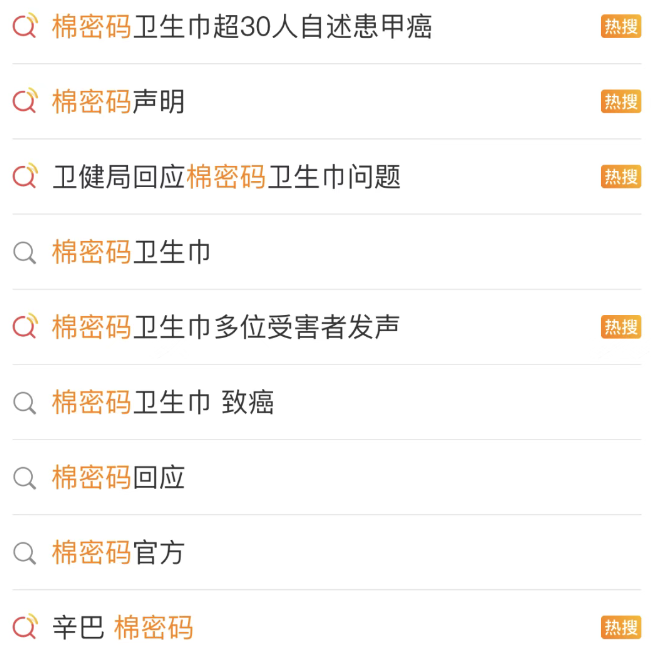
Core Viewpoint - The article discusses the recent controversy surrounding the sanitary napkin brand "Cotton Password" created by influencer Xinba, which has been accused of containing harmful substances, leading to a broader trust crisis in the sanitary products market [3][6]. Industry Overview - The sanitary products market in China is projected to reach a scale of 703.4 billion yuan in 2023, with e-commerce sales of sanitary napkins expected to exceed 18 billion yuan in 2024. The market is anticipated to maintain a compound annual growth rate of 5%-8%, potentially exceeding 105 billion yuan by 2025 [19]. - The sanitary napkin industry is characterized by high profit margins, with brands like Baiya and Hengan International reporting gross margins of 55.8% and 63.7%, respectively [24][21]. Recent Events - Xinba's brand "Cotton Password" faced scrutiny after a report revealed that 7 out of 10 samples tested contained high levels of thiourea, a compound classified as a potential carcinogen by the International Agency for Research on Cancer [7][8]. - Following the controversy, the Shantou market supervision authority stated that products sold before July 2023 complied with old national standards, but could not be produced under new regulations that ban thiourea [10][9]. Consumer Sentiment - There is significant consumer backlash regarding the safety of sanitary products, with reports of health issues linked to the use of "Cotton Password" sanitary napkins, including thyroid cancer and other skin-related conditions [13][18]. - A survey indicated that over 30 individuals reported thyroid cancer after using "Cotton Password," with many families sharing the product among underage daughters [13][15]. Market Dynamics - The rise of influencer-driven brands in the sanitary napkin market has led to increased competition, with many traditional brands losing market share to new entrants [25]. - The article highlights that despite high profit margins, many brands focus more on marketing gimmicks rather than product safety and research, which has led to several scandals in the industry [22][26].


这次,辛巴踩中“雷区”了
Hu Xiu· 2025-07-28 08:49
Core Viewpoint - The controversy surrounding the sanitary napkin brand "Mian Mima" created by influencer Xinba has led to a significant trust crisis in the sanitary napkin industry, particularly after allegations of carcinogenic substances were raised [2][4]. Industry Overview - The sanitary napkin market in China is projected to reach a scale of 703.4 billion yuan in 2023, with e-commerce sales expected to exceed 18 billion yuan in 2024. The market is anticipated to maintain a compound annual growth rate of 5%-8%, potentially exceeding 105 billion yuan by 2025 [21]. - The sanitary napkin category is characterized by high profit margins, largely due to low production barriers and product homogeneity, leading brands to focus more on marketing rather than research and development [23][24]. Company Insights - "Mian Mima" has reported cumulative sales of 3.33 billion yuan over eight years, with annual sales nearing 600 million yuan. The brand achieved a peak sales figure of nearly 900 million yuan in 2022 and ranked among the top seven in the industry during the 2023 618 shopping festival [27]. - The brand's marketing strategy included claims of having one million users and selling between 500 million to 1 billion packages annually, showcasing the significant market presence it has established [27]. Product Safety Concerns - Investigations revealed that 7 out of 10 samples of "Mian Mima" sanitary napkins contained high levels of thiourea, a compound classified as a possible carcinogen, raising serious health concerns among consumers [4][5][6]. - The recent controversy has led to a broader discussion about the safety standards of sanitary products, especially in light of new national standards set to take effect in July 2025, which will prohibit the use of thiourea [10][11]. Market Dynamics - The rise of influencer-driven brands in the sanitary napkin market has disrupted traditional brand dynamics, with online channels becoming increasingly important for brand competition [28]. - Established brands are adjusting their strategies in response to the growing influence of online sales and the emergence of new competitors, indicating a shift in market share dynamics [31].
今日9只A股跌停 煤炭行业跌幅最大
Zheng Quan Shi Bao Wang· 2025-07-28 04:49
Market Overview - The Shanghai Composite Index fell by 0.17% today, with a trading volume of 841.35 million shares and a transaction value of 1,138.73 billion yuan, an increase of 1.39% compared to the previous trading day [1]. Industry Performance - The top-performing sectors included Non-Bank Financials (up 1.11%), Defense and Military (up 1.04%), and Pharmaceutical and Biological (up 0.88%) [1]. - The sectors with the largest declines were Coal (down 2.46%), Steel (down 1.84%), and Beauty and Personal Care (down 1.59%) [2]. Detailed Industry Data - Non-Bank Financials: - Change: +1.11% - Transaction Value: 647.20 billion yuan (up 11.70%) - Leading Stock: Zhongyin Securities (up 6.61%) [1] - Defense and Military: - Change: +1.04% - Transaction Value: 496.34 billion yuan (up 57.68%) - Leading Stock: Xinguang Optoelectronics (up 13.27%) [1] - Pharmaceutical and Biological: - Change: +0.88% - Transaction Value: 986.89 billion yuan (down 13.87%) - Leading Stock: Erkang Pharmaceutical (up 14.89%) [1] - Coal: - Change: -2.46% - Transaction Value: 95.76 billion yuan (down 14.49%) - Leading Stock: Shanxi Coking Coal (down 6.18%) [2] - Steel: - Change: -1.84% - Transaction Value: 129.93 billion yuan (down 18.37%) - Leading Stock: Liugang Co. (down 8.58%) [2] - Beauty and Personal Care: - Change: -1.59% - Transaction Value: 52.80 billion yuan (down 7.19%) - Leading Stock: Baiya Co. (down 7.94%) [2]
重视中烟香港获“长城”雪茄独家经销权,舆论或催化个护线上格局优化
SINOLINK SECURITIES· 2025-07-27 13:24
Investment Rating - The report provides a positive outlook on various sectors, indicating a stable recovery in the home furnishing and paper packaging sectors, while new tobacco and packaging sectors show robust growth [3][4]. Core Insights - The home furnishing sector is expected to see marginal improvement in domestic demand due to government support for consumption upgrades, with a focus on companies with high dividend yields and growth certainty for 2025 [5][10]. - The new tobacco sector is experiencing growth, particularly in heated tobacco products (HTP), with significant sales increases reported in Europe and a growing user base for IQOS [11]. - The paper packaging sector is facing a gradual recovery in pulp prices, with a focus on companies that maintain strong market positions and high dividends [12]. - The light consumer goods and pet food sectors are under pressure, but there are opportunities in innovative product launches and channel expansion [15]. - The two-wheeler sector is poised for a rebound with government subsidies and new standards expected to drive demand [16][17]. Summary by Sections Home Furnishing - Domestic sales are expected to improve due to government initiatives, with a focus on companies with strong growth prospects and high dividends [5][10]. - Export figures show a slight increase in June, but a cumulative decline for the first half of the year [10]. New Tobacco - HNB sales increased by 10.5% year-on-year, with a growing user base for IQOS [11]. - The regulatory environment in the U.S. is tightening, which may benefit compliant market players [11]. Paper Packaging - Pulp prices have shown slight increases, but overall market conditions remain challenging [12]. - Companies with strong market positions and dividend policies are recommended for investment [12]. Light Consumer Goods & Pet Food - The sector is facing challenges, but there are opportunities in new product launches and expanding distribution channels [15]. - Online sales data indicates mixed performance across different product categories [23]. Two-Wheeler - The sector is expected to benefit from government subsidies and new regulations, with a focus on companies that can leverage these changes for growth [16][17]. - Recent data shows a significant number of electric bikes being replaced under the subsidy program [26][27].


辛巴卫生巾出事,说明直播间里的“雷军”还不够
商业洞察· 2025-07-27 03:55
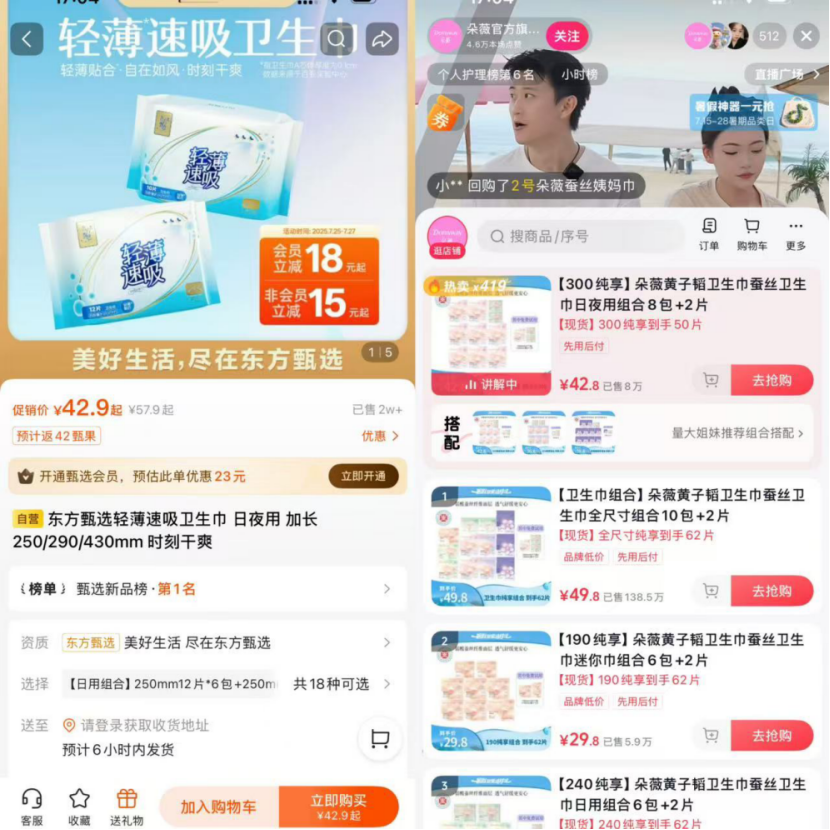
Core Viewpoint - The article discusses the contrasting reputations of various brands in the sanitary napkin market, highlighting the trust crisis in the industry, particularly focusing on the controversies surrounding Xinba's brand "Mian Mima" and the successful market entries of other brands like Dongfang Zhenxuan and Duowei [2][4][23]. Group 1: Industry Overview - The sanitary napkin market in China is facing a trust crisis, exemplified by Xinba's "Mian Mima" brand being found to contain high levels of carcinogenic substances [3][10]. - The average price of sanitary napkins in 2023 is reported to be 0.9 yuan per piece, with a compound annual growth rate of 4.79% [16]. - The sanitary napkin industry has an average gross margin of 45%, but due to high marketing and channel costs, the net profit margin is only between 7% and 11% [24]. Group 2: Brand Performance - Xinba's "Mian Mima" brand reportedly achieved sales of 3.33 billion yuan over eight years and claims to have one million users [4]. - In contrast, Dongfang Zhenxuan's sanitary napkin launched in June sold 180,000 units within two days, generating an estimated sales revenue of 18 million yuan [7]. - Huang Zitao's Duowei brand sold 1.2 billion pieces within a month, with sales revenue around 80 million yuan [7]. Group 3: Product Quality and Safety - "Mian Mima" sanitary napkins were found to contain sulfur urea, a substance linked to thyroid issues, with one batch showing a sulfur urea content of 16,653.4679 μg/g [10][11]. - Despite the controversy, Xinba claims that their products are compliant with safety standards, presenting a testing report that shows no sulfur urea detected [13][15]. - Industry experts suggest that the presence of sulfur urea may be related to cost-cutting measures, as it is cheaper than other antioxidants [16]. Group 4: Market Dynamics and Strategy - The entry of entrepreneurs like Yu Minhong and Huang Zitao into the sanitary napkin market reflects a shift towards product-oriented strategies, moving away from the low-price competition exemplified by Xinba [9][40]. - Dongfang Zhenxuan emphasizes product quality, conducting extensive testing and optimizing product features to address safety concerns [38]. - Huang Zitao has invested 275 million yuan in acquiring factories and improving production lines, aiming for transparency in the manufacturing process [39].

辛巴卫生巾出事,说明直播间里的“雷军”还不够
Hu Xiu· 2025-07-25 14:09
Core Viewpoint - The sanitary napkin industry is facing a trust crisis, highlighted by the controversy surrounding Xinba's brand "Mian Mima," which has been found to contain high levels of carcinogenic substances, while other brands like those promoted by Yu Minhong and Huang Zitao are gaining popularity for their quality and marketing strategies [1][2][4]. Group 1: Industry Overview - The sanitary napkin market in China is significant, impacting the health of approximately 700 million women, and there is a strong demand for reform and quality assurance in the industry [25]. - The average gross margin in the sanitary napkin industry is reported to be around 45%, but due to high marketing and channel costs, the net profit margin is only between 7% and 11% [27]. - Recent sales data indicates that new entrants like Dongfang Zhenxuan and Huang Zitao's brands have achieved impressive sales figures, with Dongfang Zhenxuan's sanitary napkin sales reaching approximately 18 million units in just two days [5][26]. Group 2: Company-Specific Insights - Xinba's "Mian Mima" brand has generated sales of 3.33 billion yuan over eight years and claims to have 10 million users, but it is now under scrutiny due to health concerns [3][9]. - In contrast, Dongfang Zhenxuan has successfully leveraged its existing customer base and marketing strategies to enhance brand trust and sales, with a reported stock price increase of 53% since July [31]. - Huang Zitao has invested 275 million yuan into acquiring factories and innovating production lines for his brand, emphasizing transparency and quality in response to market demands [42]. Group 3: Product Quality and Safety Concerns - Reports indicate that multiple batches of "Mian Mima" sanitary napkins have been found to contain excessive levels of thiourea, a substance classified as a potential carcinogen [10][11]. - Despite the controversy, Xinba's representatives claim that their products are compliant with safety standards, presenting testing reports that show no thiourea presence in recent samples [13][14]. - Industry experts suggest that the presence of thiourea may be linked to cost-cutting measures, as it is cheaper than other antioxidants [19]. Group 4: Marketing and Consumer Trust - The recent sanitary napkin crisis reflects a broader consumer demand for product quality over low pricing, as seen in the contrasting strategies of Xinba and other emerging brands [4][44]. - Influencers like Yu Minhong and Huang Zitao are capitalizing on their reputations to build trust and drive sales, focusing on product quality rather than solely on price [7][43]. - The success of these brands in the sanitary napkin market illustrates a shift towards a product-centric approach, which is essential for long-term sustainability in the industry [51].
网红卫生巾「翻车」,辛巴又栽了?
3 6 Ke· 2025-07-25 10:01
Core Viewpoint - The safety concerns surrounding the "Mian Mima" sanitary napkin brand, created by influencer Xin Ba, have raised significant alarm among consumers, particularly regarding the presence of thiourea, a compound linked to health issues [1][2][3] Group 1: Company Background - "Mian Mima" was established in 2017 under the Xin Xuan Group, with Xin Ba as the controlling figure, leveraging the popularity of live-streaming sales to achieve remarkable sales figures [6][7] - The brand claims to have sold between 500 million to 1 billion packages annually, with significant sales reported on platforms like Douyin and Tmall [6][7] Group 2: Safety Concerns - Reports indicate that from 2019 to 2025, multiple batches of "Mian Mima" products tested positive for thiourea, with 7 out of 10 samples from a recent inspection showing contamination [2][3] - A safety assessment report indicated a thiourea residue of 1.7% in the sanitary napkin samples, but the safety of this level remains under debate due to the lack of unified standards [3][9] Group 3: Industry Context - The sanitary napkin industry is characterized by high profit margins, with major players like Hengan International reporting a gross margin of over 63% despite revenue declines [8] - The market has seen a surge in brands and influencers entering the space, often promoting products with claims of antibacterial and natural properties, which can lead to consumer mistrust when safety issues arise [8][9] Group 4: Regulatory and Market Implications - The incident has prompted increased scrutiny of the sanitary products industry, highlighting the need for clearer regulatory standards and greater transparency from companies [10] - The ongoing safety issues have led to a crisis of trust among consumers, necessitating a shift in how brands communicate product safety and compliance [10]
2025年吉林省315曝光产品专项监督抽查结果公布
Zhong Guo Zhi Liang Xin Wen Wang· 2025-07-22 08:57
Summary of Key Points Core Viewpoint - The Jilin Provincial Market Supervision Administration conducted a special supervision inspection of products exposed during the 315 event, revealing a 2.94% non-compliance rate among the sampled products, with two batches of portable disposable underwear failing the quality test [2]. Group 1: Inspection Results - A total of 68 batches of products from 47 manufacturers and sellers were inspected [2]. - Only 2 batches of products (portable disposable underwear) were found to be non-compliant, resulting in a non-compliance rate of 2.94% [2]. - The non-compliant products have been handed over to local market supervision departments for legal processing [2]. Group 2: Product Compliance - The majority of products inspected, including various brands of sanitary napkins, adult diapers, and baby diapers, were found to be compliant with quality standards [3][4][5]. - Specific brands such as "月舒日记", "护舒宝", and "高洁丝" had all their inspected products pass the quality tests [3][4]. - The inspection covered a wide range of products, including personal hygiene items and electrical cables, with most items meeting the required standards [4][5].


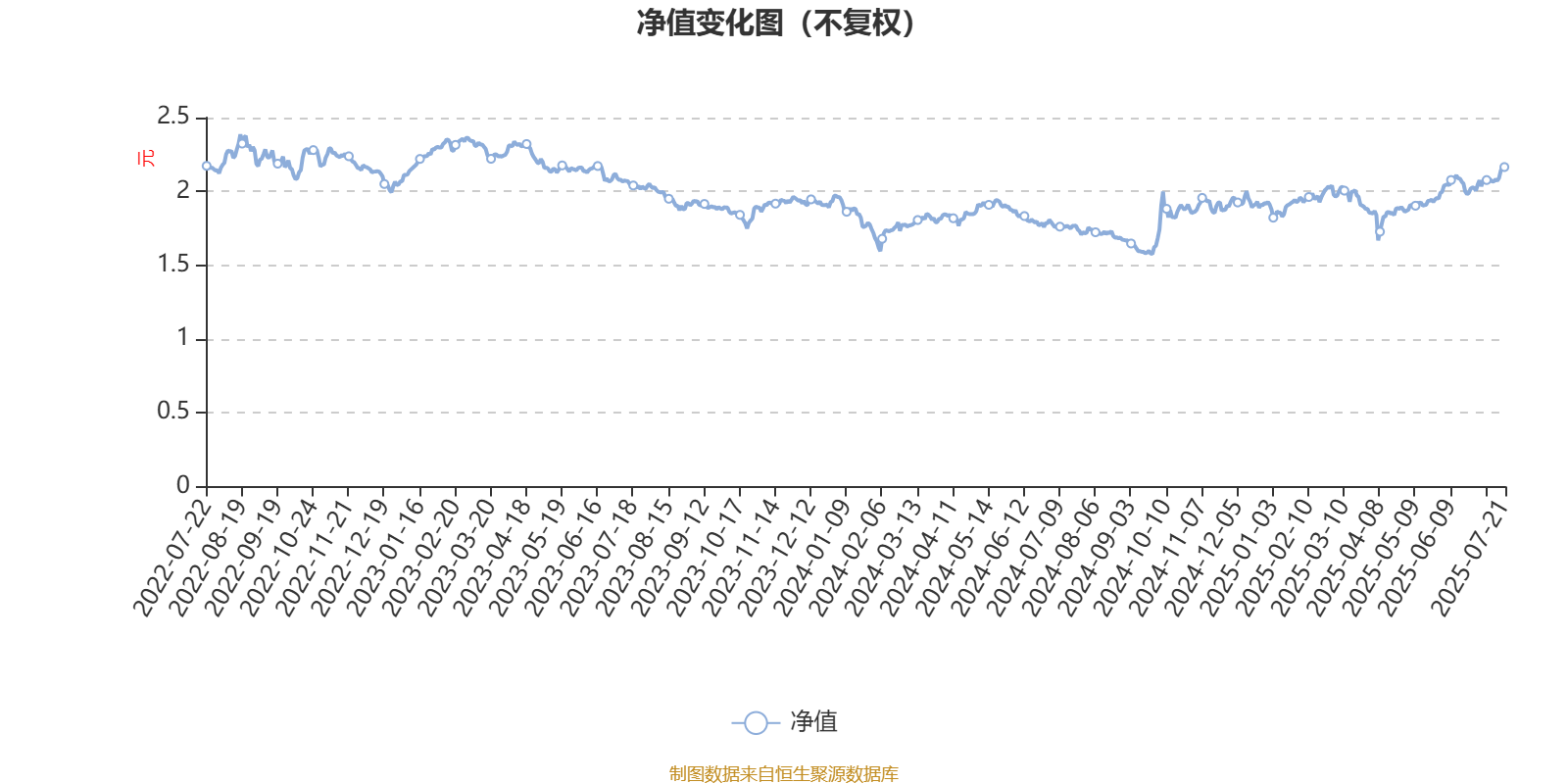
大成一带一路灵活配置混合A:2025年第二季度利润442.43万元 净值增长率10.35%
Sou Hu Cai Jing· 2025-07-22 03:44
AI基金大成一带一路灵活配置混合A(002319)披露2025年二季报,第二季度基金利润442.43万元,加权平均基金份额本期利润0.1917元。报告期内,基金 净值增长率为10.35%,截至二季度末,基金规模为4693.48万元。 该基金属于灵活配置型基金。截至7月21日,单位净值为2.165元。基金经理是齐炜中,目前管理7只基金近一年均为正收益。其中,截至7月21日,大成新兴 活力混合A近一年复权单位净值增长率最高,达26.94%;大成蓝筹稳健混合A最低,为7.13%。 基金管理人在二季报中表示,二季度,市场的机会呈现多样性,且更多来自于估值提升,既有来自产业突破的如科技、医药等,也有资产确定性提升的如金 融、资源品等。而细分需求爆发的如新消费,业绩提升的同时也享受了一定的估值提升。想要做好往往需要对细分产业做到前瞻性判断,也要在大类资产比 较上做到领先。 本基金操作上,我们仍然保持高仓位运作,也仍然是基于我们的核心框架在积累公司和评估风险。我们在二季度取得一定回报,一方面是立足自己的能力 圈,一方面也是做好风险的匹配工作。 截至7月21日,大成一带一路灵活配置混合A近三个月复权单位净值增长率为14.97 ...
消费 - 可选品和必需品的估值探讨
2025-07-21 14:26
Summary of Key Points from Conference Call Records Industry Overview - The conference call discusses the **electric power industry**, focusing on the dynamics between traditional thermal power and renewable energy sources like wind and solar power [1][4][5]. Core Insights and Arguments - **Electric Pricing Mechanism Reform**: The acceleration of reforms in the electric pricing mechanism is noted, with a shift towards a real-time pricing model that reflects supply and demand fluctuations [1][4]. - **Thermal Power as Essential Consumption**: Thermal power is classified as an essential consumption good due to its stable demand for basic electricity supply, contrasting with the intermittent nature of renewable energy [5][12]. - **Capacity Fee Policy**: The government has implemented a capacity fee policy to ensure the survival of thermal power plants, allowing them to cover fixed costs even when not generating electricity [1][18]. - **Supply and Demand Dynamics**: The increase in electricity load in 2025 has offset the new thermal power capacity added in 2022 and 2023, leading to an improved supply-demand balance [1][13]. - **Investment Opportunities**: The expected increase in dividend payouts starting in 2026, with thermal power companies like Huaneng and Huadian offering attractive dividend yields around 8% to 10%, presents significant investment opportunities [17][18]. Additional Important Content - **Challenges and Opportunities**: The electric power industry faces challenges from technological innovations and the need to adapt to new energy pricing mechanisms, which could create new development opportunities [6][7]. - **Impact of Renewable Energy**: The growth of renewable energy, particularly wind and solar, is causing overcapacity issues, which may lead to a decrease in long-term valuations if growth slows [1][9]. - **Future of Nuclear Fusion**: Nuclear fusion technology is still in its infancy and is not expected to pose a short-term threat to existing thermal and renewable energy companies [10]. - **Storage Technology**: The development of storage technology is anticipated to lower costs and enhance the stability of renewable energy supply, potentially reshaping the energy market [11]. - **Carbon Tax Implications**: The introduction of a carbon tax is unlikely to collapse the thermal power industry, as the costs will ultimately be borne by consumers [12]. - **Regional Pricing Trends**: There is a divergence in thermal power pricing trends, with northern regions experiencing price increases while southern regions see declines due to varying levels of renewable energy integration [14][15]. Conclusion - The electric power industry is undergoing significant changes driven by policy reforms, technological advancements, and shifts in consumer demand. Thermal power remains a critical component of the energy landscape, with promising investment opportunities emerging as the market adapts to new realities.