中国联通

Search documents
怎么看亚马逊和阿里云涨价
2026-01-26 15:54
Summary of Conference Call on Cloud Services Price Trends Industry Overview - The conference call discusses the recent price increases in cloud services, particularly focusing on Amazon Web Services (AWS) and Alibaba Cloud, with a specific emphasis on AI and GPU-related services [1][2]. Key Points and Arguments Price Increases - AWS has raised prices for GPU-related cloud services by approximately 15%, with specific instances increasing from $30.34 to $39 per hour, breaking a trend of price reductions since 2020 [2]. - Alibaba Cloud has followed suit, increasing prices for AI computing services while basic cloud services like CPU instances and object storage are still in a price reduction cycle, with some overseas ECS instances seeing price drops of 10%-12% [2]. Scope of Price Increases - Price hikes are not limited to GPU services but also include AI-related PaaS offerings such as virtualization and containerization, with expected increases of 5%-8% in the future [1][5]. - Current AI infrastructure, including GPU, CPU, and storage devices, has already seen price increases, while PaaS and SaaS layers have not yet shown clear price hike expectations [3][13]. Supply Chain and Market Dynamics - A shortage of storage chips is a primary driver of price increases, with expectations that supply issues will persist until mid-2027 [8]. - The shift in demand from training to inference in AI workloads is causing a non-linear increase in task volume, contributing to the upward price trend [7][8]. Technological Changes - The cloud computing architecture is evolving towards intelligent computing centers, with significant changes in network architecture, business applications, storage technology, and energy management [9][11]. - New technologies such as SAD QLC storage and HAMR are being introduced to enhance performance and cost-effectiveness in AI databases and training tasks [12]. Competitive Landscape - The domestic cloud computing market has transitioned from a three-player model to a multi-modal structure, including traditional giants, telecom operators, emerging AI computing companies, and vertical private cloud enterprises [16]. Additional Important Insights - The price increases are partly due to the need for companies to balance operational costs and recovery periods, especially in the AI computing sector, where high operational costs can lead to prolonged periods of loss [18]. - The profit margins for companies have improved post-price hikes, emphasizing the importance of ensuring that investments in AI capabilities yield profitability [19]. - Small and medium-sized customers are sensitive to price increases and may consider building their own data centers if costs become prohibitive, potentially shifting demand away from major cloud providers [21]. Conclusion - The overall trend indicates a sustained increase in prices for AI and GPU-related cloud services, driven by supply chain constraints and evolving market dynamics, while basic services may continue to see competitive pricing to attract smaller clients.

通信行业 2025Q4 基金持仓总结:基金持仓占比涨幅位列第一,AI算力产业链持续向好
GUOTAI HAITONG SECURITIES· 2026-01-26 11:15
Investment Rating - The report maintains an "Overweight" rating for the communication industry [4][18]. Core Insights - The communication industry saw a significant increase in fund holdings, with a market value share of 10.18% in Q4 2025, reflecting a quarter-on-quarter increase of 3.30 percentage points, ranking first among all sectors [2][6]. - The industry is expected to continue benefiting from developments in AI infrastructure and new connectivity, maintaining a high growth outlook despite current valuations being above historical averages [19]. - Key stocks in the communication sector are focused on the AI industry chain, with major holdings including Zhongji Xuchuang, Xinyi Sheng, and Tianfu Communication, which ranked as the top three in fund holdings by market value [9][19]. Summary by Sections Fund Holdings Overview - As of Q4 2025, the communication sector's fund holdings ranked among the top five sectors, alongside electronics, power equipment, non-ferrous metals, and non-bank financials [6]. - The top three stocks by fund holdings in the communication sector are Zhongji Xuchuang (¥162.18 billion, +45.51% QoQ), Xinyi Sheng (¥124.66 billion, +13.14% QoQ), and Tianfu Communication (¥19.45 billion, +0.73% QoQ) [9][19]. Investment Recommendations - The report recommends maintaining an "Overweight" rating for the communication industry, highlighting specific stocks for investment: 1. Optical Modules: Zhongji Xuchuang, Xinyi Sheng, Guangxun Technology, Huagong Technology 2. CPO/Silicon Photonics: Tianfu Communication, Shijia Photonics, Yuanjie Technology, Guangku Technology, Changguang Huaxin, Taicheng Light 3. PCB: Hudian Co., Shenzhen South Circuit 4. End-side: Guanghe Tong, ZTE Corporation 5. IDC/Liquid Cooling: Wangsu Technology, Aofei Data, Guanghuan New Network 6. Network Side: ZTE Corporation, Ruijie Networks, Unisplendour, Fenghuo Communication, Feiling Kesi 7. High-speed Copper Cables: Zhaolong Interconnect 8. Operators: China Mobile, China Telecom, China Unicom 9. Military Communication-related stocks: Haige Communication, Qiyi Er, Changying Tong 10. US stocks: Credo (CRDO), MaxLinear (MXL), Arista Networks (ANET), VNET Group (VNET), Coherent (COHR), Lumentum (LITE), Broadcom (AVGO), Marvell (MRVL), AXT (AXTI) [18]. Valuation Insights - The overall valuation of the communication sector is above the historical average, with a PE-TTM of 50x, placing it in the 86th percentile over the past decade. The sector is expected to maintain significant growth potential as it benefits from AI infrastructure and new connectivity developments [19].


安徽联通:“五心”服务暖江淮
Xin Hua Wang· 2026-01-26 06:48
Core Viewpoint - Anhui Unicom is committed to enhancing customer service through initiatives like the "Customer Day," integrating online and offline efforts to meet user needs and embody the mission of serving the people [1][2]. Group 1: Customer Engagement Initiatives - The "Customer Day" initiative aims to create a warm platform that addresses user concerns, with over 200 offline events and more than 20,000 online interactions planned for 2025 [2]. - The company has collected 167 user stories through engaging online events, fostering emotional connections with customers [2]. - Offline activities include a blend of cultural innovation and technology, with a focus on reaching various community sectors, including enterprises, rural areas, schools, and families [2]. Group 2: Service Philosophy and Recognition - Anhui Unicom has developed a "Five Hearts" service philosophy, emphasizing network security, transparent consumption, warm experiences, digital inclusivity, and emotional resonance [3]. - The company has received multiple national and provincial awards for customer satisfaction and service excellence, including recognition in industry skill competitions [3]. - The team achieved second place in a national customer service skills competition, marking a historic achievement for the company [3]. Group 3: Future Commitment - Anhui Unicom plans to continue its customer-centric approach, expanding service offerings and enhancing digital connectivity as a "connector," "enabler," and "guardian" in the digital age [4].

探访南京建邺高新区OPC社区 ——抢滩布局,竞逐人工智能新赛道
Xin Lang Cai Jing· 2026-01-26 06:39
Core Viewpoint - The OPC (One Person Company) model is leading an innovative approach of "individual + AI as a company," aiming to empower individual entrepreneurship through artificial intelligence and create a competitive ecosystem in the AI sector [1] Group 1: OPC Community Development - Multiple OPC communities have rapidly emerged in Nanjing Jianye High-tech Zone, showcasing a vigorous growth trend [1] - The "Mofa Academy," an OPC community, has attracted 23 AI innovation companies since its operation began six months ago, providing a unique entrepreneurial micro-ecosystem [2] - The "Geek Pier" OPC community focuses on game animation and AI + digital content, collaborating with major companies and universities to offer comprehensive lifecycle services for digital content entrepreneurs [3] Group 2: Support for Entrepreneurs - The Mofa Academy provides a supportive environment for young entrepreneurs, exemplified by 23-year-old Wu Yang, who benefits from close proximity to resources and networking opportunities [2] - The community has successfully facilitated business connections, as seen in the case of entrepreneur Zhu Pengfei, who secured a significant order with a provincial state-owned enterprise shortly after establishing his company [4] - The ecosystem's appeal is enhanced by a clear industrial plan and practical support policies, attracting entrepreneurs from other regions [4] Group 3: Data and Resource Integration - Jianye District is building a "data-model-application" development cycle, leveraging a public data platform that has attracted over 40 public data developers [5] - The district has issued 30 million yuan in "model vouchers" and established green channels for model applications, drawing in over 60 data element companies [5] Group 4: Future Industry Cultivation - The Jianye High-tech Zone emphasizes the importance of OPC community construction as a means to cultivate current enterprises and lay the groundwork for future industry forms [6] - The district's policies include up to two years of free office rent and substantial research and computing subsidies, aiming to create a comprehensive industrial ecosystem [6] - By 2028, Jianye plans to attract over 1,000 AI companies and teams, gathering more than 20,000 innovative talents to form a trillion-level "AI+" industry cluster [7]
292亿资金涌入现金流赛道,现金流ETF嘉实(159221)一键布局优质“现金牛”组合
Xin Lang Cai Jing· 2026-01-26 03:09
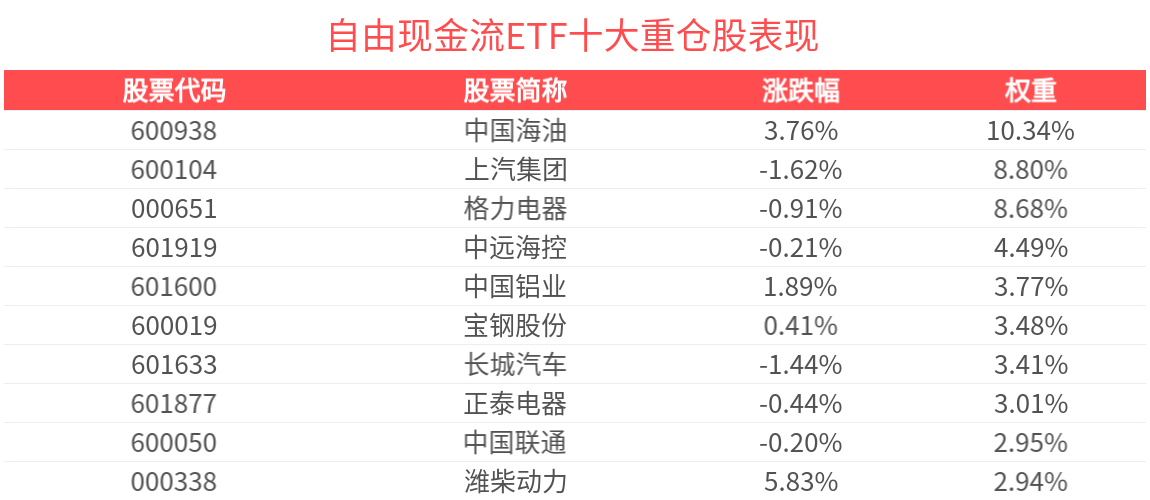
Group 1 - The core viewpoint of the articles highlights the performance of the National Index of Free Cash Flow, which has seen a rise of 0.65% as of January 26, 2026, with significant gains in constituent stocks such as silver and various industrial companies [1] - The current market has 101 ETFs tracking free cash flow-related indices, with a total scale of 29.291 billion yuan as of January 21 [1] - Western Securities notes that during the Kondratiev wave downturn, geopolitical uncertainties have increased, leading to a natural preference for gold or stable cash flow "safe assets," which has re-evaluated the dividend strategy in the A-share market [1] - The free cash flow strategy has shown advantages over the dividend strategy, particularly in bull markets, as it has not underperformed the market in bear markets [1] - As of December 31, 2025, the top ten weighted stocks in the National Index of Free Cash Flow include major companies like China National Offshore Oil Corporation and SAIC Motor Corporation, accounting for 51.95% of the index [1] Group 2 - The cash flow ETF managed by Harvest (159221) closely tracks the National Index of Free Cash Flow, aiming to create a combination of profitability quality and dividend potential [2] - Investors can also access the cash flow ETF through the Harvest's off-market connection (024574) to seize investment opportunities [3]
电子掘金-从供需关系看CPU-光纤行业涨价趋势
2026-01-26 02:49
Summary of Key Points from Conference Call Records Industry Overview - The records focus on the **fiber optic** and **CPU** industries, highlighting trends in pricing and demand driven by technological advancements and market dynamics. Fiber Optic Industry Core Insights - **Increased Demand**: The demand for G657A single-mode fiber optic cables is expected to surge due to the rise of drones, projected to account for nearly **10%** of global fiber demand by Q2 2025 [1][2]. - **AI Influence**: The development of AI is significantly boosting the demand for fiber optics in data centers, with expectations that AI-related needs will represent **30%** of global fiber demand by **2027** [1][2]. - **Price Increases**: Prices for G657A and G652D single-mode fibers have risen sharply, with G657A increasing from over **30** to more than **55** yuan per kilometer, and G652D from over **20** to above **35** yuan per kilometer, reflecting a tighter market supply [1][2]. - **Supply-Demand Gap**: By **2027**, global fiber demand is projected to reach **800 million** core kilometers, while supply is expected to be around **810 million**, resulting in a **5%** supply-demand gap [1][5]. Additional Considerations - **Short-term Price Influences**: Short-term price fluctuations are influenced by the sustainability of drone demand and procurement strategies from telecom operators [7]. - **Telecom Procurement Impact**: The procurement strategies of major Chinese telecom operators like China Unicom and China Mobile significantly affect supplier profits and market dynamics [8][9]. CPU Industry Core Insights - **Market Changes**: The CPU market has seen notable price increases and secondary market fluctuations due to limited production capacity and competition from high-end GPUs and ASICs [10]. - **Extended Lead Times**: The lead time for CPU shipments has increased from the normal **8-10 weeks** to over **24 weeks** due to supply chain bottlenecks and material shortages [10]. - **Price Trends**: Major server CPUs from Intel and AMD have already seen price increases of several percentage points, with predictions of further increases of **10-20%** in **2026** [11][12]. AI Impact - **Rising Demand**: The advent of AI Agents is expected to significantly increase CPU demand as they require rapid and secure environments for executing AI code [13][19]. - **Market Growth Potential**: The market for AI Agents and their associated sandbox environments is projected to grow substantially, potentially increasing CPU demand by **hundreds of times** by **2028** [19]. Technological Advancements - **Micro-Virtual Machine Advantages**: Micro-virtual machines offer rapid startup times and high elasticity, enhancing CPU resource utilization and reducing costs [14][15]. - **Security Enhancements**: These technologies improve security by managing permissions dynamically and ensuring code integrity, making them suitable for high-value tasks [16]. Conclusion - The fiber optic and CPU industries are experiencing significant transformations driven by technological advancements, particularly in AI and drone applications. The ongoing supply-demand imbalances and price fluctuations present both challenges and opportunities for investors and industry players.
光纤价格已进入明确上涨周期,通信ETF嘉实(159695)布局AI变革下的光通信投资机遇
Xin Lang Cai Jing· 2026-01-26 02:29
Group 1 - The core viewpoint of the articles indicates that the optical fiber industry is transitioning from a cost-driven model to a demand-driven model, entering a new phase of high prosperity due to the structural explosion in demand driven by AI computing power construction and supply constraints [1] - Since 2025, the price of mainstream G.652D optical fibers has increased by 20%-30% compared to the beginning of the year, marking a clear upward trend in optical fiber prices [1] - According to Lightcounting, the market size of optical modules, a core product in the global optical communication industry chain, is expected to exceed $20 billion by 2027, with data centers becoming the largest application market [1] Group 2 - The National Communication Index (399389) has its top ten weighted stocks, including companies like Zhongji Xuchuang, New Yisheng, and ZTE, which collectively account for 54.96% of the index [1] - The investment logic in optical communication is shifting from leading companies to high-elasticity, high-barrier, or core-position quality targets as the global AI computing competition intensifies [1] - The Communication ETF (159695) closely tracks the National Communication Index, providing a way for investors to access the optical communication industry chain [2]
自由现金流ETF(159201)冲击6连涨,最新规模达113.78亿元,创成立以来新高
Xin Lang Cai Jing· 2026-01-26 02:13
Core Viewpoint - The National Index of Free Cash Flow has shown positive performance, with significant increases in both the index and its constituent stocks, indicating strong investor interest and liquidity in the market [1][2]. Group 1: Market Performance - As of January 26, 2026, the National Index of Free Cash Flow rose by 0.59%, with notable increases in constituent stocks such as Silver Nonferrous (+8.68%), Weichai Power (+5.83%), and China National Offshore Oil Corporation (+3.76%) [1]. - The Free Cash Flow ETF (159201) has experienced a 0.30% increase, marking its sixth consecutive rise, with a trading volume of 1.84 billion yuan [1]. - Over the past week, the Free Cash Flow ETF has averaged daily transactions of 6.16 billion yuan, reflecting strong liquidity [1]. Group 2: Fund Inflows and Performance - The Free Cash Flow ETF has seen continuous net inflows over the past six days, with a peak single-day net inflow of 672 million yuan, totaling 1.402 billion yuan in net inflows [1]. - The latest share count for the Free Cash Flow ETF reached 8.709 billion shares, with a total scale of 11.378 billion yuan, setting a new record since its inception [1]. - The ETF has recorded a financing net purchase amount of 3.3297 million yuan this month, with a current financing balance of 137 million yuan [1]. Group 3: Historical Returns - Since its inception, the Free Cash Flow ETF has achieved a maximum monthly return of 7%, with the longest streak of consecutive monthly gains being six months and a total gain of 22.69% [2]. - The ETF has an 80% monthly profit percentage and a 100% probability of profitability over a six-month holding period [2]. - As of January 23, 2026, the ETF outperformed its benchmark with an annualized excess return of 5.21% over the past six months [2]. Group 4: Index Composition - The top ten weighted stocks in the National Index of Free Cash Flow as of December 31, 2025, include China National Offshore Oil Corporation, SAIC Motor, and Gree Electric Appliances, collectively accounting for 51.95% of the index [2]. - The index reflects the price changes of listed companies with high and stable free cash flow levels in the Shanghai and Shenzhen stock exchanges [2].

AI逼停电网!美国13州停电,中国“算电协同”破局全球能源危机
Sou Hu Cai Jing· 2026-01-25 22:17
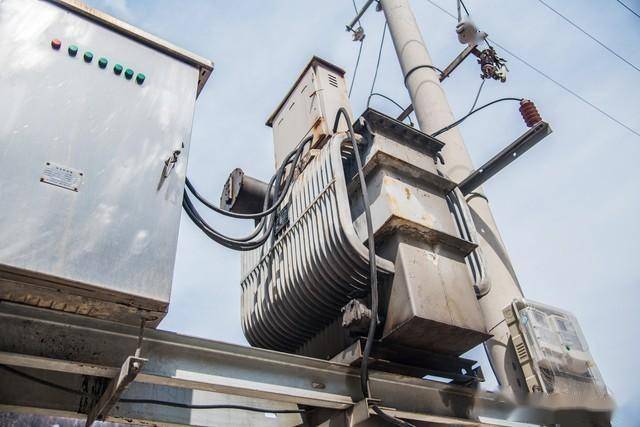
Core Viewpoint - The global energy crisis is driven by the exponential demand for AI computing power, which is outpacing the linear growth of electricity supply, leading to significant risks of power shortages and increased electricity costs in various regions, particularly in the U.S. [1][3] Group 1: AI Power Demand and Energy Crisis - The demand for AI computing power has surged, with requests for electricity from AI data centers in Northern Virginia reaching 47 gigawatts, exceeding the grid's capacity of 32 gigawatts, resulting in a 30% power shortfall dedicated to AI [3] - A single large AI data center can consume up to 360 GWh annually, equivalent to the annual electricity usage of 500,000 average households, while major companies like Microsoft and Google are projected to add 5,000 GWh of electricity consumption per year from new AI data centers [3] - The energy consumption of AI is increasing exponentially, with energy requirements for training models rising 1,000 times as parameters increase from 10 billion to 1 trillion, complicating load management for power grids [3] Group 2: Global Impact and Responses - The electricity crisis has spread globally, with European data center electricity costs rising by 40% in a year, Singapore halting approvals for new AI data centers, and South Korean tech firms relocating AI training tasks overseas due to insufficient power quotas [5] - The previous bottleneck in AI development due to chip shortages has now shifted to power shortages, becoming a critical barrier for the industry [5] Group 3: China's Strategic Response - China has adopted a "computing and electricity coordination" strategy to ensure AI development without compromising residential energy needs, utilizing cross-regional scheduling to balance power supply and demand [5][6] - The "East Data West Computing" initiative allows AI training tasks to be dynamically moved to regions with abundant renewable energy, achieving a 65% green energy usage rate in western data centers and saving over 10 million yuan in annual electricity costs for individual centers [6] - Technological innovations, such as liquid cooling technology, have reduced AI server energy consumption by over 30%, while integrated solutions like Huawei's "smart photovoltaic + energy storage" provide 24-hour green electricity supply [6] Group 4: Policy and Future Trends - China's policies mandate that new large AI data centers maintain a Power Usage Effectiveness (PUE) of no more than 1.25 and a green energy usage ratio of at least 50%, promoting a shift towards a greener, low-carbon industry [8] - The future of AI and energy is envisioned as a symbiotic relationship rather than a conflict, with the potential for AI to optimize energy systems and contribute positively to electricity management [8][10] - By 2030, it is expected that AI-related electricity consumption will account for 5.2% of total electricity usage globally, emphasizing the importance of integrating computing power with green energy [8]
彩讯股份拟发可转债募资14.6亿,砸向AI
Guo Ji Jin Rong Bao· 2026-01-25 22:10
Core Viewpoint - The company, CaiXun Co., Ltd. (300634.SZ), plans to issue convertible bonds to raise up to 1.46 billion yuan, with all funds directed towards AI-related projects, aiming to build a comprehensive AI ecosystem [1][4]. Group 1: Fundraising and Project Focus - The total amount of 1.46 billion yuan will be allocated to three major projects, focusing on "computing power infrastructure + platform + industry applications" [1][4]. - The fundraising amount represents approximately 42.7% of the company's total assets as of Q3 2025 [1]. - The construction of the AI computing center is the primary focus, accounting for over 70% of the total fundraising, with an investment of 1.035 billion yuan planned [4]. Group 2: Industry Context and Competition - The construction of AI computing centers is described as a capital-intensive "arms race" within the industry [5]. - Major telecom operators and leading internet companies in China have already invested heavily in large-scale computing clusters [6]. - CaiXun's revenue of 1.341 billion yuan ranks it 39th in the industry, raising concerns about its competitive position with the planned fundraising [7]. Group 3: Project Details and Development Plans - The AI computing center project aims to deploy computing servers and storage devices, targeting a total computing power scale of approximately 12,000 P, with a construction period of two years [4]. - The company plans to invest 131 million yuan in upgrading the Rich AIBox platform, which serves as a "incubator" for intelligent agents, with a three-year development cycle [8]. - An additional investment of 294 million yuan is earmarked for the development of enterprise-level AI applications, focusing on vertical industry implementations, also with a three-year timeline [9]. Group 4: Market Dynamics and Challenges - The AI application market is highly competitive, with major players like Alibaba Cloud and Baidu Smart Cloud dominating due to their model and platform advantages [11]. - The company must establish technological differentiation or deep understanding of existing advantageous industries to avoid homogenization and achieve scalable commercial success [11]. - The company is also exploring investments in embodied intelligence, including the development of underlying control system software and investments in a humanoid robot company [12][13].