九毛九

Search documents
太二酸菜鱼爆改自救,门店上线鲜牛肉、活鱼、鲜鸡
2 1 Shi Ji Jing Ji Bao Dao· 2025-09-21 05:06
Core Viewpoint - The company, Tai Er Suancaiyu, is undergoing significant store renovations to introduce fresh ingredients like beef, live fish, and fresh chicken in response to declining revenues and store closures [1] Group 1: Company Performance - In the first half of 2025, Tai Er Suancaiyu reported revenues of 1.949 billion yuan, a decrease of 13.3% compared to 2.248 billion yuan in the same period last year [1] - The company has closed over 60 stores within the half-year period, indicating a challenging operational environment [1] Group 2: Strategic Changes - The renovations are primarily focused in the southern regions of China, particularly in Guangzhou and Shenzhen, which are the company's main operational areas [1] - Fresh ingredients are prominently displayed in stores with labels indicating "same-day arrival," aiming to attract customers and improve sales [1]
7家消费品公司拿到新钱;“餐厅预制菜需要明示”国标草案已过审;字节跳动:将按照中国法律要求推进相关工作|创投大视野
36氪未来消费· 2025-09-21 02:50
Investment Opportunities - Yunshansong completed a 10 million yuan angel round financing, focusing on technology upgrades and expanding its logistics team to enhance its "smart delivery + human resource services" ecosystem [3] - Shikongsu completed a multi-million Pre-A round financing, aiming to help hotels reduce costs and increase efficiency by breaking the reliance on traditional online booking platforms [4] - Jiandan Sports secured several tens of millions in B round financing, with plans for smart upgrades and expanding its membership service system [5] - Baojia Youpin raised 8 million yuan in angel round financing, focusing on food safety with its core product aimed at removing pesticide residues from fruits and vegetables [6] - Qilin Yi completed 18.6 million yuan in A round financing, focusing on the development and operation of a Chinese hamburger brand [8] - Guanghe Fenghang raised nearly 10 million yuan in seed round financing, proposing an AI gardening methodology [9] - Yisheng Ginseng completed a 10 million yuan angel round financing, focusing on health products related to ginseng and western ginseng [10] Company Updates - ByteDance announced it will proceed with relevant work according to Chinese laws regarding TikTok, aiming to continue serving American users [11] - The "Gazi" account of Xie Mengwei was banned on Kuaishou after being reported for wearing police uniform during a live stream [12] - Jiumaojiu Group closed 88 restaurants in the first half of the year, reflecting a decline in revenue from its main brands [13] - Xibei issued an apology and committed to adjusting several dishes to be made fresh in-store, following public criticism [14] - A basic framework for resolving the TikTok issue was reached between China and the U.S. [15] Regulatory Developments - A national standard draft for pre-made dishes has passed expert review and will soon be open for public consultation, marking a key transition for the industry [15] - The Federal Reserve announced a 25 basis point rate cut, marking its first rate reduction since December 2024 [16] - New regulations for childcare subsidies were introduced, emphasizing streamlined application processes and annual disbursement [18] - Personal medical insurance accounts now support transfers to family members, enhancing the usability of these funds [19] - A national cultural and tourism consumption month will launch, with over 330 million yuan in subsidies to stimulate spending [20]


山姆上架太二酸菜鱼预制菜,九毛九4年市值蒸发480亿
2 1 Shi Ji Jing Ji Bao Dao· 2025-09-21 02:12
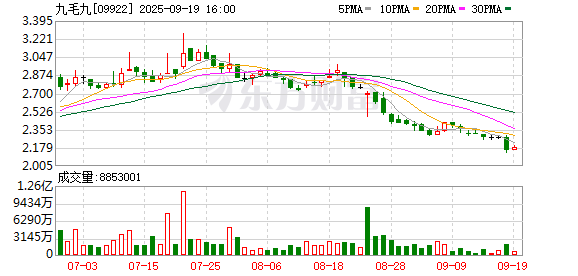
Core Viewpoint - The ongoing "pre-made dish war" in the restaurant industry has intensified, with the company 九毛九 (09922.HK) facing significant challenges, including declining stock prices and poor financial performance, leading to a strategic shift towards pre-made dishes and international expansion [1][10]. Company Performance - 九毛九's stock price has dropped significantly from a peak of 37.8 HKD per share in early 2021 to 2.18 HKD per share by September 2025, resulting in a market capitalization decline from nearly 550 billion HKD to 30 billion HKD, a loss of over 520 billion HKD (approximately 480 billion RMB) or 94% [2][3]. - The company's revenue and net profit both decreased in the first half of 2025, with revenue at 2.753 billion RMB, down 10.1% year-on-year, and net profit at 61 million RMB, down 16.05% [3][5]. Brand Performance - The core brand 太二酸菜鱼 experienced a revenue decline of 13.3% in the first half of 2025, generating 1.949 billion RMB, with the number of stores reducing from 612 to 547, marking the first significant closure of stores since its listing in 2019 [5][6]. - The other two main brands, 怂火锅 and 九毛九 (西北菜), also reported poor performance, with revenues of 417 million RMB (down 3.5%) and 226 million RMB (down 22.6%) respectively [5]. Market Challenges - The restaurant industry is facing a brutal price war, with many companies reporting disappointing financial results. The overall market is experiencing a significant increase in closures, with 4.09 million restaurants closed in 2024, a closure rate of 61.2% [11][12]. - Despite the challenges, some companies in the beverage sector have shown strong performance, indicating a potential shift in consumer preferences and market dynamics [11]. Strategic Shifts - In response to declining performance, 九毛九 is implementing a comprehensive overhaul of the 太二酸菜鱼 brand, introducing a new "fresh live model" and expanding its international presence, with new stores opened in countries like Singapore, Malaysia, and Canada [9][10]. - The company has also begun selling pre-made 太二酸菜鱼 products through channels like Sam's Club, with revenue from product sales increasing by 140% year-on-year in the first half of 2025 [9].
山姆上架太二酸菜鱼预制菜 九毛九4年市值蒸发480亿
2 1 Shi Ji Jing Ji Bao Dao· 2025-09-21 02:12
Core Viewpoint - The ongoing "pre-made dish war" in the restaurant industry has intensified, with companies like Jiumaojiu (09922.HK) facing significant challenges, including declining stock prices and poor financial performance [2][5][19]. Company Performance - Jiumaojiu's stock price has dropped significantly from a peak of 37.8 HKD per share in early 2021 to 2.18 HKD per share by September 2025, resulting in a market capitalization decline from nearly 55 billion HKD to 3 billion HKD, a loss of over 94% [5][8]. - The company reported a revenue decline of 10.1% year-on-year to 2.753 billion CNY and a net profit decrease of 16.05% to 61 million CNY in the first half of 2025 [7]. - The three main brands under Jiumaojiu, including Taier, Song Hotpot, and Jiumaojiu (Northwest Cuisine), have all experienced revenue declines, with Taier's revenue dropping 13.3% to 1.949 billion CNY in the first half of 2025 [9][10]. Market Trends - The restaurant industry is facing a brutal price war, with many companies reporting poor financial results. For instance, Xiaobai Xiaobai's revenue fell by 18.9% to 1.942 billion CNY in the first half of 2025 [19]. - The overall restaurant market is undergoing a significant shakeout, with a closure rate of 61.2% in 2024, indicating a challenging environment for many players [21]. Brand Challenges - Taier, once a popular brand, is now facing criticism regarding its product quality and service speed, leading to a decline in customer interest [12][14]. - The brand's store count has decreased from 612 to 547 within six months, marking the first significant closure since its inception [9][16]. Strategic Adjustments - In response to its challenges, Taier has initiated a comprehensive overhaul, introducing a new store model focused on fresh ingredients and improved customer experience [17]. - The company has also expanded its pre-made dish offerings, with sales from this segment increasing by 140% year-on-year to 132 million CNY in the first half of 2025 [17].
太二自救:关低效店、拓三大单品
Xin Lang Cai Jing· 2025-09-20 11:45
Core Insights - The controversy surrounding pre-made dishes has highlighted the operational challenges faced by the company, particularly in relation to its brand image of using fresh ingredients and live fish [1][5][7] - The company has experienced a significant decline in store numbers and revenue, indicating a broader trend of underperformance within the industry [3][4][8] Group 1: Company Performance - Six out of 23 stores in Hangzhou have closed, marking the first contraction in store numbers since the company went public [3] - The parent company reported a revenue of 27.53 billion yuan for the first half of 2025, a 10.1% decline year-on-year, with the flagship brand generating 19.46 billion yuan, down 13.25% [7][8] - The average table turnover rate has decreased from 2.7 to 2.2, indicating reduced customer throughput and potential revenue loss [9][10] Group 2: Operational Challenges - The reliance on a central kitchen and pre-made ingredients has led to a trust crisis among consumers, as evidenced by complaints regarding food safety and quality [6][7] - The company's previous model of high turnover and high customer spending is becoming unsustainable due to rising operational costs and changing consumer preferences [16][22] Group 3: Market Dynamics - The competitive landscape for the company's core product, sauerkraut fish, has intensified, with over 2,000 new stores opening in the past year, leading to a decline in consumer interest [22] - The shift in consumer behavior towards value and quality has rendered the previous business model less effective, necessitating a reevaluation of store formats and pricing strategies [23][24] Group 4: Strategic Responses - The company has initiated a transformation plan, including the introduction of new store formats and menu diversification, but the effectiveness of these changes remains uncertain [20][21] - Comparisons with other successful brands indicate that a shift away from reliance on high-priced, large-format stores towards more community-oriented and cost-effective models may be necessary for survival [23][24]
儿童餐赛道升级,九毛九集团如何布局家庭消费新场景?
Sou Hu Cai Jing· 2025-09-19 14:11
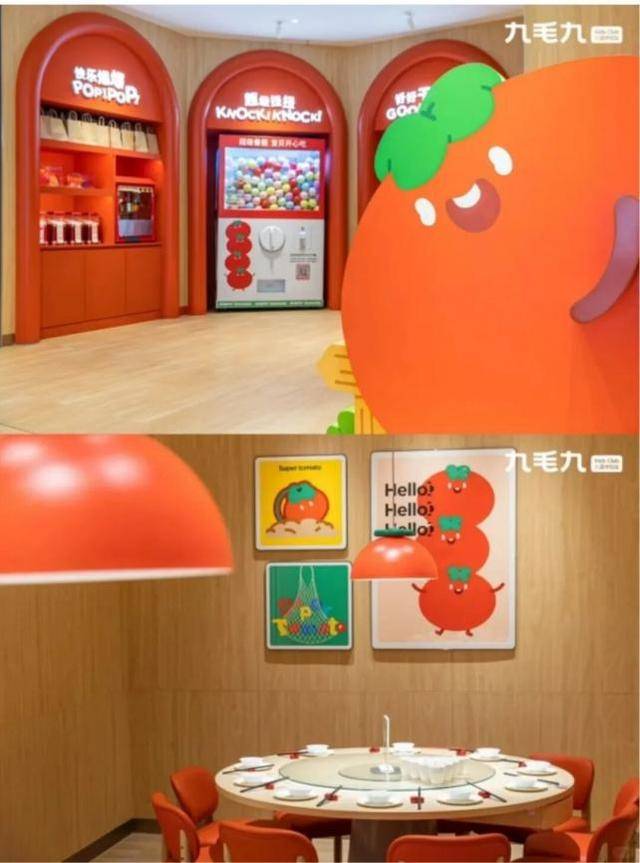
Core Insights - The children's meal segment has evolved from being an "accessory" to a core battleground for brand differentiation in the restaurant industry, driven by increasing family consumption and supportive policies in regions like Guangdong [1][5] - The competition has expanded beyond food to encompass a comprehensive experience that integrates food, environment, and emotional engagement, exemplified by companies like Jiumaojiu Group [3][4] - Jiumaojiu Group's children's experience stores utilize the "Super Tomato" IP to create engaging dining environments, enhancing customer retention and opening new pathways for differentiated growth [4][5] Industry Trends - The restaurant function has transformed from merely a dining space to a comprehensive experience that combines nutrition, interaction, and emotional connection, significantly increasing family dwell time [4] - The evolution of children's meals has shifted from simple smaller portions to a systematic approach requiring independent research and professional standards, addressing modern families' higher quality demands [4][5] - Jiumaojiu Group has established a "Mom Advisory Group" to ensure a balance between taste and nutrition in children's meals, reflecting the industry's response to the specialized market needs [4][5] Strategic Implications - Jiumaojiu's strategy in the children's meal sector highlights the restaurant industry's strategic restructuring in response to niche market demands, focusing on long-term consumer habits through emotional connections and experiential environments [5] - The ongoing professionalization, IP integration, and experiential focus in children's meals pose challenges for brands to balance nutritional standards, operational costs, and innovative experiences [5]
预制菜的死敌不是罗永浩,是贵
Sou Hu Cai Jing· 2025-09-19 10:12
Group 1 - Xibei has announced nine rectification measures for its 370+ stores, including switching to non-GMO soybean oil and making children's meals on-site, without lowering prices [2] - The Chinese restaurant industry is entering a "micro-profit era," with average net profit margins dropping below 15%, and over 16% of businesses facing micro-profits or losses [3] - The number of restaurant closures in China reached 4.09 million in 2023, with a closure rate of 61.2%, indicating a challenging market environment [3] Group 2 - Xibei's average consumer spending exceeds 85 yuan, which is higher compared to competitors like Jiamaoji at 55 yuan and other brands like Waipojia and Lvyu at 67 yuan and 62 yuan respectively [3] - New emerging brands with lower average prices, such as Laoxiangji at 24 yuan and Xiaocaiyuan at 66 yuan, are redefining consumer expectations [4] - Analysts suggest that brands must balance quality and price to thrive in the current market, as consumer sensitivity to pricing has increased significantly [6] Group 3 - The restaurant industry is shifting towards efficiency improvements, with a focus on optimizing store operations and enhancing supply chain value [8] - The central kitchen model is becoming mainstream, improving survival rates and customer satisfaction for chain restaurants [8] - Xibei's previous IPO plans may be jeopardized due to recent controversies, highlighting the challenges faced by the brand [9] Group 4 - The pre-prepared food market in China is rapidly growing, with estimates suggesting its size could exceed 1.1 trillion yuan, despite the continued demand for freshly cooked meals [9] - Consumer willingness to pay 20% more for visible freshness indicates a strong market for high-quality dining experiences [9] - Companies must ensure their pricing strategies align with consumer perceptions of value to remain competitive in the evolving market landscape [10]
又一个“西贝”暴雷!3亿中产天塌了
商业洞察· 2025-09-19 09:22
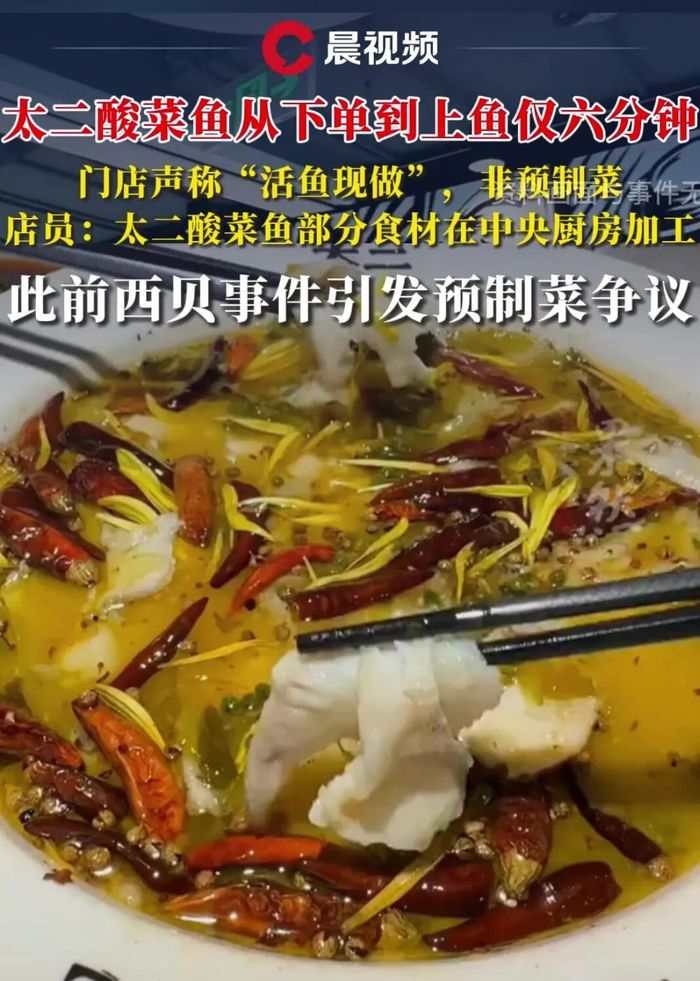
Core Viewpoint - The article discusses the challenges faced by the popular restaurant chain "Tai Er" in light of recent controversies surrounding pre-prepared dishes, particularly in the context of the broader dining industry and consumer perceptions [3][10]. Group 1: Company Overview - Tai Er has become a prominent player in the Chinese dining market, particularly known for its signature dish, sauerkraut fish, which has gained popularity due to its unique flavor profile and marketing strategies [19][21]. - The brand has experienced significant growth, with a projected compound annual growth rate of 33.7% in the sauerkraut fish market from 2018 to 2024, potentially reaching a market size of over 800 billion yuan by 2025 [20]. Group 2: Recent Challenges - Tai Er has faced scrutiny regarding its use of pre-prepared ingredients, with consumers questioning the authenticity of its "freshly made" claims, especially after reports of rapid service times [5][10][11]. - The company has seen a decline in performance, with a reported revenue drop of 13.3% year-on-year, and a reduction of 65 stores over the past year, indicating a significant operational challenge [26][27]. Group 3: Strategic Responses - In response to the controversies, Tai Er has initiated a transformation strategy, including the introduction of "fresh active" stores and expanding its menu to include other protein options like fresh chicken and beef, aiming to diversify its offerings and reduce reliance on sauerkraut fish [27][29]. - The brand is also adapting its dining model by allowing larger groups and introducing takeaway services, which marks a shift from its previous operational restrictions [27][30]. Group 4: Market Perception - The pre-prepared dish controversy has created a significant challenge for Tai Er, as consumer trust is critical in the restaurant industry, and any association with pre-prepared food can lead to negative perceptions [10][17]. - The article emphasizes the importance of establishing a clear distinction between pre-prepared and freshly made dishes, as consumer expectations evolve and competition increases in the dining sector [17][31].
又一个“西贝”暴雷!3亿中产天塌了
创业邦· 2025-09-19 06:27
Core Viewpoint - The article discusses the challenges faced by the hotpot restaurant chain "Tai Er" amid controversies surrounding the use of pre-prepared dishes, particularly in the context of the recent "Xi Bei" incident, which has heightened consumer scrutiny on food quality and preparation methods [5][10]. Group 1: Company Overview - Tai Er has gained popularity for its unique dining experience, including long wait times and strict dining rules, but is now facing allegations of using pre-prepared ingredients, which contradicts its branding as serving "live fish" [6][10]. - The company has seen a significant decline, closing 65 stores in the past year and experiencing a sharp drop in revenue, with a reported income of 1.949 billion yuan, down 13.3% year-on-year [8][21]. Group 2: Market Context - The pre-prepared dish controversy has become a nightmare for many restaurant brands, as consumer perception can quickly turn negative, impacting sales and brand reputation [10][14]. - The Chinese sauerkraut fish market is projected to grow at a compound annual growth rate of 33.7% from 2018 to 2024, with the market size expected to exceed 80 billion yuan by 2025, indicating significant consumer potential [17]. Group 3: Strategic Responses - In response to the controversies, Tai Er has initiated a transformation strategy, including the introduction of "fresh live concept stores" and expanding its menu to include other core items like fresh chicken and beef, aiming to diversify its offerings and reduce reliance on sauerkraut fish [22]. - The company is also adapting its dining policies to attract family customers by allowing larger groups and introducing new cooking styles, which marks a shift from its previous strict dining rules [22]. Group 4: Future Outlook - The ongoing pre-prepared dish debate presents both a challenge and an opportunity for Tai Er to redefine its brand narrative and potentially regain consumer trust through genuine quality improvements [22][24]. - As competition intensifies and consumer interest wanes, the company must focus on building long-term brand loyalty and differentiating itself in a crowded market to avoid stagnation [24].
守住堂食or加码外卖,该怎么选?
3 6 Ke· 2025-09-19 01:36
Core Viewpoint - The restaurant industry is experiencing a divide in strategies regarding dine-in and takeout services, with some brands prioritizing dine-in experiences while others aggressively expand their takeout operations [1][8][18]. Group 1: Dine-in vs. Takeout Strategies - Companies like Xiaocaiyuan and Weijia Liangpi are opting to limit their takeout services, with Xiaocaiyuan stating that takeout should not exceed 35% of their business, emphasizing the importance of dine-in for customer experience [1][3][12]. - Weijia Liangpi has completely exited the takeout market, citing high commission fees and negative impacts on food quality as primary reasons for their decision [4][11][10]. - In contrast, brands like Haidilao and Jiumaojiu are seeing significant growth in their takeout services, with Haidilao's takeout revenue reaching 928 million yuan in the first half of 2025, a 59.6% increase [7][18]. Group 2: Consumer Behavior and Market Trends - A significant portion of consumers (75%) prefer takeout due to lower prices, and 86% would choose takeout if it is cheaper than dine-in options, leading to a decline in dine-in traffic for many restaurants [8][18]. - The shift towards takeout has been particularly challenging for small and medium-sized restaurants, with reports of drastic reductions in customer traffic and revenue [8][10]. Group 3: Value of Dine-in Experience - Dine-in services provide a complete consumer experience, including ambiance and personal interaction, which are difficult to replicate through takeout [9][13]. - Dine-in also tends to yield higher profits, as restaurants can retain a larger percentage of the menu price compared to takeout, where commissions can significantly reduce actual revenue [13][18]. Group 4: Future Outlook and Strategic Balance - The future of the restaurant industry may not be a choice between dine-in and takeout but rather a balance of both, where brands can maintain their core dine-in experiences while exploring takeout opportunities [14][18]. - Successful brands will likely be those that can effectively manage both dine-in and takeout strategies, ensuring that neither aspect undermines the other [18].