百威亚太

Search documents
270天5家上市公司人事调整 啤酒行业或迎产品、渠道新变化
Bei Jing Shang Bao· 2025-07-29 11:29
Core Insights - The Chinese beer industry is undergoing a significant leadership transition, with major companies experiencing management changes over the past nine months, reflecting challenges in performance growth and strategic transformation [1][2][4] Group 1: Leadership Changes - Zhang Yong has been appointed as the new general manager of Zhujiang Beer, marking a shift in leadership as part of a broader trend affecting major beer companies in China [1] - In 2024, Qingdao Beer and Lanzhou Yellow River also saw significant management changes, with new leadership taking over after the retirement of long-standing executives [2] - International beer companies are also adjusting their leadership in China, with Budweiser China appointing Fabio Sala as the new China president, ending a three-year vacancy in the position [2] Group 2: Industry Challenges - The beer industry is facing a transition from volume growth to a new phase where both volume and profit are stagnating or only slightly increasing, prompting companies to seek new growth avenues [3] - A significant number of beer companies are reporting declining revenues, with four out of seven major listed companies experiencing revenue drops, including Budweiser Asia Pacific and China Resources Beer, with declines of -8.9% and -0.76% respectively [4][5] - The overall beer production in China decreased by 0.6% in 2024, with major companies like China Resources Beer and Budweiser Asia Pacific also reporting declines in sales volume [5] Group 3: Market Dynamics - The beer market is witnessing a shift in consumer demand, with challenges in high-end product growth and a decline in immediate consumption channels, leading to a need for strategic adjustments [6][7] - The competition in the beer sector is evolving from channel acquisition to exploring consumer scenarios, particularly in the high-end beer segment [6] - The online penetration rate in the alcohol industry has reached 35%, with the beer instant retail market experiencing significant growth, indicating a shift towards more diverse and health-oriented products [7]



如何看待当前啤酒板块投资机会
2025-07-28 01:42
Summary of Beer Industry Conference Call Industry Overview - The beer industry experienced a slight increase in sales in Q2 2025, with most companies achieving low single-digit growth. Budweiser continued to decline, while Chongqing remained flat, Qingdao and China Resources grew by approximately 2%, Zhujiang increased by 3-4%, and Yanjing saw low single-digit growth [1][5] - Cost benefits persisted with improved prices for barley and packaging materials, leading to expectations of mid to high single-digit profit growth for the industry in Q2, with the first half nearing high single-digit profit increases [1][5] Key Insights and Arguments - The impact of alcohol bans in Q3 is expected to be significant, especially in northern regions, although social media corrections may mitigate this effect. Hot weather is anticipated to aid in sales recovery, with July sales for China Resources and Qingdao expected to show positive growth, while Zhujiang faces short-term pressure [1][6][7] - 2025 is marked by significant management changes across the beer industry, with companies like Qingdao, China Resources, Zhujiang, and Budweiser adjusting leadership to focus more on market share and competitive strategies [1][8] - Qingdao is prioritizing the South China market, fresh beer, and instant retail, while China Resources is increasing sales KPI assessments. Budweiser is investing more in core products, and Zhujiang plans to expand outside its province [1][9] High-End Beer Market Performance - From 2021 to 2023, the high-end beer market maintained double-digit growth in the 8 yuan and above price range, even during the pandemic-affected year of 2022. However, the pace of premiumization has slowed due to ongoing weakness in the dining sector [3][4] - Yanjing's U8 product is expected to grow by 30% this year, reaching 900,000 tons, with a long-term target of 1.2 million tons. The net profit margin is projected to improve to around 10% through efficiency gains [3][10] Company-Specific Developments - China Resources is expected to see over 2% sales growth in the first half of 2025, with profits likely to achieve low double-digit growth. The departure of key personnel has been absorbed, and the transition is expected to be smooth due to the new CEO's experience in the beer business [11] - Budweiser faces challenges in Guangdong due to its reliance on large distributors and a focus on high-end products, which limits its distribution effectiveness. Without attractive new products, Budweiser risks losing market share to competitors like Zhujiang [12] Conclusion - The beer industry is navigating a complex landscape with varying growth rates among companies, management changes, and external pressures such as alcohol bans and market competition. The focus on market share and product innovation will be crucial for sustaining growth in the coming quarters [1][8][12]
啤酒巨头中年危机,1300亿精酿围城,谁能破局同质化内卷?
Tai Mei Ti A P P· 2025-07-27 08:56
Core Insights - The beer industry in China is experiencing a generational divide, with traditional industrial beers seeing a decline in consumption while craft beers are gaining popularity among younger consumers [2][10][11] - In 2022, the beer industry revenue in China fell by 5.7%, making it the only category in the food and beverage sector to experience negative growth [1][2] - The craft beer market is projected to reach 130 billion yuan by 2025, with a 17% annual growth rate, significantly outpacing the decline of industrial beers [2] Industry Trends - The traditional beer market is characterized by high price sensitivity among consumers, particularly among older generations who prioritize affordability over taste [5][6][10] - Local beer brands have a strong understanding of their regional consumers, but the high transportation costs limit their ability to expand nationally [4][9] - The shift in consumer demographics, with younger generations less reliant on alcohol for stress relief, has led to a decline in traditional beer consumption [10][11] Consumer Behavior - Younger consumers are increasingly seeking unique flavors and experiences, leading to a rise in demand for craft beers that offer diverse taste profiles [11][13] - The consumption patterns of younger generations emphasize moderation and quality, with many preferring to drink less but enjoy higher-quality beverages [11][12] - Emotional connections and social experiences are becoming crucial for brands to engage younger consumers, prompting a shift in marketing strategies [14][15] Market Dynamics - The beer market is witnessing intense competition, with brands innovating rapidly to capture consumer interest through unique flavors and marketing campaigns [16][17] - Price competition is becoming a significant issue, with brands risking quality in an attempt to attract price-sensitive consumers [17][18] - The craft beer segment is expanding rapidly, driven by changing consumer preferences and the desire for new experiences [13][16]
食品展健康升级,SIAL西雅展9月深圳响应健康中国2030,健康化创新成主流
Zhong Guo Shi Pin Wang· 2025-07-23 06:06
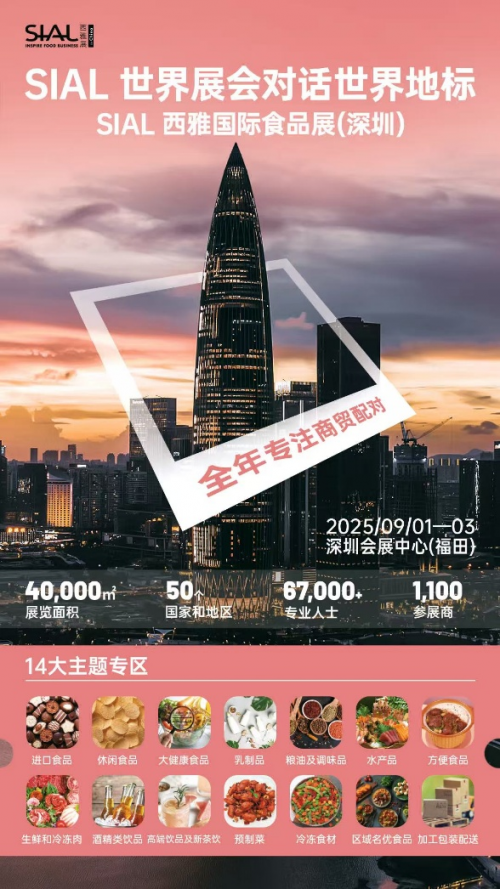
Core Insights - The transformation of the snack food industry is shifting from "pursuing tasty" to "pursuing quality," encompassing health, fun, and culture [1] - The SIAL International Food Exhibition in Shenzhen serves as a vital platform for the industry, injecting new vitality into the sector [1] Policy-Driven Health Innovation - National strategies are guiding the health-focused innovation in the snack food industry, with policies aimed at reducing sugar, salt, and oil, as well as promoting clean labels and nutrition [4][5] - The SIAL exhibition will gather over 1,100 exhibitors from 50 countries and regions, discussing pathways and opportunities for health innovation [5] Fun Integration and Young Market - Snack food companies are incorporating fun elements and cultural connotations to attract younger consumers [7] - Companies like Guangdong Jintian Animation Co., Ltd. and Dongguan Jinwang Food Co., Ltd. are leveraging popular IP collaborations to create products appealing to young consumers [7] Channel Innovation - The SIAL exhibition highlights channel innovations, such as Sam's Club's localization strategy, which accelerates the rise of Chinese snacks [9] - The introduction of WeChat's "gift" feature expands new consumption scenarios for snacks, presenting new growth points for the e-commerce sector [9] Supply and Demand Matching - The SIAL exhibition facilitates efficient cooperation and win-win scenarios through its supply-demand matching services, optimizing resource allocation [10] - A significant number of buyers from various channels, including retail, trade, and e-commerce, have pre-registered for the event, enhancing its international appeal [10] Industry Development - The SIAL International Food Exhibition is a key driver for the upgrade and development of the snack food industry, providing a platform for showcasing and exchanging ideas [11] - The exhibition supports companies with comprehensive solutions from product development to scene implementation, underpinned by policy and consumer upgrade dynamics [11]

食品饮料行业 2025 年中报前瞻:白酒出清探底,食品亮点频现
Huachuang Securities· 2025-07-22 09:25
Investment Rating - The report maintains a "Recommended" rating for the food and beverage industry, particularly highlighting opportunities in the liquor sector and food products [1] Core Insights - The liquor industry is undergoing extreme pressure testing, with a significant focus on inventory clearance and bottoming out of financial reports. The second quarter has shown weak demand due to seasonal factors and regulatory impacts, leading to a notable decline in sales and pricing pressures [5][10] - High-end liquor brands like Moutai are expected to maintain growth, while mid-tier brands face challenges with declining revenues and profits. The overall industry is in a deep clearance phase, with potential for recovery as regulations stabilize [5][12] - The consumer goods sector shows mixed performance, with snacks and beverages remaining strong, while other segments like frozen foods and chain restaurants face ongoing demand pressures [20][25] Summary by Sections 1. Liquor Sector - The liquor industry is experiencing extreme pressure, with weak demand in the second quarter and significant inventory levels. Major brands like Moutai and Wuliangye are expected to show modest growth, while others like Yanghe and Luzhou Laojiao are facing declines [5][11][12] - Moutai's revenue is projected to grow by 7% in Q2, while Wuliangye is expected to see a 1% increase. In contrast, brands like Yanghe and Luzhou Laojiao are forecasted to decline by 35% and 8% respectively [11][12] 2. Consumer Goods - The overall demand for consumer goods remains weak, but segments like snacks and beverages are performing well. For instance, East Peak is expected to see a 33% increase in revenue, while other snack brands are also showing positive trends [20][25] - The beverage sector is projected to see positive growth, with major brands like Qingdao Beer and Yanjing expected to report increases in revenue and profit [25][26] 3. Investment Recommendations - The report suggests focusing on high-performing stocks in the short term while considering long-term investments in liquor brands that are currently at their bottom. Brands like Moutai and Gujing are recommended for their lower risk profiles [7][8] - For consumer goods, companies like Anqi and East Peak are highlighted for their growth potential, while traditional dairy brands like Yili and Mengniu are suggested for a bundled investment approach [7][8]





争夺Z世代的酒桌:健康微醺、跨界融合定义酒业新十年
Sou Hu Cai Jing· 2025-07-19 06:04
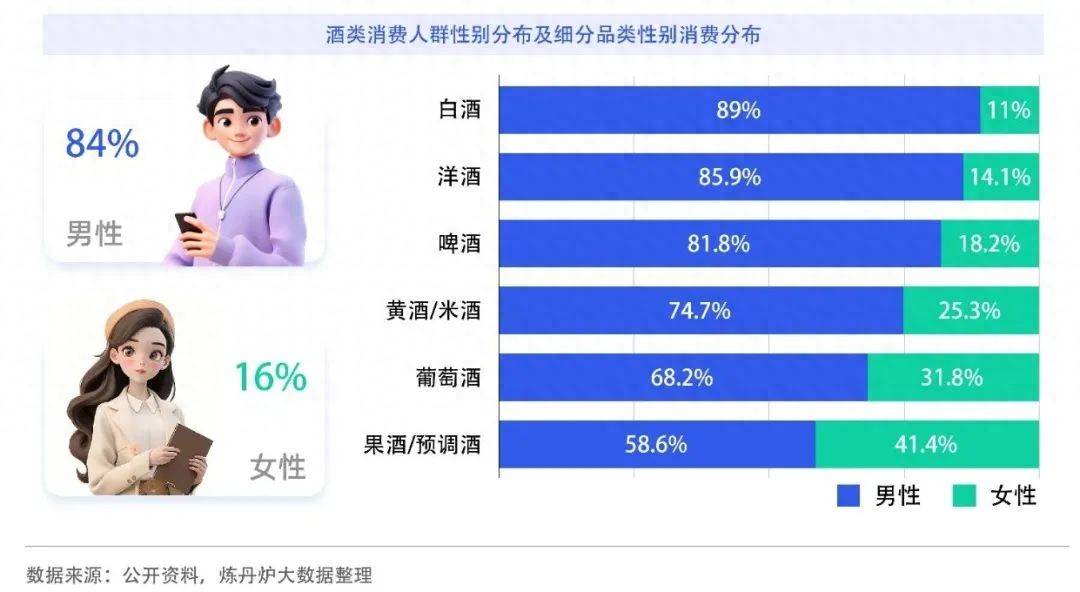
Core Insights - The Chinese liquor market is experiencing robust growth alongside structural transformation driven by changing consumer habits and the rise of online channels [1][2] - Young consumers and health consciousness are reshaping the industry landscape, prompting traditional liquor companies and emerging brands to seek new opportunities [1][8] Market Dynamics - The liquor distribution market in China continues to grow, with 54.2% of consumers now purchasing liquor online, disrupting the dominance of traditional offline channels [2] - Major sales peaks occur during traditional holidays, highlighting liquor's role as an "emotional carrier" and "social currency," which drives companies to focus on holiday-specific gift boxes and scenario-based marketing [2] Consumer Demographics - There is a significant gender disparity in liquor consumption, with men dominating the market at 84%, particularly in categories like baijiu, foreign liquor, and beer, while women have increased their share in fruit and pre-mixed drinks to 41.4% [4] - The younger demographic (ages 18-29) shows growing interest in baijiu, necessitating innovative products and marketing strategies to attract this group [5] Product Trends - Baijiu remains the dominant category, benefiting from strong consumer roots and diverse demand, with 70% of consumption linked to business and social occasions [5] - The market for mid-to-high-end baijiu is intensifying, with 64.8% of sales in the mid-to-high-end segment, and high-end products priced above 800 yuan accounting for 41.3% [5] Flavor Preferences - Consumers prioritize taste, favoring smooth, delicate, and rich flavors in baijiu, while beer sales peak in summer, with "pure and refreshing" being key descriptors [7] - The foreign liquor market is characterized by distinct consumer segments, with brand loyalty among young, educated urbanites, and a rising trend in DIY cocktails [7] Future Trends - The liquor industry is entering a new era characterized by health consciousness, cultural expression, and the rise of younger consumers, leading to trends like "low-alcohol enjoyment" and "scenario innovation" [8] - The "micro-drunk" economy is gaining traction, with fruit and rice wines seeing increased sales, and health-oriented product innovations becoming standard [9] - DIY cocktail culture is on the rise, with platforms promoting home mixology, appealing to young professionals and trendsetters [10] - Brands are enhancing their appeal through artistic packaging and cultural symbolism, while integrating health concepts into their offerings [12]
品牌市场证明:助力啤酒领域企业抢占市场制高点
Sou Hu Cai Jing· 2025-07-17 14:07
Core Insights - The Chinese beer market is projected to reach a scale of 336 billion yuan by 2025, with a compound annual growth rate of 4.5%, potentially exceeding 420 billion yuan by 2030, driven by consumption upgrades, technological innovation, and channel transformation [2] - The market is currently dominated by five major brands: China Resources Snow Beer, Tsingtao Brewery, Budweiser APAC, Yanjing Beer, and Carlsberg, which collectively hold over 70% market share [2] - Craft beer is emerging as a significant player, with its market size expected to surpass 3 billion yuan in 2024, growing at a rate of 28.5%, appealing particularly to the Gen Z demographic [2] Industry Challenges - The upstream supply chain faces challenges, with 70% of barley and 90% of hops being imported, leading to weak bargaining power against suppliers and sensitivity to raw material price fluctuations [3] - Traditional on-the-go channels are experiencing stagnant growth, while non-on-the-go channels like community convenience stores and discount shops are showing strong growth [3] Market Positioning - Establishing market position is crucial for companies in the competitive landscape, as it reflects both business strategy and corporate strength [3][4] - Market position certification enhances brand value, increases market competitiveness, and serves as a basis for external promotion, thereby boosting consumer trust [4][5] - Higher market share indicates stronger competitive strength, allowing companies to scale up, improve production efficiency, reduce costs, and increase profits [4][5]
集体爆发!
中国基金报· 2025-07-17 11:58
Core Viewpoint - The Hong Kong stock market saw a collective surge in the pharmaceutical and biotechnology sector, with notable gains in companies like Li Auto and China Biologic Products [2][4][12]. Group 1: Market Performance - The Hang Seng Index closed at 24,498.95 points, down 0.08%, while the Hang Seng Tech Index rose by 0.56% to 5,448.85 points [2]. - The total market turnover was HKD 236.4 billion, a decrease from the previous trading day, with net inflows from southbound funds amounting to HKD 1.855 billion [2]. - Among the constituent stocks, 43 rose and 40 fell, with Li Auto leading the gains at 9.73% [4]. Group 2: Notable Stock Movements - Li Auto's stock price increased by 9.73%, closing at HKD 124.10, with a year-to-date increase of 32.09% [5][19]. - China Biologic Products rose by 5.90%, with a significant year-to-date increase of 114.68% [5]. - The pharmaceutical sector saw a strong performance, with the Wande Pharmaceutical and Biotechnology Index rising by 4.65% [15]. Group 3: Sector Analysis - The healthcare sector increased by 5.17%, while the materials and energy sectors experienced declines of 1% and 0.94%, respectively [6]. - The CAR-T index rose by 8.19%, and the unprofitable biotech index increased by 6.28%, indicating strong investor interest in these areas [9]. Group 4: Regulatory Developments - The National Healthcare Security Administration and the National Health Commission introduced measures to support the high-quality development of innovative drugs, which is expected to enhance the role of commercial insurance in the multi-level medical security system [17]. - This regulatory change is anticipated to positively impact the upstream supply chain, including research reagents and CXO industries, with expected performance improvements starting from mid-2025 [17]. Group 5: Company-Specific News - Li Auto announced the opening of pre-orders for its i8 model, leading to a stock price increase of nearly 10% [18][19]. - The expected price range for the i8 is between RMB 350,000 and RMB 400,000, with the official price to be announced on July 29 [22].

“沸腾”!刚刚,涨停潮来了!
天天基金网· 2025-07-17 06:28
上天天基金APP搜索【777】注册即可 领500元券包,优选基金10元起投!限量发放!先到 先得! 7月17日,A股市场早间小幅低开,随后震荡拉升。截至发稿,三大指数集体飘红,创业板指 涨近1%。 盘面上,通信、钢铁、医药、零售等板块走高,电路板、光模块、CRO等概念股火热;地 产、传媒、银行等板块不振,稀土、火电等概念股回调。 港股早间冲高回落,截至发稿,三大指数均处于微红状态。中国生物制药涨近3%,领涨恒指 成份股。 | 24524.32 | | 8861.93 | 5425.13 | | | --- | --- | --- | --- | --- | | 恒生指数 +0.03% | | 国企指数 +0.01% | 恒生科技指数 +0.12% | | | 序号代码 | | 名称 | 现价 涨跌 | 涨跌幅 * | | 1 | 1177 | 中国生物制药6.630 | 0.190 | 2.95% | | വ | 0175 吉利汽车 | | 18.760 0.500 | 2.74% | | 3 | 3692 翰森制药 | | 33.850 0.800 | 2.42% | | ব | 9633 农夫山泉 | | ...
“沸腾”!刚刚,涨停潮来了!
Zhong Guo Ji Jin Bao· 2025-07-17 03:18
Market Overview - The A-share market opened slightly lower on July 17 but then experienced a rebound, with all three major indices showing positive performance, particularly the ChiNext index which rose nearly 1% [2] - The total market capitalization reached 14.20 trillion CNY, with a trading volume of 7698.06 million hands and a turnover rate of 1.46% [3] Pharmaceutical Sector - The pharmaceutical sector saw a significant surge, with multiple stocks hitting the daily limit up, including Weikang Pharmaceutical and Chengdu Xian Dao, both reaching a 20% increase [4][5] - Notable stocks in the pharmaceutical sector included: - Chengdu Xian Dao: 21.46 CNY, up 20.02% - Weikang Pharmaceutical: 20.71 CNY, up 19.99% - Other stocks like Lifespring Pharmaceutical and Zhejiang Zhenyuan also saw increases of around 10% [5][6] - The Hong Kong pharmaceutical and biotechnology sector also experienced notable gains, with companies like Fudan Zhangjiang and Kanyin Biotech showing significant price increases [6] Robotics Sector - The humanoid robot concept stocks remained active, with Nanjing Julong hitting the daily limit up of 20%, and other companies like Dongshan Precision and Taijing Technology also seeing substantial gains [7][8] - On July 17, the stock of Aowei New Materials achieved a 20% limit up, marking its seventh consecutive trading day of gains, with a closing price of 27.89 CNY [10][11] Policy Impact - The National Healthcare Security Administration recently announced the initiation of the 11th batch of centralized drug procurement, which will include 55 drug varieties, focusing on mature "old drugs" while excluding innovative drugs from the procurement list [6]