红旗连锁

Search documents
链接全球市场 悦享多元消费,“2025成都进口嘉年华”系列活动圆满收官
Sou Hu Cai Jing· 2025-12-05 12:15
Core Insights - The "2025 Chengdu Import Carnival" series, organized by Chengdu's Commerce Bureau, aims to enhance Chengdu's status as an international consumption center and stabilize import-export trade through various themed activities and global supply-demand matching events [2][12] Group 1: Consumer Experience - The carnival features immersive experiences, such as the introduction of "Country Recommendation Officers" to share cultural stories behind imported goods, and a comprehensive guide for consumers to navigate import shopping [3] - During the Mid-Autumn Festival and National Day, the "Golden Autumn Global Gathering" event showcased over 20 import merchants, creating vibrant consumer experiences across various districts [5] - Efficient international trade channels allow for rapid delivery of imported goods, exemplified by Norwegian salmon reaching consumers in Chengdu within 48 hours and Thai durians arriving in 72 hours [5] Group 2: Business Collaboration - The carnival serves as a high-level platform for trade cooperation, with two supply-demand matching events held in Chengdu and Shanghai, leveraging the influence of the China International Import Expo [6] - Significant partnerships were formed during these events, including agreements for a direct sourcing platform and strategic collaborations with international companies [9] Group 3: Market Confidence - The success of the carnival reflects the confidence of international brands and local enterprises in the Chengdu market, with extensive media coverage and online promotions achieving millions of exposures [10] - Local importers are optimistic about the market's potential, with plans to enhance their presence and product offerings in response to consumer demand for high-quality imports [10][11]


茶饮市场再现黑马,甜心皮皮三个月获近亿元投资融资,签约门店超1500家
Zhong Jin Zai Xian· 2025-12-05 06:47
Core Insights - The emerging tea beverage brand, Sweetheart Pipi, has achieved significant milestones by securing 1,508 store cooperation intentions within three months and attracting nearly 100 million yuan in investment from well-known domestic institutions, surpassing the early expansion speed of leading brands like Mixue Ice City and Bawang Tea Sister, indicating untapped growth potential in the tea beverage market [1] Expansion Strategy - As of November 2025, Sweetheart Pipi has established cooperation intentions for 1,130 stores domestically, focusing on regions such as Yunnan, Guizhou, Sichuan, Chongqing, and coastal areas; internationally, it has rapidly expanded with 378 intended stores across Vietnam, Indonesia, Malaysia, Australia, New Zealand, North America, and the Middle East [2] - The brand's monthly revenue per store exceeds the industry average, and it has set a goal to achieve "10,000 store chains" within the next year, which would position it among the top tier in the tea beverage industry, showcasing its strategic execution capabilities and high growth potential for investors [2] Investment Appeal - In a tightening investment environment for the tea beverage industry, Sweetheart Pipi has secured nearly 100 million yuan in funding as of November, driven by the strength of its elite team [3] - The founder, Guo Guanghui, has 15 years of experience in the domestic and Southeast Asian markets, bringing valuable local resources; the core team includes members from established brands like Mixue Ice City, Bawang Tea Sister, Kud Coffee, and Luckin Coffee, enhancing the brand's risk resilience and feasibility for international expansion [3] Supply Chain Strength - Sweetheart Pipi's rapid expansion is supported by a robust supply chain, featuring an in-house R&D team and core raw materials produced by its own factories, along with a regional warehousing and logistics network [4] - This supply chain capability ensures stable store operations and supports simultaneous domestic and international market expansion, laying a foundation for long-term competitiveness, particularly with customized strategies for diverse overseas markets [4] Industry Impact and Market Outlook - The rise of Sweetheart Pipi indicates that new brands can find growth opportunities through innovation, even in a market dominated by established players like Mixue Ice City and Gu Ming [5] - According to data from the China Chain Store and Franchise Association and Northeast Securities, the market size of China's tea beverage industry is expected to exceed 400 billion yuan in 2024 and reach 573.2 billion yuan by 2028, with a compound annual growth rate (CAGR) of 17.3% from 2023 to 2028 [5] - This round of financing represents a significant phenomenon in the tea beverage industry for 2025, reflecting the maturity and global confidence of Chinese brands; the ability of Sweetheart Pipi to achieve its "10,000 store goal," maintain competitiveness, and build a brand moat will serve as a benchmark for the industry and provide insights into the resilience of the Chinese consumer market [5] Conclusion - Sweetheart Pipi's performance demonstrates that innovation and efficient execution can drive industry progress even in a saturated tea beverage market [6] - Its development path not only serves as a reference for similar brands but also highlights the importance of supply chain and team integration in investment decision-making [6]
全球亿万富翁人数,创历史新高
3 6 Ke· 2025-12-05 03:07
Core Insights - UBS's report indicates that the number of billionaires globally is expected to reach a new high by 2025, driven by soaring valuations of tech companies and rising global stock markets [1][2] Group 1: Billionaire Statistics - Currently, there are approximately 2,900 billionaires worldwide, controlling a total wealth of $15.8 trillion, up from about 2,700 billionaires and nearly $14 trillion a year ago [2] - An estimated 287 new billionaires are expected to emerge by 2025, marking the second-highest increase since UBS began tracking in 2015, only behind the surge in 2021 [2] - The report highlights that the growth of the billionaire population is accelerating across various sectors, with new billionaires including entrepreneurs and heirs [2] Group 2: Wealth Transfer Trends - Among the newly minted billionaires, 91 are heirs who collectively inherited assets worth $298 billion, including members from two major German pharmaceutical families [2] - The report emphasizes a significant trend of intergenerational wealth transfer, with most wealth initially passing to spouses and then to the next generation [2] Group 3: Regional Insights and Concerns - UBS anticipates that most wealth inheritance will occur in the United States, followed by India, France, Germany, and Switzerland [3] - A separate report from Altrata estimates a total of 3,508 billionaires globally, with a combined wealth of $13.4 trillion, about one-third of which is from the U.S. [3] - Concerns among Asian billionaires center around tariffs, while U.S. billionaires are primarily worried about inflation and geopolitical risks [3] - UBS executives note that Switzerland, the UAE, the U.S., and Singapore are favored destinations for billionaires, especially after Switzerland rejected a proposal for a 50% inheritance tax on the ultra-wealthy [3]

创新还是噱头,餐饮跨界边在哪?
Qi Lu Wan Bao· 2025-12-04 22:02
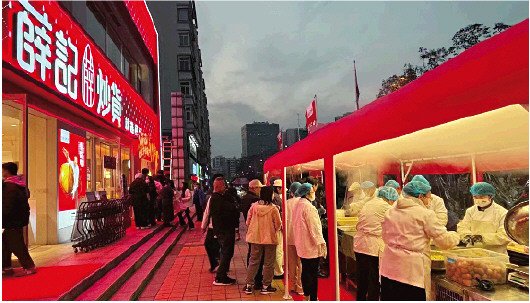
Core Viewpoint - The article discusses the trend of food and beverage brands diversifying their product offerings by entering new categories, such as breakfast items and snacks, to enhance customer engagement and drive sales growth [2][4][5]. Group 1: New Product Launches - Recently, customers reported that Mixue Ice City has introduced a breakfast series in its app, featuring items priced at 5 yuan each, although the rollout is currently limited to select cities like Dalian and Xi'an [2]. - Xueji Snack has also ventured into the snack market by selling fried items such as chicken legs and meatballs, with prices ranging from 10 yuan for a chicken leg to 19.8-39.8 yuan per pound for other snacks [3]. Group 2: Industry Trends - The restaurant industry is shifting from expansion to deepening existing markets, with brands focusing on creating diverse consumption experiences to attract a wider customer base and increase purchase frequency [4]. - The "fast food economy" is becoming a key area for many brands, with examples including M Stand's breakfast sets and Tims' lunch boxes, indicating a growing trend towards all-day dining options [4]. Group 3: Consumer Reactions - Social media users have expressed mixed feelings about the cross-industry innovations, with some appreciating the new combinations while others emphasize the importance of taste and service over novelty [5]. - The cross-industry attempts have helped brands attract younger consumers, expanding their traditional customer base, which primarily consisted of individuals aged 30-60 [5]. Group 4: Challenges and Opportunities - Despite having a "stock advantage," brands face challenges in maintaining product quality and pricing strategies when entering new markets, as seen with brands like Heytea and others that struggled to establish sustainable consumption habits [6]. - Experts suggest that brands with established store networks can leverage their existing resources to minimize costs while introducing new product lines, but they must also ensure staff are adequately trained to maintain quality [6][7].
蜜雪冰城把店开到了公交站,公交公司还提供优惠:凭乘车记录享折扣!执法局的人却上门了……
Mei Ri Jing Ji Xin Wen· 2025-12-04 16:26
Core Viewpoint - Zhengzhou's public transportation system is collaborating with Mixue Ice City to open a new store at a busy BRT station, enhancing passenger experience and generating new revenue streams for the bus company [1][3][5]. Group 1: Store Opening and Collaboration - The new Mixue Ice City store is set to open before New Year's Day at a prominent BRT station in Zhengzhou, which is expected to attract high foot traffic [1][3]. - This partnership aims to extend public transport services by providing convenient access to affordable beverages for passengers while improving station facilities [3][5]. Group 2: Operational Challenges - There are procedural issues regarding land use planning permits that have arisen during the collaboration, as the Zhengzhou Bus Group has not provided the necessary documentation for construction [5][7]. - Concerns have been raised by the public about potential disruptions to passenger flow due to the store's location, but the bus company has assured that the design allows for adequate space for passenger movement [7][9]. Group 3: Industry Trends - Other cities, such as Zaozhuang and Xiamen, have successfully implemented open business models at BRT stations, integrating retail and service functions to enhance the utility of these transit spaces [9][10].

蜜雪冰城进军北美市场,美国、墨西哥新店正在装修
Sou Hu Cai Jing· 2025-12-04 13:36
Core Insights - Recently, multiple reports from netizens indicate that Mixue Ice City is set to open new stores in New York and Los Angeles, with sightings of a new store in Mexico as well [1][3] Group 1: Store Locations and Developments - The new stores in New York, Los Angeles, and Mexico are currently under renovation, with signs indicating "OPENING SOON" [3] - The New York store is located in Manhattan's Chinatown, the Los Angeles store is on Hollywood Boulevard, and the Mexico store is situated in Mexico City's Constitution Square, all in high-traffic areas with many other dining options nearby [3] Group 2: Community Engagement and Marketing - The Mexico store has launched a social media account to update on the store's progress, receiving comments from users worldwide expressing interest in new locations [3] - The renovation banners at the new stores include a QR code that provides information about the company's mission, development history, and product offerings, although prices are not yet listed [3]

全球亿万富翁人数,创历史新高
财联社· 2025-12-04 13:01
Core Viewpoint - The number of billionaires globally is expected to reach a new high by 2025, driven by soaring valuations of technology companies and rising global stock markets [2][4]. Group 1: Billionaire Statistics - Currently, there are approximately 2,900 billionaires worldwide, controlling a total wealth of $15.8 trillion, up from about 2,700 billionaires and nearly $14 trillion a year ago [4]. - An estimated 287 new billionaires are expected to emerge by 2025, marking the second-highest increase since 2015, only behind the surge in 2021 [4]. - The report indicates that the growth of the billionaire population is accelerating and includes both entrepreneurs and heirs [4]. Group 2: Wealth Transfer - Among the new billionaires, 91 are heirs who collectively inherited assets worth $298 billion, including 15 members from two major German pharmaceutical families [5]. - The trend of large-scale intergenerational wealth transfer has been ongoing for over a decade and is now becoming a reality [5]. - Most inherited wealth is expected to first transfer to spouses, typically wives, before being passed on to the next generation [5]. Group 3: Investment Trends - UBS predicts that most wealth transfers will occur in the United States, followed by India, France, Germany, and Switzerland [6]. - A report from Altrata also indicates a historical high in the number of billionaires, estimating 3,508 billionaires with a combined wealth of $13.4 trillion, with about one-third from the U.S. [6]. - Interest in North America as a short-term investment destination has decreased from 81% to 63%, while interest in Western Europe, Greater China, and other Asia-Pacific regions has increased [6]. Group 4: Concerns and Preferences - Asian billionaires are primarily concerned about tariffs, while U.S. billionaires are more focused on inflation and geopolitical risks [7]. - Preferred destinations for billionaires include Switzerland, the UAE, the U.S., and Singapore [7]. - A recent Swiss vote rejected a proposal for a 50% inheritance tax on super-rich individuals, with opponents fearing it could lead to an exodus of wealthy individuals [7].

离场还是进化?酒水经销商的出路到底在哪里
Sou Hu Cai Jing· 2025-12-04 10:47
Core Viewpoint - The Chinese liquor industry is facing significant challenges, akin to extreme mountain climbing, with leading companies struggling for growth while distributors experience severe survival pressures [1][3]. Industry Performance - The third-quarter reports indicate a sharp decline in performance for most liquor companies, with some net profits dropping nearly three digits year-on-year [1]. - The growth in the industry is highly concentrated among a few leading companies, resulting in the exit of numerous small and medium-sized enterprises, with over 100 liquor companies expected to exit by mid-2025 [1]. Distributor Challenges - Major liquor distribution companies reported a dramatic drop in both revenue and net profit in the third quarter, highlighting the severe survival challenges faced by distributors [3]. - Many distributors are only able to provide minimal living expenses to employees, leading to salary cuts or layoffs [3]. - By mid-2025, 1,701 distributors exited from the networks of 20 major liquor companies, contrasting sharply with a net increase of nearly 2,000 last year [3]. Market Trends - Traditional sales peaks during the Mid-Autumn and National Day festivals have diminished, with sales dropping by 20% compared to the previous year [3]. - The high-end gift liquor market is declining due to more rational consumer behavior, while the self-consumption market is still present but with reduced purchase volumes and heightened price sensitivity [3]. Strategic Shifts - To survive, distributors are adopting new strategies such as street vending, live streaming, and reducing inventory [5]. - Many distributors are shifting focus to new beverage categories, such as low-alcohol trendy drinks, to navigate the current market challenges [5]. - The new beverage segment is seen as a second climbing route, with higher repurchase rates and a growing customer base, contrasting with traditional liquor sales [5]. Emerging Opportunities - Successful new products, such as the 38-degree Guojiao 1573 and Wuliangye's "Yijian Qingxin," have achieved significant sales milestones, indicating a potential shift in consumer preferences [9]. - Beverage giants are entering the new drink market, with brands like Yuanqi Forest and Mixue Ice City launching new products, reflecting changing consumer trends towards convenience and value [9]. - The new beverage market is rapidly heating up, suggesting that competition will intensify as companies adapt to the evolving landscape [9].
2900人掌控15.8万亿美元财富!受益于科技股估值飙升,全球亿万富翁数量再创历史新高
Hua Er Jie Jian Wen· 2025-12-04 10:46
Group 1 - The core viewpoint of the article highlights that the number of billionaires and their total wealth is expected to reach a historical high by 2025, driven by soaring valuations of technology companies and rising stock markets [1] - Approximately 2,900 billionaires control a total wealth of $15.8 trillion, a significant increase from around 2,700 billionaires and nearly $14 trillion the previous year [1] - The report indicates that 287 new billionaires are expected to emerge in 2025, marking the second-highest record since 2015, following the surge in 2021 due to government stimulus measures and low interest rates [1] Group 2 - The report from UBS shows that new billionaires include entrepreneurs from various sectors, such as Ben Lamm of Colossal Biosciences and Michael Dorrell of Stonepeak Partners, as well as heirs who have significantly increased their wealth through inheritance [2] - A notable increase in wealth inheritance is observed, with 91 new billionaires inheriting a total of $298 billion, which is over a one-third increase compared to 2024 [2] - UBS estimates that over the next 15 years, at least $5.9 trillion will be inherited by the children of billionaires, primarily occurring in the United States, followed by India, France, Germany, and Switzerland [2] Group 3 - A shift in investment preferences is noted, with the proportion of billionaires considering North America the best investment location dropping from 81% to 63% over the past year, while investment attractiveness in Western Europe and the Asia-Pacific region has increased [3] - Asian billionaires express concerns about tariffs, while U.S. billionaires are more focused on inflation and geopolitical issues [3] - The high mobility of billionaires, especially among the younger generation, is reshaping the global wealth landscape, with Switzerland, the UAE, the U.S., and Singapore being favored destinations [3]
星巴克中国、蜜雪冰城……茶咖品牌们,都盯上了打工人的早餐
3 6 Ke· 2025-12-04 03:55
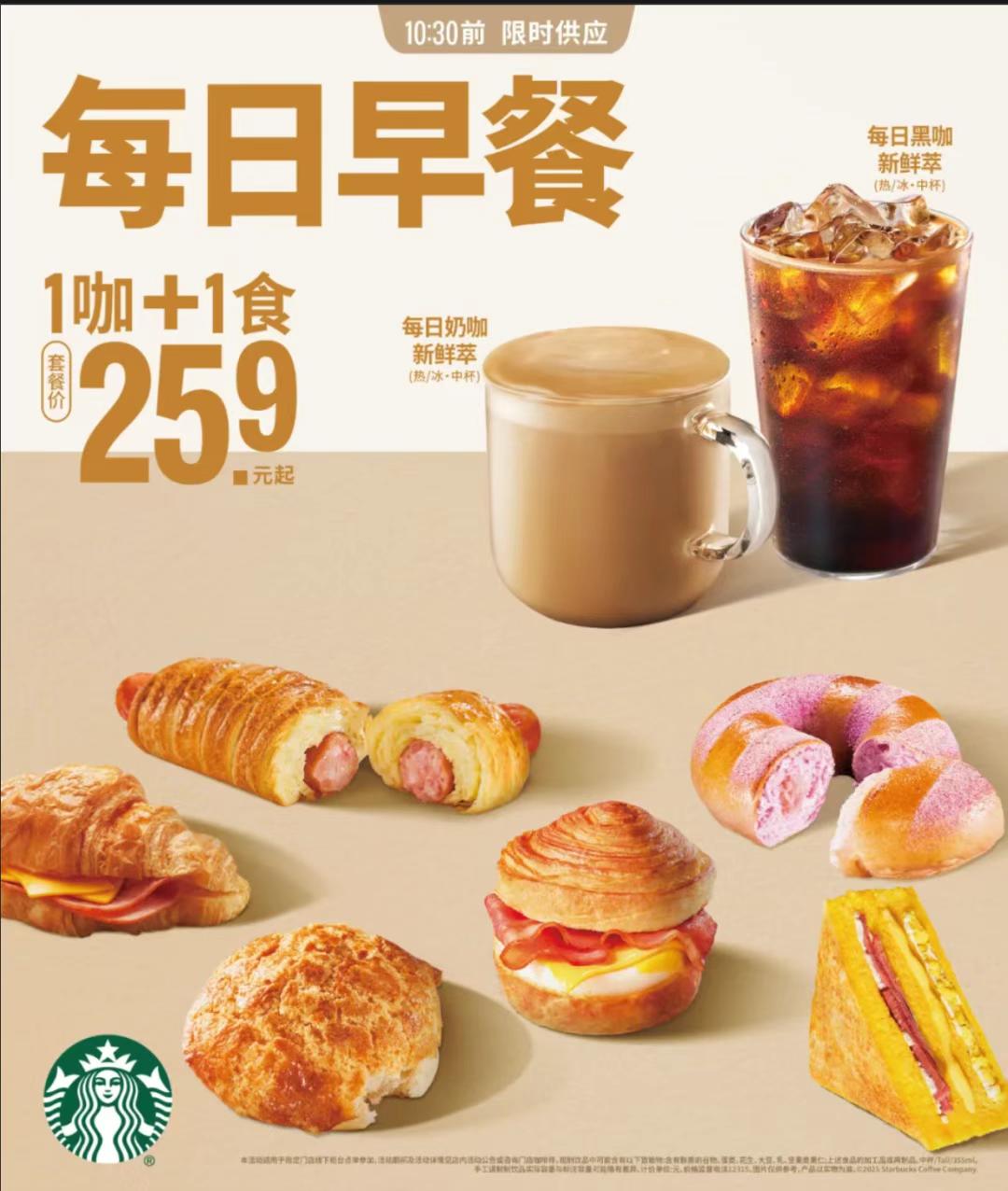
Core Insights - The article discusses the emerging trend of beverage brands, particularly coffee and tea chains, entering the breakfast market, indicating a shift in consumer behavior and market strategy [2][3][23] Group 1: Market Trends - Major beverage brands like Starbucks and Mixue Ice City are focusing on breakfast offerings, suggesting a strategic shift to capture consumer demand during this key meal period [2][4][22] - The trend of integrating food with beverages is becoming a standard practice rather than a differentiating factor, as seen with brands like Nayuki Tea and Tims Coffee [3][12][24] Group 2: Company Strategies - Starbucks launched a "Daily Breakfast" series in Shenzhen, offering value meal combinations at prices ranging from 25.9 to 31.9 yuan, which includes coffee and food items [6][8] - Tims Coffee has also entered the lunch market with a "Light Bagel Lunch Box" series, emphasizing health and freshness, indicating a broader strategy to attract consumers throughout the day [10][11] Group 3: Consumer Behavior - There is a growing consumer preference for convenient breakfast options, particularly among office workers and students, leading to increased demand for quick meal solutions [22][24] - The article highlights that breakfast consumption is becoming a necessity, with brands recognizing the importance of catering to this demand to enhance customer engagement and sales [22][26] Group 4: Competitive Landscape - The competitive landscape is shifting as beverage brands aim to capture a larger share of the breakfast market, which has traditionally been dominated by street vendors and local eateries [26][27] - The integration of food offerings is seen as a way to increase customer frequency and average transaction value, making it essential for brands to adapt to this evolving market [24][25]