英诺赛科

Search documents
港股英诺赛科飙升逾13%再创新高
Mei Ri Jing Ji Xin Wen· 2025-09-01 08:32
Group 1 - InnoCare Pharma (02577.HK) surged over 13%, reaching a new high of 98.7 HKD [1] - As of the time of reporting, the stock increased by 12.36%, trading at 97 HKD [1] - The trading volume amounted to 1.027 billion HKD [1]
人形机器人产业周报:国务院发布深入实施“人工智能+”行动的意见,英伟达推出JetsonThor-20250901
Guoyuan Securities· 2025-09-01 07:46
Investment Rating - The report maintains a "Recommended" investment rating for the humanoid robot industry, indicating that the industry index is expected to outperform the benchmark index by more than 10% [7][26]. Core Insights - The humanoid robot concept index increased by 0.75% from August 24 to August 29, 2025, underperforming the CSI 300 index by 1.97 percentage points. Year-to-date, the humanoid robot index has risen by 69.78%, outperforming the CSI 300 index by 52.07 percentage points [2][11]. - The report highlights significant policy support for the humanoid robot sector, including the establishment of innovation centers and funding initiatives aimed at fostering research and development in this field [3][21]. - Technological advancements are evident, with companies like UBTECH deploying NVIDIA's latest Jetson AGX Thor technology in their humanoid robots, enhancing their capabilities [19][22]. - The report emphasizes the growing investment activity in the sector, with several companies securing substantial funding to accelerate their development and production of humanoid robots [23][24]. Summary by Sections Weekly Market Review - The humanoid robot index saw a weekly increase of 0.75%, while the A-share humanoid robot stocks showed significant volatility, with Haon Electric experiencing the highest weekly gain of 58.28% and Haichang New Materials the largest drop of 14.90% [2][17]. Weekly Hotspots Review Policy Developments - The establishment of a 3 million yuan fund to support research in humanoid robotics, with individual project funding ranging from 300,000 to 500,000 yuan, was announced [3][19]. - The Ministry of Industry and Information Technology published a list of 32 pilot projects for intelligent elderly care service robots [3][20]. Product and Technology Iteration - UBTECH's Walker S2 robot is the first humanoid robot to feature autonomous battery swapping capabilities, utilizing NVIDIA's latest technology [19][22]. - The production capacity of Ningbo Puzhi Future Robot is set to expand to 2,000 units next year, following the initial rollout of 200 units [19][22]. Investment and Financing - Significant funding rounds were reported, including a billion-level angel round for Ruoyu Technology and nearly 500 million yuan for Meikaman, aimed at advancing their humanoid robotics technologies [23][24]. Key Company Announcements - Companies like Micron Technology and Hechuan Technology are actively engaging in the humanoid robotics sector, with partnerships and product developments aimed at enhancing their market positions [24][25].




英诺赛科飙升逾13%再创新高 上半年实现毛利转正 AI及数据中心销售同比增长180%
Zhi Tong Cai Jing· 2025-09-01 07:07
Core Viewpoint - InnoPhase (02577) shares surged over 13%, reaching a new high of HKD 98.7, driven by strong interim performance and significant growth in AI and data center sales [1] Financial Performance - The company reported a sales revenue of HKD 5.53 billion for the first half of the year, representing a year-on-year increase of 43.4% [1] - Gross margin improved to 6.8%, a significant increase of 28.4 percentage points compared to the same period in 2024, marking the first time the company recorded a positive gross margin [1] - Net loss narrowed to approximately HKD 4.29 billion, a year-on-year reduction of 12.16% [1] Market Developments - Sales targeting AI and data centers grew by 180% year-on-year, with the company entering mass production for 48V-12V applications based on 100V gallium nitride technology [1] - InnoPhase has partnered with leading companies in the robotics sector, successfully launching the world's first gallium nitride robot [1] - The company anticipates that the shipment of gallium nitride chips for robots will exceed 10,000 units this year, with each robot requiring approximately 300 gallium nitride chips [1] - As technology continues to evolve, the demand for gallium nitride chips in humanoid robots is expected to rise significantly, with the chip usage per robot projected to increase to 1,000 chips for more complex movements [1]
港股异动 | 英诺赛科(02577)飙升逾13%再创新高 上半年实现毛利转正 AI及数据中心销售同比增长180%
智通财经网· 2025-09-01 07:03
Core Viewpoint - InnoCare (02577) shares surged over 13%, reaching a new high of HKD 98.7, following the release of its interim performance report, which showed significant growth in sales and improvements in profitability metrics [1] Financial Performance - The company reported a sales revenue of HKD 553 million for the first half of the year, representing a year-on-year increase of 43.4% [1] - The gross margin improved to 6.8%, marking a substantial increase of 28.4 percentage points compared to the same period in 2024, achieving positive gross profit for the first time [1] - The net loss narrowed to approximately HKD 429 million, a reduction of 12.16% year-on-year [1] Market Developments - Sales related to AI and data centers experienced a remarkable year-on-year growth of 180% [1] - The company has entered mass production for its 100V gallium nitride (GaN) applications in the 48V-12V range [1] Product Innovations - InnoCare has collaborated with leading companies in the robotics sector to launch the world's first gallium nitride robot [1] - The company anticipates that the shipment of gallium nitride chips for robots will exceed 10,000 units this year, with each robot requiring approximately 300 gallium nitride chips [1] - As technology continues to evolve, the demand for gallium nitride chips in humanoid robots is expected to rise significantly, with the usage per robot projected to increase to 1,000 chips for more complex movements [1]
日本功率半导体,大撤退
虎嗅APP· 2025-08-31 08:58
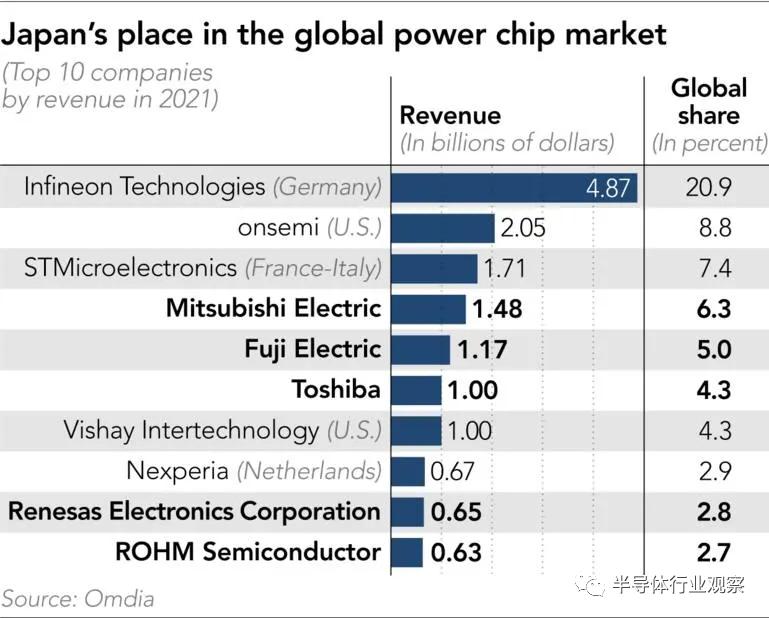
Core Viewpoint - The semiconductor industry is experiencing a shift in focus from power semiconductors to emerging technologies like AI chips and HBM, leading to a decline in the prominence of power semiconductor manufacturers, particularly in Japan [4][5]. Group 1: Current Landscape of Power Semiconductors - The demand for power semiconductors is expected to grow due to the rapid development of industries such as electric vehicles, photovoltaics, and wind power, alongside the adoption of wide-bandgap semiconductor materials [7]. - Japanese manufacturers, once dominant in the power semiconductor market, are facing challenges as their expansion plans are delayed, resulting in a loss of market share [10][11]. - In 2024, only three Japanese companies remain in the global top ten power semiconductor manufacturers, with each holding less than 5% market share [11][12]. Group 2: Challenges Faced by Japanese Manufacturers - Rohm has reported a net loss of 50 billion yen for the fiscal year ending March 2025, marking its first annual loss in 12 years, and has had to scale back its investment plans significantly [15][16]. - Toshiba's collaboration with Rohm has stalled, and its investments in power semiconductors have not yielded expected returns, leading to a slowdown in its growth [19][20]. - Renesas Electronics has announced a net loss of 175.3 billion yen in the first half of 2025 and has decided to abandon its plans to enter the silicon carbide (SiC) market due to competitive pressures and market conditions [21][22][24]. Group 3: Reasons for the Decline - Internally, Japanese companies struggle with a lack of trust and collaboration, which hampers their ability to integrate and innovate effectively [32][33]. - Externally, the rise of Chinese semiconductor companies has intensified competition, with these firms rapidly gaining market share and driving down prices, putting pressure on Japanese manufacturers [34][36]. - The global electric vehicle market has not developed as anticipated, leading to overcapacity and insufficient returns on investments made by Japanese firms [34]. Group 4: The Rise of Chinese Semiconductor Companies - Chinese companies are rapidly establishing themselves in the power semiconductor market, leveraging low energy costs and a large domestic market to achieve scale and reduce costs [36][38]. - Companies like Tianjiao and Tianyue have emerged as leaders in the silicon carbide substrate market, significantly impacting the competitive landscape [36][39]. - The technological gap between Japanese and Chinese firms is narrowing, with Chinese companies quickly catching up in both silicon and silicon carbide technologies [40]. Group 5: Future Outlook - The Japanese power semiconductor industry must undergo significant restructuring and collaboration to regain competitiveness in the global market [42][43]. - There is a need for Japanese companies to diversify their product offerings beyond electric vehicles and focus on emerging markets such as industrial automation and energy [43].

日本功率半导体,大撤退
3 6 Ke· 2025-08-31 05:06
Group 1 - The semiconductor industry is experiencing a shift in focus, with AI chips and HBM gaining prominence, while the power semiconductor sector is losing its previous allure [1][2] - Japanese manufacturers, once leaders in power semiconductors, are facing delays in capacity expansion and losing market share to domestic competitors in China [3][4][6] - The competitive landscape for global power semiconductors is changing, with Japanese firms struggling to maintain their positions as domestic Chinese companies accelerate their growth [1][26] Group 2 - Japanese power semiconductor companies like Mitsubishi Electric, Fuji Electric, and Toshiba are showing signs of fatigue, with their market shares dropping below 5% in the latest rankings [7][9][12] - Financial struggles are evident, as companies like Rohm report significant losses and are forced to cut investment plans, while others like Renesas abandon their SiC market ambitions [9][16][21] - The rise of Chinese competitors is a critical factor in the decline of Japanese firms, as they leverage cost advantages and rapidly improve their technology [25][26][28] Group 3 - The Japanese government is attempting to support the power semiconductor industry through subsidies and strategic plans, aiming to increase market share from 20% to 40% by 2030 [6][31] - However, internal challenges such as lack of collaboration and trust among Japanese firms hinder effective industry consolidation [24][31] - The market dynamics are further complicated by changing demand patterns in the electric vehicle sector, which have not met Japanese companies' expectations [25][30]
日本功率半导体,大撤退
半导体行业观察· 2025-08-31 04:36
Core Viewpoint - The semiconductor industry is experiencing a shift in focus from power semiconductors to emerging technologies like AI chips and HBM, leading to a decline in the competitive position of Japanese power semiconductor manufacturers [2][26]. Group 1: Current Landscape of Power Semiconductors - The demand for AI chips is surging due to the rise of large models, while HBM is gaining prominence in data storage [2]. - Japanese manufacturers, once leaders in power semiconductors, are facing delays in capacity expansion and losing market share to domestic competitors [2][6]. - The global power semiconductor market is witnessing a shift, with Japanese firms' market share dropping significantly, as they now hold only three positions in the top ten rankings [6][7]. Group 2: Financial Performance of Japanese Firms - Rohm reported a net loss of 50 billion yen for the fiscal year ending March 2025, marking its first annual loss in 12 years [9]. - Mitsubishi Electric's expansion plans for a new power semiconductor factory have been postponed, reflecting a broader trend of reduced investment in the sector [19][20]. - Renesas Electronics announced a record net loss of 175.3 billion yen in the first half of 2025 and has abandoned its plans to enter the silicon carbide (SiC) market [15][16]. Group 3: Competitive Challenges - Japanese firms are struggling against fierce competition from emerging Chinese companies, which are rapidly gaining market share and driving down prices [27][30]. - The lack of collaboration and trust among Japanese semiconductor companies is hindering their ability to respond effectively to market changes [25][33]. - The Japanese power semiconductor industry is facing a critical juncture, with the need for strategic adjustments to regain competitiveness [32][33]. Group 4: Future Outlook - The Japanese government is attempting to support the power semiconductor sector through subsidies and strategic initiatives, but the effectiveness of these measures remains uncertain [6][33]. - Companies must shift their focus from solely electric vehicle applications to other growth areas such as industrial automation and energy to diversify their product offerings [33]. - The competitive landscape is evolving, and without significant changes in strategy and collaboration, Japanese firms may continue to struggle in the global market [32][33].
英诺赛科上半年实现收入5.53亿元,同比增长43.4%
Ju Chao Zi Xun· 2025-08-30 05:54
Core Viewpoint - InnoScience reported significant growth in sales and gross margin for the first half of 2025, marking a turnaround in financial performance compared to the previous year [2][3]. Financial Performance - The company achieved sales revenue of RMB 553.54 million, representing a year-on-year increase of 43.4% [2][3]. - Gross margin improved to 6.8%, a substantial increase of 28.4 percentage points from -21.6% in the same period of 2024 [2][3]. - The net loss for the period was RMB 428.67 million, a decrease from RMB 488.00 million in the previous year [3]. Product Development and Market Position - InnoScience is advancing the adoption of Gallium Nitride (GaN) technology in AI and data centers, with sales in this segment growing by 180% year-on-year [4]. - The company has entered mass production of 100V GaN applications for 48V-12V systems and is now a supplier for NVIDIA's 800V high-voltage direct current solutions [4]. - In the automotive sector, the company reported a 128% year-on-year increase in the delivery of automotive-grade chips, collaborating with leading automotive electronics firms [4]. Strategic Partnerships - InnoScience has established partnerships with several prominent companies, including STMicroelectronics and Midea, to expand GaN applications in various sectors [5]. - The collaboration with Midea focuses on the application of GaN technology in home appliances, with successful mass production of 700V high-voltage GaN products in range hoods [5]. - A joint laboratory has been set up with United Automotive Electronics to develop smaller and lighter power systems for electric vehicles [5].
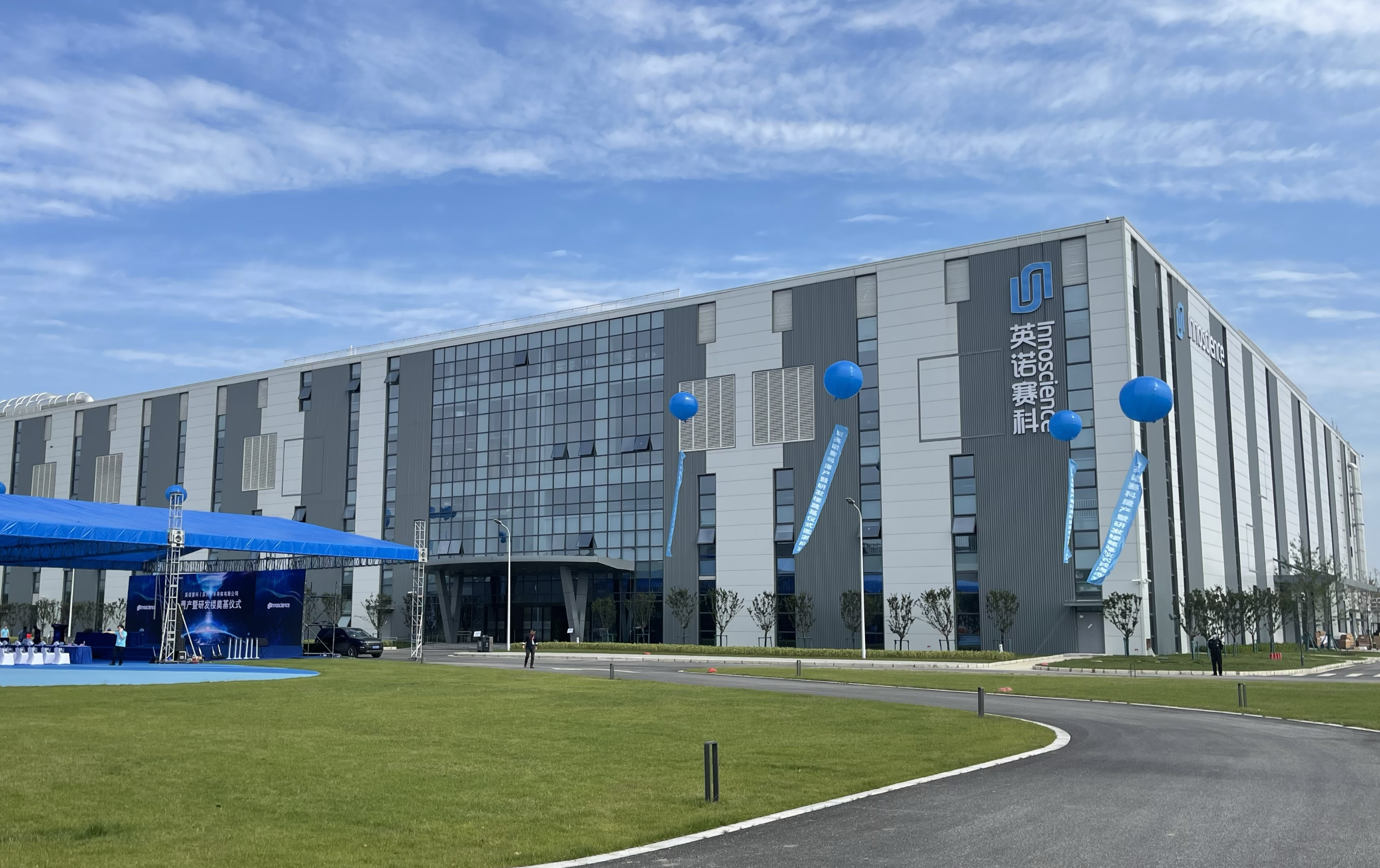
我省第三代半导体代表性企业数量全国第一——锻造强“芯”脏,澎湃新动能
Xin Hua Ri Bao· 2025-08-29 23:13
Core Insights - The third-generation semiconductor, represented by silicon carbide (SiC) and gallium nitride (GaN), is considered the cornerstone of future electronics industries due to its performance advantages in various applications such as semiconductor lighting, electric vehicles, next-generation mobile communications, renewable energy integration, and high-speed rail transportation [1] - Jiangsu Province has prioritized the development of the third-generation semiconductor industry, aiming to establish itself as a leading hub both domestically and internationally [1][4] Group 1: Industry Development - Jiangsu's semiconductor industry is notably strong, with Wuxi being a key player where all processes for producing an 8-inch integrated circuit wafer can be completed locally [2] - The successful delivery of advanced semiconductor equipment by Yiwon Technology to BYD signifies a leap in domestic manufacturing capabilities, with orders extending into 2026 [2] - The establishment of the National Third-Generation Semiconductor Technology Innovation Center in Nanjing serves as a pivotal hub for technological advancements and regional innovation [3] Group 2: Innovation and Talent - Jiangsu has formed a comprehensive third-generation semiconductor industry chain, with projected revenues of approximately 5 billion yuan in 2024 [5] - The region benefits from a strong talent pool, with several universities establishing integrated circuit programs to support industry growth [5] - Significant breakthroughs in key technologies, such as the development of high-voltage SiC devices, have been achieved, enhancing the region's competitive edge [5][6] Group 3: Funding and Support - A dedicated fund of 5 billion yuan has been established in Wuxi to support research and development in silicon carbide and gallium nitride devices, facilitating the domestic replacement process [6] - The establishment of the first "third-generation semiconductor" stock in Hong Kong reflects the growing financial support for the industry [6] Group 4: Future Outlook - The third-generation semiconductor industry in Jiangsu is expected to see significant collaborative development over the next 3-5 years, with a focus on building a robust innovation ecosystem [9] - The province aims to enhance its technological innovation network and policy framework to foster a conducive environment for industry growth [9]
港股8月收官 | 恒指涨1.23%,月线4连阳!黄金、半导体多只个股刷新历史新高
Ge Long Hui· 2025-08-29 08:51
Core Insights - The Hong Kong stock market closed August with positive performance, with the Hang Seng Index rising by 1.23%, marking four consecutive months of gains for all three major indices [1] Index Performance - The Hang Seng Index increased by 1.23% - The Hang Seng China Enterprises Index rose by 0.73% - The Hang Seng Tech Index saw a significant increase of 4.06% [1] Sector Performance - Semiconductor stocks led the gains, with InnoCare Pharma surging by 96.7%, and SMIC rising nearly 19%, both reaching historical highs - Gold stocks also performed well, with China Gold International up by 61.48%, Lingbao Gold rising over 39%, Zhaojin Mining up by 23%, and Zijin Mining increasing by over 22% [1] - Conversely, the banking sector experienced a pullback, with China Construction Bank down by 6.7%, China Merchants Bank nearly 6%, Bank of Communications down by 4.8%, and Industrial and Commercial Bank of China down over 4% [1] - Other sectors such as restaurants, ports and shipping, and dairy products saw some declines [1] Large Tech Stocks - Among large tech stocks, Tencent performed well with an increase of 8.45%, followed by Baidu at 5.67% and NetEase at 4.37% - Alibaba remained flat, while Meituan experienced a significant drop of 15.5%, JD.com fell over 4%, and Xiaomi saw a slight decline of 0.56% [1]