
农业银行

Search documents
金价过山车!一天暴跌12%,大家做好准备,明后两天或迎大行情
Sou Hu Cai Jing· 2026-02-06 17:08
Group 1 - The core event was a significant drop in gold prices on January 30, 2026, with London gold prices falling from a historical high of $5598 per ounce to a low of $4682, marking the largest single-day drop since 1983, with a peak decline of 12% [1][3] - The immediate trigger for the drop was the nomination of Kevin Warsh, known for his hawkish stance, to replace Jerome Powell as the Federal Reserve Chair, leading to a 1.01% increase in the US dollar index and subsequent selling pressure on gold [3] - Prior to the drop, gold prices had surged approximately 30% since the beginning of 2026, with speculative long positions reaching historical highs, indicating that the market was overbought and vulnerable to profit-taking [3] Group 2 - Following the extreme market conditions, major Chinese banks quickly adjusted gold contract margin requirements and trading limits to curb speculative trading, which inadvertently increased short-term market liquidity tension [5] - Despite the volatility, institutional interest in gold remained strong, with significant inflows into gold ETFs prior to the drop, indicating sustained long-term demand [5] - On February 3, gold prices rebounded with a single-day increase of over 6%, returning to the $5000 mark, although market sentiment had not fully recovered by February 5, as domestic gold prices fell again [5] Group 3 - The fluctuations in gold prices reflect a clash between short-term speculative sentiment and long-term investment logic, with central banks globally increasing their gold purchases, indicating ongoing macroeconomic support for gold [7] - In 2025, global central banks purchased a total of 863 tons of gold, with January 2026 alone seeing a surge to 1200 tons, highlighting a strong demand for gold amid geopolitical risks and a trend towards de-dollarization [7]


金银市场遭遇黑色星期三,白银价格暴跌近15%,黄金也跌超3%,黄金股多股跌停,一些投资者却开始疯狂扫货
Sou Hu Cai Jing· 2026-02-06 17:08
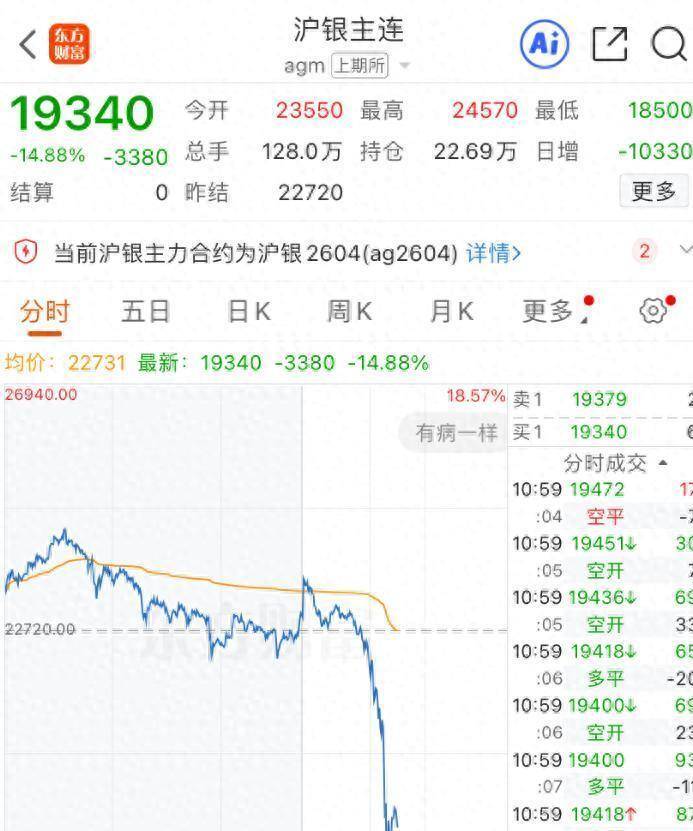
Core Viewpoint - The precious metals market experienced a dramatic decline on February 5, 2026, with silver prices plummeting over 14% and gold dropping more than 3%, leading to significant losses in related stocks and a stark contrast between capital market panic and physical market demand [1][3][4]. Market Performance - On February 5, silver prices fell to a low of $75.83 per ounce, while the Shanghai Futures Exchange saw silver contracts drop nearly 15% to 19,340 yuan per kilogram. Gold prices fell below the critical psychological level of $4,800 [1][4]. - A significant number of stocks related to gold and silver, such as Hunan Gold and Sichuan Gold, hit their daily limit down, reflecting a widespread sell-off in the sector [1][4][5]. Market Dynamics - The decline was preceded by a strong performance in January, where gold prices reached nearly $5,600 per ounce and silver exceeded $120 per ounce, resulting in gains of over 25% for gold and 60% for silver in just a month [3][4]. - The sell-off on February 5 was characterized by a lack of liquidity and a surge in stop-loss orders, creating a downward spiral in prices [4][6]. Regulatory Changes - Prior to the crash, exchanges raised margin requirements for silver contracts, which forced leveraged traders to either add funds or face forced liquidation, exacerbating the price decline [6][12]. - Major banks issued risk warnings to clients regarding the heightened volatility in the precious metals market, advising caution and stricter trading rules [12]. Institutional Behavior - Large investment institutions began to adjust their portfolios, with noticeable outflows from major gold ETFs during the price drop, indicating a shift in institutional sentiment [7][12]. - Analysts noted that the market's reaction was influenced by macroeconomic factors, including potential changes in U.S. Federal Reserve leadership and interest rate expectations, which could strengthen the dollar and negatively impact gold and silver prices [6][12]. Physical Market Response - Despite the turmoil in the capital markets, physical gold and silver demand surged in places like Shenzhen, where customers flocked to purchase gold bars, viewing the price drop as an opportunity [9][10]. - Retail gold prices adjusted downward in response to falling wholesale prices, making gold jewelry more attractive to consumers [10]. Analyst Perspectives - Analysts from various firms expressed differing views on the causes of the market decline, with some attributing it to technical adjustments and profit-taking, while others pointed to macroeconomic uncertainties stemming from U.S. Federal Reserve personnel changes [12][13]. - The overall sentiment in the market shifted from extreme optimism to fear, with many investors now closely monitoring support levels and physical demand to gauge future price stability [13].




背靠农行陷发展困局 农银汇理基金业绩规模双承压
Zhong Guo Neng Yuan Wang· 2026-02-06 11:14
Core Viewpoint - Agricultural Bank of China-backed fund management company, Agricultural Bank of China Huiri Fund, has faced significant challenges over the past year, including poor product performance, ineffective fund managers, and a continuous decline in management scale, leading to a net profit drop from 648 million yuan to 248 million yuan, a decrease of 61.7% [1] Performance Decline - The company's performance has been particularly poor in equity products, with a three-year absolute return rate of -32.43%, placing it in the bottom 10% of the industry [2] - Key equity products have suffered losses significantly greater than their peers, with some struggling near the liquidation threshold [2] Fund Performance Data - Agricultural Bank of China Huiri Quality Agriculture Fund has consistently underperformed since its inception, with A-class shares showing a net value of only 0.8485 yuan as of January 23, 2026, and a cumulative loss of 23.21% since inception [3] - The fund's annualized return over the past three years is -15.66%, significantly lagging behind the benchmark and the CSI Agricultural Index [3] Fund Size Reduction - The fund's management scale has drastically decreased from an initial 2.7 billion yuan to 320 million yuan, a reduction of over 88% [4] - The fund's actual holdings have deviated significantly from its agricultural theme, with 73.66% of its holdings in manufacturing sectors [4] Liquidation Risk - The fund has faced liquidation risks since its inception, with multiple announcements regarding potential liquidation due to low net asset values [5] - The company has modified its liquidation terms to make it more difficult to liquidate the fund, but subsequent shareholder meetings have failed due to lack of participation [8] Management Turmoil - The fund has experienced significant turnover in its management team, with previous star fund manager Zhao Yi leaving and subsequent managers failing to deliver positive returns [9] - Current managers have also struggled, with one manager's funds showing a maximum drawdown exceeding 40% [9] Industry Position - The company's management scale has decreased by nearly 13% from its peak, with its industry ranking dropping to 38th [15] - The company has faced increasing challenges in raising new funds, with many new products failing to meet their fundraising targets [16]

贪欲膨胀,甘于被“围猎”!陈元良,被开除党籍!
Zhong Guo Ji Jin Bao· 2026-02-06 11:09
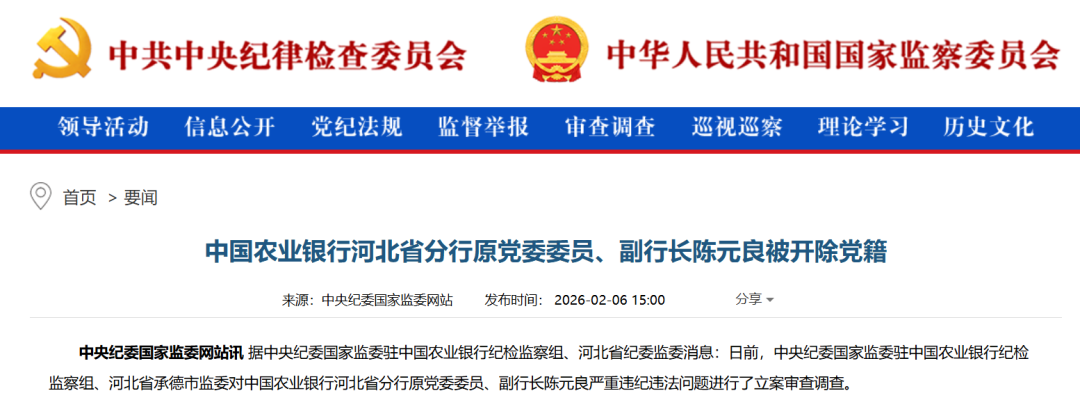
【导读】中国农业银行河北省分行原党委委员、副行长陈元良被开除党籍 金融反腐最新通报来了! 2月6日,中央纪委国家监委官网通报:中国农业银行河北省分行原党委委员、副行长陈元良被开除党籍。 日前,中央纪委国家监委驻中国农业银行纪检监察组、河北省承德市监委对中国农业银行河北省分行原党委委员、副行长陈元良严重违纪违法问题进行了 立案审查调查。 经查,陈元良存在以下问题: ●丧失理想信念,背弃初心使命,私自阅看有严重政治问题的书籍,对抗组织审查; ●无视中央八项规定精神,借用管理和服务对象车辆; ●违反组织原则,利用原职务影响违规为他人谋取人事利益; ●廉洁底线失守,违规收受礼品、礼金、消费卡,借用管理和服务对象钱款,接受可能影响公正执行公务的宴请,违规从事营利活动; ●不正确履行职责,违规批准对外提供担保; ●贪欲膨胀,甘于被"围猎",利用职务便利为他人在贷款审批、项目承揽等方面谋利,并非法收受巨额财物。 通报指出,陈元良严重违反党的政治纪律、组织纪律、廉洁纪律、工作纪律和生活纪律,构成严重职务违法并涉嫌受贿犯罪,且在党的十八大后不收敛、 不收手,性质严重,影响恶劣,应予严肃处理。 依据《中国共产党纪律处分条例》《中 ...

11家银行因虚增存贷款被罚、规模增7.5倍,违规考核问题突出
2 1 Shi Ji Jing Ji Bao Dao· 2026-02-06 10:36
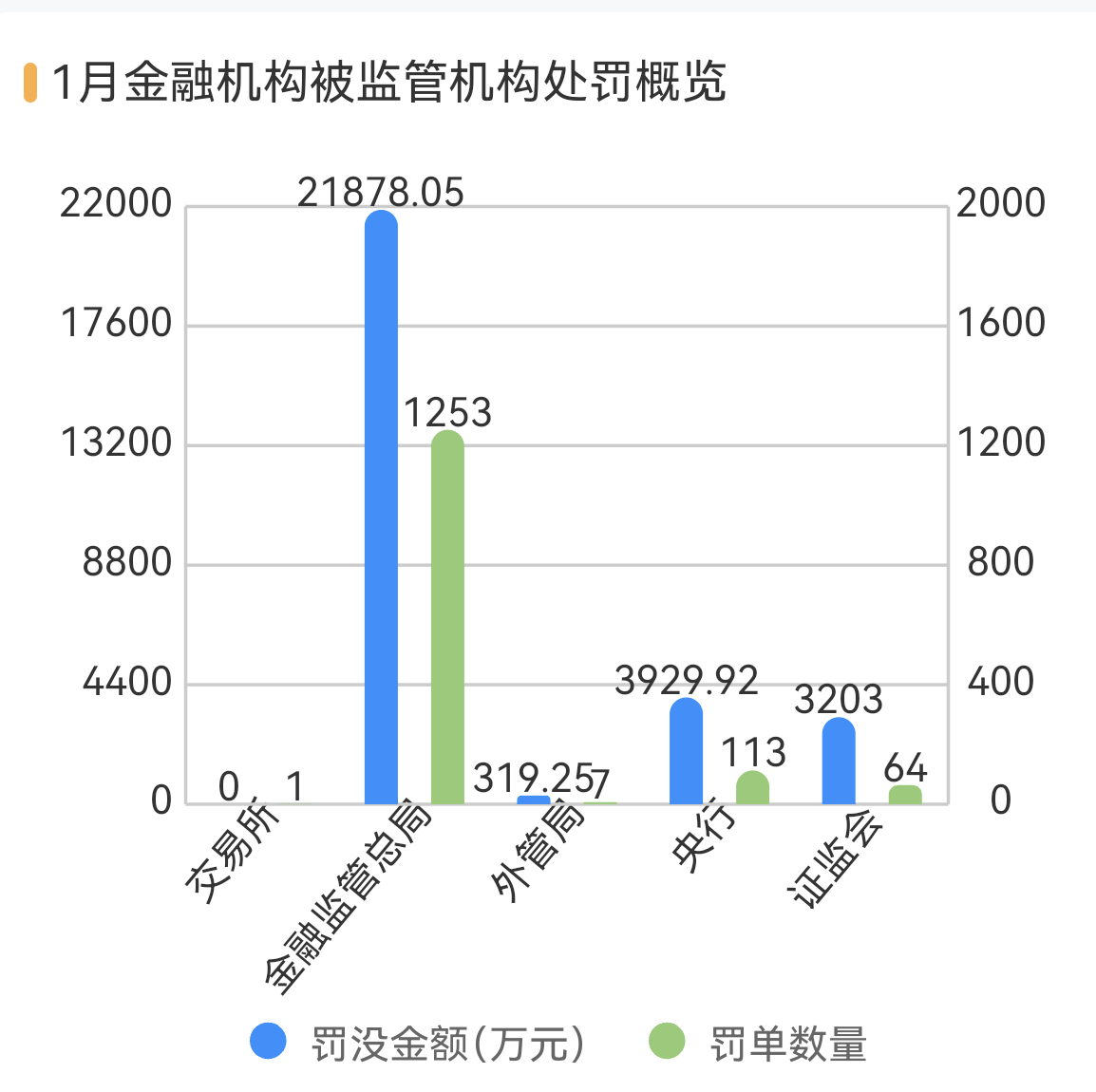
Core Insights - In January, the number of fines imposed on financial institutions increased significantly year-on-year, while the total amount of fines decreased [1][3] Group 1: Overview of Penalties - A total of 1,438 fines were issued to financial institutions in January, representing a year-on-year increase of 54.13%, with a total penalty amount of 29.3 million yuan, down 20.16% from the previous year [1] - The Financial Regulatory Bureau issued 1,253 fines, an increase of 83.19% year-on-year, with a total penalty amount of 21.9 million yuan, up 15.87% [3] - The People's Bank of China issued 113 fines, a decrease of 38.59% year-on-year, while the China Securities Regulatory Commission issued 64 fines, an increase of 18.52% [3] Group 2: Penalties by Financial Institution Type - Banks received 830 fines, an increase of 41.88% year-on-year, with a total penalty amount of 21.4 million yuan, down 25.95% [6] - The insurance sector faced 532 fines, a year-on-year increase of 84.08%, with a slight decrease in total penalty amounts [6] - Securities firms received 12 fines, and futures companies received 9 fines, while private equity firms faced 44 fines [6] Group 3: Major Penalties - Shanghai Riyi Equity Investment Fund Co., Ltd. was fined 14 million yuan for failing to operate investments as per contractual agreements [9] - The actual controller of Shanghai Riyi, Sun, received a fine of 11.9 million yuan for similar violations, including misleading investors about capital safety [9] - Zhejiang Min Tai Commercial Bank was fined 7.15 million yuan for serious violations of prudent management rules [9] Group 4: Compliance Trends - The number of fines related to inflated loan and deposit figures increased 7.5 times month-on-month, with 34 fines issued in January compared to only 4 in December [11] - Misleading sales and promotional practices resulted in 34 fines, doubling from the previous month, primarily affecting insurance companies and banks [12] Group 5: Penalty Rankings - In January, non-bank institutions, particularly insurance companies, dominated the list of penalties, with Shanghai Riyi Equity Investment Fund being the highest fined non-bank entity [17] - China Ping An Property Insurance and China People's Property Insurance ranked second and third in total penalty amounts [17]




再度举牌,平安持有中国人寿H股突破10%
Huan Qiu Lao Hu Cai Jing· 2026-02-06 08:18
Group 1 - China Ping An increased its stake in China Pacific Insurance (CPIC) by acquiring approximately 10.89 million H-shares at an average price of about HKD 33.26 per share, totaling around HKD 362 million, raising its holding to approximately 753 million shares, which is 10.12% of the total [1] - China Ping An has been consistently increasing its stake in China Life Insurance since it first acquired shares in August 2025, recently purchasing 11.89 million H-shares for about HKD 381 million, bringing its stake to 9.14%, close to the 10% threshold [1] - China Life Insurance reported a total revenue of CNY 1.28 trillion in 2025, a year-on-year increase of 11.3%, with combined premium income of CNY 887.4 billion, up 7.4%, and total assets of CNY 8.56 trillion, reflecting a 14.4% growth [1] Group 2 - Foreign investment institutions are optimistic about the insurance sector, with Citigroup indicating that retail investors will seek higher reinvestment yields as bank deposits mature, predicting a historic opportunity for life insurance stocks, particularly for leading companies like China Life [2] - China Ping An has also been actively increasing its holdings in state-owned banks, with over 10 instances of increasing stakes in Agricultural Bank, China Merchants Bank, and Postal Savings Bank since 2025, with its stake in Agricultural Bank rising from 5% in February last year to 20.1% by year-end [2] - The trend of increasing equity asset investments by insurance funds is driven by multiple factors, including declining market interest rates and regulatory guidance, making bank stocks attractive due to their large asset sizes and stable dividend returns, similar to the investment logic for insurance stocks [2]


农业银行河北省分行原党委委员、副行长陈元良被开除党籍
Bei Jing Shang Bao· 2026-02-06 07:43
陈元良严重违反党的政治纪律、组织纪律、廉洁纪律、工作纪律和生活纪律,构成严重职务违法并涉嫌 受贿犯罪,且在党的十八大后不收敛、不收手,性质严重,影响恶劣,应予严肃处理。依据《中国共产 党纪律处分条例》《中华人民共和国监察法》《中华人民共和国公职人员政务处分法》等有关规定,经 中国农业银行党委研究,决定给予陈元良开除党籍处分;经中央纪委国家监委驻中国农业银行纪检监察 组研究,决定按规定取消其享受的待遇;收缴其违纪违法所得;河北省承德市监委将其涉嫌犯罪问题移 送检察机关依法审查起诉,所涉财物一并移送。 经查,陈元良丧失理想信念,背弃初心使命,私自阅看有严重政治问题的书籍,对抗组织审查;无视中 央八项规定精神,借用管理和服务对象车辆;违反组织原则,利用原职务影响违规为他人谋取人事利 益;廉洁底线失守,违规收受礼品、礼金、消费卡,借用管理和服务对象钱款,接受可能影响公正执行 公务的宴请,违规从事营利活动;不正确履行职责,违规批准对外提供担保;贪欲膨胀,甘于被"围 猎",利用职务便利为他人在贷款审批、项目承揽等方面谋利,并非法收受巨额财物。 北京商报讯(记者 宋亦桐)2月6日,据中央纪委国家监委网站消息,据中央纪委国家 ...
中国农业银行河北省分行原副行长陈元良被开除党籍
Xin Lang Cai Jing· 2026-02-06 07:35
陈元良严重违反党的政治纪律、组织纪律、廉洁纪律、工作纪律和生活纪律,构成严重职务违法并涉嫌 受贿犯罪,且在党的十八大后不收敛、不收手,性质严重,影响恶劣,应予严肃处理。依据《中国共产 党纪律处分条例》《中华人民共和国监察法》《中华人民共和国公职人员政务处分法》等有关规定,经 中国农业银行党委研究,决定给予陈元良开除党籍处分;经中央纪委国家监委驻中国农业银行纪检监察 组研究,决定按规定取消其享受的待遇;收缴其违纪违法所得;河北省承德市监委将其涉嫌犯罪问题移 送检察机关依法审查起诉,所涉财物一并移送。 中央纪委国家监委网站讯 据中央纪委国家监委驻中国农业银行纪检监察组、河北省纪委监委消息:日 前,中央纪委国家监委驻中国农业银行纪检监察组、河北省承德市监委对中国农业银行河北省分行原党 委委员、副行长陈元良严重违纪违法问题进行了立案审查调查。 经查,陈元良丧失理想信念,背弃初心使命,私自阅看有严重政治问题的书籍,对抗组织审查;无视中 央八项规定精神,借用管理和服务对象车辆;违反组织原则,利用原职务影响违规为他人谋取人事利 益;廉洁底线失守,违规收受礼品、礼金、消费卡,借用管理和服务对象钱款,接受可能影响公正执行 公务 ...
A股低开冲高回落后收跌:基础化工领涨两市,大消费走弱
Xin Lang Cai Jing· 2026-02-06 07:33
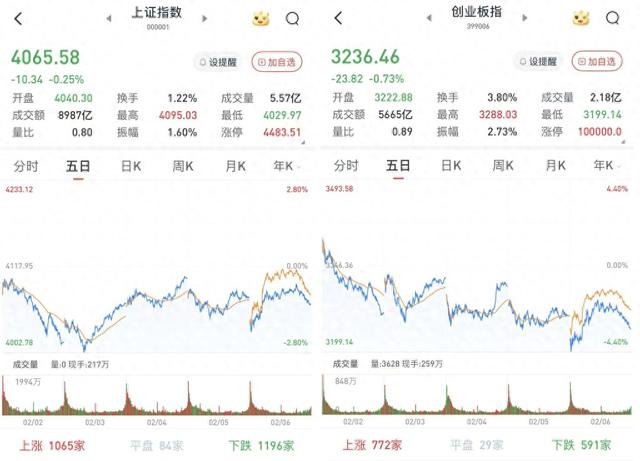
Market Overview - The A-share market experienced a collective decline on February 6, with the Shanghai Composite Index down by 0.25% to 4065.58 points, the ChiNext Index down by 0.73% to 3236.46 points, and the Shenzhen Component Index down by 0.33% to 13906.73 points [3] - The total trading volume in the Shanghai and Shenzhen markets was 21,458 billion yuan, a decrease of 304 billion yuan from the previous trading day [4] Sector Performance - The basic chemical sector led the market, with stocks like Jiangtian Chemical and Jinniu Chemical hitting the daily limit or rising over 10% [5] - The food and beverage sector saw significant declines, with stocks like Huangtai Liquor and Zhongxin Niya experiencing steep drops [6] - The electric equipment sector also performed well, with stocks such as Wanrun New Energy and Zairun New Energy reaching the daily limit or increasing by over 10% [6] Investment Sentiment - The market is characterized by accelerated rotation and cooling of main themes, with funds seeking refuge in defensive sectors [7] - There is a noted decrease in risk appetite among investors, as indicated by the continuous reduction in trading volume [7] - Analysts suggest that the current market environment may lead to a shift in investment focus towards consumer and banking sectors for defensive strategies [7] Future Outlook - Analysts from Zhongjin Company maintain a positive long-term outlook for Chinese stocks, citing ample liquidity and improving earnings as key factors [8] - The upcoming Spring Festival is expected to boost consumer spending, with strong policy support anticipated to drive recovery in the consumption market [8]
中国农业银行河北省分行原党委委员、副行长陈元良被开除党籍
Zhong Yang Ji Wei Guo Jia Jian Wei Wang Zhan· 2026-02-06 07:09
中央纪委国家监委网站讯 据中央纪委国家监委驻中国农业银行纪检监察组、河北省纪委监委消息:日 前,中央纪委国家监委驻中国农业银行纪检监察组、河北省承德市监委对中国农业银行河北省分行原党 委委员、副行长陈元良严重违纪违法问题进行了立案审查调查。 经查,陈元良丧失理想信念,背弃初心使命,私自阅看有严重政治问题的书籍,对抗组织审查;无视中 央八项规定精神,借用管理和服务对象车辆;违反组织原则,利用原职务影响违规为他人谋取人事利 益;廉洁底线失守,违规收受礼品、礼金、消费卡,借用管理和服务对象钱款,接受可能影响公正执行 公务的宴请,违规从事营利活动;不正确履行职责,违规批准对外提供担保;贪欲膨胀,甘于被"围 猎",利用职务便利为他人在贷款审批、项目承揽等方面谋利,并非法收受巨额财物。 陈元良严重违反党的政治纪律、组织纪律、廉洁纪律、工作纪律和生活纪律,构成严重职务违法并涉嫌 受贿犯罪,且在党的十八大后不收敛、不收手,性质严重,影响恶劣,应予严肃处理。依据《中国共产 党纪律处分条例》《中华人民共和国监察法》《中华人民共和国公职人员政务处分法》等有关规定,经 中国农业银行党委研究,决定给予陈元良开除党籍处分;经中央纪委国家 ...