
科华数据

Search documents
中国光伏:追踪盈利拐点-9 月多晶硅、玻璃价格超预期,但下游库存积压或致逆转-China Solar_ Tracking profitability inflection_ Sep Poly_Glass price above expectation, but likely to be reversed as downstream inventory piles up
2025-09-29 02:06
Summary of China Solar Profitability Tracker Industry Overview - The report focuses on the solar industry in China, specifically tracking the profitability and pricing dynamics of the solar value chain, including Poly, Glass, Wafer, and Module segments [3][12]. Key Highlights 1. **Price Dynamics**: - In September 2025, the solar value chain experienced a price hike of 5% month-to-date (MTD), up from 2% in August, primarily driven by a 15% increase in Glass prices and an 8% increase in Poly prices [3][6]. - The price increase was attributed to active downstream re-stocking activities rather than a recovery in solar installation demand [3][12]. 2. **Inventory and Demand Outlook**: - There is an expectation of a 20% decline in Poly and Glass prices for the remainder of the year due to a buildup of downstream inventory against weak demand [3][12]. - Estimated inventory levels indicate that 130GW of Poly inventory will suffice for module needs, while Glass shipments are projected to decline by 20% month-over-month due to potential production cuts [3][12]. 3. **Sector View**: - The ongoing anti-involution campaign and new restrictions on below-cost pricing are expected to have a mild positive impact on Poly pricing, but downstream players will still need to reduce selling prices to maintain market share amid demand weakness [3][12]. - Long-term profitability is anticipated to remain low without a reduction in Tier 1 capacity [3][12]. 4. **Profitability Trends**: - Cash gross profit margins (GPM) and EBITDA margins improved for upstream companies but deteriorated for downstream players in September [5][9]. - The average cash GPM for Poly was reported at 36%, while for Glass, it was 16% [12]. 5. **Investment Recommendations**: - Preferred segments include Film (Buy on Hangzhou First), High-efficiency Module (Buy on Longi), and Granular Poly (Neutral on GCL Tech) [4]. - Least preferred segments include Glass (Sell on Flat A/H, Xinyi Solar) and Equipment (Sell on Shenzhen S.C. and Maxwell) [4]. Additional Insights - The report indicates that the production-to-demand ratio for the solar value chain is expected to increase to 110% in September from 109% in August, suggesting a slight oversupply situation [13]. - Producer-side inventory days are likely to decline to 34 days in September from 37 days in August, indicating a tightening of inventory levels [15]. This summary encapsulates the critical insights from the China Solar Profitability Tracker, highlighting the current state of the solar industry, pricing dynamics, inventory levels, and investment recommendations.
东吴证券晨会纪要-20250929
Soochow Securities· 2025-09-28 23:30
Macro Strategy - The current economic situation indicates increasing pressure on stabilizing investment and consumption, suggesting that a new round of growth stabilization policies is imminent. The cumulative growth rate of fixed asset investment for the first eight months of this year is only 0.5%, necessitating coordinated fiscal and monetary policies to promote recovery [10][11] - The expected GDP growth for the third quarter is between 4.7% and 4.9%, with a cumulative growth rate of approximately 5.1% for the first three quarters. If the growth rate for the fourth quarter exceeds 4.5%, the annual target of around 5.0% can be achieved [10][11] - The report anticipates that the new policies will focus on four areas: early use of debt limits, introduction of new policy financial tools, potential interest rate cuts, and adjustments to consumption policies to stimulate demand [10][11] Fixed Income - The issuance of the Jin 25 convertible bond is set at a total scale of 2 billion yuan, with net proceeds allocated for the Zambia Lubanbi copper mine project and related operational and capital expenditures. The bond has a maturity of six years and a yield to maturity of 2.46% [20] Industry Analysis - The insurance industry showed strong growth in life insurance premiums in August, while non-auto property insurance faced short-term pressure. The valuation of insurance stocks remains low, with expected PEV ratios between 0.57 and 0.85 and PB ratios between 1.02 and 2.16 for 2025, indicating significant upside potential [7] - The report highlights that the demand for savings remains robust, and with ongoing regulatory guidance and proactive transformation by insurance companies, liability costs are expected to gradually decrease, alleviating pressure on interest margins [7] Energy Storage - The report emphasizes the rise of independent energy storage in China, with significant demand growth expected in both domestic and international markets. The ongoing shortage of energy storage cells is projected to continue until the second half of 2026, with price increases anticipated [8] - Key companies recommended for investment in the energy storage sector include CATL, Sungrow, and Yiwei Lithium Energy, among others, due to their competitive advantages and profit growth potential [8]
沐曦摩尔上市加快,国产算力加速腾飞
2025-09-28 14:57
Summary of Key Points from Conference Call Industry Overview - The conference call discusses the advancements in the domestic computing power industry, particularly focusing on companies like Huawei, Alibaba, and domestic GPU manufacturers such as Moer Technology and Muxi Semiconductor [1][2]. Core Insights and Arguments - **Huawei's Progress**: Huawei has made significant advancements in single-card performance optimization and large-scale cluster core technologies, launching new Ascend chip series (950, 960, 970) and achieving breakthroughs in cluster solutions [2]. - **Alibaba's Investment**: Alibaba announced a three-year investment of 380 billion RMB in AI technology, predicting a tenfold increase in data center power consumption over the next decade [1][2]. - **IPO Developments**: Moer Technology has passed the Shanghai Stock Exchange's listing review and is expected to be listed between late November and early December 2025. Muxi Semiconductor is also progressing towards its IPO, with a potential listing by the end of 2025 or early 2026 [1][4]. - **Muxi Semiconductor's C500 Chip**: The C500 chip, aimed at government-led intelligent computing center projects, is expected to see a price drop to 40,000-45,000 RMB due to bulk purchases from major clients [1][5]. - **Order Book**: As of early September 2025, Muxi has secured orders totaling 1.43 billion RMB, primarily for the C500 series [6][7]. Additional Important Content - **Product Development**: Muxi's C500 chip is currently in mass production and is expected to remain a primary revenue source through 2026. The company is also developing the Nebula C600 and C700 chips, with the latter aimed at competing with NVIDIA's H100 [8][9]. - **Market Expansion**: Muxi is actively pursuing partnerships with internet companies and telecom operators, having entered the procurement shortlist of China Telecom and engaging with other major telecom operators [7][8]. - **Moer Technology's Product Line**: Moer has launched four GPU products, covering a complete intelligent computing solution from chips to clusters, and has developed its own MUSA architecture to compete with NVIDIA's CUDA ecosystem [10]. - **Beneficiaries of Muxi's IPO**: Companies in the domestic GPU supply chain, including Chipone Microelectronics, Kehua Data, and SMIC, are expected to benefit from Muxi's accelerated IPO process [11]. - **Challenges in AI Industry**: The domestic AI industry faces challenges due to overseas foundry risks, particularly from U.S. sanctions affecting companies like TSMC and Samsung [13]. - **Advancements in Chip Manufacturing**: Domestic companies are advancing in chip manufacturing and packaging, with plans to expand to 7nm processes by the end of the year [14]. - **Growth of Domestic HBM Market**: Muxi's procurement of HBM has increased to 50% in 2025, up from 30% in 2024, driven by U.S. restrictions and the urgent need for domestic capabilities [15]. - **Collaborations**: Muxi is collaborating with companies like Guanghuan New Network to build AIGC computing networks, enhancing overall computing power and service quality [16]. - **Role of Key Players**: Companies like ChaoXun Communication and Kehua Data are positioned to benefit significantly from Muxi's developments, with expected substantial increases in their order volumes [17]. Future Outlook - The domestic computing power market is expected to accelerate its growth, particularly as NVIDIA faces ongoing restrictions, creating opportunities for domestic companies to capture market share [19][20].
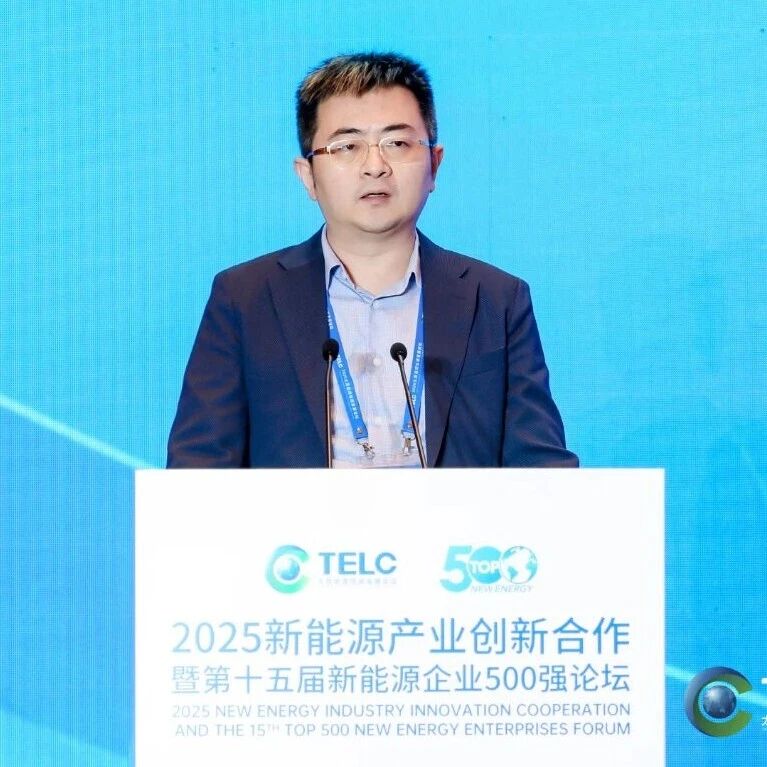
崔剑:以创新破局,以合作立生
中国能源报· 2025-09-28 13:04
Core Viewpoint - The forum highlighted the importance of innovation and collaboration in the renewable energy sector, emphasizing that these elements are crucial for sustainable development and overcoming industry cycles [2][4][6]. Group 1: Industry Overview - The renewable energy industry experiences cycles of growth and adjustment, driven by technological breakthroughs and policy support [4]. - The transition to new energy systems presents challenges, particularly with the high penetration of wind and solar energy affecting grid stability [5]. Group 2: Company Insights - The company has 37 years of experience in power electronics and has been focusing on renewable energy, energy storage, and system integration since 2007 [4]. - The company has successfully participated in over 400 microgrid projects and has established itself as a leader in the PCS (Power Conversion System) market for three consecutive years [5]. Group 3: Future Directions - The company plans to continue increasing investment in innovation and R&D, while deepening collaboration with ecosystem partners to address global opportunities and challenges in the renewable energy sector [6].


电力设备行业周报:海上风电招标、交付、政策共振 天赐材料计划赴港上市
Xin Lang Cai Jing· 2025-09-28 10:30
Group 1: Photovoltaic Industry - President Xi Jinping announced a new target for wind and solar installed capacity to reach 3.6 billion kilowatts by 2035, which is over six times the scale of 2020 [1] - As of July 2024, the total installed capacity of wind and solar power in China reached 1.206 billion kilowatts, achieving the 2030 target six years ahead of schedule [1] - The new target implies the need for an additional 1.9 billion kilowatts of installed capacity over the next decade, boosting confidence in the high-quality development of the photovoltaic industry [1] - Key focus areas include supply-side reform opportunities, long-term growth from new technologies, and industrialization opportunities from perovskite technology [1] Group 2: Wind Power and Grid - Major offshore wind power projects are underway, including a 1.2 million kilowatt project in Hainan and a 1GW project in Liaoning [2] - As of August 2025, the total installed capacity of wind and solar power exceeded 1,690GW, with a target to reach 3,600GW in the next ten years, requiring an average annual addition of 190GW [2] - The National Energy Administration emphasizes the need for orderly development of offshore wind power and the upcoming deep-sea offshore wind planning [2] - Recommended companies include Goldwind Technology, Yunda Co., Mingyang Smart Energy, and Sany Heavy Energy [2] Group 3: Hydrogen Energy - Longi Hydrogen Energy signed a supply agreement for a significant green hydrogen project in Namibia, set to be operational by Q1 2027 [3] - The project aims to deploy hydrogen solutions across various sectors, contributing to decarbonization goals [3] - Recommended companies in the hydrogen sector include Shuangliang Eco-Energy, Huadian Heavy Industries, and Shenghui Technology [3] Group 4: Energy Storage - The bidding price range for the W3 energy storage system project in September was between 0.396 CNY/Wh and 0.684 CNY/Wh [3] - The average bidding price for W3 EPC was between 0.775 CNY/Wh and 1.38 CNY/Wh [3] - Companies to watch in the energy storage sector include Sungrow Power Supply, Haibo Technology, and Keda Clean Energy [3] Group 5: New Energy Vehicles - Tianci Materials has initiated an IPO process in Hong Kong, which is part of its global strategy to enhance international competitiveness [4] - The company signed long-term supply agreements with Ruipu Lanjun and Chuangneng New Energy for a total of at least 135,000 tons of electrolyte products by the end of 2030 [4] - The signing of these long-term contracts is expected to ensure production certainty and stable future performance for Tianci Materials [4]

打破CUDA垄断?壁仞带着异构混训“黑科技”赴港
是说芯语· 2025-09-27 11:02
Core Viewpoint - Wallen Technology's application for listing on the Hong Kong Stock Exchange signifies not only the capital advancement of this domestic GPU leader but also an important signal of China's breakthrough in autonomous computing power [1] Group 1: Technological Advancements - Wallen Technology's core strength lies in its technological breakthroughs, having developed an original architecture that disrupts the high-end GPU market's technological monopoly [3] - The flagship BR100 series, built on the "Bili Ran" architecture, utilizes 7nm process and Chiplet technology, achieving over three times the performance of mainstream products, with 770 billion transistors and INT8 computing power reaching 19.2 TOPS [3] - The proprietary BLink™ high-speed interconnect technology enables a single card to achieve 448GB/s bandwidth, supporting over 95% linear acceleration for large-scale clusters [3] - Wallen's heterogeneous mixed training technology allows four different GPUs to train the same large model, providing a viable solution to the computing power isolation problem [3] Group 2: Ecosystem Development - The progress of ecosystem construction directly influences the market viability of GPU products, with Wallen Technology striving to close the ecological gap with international giants through open collaboration [5] - The self-developed BIRENSUPA™ software toolchain has become the core of the ecosystem, supporting mainstream data precisions and achieving compatibility with major models [5] - Wallen has established a diverse cooperation network through technological openness, collaborating with various companies to enhance training performance and create a complete technology closed loop [5] Group 3: Commercialization and Market Strategy - The acceleration of commercialization has allowed Wallen Technology to convert technological value into market competitiveness, achieving comprehensive coverage of three major telecom operators [6] - Wallen has formed a clear product matrix targeting different application scenarios, with the BR100 focusing on AI training and the Bili 110E inference card offering significant performance density and energy savings [6] - The company has set a target of 20,000 chips for procurement by 2025 and is expanding its reach into government and enterprise markets through partnerships [7] Group 4: Financial Outlook and Growth Potential - Despite the promising technological advancements, Wallen Technology's revenue remains modest, projected at approximately 280 million yuan in 2025, highlighting the challenge of converting technical advantages into profitability [7] - The capital injection from the Hong Kong listing may accelerate investments in key areas such as packaging localization and ecosystem expansion [7] - The deep involvement of industrial capital, like Shanghai Lingang, not only shares in the company's growth but also strengthens the development foundation for hard-tech enterprises, fostering a beneficial cycle of "capital + technology" [7]
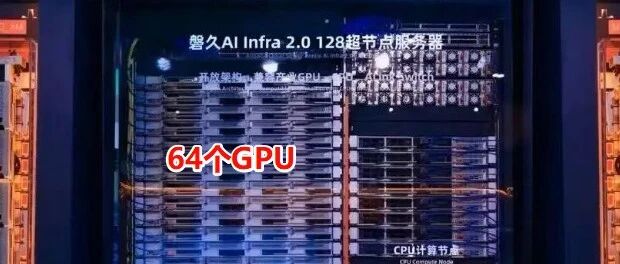
阿里的磐久超节点和供应链
傅里叶的猫· 2025-09-27 10:14
Core Viewpoint - The article provides a detailed comparison of Alibaba's super node with NVIDIA's NVL72 and Huawei's CM384, focusing on GPU count, interconnect technology, power consumption, and ecosystem compatibility. Group 1: GPU Count - Alibaba's super node, known as "Panjun," utilizes a configuration of 128 GPUs, with each of the 16 computing nodes containing 4 self-developed GPUs, totaling 16 x 4 x 2 = 128 GPUs [4] - In contrast, Huawei's CM384 includes 384 Ascend 910C chips, while NVIDIA's NVL72 consists of 72 GPUs [7] Group 2: Interconnect Technology - NVIDIA's NVL72 employs a cable tray interconnect method using NVLink proprietary protocol [8] - Huawei's CM384 also uses cable connections between multiple racks [10] - Alibaba's super node features an orthogonal interconnect without a backplane, allowing for direct connections between computing and switch nodes, reducing signal transmission loss [12][14] Group 3: Power and Optical Connections - NVIDIA's NVL72 uses copper for scale-up connections, while Huawei's CM384 employs optical interconnects, leading to higher costs and power consumption [15] - Alibaba's super node uses electrical interconnects for internal scale-up, with some connections made via PCB and copper cables, while optical interconnects are used between two ALink switches [18][19] Group 4: Parameter Comparison - Key performance metrics show that NVIDIA's GB200 NVL72 has a BF16 dense TFLOPS of 2,500, while Huawei's CM384 has 780, indicating a significant performance gap [21] - The HBM capacity for NVIDIA's GB200 is 192 GB compared to Huawei's 128 GB, and the scale-up bandwidth for NVIDIA is 7,200 Gb/s while Huawei's is 2,800 Gb/s [21] Group 5: Ecosystem Compatibility - Alibaba claims compatibility with multiple GPU/ASICs, provided they support the ALink protocol, which may pose challenges as major manufacturers are reluctant to adopt proprietary protocols [23] - Alibaba's GPUs are compatible with CUDA, providing a competitive advantage in the current market [24] Group 6: Supply Chain Insights - In the AI and general server integration market, Inspur holds a 33%-35% market share, while Huawei's share is 23% [33] - For liquid cooling, Haikang and Invec are key players, each holding 30%-40% of the market [35] - In the PCB sector, the number of layers has increased to 24-30, with low-loss materials making up over 60% of the composition, significantly increasing the value of single-card PCBs [36]

多企业布局双赛道!和而泰等牵手摩尔线程与华为,推动产业智能化
Sou Hu Cai Jing· 2025-09-26 14:49
Core Insights - The rapid development of technology has led to deep integration within the industry chain, with many companies excelling in their respective fields while strategically positioning themselves in two key areas: GPU computing power and collaboration within the Huawei ecosystem [1] Company Summaries - Heptagon is a strong player in the smart controller sector, leveraging AI algorithms to enhance the intelligence of home appliances. The company has invested in Moore Threads, entering the GPU market, which will significantly impact its future production capacity. Additionally, its collaboration with Huawei HiSilicon lays a solid foundation for addressing various industry technical challenges and future joint research [3] - Chuling Information has made significant strides in the big data access sector, showcasing leading technology in the industry. By indirectly investing in AI computing power and operations, the company demonstrates a long-term vision for Moore Threads. As part of the Huawei ecosystem, its wholly-owned subsidiary plays a crucial role in technology certification and industry alliances, facilitating the implementation of intelligent customer service and large model technologies [3] - Yingqu Technology focuses on smart hardware manufacturing and has also invested in Moore Threads. Its collaboration with Huawei is vital, as it supplies numerous core components to Huawei's new energy vehicle factories, showcasing strong manufacturing capabilities in smart home and industrial control sectors [3] - Zhejiang University Network New is a notable player in the smart city and cloud service sectors, acting as the general agent for Moore Threads in Zhejiang Province. The company is responsible for distributing and promoting various businesses, including servers and edge computing. Its relationship with Huawei in the Xinchuang and Harmony ecosystem collaboration is significant for driving industrial upgrades and domestic substitution [3] - Kehua Data excels in data center and clean energy solutions, collaborating with Moore Threads and Gui'an New Area to establish an intelligent computing center. This partnership strengthens its connection with Moore Threads in computing resources and provides essential support for Huawei's collaborative development in related fields [3] Emerging Display and Component Innovations - Hanbo High-tech has demonstrated strong technology in vehicle displays and Mini-LED backlight modules, aligning its product layout with the needs of Moore Threads and Huawei ecosystem terminals, catering to multiple application scenarios [4] - Maijie Technology has shown steady development in the electronic components sector, supplying critical magnetic components to Moore Threads and integrating into the computing server supply chain, while also providing power supplies for Huawei's base stations and other core components, showcasing diverse collaborative capabilities [4] Industry Trends - The performance of these companies in smart technology and industry ecosystem collaboration highlights their unique competitive advantages. They are deeply engaged in popular sectors, driving the autonomous and intelligent development of the industry chain [5]

摩尔线程科创板IPO今日上会 本周多家上市公司回应合作情况
Di Yi Cai Jing· 2025-09-26 06:54
Core Points - The Shanghai Stock Exchange announced that Moore Threads plans to undergo review by the Sci-Tech Innovation Board on September 26 [1] - Several listed companies have responded regarding their cooperation with Moore Threads, indicating varying levels of investment and partnership [1][2] Group 1: Investment and Shareholding - Yuexiu Capital has identified Moore Threads as one of the investment projects of its industrial fund [1] - Xiamen Guomao holds a 0.67% stake in Moore Threads through an investment fund [1] - Wanhe Electric does not directly hold shares in Moore Threads but has a 0.4664% stake through a participating fund [1] - Heertai directly holds 1.0262% of Moore Threads [1] - Honglida indirectly holds approximately 0.3% of Moore Threads [1] - Chuling Information has an indirect holding of about 0.0229% in Moore Threads, which is minimal [1] Group 2: Business Cooperation - Zhuoyi Information has a client relationship with Moore Threads, but specific business cooperation details are confidential [1] - Kehua Data has initiated business cooperation with Moore Threads and other domestic GPU chip manufacturers [1] - Shenzhen Huqiang has established business cooperation with Moore Threads [1] Group 3: No Investment or Cooperation - Companies such as Juhua Technology, Jingxing Paper, and Sihui Tuxin have confirmed they do not hold shares in Moore Threads [2] - Many companies, including Dazhu CNC and Yiyaton, have stated they have no investment in Moore Threads [2] - Several companies, including Kabeiyi and Zhongke Chuangda, have reported no cooperation with Moore Threads [1][2]
直线拉升!A股盘中,集体异动!
Zheng Quan Shi Bao Wang· 2025-09-26 06:20
Group 1 - The automotive industry chain experienced significant movements today, with multiple stocks such as Disenli, Wanxiang Qianchao, and Tianqimo reaching their daily limit up [1][2] - Seres' market capitalization surpassed 260 billion yuan, hitting a historical high, with a peak stock price of 163.52 yuan per share [2] - Analysts predict that as the price war in the passenger car market eases, the profitability of car manufacturers is expected to recover in the second half of the year [7][8] Group 2 - In August, China's automotive industry returned to a growth trend, with production and sales reaching 2.815 million and 2.857 million units respectively, marking a month-on-month increase of 8.7% and 10.1% [3] - New energy vehicles (NEVs) accounted for 48.8% of total new car sales in August, indicating a steady increase in market penetration [3] - The China Automobile Dealers Association anticipates strong consumer demand in September due to seasonal factors, projecting total passenger car sales to reach 2.2 million units [3][4] Group 3 - From January to August, China's automotive exports reached 4.94 million units, with a year-on-year growth rate of 21% [5][6] - The export of new energy vehicles in August was 315,000 units, reflecting a year-on-year increase of 83% [5] - Analysts expect that by 2025, China's new energy vehicle penetration rate will exceed 50%, with significant growth in overseas markets [6][7] Group 4 - The Ministry of Industry and Information Technology has issued a growth stabilization plan for the automotive industry, aiming to set clear growth targets and specific measures [8] - The ongoing "trade-in" policy is expected to stimulate consumer demand in the automotive market [8] - The development and commercialization of intelligent driving technology are anticipated to create investment opportunities in related component industries [8]
