罗氏

Search documents
科技承压下的资金新选择,创新药开启上涨新周期?
Ge Long Hui· 2025-11-01 09:54
Core Viewpoint - The technology sector experienced significant declines, prompting a structural shift in market funds towards the innovative drug sector, which saw notable gains on the same day [1][3]. Group 1: Market Performance - The innovative drug sector rose by 3.91% amidst a downturn in the technology sector, successfully breaking through the 20-day moving average with increased trading volume, signaling positive market sentiment [3]. - The innovative drug sector had been in a downward trend since August but began to stabilize and form a bottom pattern in October [3]. Group 2: Multiple Sclerosis (MS) Market - The global market for MS drugs is projected to reach approximately $18.5 billion in 2024, with a significant portion of sales coming from third-generation products, particularly CD20 monoclonal antibodies [6]. - CD20 monoclonal antibodies are expected to account for over 60% of the MS drug sales in 2024, with the drug Ocrelizumab projected to generate sales of 7.64 billion yuan, reflecting a year-on-year growth of 7.4% [6]. Group 3: Chemical Pharmaceutical Industry - The global chemical pharmaceutical market grew from $1,038 billion in 2019 to $1,128 billion in 2023, with expectations to reach $1,156 billion in 2024 [10]. - In China, the chemical pharmaceutical market size was 883.9 billion yuan in 2022, with a year-on-year growth of 4.4%, projected to increase to 945 billion yuan by 2024 [10]. Group 4: Innovative Drug Sector Performance - In the first half of 2025, 21 A-share innovative drug companies reported revenues of 28.69 billion yuan, a year-on-year increase of 42%, while net losses narrowed significantly [11]. - The second quarter of 2025 saw these companies achieve revenues of 15.34 billion yuan, a 39% increase year-on-year, with net losses reduced by 97% [11][12]. Group 5: Future Outlook - Continued policy support for innovative drugs is expected to enhance performance, with an increase in product launches anticipated to drive revenue growth [15]. - The active business development (BD) transactions in the innovative drug sector in the first half of 2025 are expected to bolster the apparent performance of related companies [15].




来进博会感受健康新方向、市场新活力
Xin Hua Wang· 2025-11-01 08:28
Core Insights - The 8th China International Import Expo (CIIE) will be held from November 5 to 10 in Shanghai, showcasing cutting-edge medical devices and healthcare products, reflecting both "Chinese speed" and "Chinese warmth" in health protection [1] Group 1: Innovative Products - Siemens Healthineers will have its largest exhibition area at the CIIE, featuring the ARTIS icono ceiling Xpand, which can capture small tumors with high precision in just 2.5 seconds, integrating multiple AI technologies for refined treatment of liver and lung cancer patients [2] - Medtronic will showcase a compact device that listens to the body's signals and adjusts stimulation in real-time for chronic pain patients [2] - Novartis will present nearly 20 innovative products across key therapeutic areas, offering immersive experiences for attendees to understand the journey of new drugs within the human body [2] Group 2: Product Commercialization - The AVEIR™ DR dual-chamber leadless cardiac pacemaker, first showcased at the previous CIIE, has received approval for use in China and has been implanted in multiple hospitals, benefiting many patients [3] - The rapid approval of innovative drugs in China has allowed companies like Boehringer Ingelheim to successfully launch products like the lung cancer drug "Saint Hertu" shortly after its CIIE debut [3] - Shanghai Pharmaceutical Cloud Health is facilitating the last-mile delivery of innovative drugs through a combination of professional pharmacies and digital patient service platforms [3] Group 3: Investment and Collaboration - Companies like Medtronic and Roche are expanding their investments in China, with Roche announcing a 2.04 billion RMB investment for a new biopharmaceutical production base in Shanghai [4] - Medtronic has invested in over 10 medical technology startups in China, focusing on local innovation and strategic partnerships [5] - The CIIE serves as a crucial platform for foreign companies to deepen their presence in China, with many companies reporting successful collaborations and partnerships formed during the event [5]
2025国谈第三日下午:诺华、罗氏、贝达药业等企业代表入场
Xin Lang Cai Jing· 2025-11-01 06:33
Core Viewpoint - The 2025 National Medical Insurance Directory negotiations are ongoing, focusing on pricing discussions for innovative drugs, particularly in the chronic disease medication sector [1] Group 1: Negotiation Details - The third day of the national negotiations began at approximately 1:40 PM, with participation from companies such as Novartis, Gensai, Roche, and Betta Pharmaceuticals [1] - The morning session emphasized negotiations on chronic disease medications, with Eli Lilly and Sinopharm bringing significant products to the discussions [1]


从单药博弈到系统制胜:创新药投资的“能力锚”与“全球局”
雪球· 2025-11-01 03:55
Core Viewpoint - The essence of innovative drug investment is a "high risk, high return" probability game, focusing on the value realization cycle of potential blockbuster drugs [2] - The success of a single drug is merely a "probability event," while the "system capability" of a company is crucial for navigating cycles and enhancing success rates [2][3] Pipeline Worship Rejection - The value of a pipeline is ultimately defined by the company's capabilities, rather than the pipeline itself [4] - For small innovative drug companies, the core value is concentrated in 1-2 key pipelines, while for larger companies and MNCs, the match between "pipeline thickness" and "capability boundaries" is key to determining value [5] - The "false precision" of pipeline valuation is meaningless; the success rate of a drug from clinical trials to approval is only about 10% [6] Company and Platform Capabilities - Company capabilities serve as a "risk hedging tool" for pipelines, enhancing the success probability and value ceiling of drugs [7] - The core of a pipeline is "sustainability" rather than "quantity," as evidenced by the growth history of overseas MNCs [8] Chinese Characteristics of Capability - The "low cost + strong sales" model of companies like Heng Rui is a unique product of China's innovative drug industry stage, based on industry advantages [10] - The model's boundaries do not apply to overseas markets, where MNCs focus on breakthrough innovations and global sales platforms [11] Evolution of Capabilities - The direction of capability evolution is shifting from "cost advantages" to "innovation + integration," as the market landscape changes [12][13] Global Perspective on Big Pharma Logic - Comparing domestic and foreign MNCs clarifies the boundaries between "single drug competition" and "system victory," with both relying on system capabilities rather than single drug dependence [15][16] Investment Framework Upgrade - The complete framework for innovative drug investment should adapt to "stage matching + capability focus," recognizing the value of single drug competition while not idolizing pipelines [18] - For small innovative drug companies, the focus remains on "single drug value inflection points," while for large companies and MNCs, the emphasis is on "capability inflection points" [18] Incremental Options to Enhance Long-term Value - Three incremental options can significantly enhance investment elasticity: improvements in payment terms, overseas value realization, and merger integration [19] - Caution is advised against companies that focus solely on pipeline stories or lack clear capability boundaries for overseas expansion [19] Conclusion - The essence of innovative drug investment is balancing "probability and value," with small companies focusing on "single drug success" and large companies on "capability-driven success" [21] - The development of China's innovative drugs is transitioning from "single drug breakthroughs" to "system competition," with future winners being those that can upgrade local advantages to global innovation and integration capabilities [21]

跨国药企三季报密集披露,多家企业上调今年业绩指引
Bei Ke Cai Jing· 2025-11-01 03:53
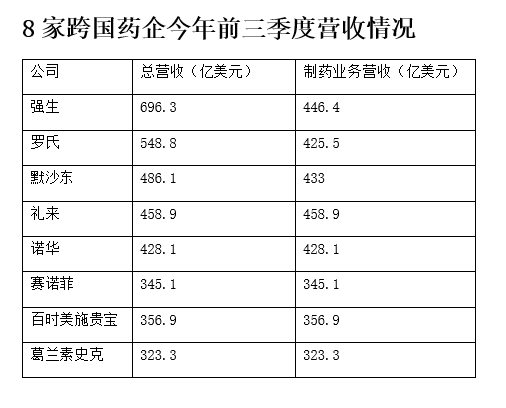
Core Insights - The competition for the title of "King of Drugs" is intensifying, with Eli Lilly's weight loss drug, Tirzepatide, leading sales in the first three quarters of the year, surpassing Merck's Keytruda [2][3] - Major pharmaceutical companies, including Johnson & Johnson, Roche, and Merck, have raised their annual revenue guidance following strong third-quarter performances [5][6][7] Group 1: Company Performance - Johnson & Johnson reported total revenue of $69.63 billion, leading the industry, with pharmaceutical revenue at $44.64 billion [4] - Eli Lilly achieved pharmaceutical revenue of $45.89 billion, driven by Tirzepatide, which generated $24.8 billion in sales [3][5] - Merck's total revenue reached $48.61 billion, with pharmaceutical revenue at $43.3 billion; however, sales growth for Keytruda has slowed [7] Group 2: Drug Sales Highlights - Tirzepatide's sales for the first three quarters reached $24.84 billion, with a significant increase in sales for its diabetes version, Mounjaro, which saw a 109% year-on-year growth [3] - Keytruda's sales were $23.30 billion, reflecting an 8% growth, but the growth rate is slowing down [7] - Roche's Phesgo saw a 54% increase in sales, contributing to a pharmaceutical revenue of approximately $42.55 billion [6] Group 3: Revenue Guidance Adjustments - Eli Lilly raised its full-year revenue guidance to between $63 billion and $63.5 billion [5] - Johnson & Johnson adjusted its revenue forecast to grow by 4.8% to 5.3%, targeting $93 billion to $93.4 billion [5] - Roche also increased its annual revenue expectations based on strong third-quarter results [6]


VYMI: Foreign 4.3% Dividend Yield Made Cheap And Simple
Seeking Alpha· 2025-10-31 20:56
Core Insights - Non-US markets represent 75% of the global economy, 90% of the IMF's expected GDP growth, and 95% of the world population, indicating significant investment opportunities outside the US [1] Group 1: Investment Strategy - The focus is on improving international stock strategies, highlighting the importance of diversifying investments beyond the US [1] - The Expat Portfolio offers resources such as frequent analysis, a watchlist, and market guides to assist investors in navigating foreign markets [2] Group 2: Analyst Background - Tariq Dennison, an experienced RIA, emphasizes the benefits of investing in diverse foreign markets, leveraging his extensive international experience [2] - The Expat Portfolio community provides direct access to expert insights and discussions, enhancing investor confidence in international investments [2]

Alnylam Pharmaceuticals: Q3 Earnings Review - A Sensational Year Reaches Its Peak
Seeking Alpha· 2025-10-31 19:58
Core Insights - The article emphasizes the importance of staying updated on stocks within the biotech, pharma, and healthcare sectors, highlighting key trends and catalysts that influence market valuations [1] Group 1: Industry Overview - The biotech, pharma, and healthcare industries are experiencing significant movements, necessitating investors to track developments closely [1] - The Haggerston BioHealth investing group provides insights and forecasts related to product sales and financial performance for major pharmaceutical companies [1] Group 2: Analyst Background - Edmund Ingham, a biotech consultant with over five years of experience, has compiled detailed reports on more than 1,000 companies in the biotech and healthcare sectors [1] - The investing group led by Ingham caters to both novice and experienced investors, offering buy and sell ratings along with market analysis [1]


ALNY Q3 Earnings and Revenues Top Estimates on Higher Amvuttra Sales
ZACKS· 2025-10-31 16:20
Core Insights - Alnylam Pharmaceuticals reported Q3 2025 earnings of $2.90 per share, exceeding the Zacks Consensus Estimate of $1.67, primarily due to increased revenues from Amvuttra sales [1][11] - Total revenues reached $1.25 billion, surpassing the Zacks Consensus Estimate of $1.02 billion, marking a 149% year-over-year increase [2][11] - Despite strong earnings and revenue growth, ALNY shares fell by 6.7% due to investor concerns over an external inquiry into commercial practices [3] Revenue Breakdown - Net product revenues were $851.1 million, a 103% increase year over year, driven by demand for Amvuttra, Givlaari, and Oxlumo [3][9] - Collaboration revenues totaled $351.7 million, boosted by a $300 million milestone payment from Roche related to the ZENITH phase III clinical study [4][11] - Royalty revenues increased by 98% year over year to $46.2 million [5] Product Performance - Amvuttra sales reached $685.3 million, a 165% increase, driven by demand from patients with ATTR amyloidosis and cardiomyopathy [8][11] - Onpattro sales were $39.1 million, down 22% year over year, missing estimates [6] - Givlaari recorded sales of $73.9 million, a 4% increase, but also missed estimates [9] Financial Guidance - Alnylam raised its 2025 net product revenue guidance to $2.95-$3.05 billion from $2.65-$2.80 billion [16] - Collaboration and royalty revenue guidance remains at $650-$750 million, while adjusted R&D and SG&A expenses are now expected to be $2.15-$2.20 billion [17] Research and Development - Adjusted R&D expenses rose 23% year over year to $310.1 million, driven by costs associated with the ZENITH study and other clinical trials [13] - Adjusted SG&A expenses increased 35% year over year to $262.6 million, primarily due to higher employee compensation and marketing investments for Amvuttra [14]

智通港股解盘 | 月底魔咒再起恒指跌破关口 医药目录谈判引发资金涌入
Zhi Tong Cai Jing· 2025-10-31 12:50
Market Overview - The Hang Seng Index closed down 1.43%, breaking below the 26,000-point mark [1] - U.S. Treasury Secretary indicated that a U.S.-China trade agreement could be signed as early as next week [1] - Concerns over AI investment returns were highlighted after Meta's stock fell 11% due to significant AI spending [1] AI Sector Developments - AI giants like NVIDIA and Samsung are increasing capital expenditures, with Samsung planning to build an "AI factory" [2] - Despite strong demand in AI, stocks like Hua Hong Semiconductor fell over 7% due to fund managers adjusting positions at month-end [2] - Oracle's CDS costs have risen, indicating market concerns about the sustainability of AI investments [1][2] Healthcare and Pharmaceuticals - The National Medical Insurance Directory negotiations are ongoing, with a focus on high-value clinical areas like oncology and chronic disease [4] - Companies like Junshi Biosciences and Kelun-Biotech are seeing stock increases due to their participation in the negotiations [4][5] - The introduction of a commercial insurance innovative drug directory is expected to drive investments in the pharmaceutical sector [3] Shipping and Logistics - The Ningbo Containerized Freight Index rose by 12.6%, with 16 out of 21 routes showing price increases [7] - VLCC freight rates have reached over $120,000 per day, marking a ten-year high [7] Company-Specific Highlights - Zoomlion reported a revenue increase of 8.06% and a net profit increase of 24.89% in Q3 2025 [8] - The company plans to issue up to 6 billion HKD in convertible bonds to enhance global competitiveness [9] - Zoomlion's overseas revenue accounted for 57.36% of total revenue, reflecting a 20.80% year-on-year growth [9]

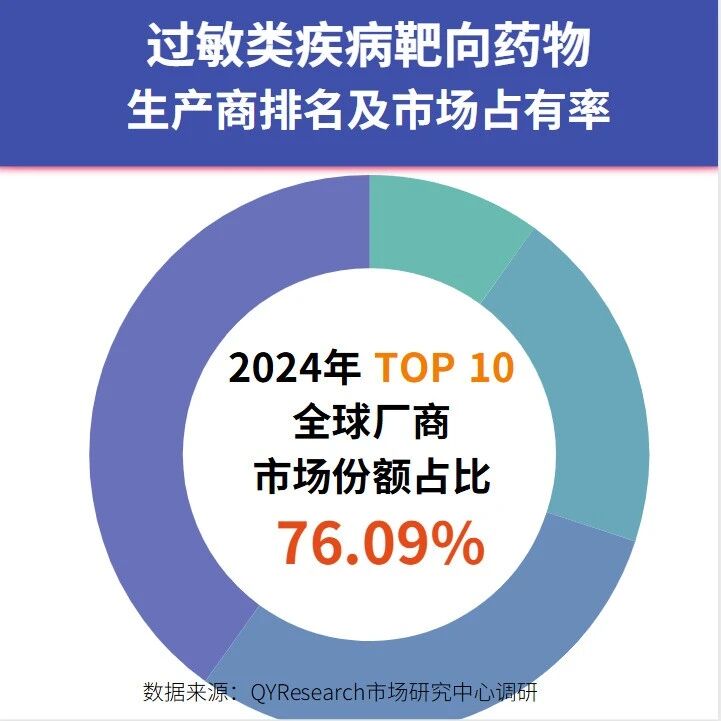
行业聚焦:全球过敏类疾病靶向药物市场头部企业份额调研(附Top 10 厂商名单)
QYResearch· 2025-10-31 10:48
Core Viewpoint - The targeted drug market for allergic diseases is rapidly evolving due to increased understanding of immune pathways and the rising burden of allergic diseases globally, with a focus on precision medicine and innovative therapies [3][4]. Group 1: Definition and Overview - Allergic diseases affect approximately 25% of the global population, with type 2 immune pathway abnormalities being a significant factor in their development [2]. - Targeted drugs, including biologics and small molecule inhibitors, are becoming mainstream in the treatment of allergic diseases, showing better efficacy and safety compared to traditional therapies [2][3]. Group 2: Market Development - The market for targeted drugs is expanding from monoclonal antibodies to a diverse range of biologics and small molecule inhibitors, with several products already approved for conditions like asthma and atopic dermatitis [4]. - Major pharmaceutical companies and emerging biotech firms are actively participating in this market, driving innovation and expanding treatment indications [4]. Group 3: Future Trends - Future drug development will focus on new mediators related to allergic inflammation, such as IL-33, and will integrate precision medicine approaches to enhance treatment efficacy [5]. - The market is expected to see a rise in small molecule therapies and oral treatments, providing more convenient administration options [5]. Group 4: SWOT Analysis - Strengths include a solid scientific foundation based on advances in immunology and molecular biology, leading to effective targeted therapies [6]. - Opportunities arise from the increasing prevalence of allergic diseases and the potential for new targets and combination therapies [8]. Group 5: Market Size and Competition - The global market for targeted drugs for allergic diseases is projected to reach approximately $37.15 billion by 2024, with a compound annual growth rate (CAGR) of 16.07% [10]. - Major manufacturers like Sanofi, AbbVie, and Novartis hold about 76.09% of the market share, with IL-4R being the leading product type [12][14]. Group 6: Regional Market Insights - North America leads the market due to advanced healthcare systems and high patient awareness, while Europe shows strong growth supported by regulatory frameworks [20]. - Emerging markets, particularly in Asia, are experiencing rapid growth due to rising prevalence and expanding healthcare coverage [20].