SHEIN

Search documents
亮点纷呈!2025黄河流域跨境电商博览会在青岛开幕
Sou Hu Cai Jing· 2025-06-13 04:20
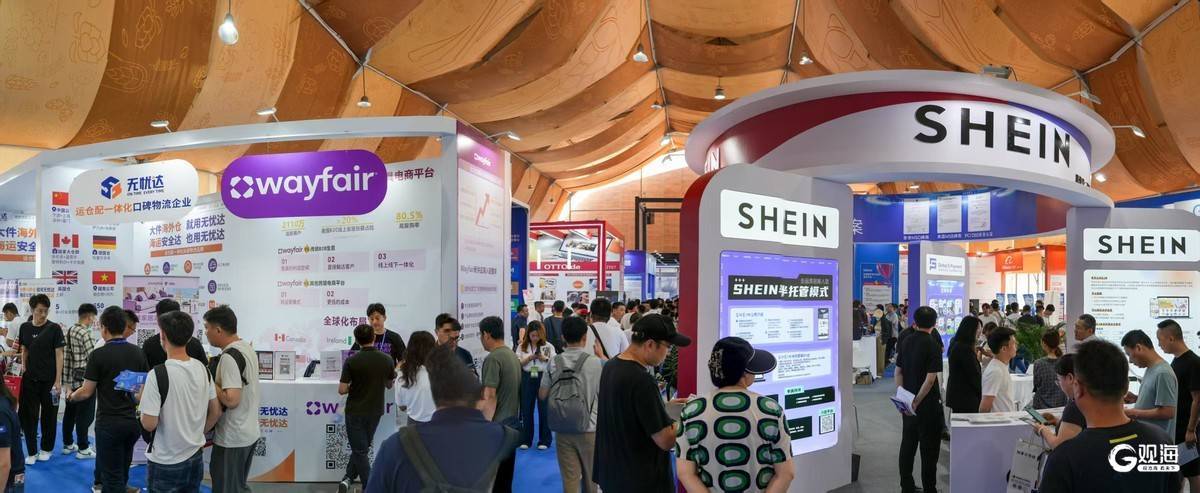
Core Insights - The 2025 Yellow River Basin Cross-Border E-Commerce Expo opened in Qingdao, covering an area of 23,000 square meters with nine exhibition zones, showcasing over 15,000 products, a 15.4% year-on-year increase [1] - Since 2022, the expo has successfully hosted three sessions, attracting 33,000 domestic and international buyers and achieving a trade matching amount exceeding 1.5 billion yuan [3] - The expo has become a high-level open platform that supports national strategies and integrates the Yellow River Basin's industrial belt into the global value chain [3] Exhibition Highlights - The expo features 40 global e-commerce platforms, including major players like Amazon, Alibaba, eBay, and 12 emerging platforms, covering key markets such as Europe, Southeast Asia, the Middle East, Latin America, Africa, and Russia [3][4] - A special Source Factory Pavilion was established, showcasing over 400 source factories with nearly 10,000 product categories, allowing sellers to reduce procurement costs by over 20% [4] - The expo organized six specialized trade negotiation events targeting different global markets, facilitating precise connections between 400 source factories and potential buyers [4] Regional Economic Impact - In 2024, Shandong Province achieved a foreign trade import and export volume of 3.38 trillion yuan, a growth of 3.5%, with the eight provinces along the Yellow River showing a 6.9% increase in trade through Shandong ports [5] - Qingdao City leverages its geographical advantages to enhance economic cooperation with the Yellow River Basin, achieving significant results in high-quality economic development [5]

破解“内卷”困局:以品牌价值为核心 ,构建产业链价值共创格局
Jing Ji Guan Cha Wang· 2025-06-12 10:27
Group 1 - The automotive industry is facing supply chain pressures, prompting 16 major car manufacturers to limit payment terms to suppliers within 60 days, coinciding with the implementation of a new regulation aimed at protecting small and medium-sized enterprises (SMEs) [2] - The automotive sector is experiencing a competitive environment similar to that seen in the home appliance and mobile phone industries, where aggressive pricing strategies have led to market instability and only a few companies with core technologies and brand value have survived [2][4] - The need for industries to balance scale expansion with quality upgrades is critical, with brand building becoming a key focus for high-quality development [2] Group 2 - Former Sinopec Chairman Fu Chengyu emphasized the importance of not sacrificing long-term benefits for short-term gains, warning against practices that could harm SMEs, such as prolonged payment terms and price reductions [3] - The home appliance industry, particularly in Guangdong Shunde, is under pressure despite its mature supply chain, with ODM factories facing order uncertainty and profit compression due to aggressive pricing competition [4][5] Group 3 - The home appliance industry's supply chain is characterized by a "pyramid" structure, where brand owners exert pricing power, leading to cost pressures on suppliers and ultimately resulting in product homogenization and quality risks [5][6] - The dominance of leading brands in the home appliance sector has resulted in a significant profit squeeze for many SMEs, with net profit margins declining over the years [6] Group 4 - The restructuring of the supply chain is urgent, requiring collaboration between large enterprises and SMEs to break the cycle of exploitation and promote high-quality development driven by both brand and technology [7] - Major companies are encouraged to adopt a role as enablers rather than exploiters, fostering innovation and resilience within the supply chain [7] Group 5 - Companies like Midea and Haier are taking steps to empower SMEs through platforms that provide resources and support for brand development and innovation [8] - The acquisition of brands by SMEs, such as Jiahe Intelligent's purchase of the German audio brand Beyerdynamic, represents a strategic move towards establishing a presence in high-end markets [9] Group 6 - The Chinese government is implementing policies to support the growth of specialized SMEs, including financial incentives and resources for technology upgrades [11] - The internationalization of supply chains is seen as a way to alleviate domestic pressures, with companies like BYD and CATL establishing production bases in Europe to enhance local service and reduce costs [13]


日本讨论调整小额免税,或要求海外电商纳税
日经中文网· 2025-06-12 03:06
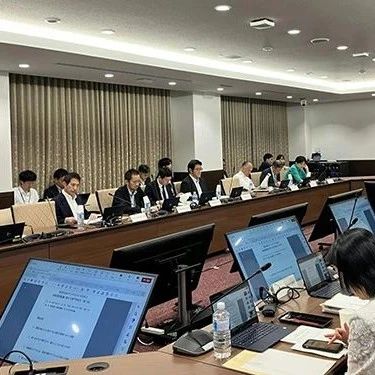
日本政府的税制调查会通过专家会议讨论了调整小额进口货物的免税政策。日本目前对1万日元以下的 进口货物免除消费税和关税。这被认为支持了中国"Temu"和"SHEIN"等…… 日本政府的税制调查会(首相的咨询机构)在6月11日,通过专家会议讨论了调整小额进口货 物的免税政策。日本财务省在之前的会议上表示,很多观点认为应该要求销售额等达到一定 规模的海外电商运营商尽纳税义务。 还展示了整理会议意见的资料。作为讨论的方向,有人推荐澳大利亚的方式。该方式将一定 规模的电商运营商的交易排除在免税制度之外。 日本目前对1万日元以下的进口货物免除消费税和关税。这被认为支持了中 国"Temu"和"SHEIN"等跨境电商网站扩大销路。也有观点指出,低价产品从中国涌入,给日 本国内带来了不正当的低价竞争。多个国家正在缩小或废除免税政策。 会议还介绍了已废除免税制度的欧盟(EU)的方式。由于作为征税对象的货物大幅增加,可 能导致业务成本增加,因此许多人持谨慎态度。也有观点认为,为了实现公平的税制,从中 长期来看日本可以考虑采取欧盟的方式。 有人要求在调整制度时,针对海外运营商不纳税的情况采取对策。日本政府的税制调查会将 在考虑这些意 ...
日本讨论调整小额免税,或要求海外电商纳税
日经中文网· 2025-06-12 03:05
有人要求在调整制度时,针对海外运营商不纳税的情况采取对策。日本政府的税制调查会将 在考虑这些意见的基础上,继续进行讨论。 日本目前对1万日元以下的进口货物免除消费税和关税。这被认为支持了中 国"Temu"和"SHEIN"等跨境电商网站扩大销路。也有观点指出,低价产品从中国涌入,给日 本国内带来了不正当的低价竞争。多个国家正在缩小或废除免税政策。 版权声明:日本经济新闻社版权所有,未经授权不得转载或部分复制,违者必究。 日本政府的税制调查会的专家会议就小额货物的免税制度进行了讨论(6月11日,东京都千代田区) 日本政府的税制调查会通过专家会议讨论了调整小额进口货物的免税政策。日本目前对1万日元以下的 进口货物免除消费税和关税。这被认为支持了中国"Temu"和"SHEIN"等…… 日本政府的税制调查会(首相的咨询机构)在6月11日,通过专家会议讨论了调整小额进口货 物的免税政策。日本财务省在之前的会议上表示,很多观点认为应该要求销售额等达到一定 规模的海外电商运营商尽纳税义务。 还展示了整理会议意见的资料。作为讨论的方向,有人推荐澳大利亚的方式。该方式将一定 规模的电商运营商的交易排除在免税制度之外。 会议还介绍 ...
IDG投资刘靖康,一场重仓年轻人的胜利
36氪· 2025-06-11 23:45
Core Viewpoint - Insta360 has successfully completed its IPO on June 11, 2023, becoming the "first stock in smart imaging" with a first-day opening price of 182 CNY per share, a 285% increase from the issue price, and a total market capitalization exceeding 70 billion CNY [3]. Group 1: Company Overview - Insta360 raised 1.938 billion CNY during its IPO, ranking third in overall fundraising on the Shanghai Stock Exchange since 2025 and first in the Sci-Tech Innovation Board [3]. - The founder, Liu Jingkang, is a unique figure among A-share listed companies, being a 90s entrepreneur who started from scratch and achieved global success with a technology-driven company [3]. Group 2: Investment Journey - IDG Capital became the largest external shareholder before the IPO, holding over 13% of shares, with other major shareholders including Qiming Venture Partners and Xunlei [3]. - The investment story spans 12 years, with IDG's initial investment made when Liu was still a student with no income or team [4][5]. Group 3: Investment Philosophy - IDG's decision to invest in young entrepreneurs was a bold move, focusing on Liu's technical talent and product perception despite the high risks involved [6]. - The investment strategy emphasized "investing in people" while being aware of the uncertainties in technology and commercialization [6]. - IDG did not focus on valuation but was primarily concerned about funding sufficiency during the early stages of Insta360's hardware transition [7]. Group 4: Market Insights - IDG recognized the potential of Insta360's technology in emerging consumer scenarios like VR and action cameras, which contributed to its investment decision [6]. - The company achieved a significant breakthrough in 2018 with a milestone consumer product, generating revenue of 258 million CNY and a net profit of 18.287 million CNY [7]. Group 5: Future Directions - IDG is now shifting its focus to the next generation of entrepreneurs, particularly those from top institutions and universities, to capture innovative breakthroughs [10]. - The investment logic of IDG emphasizes a transition from being mere fund providers to nurturing ecosystems, highlighting the importance of young founders, technological innovation, and global market strategies [10].
IDG投资刘靖康,一场重仓年轻人的胜利
暗涌Waves· 2025-06-11 03:20
Core Viewpoint - The successful IPO of Insta360 marks a significant milestone in the smart imaging sector, highlighting the potential of young entrepreneurs and innovative technology in the capital market [1][4]. Group 1: Company Overview - Insta360, a smart imaging device provider, completed its IPO on June 11, 2023, becoming the "first stock in smart imaging" with an opening price of 182 CNY per share, a 285% increase from the issue price, and a total market capitalization exceeding 70 billion CNY [1]. - The company raised 1.938 billion CNY in its IPO, ranking third in overall fundraising on the Shanghai Stock Exchange since 2025 and first in the Sci-Tech Innovation Board [1]. Group 2: Investment Journey - Insta360 has undergone eight rounds of financing since its establishment, with IDG Capital being the largest external shareholder, holding over 13% of shares prior to the IPO [2]. - IDG Capital's early investment in Insta360 began in 2014 when the company had no revenue, team, or product, showcasing a bold decision to invest in a young entrepreneur [2][4]. Group 3: Investment Philosophy - IDG Capital's investment strategy focused on "investing in people," emphasizing the importance of technology evolution and the potential of new consumer scenarios [4][6]. - The firm maintained a long-term perspective, allowing for the necessary time for technology development and commercialization, which ultimately led to a breakthrough in 2018 with significant product launches [6][8]. - IDG Capital's approach included not just financial support but also resource injection, talent acquisition, and strategic collaboration to foster growth [8][10]. Group 4: Market Insights - The investment in Insta360 reflects a broader trend of recognizing the potential of the post-90s generation in driving future market demands, with IDG Capital being one of the first to support young entrepreneurs [7][10]. - The firm has shifted its focus to include the emerging 00s generation, identifying innovative teams that can lead breakthrough developments in various fields [9][10].

关税从0%飙到120%13.6亿个包裹遭殃霸王茶姬8美元奶茶谁会买单?
Sou Hu Cai Jing· 2025-06-11 00:32
Group 1: Global Trade Dynamics - The global trade landscape has undergone significant changes, with tariff policy adjustments posing challenges to cross-border e-commerce and brand expansion [1] - The rise of cross-border e-commerce platforms like SHEIN has been facilitated by tax-free policies, but recent tariff increases have disrupted this model [2][3] Group 2: SHEIN's Challenges and Adaptations - SHEIN's business model, which thrived on low logistics costs and zero tariffs, is now under pressure due to a tariff increase from 0% to 54% on small packages [2] - The high compliance costs and the need for supply chain migration to countries like Vietnam are significant challenges for SHEIN [2][3] Group 3: Cultural Branding Strategies - Brands like Bawang Chaji are leveraging cultural symbols, such as "Chinese tea," to penetrate global markets, with plans for expansion in North America [5] - The brand's unique positioning emphasizes authentic tea flavors, differentiating it from competitors [5] Group 4: Market Entry Challenges for Bawang Chaji - Bawang Chaji faces high operational costs in the U.S., requiring a price point of $8 to $10 per cup to cover expenses, which may limit market appeal [7] - The brand's success will depend on balancing cultural authenticity with local market adaptations [8] Group 5: IP Globalization through Pop Mart - Pop Mart has successfully utilized non-region-specific IP characters to capture global markets, with significant revenue contributions from international endorsements [9][11] - The company's strategy of controlling the entire IP lifecycle has proven effective, leading to substantial overseas revenue growth [11] Group 6: Future Directions for Chinese Brands - The global strategies of SHEIN, Bawang Chaji, and Pop Mart highlight diverse approaches for Chinese companies in international markets, focusing on compliance, cultural branding, and IP development [13] - Success will hinge on a deep understanding of local markets, consumer habits, and regulatory environments [13]

到拉美去,中企找到另一个“黄金海岸”丨力见
2 1 Shi Ji Jing Ji Bao Dao· 2025-06-10 09:15
Core Insights - The article discusses the increasing interest of Chinese companies in the Latin American market, particularly in Mexico and Brazil, due to changing external environments and the need to diversify risks from reliance on single markets [1][2][3] - The Latin American e-commerce market is transitioning from chaotic growth to rational competition, with a significant increase in the number of Chinese sellers leading to price reductions and increased competition [2][3][10] - The article highlights the diverse market conditions within Latin America, with Mexico being the most developed market, Brazil presenting high risks and rewards, and Chile offering opportunities for mid-to-high-end products [4][5][6] Market Dynamics - The Latin American e-commerce landscape is becoming more competitive, with platforms like Amazon, Meikedo, and others vying for market share, particularly in Mexico [8][10] - Regulatory changes in Brazil and Mexico are increasing compliance pressures for cross-border e-commerce sellers, but these changes are also seen as necessary for market maturation [3][6] - The competition among platforms is expected to intensify, with significant investments in logistics and payment infrastructure, which will lower entry barriers for new sellers [10][11] Seller Strategies - Successful sellers in Latin America are focusing on deep localization and understanding consumer needs, as exemplified by a case of a rugged smartphone tailored for local outdoor workers [11][12] - Companies are advised to invest resources in market research and to develop differentiated products rather than relying on simple procurement strategies [11][12] - The article emphasizes that the era of easy profits in Latin America has ended, and sellers must adapt to a more competitive environment by focusing on brand and service quality [12]
星巴克,“降价”切入茶饮市场丨消费参考
2 1 Shi Ji Jing Ji Bao Dao· 2025-06-10 01:24
Group 1 - Starbucks China is focusing on tea beverages, planning to launch new products with an average price reduction of around 5 yuan, bringing the price of large cups to approximately 23 yuan starting June 10, 2025 [1] - The tea beverage market in China is larger than the coffee market, with the current market size for freshly brewed coffee at 172.1 billion yuan and freshly made tea drinks at 258.5 billion yuan [1] - Starbucks has advantages in product development and supply chain, as evidenced by the popularity of its Frappuccino [1] Group 2 - Competitors like Heytea and Nayuki have lower average customer prices, with Heytea at 17.44 yuan and Nayuki at 19.32 yuan [3] - Starbucks maintains a high service standard in its stores, which is supported by a robust operational system, unlike competitors that are increasingly using temporary workers [4] - The demand for Starbucks' "third space" concept remains uncertain, raising questions about potential crowding in stores [4] Group 3 - The introduction of new tea products is seen as a positive change for Starbucks, aligning with the narrative of "morning coffee, afternoon tea" [4] - The market is witnessing incremental growth opportunities as Starbucks diversifies its offerings [5]
损失达几十亿?美的回应北美空调事件:不存在缺陷系主动召回;DeepSeek核心高管离职创业;传华为Pura X有新开屏方案
雷峰网· 2025-06-10 00:28
Group 1 - Xiaomi's China region has undergone personnel adjustments, with Vice President Wang Xiaoyan also taking on the role of General Manager of Xiaomi Home, while the former GM Wang Hui will transition to the Sales Management Department [4] - As of March 31, Xiaomi's offline retail store count in China reached 16,000, with a target of 20,000 by the end of the year [4] - Xiaomi is expanding its new retail model globally, planning to open 10,000 stores overseas in the next five years [5] Group 2 - DeepSeek's core executive has left to start a new venture focused on the Agent sector, with plans to launch a product by Christmas 2025 [7] - DJI's imaging system founder and team leader has reportedly left the company, marking a significant personnel change [9] Group 3 - Midea Group responded to a recall of its North American air conditioning units, stating it was a voluntary recall and not due to defects, despite potential losses amounting to billions [10] - The recalled U-shaped air conditioner has sold 1.7 million units in the U.S. and 45,900 in Canada since its launch in 2020 [10] Group 4 - BYD has entered the top ten of imported car brands in Japan for the first time, with 416 units registered in May and plans to open 100 stores by the end of 2025 [21] - BYD's sales in Japan for 2024 are projected at 2,221 units, a 10% year-on-year increase, despite a 6% decline in overall imported car sales [21] Group 5 - JD.com has released a clean cooperation guideline prohibiting suppliers from engaging with dismissed employees, and established a 10 million yuan anti-corruption reward fund [19] - GAC Aion has seen a leadership change, with He Xianqing taking over as chairman from Feng Xingya [19] Group 6 - Xiaohongshu has established its first overseas office in Hong Kong, marking a significant step in its global strategy [20] - The platform aims to enhance creative collaboration between local content creators and brands, promoting cultural exchange [20] Group 7 - The "Guzi economy" is rapidly growing, with Pinduoduo testing a new group buying service specifically for this market, projected to reach a market size of 168.9 billion yuan in 2024 [13] - SiliconCloud, a generative AI development platform, has surpassed 6 million users and thousands of enterprise clients, with significant daily token generation [14] Group 8 - Neuralink and Grok are collaborating to enable ALS patients to communicate again through a brain-machine interface, showcasing advancements in assistive technology [32] - Toyota is partnering with a Finnish company to launch the world's first hydrogen sauna, aligning with its environmental goals [33] Group 9 - Qualcomm has announced the acquisition of UK semiconductor company Alphawave Semi for approximately $2.4 billion, enhancing its semiconductor IP portfolio [34] - SHEIN has denied reports of plans to increase its Indian supplier base from 150 to 1,000, clarifying its partnership with Reliance is limited to brand licensing [34]