康方生物

Search documents
港股通科技ETF(513860)上涨0.14%,港股后市被看好
Mei Ri Jing Ji Xin Wen· 2025-12-04 02:49
Group 1 - The Hong Kong stock market opened slightly higher on December 4, with the Hang Seng Index rising by 0.17% and the Hang Seng Biotechnology Index increasing by over 1% [1] - The Hong Kong Stock Connect Technology ETF (513860) saw a gain of 0.14%, with notable increases in constituent stocks such as Kingsoft Biotechnology and CanSino Biologics, both rising nearly 4% [1] - As of December 3, the Hong Kong Stock Connect Technology ETF (513860) attracted a total of 410 million yuan over the past nine trading days, with a net inflow of 74.36 million yuan on December 2 [1] Group 2 - Guosen Securities emphasizes that AI will remain a key focus through 2026, driven by the need for accelerated domestic hardware production and the expectation of more AI applications being implemented [2] - The Hong Kong Stock Connect Technology ETF (513860) closely tracks the CSI Hong Kong Stock Connect Technology Index, which selects 50 large-cap, high R&D investment, and fast-growing technology companies as sample stocks [2] - The top ten weighted stocks in the index include major players such as Alibaba-W, Tencent Holdings, SMIC, BYD Company, and Xiaomi Group-W [2]


港股创新药逆市走强,康方生物领涨!520880拉升逾1%,机构:创新药跨年行情可期
Xin Lang Cai Jing· 2025-12-04 02:22
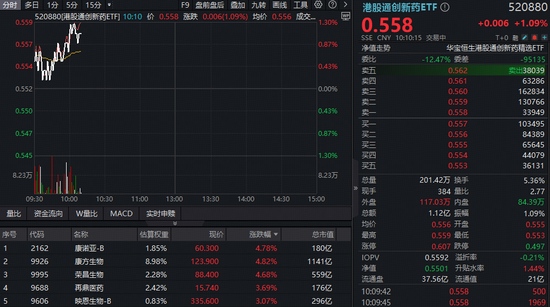
Group 1 - The core viewpoint of the news is that after a four-day decline, the Hong Kong innovative drug sector has rebounded, with leading stocks like Kangfang Biotech and Rongchang Biotech showing significant gains [1][7] - The Hong Kong Stock Connect Innovative Drug ETF (520880) has over 70% of its holdings in leading innovative drug stocks, indicating strong market confidence [1][7] - The innovative drug sector is expected to be a major upward trend in the cross-year market, supported by China's pharmaceutical industry entering a critical phase of "innovation realization + global layout" [3][9] Group 2 - The Hong Kong Stock Connect Innovative Drug ETF (520880) has a total scale of 2.142 billion yuan and an average daily trading volume of 458 million yuan since its listing, making it the largest and most liquid ETF tracking the same index [5][10] - The index tracked by the ETF, the Hang Seng Stock Connect Innovative Drug Select Index, has a high concentration of leading stocks, with the top ten stocks accounting for 72.57% of the total weight, showcasing the strength of the innovative drug sector [3][10] - The ETF is designed to cover pure innovative drug companies without including CXO, ensuring a comprehensive representation of the innovative drug research and development sector [4][9]


利好创新药 中国药品价格登记系统上线
2 1 Shi Ji Jing Ji Bao Dao· 2025-12-03 23:05
Core Viewpoint - The launch of the China Drug Price Registration System marks a significant step towards a globalized pricing framework for innovative drugs, enhancing market-oriented pricing capabilities for pharmaceutical companies and supporting the development of a new pricing ecosystem that aligns drug prices with innovation value and market demand [1][2][6]. Group 1: Drug Price Registration System - The new system allows domestic and international pharmaceutical companies to independently register drug prices, ensuring accountability for price authenticity [1][3]. - The system operates under the principle of "one location acceptance, nationwide sharing, global openness," and is managed by a state-owned enterprise in Beijing [1][3]. - The first batch of companies to register prices includes major players such as China National Pharmaceutical Group, Beijing Tongrentang, and Roche, indicating strong industry participation [3]. Group 2: Impact on Pharmaceutical Industry - The system is expected to enhance the pricing strategies of pharmaceutical companies, allowing them to adjust prices based on clinical value, supply-demand dynamics, and competitive landscape [3][4]. - The dual mechanism of registration and query will promote transparency in drug pricing, moving away from previous opaque practices [4]. - The establishment of this system is anticipated to create a comprehensive pricing structure that encompasses innovative drugs, insurance payment prices, and generic drug prices, benefiting the innovative drug sector [5]. Group 3: Global Market Development - The China Drug Price Registration System is designed to facilitate the international expansion of Chinese innovative drugs and attract high-quality foreign drugs into the Chinese market [2][5]. - Data indicates that the total amount of overseas licensing transactions by Chinese pharmaceutical companies exceeded $92 billion in the first three quarters of 2025, highlighting the growing global presence of Chinese innovative drugs [2]. - The system aims to address significant price discrepancies between domestic and international markets, influenced by factors such as currency exchange rates and pricing mechanisms [5]. Group 4: Long-term Industry Implications - The implementation of the drug price registration system is expected to enhance the global competitiveness of China's biopharmaceutical industry and drive high-quality innovation within the sector [6].


烧钱23年却无产品上市 和美药业赴港IPO求生
Bei Jing Shang Bao· 2025-12-03 16:01
Core Viewpoint - He Mei Pharmaceutical is urgently seeking an IPO after 23 years of product development, with its first drug Mufemilast recently approved, amidst a highly competitive market for psoriasis treatments [1][4]. Company Overview - Founded in 2002, He Mei Pharmaceutical has raised over 1.2 billion yuan and incurred losses exceeding 1.1 billion yuan, achieving a valuation of 3.9 billion yuan without any products on the market [1][3]. - The company has been in a continuous state of high cash burn, with significant R&D expenditures primarily focused on Mufemilast, which has taken over 16 years to develop [2][3]. Product Development - Mufemilast's development timeline began in 2009, with clinical trials starting in 2012, and it received approval for treating moderate to severe plaque psoriasis in September 2025 [2]. - The R&D costs for Mufemilast accounted for 60% of the total R&D expenses from 2023 to mid-2025, reflecting the heavy investment required for its development [2]. Market Competition - The psoriasis drug market in China is highly competitive, with 18 approved targeted therapies, including 5 small molecules and 13 biologics, leading to a fierce price war [4][5]. - Major competitors include established products from international pharmaceutical giants, which have already captured significant market shares [4][5]. Pricing Strategy - He Mei Pharmaceutical plans to set Mufemilast's initial annual treatment cost between 52,700 and 119,900 yuan, positioning it above some small molecule competitors but below the price of leading biologics [7]. - The relatively high pricing strategy may hinder Mufemilast's competitiveness, especially among price-sensitive patients requiring long-term treatment [7][8]. Commercialization Challenges - The commercialization of Mufemilast is expected to be slow due to the nature of psoriasis as a chronic disease, which requires extensive academic promotion and trust-building among healthcare professionals [8]. - Even if Mufemilast successfully launches, it may not generate significant revenue quickly enough to offset the company's ongoing losses [8].
鼓励创新药出海,中国药品价格登记系统上线:我国药企授权出海交易超920亿美元
Mei Ri Jing Ji Xin Wen· 2025-12-03 13:24
Core Insights - The launch of the Chinese Drug Price Registration System on December 2 is seen as a significant positive development for the innovative drug sector, facilitating the international expansion of domestic innovative drugs [1][4]. Group 1: Drug Price Registration System - The Chinese Drug Price Registration System was launched on December 2, with nine pharmaceutical companies participating in the initial registration, including both multinational and traditional Chinese medicine firms [2]. - The system currently includes limited information, with only 10 drug entries available, indicating a nascent stage of development [2]. - The system allows for independent pricing by companies outside of the National Medical Insurance (NMI) framework, which is a notable shift in policy [1][5]. Group 2: Innovative Drugs Highlighted - Four drugs showcased on the system are recognized as either the first of their kind in China or globally, including innovative treatments like Toripalimab and Icaritin [3]. - For instance, Toripalimab is the first Chinese PD-1 monoclonal antibody approved in both Europe and the U.S., while Icaritin is the first CAR-T therapy targeting BCMA approved in China [3]. Group 3: Market Implications - The establishment of the registration system is expected to enhance the global pricing framework for Chinese innovative drugs and attract high-quality foreign drugs to the Chinese market [4][5]. - Data indicates that in the first three quarters of 2025, Chinese pharmaceutical companies completed 103 license-out transactions totaling $92.03 billion, highlighting the growing importance of the Chinese market in the global pharmaceutical industry [4]. - The NMI's non-interference in pricing for the non-NMI market is seen as a positive step towards respecting market dynamics and enhancing the pricing power of domestic companies in international markets [5].

我国药企授权出海交易超920亿美元
Mei Ri Jing Ji Xin Wen· 2025-12-03 12:49
Core Insights - The launch of the Chinese Drug Price Registration System on December 2 is seen as a significant positive development for the innovative drug sector, facilitating the international expansion of domestic innovative drugs [1][4] - The system allows for independent pricing by companies outside of the National Medical Insurance (NMI) market, which is expected to foster a more competitive environment [1][5] Group 1: Drug Price Registration System - The Chinese Drug Price Registration System was launched on December 2, with nine pharmaceutical companies participating in the initial registration, including both multinational and domestic firms [2] - The system currently includes limited data, with only 10 drug entries available, indicating a nascent stage of development [2] - The system is designed to respect the pricing autonomy of companies in the non-NMI market, which is a shift from previous perceptions that equated the NMI market with the entire Chinese pharmaceutical market [5] Group 2: Innovative Drugs Highlighted - Four drugs showcased on the system's homepage hold either domestic or global "first" status, including innovative treatments like the first Chinese PD-1 monoclonal antibody approved in Europe and the U.S. [3] - Specific pricing examples illustrate the disparity between NMI reimbursement prices and companies' self-reported prices, such as the self-reported price of 10,688 yuan for a PD-1 monoclonal antibody compared to the NMI price of 1,253.53 yuan [3] Group 3: Market Implications - The establishment of the drug price registration system is expected to enhance the global pricing framework for Chinese innovative drugs and attract high-quality foreign drugs to the Chinese market [4] - Data indicates that Chinese pharmaceutical companies completed 103 license-out transactions worth 9.203 billion USD in the first three quarters of 2025, highlighting the growing importance of the Chinese market in the global pharmaceutical industry [4] - The NMI's non-interference in pricing for the non-NMI market is viewed as a positive step towards empowering companies to set prices that reflect market conditions, potentially increasing their influence in international markets [5]
烧钱23年零产品,和美药业赴港IPO求生
Bei Jing Shang Bao· 2025-12-03 11:56
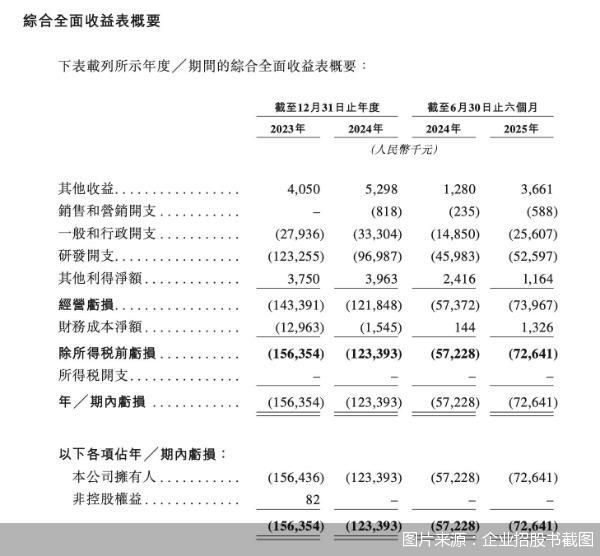
Core Viewpoint - He Mei Pharmaceutical is urgently seeking an IPO after 23 years of product development, with its first drug Mufemilast recently approved, amidst a highly competitive market for psoriasis treatments [1][6]. Company Overview - Founded in 2002, He Mei Pharmaceutical has raised over 1.2 billion RMB and incurred losses exceeding 1.1 billion RMB, achieving a valuation of 3.9 billion RMB despite having no products on the market [1][5]. - The company has been heavily reliant on external financing, completing six rounds of funding from 2021 to the end of 2024, with a post-investment valuation reaching 3.9 billion RMB after the E round [5]. Product Development - The development of Mufemilast has taken 16 years, starting from preclinical research in 2009 to receiving approval for treating moderate to severe plaque psoriasis in September 2025 [3]. - Research and development expenses for Mufemilast accounted for 60% of the total R&D costs, with losses reported at 156.4 million RMB for 2023 and projected losses of 123.4 million RMB for 2024 [3][4]. Market Competition - The psoriasis drug market in China is projected to grow from 18.2 billion RMB in 2024 to 48.3 billion RMB by 2028, with 18 approved targeted therapies already available, including 13 biologics [6][7]. - He Mei Pharmaceutical faces intense competition from established players like Novartis and Eli Lilly, which have already captured significant market shares with their products [6][7]. Pricing Strategy - He Mei Pharmaceutical plans to price Mufemilast between 52,700 RMB and 119,900 RMB annually, positioning it above some small molecule competitors but below the price of established biologics [8]. - The higher pricing strategy may hinder Mufemilast's competitiveness in a market where patients are sensitive to treatment costs, especially for chronic conditions requiring long-term medication [8][9]. Commercialization Challenges - The commercialization of Mufemilast is expected to be slow due to the need for long-term academic promotion and building trust among healthcare professionals [9]. - Even with successful market entry, Mufemilast is unlikely to generate significant revenue quickly, making it difficult for He Mei Pharmaceutical to reverse its overall loss situation [9].
灵魂拷问:牛市还在不在?
Ge Long Hui· 2025-12-03 08:06
今天又超过4000家公司下跌,大跌的公司其实并不多,但最近的盘面,就是持续的阴跌,其难受程度,远不如4月给人一个痛快。 从10月至今,市场超过3000家公司是大跌的,涨10个点以上的公司1100家(10个点以内可以理解为震荡行情)。如果我们按10月至 今的区间最高价算到昨天收盘价,回撤10个点以上的公司有3300家,回撤超过15个点的有2049家,回撤超过20个点的有1024只。 所以,这段时间,虽然上证指数回撤并没有多少,但应该不少人的回撤是很大的。 如果配了港股,那会更加悲剧,因为就恒生科技指数来说,最高下来回撤了近20%,个股回撤2、30个点的一抓一大把,说港股一脚 已经踏入熊市,都不算过分的。 这就引出了一个灵魂问题:牛市到底还在不在? 我们从这波回撤的原因,当前的市场环境来讨论这个问题。 01 高位很高,低位不济 10月至今这波回撤,要说原因的话,我觉得就是8个字,高位很高,低位不济。 10月之前,创新药猛猛涨了一波,半导体猛猛涨了一波,AI猛猛涨了一波。这些方向的估值都非常高,如果没有更新的进展来打鸡 血,震荡消化估值是不可避免的。像光模块方向因为实不实又被美帝那边的进展打下鸡血,还有铜铝也加上了 ...
灵魂拷问:牛市还在不在?
格隆汇APP· 2025-12-03 07:49
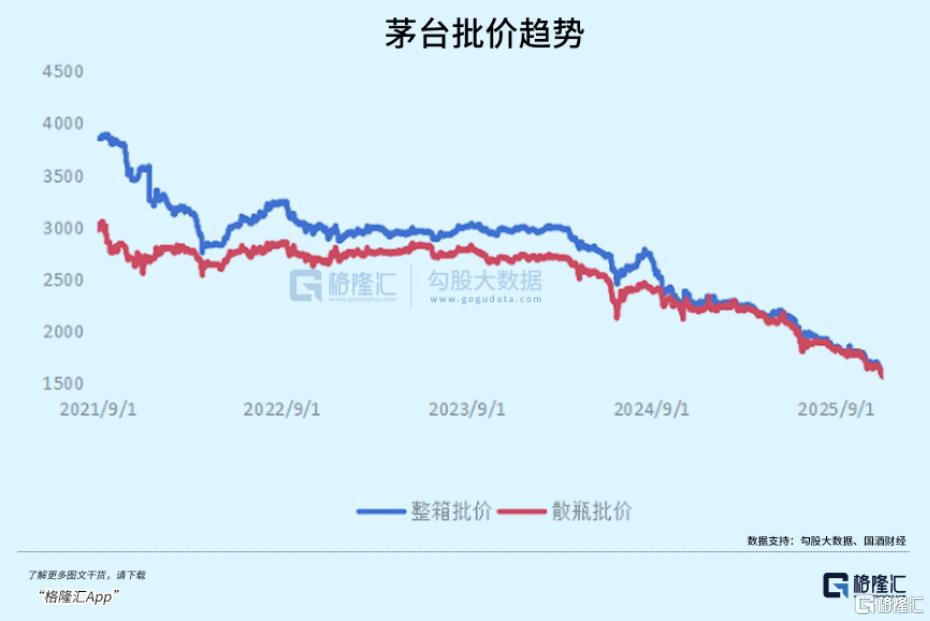
Core Viewpoint - The current market environment is characterized by a significant number of companies experiencing declines, with over 3,000 companies seeing substantial drops since October, despite the Shanghai Composite Index showing limited retreat [4][5]. Market Performance - Since October, more than 3,000 companies have faced significant declines, with 1,100 companies rising by over 10%. A total of 3,300 companies have retreated by more than 10%, 2,049 by over 15%, and 1,024 by over 20% [4]. - The Hang Seng Technology Index has seen a nearly 20% drop, with individual stocks experiencing declines of 20-30% [5]. Market Sentiment - The question of whether a bull market still exists is raised, with the current sentiment suggesting a struggle due to high valuations and weak fundamentals [6][7]. Reasons for Market Retreat - The recent market retreat is attributed to high valuations in sectors like innovative pharmaceuticals, semiconductors, and AI, which have not seen new developments to justify their prices [9]. - The consumer sector, particularly in areas like liquor, has also shown weakness, with companies like Moutai hitting new lows [11]. Economic Environment - The macroeconomic environment remains weak, with indicators such as PMI orders declining and consumer spending showing no signs of recovery [14]. - Predictions indicate that housing prices may continue to decline, impacting household wealth and consumer confidence [15][17]. Future Outlook - The government is expected to increase liquidity support, especially with the upcoming Federal Reserve meeting and domestic economic conferences [18][19]. - The technology sector is anticipated to remain a focal point, with potential opportunities for bottom-fishing in specific segments [20]. - The market may experience a difficult period for another half month, but the bull market is still considered to be intact, pending macroeconomic support [23].

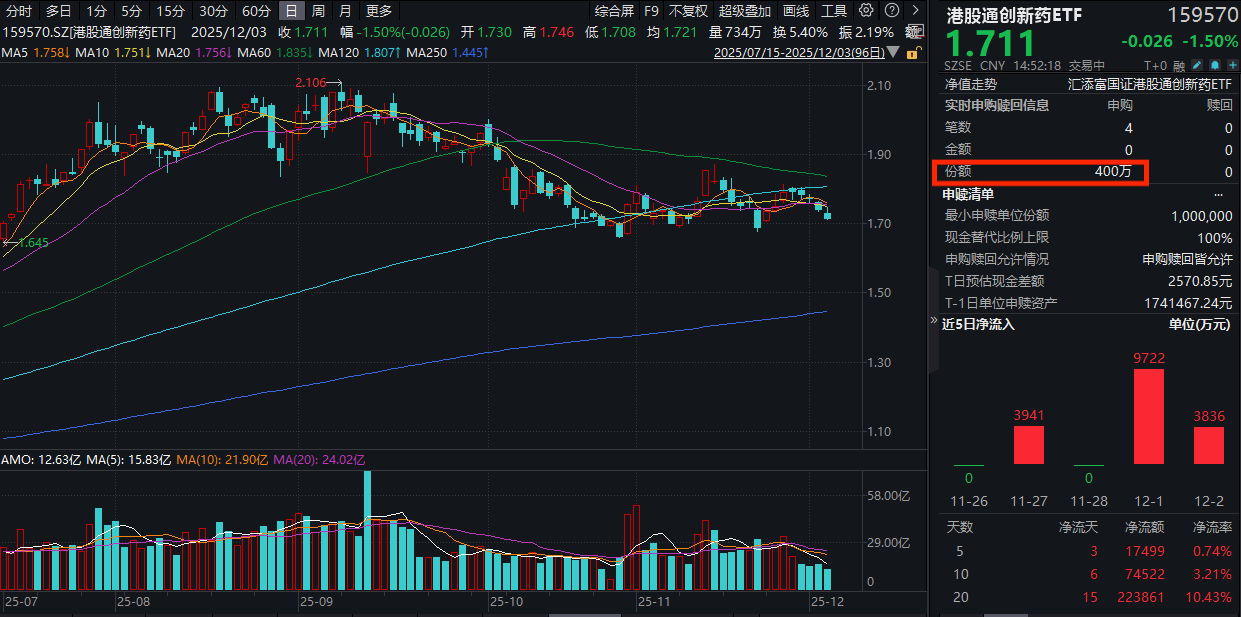
ASH数据催化临近!港股通创新药ETF(159570)回调1.5%录得弱势四连跌,资金再度逢跌加仓!创新药出海有望持续高增长!
Xin Lang Cai Jing· 2025-12-03 07:13
Group 1 - The Hong Kong Innovation Drug ETF (159570) experienced a 1.5% decline, marking its fourth consecutive day of decrease, with a trading volume exceeding 1.3 billion yuan [1] - The ETF has attracted a net inflow of over 6 million yuan during the day and has accumulated over 740 million yuan in the last 10 days, with a total size exceeding 23.6 billion yuan as of December 2 [1] - Major weighted stocks in the ETF, such as 3SBio, Innovent Biologics, and China Biologic Products, saw declines of over 2%, while others like CSPC Pharmaceutical and BeiGene dropped over 1% [2][3] Group 2 - The upcoming ASH conference is expected to reveal key data in the hematology field, which may catalyze the valuation recovery of related pipelines, particularly for companies with differentiated advantages in oncology, autoimmune, and rare disease products [5] - The Chinese innovative drug industry has shown significant growth, with the number of clinical trials increasing from 1,473 in 2020 to 2,539 in 2024, reflecting a compound annual growth rate of over 15% [6][9] - Chinese pharmaceutical companies are becoming increasingly prominent in global research, contributing 27% in oncology and 19% in autoimmune fields, with significant positions in ADC targets such as HER2 and TROP2 [9]