
福瑞达

Search documents
福瑞达生物股份这一新原料即将“起飞”!
FBeauty未来迹· 2025-06-03 11:21
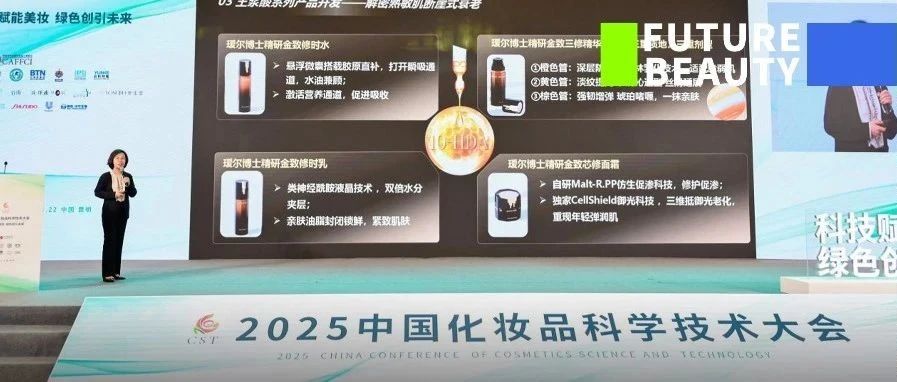
Core Viewpoint - The Chinese cosmetics industry is undergoing a high-quality transformation driven by "ingredients," with a focus on the active ingredient "10-Hydroxy-2-Decenoic Acid" (commonly known as Royal Jelly Acid) emerging as a significant innovation following Hyaluronic Acid [2][3]. Group 1: Research and Development Progress - On May 21-23, 2025, Furuida Bio Co., Ltd. publicly disclosed important research advancements regarding Royal Jelly Acid, showcasing a comprehensive approach from "synthesis process to efficacy research to application" [4][6]. - Royal Jelly Acid, a unique unsaturated fatty acid found in royal jelly, is considered a core indicator of royal jelly quality, with a content of only 1.4-2.4% [4][6]. - Furuida Bio has achieved breakthroughs in synthesizing Royal Jelly Acid through collaboration with Qilu University of Technology, resulting in high-yield production methods [6][10]. Group 2: Application and Market Potential - The successful development of Royal Jelly Acid not only breaks technical barriers but also enhances brand recognition, positioning it as a new key ingredient in China's raw material library [2][4]. - Furuida Bio's research has led to the discovery of Royal Jelly Acid's skin barrier protection and anti-aging effects, with the ingredient officially registered as a new cosmetic raw material in July 2024 [6][10]. - The upcoming launch of the "Jingyan Jinzhi" product line, featuring Royal Jelly Acid, is set for June 2025, indicating the ingredient's entry into the cosmetics market [22][24]. Group 3: Industry Implications - The transition from Hyaluronic Acid to Royal Jelly Acid reflects a collective awakening among domestic brands regarding ingredient development and value return [27][32]. - The competition for key active ingredients in the global cosmetics market has evolved into a "technology chip war," where mastery of core raw materials and innovative applications determines market leadership [28][29]. - The successful industrialization of Royal Jelly Acid represents a significant shift in the Chinese cosmetics industry's approach to ingredient science, emphasizing the importance of independent research and development [31][32].


国泰海通:美妆个护国货崛起加速 优选产品上升周期成长型标的
Zhi Tong Cai Jing· 2025-06-03 06:27
Core Viewpoint - The cosmetics retail sales in China for January to April 2025 showed a year-on-year increase of 4%, underperforming the overall retail market by 0.7 percentage points, but this represents an improvement compared to 2024. The industry is characterized by four key trends: innovation in personal care products, breakthroughs in ingredient technology, rising emotional consumption, and the continuation of affordable consumption [1][3]. Investment Recommendations - The company recommends increasing holdings in the personal care sector, highlighting quality companies that benefit from product innovation and opportunities in Douyin channels, with key recommendations including Ruoyuchen (003010), Dengkang Oral (001328), and Runben Co. [2] - In the beauty sector, structural opportunities are identified, with key recommendations for companies like Jinbo Biological, Juzi Biological, and Marubi Co. that are positioned to benefit from the collagen restructuring trend. Additionally, brands like Maogeping, Shumei Co., Proya (603605), and Shanghai Jahwa (600315) are expected to gain from the overall increase in domestic market share [2]. - Companies expected to bottom out and potentially see a turning point include Lafang Household (603630), Shuiyang Co. (300740), Betaini (300957), Furuida (600223), Huaxi Biological, Fulejia (301371), Meilitiantian Medical Health, and Qingsong Co. (300132) [2]. Industry Overview - Demand remains stable, with the rise of domestic brands in the beauty and personal care sectors accelerating. The cosmetics retail sales for January to April 2025 increased by 4% year-on-year, which is a 0.7 percentage point underperformance compared to the overall retail market, but shows improvement from 2024. The overall demand is stable, with leading domestic brands performing well and the rise of new domestic brands spreading from beauty to personal care categories [3][4]. Trends - The industry is witnessing several trends: 1) Personal care transformation with new products in traditional categories, supported by content e-commerce creating a favorable environment for new product launches [4]. 2) Ingredient innovation, particularly in collagen restructuring, with various types and structural innovations expanding application scenarios [4]. 3) Emotional consumption, where cultural, stylistic, and experiential demands are driving the growth of domestic trends in cosmetics and fragrances [4]. 4) Affordable consumption, where the trend for cost-effectiveness continues under supply-demand resonance, benefiting strong supply chains and well-operated brands [4]. Key Companies - Looking ahead to 2025, the market risk appetite is expected to recover significantly. The beauty sector is characterized by substantial changes and a clear trend of rising domestic brands, indicating strong growth potential and leadership in new consumption [5]. The differentiation among brands is increasing, emphasizing the selection of high-growth targets driven by product innovation and attention to marginal improvements [5].



探底玻尿酸
Jing Ji Guan Cha Wang· 2025-06-03 03:11
Core Viewpoint - Hyaluronic acid is not just a moisturizing agent but has vast applications in pharmaceuticals, medical aesthetics, skincare, and health foods, indicating a significant growth potential in various sectors [1][2][4]. Industry Overview - The hyaluronic acid market is primarily dominated by three major companies: Huaxi Biological, Aimeike, and Haohai Biological, collectively referred to as the "big three" in the industry, with market capitalizations exceeding 100 billion yuan for Huaxi Biological and Aimeike at one point [2][3]. - In 2023, China accounted for 84% of the global hyaluronic acid raw material sales, establishing itself as the largest producer, with Shandong province being the key production hub [7][8]. Application Scenarios - Hyaluronic acid is widely used in the medical aesthetics sector, particularly in non-surgical procedures like water light needles and injection fillers, due to its excellent moisture retention and filling properties [3][4]. - The applications of hyaluronic acid have expanded from ophthalmology to include various medical fields, such as joint lubrication, vascular permeability regulation, and wound healing [5][14]. Technological Advancements - Huaxi Biological has significantly improved the production efficiency of hyaluronic acid through microbial fermentation technology, increasing the yield from 3g/L to 12-14g/L and reducing production time from 72 hours to 18 hours [8][13]. - The introduction of cross-linking technology has transformed hyaluronic acid from a liquid to a gel state, extending its metabolic duration in the body and facilitating its use in aesthetic procedures [5][8]. Market Challenges - The industry faces challenges such as overcapacity and price wars due to an influx of competitors, leading to a significant drop in raw material prices from thousands to hundreds of yuan [8][9]. - Major companies have reported varying degrees of performance challenges since 2022, with Huaxi Biological's functional skincare and food businesses experiencing declines [9]. Future Directions - The future of hyaluronic acid lies in expanding its applications in medical devices and developing new products that combine hyaluronic acid with other ingredients for enhanced therapeutic effects [11][12]. - Companies are exploring regenerative capabilities of hyaluronic acid, focusing on its dual functions of filling and regeneration, which could lead to innovative product offerings [12][14].

化妆品板块走高 贝泰妮涨超10%
news flash· 2025-06-03 02:16
Group 1 - The cosmetics sector is experiencing a rise, with Betaini (300957) increasing by over 10% [1] - Other companies such as Babi Co., Water Sheep Co. (300740), Fulejia (301371), Lafang Jiahua (603630), and Furida (600223) are also seeing gains [1]
2025年中国口服美容市场研究报告(简版)
Sou Hu Cai Jing· 2025-06-02 13:45
Core Insights - The Chinese oral beauty market is expected to exceed 25 billion yuan by 2025, driven by health consumption trends and a shift from external to internal beauty solutions [1][10][20] - The market is characterized by intense competition between international brands and local companies, with a focus on innovation and traditional Chinese medicine [2][10] Market Landscape - China has become the second-largest oral beauty consumption market in East Asia, accounting for nearly one-third of the Asia-Pacific region [2][10] - Despite a slowdown in growth, the projected market size of 25 billion yuan indicates significant potential [2][10] - The industry is experiencing a "dual-drive" model, with international brands localizing their strategies and domestic companies leveraging traditional medicine [2][10] Consumer Insights - The primary consumer group is women aged 31-40, but younger consumers aged 18-23 show a higher interest in oral beauty products [3][10] - The rise of "punk health" among Gen Z consumers emphasizes the desire for scientifically validated ingredients and enjoyable consumption experiences [3][10] - Emerging markets in second- and third-tier cities are driving changes in product strategies, with a notable increase in repurchase rates for "food-medicine homology" products [3][10] Product Evolution - The industry is transitioning from marketing-driven to science-driven approaches, with three main product categories emerging: "blue hat" health foods, functional foods, and traditional supplements [4][10] - Innovative product forms like gummy candies and jelly bars have seen a 217% year-on-year growth, appealing to younger consumers' preferences [4][10] - A focus on effective ingredients and enjoyable consumption experiences is reshaping product offerings [4][10] Ingredient Competition - Plant extracts and collagen account for 60% of the market share, with local brands innovating using traditional Chinese medicine [5][10] - Probiotics have emerged as a significant trend, with a sales growth rate of 89%, aligning with consumer interests in holistic health [5][10] - B vitamins have captured a 32% market share in the anti-hair loss segment, showcasing the effectiveness of combined formulations [5][10] Future Outlook - Regulatory policies are becoming stricter, pushing companies to enhance their formulations and marketing strategies [6][10] - Future competition will focus on penetrating second- and third-tier cities, developing products for specific consumer needs, and innovating product forms [6][10] - The intersection of traditional health wisdom and modern biotechnology is expected to drive the evolution of the oral beauty market in China [6][10]
国际化妆品医美公司25Q1业绩跟踪报告:业绩下滑或增长降速,国际集团复苏尚需时日
Shenwan Hongyuan Securities· 2025-05-28 08:41
Investment Rating - The report maintains a "Positive" outlook on international cosmetics and medical beauty companies for Q1 2025 [2]. Core Insights - The global beauty market is projected to grow at a rate of 4.5% in 2024, a decline from the 8% growth seen in 2023, with significant regional disparities [3][12]. - The North Asia market, particularly China, has shown signs of improvement, but overall performance remains subdued, with North America exhibiting signs of fatigue [3][12]. - International beauty groups are still grappling with performance declines or slower growth, which may become the new normal due to various factors including the pandemic and macroeconomic conditions [3][15]. - Companies are adopting localization strategies and investing in local brands to maintain market share amid fierce competition from domestic brands [3][19]. Summary by Sections 1. Global Beauty Market Trends - The beauty market continues a stable trend from 2024, with Europe outperforming other regions at a 7.5% growth, while North Asia has seen a 2% decline [3][12]. - The international beauty groups are facing a challenging environment with performance fluctuations and strategic adjustments [15]. 2. L'Oréal Performance - L'Oréal's Q1 2025 revenue growth slowed to 4.4%, with the Chinese market remaining flat and tourism retail channels under pressure [3][27]. - The company is actively investing in local brands and expanding its product matrix to compete with domestic brands [3][27]. 3. Estée Lauder Performance - Estée Lauder reported a 9.9% decline in revenue for Q1 2025, continuing a trend of three consecutive quarters of revenue decline [3][51]. - The company is undergoing strategic reforms to address issues related to brand and product positioning [47][51]. 4. Shiseido Performance - Shiseido's revenue decreased by 8.5% in Q1 2025, with its main brand struggling while the ELIXIR brand showed growth [3][18]. - The company is focusing on strategic product launches and price adjustments to enhance profitability [3][27]. 5. Investment Recommendations - Recommended companies include Up Beauty and Proya for their strong brand matrices and growth potential, as well as Marubi for leveraging Douyin traffic [4]. - In the medical beauty sector, companies with strong R&D capabilities and broad product pipelines, such as Aimeike, are highlighted as key investment opportunities [4].
测不到胶原?医美龙头被质疑造假风波发酵,今日股价一度重挫10%
21世纪经济报道· 2025-05-26 14:31
Core Viewpoint - The article discusses the controversy surrounding Giant Bio (巨子生物) and its flagship product, Kefu Mei (可复美), which has been accused of potential fraud regarding its collagen content, leading to a crisis of trust among investors and consumers [1][4]. Group 1: Controversy and Market Impact - On May 24, a report from "Dr. Yan's Research Institute" claimed that Kefu Mei's collagen content was undetectable, raising questions about the company's credibility and regulatory compliance [1][4]. - Following the allegations, Giant Bio's stock price fell over 10% on May 26, closing at 73.6 HKD per share, with a total market capitalization of 788.19 billion HKD [4]. - Other companies in the collagen market, such as Jinbo Bio (锦波生物), Marubi (丸美生物), and Furuida (福瑞达), also experienced stock price declines amid the controversy [4]. Group 2: Product and Testing Disputes - The report highlighted three main issues with Kefu Mei: the claimed collagen content was only 0.0177%, below the regulatory threshold of 0.1%, and the absence of glycine, a key amino acid in collagen [9][11]. - Giant Bio defended its product, stating that it complies with national standards and has undergone multiple testing phases to ensure quality [11]. - The lack of standardized testing methods for collagen products in China has been identified as a significant issue, leading to discrepancies in test results from different institutions [12]. Group 3: Industry Context and Growth Potential - The collagen market in China reached 192.4 billion CNY in 2022, with a projected compound annual growth rate of 44.93%, expected to reach 585.7 billion CNY by 2025 [20]. - Companies like Jinbo Bio and Marubi are actively developing their collagen products, with Jinbo Bio reporting a revenue increase of 84.92% in 2024 [20][21]. - The article emphasizes the need for a scientific testing framework and transparent regulatory oversight to address the ongoing challenges in the collagen industry [17][22].

“测不到胶原”风波发酵:巨子生物陷信任危机,重组胶原蛋白市场震荡
2 1 Shi Ji Jing Ji Bao Dao· 2025-05-26 12:09
Core Viewpoint - The controversy surrounding Juzhibio's flagship product, Kefu Mei, has raised significant concerns about the authenticity of its collagen claims, leading to a crisis of trust among investors and consumers [1][3][6]. Company Summary - Juzhibio, known as a leader in recombinant collagen, has faced allegations of product falsification, particularly regarding its Kefu Mei product, which reportedly contains only 0.0177% collagen, below the regulatory threshold of 0.1% [3][4]. - The company has stated that all its products are compliant with regulatory standards and have undergone rigorous quality checks [4][6]. - Following the controversy, Juzhibio's stock price fell by 4.04% to HKD 73.6, with a total market capitalization of HKD 788.19 billion as of May 26 [2]. Industry Summary - The demand for aesthetic products, including hyaluronic acid and collagen, has been rising, with major players like Juzhibio and Jinbo Bio seeing growth despite market challenges [2][9]. - The recombinant collagen market in China is projected to grow significantly, reaching CNY 585.7 billion by 2025, with a compound annual growth rate of 44.93% [10][12]. - The lack of standardized testing methods for collagen products has led to discrepancies in product claims and consumer trust issues, highlighting the need for regulatory frameworks in the industry [5][8][12].
玻尿酸&重组胶原蛋白两手抓的中国企业,出现了!
FBeauty未来迹· 2025-05-23 14:43
Core Viewpoint - The beauty industry is currently experiencing a "ingredient dispute" focusing on two key ingredients: hyaluronic acid and recombinant collagen, which has expanded to discussions on business strategies of leading beauty companies, the ecological environment of the industry, and the public sentiment in the capital market [2][3] Summary by Sections Hyaluronic Acid - Hyaluronic acid, known scientifically as hyaluronic acid (HA), is a crucial component of human tissue, comprising about 50% of the total amount in the skin, and is recognized for its powerful moisturizing, soothing, repairing, and anti-aging properties [5][6] - Historically, hyaluronic acid was monopolized by foreign companies in the 1980s, making it expensive and inaccessible to the Chinese market. Furuida Biotech broke this monopoly by developing a microbial fermentation method, reducing the cost of hyaluronic acid by 90% [6][8] - Furuida has established a complete industrial chain centered around hyaluronic acid, covering raw materials, pharmaceuticals, cosmetics, functional foods, and medical devices, and has created several well-known beauty brands [8][10] Recombinant Collagen - The recombinant collagen market in China has grown from 1.5 billion yuan in 2017 to 10.8 billion yuan in 2021, with a projected compound annual growth rate of 42.4% until 2027 [11] - Recombinant collagen is seen as a next-generation regenerative medicine material, offering advantages such as no viral risk and high biocompatibility, and is expected to complement hyaluronic acid in skincare [13][14] Furuida's Strategic Moves - Furuida has recognized the complementary relationship between hyaluronic acid and recombinant collagen, launching its first medical beauty brand, Kemi, in December 2023, and investing in a production line for recombinant collagen [14][16] - The company has achieved significant milestones in recombinant collagen research, including obtaining medical-grade material qualifications and developing various types of collagen with multiple patents [16][18] Market Performance - Furuida's cosmetics sales revenue reached 2.475 billion yuan in 2024, with a gross margin of 62.57%, indicating a stable performance in its main business segment [17][18] - The dual focus on hyaluronic acid and collagen has led to rapid growth for its brands, with the Yilian brand achieving 963 million yuan in revenue in 2024, a year-on-year increase of 12.36% [20] Future Outlook - Both hyaluronic acid and recombinant collagen have significant growth potential, with recent research highlighting the extracellular matrix (ECM) as a new frontier in anti-aging studies [20][21] - Furuida's innovative approach, including the development of a breakthrough ingredient that accurately restores ECM protein composition, is redefining the application boundaries of collagen [21][22] - The success of hyaluronic acid represents a model for the Chinese beauty industry, showcasing the potential for multiple "hyaluronic acid effects" to drive industry growth and global competitiveness [22]

福瑞达:夯实玻尿酸科技壁垒 发力重组胶原蛋白轻医美赛道
Qi Lu Wan Bao· 2025-05-22 13:19
Core Viewpoint - Furuida has established itself as a leader in the hyaluronic acid industry in China, breaking foreign monopolies and achieving significant success across various sectors including pharmaceuticals, cosmetics, and food, with over 70% of global hyaluronic acid raw materials sourced from China [1][2][3]. Group 1: Hyaluronic Acid Industry - Furuida pioneered the industrial-scale production of hyaluronic acid through microbial fermentation, reducing costs by 90% compared to traditional animal extraction methods [2]. - The company has developed a complete industrial chain around hyaluronic acid, including raw materials, pharmaceuticals, cosmetics, functional foods, and medical devices, supported by multiple national and provincial research platforms [3][4]. - Furuida's innovative products, such as various patented hyaluronic acid formulations, have made it a dominant player in the cosmetics and medical aesthetics sectors, with a notable market presence in China [4]. Group 2: Collagen and Future Growth - Furuida is expanding into the recombinant collagen market, launching its first medical aesthetics brand, Kemi, and investing significantly in production capabilities [5][6]. - The company emphasizes the complementary relationship between hyaluronic acid and collagen, positioning the combination as a solution for long-lasting anti-aging needs [6][7]. - Furuida has rapidly advanced its recombinant collagen technology, achieving medical-grade certifications and developing multiple collagen products, with ongoing research into high-value medical devices [7][8]. Group 3: Innovation and Market Position - Furuida's growth story exemplifies how technological innovation can reshape industry dynamics, transitioning from a focus on hyaluronic acid to establishing a foothold in the recombinant collagen sector [8]. - The company aims to leverage its technological advancements and ecosystem approach to navigate the global health and beauty market, setting a precedent for other Chinese enterprises [8].